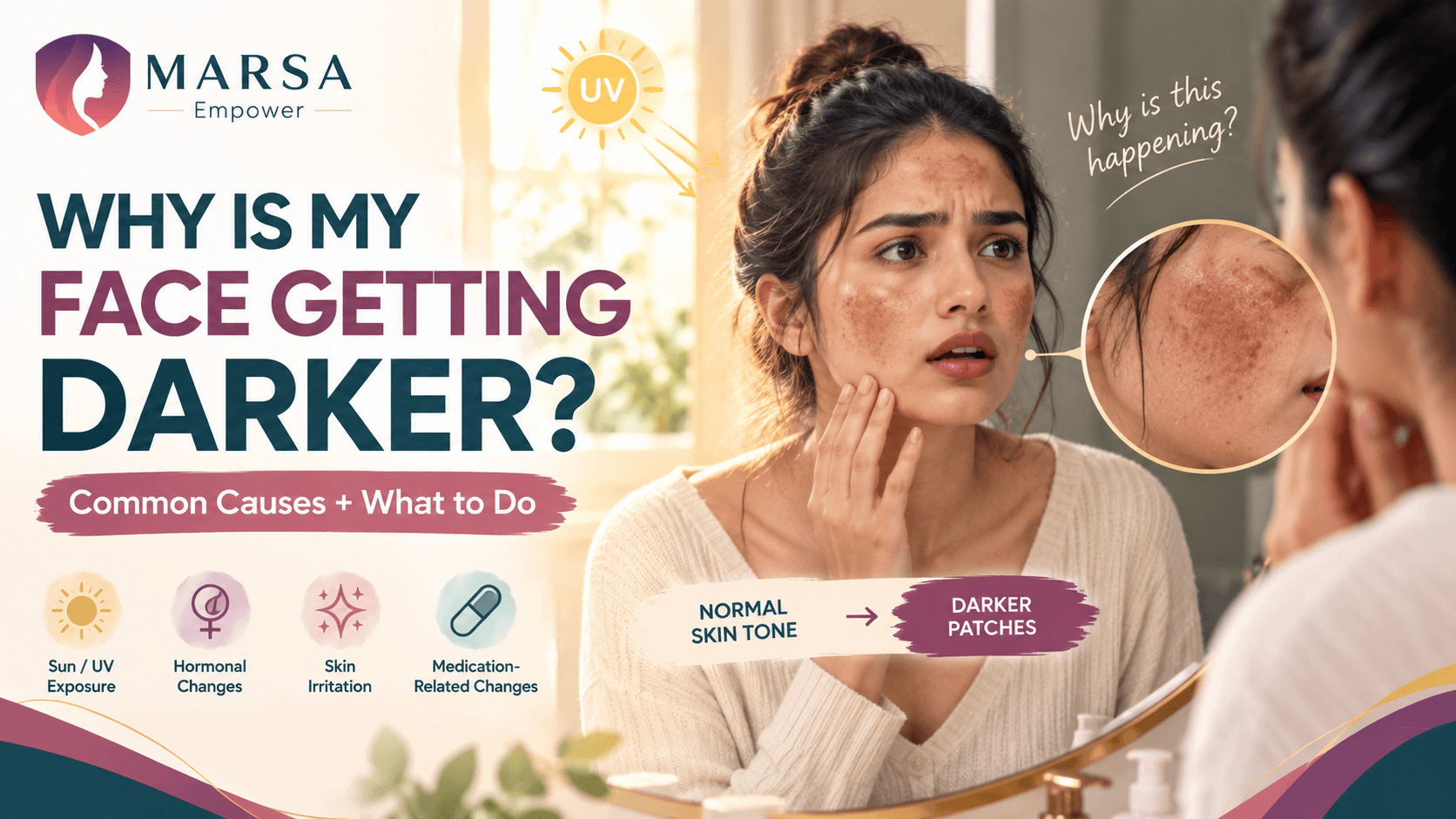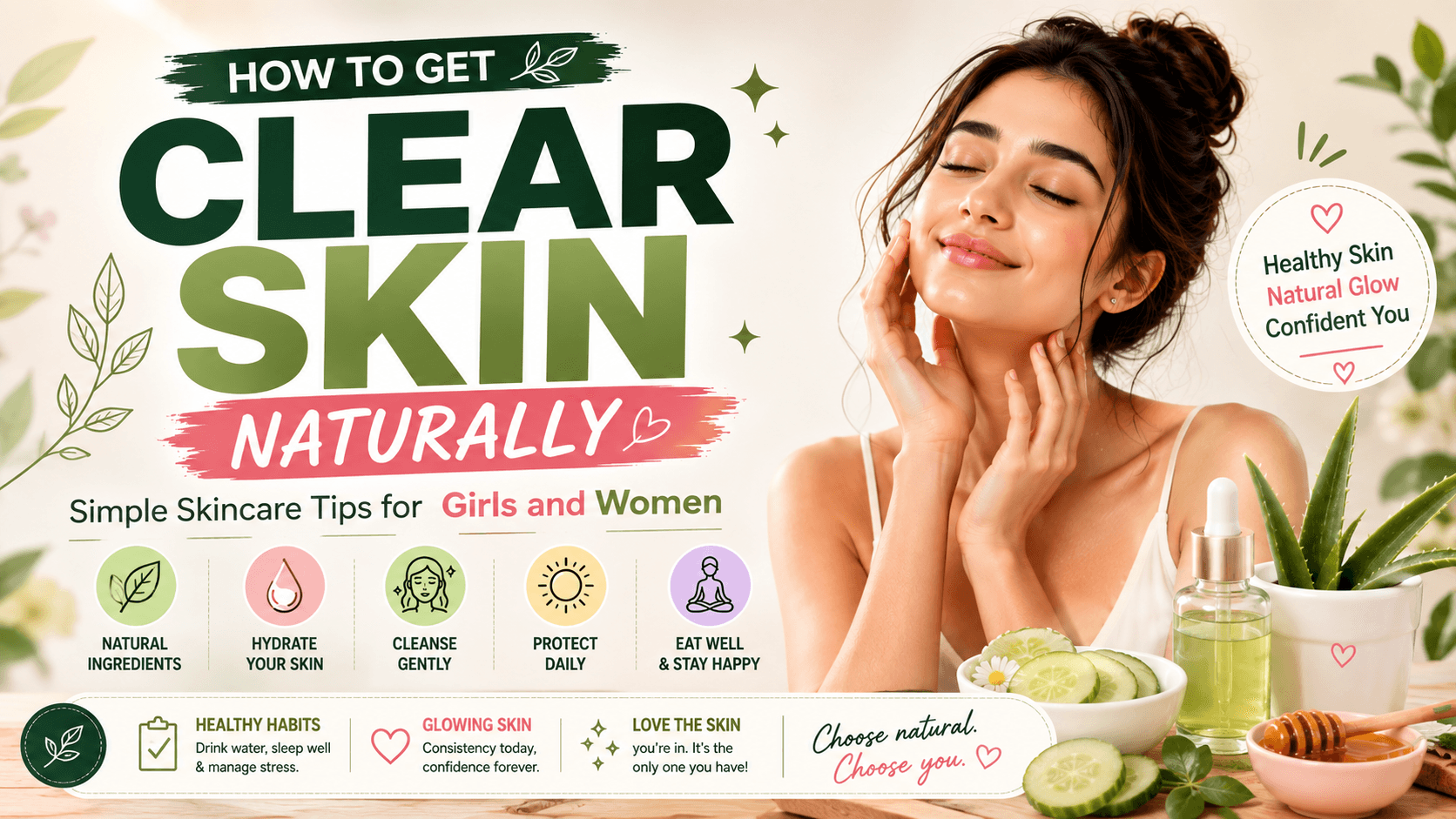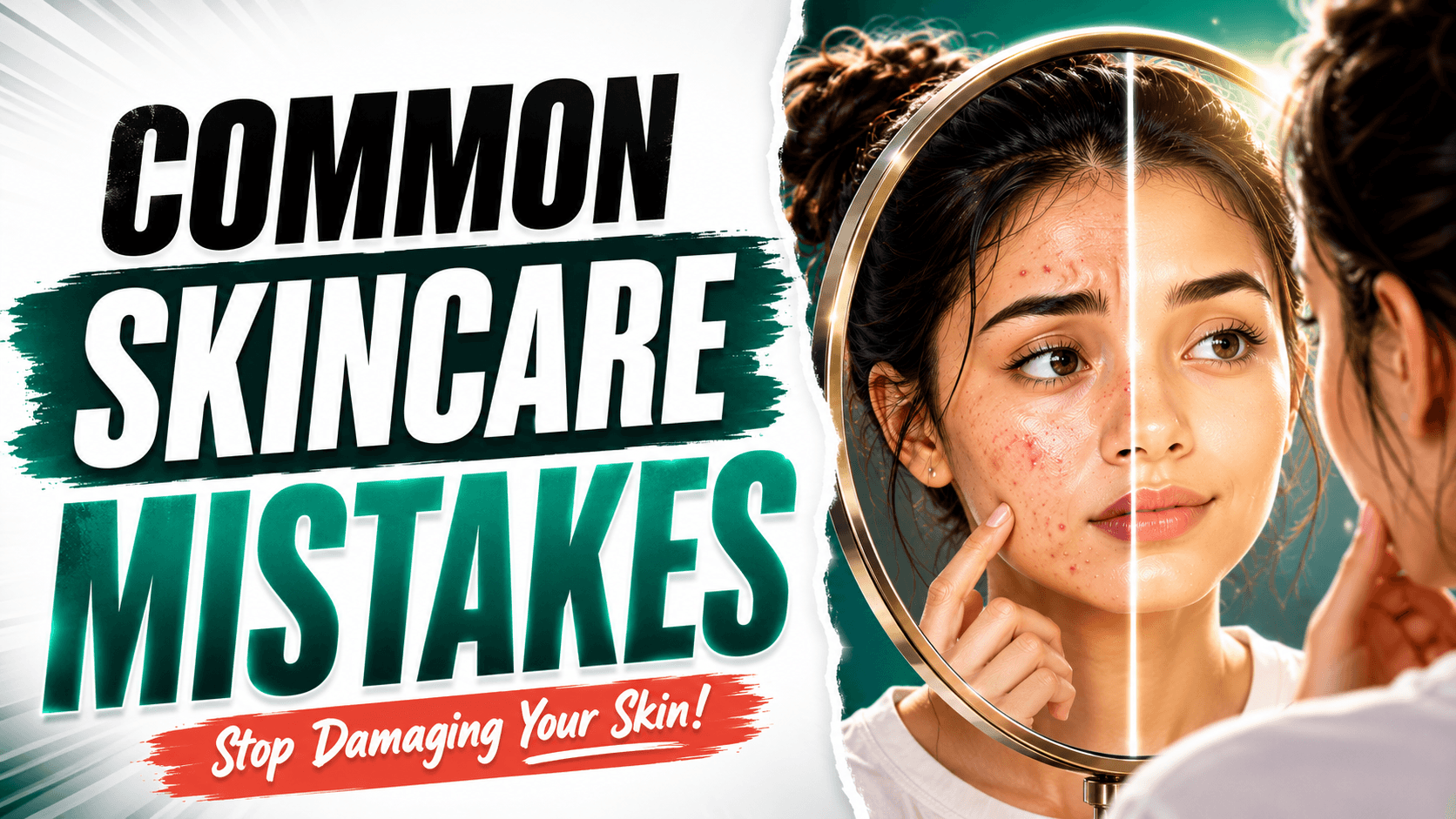
Many teen girls make skincare mistakes that can harm their skin. Learn how to avoid these errors and maintain healthy, glowing skin.

Maryam Mumtaz
Co-Founder & CEO
12 min read•7/28/2026
Marsa Empower · Skin Health & Teen Wellness · For Girls & Women Aged 13 and Above · 14 min read
"Healthy skin is not built by following the most popular trend or buying the most expensive product. It is built by understanding what your skin actually needs — and consistently giving it that."
Most teenage girls who struggle with acne, oily skin, or irritation are not failing to take care of their skin. They are taking care of it — often with a lot of effort and a lot of products — but in ways that are unknowingly making things worse rather than better.
The problem is rarely a lack of effort. It is a lack of accurate information.
Social media presents skincare as a world of elaborate routines, expensive products, and viral hacks — while rarely explaining the actual biology of what the skin needs or why certain approaches cause more harm than good. As a result, many teen girls end up over-cleansing, over-exfoliating, layering incompatible active ingredients, squeezing spots that should be left alone, and following trends that damage rather than support their skin — all while genuinely trying to help it.
This guide names the most common mistakes clearly and honestly, explains exactly why each one harms skin, and tells you precisely what to do instead. No expensive products required. No complicated routine needed. Just accurate information, applied consistently.
During puberty, the body undergoes a significant hormonal shift. Rising levels of androgens — a group of hormones that includes testosterone — directly stimulate the sebaceous glands in the skin to produce more oil (sebum) than before puberty. This increase in oil production makes the skin:
Understanding that these changes are hormonal — not a result of poor hygiene or inadequate care — is the foundation of every good skincare decision during the teenage years. The goal is not to eliminate oil entirely (that is impossible and would cause other problems), but to manage it appropriately and avoid the habits that make acne and skin irritation worse.
"If my skin is oily and breaking out, washing it more often will help. More washing = cleaner skin = fewer pimples."
This is one of the most common and most counterproductive skincare beliefs. The skin's surface has a natural protective layer called the acid mantle — a thin film of natural oils, dead cells, and microorganisms that maintains the skin's pH balance and acts as a physical barrier against bacteria, pollution, and irritants.
When you wash your face more than twice a day, you strip this protective layer. The skin detects that its natural oils have been removed and responds by telling the sebaceous glands to produce more oil to compensate. The result is often a cycle of excessive washing → more oil production → more washing — which makes oiliness and breakouts worse, not better.
Over-washing also damages the skin's moisture barrier, leading to a paradoxical combination of oily and dehydrated skin — tight, irritated, and shiny at the same time.
Wash your face exactly twice a day — once in the morning and once before bed. If you exercise or sweat heavily, an additional rinse with water and a gentle cleanse afterward is appropriate. In all other circumstances, twice is enough.
On very dry or sensitive skin, washing once a day at night and simply rinsing with water in the morning may be even better.
Grab whatever soap is in the bathroom and use it on their face — or use a strong antibacterial body wash, thinking it will kill the bacteria causing pimples.
The skin on your face is significantly more delicate than the skin on your body. It is thinner, more reactive, and more densely packed with sebaceous glands and nerve endings. Regular body soaps and antibacterial washes are formulated for the thicker, less sensitive skin on the body — they have a pH that is too alkaline for facial skin, contain surfactants that are far too stripping, and often include fragrances and antibacterial agents that irritate facial skin.
Using body soap on the face strips the skin's moisture barrier, raises its pH above the ideal range, and can trigger a significant inflammatory response — worsening redness, dryness, and breakouts even while feeling like it is "really cleaning."
Use a facial cleanser specifically formulated for the face. A good beginner facial cleanser is:
Affordable, widely available options include Cetaphil Gentle Skin Cleanser, Simple Kind to Skin Micellar Gel Wash, and Neutrogena Hydro Boost Gel Cream Cleanser.
"My skin is already oily. Adding moisturiser will make it greasier and cause more pimples."
This is one of the most persistent skincare myths — and one of the most damaging ones. Moisturiser does not make oily skin oilier. In fact, the opposite is true.
When oily skin is not moisturised after cleansing, the skin detects that its surface hydration has been removed and compensates by increasing oil production from the sebaceous glands. The result is more oil — not less.
Additionally, most acne treatments — salicylic acid, benzoyl peroxide, retinoids — are inherently drying. Using them without moisturiser leads to a dry, irritated skin barrier that becomes increasingly sensitive, reactive, and paradoxically more prone to breakouts as the barrier breaks down.
Moisturiser also does not cause pimples — the wrong type of moisturiser for your skin type can do so. The key is choosing the right formula.
Choose a lightweight, oil-free, non-comedogenic moisturiser for oily or acne-prone skin. Look for these words on the packaging:
Apply a small amount — approximately pea-sized — to clean, slightly damp skin after every cleanse. Both morning and evening. Every day.
"I only need sunscreen at the beach or in direct summer sun. My daily routine doesn't require it."
This is the skincare mistake with the most significant long-term consequences — and the one that the majority of teenage girls and young women make.
UV radiation from the sun reaches the skin every day — not just in summer, not just in direct sunlight, not just on hot days. UVA rays — the type most responsible for skin aging, dark spots, and DNA damage — penetrate cloud cover and glass. They reach your skin through your classroom window, in the car, walking to school, sitting near any window. Every single day of the year.
The damage from UV exposure is cumulative and largely invisible for years. Teenage girls who skip sunscreen are making deposits into a long-term damage account that does not show its full balance until their thirties and forties — when dark spots, uneven skin tone, premature fine lines, and increased skin cancer risk become visible.
Sunscreen also has an immediate benefit: it prevents the dark marks (post-inflammatory hyperpigmentation) that acne spots leave behind from darkening further with sun exposure. Girls with acne who do not wear sunscreen watch their post-acne marks become darker and last months longer than they otherwise would.
Apply SPF 30 or higher — broad spectrum (protecting against both UVA and UVB) — every single morning as the last step of your skincare routine, before makeup.
For oily or acne-prone skin, look for:
There are many affordable, lightweight sunscreens designed specifically for oily and acne-prone skin that do not feel greasy or cause breakouts.
Squeeze, pick, or press pimples — sometimes with fingers, sometimes with tools — because the pimple is visible and they want it gone immediately.
This is one of the hardest skincare habits to break — because there is an immediate, satisfying feeling of having "dealt with" the pimple. But the consequences are almost always worse than the original spot.
When you squeeze a pimple:
1. You push material sideways, not out. The pressure of squeezing does not extract the plug cleanly. It forces infected material sideways into the surrounding tissue — deeper into the skin and into neighbouring follicles. This triggers a larger inflammatory response, creating a bigger, redder, more painful area than the original spot.
2. You introduce bacteria from your fingers. Your fingertips carry bacteria from every surface they have touched. Pressing this bacteria into an open pimple dramatically increases the risk of secondary infection — turning a simple papule into a more severe, deeper lesion.
3. You cause post-inflammatory hyperpigmentation. The trauma of squeezing triggers the skin to produce excess melanin (pigment) as part of its healing response. This produces the dark marks that remain long after the pimple itself has healed — sometimes for three to six months.
4. You risk scarring. Deeper pimples — nodules and cysts — that are squeezed almost always produce atrophic scars (small pits in the skin surface) that can be permanent. These scars are the most common reason young women in their twenties and thirties seek dermatological treatment.
Buy five, eight, or ten different skincare products — many containing active ingredients — and use them all simultaneously, switching frequently based on new recommendations.
You cannot know what is working. When multiple new products are introduced simultaneously, any improvement or any reaction cannot be attributed to a specific product. You are flying blind.
Active ingredients conflict. Many common skincare actives — retinol, vitamin C, AHAs, BHAs, benzoyl peroxide — interact with each other in ways that reduce their effectiveness or significantly increase irritation when used together. Using them simultaneously without understanding these interactions often produces worse results than using a single well-chosen product.
The skin barrier becomes overwhelmed. The skin has a tolerance limit for how many active ingredients it can process simultaneously. Exceeding this limit — particularly on teenage skin that is already sensitised by hormonal changes — leads to a compromised skin barrier: red, dry, peeling, sensitive skin that is more prone to breakouts, not less.
Money is wasted. Products that are abandoned every two weeks never have enough time to work. Most skincare ingredients need six to eight weeks of consistent use to produce their full effect.
Start with the minimum effective routine:
| Morning | Evening |
|---|---|
| Gentle cleanser | Gentle cleanser |
| Lightweight moisturiser | Lightweight moisturiser |
| SPF 30+ | Spot treatment (if needed) |
This three-step morning and evening routine is sufficient for most teenage girls. Add one new active ingredient (salicylic acid, retinol, niacinamide) only if a specific concern requires it — and introduce it slowly, one at a time, at least four weeks apart.
Try viral skincare trends from TikTok, Instagram, and YouTube — including home remedies, DIY treatments, and multi-step routines promoted by influencers with sponsored content.
Social media skincare advice is almost completely unregulated. Influencers are paid to promote products regardless of whether they work — or even whether they are safe. Viral trends frequently involve applying substances to the face that have no scientific evidence for skin benefit and documented evidence of harm:
Lemon juice: Highly acidic (pH 2–3) — far below the skin's natural pH. Causes chemical irritation, photosensitivity, and can produce chemical burns. Frequently cited as a "natural brightener" — it brightens by removing skin cells through chemical burn, which causes long-term sensitivity and can worsen dark spots.
Toothpaste on pimples: Contains ingredients (sodium lauryl sulphate, hydrogen peroxide, mint) that irritate skin, disrupt its pH balance, and worsen redness rather than reducing it. No clinical evidence of benefit for acne.
Baking soda scrubs: Alkaline (pH 9) — disrupts the skin's natural acid mantle and damages the protective barrier. Causes increased sensitivity, dryness, and paradoxically worsened breakouts.
Onion juice, garlic, raw potato: No evidence-based benefit for acne or skincare. High risk of allergic reaction and irritation.
DIY retinol mixtures or acid peels: High-concentration acids and retinoids can cause significant, sometimes lasting chemical damage to the skin when improperly formulated. A viral "DIY peel" trend caused widespread chemical burns among teen girls.
Stick to established skincare ingredients with genuine clinical evidence — salicylic acid, niacinamide, hyaluronic acid, retinol, ceramides, vitamin C. These are available in well-formulated, correctly-dosed products from reliable brands. If you are unsure whether a trend is safe, a simple rule applies: if it sounds extreme, it probably is.
Skip removing makeup before bed — because they are tired, because they got home late, because they think "just once won't matter."
Every night the skin does not have makeup removed is a night of accelerated skin damage:
Pore blockage: Foundation, concealer, and primer are formulated to stay on the skin through a full day. Left on overnight — for eight hours — they block pores thoroughly, trapping oil and dead skin cells inside follicles and directly causing and worsening blackheads and whiteheads.
Oxidative damage: Makeup acts like a sponge for environmental pollution — free radicals that damage skin cells and accelerate aging. Leaving this pollution-loaded makeup on the skin overnight means the skin is exposed to that oxidative stress for an additional eight hours.
Disrupted repair: The skin's most active cellular repair processes happen during sleep. This repair requires clean, uncovered skin. Makeup creates a barrier that reduces the effectiveness of the skin's overnight renewal.
Eye area damage: Eye makeup — mascara, eyeliner, eyeshadow — is particularly damaging when left on overnight. It migrates into the eyes, contributing to irritation, conjunctivitis risk, and can block the tiny oil glands along the eyelid margin, causing styes and blepharitis (eyelid inflammation).
Commit to a non-negotiable rule: makeup is removed every single night, no exceptions.
The two-step approach:
On nights when you are very tired, micellar water applied with a cotton pad followed by a gentle cleanser takes under two minutes. There is no night tired enough to justify skipping it.
Buy popular products without checking whether they are appropriate for their specific skin type — and then wonder why the products seem to make their skin worse.
Skincare products are formulated for specific skin conditions. A product that is perfect for one skin type can be actively harmful for another:
Oily skin: Gel or foam cleanser · Oil-free moisturiser · Matte or lightweight sunscreen · Non-comedogenic everything
Dry skin: Cream or milk cleanser · Richer moisturiser with hyaluronic acid or ceramides · Hydrating sunscreen · No harsh or stripping products
Combination skin (oily T-zone, normal/dry cheeks): Balanced gentle cleanser · Lightweight moisturiser · Non-comedogenic sunscreen · Targeted treatment for oily areas only
Sensitive skin: Fragrance-free everything · Minimum ingredients · Cream cleanser or micellar water · Soothing moisturiser with ceramides or aloe vera · Mineral sunscreen (zinc oxide)
Wash your face, apply nothing, and wait one hour. Assess:
Try a new product for three to five days, see no improvement, conclude it is not working, and switch to something else — cycling through products every week or two.
Most skincare products — particularly those containing active ingredients like salicylic acid, niacinamide, retinol, or azelaic acid — do not produce visible results within a few days. Here is why:
Switching products every week means no product ever has time to work. The skin never settles into a consistent routine. Active ingredients change so frequently that the skin barrier is constantly adapting to new inputs — producing more sensitivity and more reactivity, not less.
Introduce one new product at a time. Use it consistently for six to eight weeks before assessing whether it is working. Take a before photograph so you have an objective comparison rather than relying on daily subjective assessment.
The only reason to stop a product before six to eight weeks is if it is causing significant irritation, redness, or allergic reaction — not if results are simply not visible yet.
Use the same makeup brushes for weeks or months without cleaning them.
Every time a makeup brush is used, it picks up oil, dead skin cells, old makeup residue, and bacteria from the skin surface. If the brush is not cleaned before the next use, all of this material is redeposited back onto the skin — directly into pores — with every subsequent application.
This is a consistent, regular source of new bacterial introduction to the skin that many girls never identify as a cause of their persistent breakouts.
Foundation brushes used daily should ideally be cleaned weekly. Brushes used less frequently should be cleaned every two weeks.
Weekly brush cleaning: Apply a small amount of gentle shampoo or brush-specific cleanser to the bristles, work it into a lather under running water, rinse thoroughly, reshape the bristles, and lay flat on a clean towel to dry. Do not stand wet brushes upright — water runs into the ferrule and loosens the glue holding bristles.
Between washes: Spray a brush cleaner or micellar water onto a clean cloth or paper towel and swipe the brush across it to remove the bulk of the residue between uses.
Drink primarily tea, coffee, sugary drinks, and sodas throughout the day rather than water — and wonder why their skin looks dull, tired, and dehydrated despite using hydrating skincare.
Topical moisturisers hydrate the surface of the skin from the outside. But the skin's cells need water delivered from the inside — through the bloodstream — to maintain their function, elasticity, and appearance.
Mild chronic dehydration — extremely common among teenage girls who do not prioritise water intake — produces skin that looks dull, feels tight and rough, develops fine lines more readily, and loses the natural plumpness associated with well-hydrated skin. No moisturiser, however good, can fully compensate for inadequate internal hydration.
Dehydration also concentrates the waste products that the body clears through sweat and other mechanisms, which can worsen skin congestion.
Aim for 6 to 8 glasses (approximately 1.5 to 2 litres) of water per day as a baseline. Increase during hot weather, exercise, and heavy sweating.
Practical tips:
"Diet has nothing to do with acne — that's a myth."
The connection between diet and acne is more nuanced than "eating greasy food causes spots" — but it is real. The most strongly supported dietary acne trigger is high-glycaemic foods — foods that cause rapid blood sugar spikes.
Here is the mechanism: high-glycaemic foods → rapid blood sugar spike → spike in insulin → spike in insulin-like growth factor 1 (IGF-1) → increased androgen production → increased sebum production → more clogged pores → more acne.
This chain reaction is well-documented in peer-reviewed research and explains why women with PCOS — who have chronically elevated insulin — often have the most persistent and severe acne.
The foods most consistently linked to worsening acne through this pathway include:
No single food needs to be completely eliminated. The goal is reducing the overall glycaemic load of the diet — eating more foods that release energy slowly and fewer foods that cause rapid blood sugar spikes.
Include more:
Compare their skin to friends, to influencers, to celebrities — and feel that their own skin is failing because it does not look like the images they see online.
Almost every image of skin seen on social media has been processed in some way — through lighting, filters, editing applications, Facetune, or professional photography that specifically eliminates pores, textural variation, redness, and blemishes. The skin visible on screen is almost never an accurate representation of what that person's skin looks like in a mirror under normal lighting.
Real skin — healthy, normal, well-cared-for skin — has pores. It has texture. It has occasional blemishes. It changes throughout the month with hormonal cycles. It is not uniformly smooth, perfectly even-toned, or poreless.
Comparing your real skin to a digitally modified image creates the false impression that your skin is abnormal when it is, in fact, entirely normal.
Evaluate your skin against realistic criteria:
These are the relevant questions. "Does it look like a filtered social media image?" is not.
Unfollow accounts that consistently make you feel worse about your skin. This is not an extreme action — it is appropriate curation of your information environment.
Use physical scrubs — products with abrasive particles like walnut shell, apricot kernel, sugar, or salt — to exfoliate the face, believing that the scrubbing sensation means the products are working harder.
The particles in most commercially available facial scrubs are jagged under a microscope — even the ones labelled "gentle." When dragged across facial skin, they create thousands of micro-tears in the skin surface. These tiny wounds:
The damage accumulates with every use — which is why many girls using harsh scrubs notice that their skin becomes increasingly sensitive, reactive, and prone to breakouts over weeks and months of use.
Use chemical exfoliation instead of physical scrubbing. Chemical exfoliants dissolve the bonds holding dead skin cells together without any physical abrasion:
Start with once or twice per week and increase only if the skin tolerates it well.
If you prefer a physical element in exfoliation, a soft, damp face cloth used with very gentle pressure during cleansing is far safer than any particle-based scrub.
Rub eye makeup off aggressively with a dry cotton pad and their regular face wash, or leave it partially on, or skip eye makeup removal entirely.
The skin around the eyes is the thinnest skin on the face — approximately four times thinner than the skin on the cheeks. It has minimal subcutaneous fat support and very few sebaceous glands. It is extremely delicate and shows damage earlier and more readily than any other facial area.
Rubbing this area aggressively with a dry cotton pad causes mechanical trauma to the thin skin — contributing to fine lines, loss of elasticity, and in time, the worsening of dark circles and under-eye hollowness.
Leaving mascara, eyeliner, or eyeshadow on overnight allows these products to migrate into the eyes — causing redness, irritation, and increasing the risk of infection. It also blocks the meibomian glands along the eyelid margin — the tiny glands that produce the oil layer of tears — contributing to dry eyes, styes, and eyelid irritation.
Use a dedicated eye makeup remover — a gentle micellar water, oil-based eye makeup remover, or cleansing oil specifically formulated for the eye area:
After avoiding all of the mistakes above, here is what a genuinely effective teen skincare routine looks like — simple, consistent, and appropriate for most skin types.
| Step | Product | Purpose |
|---|---|---|
| 1 | Gentle facial cleanser | Remove overnight oil and dead skin cells |
| 2 | Lightweight moisturiser | Hydrate and protect the skin barrier |
| 3 | SPF 30+ sunscreen | Protect from UV damage — non-negotiable |
| Step | Product | Purpose |
|---|---|---|
| 1 | Makeup remover (if wearing makeup) | Remove makeup, sunscreen, and product residue |
| 2 | Gentle facial cleanser | Deep cleanse after makeup removal |
| 3 | Active treatment (if needed) | Salicylic acid spot treatment or retinol — only if a specific concern requires it |
| 4 | Lightweight moisturiser | Replenish hydration lost during cleansing |
Total products needed: four to five. Everything else is optional enhancement, not essential care.
The most important quality of any skincare routine is consistency — doing these simple steps every single day produces far better results than using ten different products sporadically.
A consistent home routine using appropriate products resolves most mild teen skin concerns within six to eight weeks. However, see a dermatologist if:
| Mistake | What It Does | What to Do Instead |
|---|---|---|
| Washing too often | Strips barrier → more oil production | Wash exactly twice daily |
| Using body soap on face | Too harsh → irritation and dryness | Use a gentle facial cleanser |
| Skipping moisturiser | More oil production as compensation | Use lightweight non-comedogenic moisturiser daily |
| Skipping sunscreen | Cumulative UV damage · Dark marks stay longer | SPF 30+ every morning — no exceptions |
| Picking pimples | Worse inflammation · Scarring · Dark marks | Spot treatment · Leave it alone |
| Too many products at once | Barrier damage · Unknown what works | Start with 3 products · Add slowly |
| Following social media trends | Unproven or dangerous ingredients | Use evidence-based skincare only |
| Sleeping in makeup | Clogged pores · Oxidative damage | Remove all makeup every night |
| Wrong products for skin type | Worsening of the exact concern | Identify skin type · Choose accordingly |
| Changing products too quickly | Nothing has time to work | Use each product for 6 to 8 weeks minimum |
| Dirty makeup brushes | Redepositing bacteria onto skin | Clean brushes weekly |
| Not drinking water | Dull, dehydrated skin | 6 to 8 glasses of water daily |
| Too much processed food | Insulin spikes → more oil → more acne | Reduce high-glycaemic foods |
| Comparing skin to social media | Unrealistic standard · Damaged confidence | Evaluate skin against realistic criteria |
| Harsh physical scrubs | Micro-tears · Barrier damage · More breakouts | Use chemical exfoliants instead |
| Rough eye makeup removal | Skin trauma · Fine lines · Eye irritation | Soak with remover · Pat gently |
"The most common reason teenage girls struggle with their skin is not a lack of products — it is a lack of accurate information. Armed with the right knowledge, a simple, consistent four-step routine beats ten expensive products used incorrectly every single time."
Educational Disclaimer
This article is for educational and awareness purposes only. It does not constitute medical advice, diagnosis, or treatment. If you have specific skin concerns or are experiencing significant acne that is affecting your wellbeing, please consult a qualified dermatologist or healthcare professional for personalised guidance.
Marsa Empower · Skin Health · Teen Wellness · Skincare Education
Medical Disclaimer
This article is for general informational and educational purposes only and is not a substitute for professional medical advice, diagnosis, or treatment. Always seek the advice of a qualified healthcare provider with any questions you may have regarding a medical condition. Never disregard professional medical advice or delay seeking it because of something you have read on MARSA Empower.
Written By
Maryam Mumtaz
Co-Founder & CEO
Co-Founder of MARSA Empower who leads the visual and strategic evolution of the platform. Maryam bridges technical complexity with human-centric design, architecting the team's official roadmap and ensuring MARSA effectively addresses the real-world needs of women. With deep expertise in agentic AI, full-stack development, and UI/UX design, she has delivered 50+ projects for 30+ satisfied clients.
Enjoyed this story?