Learn how teenage girls can maintain healthy, radiant skin with simple skincare routines and products. Understand your skin type, avoid common mistakes, and embrace lifelong healthy habits.

Maryam Mumtaz
Co-Founder & CEO
12 min read•7/21/2026
Marsa Empower · Skin Health & Teen Wellness · For Girls & Women Aged 13–50 · 14 min read
"You do not need ten products or a big budget to have healthy skin. You need the right information, the right habits, and a little patience."
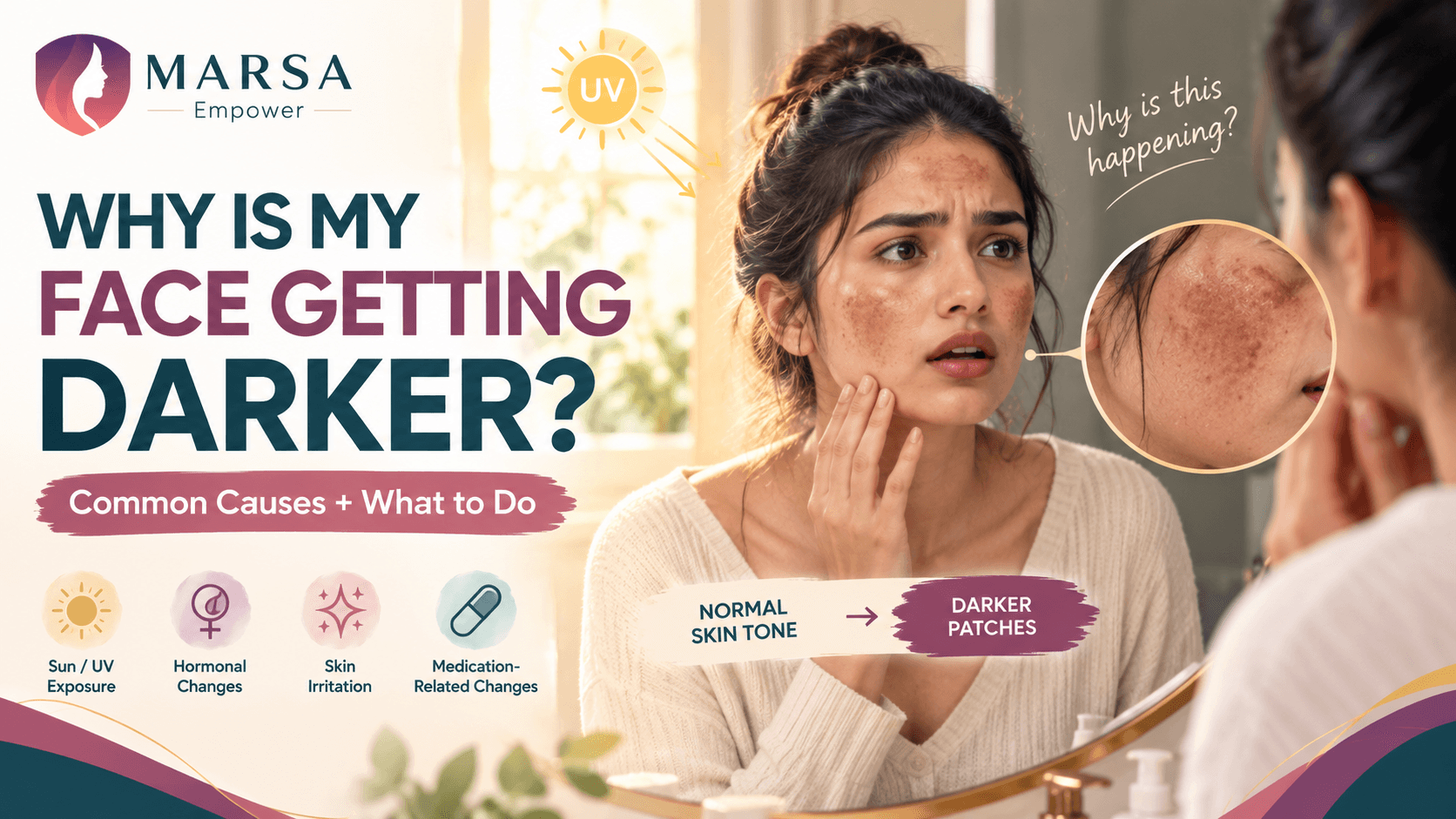
If you have started noticing that your skin looks different than it did a few years ago — oilier, more prone to pimples, or just different — you are not imagining it. Your skin is genuinely changing.
During puberty, your body produces more of a group of hormones called androgens. These hormones send a signal to the oil glands in your skin — tiny glands under the surface called sebaceous glands — telling them to produce more oil. This oil is called sebum, and it is actually useful in small amounts. It keeps the skin soft and protected.
The problem is that during the teenage years, these glands can produce more oil than the skin needs. When excess oil mixes with dead skin cells inside the hair follicles — the tiny openings all over your skin — it creates a blockage. Bacteria grow inside that blockage. The result is the pimples, blackheads, and whiteheads that most teenagers experience.
This is not your fault. It is not because you are not washing your face properly. It is a completely normal biological response to the hormones that are doing their job — helping your body grow and develop.
Understanding this is important — because once you know why your skin is changing, you can make smarter choices about how to take care of it.
Before you buy any skincare product, the most important thing to know is your skin type. Using the wrong products for your skin type — even good-quality products — can make your skin worse instead of better.
There are four main skin types. Read through each one carefully and see which description sounds most like your skin.
Your skin is oily if:
What this means: Your oil glands are producing more sebum than your skin needs. The goal of skincare for oily skin is to gently remove excess oil without stripping the skin completely — because over-stripping triggers even more oil production as the skin tries to compensate.
What oily skin needs:
| Product Type | What to Look For |
|---|---|
| Cleanser | Gel or foam formula · Labelled for oily or acne-prone skin |
| Moisturiser | Lightweight · Oil-free · Gel texture |
| Sunscreen | Matte finish · Oil-free · Non-comedogenic |
Your skin is dry if:
What this means: Your skin is not producing or retaining enough moisture. The goal for dry skin is to cleanse very gently (without removing the little moisture the skin has) and to restore and lock in hydration with a good moisturiser.
What dry skin needs:
| Product Type | What to Look For |
|---|---|
| Cleanser | Cream or milk formula · Hydrating · Gentle |
| Moisturiser | Richer texture · Contains hyaluronic acid or ceramides |
| Sunscreen | Hydrating formula · Moisturising SPF |
Your skin is combination if:
What this means: This is actually the most common skin type among teenagers. The T-zone has a higher concentration of oil glands and responds more strongly to hormonal changes. The goal is to balance the oily areas without drying out the drier areas.
What combination skin needs:
| Product Type | What to Look For |
|---|---|
| Cleanser | Gentle · Balancing · Not too stripping |
| Moisturiser | Lightweight · Non-comedogenic |
| Sunscreen | Lightweight · Non-greasy |
Your skin is sensitive if:
What this means: Your skin's protective barrier is more reactive than average. The goal for sensitive skin is to keep the routine very simple and very gentle — fewer products, simpler formulas, and always patch-test new products before applying them to the full face.
What sensitive skin needs:
| Product Type | What to Look For |
|---|---|
| Cleanser | Fragrance-free · Hypoallergenic · Minimal ingredients |
| Moisturiser | Fragrance-free · Soothing · Contains ceramides or aloe |
| Sunscreen | Mineral sunscreen · Zinc oxide · Fragrance-free |
Wash your face with a gentle cleanser and pat it dry. Wait one hour without applying anything. Then look at your face in natural light:
Here is the most important thing to know about skincare: a simple routine done consistently every day will always produce better results than an expensive complicated routine done occasionally.
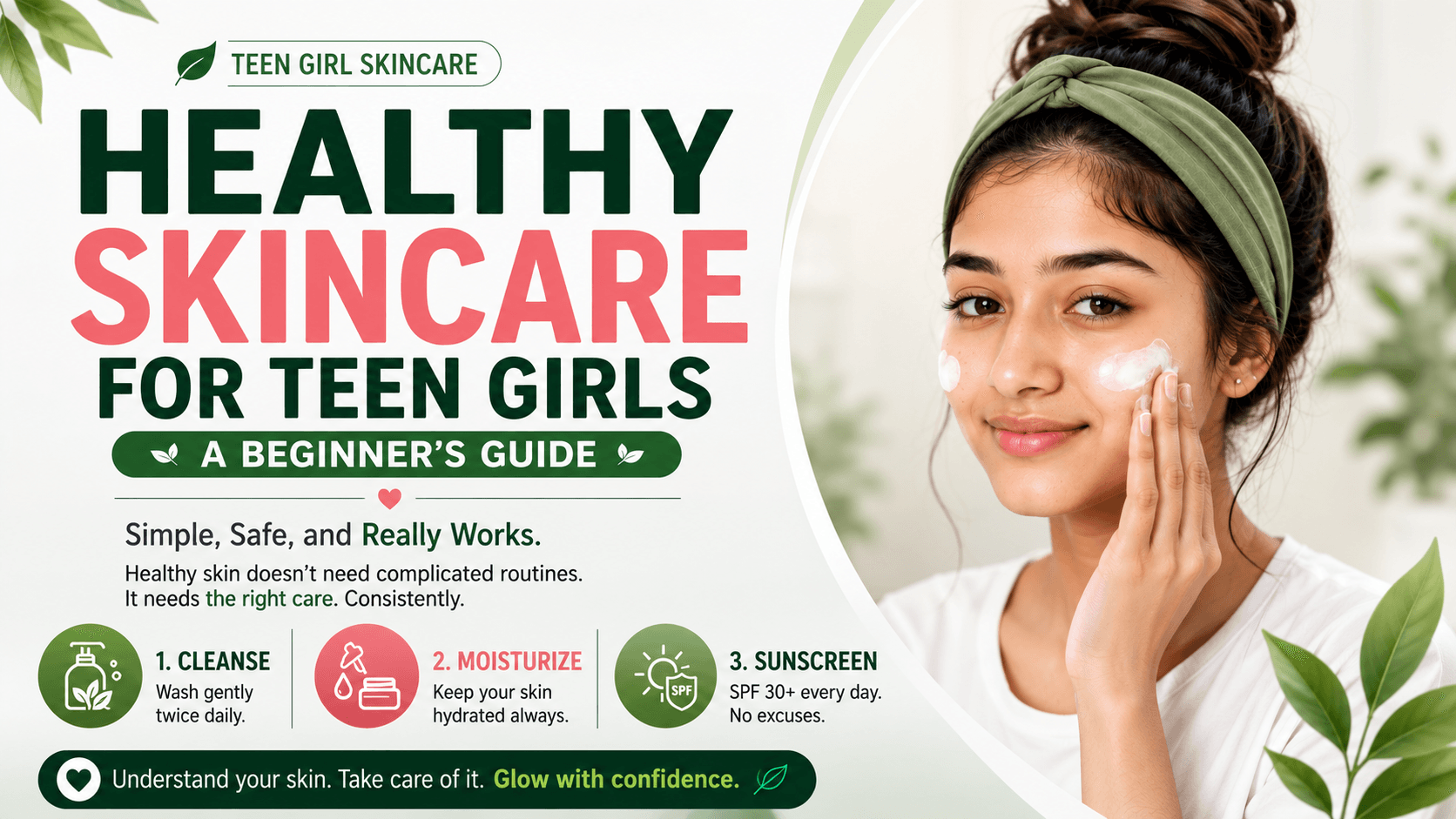
You do not need ten products. You do not need the products you see your favourite influencer using. You need three things done well: cleanse, moisturise, and protect.
When: Morning and evening — twice a day, every day.
Why: Cleansing removes the oil, dead skin cells, sweat, bacteria, and environmental pollution that accumulate on your skin throughout the day and night. Without cleansing, these substances sit on the skin and block pores, leading to breakouts.
 |
|---|
| Recommended: Cetaphil Gentle Skin Cleanser · Neutrogena Gentle Cleanser · Simple Kind to Skin Cleanser |
How to cleanse correctly:
What NOT to do:
When: After cleansing — both morning and evening.
Why: Many teenage girls skip moisturiser because they think it will make their oily skin worse. This is one of the most common skincare mistakes. Every skin type needs moisture — including oily skin. When skin is dry, it produces more oil to compensate. A good moisturiser actually helps balance oil production over time.
 |
|---|
| Recommended: Neutrogena Oil-Free Moisturiser · CeraVe Moisturising Cream · Garnier Skin Active |
How to moisturise correctly:
Choosing the right moisturiser:
When: Every single morning — the last step before going outside.
Why: This is the most important skincare step of all — and the one most girls skip. The sun produces ultraviolet (UV) rays that damage the skin every time you are exposed to them, even on cloudy days. Over time, this damage causes dark spots, uneven skin tone, premature aging, and increases the risk of skin cancer. Many people do not see these effects until their thirties or forties — but the damage is happening every day in the teenage years.
 |
|---|
| Recommended: NIVEA Sun SPF 30 · Neutrogena Clear Face SPF 50 · Cetaphil Sun SPF 50 |
Sunscreen also protects against the dark spots and marks that acne leaves behind. Without sunscreen, these marks become significantly darker and last much longer.
How to use sunscreen correctly:
What to look for:
When: Any time lips feel dry — morning and night is ideal.
Why: The skin on your lips is thinner and more delicate than the skin on your face. It does not have oil glands of its own, which means it dries out more easily — particularly in winter, in air conditioning, or when you are dehydrated.
 |
|---|
| Recommended: ChapStick Classic · Vaseline Lip Therapy · NIVEA Lip Care |
Apply a simple, unflavoured lip balm before sleeping and whenever your lips feel dry. Avoid licking your lips — saliva makes lips drier in the long run.
If you have pimples, blackheads, or persistent acne, you can add a simple acne treatment product to your routine after cleansing and before moisturising.
 |
|---|
| Recommended: La Roche-Posay Effaclar · Neutrogena Rapid Clear · Garnier Spot Corrector |
The two most effective over-the-counter acne ingredients:
Salicylic acid — works by dissolving the dead skin cells and oil that block pores. It is particularly effective for blackheads, whiteheads, and general congestion. Available in face washes, toners, and spot treatments.
Benzoyl peroxide — kills the bacteria that cause inflamed pimples. It is particularly effective for red, swollen spots and pustules. Start with the lowest available concentration — 2.5% or 5% — to minimise dryness and irritation.
How to introduce a new acne treatment:
Not all skincare products are created for teenage skin. Teen skin is still developing, and some products that are safe for adults can be too strong, too active, or simply unnecessary for younger skin.
Safe and appropriate products for teen girls:
| Product | What It Does | Safe for Teens? |
|---|---|---|
| Gentle face cleanser | Removes oil, dirt, sweat | Yes — use twice daily |
| Lightweight moisturiser | Keeps skin hydrated | Yes — use after every cleanse |
| SPF 30+ sunscreen | Protects from UV damage | Yes — use every morning |
| Lip balm | Prevents dry, chapped lips | Yes — use as needed |
| Salicylic acid (0.5–2%) | Clears blocked pores | Yes — if acne is present |
| Benzoyl peroxide (2.5–5%) | Reduces acne bacteria | Yes — if acne is present |
| Niacinamide serum | Reduces redness, balances oil | Yes — generally well-tolerated |
Some products are commonly sold in markets and pharmacies but are harmful — particularly for teenage skin. These products may appear to work quickly in the short term but cause serious damage over months and years.
Products teen girls should completely avoid:
| Product | Why It Is Dangerous |
|---|---|
| Skin whitening or bleaching creams | Often contain mercury or hydroquinone — toxic to skin and the body |
| Strong steroid creams (without a prescription) | Thin the skin permanently, cause hormonal disruption, worsen acne in the long run |
| Harsh physical scrubs (walnut shells, apricot scrub) | Micro-tears in the skin surface lead to increased breakouts and sensitivity |
| Unknown or unbranded online products | No regulation, often contain dangerous ingredients not listed on packaging |
| Anti-aging products (retinol, AHA/BHA in high concentrations) | Too strong for teenage skin — can damage the skin barrier |
| Fragranced toners with alcohol | Strip and irritate the skin — worsen dryness and sensitivity |
A simple rule: if you do not recognise or cannot pronounce most of the ingredients on a product, do not put it on your face.
Yes — wearing makeup is a personal choice, and there is nothing wrong with it. But there are a few important guidelines that protect your skin when you choose to wear it.
If you wear makeup:
Remember: Healthy skin is the best base for makeup. Skincare first — makeup second.
These are the most frequent mistakes that teenage girls make with their skin — and how to correct each one:
Many girls think that washing the face more frequently will reduce acne. In reality, washing more than twice a day strips the skin of its natural oils. The skin responds by producing even more oil — which leads to more breakouts. Twice a day is enough.
This is the most damaging skincare habit. When you squeeze a pimple, you push the bacteria and infected material deeper into the skin. This causes more inflammation, creates more pimples around the original one, and almost always leaves a dark mark or scar that can last for months or even years.
What to do instead: Apply a salicylic acid spot treatment directly on the pimple and leave it alone. If it is very painful or very large, see a dermatologist.
Buying five new products and using them all at the same time makes it impossible to know which product is helping your skin — and which one is causing a reaction. Introduce one new product at a time, at least two weeks apart, so you can properly assess what each one is doing.
Social media is full of skincare trends — and many of them are not safe for teenage skin. Viral trends often involve putting kitchen ingredients, strong acids, or unregulated products on the face. Remember: if a trend seems extreme, it probably is. Stick to simple, well-researched products from established brands.
One late night of not removing makeup can lead to multiple days of breakouts. Makeup, especially foundation and concealer, blocks the pores completely when left on overnight. No matter how tired you are — always remove your makeup before sleep.
Many girls skip sunscreen because they think their skin is not being damaged if they cannot feel it. Sunscreen feels unnecessary — until, years later, dark spots, uneven tone, and premature aging begin to appear. The damage from skipping sunscreen is real; it is simply invisible for years. Start the habit now.
Physical scrubs — with rough particles like walnut shells — feel satisfying to use but actually damage the skin surface. Tiny tears in the skin surface create more opportunities for bacteria to enter and cause more breakouts. If you want to exfoliate, use a gentle chemical exfoliant with salicylic acid instead.
What you eat affects your skin — perhaps more than any product you put on it. Your skin is made up of cells that need specific nutrients to function, repair, and look healthy. When those nutrients are missing from your diet, the effects show up on your face.
Fruits and vegetables are among the best skin foods available. They are rich in vitamins A, C, and E — antioxidants that protect skin cells from damage, support collagen production (which keeps skin firm and smooth), and reduce inflammation throughout the body.
| Food | Key Nutrients | What They Do for Skin |
|---|---|---|
| Spinach, methi, kale | Vitamins A, C, K · Iron | Reduce inflammation · Improve skin glow |
| Carrots and sweet potato | Beta-carotene | Supports healthy skin cell production |
| Tomatoes | Lycopene · Vitamin C | Protects skin from sun damage |
| Berries | Vitamin C · Antioxidants | Protect skin cells · Brighten skin tone |
| Apples and oranges | Vitamin C · Fibre | Support collagen production |
| Bananas | Vitamin B6 · Potassium | Supports skin moisture and elasticity |
Protein is the building block of every cell in the body — including skin cells. Hair, nails, and the structure of the skin itself are made primarily from protein.
| Food | Protein + Key Skin Nutrients |
|---|---|
| Eggs | Protein · Biotin · Zinc · Vitamin D |
| Chicken and fish | High-quality protein · Omega-3 (fish) |
| Lentils and daal | Protein · Zinc · Iron |
| Chickpeas and beans | Protein · Zinc · Folate |
Healthy fats are essential for keeping skin moisturised and supple from the inside. The skin barrier — the protective outer layer — depends on healthy fats to function properly.
| Food | Healthy Fats for Skin |
|---|---|
| Walnuts | Omega-3 fatty acids — reduce skin inflammation |
| Almonds and cashews | Vitamin E — protects skin cells |
| Sunflower seeds | Vitamin E · Linoleic acid |
| Avocado | Healthy fats · Vitamin E and C |
Water is perhaps the most underestimated skin nutrient. Skin cells are largely made of water. When you are dehydrated — even mildly — your skin looks dull, feels tight, and fine lines become more visible. Drinking at least 8 glasses of water per day is one of the simplest and most effective things you can do for your skin.
| Food or Habit | Why It Affects Skin |
|---|---|
| Sugary drinks, sweets, biscuits | Spike blood sugar → spike insulin → more androgen → more oil → more breakouts |
| White bread, white rice, processed carbs | Same insulin spike mechanism as above |
| Too much dairy (particularly skimmed milk) | Some research links to increased acne in teenagers |
| Fried and fast food | Pro-inflammatory — worsens redness and breakouts |
| Skipping meals | Deprives skin cells of essential nutrients |
| Excessive caffeine | Raises cortisol → worsens stress-related breakouts and skin inflammation |
The best skincare happens not just in front of the mirror but through your daily lifestyle choices. These habits cost nothing — but they make a significant difference to how your skin looks and feels over time.
Sleep 8 to 10 hours every night. Sleep is when your skin performs its most intensive repair. Growth hormone — essential for cell renewal — is primarily released during deep sleep. Chronic sleep deprivation raises cortisol, worsens oil production, and increases inflammation. Teenagers genuinely need more sleep than adults — 8 to 10 hours is the recommendation, not a luxury.
Drink enough water throughout the day. Your skin is approximately 64% water. When you are even mildly dehydrated, your skin looks dull, feels tight, and is more prone to irritation. Carry a water bottle and drink consistently throughout the day — do not wait until you feel thirsty.
Exercise regularly. Physical movement improves circulation — which means more oxygen and nutrients reaching skin cells. Sweating during exercise also helps flush the pores. Just make sure to cleanse your face promptly after exercising to remove the sweat and oil before they sit in the pores.
Wash your pillowcase every 2 to 3 days. Your pillowcase collects oil, dead skin cells, bacteria, and hair product residue every single night. Pressing your face against this surface for 8 hours is one of the most consistent sources of new breakouts. Changing pillowcases frequently — or placing a clean towel over your pillow — makes a noticeable difference.
Keep your phone screen clean. Phone screens are among the most bacteria-contaminated surfaces we regularly touch — and we press them against our faces multiple times a day. Wipe your phone screen with an antibacterial wipe daily.
Do not touch your face. Hands carry bacteria, oil, and environmental pollution from every surface they touch. Every time you rest your chin on your hand, touch a pimple, or rub your eyes, you are transferring that bacteria to your skin.
Manage stress. Stress causes the body to produce more cortisol, which increases oil production and inflammation in the skin. Academic pressure, friendship difficulties, and family stress all affect skin health through this hormonal pathway. Finding ways to genuinely manage stress — regular movement, adequate sleep, talking to someone you trust, hobbies that relax you — directly supports your skin.
Avoid smoking and vaping. Even occasional smoking and vaping damage collagen, reduce oxygen supply to skin cells, and accelerate aging at a cellular level. The effects are not visible immediately — but they accumulate.
A basic skincare routine and healthy lifestyle habits resolve mild skin concerns for most teenage girls. But there are situations where professional advice is important — and seeking it early prevents more serious problems.
See a doctor or dermatologist if:
Remember: Seeing a dermatologist is not an extreme step. It is appropriate healthcare for a skin concern. The earlier a skin condition is properly treated, the easier it is to resolve and the less likely it is to leave permanent marks.
| Step | What to Do | When |
|---|---|---|
| Cleanse | Gentle face wash for your skin type | Morning and evening |
| Treat | Salicylic acid or benzoyl peroxide if acne is present | After cleansing — evening |
| Moisturise | Lightweight non-comedogenic moisturiser | After every cleanse |
| Protect | SPF 30+ sunscreen | Every morning |
| Lip care | Simple lip balm | Morning, evening, as needed |
| Remove makeup | Micellar water + cleanser | Every single night |
| Drink water | 8 glasses minimum per day | Throughout the day |
| Sleep | 8 to 10 hours | Every night |
| Product | Best Affordable Option | What to Look For |
|---|---|---|
| Gentle cleanser | Cetaphil · Neutrogena · Simple | Fragrance-free · Mild · Suitable for your skin type |
| Moisturiser | Neutrogena Hydro Boost · CeraVe · Garnier | Non-comedogenic · Oil-free for oily skin |
| Sunscreen | NIVEA Sun · Neutrogena Clear Face SPF | Broad spectrum · SPF 30+ · Non-comedogenic |
| Acne treatment | Any salicylic acid product | 0.5–2% salicylic acid · Start slowly |
| Lip balm | ChapStick · Vaseline · Nivea | Simple · Unflavoured |
"Healthy skin is not about being perfect. It is about understanding your body, making informed choices, and taking care of yourself every single day. Start simple, be consistent, and give your skin the time it needs."
Educational Disclaimer
This article is for educational and awareness purposes only. It does not constitute medical advice, diagnosis, or treatment. If you have concerns about your skin health, please consult a qualified dermatologist or healthcare professional for personalised guidance.
Marsa Empower · Skin Health · Teen Wellness · Women's Health Education
Medical Disclaimer
This article is for general informational and educational purposes only and is not a substitute for professional medical advice, diagnosis, or treatment. Always seek the advice of a qualified healthcare provider with any questions you may have regarding a medical condition. Never disregard professional medical advice or delay seeking it because of something you have read on MARSA Empower.
Written By
Maryam Mumtaz
Co-Founder & CEO
Co-Founder of MARSA Empower who leads the visual and strategic evolution of the platform. Maryam bridges technical complexity with human-centric design, architecting the team's official roadmap and ensuring MARSA effectively addresses the real-world needs of women. With deep expertise in agentic AI, full-stack development, and UI/UX design, she has delivered 50+ projects for 30+ satisfied clients.
Enjoyed this story?