One App. Every Woman.
One App. Every Woman.
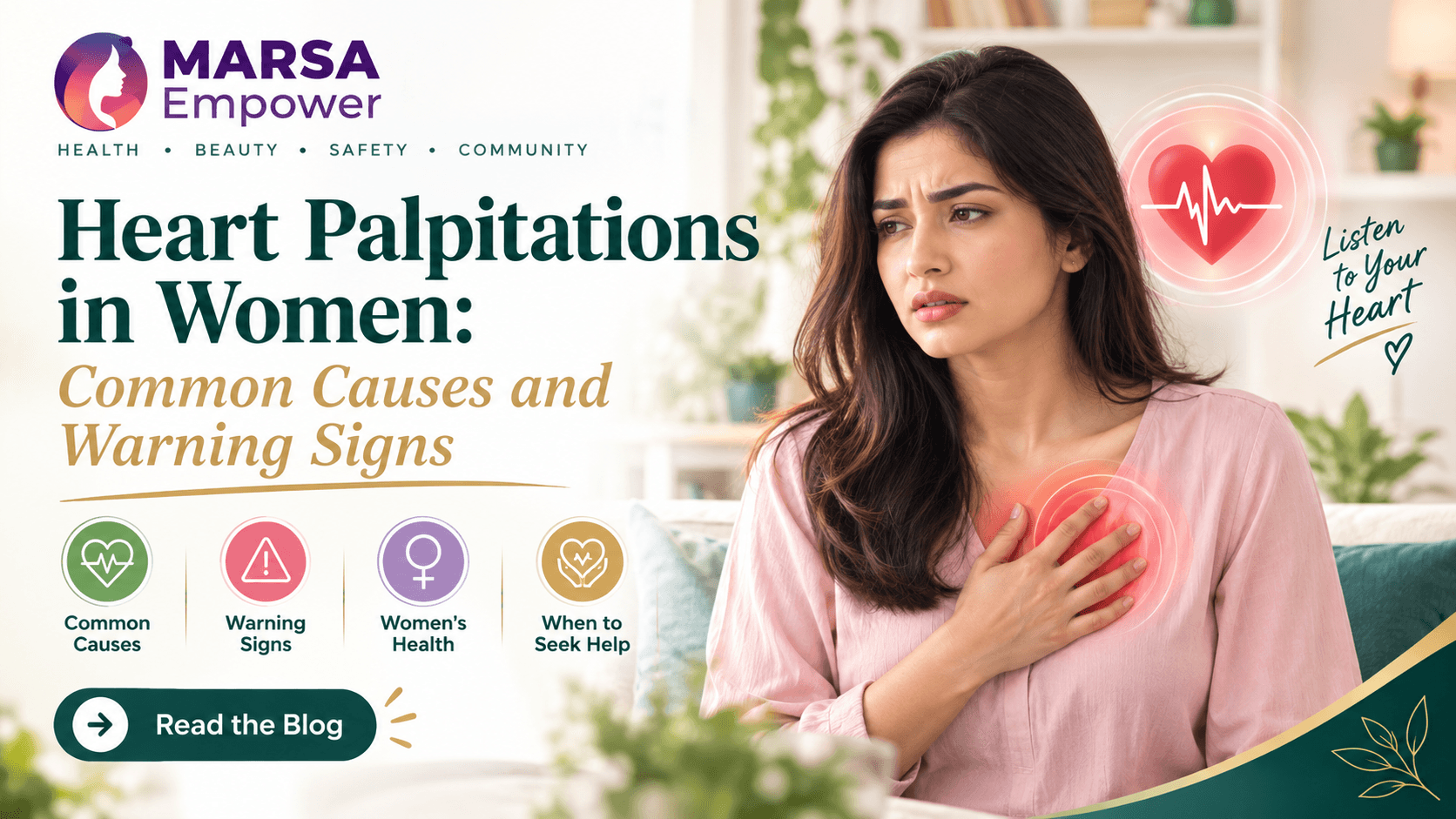
Heart palpitations in women can be unsettling. Discover common causes, warning signs, and when to seek medical advice.

Maryam Mumtaz
Co-Founder & CEO
12 min read•9/21/2026
Marsa Empower · Women's Health · Heart & Wellness · For Girls & Women Aged 13 and Above · 12 min read
For many women, heart palpitations arrive with no warning — a sudden awareness that the heart is beating faster, harder, or differently than normal. It might feel like a flutter in the chest. A brief "thump" followed by an odd pause. A racing sensation that comes and goes in seconds. A feeling that the heart has skipped a beat or added an extra one.
The experience can be startling, sometimes frightening — particularly the first time it happens. When you become acutely aware of your own heartbeat in a way that feels wrong, the mind can quickly spiral toward worry about what it means.
For the majority of women, heart palpitations are a benign, temporary experience related to identifiable and manageable triggers — stress, anxiety, caffeine, hormonal changes, dehydration, poor sleep, or physical exertion. They pass quickly, they are not dangerous, and they do not indicate heart disease.
But for some women, palpitations can be associated with medical conditions — including thyroid disorders, anaemia, cardiac arrhythmias, and others — that deserve proper evaluation. And a small number of palpitation patterns are warning signs that require urgent medical attention.
Understanding which category your experience falls into — and which features distinguish harmless from concerning palpitations — is what this guide provides.
Heart palpitations are the perception of an abnormal heartbeat — an awareness of the heart beating that is not normally present. This awareness may involve the heart beating faster than usual (tachycardia), more powerfully than usual, irregularly, or in a pattern that feels unusual.
Under normal circumstances, people are not consciously aware of their heartbeat. Palpitations occur when this background heartbeat becomes detectable — either because the heart's rhythm or rate has actually changed, or because the person's attention or sensory awareness has shifted to perceive the normal heartbeat more strongly than usual (as can happen during anxiety or in quiet environments).
The heart rate and rhythm changes underlying palpitations range from entirely benign (ectopic beats — extra or skipped beats — that occur in most people at some frequency and are usually harmless) to potentially significant (sustained arrhythmias that may require medical management).
Most palpitations are benign. But the symptom itself is non-specific — it does not reliably indicate whether the underlying rhythm change is harmless or clinically significant. That determination requires clinical context, history, and in many cases specific investigations.
Women describe heart palpitations in many different ways, reflecting the range of actual rhythm and rate changes that produce this symptom.
A fluttering sensation in the chest — often described as like a butterfly or a brief vibration — is one of the most common descriptions, particularly for ectopic (extra) beats.
A racing heart — a rapid heartbeat that is noticeably faster than normal — may be described as the heart "pounding" or feeling as though it is working hard.
A skipped beat — the sensation that the heart has momentarily stopped or missed a beat — is typically caused by an early ectopic beat followed by a compensatory pause, creating the perception of a skip.
A thumping or extra-hard beat — a single forceful beat that stands out from the normal rhythm — is also commonly caused by ectopic beats, where the extra beat may actually be stronger than usual.
A flipping or turning over sensation in the chest.
A pounding awareness of the heartbeat that feels too strong — sometimes felt in the chest, throat, or neck.
These descriptions overlap significantly, and the same underlying rhythm change may produce different descriptions in different women. The specific description is less clinically important than the accompanying features — how long palpitations last, whether they are accompanied by other symptoms, and what was happening when they occurred.
Psychological stress and anxiety are among the most common triggers of palpitations in women. Stress activates the sympathetic nervous system — the "fight or flight" response — which releases adrenaline. Adrenaline directly increases heart rate, increases the force of cardiac contractions, and lowers the threshold for ectopic beats. The result is a more rapid, more powerful, and occasionally irregular heartbeat that is perceived as palpitations.
Anxiety — whether generalised or situational — produces the same sympathetic activation pattern. Palpitations from anxiety can themselves trigger more anxiety about the palpitations, creating a cycle in which the fear of the palpitations amplifies the physiological response that causes them.
Poor sleep quality and insufficient sleep duration elevate cortisol and maintain sympathetic nervous system activation that would normally reduce during restorative sleep. Sleep deprivation also reduces the heart's electrical stability, lowering the threshold for ectopic beats and rhythm irregularities.
Women who consistently under-sleep — whether from insomnia, stress, shift work, caring for a baby, or heavy screen use before bed — often notice palpitations among the physiological effects of their sleep debt.
Caffeine is a stimulant that increases the firing rate of the sinoatrial node (the heart's natural pacemaker) and lowers the threshold for ectopic electrical activity. Consuming caffeine in amounts that exceed individual tolerance — which varies significantly between women and changes with habitual intake, sleep status, stress, and hydration — directly increases palpitation frequency and intensity.
Energy drinks combine high caffeine with other stimulants (taurine, guarana, B vitamins) in doses that produce significant heart rate increases and palpitations in many women. They are particularly potent palpitation triggers.
Sudden reduction of habitual caffeine intake can also trigger temporary palpitations during withdrawal — though this resolves within a few days.
Dehydration reduces blood volume, which reduces venous return to the heart. The heart compensates by increasing its rate to maintain cardiac output — producing the faster heartbeat perceived as palpitations. Electrolyte changes accompanying dehydration (particularly reductions in potassium and magnesium) also affect the heart's electrical stability, increasing the likelihood of ectopic beats.
Women who are dehydrated from inadequate fluid intake, heavy sweating, illness, or excessive caffeine consumption (which has a mild diuretic effect) are at increased risk of palpitations.
Physical exertion increases heart rate and cardiac output to meet the increased oxygen demands of working muscles. This normal increase in heart rate is not pathological and does not itself constitute palpitations. However, palpitations that occur during exercise are worth noting — particularly if they are accompanied by chest pain, breathlessness, dizziness, or pre-syncope (feeling as though fainting is about to occur) — as exercise-induced arrhythmias can be more clinically significant than those occurring at rest.
Palpitations during the cool-down phase after exercise, as the heart rate is returning to baseline, are more commonly benign — often ectopic beats that emerge as the rate normalises.
The hormonal environment of the female reproductive cycle directly influences cardiac electrical function. Oestrogen and progesterone both have cardiac effects — influencing the activity of ion channels in the cardiac muscle cells that govern the electrical impulses of the heartbeat.
This is why palpitations are more common in women than men at equivalent ages, and why palpitations in women often follow predictable patterns related to the menstrual cycle, pregnancy, and menopause.
Many women notice palpitations at particular phases of their menstrual cycle — most commonly in the premenstrual phase and around the time of menstruation. The mechanisms include the prostaglandin-mediated cardiovascular effects of menstruation, the hormonal fluctuations of the luteal phase, and the anxiety and sleep disruption of PMS — all of which can produce or worsen palpitations.
Women with heavier periods may also experience palpitations related to the anaemia that develops from significant monthly blood loss — discussed under health conditions below.
Palpitations are common during pregnancy, particularly in the first and second trimesters. The cardiovascular demands of pregnancy include a 40 to 50 percent increase in blood volume, a 20 to 30 percent increase in cardiac output, and an increase in resting heart rate of 10 to 20 beats per minute. These normal physiological changes can produce a heightened awareness of the heartbeat and occasional ectopic beats.
Pregnancy-specific anaemia, the increased sympathetic tone of pregnancy, and the hormonal changes of the first trimester all contribute to palpitation frequency.
Palpitations during pregnancy that are sustained, accompanied by chest pain, breathlessness, or dizziness, or that are severe or frequent require prompt discussion with the obstetric healthcare provider.
The hormonal fluctuations of perimenopause — the transition phase before menopause — include episodic oestrogen surges and drops that directly affect cardiac electrical function. Hot flushes, which involve sudden cardiovascular responses, are frequently accompanied by a racing heart or palpitations. Many perimenopausal women report that palpitations are among their most distressing symptoms.
After menopause, the sustained low oestrogen environment and the autonomic nervous system changes of this period can produce both palpitations and increased baseline heart rate in some women.
Several commonly used medications and supplements can trigger palpitations by stimulating the heart directly, altering electrolyte balance, or modifying the cardiac electrical system.
Decongestants (pseudoephedrine, found in many cold and allergy medications) stimulate adrenaline receptors and can significantly increase heart rate and trigger palpitations. Asthma inhalers (particularly salbutamol and other beta-agonists) stimulate the same receptors. High-dose thyroid hormone replacement can trigger palpitations if the dose is excessive. Certain antidepressants, antihistamines, and antifungal medications can affect cardiac electrical activity. Some herbal supplements — including ginseng, ephedra, and high-dose liquorice — affect heart rate or blood pressure. Iron supplements can trigger palpitations in some women through uncertain mechanisms.
If palpitations began or worsened after starting a new medication or supplement, this is worth raising with the prescribing healthcare provider.
Iron deficiency anaemia reduces the blood's capacity to carry oxygen. The heart compensates for this reduced oxygen delivery by beating faster and harder — producing the rapid, pounding heartbeat perceived as palpitations.
For women who menstruate — particularly those with heavy periods — iron deficiency anaemia is one of the most common preventable causes of palpitations. The combination of consistent premenstrual palpitations, heavy menstrual flow, persistent fatigue, pale skin, and breathlessness on exertion strongly suggests iron deficiency as a contributing cause, and a serum ferritin blood test is the appropriate first investigation.
Both hyperthyroidism (overactive thyroid) and hypothyroidism (underactive thyroid) can cause palpitations, though through different mechanisms.
Hyperthyroidism significantly increases the metabolic rate and stimulates the heart directly through increased thyroid hormone signalling, producing rapid and sometimes irregular heartbeat. Palpitations from hyperthyroidism are often sustained, accompanied by other hyperthyroid symptoms — weight loss despite increased appetite, heat intolerance, anxiety, tremor, and increased sweating.
Hypothyroidism can cause palpitations through a less direct mechanism — the cardiovascular changes of underactive thyroid include reduced cardiac contractility and altered electrical stability that can produce ectopic beats.
Thyroid function testing (TSH and free T4) is an important early investigation for any woman with new or unexplained palpitations.
When blood glucose falls significantly — from skipping meals, prolonged fasting, high-intensity exercise on an empty stomach, or diabetes management — adrenaline is released to stimulate glycogen breakdown and glucose release. This adrenaline release directly increases heart rate and lowers the ectopic beat threshold, producing palpitations.
Women who regularly skip meals, fast for extended periods, or have blood sugar management challenges frequently experience palpitations as a symptom of the accompanying sympathetic activation.
The electrical activity of the heart is directly governed by the movement of specific electrolytes — potassium, sodium, calcium, and magnesium — across cardiac cell membranes. When these electrolytes are outside their normal range, the heart's electrical stability is altered and arrhythmias including palpitations can result.
Low potassium (hypokalaemia) — from diuretic use, vomiting, inadequate dietary intake, or certain health conditions — is particularly associated with cardiac arrhythmias. Low magnesium can also affect cardiac electrical stability. Severe calcium abnormalities affect the heart's contractile function.
A small proportion of palpitations in women reflect genuine cardiac arrhythmias — abnormal electrical rhythms of the heart — that require specific diagnosis and management.
Supraventricular tachycardia (SVT) is one of the most common arrhythmias in younger women, producing episodes of rapid but regular heartbeat (often 150 to 250 beats per minute) that start and stop suddenly, may last minutes to hours, and may be accompanied by throat pulsation, breathlessness, or lightheadedness.
Atrial fibrillation (AF) is an irregular and often rapid heart rhythm that becomes more common with age, hypertension, and certain other risk factors. It produces an irregularly irregular pulse and may cause breathlessness, fatigue, and dizziness alongside the palpitation sensation.
Ventricular ectopic beats (PVCs) are extra beats arising from the ventricles (the main pumping chambers). They are common, often harmless, but can be distressing and in some contexts require assessment.
Distinguishing these conditions from benign causes of palpitations requires clinical assessment including ECG recording.
Many women experience palpitations in the premenstrual and menstrual phases — and understanding why helps distinguish this from a pattern requiring medical evaluation.
The premenstrual phase involves significant hormonal changes — falling oestrogen and progesterone, rising prostaglandins — that affect the cardiovascular system. Falling oestrogen alters cardiac electrical activity. PMS anxiety and sleep disruption maintain sympathetic activation. Prostaglandins affect vascular tone in ways that can influence heart rate perception. All of these create conditions in which palpitations are more likely.
During menstruation itself, women with heavy flow lose significant amounts of blood — reducing blood volume temporarily and, if the losses are significant over multiple cycles, leading to the iron deficiency anaemia described above. Both blood volume reduction and anaemia increase heart rate and the likelihood of palpitations.
Premenstrual and menstrual palpitations that follow a consistent, predictable cyclical pattern, that are brief, and that are accompanied by no other cardiac symptoms are typically benign. However, palpitations that are sustained, severe, accompanied by chest pain or dizziness, or that are worsening over time warrant medical evaluation regardless of their cyclical pattern.
Palpitations during pregnancy are common and for most women are a normal physiological response to the cardiovascular demands of supporting a pregnancy. The 40 to 50 percent increase in blood volume and 20 to 30 percent increase in resting heart rate of pregnancy make the heartbeat more prominent and ectopic beats more likely.
Most pregnancy-related palpitations are benign. They tend to occur throughout the pregnancy but are often most prominent in the first trimester.
However, palpitations during pregnancy that are sustained (lasting more than a few minutes continuously), accompanied by chest pain, significant breathlessness, dizziness, or pre-syncope, or that are frequent and distressing should be discussed with the obstetric healthcare team promptly. The pregnant heart is under physiological stress, and arrhythmias that require management do occasionally emerge or become more symptomatic during pregnancy.
Pregnancy also involves significant iron demands, and iron deficiency anaemia developing during pregnancy can cause or worsen palpitations. Haemoglobin and iron status are routinely monitored in antenatal care.
Teenage girls experience palpitations more frequently than might be expected, and the causes in this age group are specific.
Anxiety and stress — which are elevated in teenage girls compared to most other demographic groups — are among the most common causes. The autonomic nervous system of the adolescent is still maturing, and the sympathetic surges that accompany anxiety can be more intense and more easily triggered than in adult women.
Caffeine from energy drinks, strong coffee, and cola — increasingly consumed by teenagers — is a potent and common palpitation trigger in this age group.
Iron deficiency anaemia is prevalent among teenage girls from the combination of monthly period blood loss and dietary iron intake that often does not keep pace with requirements. Palpitations in a teenage girl with heavy periods, persistent fatigue, and pale skin strongly suggest iron deficiency as a contributing factor.
The onset of the menstrual cycle brings the hormonal fluctuations described above, and premenstrual palpitations are recognised in adolescents.
SVT is one of the most common arrhythmias in young women and can present in the teenage years with episodes of sudden rapid heartbeat that start and stop abruptly.
Any teenage girl with palpitations that are sustained, frequent, accompanied by chest pain, breathlessness, dizziness, or fainting, or that occur during exercise should be assessed by a healthcare professional.
The most important immediate response to palpitations — particularly those triggered by anxiety — is to reduce sympathetic nervous system activation by sitting or lying down and consciously attempting to calm the anxiety about the palpitations themselves.
When anxiety about palpitations triggers more adrenaline release, the palpitations are prolonged and intensified by the anxiety response. Breaking this cycle by choosing a calm, non-panicked response — acknowledging that palpitations are common and usually harmless, sitting comfortably, and waiting — is itself therapeutic.
Slow, diaphragmatic breathing — breathing in for four counts, holding briefly, and breathing out for six to eight counts — activates the parasympathetic nervous system and directly reduces the sympathetic (adrenaline-driven) activation that drives palpitations. Breathing out for longer than breathing in is the most effective technique for activating the vagus nerve and reducing heart rate.
This technique — sometimes called 4-7-8 breathing or simply slow breathing — can interrupt and shorten palpitation episodes in many women and is worth practising during calm periods so it is available during episodes.
If dehydration is a possible trigger, drinking a glass of water addresses the blood volume reduction that may be driving increased heart rate.
If caffeine is a known trigger, avoiding further caffeine during a palpitation episode prevents extending or worsening the stimulus driving it.
A brief symptom diary — recording when palpitations occurred, what was happening before they started, how long they lasted, what the heart felt like, whether any other symptoms were present, and what cycle day it was if relevant — provides the information that makes clinical evaluation of palpitations most productive and most efficient.
Manage caffeine intake. Reduce or eliminate coffee, strong tea, and energy drinks. If reducing after significant habitual intake, reduce gradually rather than suddenly to avoid withdrawal symptoms.
Stay consistently hydrated. Six to eight glasses of fluid daily under normal conditions, more during exercise or heat.
Eat regular, balanced meals. Avoiding prolonged fasting and ensuring adequate iron, magnesium, and potassium intake addresses several nutritional triggers simultaneously.
Prioritise adequate sleep. Seven to nine hours per night with consistent sleep timing reduces the sympathetic nervous system activation that lowers the palpitation threshold.
Manage stress and anxiety actively. Regular exercise, breathwork, social connection, adequate sleep, and professional support where needed reduce the cortisol and adrenaline burden that drives stress-related palpitations.
Limit or avoid alcohol. Alcohol can trigger palpitations acutely (particularly in the hours after drinking) and impairs sleep quality, which elevates the palpitation risk on the following day.
Address iron deficiency. If iron deficiency anaemia is contributing to palpitations, treating it through iron-rich diet, vitamin C co-ingestion, and supplementation where confirmed by testing removes a significant and correctable trigger.
Most palpitations in women are benign, particularly when several of the following features are present together.
The episode is brief — lasting seconds to a minute or two and then resolving spontaneously. There is a clear identifiable trigger — stress, caffeine, dehydration, a large meal, alcohol, or a specific cycle phase. The palpitations consist of single or infrequent extra beats or brief racing episodes rather than sustained rapid or irregular rhythm. There are no accompanying symptoms — no chest pain, no breathlessness, no dizziness, no pre-syncope. Palpitations have been investigated previously and found to be benign. The pattern has been consistent over a long time without change.
Occasional ectopic beats (extra or skipped beats) are extremely common — occurring at some frequency in virtually every person — and when they occur in the context of otherwise good health and no accompanying symptoms, they are almost always harmless.
The following features of palpitations always warrant medical evaluation, regardless of how common or benign palpitations may otherwise have been.
Chest pain or chest tightness occurring alongside palpitations. Chest pain with cardiac arrhythmia can indicate reduced blood flow to the heart muscle and requires urgent assessment.
Significant breathlessness that is new or disproportionate to the situation. Breathlessness with an arrhythmia may indicate that cardiac output is impaired.
Dizziness, pre-syncope (feeling about to faint), or actual fainting during or immediately after palpitations. These features suggest the palpitation is causing a significant drop in cardiac output and cerebral blood flow.
Palpitations that are sustained — lasting more than a few minutes — or that start and stop abruptly in a very regular pattern (which may suggest SVT or another specific arrhythmia).
Palpitations during exercise accompanied by any other symptoms. Exercise-induced arrhythmias are more clinically significant than those at rest.
New palpitations in a woman who has never experienced them before, particularly if the heart rate feels very fast or irregular.
Palpitations in a woman with known heart disease or known risk factors for arrhythmias.
Palpitations during pregnancy that are sustained, severe, or accompanied by any other symptoms.
Call emergency services or go directly to the nearest emergency department immediately for any of the following.
Chest pain or crushing chest discomfort occurring alongside palpitations. Severe breathlessness. Fainting or loss of consciousness. Sudden extreme dizziness or inability to stand or maintain balance. A sensation that the heart is beating extremely rapidly and will not slow down. Palpitations in a person with known heart disease that are more severe or sustained than their usual pattern. Any palpitation episode that is accompanied by feeling seriously or suddenly unwell.
Do not drive yourself to a hospital if you are experiencing any of these features. Call emergency services.
When palpitations are reported, a healthcare provider will use a combination of clinical assessment tools to identify the likely cause and determine whether any investigation or treatment is needed.
A thorough history is the most important component. This includes how long palpitations have been occurring, how often they happen, how long each episode lasts, what the heart feels like during an episode, whether there are any accompanying symptoms, what triggers or worsens them, what the menstrual cycle is doing when they occur, current medications and supplements, caffeine and alcohol intake, sleep habits, and any relevant medical history.
Blood tests commonly ordered for palpitation evaluation include a full blood count (to identify anaemia), serum ferritin (to assess iron stores — more sensitive than haemoglobin alone for iron deficiency), thyroid function (TSH and free T4), electrolytes (potassium, sodium, calcium, magnesium), blood glucose, and depending on clinical context, other relevant investigations.
An ECG records the electrical activity of the heart through electrodes placed on the skin. It can identify cardiac arrhythmias if they are present at the time of recording, show evidence of previous cardiac events, and identify structural or conduction abnormalities.
The limitation of a standard ECG is that it captures only the rhythm at the moment of recording — palpitations that are intermittent may not be captured on a standard ECG taken between episodes.
For women whose palpitations are intermittent and not captured on a standard ECG, longer-duration recording is the most effective investigation. A 24 or 48-hour Holter monitor records the heart's electrical activity continuously over that period, capturing any arrhythmias that occur during normal daily activities. Longer event monitors (worn for weeks) or implantable loop recorders (worn for months to years) are used when palpitations are too infrequent to capture with shorter monitoring.
Where Marsa helps — Health Hub symptom and cycle tracking. Marsa's Health Hub allows women to document palpitation episodes alongside their menstrual cycle, sleep quality, stress level, caffeine intake, and other relevant factors. Over several weeks and cycles, this tracking reveals patterns — whether palpitations consistently occur premenstrually, whether they correlate with poor sleep nights, whether they follow caffeine consumption — that make both self-management and medical consultations significantly more productive.
Why it matters. Many women experience palpitations for months before seeking evaluation because they are uncertain whether the pattern warrants attention. Documented symptom tracking transforms this uncertainty into specific, dated information: "I have had palpitations lasting one to two minutes on seventeen occasions in the past two months, twelve of which occurred in the five days before my period." This precision helps both the woman and her doctor make more informed decisions.
Health education resources. Marsa's educational content explains the specific hormonal mechanisms that make palpitations more common in women at different cycle phases, the nutritional factors (particularly iron and magnesium) most relevant to palpitation prevention, and the distinction between common benign triggers and the warning signs that require medical evaluation.
AI health guidance — Digital Doctors. Women who experience palpitations and are uncertain whether their specific pattern warrants medical attention can access Marsa's Digital Doctors for educational guidance on common causes, warning signs, and appropriate next steps.
Important note. Marsa Empower is a health education and wellness companion. It does not diagnose cardiac arrhythmias, interpret ECGs, or replace clinical evaluation. Any palpitations accompanied by chest pain, breathlessness, fainting, or sustained abnormal rhythm require immediate medical assessment, and any new, frequent, or concerning palpitation pattern warrants evaluation by a qualified healthcare professional.
Are heart palpitations common in women?
Yes — palpitations are among the most common cardiovascular symptoms reported by women, and women report them more frequently than men at equivalent ages. The hormonal fluctuations of the menstrual cycle, pregnancy, and menopause all influence cardiac electrical activity in ways that increase palpitation frequency. The majority are benign.
Can anxiety cause heart palpitations?
Yes, directly. Anxiety activates the sympathetic nervous system, releasing adrenaline that increases heart rate, increases cardiac contractility, and lowers the threshold for ectopic beats. The resulting palpitations can themselves trigger more anxiety about the heart, creating a cycle. Slow breathing, sitting down, and addressing the underlying anxiety through appropriate management all reduce anxiety-related palpitations.
Can periods cause a racing heart?
Yes. Premenstrual hormonal changes affect cardiac electrical activity, PMS-related anxiety and sleep disruption maintain sympathetic activation, and menstrual blood loss (particularly in women with heavy periods) reduces blood volume and may worsen iron deficiency anaemia — all of which can produce or worsen palpitations in the premenstrual and menstrual phases.
Can caffeine cause palpitations?
Yes. Caffeine directly increases heart rate and lowers the threshold for ectopic beats. The amount of caffeine that triggers palpitations varies significantly between individuals and is influenced by habitual intake, sleep deprivation, stress level, and hydration. Women who notice a consistent relationship between caffeine consumption and palpitations should trial caffeine reduction.
Can low iron cause heart palpitations?
Yes. Iron deficiency anaemia reduces the oxygen-carrying capacity of the blood. The heart compensates by beating faster and harder — producing the palpitation sensation. This is particularly relevant for women with heavy menstrual periods, who lose iron monthly. Testing serum ferritin and treating iron deficiency with dietary attention and supplementation where confirmed removes this contributing cause.
When should heart palpitations be checked by a doctor?
Palpitations warrant medical evaluation when they are accompanied by chest pain, breathlessness, fainting, or dizziness. When they are sustained (lasting more than a few minutes continuously). When they are new and without an identifiable trigger. When they occur during exercise. When they are frequent and distressing. When they occur in a woman with known heart disease. Or when the woman is pregnant and palpitations are severe, sustained, or accompanied by other symptoms.
Are heart palpitations dangerous?
The majority of palpitations in women — particularly those that are brief, have an identifiable trigger, and are not accompanied by other symptoms — are not dangerous. They reflect benign ectopic beats or brief normal rhythm fluctuations. However, some palpitations reflect cardiac arrhythmias that require treatment. The features described in the warning signs section are what distinguish potentially dangerous from benign palpitations — and when those features are present, prompt evaluation is important.
Heart palpitations are one of the most common cardiovascular experiences for women — and one of the most frequently misunderstood. The majority of palpitations are benign, related to identifiable and manageable triggers, and do not indicate heart disease or danger.
But palpitations are also a symptom — a signal from the body that something has changed in the heart's rhythm or its perception. Most often that signal is benign. Sometimes it is pointing to a nutritional deficiency, a thyroid problem, a hormonal pattern, or an anxiety burden that deserves attention. And occasionally it is a warning sign that requires prompt medical evaluation.
Understanding which category your experience falls into starts with documenting the pattern — when palpitations occur, how long they last, what they feel like, what accompanies them, and what the menstrual cycle is doing. That documented pattern is the foundation of both self-understanding and productive medical consultations.
Know the warning signs. Track your symptoms. Address the modifiable triggers. And when palpitations are accompanied by chest pain, significant breathlessness, fainting, or feeling very unwell — seek emergency care without delay.
Educational Disclaimer
This article is for educational and awareness purposes only. It does not constitute medical advice, diagnosis, or treatment. If you experience palpitations with chest pain, breathlessness, fainting, or dizziness — or any palpitation pattern that concerns you — please consult a qualified healthcare professional promptly. In a medical emergency, call emergency services immediately.
Marsa Empower | Care. Safety. Growth.
Visit marsaempower.com to track your symptoms and menstrual cycle, access women's health education, and explore wellness resources at every stage of life.
Medical Disclaimer
This article is for general informational and educational purposes only and is not a substitute for professional medical advice, diagnosis, or treatment. Always seek the advice of a qualified healthcare provider with any questions you may have regarding a medical condition. Never disregard professional medical advice or delay seeking it because of something you have read on MARSA Empower.
Written By
Maryam Mumtaz
Co-Founder & CEO
Co-Founder of MARSA Empower who leads the visual and strategic evolution of the platform. Maryam bridges technical complexity with human-centric design, architecting the team's official roadmap and ensuring MARSA effectively addresses the real-world needs of women. With deep expertise in agentic AI, full-stack development, and UI/UX design, she has delivered 50+ projects for 30+ satisfied clients.
Enjoyed this story?