One App. Every Woman.
One App. Every Woman.
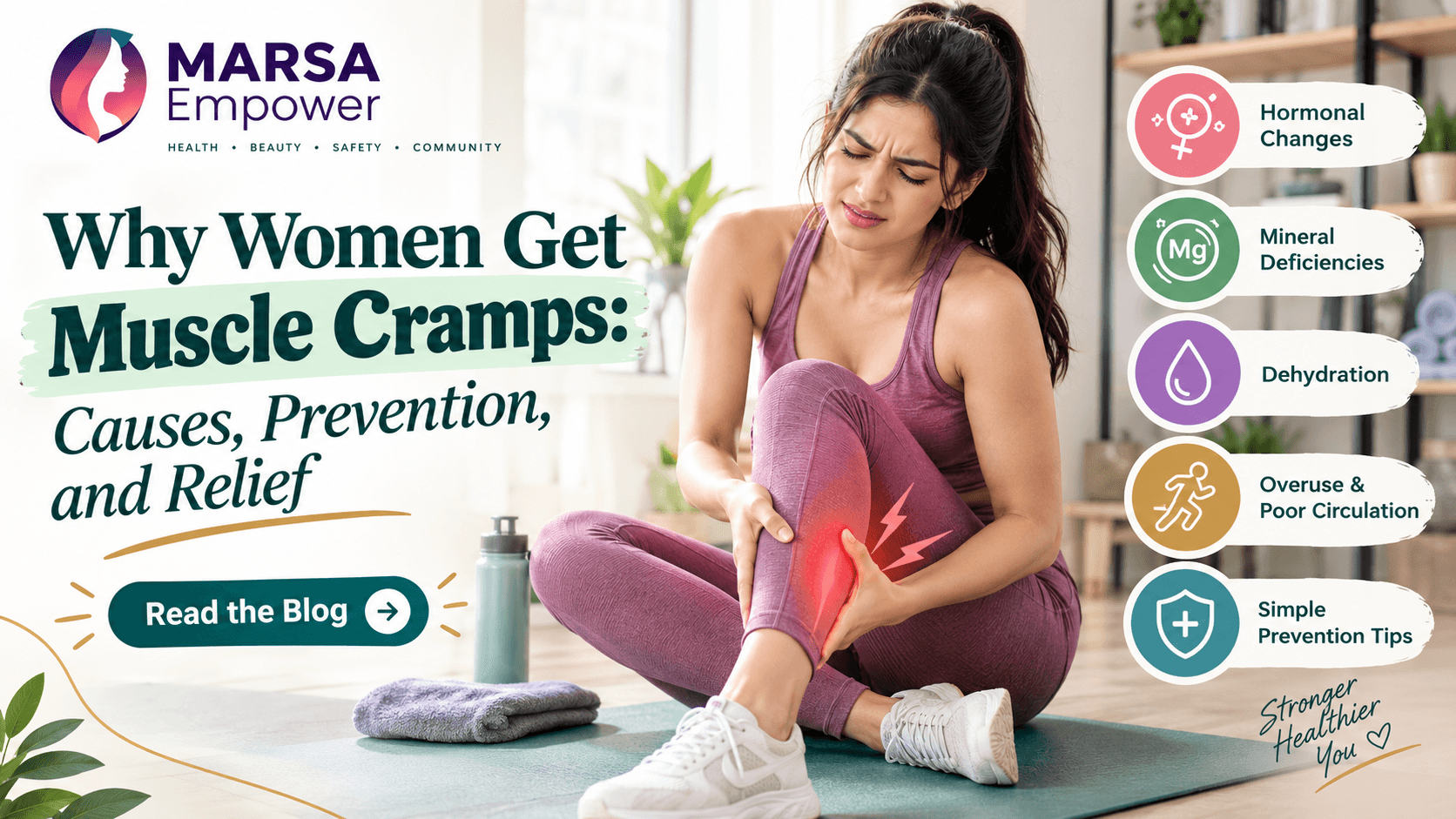
Discover why women experience muscle cramps, explore common causes, learn prevention strategies, and find effective relief tips.

Maryam Mumtaz
Co-Founder & CEO
12 min read•9/19/2026
Marsa Empower · Women's Health & Everyday Wellness · For Girls & Women Aged 13 and Above · 12 min read
Muscle cramps are one of those experiences that almost every woman knows well — the sudden, involuntary tightening of a muscle that produces sharp, intense pain and temporarily makes the affected area impossible to move normally. Leg cramps that jolt you awake in the middle of the night. Calf cramps during or after exercise. Foot cramps that come from nowhere. Period cramps that make the first two days of menstruation genuinely difficult.
Muscle cramps are extremely common in women, occurring at higher rates than in men and across all age groups from teenage girls to older women. Despite this, they are frequently dismissed as an unavoidable inconvenience — something to simply endure until they pass.
They do not need to be. Most muscle cramps have identifiable causes, respond to simple immediate management, and can be significantly reduced in frequency through consistent attention to hydration, nutrition, movement habits, and — for cycle-related cramps — appropriate menstrual health management.
This guide explains what muscle cramps are, why women experience them frequently, what causes them across different circumstances and life stages, and what both immediate and preventive strategies actually work.
A muscle cramp is a sudden, involuntary contraction of a muscle that does not release as normal muscle contractions do. Instead of contracting and then relaxing in the usual coordinated sequence, the muscle enters a sustained state of contraction — producing pain that ranges from mildly uncomfortable to severely intense, and that makes the muscle temporarily hard, tight, and resistant to movement.
Most muscle cramps last from a few seconds to a few minutes. During this time, the muscle may be visibly tight or knotted under the skin. The pain resolves when the muscle finally relaxes, though soreness in the affected area can persist for hours afterward from the sustained overcontraction.
The physiological mechanism underlying most cramps involves the motor neurons that signal muscle fibres to contract. When these neurons fire abnormally — triggering repeated, uncoordinated contractions rather than the smooth on-off sequence of normal movement — the muscle cannot relax as it should. The exact triggers for this abnormal firing include electrolyte imbalances (which alter the electrical threshold for neuromuscular signalling), dehydration (which affects tissue fluid balance and neuromuscular function), muscle fatigue (which alters motor unit recruitment patterns), poor circulation (which creates local metabolite accumulation), and hormonal changes (which affect smooth and skeletal muscle function).
Water is essential for every cellular process in the body, including the electrochemical processes governing muscle contraction and relaxation. Even mild dehydration — before obvious thirst develops — can impair neuromuscular function and increase the likelihood of cramping.
When fluid intake is insufficient, total body water falls, reducing blood volume and impairing the delivery of electrolytes to muscle cells. The electrical signals that govern the precise timing of muscle contraction and relaxation become less reliable, and the threshold for abnormal motor neuron firing is lowered.
Women who exercise in heat, sweat heavily, drink primarily sugary or caffeinated beverages rather than water, or who consistently drink less than their body needs are at increased risk of dehydration-related cramps.
Electrolytes — particularly potassium, magnesium, calcium, and sodium — are the minerals that carry electrical charge in body fluids and are essential for neuromuscular signalling. The contraction of a muscle fibre is triggered by calcium entry into the cell, and the relaxation requires magnesium and potassium to restore the resting membrane potential.
When any of these electrolytes are consistently low — from insufficient dietary intake, excessive sweat loss, vomiting or diarrhoea, certain medications, or underlying health conditions — neuromuscular signalling is disrupted and the muscle's ability to complete the full contraction-relaxation cycle is impaired. This is one of the most direct mechanisms of cramping.
Related but distinct from acute electrolyte imbalance is the chronic pattern of insufficient mineral intake from diet. Many women consume consistently inadequate magnesium, potassium, and calcium — the three minerals most consistently associated with muscle cramping when deficient.
Magnesium is particularly important and particularly under-consumed. It acts as a natural muscle relaxant — it counterbalances calcium's role in triggering muscle contraction, and without adequate magnesium, muscles may remain in a partially contracted state more readily. Studies consistently show that women with recurrent muscle cramps, including period cramps, have lower dietary magnesium intake than those who cramp less frequently, and that magnesium supplementation reduces cramping in several clinical trials.
When a muscle group is worked harder or longer than it is conditioned for, the accumulated fatigue produces changes in motor unit recruitment — muscles begin to fire in less coordinated patterns, and the glycogen (energy) depletion and metabolite accumulation of fatigued muscle tissue alter the local neuromuscular environment in ways that facilitate cramping.
Cramps during or after intense exercise, after an unusually long or demanding day of physical activity, or after a sport or activity the body is not conditioned for are typically fatigue-driven.
Exercise-associated muscle cramping is one of the most common forms women experience, particularly in the legs and feet. It tends to occur during prolonged exercise in heat, when fluid and electrolyte loss through sweat compounds the neuromuscular effects of muscle fatigue, and in muscles that have been pushed beyond their current conditioning level.
Both prolonged sitting and prolonged standing in one position restrict blood circulation in the legs, allowing metabolite accumulation in the muscle tissue and reducing the fresh oxygenated blood delivery that muscles require for normal function. Night leg cramps are often associated with sustained daytime sitting — the restricted circulation and the posture patterns of long sitting days predispose the calf muscles to cramping during sleep.
Conditions that impair circulation — including peripheral arterial disease, venous insufficiency, and conditions that produce prolonged vascular compression of the lower limbs — reduce blood flow to the muscles and increase cramping frequency.
Leg cramps, particularly at night, are among the most consistently reported symptoms of pregnancy — affecting up to 50 percent of pregnant women, most commonly in the second and third trimesters. The combination of increased weight on the legs, the vascular changes of pregnancy (including venous compression from the growing uterus), altered electrolyte and fluid balance during pregnancy, and potential nutritional changes all contribute to the elevated cramping frequency during this period.
Period cramps — medically called primary dysmenorrhoea — are caused by uterine muscle contractions driven by prostaglandins (inflammatory compounds produced by the endometrial lining as it sheds). While these cramps are primarily in the uterus, their pain can radiate to the lower back, thighs, and throughout the pelvic region. The mechanisms and management of period cramps are specific enough to warrant their own section below.
Several commonly used medications can increase muscle cramping frequency through their effects on electrolyte balance, circulation, or neuromuscular function. Diuretics (water tablets used for blood pressure) increase the excretion of potassium and magnesium through urine, commonly reducing their levels and increasing cramp frequency. Statins (cholesterol-lowering medications) are associated with muscle pain and cramping in some women. Some asthma inhalers, certain blood pressure medications, and some medications that affect neurotransmitter function can also increase cramp tendency.
If cramps began or worsened after starting a new medication, this connection is worth discussing with the prescribing doctor. Never stop prescribed medication without medical advice.
Several medical conditions are associated with increased muscle cramping, and persistent or severe cramping without an obvious lifestyle or nutritional cause warrants investigation for these possibilities. Hypothyroidism (underactive thyroid) is associated with muscle cramping and pain. Kidney disease alters electrolyte balance and fluid status in ways that significantly increase cramping. Peripheral arterial disease reduces blood flow to the legs. Diabetes and peripheral neuropathy alter nerve function in ways that affect neuromuscular signalling. Severe anaemia reduces oxygen delivery to muscle tissue. Hyperventilation (breathing too fast, often from anxiety) alters blood pH and calcium balance in ways that trigger muscle spasms, particularly in the hands and face.
Lower leg cramps — particularly in the calves — are the most common type in women. Nocturnal leg cramps (cramps occurring during the night or on waking) are particularly prevalent, waking women from sleep with sudden, intense calf pain. They are most common in the second half of the night, during or just after a period of deep sleep.
Cramps in the arch of the foot or across the top of the foot are common after prolonged standing, after wearing unsupportive footwear, or after swimming (where the feet are held in a pointed position for extended periods).
The gastrocnemius and soleus muscles of the calf are the most frequently cramped muscles in the body. They are heavily involved in standing, walking, running, and cycling, and are among the muscles most affected by dehydration, electrolyte imbalance, and exercise-associated cramping.
Cramps in the quadriceps (front of the thigh) and hamstrings (back of the thigh) are common after intense exercise, after swimming, or after sustained cycling or climbing. They tend to produce more diffuse, aching pain than the sharp cramp of the calf.
Hand cramps — particularly in the small muscles of the hand and fingers — occur frequently in women who write or type extensively, play instruments, or do detailed craft work. They are also one of the symptoms of hyperventilation (from anxiety), calcium abnormalities, and occasionally magnesium deficiency.
Period cramps are one of the most common and most impactful forms of muscle cramping affecting women and warrant specific discussion.
During menstruation, the endometrial lining of the uterus produces prostaglandins — inflammatory compounds that stimulate the uterine muscle to contract and expel the lining. These contractions are necessary for the shedding process but produce the cramping pain that characterises dysmenorrhoea. Higher prostaglandin production is associated with more severe cramping.
Prostaglandins can also affect other smooth muscle in the body — including in the digestive tract — which explains the nausea, diarrhoea, and bowel changes that accompany severe period cramps for many women.
The pain of uterine cramping can radiate to the lower back, inner thighs, and hips — producing the diffuse pelvic and back pain of the first period days alongside the specific uterine cramping.
What helps with period cramps:
Non-steroidal anti-inflammatory drugs (NSAIDs) such as ibuprofen and naproxen are the most effective pharmacological management for period cramps. They work by blocking the prostaglandin-producing enzymes, directly addressing the root mechanism of the cramping. They are most effective when started one to two days before the period begins or at the very onset of cramping — before prostaglandin levels peak — rather than waiting until cramps become severe.
A warm water bottle or heat pad applied to the lower abdomen and lower back is one of the most consistently effective and evidence-supported non-pharmacological approaches for period cramp relief. Heat relaxes the smooth muscle of the uterus and increases local blood flow.
Omega-3 fatty acids from regular fatty fish consumption, walnuts, or flaxseed throughout the month compete with arachidonic acid (the prostaglandin precursor) in enzymatic pathways, reducing prostaglandin production and the severity of cramping. Several clinical studies have found omega-3 supplementation as effective as ibuprofen for reducing period pain in some women.
Magnesium — through dietary sources (pumpkin seeds, almonds, dark chocolate, spinach) or supplementation — supports uterine muscle relaxation and has evidence for reducing period cramp severity with consistent use.
Gentle movement and light exercise — despite feeling counterintuitive when in pain — releases endorphins that modulate pain perception and reduce prostaglandin-driven muscle tension.
When period cramps need medical evaluation:
Period pain that is severe enough to prevent attending school or work, requires prescription-strength medication to manage, has worsened progressively over time, or is accompanied by pain during intercourse, between periods, or with bowel movements deserves medical evaluation. These features may indicate secondary dysmenorrhoea — period pain caused by an underlying condition such as endometriosis or adenomyosis — rather than primary dysmenorrhoea from prostaglandins alone.
Nocturnal leg cramps affect up to 50 percent of pregnant women, most commonly in the second and third trimesters. They are one of the most disruptive sleep problems of pregnancy.
The causes during pregnancy include the increased mechanical load on the legs from pregnancy weight gain and the altered gait of late pregnancy. Venous compression from the enlarged uterus reduces blood return from the legs. Altered electrolyte and fluid balance in pregnancy affects neuromuscular function. Calcium and magnesium needs both increase during pregnancy and may not be fully met by diet alone.
Managing leg cramps during pregnancy:
Adequate calcium and magnesium intake throughout pregnancy supports neuromuscular function. Staying well hydrated. Gentle calf stretching before bed — standing with the heel flat on the floor and the calf gently stretched — can prevent the nocturnal onset of calf cramps. Avoiding pointed-toe positions during sleep. Sleeping on the side (which reduces vascular compression from the uterus) with legs slightly elevated where comfortable.
When a cramp occurs during pregnancy, the same immediate management applies as in non-pregnant women — gently flexing the foot (pulling toes toward the shin) to stretch the calf, massage, and warmth.
Any cramp accompanied by significant swelling of one leg that is greater than the other, localised warmth, redness, or tenderness in the calf — rather than the whole leg — should be discussed with the obstetric team promptly, as these features may indicate deep vein thrombosis (DVT), which is more common during pregnancy.
Teenage girls experience muscle cramps from several specific causes related to this life stage.
Rapid growth during puberty — particularly the height growth spurt — can temporarily mean that bones grow faster than the surrounding muscles can lengthen to accommodate, creating tightness and a tendency to cramp in the major leg muscle groups.
Active teenage girls involved in sports and exercise may experience exercise-associated cramping from inadequate fluid and electrolyte replacement, insufficient warm-up, or pushing training intensity beyond current conditioning.
Period cramps beginning with the first menstrual periods are one of the most significant new muscle cramping experiences of adolescence, and many teenage girls are not prepared with information about why they occur or what effectively manages them.
Dietary patterns in adolescence — often low in magnesium (from limited vegetable, nut, and seed intake), potentially low in calcium, and sometimes inadequately hydrated — create the nutritional conditions that facilitate cramping.
For teenage girls, building the daily habits of adequate hydration, varied nutrition that consistently includes magnesium, potassium, and calcium sources, regular stretching, and appropriate warm-up before sports all reduce muscle cramping frequency while providing broad general health benefits.
Stretching the cramping muscle is the most effective immediate intervention to stop a cramp.
For a calf cramp — the most common type — flex the foot upward (pulling the toes toward the shin) while keeping the knee straight. This stretches the gastrocnemius and soleus muscles and typically resolves the cramp within 30 to 60 seconds. If standing is possible, pushing the heel down and leaning forward into a wall or surface with the affected leg straight behind provides the same stretch while bearing weight.
For a thigh cramp (quadriceps), bend the knee to bring the heel toward the buttock while standing, or lie face down and bend the leg to stretch the front of the thigh.
For a foot cramp, flex the toes upward and circle the ankle to release the foot muscles.
Firm but gentle massage of the cramping muscle — pressing into the tightened muscle belly and working along its length — helps interrupt the abnormal nerve firing pattern and physically assists the muscle in releasing its contraction. This can be combined with stretching for faster resolution.
After the cramp has released (warmth during an active cramp may provide comfort but does not reliably stop it faster), applying a warm water bottle, heat pad, or warm cloth to the affected area reduces residual muscle tension and the post-cramp soreness that often lingers for hours.
Drink water immediately. If the cramp was exercise-related or occurred after significant sweating, a drink containing electrolytes (diluted fruit juice, coconut water, or a low-sugar electrolyte solution) is more effective than plain water at restoring the electrolyte balance that may have contributed to the cramp.
After a significant cramp, avoid returning to intense exercise of the affected muscle group immediately. Gentle movement and stretching are appropriate, but the muscle needs brief recovery from the overcontraction of the cramp.
Consistent daily hydration — approximately six to eight glasses of fluid for most adult women under normal conditions, more during exercise and hot weather — is the foundational cramp prevention habit. Distribute fluid intake throughout the day rather than drinking large amounts at once. Consistent mild dehydration through the day is a more significant cramping risk than most women realise.
A varied, nutrient-rich diet that consistently includes the minerals most directly relevant to muscle function — magnesium, potassium, calcium, and sodium — provides the nutritional foundation for normal neuromuscular function.
Magnesium — the most consistently under-consumed mineral relevant to muscle cramping. Best sources: pumpkin seeds, dark chocolate (70 percent or above), almonds, spinach, black beans, oats, and sesame seeds. For women with recurrent cramps, magnesium glycinate or magnesium citrate supplementation at 200 to 400 mg per day has good evidence for reducing cramp frequency.
Potassium — essential for maintaining the resting membrane potential of muscle cells. Best sources: bananas, sweet potatoes, lentils, beans, avocado, spinach, potatoes (with skin), and coconut water.
Calcium — required for muscle contraction triggering. Best sources: dairy products, fortified plant milks, calcium-set tofu, sardines with bones, and sesame seeds.
Sodium — the primary electrolyte in blood plasma, lost significantly in sweat during intense exercise. In the context of exercise-associated cramping, adequate sodium replacement (through a small amount of additional salt in food or an electrolyte drink) is important for women who sweat heavily.
Daily stretching of the muscle groups most prone to cramping — particularly the calves, hamstrings, and hip flexors — reduces baseline muscle tension and improves the muscle's ability to fully relax. A brief calf stretch before bed (10 to 15 seconds per side) is one of the most effective individual habits for reducing nocturnal leg cramps.
A proper warm-up — five to ten minutes of low-intensity movement increasing gradually to training intensity — prepares the neuromuscular system, increases muscle temperature and blood flow to working muscles, and significantly reduces exercise-associated cramping risk.
Gradually building training intensity and volume rather than increasing demands dramatically from session to session avoids the acute muscle fatigue that drives exercise-associated cramping. Adequate recovery time between sessions allows the metabolite clearance and muscle repair that restore normal neuromuscular function.
For women with sedentary work or study routines, regular movement breaks — standing up, walking briefly, and changing the lower limb position every 30 to 60 minutes — maintain lower limb circulation and prevent the pooling and metabolite accumulation that predisposes to cramps during and after prolonged sitting.
Bananas are the most widely associated food with potassium and are indeed a practical, accessible source. Other excellent potassium sources include sweet potatoes, avocado, spinach, lentils and other legumes, coconut water, potatoes with the skin, and oranges. Most women consume far less potassium than recommended, and increasing whole plant food intake is the most practical way to correct this.
Pumpkin seeds are one of the richest easily accessible magnesium sources — two to three tablespoons provide approximately 150 mg of magnesium (approximately 40 percent of daily needs). Dark chocolate (70 percent cacao or above) provides meaningful magnesium alongside flavonoid antioxidants. Almonds, spinach (cooked), black beans, chickpeas, oats, and sesame seeds are all significant contributors. Including at least two to three of these daily is a practical target.
Dairy products (milk, yogurt, cheese), calcium-set tofu, fortified plant milks, sardines and salmon with edible bones, sesame seeds and tahini, and kale are the best calcium sources. Given that calcium is required alongside magnesium for balanced muscle contraction and relaxation, ensuring adequate calcium alongside magnesium is important.
Iron deficiency anaemia reduces oxygen delivery to muscle tissue, impairing normal muscle metabolism and increasing fatigue and cramping. For women who menstruate, consistent iron intake through meat, fish, lentils, spinach, and fortified cereals (always alongside vitamin C to improve absorption) supports the blood oxygen delivery that normal muscle function requires.
Protein provides the amino acids from which muscle fibres are built and repaired. Adequate protein intake — from eggs, chicken, fish, lentils, dairy, or nuts — supports the structural maintenance of muscle tissue and the production of the enzymes involved in muscle contraction and energy metabolism.
Most occasional muscle cramps — even severe ones — are benign and relate to the dehydration, electrolyte, exercise, posture, and hormonal factors described in this guide. However, certain cramping patterns are worth taking more seriously.
Cramps that are very frequent — occurring daily or near-daily without an obvious trigger. Cramps that do not respond to hydration, stretching, and the standard immediate management approaches. Cramps in unusual locations — particularly the muscles of the hands, face, or trunk rather than the legs and feet. Cramps accompanied by significant swelling, warmth, or redness in the affected limb — which may suggest vascular or inflammatory causes. Cramps accompanied by muscle weakness, difficulty walking, or neurological symptoms. Cramps that began with a new medication. Cramps that are occurring in a specific limb consistently, particularly if that limb also feels cold, pale, or numb — which may indicate circulation problems.
Seek professional evaluation for muscle cramps in any of the following circumstances.
Cramps are frequent, severe, or significantly disrupting sleep or daily activities despite consistent attention to hydration, nutrition, and stretching. Cramps are accompanied by persistent muscle weakness, numbness, or loss of sensation. Cramps are occurring in an unusual pattern — in the hands, face, or in one limb specifically. Cramps began or significantly worsened after starting a new medication — discuss with the prescribing doctor. You have underlying health conditions including kidney disease, thyroid disorders, diabetes, or circulation problems, and cramps have worsened. Cramps during pregnancy are accompanied by one-sided leg swelling, warmth, or redness — which may indicate DVT requiring prompt assessment.
Muscle cramps — particularly period cramps and cramps related to hormonal cycle changes — are one of the most consistently tracked and discussed health concerns of women using health apps. Marsa Empower provides specific tools and resources that support understanding and managing them.
Where Marsa helps — Health Hub cycle and symptom tracking. Women who experience muscle cramps related to their menstrual cycle — including period cramps and premenstrual muscle tension — can track these symptoms alongside their cycle data in Marsa's Health Hub. Over several cycles, this reveals whether the cramping follows a consistent cyclical pattern, how severe it is month to month, and whether specific management approaches (dietary changes, supplementation, NSAIDs) are making a measurable difference. This documented pattern is also valuable for healthcare consultations about whether menstrual pain warrants further investigation.
Why it matters. Many women underestimate how severe their period cramps actually are because they have normalised the experience over years. Systematic tracking with a severity rating over multiple cycles provides an objective record that both increases self-awareness and provides documented evidence for medical consultations — particularly important if endometriosis or another cause of secondary dysmenorrhoea is suspected.
Smart Nutrition resources. Marsa's nutritional guidance covers the specific dietary minerals most relevant to muscle function and cramping — magnesium, potassium, calcium, and iron — explaining which foods provide them, how to include them practically, and when supplementation may be appropriate. This information is directly applicable to reducing recurrent cramping through dietary improvement.
Health education resources. Marsa's educational content explains the specific mechanisms of different types of cramping — prostaglandin-driven period cramps, pregnancy-related nocturnal cramps, electrolyte-imbalance-related exercise cramps — helping women understand what is driving their specific experience rather than treating all cramps as equivalent.
AI health guidance — Digital Doctors. Women who have questions about whether their cramping is within normal range, what supplements may help, or whether their period cramps warrant medical evaluation can access Marsa's Digital Doctors for clear, educational guidance and direction toward professional care when needed.
Important note. Marsa Empower is a health education and wellness companion. It does not diagnose the cause of muscle cramps or prescribe treatment. Severe, frequent, unusual, or medically concerning cramping patterns require evaluation by a qualified healthcare professional.
Why do women get leg cramps at night?
Nocturnal leg cramps in women are most commonly caused by the combination of daytime dehydration, inadequate magnesium or potassium intake, prolonged sitting that restricts lower limb circulation during the day, and sustained postures during sleep that place the calf in a shortened position. Stretching the calf muscles before bed, ensuring adequate hydration and mineral intake during the day, and moving regularly during the day all reduce nocturnal calf cramp frequency.
Can dehydration cause muscle cramps?
Yes. Even mild dehydration impairs neuromuscular function by reducing blood volume, altering the electrolyte concentrations around muscle cells, and reducing the fluid available for the electrochemical processes of muscle contraction and relaxation. Consistent adequate fluid intake throughout the day — particularly on hot days, during exercise, and during illness — is one of the most effective cramp prevention habits.
Can periods cause muscle cramps?
Yes. Prostaglandins produced by the uterine lining during menstruation cause uterine muscle contractions that produce period cramps. These cramps can radiate to the lower back, thighs, and hips. They are managed most effectively by NSAIDs (ibuprofen, naproxen) started before cramps peak, warm heat on the lower abdomen and back, omega-3 rich foods throughout the month, and magnesium in diet or supplement form.
Are muscle cramps common during pregnancy?
Very — affecting up to 50 percent of pregnant women, particularly in the second and third trimesters, most commonly as nocturnal leg cramps. The combination of mechanical leg loading, vascular changes from the growing uterus, and altered electrolyte balance all contribute. Calf stretching before bed, adequate calcium and magnesium intake, staying hydrated, and side-sleeping with legs slightly elevated are the most effective management approaches.
Can low magnesium cause muscle cramps?
Yes. Magnesium is a natural muscle relaxant — it counterbalances calcium's role in triggering muscle contraction. Inadequate magnesium allows muscles to remain in a more easily triggered contraction state, increasing cramping frequency. Most women eat less magnesium than recommended, and increasing intake through pumpkin seeds, almonds, dark chocolate, spinach, and oats — or through supplementation — consistently reduces cramping in many studies.
How can I stop a muscle cramp quickly?
The most effective immediate approach is gently stretching the cramping muscle — for a calf cramp, flex the foot upward (pull toes toward the shin). Hold the stretch until the cramp releases, typically 30 to 90 seconds. Firm massage of the cramping muscle alongside the stretch speeds resolution. Warmth applied after the cramp releases reduces residual soreness. Drinking water (or an electrolyte drink if exercise was involved) addresses any hydration component.
When should muscle cramps be checked by a doctor?
Seek professional evaluation if cramps are daily or near-daily without clear trigger. If cramps do not respond to standard management. If they are accompanied by muscle weakness, numbness, or neurological symptoms. If they occur in unusual locations — hands, face, or trunk. If they are consistently one-sided in the legs alongside other signs of poor circulation. If they began after a new medication. If they are occurring during pregnancy alongside one-sided leg swelling, warmth, or redness.
Muscle cramps are common in women — from period cramps that arrive monthly, to nocturnal leg cramps that disrupt sleep, to exercise-associated cramps during and after physical activity. Most have identifiable, addressable causes.
Consistent hydration, a diet that genuinely includes the minerals most relevant to muscle function (particularly magnesium, potassium, and calcium), regular stretching of the muscles most prone to cramping, appropriate warm-up before exercise, and regular movement through the day collectively reduce cramping frequency significantly for most women.
Period cramps specifically deserve better management than simply enduring them — starting NSAIDs before cramps peak, using heat, and building omega-3 and magnesium into regular dietary habits produces measurable improvement.
And when cramps are severe, frequent, unusual, or accompanied by other symptoms — that is information worth sharing with a healthcare professional rather than simply waiting out.
Your muscles were built to work for you. Understanding what they need to function well is the most direct path to keeping them comfortable.
Educational Disclaimer
This article is for educational and awareness purposes only. It does not constitute medical advice, diagnosis, or treatment. If you experience frequent, severe, or unusual muscle cramps, or cramps accompanied by other concerning symptoms, please consult a qualified healthcare professional for personalised evaluation and guidance.
Marsa Empower | Care. Safety. Growth.
Visit marsaempower.com to track your symptoms, menstrual health, and wellness patterns, and access educational resources built for every stage of a woman's life.
Medical Disclaimer
This article is for general informational and educational purposes only and is not a substitute for professional medical advice, diagnosis, or treatment. Always seek the advice of a qualified healthcare provider with any questions you may have regarding a medical condition. Never disregard professional medical advice or delay seeking it because of something you have read on MARSA Empower.
Written By
Maryam Mumtaz
Co-Founder & CEO
Co-Founder of MARSA Empower who leads the visual and strategic evolution of the platform. Maryam bridges technical complexity with human-centric design, architecting the team's official roadmap and ensuring MARSA effectively addresses the real-world needs of women. With deep expertise in agentic AI, full-stack development, and UI/UX design, she has delivered 50+ projects for 30+ satisfied clients.
Enjoyed this story?