One App. Every Woman.
One App. Every Woman.
Discover effective strategies for menstrual pain relief and take charge of your health with our empowering guide. Learn how to alleviate discomfort and embrace a pain-free lifestyle, boosting your well-being and confidence.

Maryam Mumtaz
Co-Founder & CEO
50 min read•6/20/2026
By Maryam Mumtaz — Your Partner in Women's Digital Health & Wellness
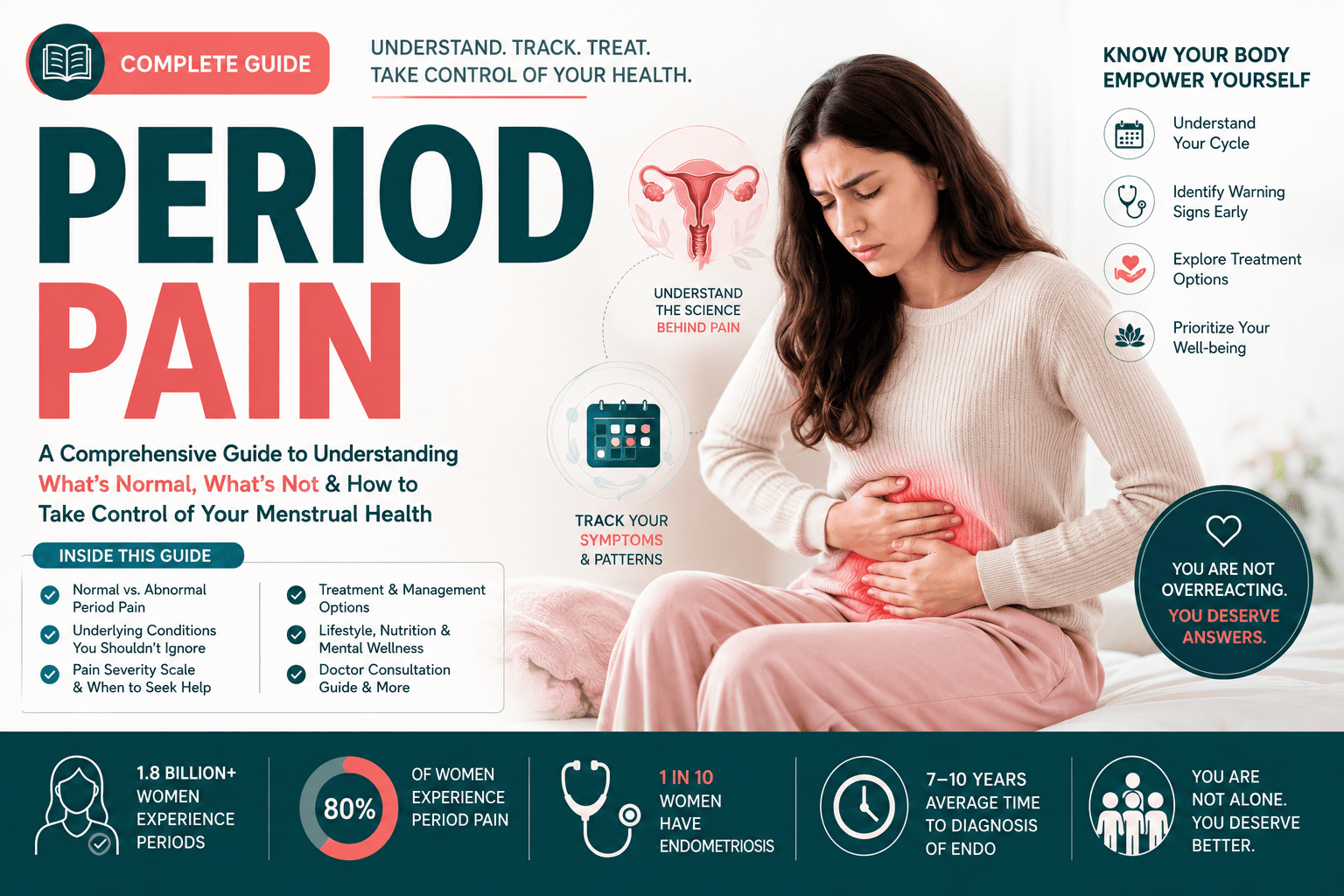
Menstruation is a natural, monthly biological process experienced by an estimated 1.8 billion women and girls worldwide. Yet despite its universality, the pain that often accompanies it — commonly known as period pain or dysmenorrhea — remains one of the most underreported, undertreated, and misunderstood health conditions on the planet.
For generations, women have been told to simply "push through the pain," that cramps are "just part of being a woman," or that there is nothing to be done about it. This narrative is not only medically inaccurate — it is actively harmful.
Here is the truth:
This guide exists to change that. Whether you are a teenager experiencing your first cycles, a woman managing a long-term diagnosis, or someone who has simply normalized pain they should never have accepted — this is your definitive resource for understanding, tracking, and treating menstrual pain at every level.
To understand period pain, we first need to understand what is actually happening in your body during menstruation.
Each month, your body prepares for the possibility of pregnancy. When pregnancy does not occur, your body begins to shed the uterine lining (endometrium) — this shedding is your period. The process is orchestrated by a complex hormonal cascade.
Prostaglandins are lipid compounds — hormone-like substances — produced in the lining of the uterus. As menstruation begins, prostaglandin levels rise significantly. These chemicals cause the uterus to contract rhythmically to help expel its lining.
The key points about prostaglandins:
| Factor | Detail |
|---|---|
| What they do | Trigger uterine contractions during menstruation |
| Why they cause pain | High levels reduce blood flow to the uterus, causing cramping |
| When levels peak | Within the first 48 hours of menstruation |
| Individual variation | Women with higher prostaglandin levels experience more severe pain |
| Medical relevance | NSAIDs (like ibuprofen) work by blocking prostaglandin production |
In some women, particularly those with chronic pelvic pain conditions, the nervous system becomes hypersensitive — a process called central sensitization. This means the brain and spinal cord amplify pain signals, making relatively minor uterine contractions feel significantly more painful. This explains why two women with the same level of uterine cramping can have entirely different pain experiences.
When the uterus contracts strongly, it can temporarily reduce its own blood supply — similar to how a clenched fist restricts blood to the fingers. This ischemia (lack of oxygen-rich blood) causes the characteristic cramping pain, similar in mechanism to angina pain in the heart.
Primary dysmenorrhea refers to menstrual cramps and pain that have no underlying pathological (disease-related) cause. It is the most common type of dysmenorrhea and affects the majority of menstruating women, particularly in their teens and twenties.
| Symptom | Why It Happens |
|---|---|
| Bloating | Hormonal changes affect fluid retention |
| Mild nausea | Prostaglandins affect the digestive tract |
| Loose stools or diarrhea | Prostaglandins cause intestinal contractions |
| Headache | Hormonal fluctuations affect blood vessels |
| Fatigue | Blood loss and hormonal shifts |
| Mild breast tenderness | Pre-menstrual hormonal changes |
| Mood changes | Estrogen and progesterone fluctuations |
Pain is considered within the normal range when it:
✅ Begins around the start of your period
✅ Lasts 1–3 days maximum
✅ Responds to standard pain relief (ibuprofen, heat)
✅ Does not prevent you from attending school, work, or daily activities
✅ Does not worsen progressively month to month
✅ Is not accompanied by extremely heavy bleeding
Yes — for many women, primary dysmenorrhea does improve:
This is perhaps the most critical section of this guide. Knowing when your pain has crossed from "normal but uncomfortable" to "medically significant and requiring attention" can genuinely save your health — and in some cases, your fertility.
Normal period pain is uncomfortable. Abnormal period pain is debilitating. Ask yourself:
If the answer to any of these is yes, your pain is not normal and you deserve medical attention.
Menstrual cramping that persists beyond the first 2–3 days of your period — especially pain that continues throughout the entire cycle — is a red flag. It suggests that the uterus is not simply contracting and relaxing normally.
This is one of the most telling signs of an underlying condition, particularly endometriosis. If your periods were manageable in your teens and have become progressively more painful in your 20s or 30s, this pattern is clinically significant.
Normal period pain does not escalate year after year. If yours does, please seek evaluation.
Signs of abnormally heavy bleeding (menorrhagia):
Pain during or after sex — particularly deep pelvic pain — is never normal and should always be investigated. This symptom is strongly associated with endometriosis, ovarian cysts, and pelvic inflammatory disease.
Cramps or pelvic pain that occurs outside of your menstrual window — at ovulation, or randomly throughout the month — indicates that something beyond a normal menstrual cycle is at play.
If you experience pain when going to the toilet during your period, this is an important symptom — particularly associated with endometriosis affecting the bowel or bladder.
While mild nausea or loose stools can accompany normal periods, the following are not normal:
Standard OTC pain relievers like ibuprofen or naproxen are genuinely effective for primary dysmenorrhea. If you are taking appropriate doses and getting no relief — or if the pain breaks through within hours — this suggests your pain has a deeper cause that medication alone cannot address.
| Warning Sign | Possible Indication |
|---|---|
| Pain lasting 3+ days | Endometriosis, fibroids, adenomyosis |
| Pain worsening year on year | Endometriosis (most common) |
| Soaking a pad/tampon hourly | Fibroids, adenomyosis, bleeding disorders |
| Large blood clots | Fibroids, hormonal imbalance |
| Pain during sex | Endometriosis, ovarian cysts, PID |
| Mid-cycle pain | Ovarian cysts, endometriosis |
| Painful bowel movements | Endometriosis (bowel involvement) |
| No response to OTC pain relief | Secondary dysmenorrhea (needs diagnosis) |
| Fever with pelvic pain | Pelvic Inflammatory Disease (urgent) |
Secondary dysmenorrhea is menstrual pain caused by an identifiable medical condition. Unlike primary dysmenorrhea, the pain is not simply the result of prostaglandins — it reflects structural or pathological changes in the reproductive organs.
Endometriosis is a chronic inflammatory condition in which tissue similar to the endometrium (the lining of the uterus) grows outside the uterus. This tissue — called endometrial implants — is most commonly found on the ovaries, fallopian tubes, outer surface of the uterus, and the lining of the pelvic cavity. In severe cases, it can affect the bowel, bladder, and even the lungs.
During each menstrual cycle, this misplaced tissue responds to hormonal signals the same way the uterine lining does — it thickens, breaks down, and bleeds. However, unlike the uterine lining, this blood has nowhere to go. It becomes trapped, causing:
The average time from first symptom to diagnosis of endometriosis is 7–10 years. This is due to:
| Treatment Type | Options | Notes |
|---|---|---|
| Pain management | NSAIDs, prescription analgesics | First-line for mild to moderate pain |
| Hormonal therapy | Combined pill, progestins, GnRH agonists, IUD | Suppresses the menstrual cycle to slow progression |
| Surgery | Laparoscopic excision or ablation | Gold standard for removing implants |
| Fertility treatment | IVF, ovarian stimulation | For women who wish to conceive |
| Multidisciplinary care | Pain clinic, physiotherapy, psychology | For complex or refractory cases |
PCOS is one of the most common hormonal disorders in women of reproductive age, affecting approximately 1 in 10 women globally. It is characterized by a hormonal imbalance — primarily elevated androgens (male hormones) — that disrupts the normal development and release of eggs from the ovaries.
While PCOS often causes irregular or absent periods, it can also cause painful periods when they do occur. The hormonal dysregulation leads to:
Untreated or poorly managed PCOS significantly increases the risk of:
| Goal | Treatment Approach |
|---|---|
| Regulate periods | Combined oral contraceptive pill, progestins |
| Reduce androgens | OCP, spironolactone, flutamide |
| Improve insulin sensitivity | Metformin, lifestyle changes |
| Manage pain | NSAIDs, hormonal therapy |
| Fertility | Clomiphene, letrozole, IVF |
| Lifestyle | Weight management (even 5–10% loss improves symptoms significantly), low-GI diet, regular exercise |
Uterine fibroids are non-cancerous (benign) growths that develop in or on the muscular wall of the uterus. They are made of smooth muscle and fibrous connective tissue and can range in size from as small as a pea to as large as a melon.
Fibroids are extraordinarily common — estimates suggest that up to 80% of women will develop fibroids by age 50, though many will never know because their fibroids cause no symptoms.
| Type | Location | Impact |
|---|---|---|
| Intramural | Within the uterine wall (most common) | Can enlarge uterus, cause heavy bleeding and pain |
| Submucosal | Just beneath the uterine lining | Most likely to cause heavy bleeding and painful periods |
| Subserosal | On the outer surface of the uterus | May cause back or pelvic pressure |
| Pedunculated | Attached by a stalk (can be inside or outside) | Risk of twisting and sudden severe pain |
Adenomyosis is a condition in which the endometrial tissue (uterine lining) grows into the muscular wall of the uterus (the myometrium) rather than outside the uterus as in endometriosis. This causes the uterine wall to thicken, and with each menstrual cycle, these misplaced cells bleed — but with no exit route, leading to significant inflammation and pain.
Adenomyosis is often called "endometriosis of the muscle" and can coexist with endometriosis.
Adenomyosis can only be definitively diagnosed via MRI or ultrasound (or histological examination of the uterus after hysterectomy). Many women are dismissed for years because their symptoms are dismissed as "normal heavy periods."
PID is an infection of the female upper reproductive organs — the uterus, fallopian tubes, and/or ovaries. It is most commonly caused by sexually transmitted infections (particularly chlamydia and gonorrhea) that have ascended from the vagina and cervix, but it can also result from other bacterial infections.
Unlike the other conditions in this section which are chronic, PID — particularly acute PID — requires prompt medical treatment. Untreated PID can cause:
If you have pelvic pain with fever, vomiting, and feeling very unwell, go to an emergency department immediately. This could indicate a tubo-ovarian abscess, which is a surgical emergency.
Ovarian cysts are fluid-filled sacs that develop on or inside the ovaries. The vast majority of ovarian cysts are functional — meaning they form as a normal part of the menstrual cycle (follicular cysts and corpus luteum cysts) and resolve on their own within a few weeks.
However, other types of cysts — including endometriomas, dermoid cysts, and cystadenomas — can persist, grow, and cause significant symptoms.
These are signs of either a ruptured cyst causing internal bleeding, or ovarian torsion (the ovary twisting on itself, cutting off its blood supply) — both of which are surgical emergencies.
Use this scale to assess and communicate your pain level accurately to healthcare providers:
| Pain Level | Description | Action |
|---|---|---|
| 0 — None | No pain | No action needed |
| 1–2 — Mild | Noticeable but does not interfere with activity | Standard heat and OTC relief |
| 3–4 — Moderate | Distracting, some limitation but can function | OTC NSAIDs, rest, heat therapy |
| 5–6 — Moderate-Severe | Significant impairment, difficult to concentrate | NSAIDs + heat; consider GP visit if recurring |
| 7–8 — Severe | Unable to perform normal activities, significant distress | Prescription treatment; seek medical evaluation |
| 9–10 — Unbearable | Complete debilitation, possibly accompanied by vomiting/fainting | Seek urgent medical attention |
These evidence-based, non-pharmacological approaches can provide meaningful relief for mild to moderate period pain:
| Helpful Foods | Foods to Reduce |
|---|---|
| Anti-inflammatory foods (berries, leafy greens, olive oil) | Processed foods and refined sugars |
| Omega-3 rich foods (salmon, walnuts, flaxseed) | Saturated and trans fats |
| Magnesium-rich foods (dark chocolate, nuts, legumes) | Excess caffeine |
| Ginger tea — anti-inflammatory and anti-nausea | Alcohol |
| Turmeric — curcumin reduces prostaglandin production | Excess salt (worsens bloating) |
| Chamomile tea — antispasmodic properties | Dairy (in some women, worsens inflammation) |
NSAIDs are the gold standard first-line treatment for primary dysmenorrhea. They work by inhibiting prostaglandin synthesis — directly targeting the biological cause of menstrual cramping.
| Medication | Typical Dose | Notes |
|---|---|---|
| Ibuprofen | 400–600 mg every 6–8 hours | Most commonly used; take with food |
| Naproxen sodium | 220–440 mg every 8–12 hours | Longer acting; fewer doses needed |
| Mefenamic acid | 500 mg initially, then 250 mg every 6 hours | Available by prescription in some countries |
| Diclofenac | 50 mg every 8 hours | Available OTC in some countries |
Key Tips for Maximum Effectiveness:
When OTC options are insufficient, a doctor may prescribe:
Hormonal treatments are the most effective long-term management strategy for both primary dysmenorrhea and dysmenorrhea secondary to conditions like endometriosis, adenomyosis, and PCOS. They work by suppressing or regulating the menstrual cycle.
| Treatment | How It Works | Best For |
|---|---|---|
| Combined oral contraceptive pill (COCP) | Suppresses ovulation; thins uterine lining; reduces prostaglandins | Primary dysmenorrhea, endometriosis, PCOS, fibroids |
| Progestin-only pill (mini-pill) | Thins uterine lining; may stop periods | Women who cannot take estrogen |
| Levonorgestrel IUD (Mirena) | Locally thins uterine lining; often eliminates periods | Adenomyosis, heavy bleeding, long-term management |
| Hormonal implant (Nexplanon) | Progestin release; may stop periods | Long-term contraception with pain benefit |
| Depot medroxyprogesterone (Depo-Provera) | Injection every 3 months; often eliminates periods | Heavy bleeding and pain |
| GnRH agonists (e.g., Lupron) | Creates temporary surgical menopause | Severe endometriosis; used before surgery |
| Dienogest | Progestin with strong anti-endometriotic effect | Endometriosis specifically |
Surgery is considered when:
| Procedure | Indicated For | Notes |
|---|---|---|
| Diagnostic & operative laparoscopy | Endometriosis, ovarian cysts | Gold standard for diagnosis and treatment of endometriosis |
| Myomectomy | Uterine fibroids | Preserves fertility; fibroids can recur |
| Hysterectomy | Adenomyosis, severe fibroids, failed treatments | Definitive cure; ends fertility |
| Uterine fibroid embolization | Fibroids | Minimally invasive; blocks blood supply to fibroids |
| Endometrial ablation | Heavy periods with adenomyosis | Destroys uterine lining; not suitable if fertility is desired |
| Ovarian cystectomy | Persistent or large ovarian cysts | Removes cyst while preserving the ovary |
Long-term lifestyle changes can significantly reduce the severity of period pain and improve overall menstrual health:
| Supplement | Evidence | Recommended Approach |
|---|---|---|
| Magnesium | Strong — reduces uterine muscle cramping | 250–400 mg daily |
| Omega-3 fatty acids (fish oil) | Strong — reduces prostaglandin production | 1–2 g EPA/DHA daily |
| Vitamin D | Moderate — anti-inflammatory; deficiency worsens dysmenorrhea | 1000–2000 IU daily (with sun exposure) |
| Vitamin B1 (Thiamine) | Moderate — reduces pain severity | 100 mg daily |
| Ginger extract | Moderate — as effective as ibuprofen in some studies | 250 mg 4x daily during first 3 days of period |
| Zinc | Emerging evidence — reduces prostaglandins | 30 mg daily in week before period |
This relationship is bidirectional and critically important:
Pain causes mental health challenges:
Mental health challenges worsen pain:
What this means for treatment: Effective management of severe dysmenorrhea often requires addressing both the physical and psychological components. Therapies like CBT have strong evidence for chronic pain conditions, including menstrual pain. Never accept the dismissal that "it's all in your head" — but do recognize that mind and body are deeply connected, and treating both yields better outcomes.
Consistent, detailed tracking transforms your period from a monthly mystery into a source of powerful health data. It also makes conversations with your doctor significantly more productive.
Track for a minimum of 3 consecutive cycles before your appointment. This gives you and your doctor a meaningful pattern to analyse. However, if your pain is severe or accompanied by red-flag symptoms, do not wait — seek care immediately.
MARSA Empower's built-in Period Tracker is designed specifically for women who want to understand their menstrual health more deeply. It allows you to:
Many women delay seeking help because they don't know how to articulate their symptoms, fear being dismissed, or feel embarrassed. Here is how to make your appointment count.
Bring:
Be prepared to discuss:
If a healthcare provider dismisses your pain without proper investigation, you have every right to:
You know your body. Severe, life-limiting pain is never something you should simply accept.
At MARSA Empower, we believe that every woman deserves access to accurate health information, compassionate care, and the tools to advocate for herself.
Our platform is designed with the unique health needs of women at its core:
Log your cycle, pain levels, symptoms, and flow — and generate comprehensive medical reports to share with your doctor. Stop relying on memory; let data drive your health decisions.
Access MARSA Empower's AI-powered digital doctors for immediate, informed evaluations of your symptoms. Get guidance on whether your pain warrants urgent care, and what conditions to discuss with your healthcare provider.
An ever-expanding library of evidence-based articles, guides, and resources — like this one — written specifically for women's health.
Connect with a community of women navigating similar health journeys. You are not alone in what you are experiencing.
Q: Is it normal to feel pain during ovulation (mid-cycle)? A: Mild, brief mid-cycle pain (called Mittelschmerz) — lasting minutes to a few hours — can be a normal sensation of ovulation. However, severe or prolonged mid-cycle pain should be evaluated, as it can indicate ovarian cysts or endometriosis.
Q: Can diet really make a difference to period pain? A: Yes — significantly. Anti-inflammatory diets rich in omega-3 fatty acids, magnesium, and antioxidants have been shown to reduce prostaglandin production and systemic inflammation. This translates to measurably less severe periods for many women. It is not an overnight fix — consistent dietary changes over 2–3 cycles are typically needed to see benefits.
Q: I am a teenager and my periods are extremely painful. Is this normal? A: While some degree of period pain is common in adolescence (as cycles regulate), severe pain that disrupts your school attendance or daily life is never something you should simply endure. Please talk to a trusted adult and seek a medical evaluation. Endometriosis, in particular, frequently begins in the teenage years and is routinely dismissed for years.
Q: Can period pain affect fertility? A: Primary dysmenorrhea (without an underlying cause) does not directly affect fertility. However, conditions that cause severe secondary dysmenorrhea — particularly endometriosis, PCOS, fibroids, and PID — can significantly impact fertility if left untreated. Early diagnosis and management is critical for women who wish to conceive in the future.
Q: My pain medication stopped working. What does this mean? A: When a previously effective medication loses its effectiveness, this is a significant clinical sign that should not be ignored. It often indicates that your condition is progressing — this is particularly associated with endometriosis. Please see a doctor as soon as possible for re-evaluation.
Q: Is a heavy period always a sign of something wrong? A: Not necessarily — some women simply have heavier cycles as their normal. However, if your period is heavier than it used to be, or if you are soaking through protection hourly, passing large clots, or feeling faint and exhausted from blood loss, these are signs that require investigation.
Q: Can stress make my periods more painful? A: Yes — there is strong evidence that psychological stress worsens menstrual pain. Cortisol (the stress hormone) increases inflammation and lowers pain tolerance. Managing stress through exercise, sleep, and mindfulness can meaningfully reduce period pain severity.
Q: How is endometriosis diagnosed? A: The only definitive diagnosis of endometriosis is via laparoscopy — a minimally invasive surgical procedure in which a camera is inserted into the pelvic cavity to visually identify and biopsy endometrial implants. Ultrasound and MRI can suggest endometriosis (particularly endometriomas) but cannot rule it out. This is why many women go undiagnosed for years.
Pain is your body speaking. When it whispers, you can afford to wait and watch. When it shouts — when it steals your days, your plans, your energy, your fertility — you must listen and act.
The medical normalization of severe period pain has caused immeasurable harm to millions of women worldwide. Conditions that were diagnosable and treatable went undetected for years — sometimes decades — because women were told to "just deal with it." That era must end.
You now have the knowledge to:
✅ Distinguish normal menstrual pain from pain that requires medical attention
✅ Recognize the symptoms of endometriosis, PCOS, fibroids, adenomyosis, PID, and ovarian cysts
✅ Understand the full spectrum of treatment options — from heat packs to surgery
✅ Track your symptoms in a way that empowers your medical consultations
✅ Advocate firmly and confidently for proper investigation and care
Your health is not a burden. Your pain is not imaginary. Your time is not well spent in silent suffering.
Use the tools available to you. Track your symptoms. Seek care early. Demand answers.
MARSA Empower exists because too many women have been told their pain was "just part of being a woman." We are here to tell you: it doesn't have to be.
"Too many women worldwide endure severe period pain under the misconception it's a woman's plight. It's not. Pain unacknowledged is pain untreated — leading to conditions that could have been identified years earlier. Empower yourself. Understand when to seek help. Use platforms designed to walk alongside your health journey."
— The MARSA Empower Health Team
🌐 Visit us at marsaempower.com | 📱 Join our WhatsApp Channel for weekly health updates
© MARSA Empower — Women's Digital Health & Wellness Platform
Medical Disclaimer
This article is for general informational and educational purposes only and is not a substitute for professional medical advice, diagnosis, or treatment. Always seek the advice of a qualified healthcare provider with any questions you may have regarding a medical condition. Never disregard professional medical advice or delay seeking it because of something you have read on MARSA Empower.
Written By
Maryam Mumtaz
Co-Founder & CEO
Co-Founder of MARSA Empower who leads the visual and strategic evolution of the platform. Maryam bridges technical complexity with human-centric design, architecting the team's official roadmap and ensuring MARSA effectively addresses the real-world needs of women. With deep expertise in agentic AI, full-stack development, and UI/UX design, she has delivered 50+ projects for 30+ satisfied clients.
Enjoyed this story?