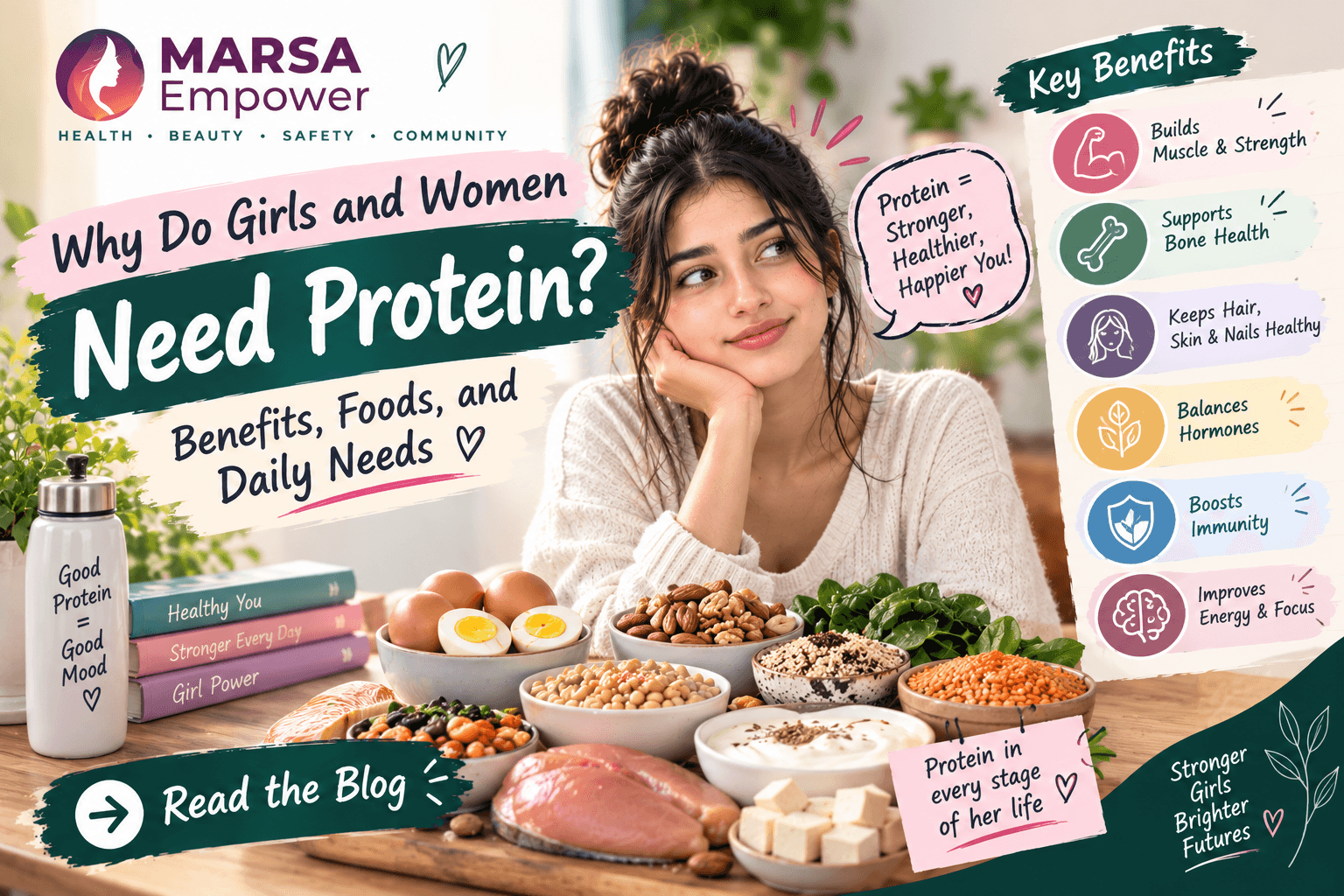
Explore the vital role of protein in women's health, its numerous benefits, and practical ways to meet daily protein needs. Ideal for women looking to optimize their nutrition.
Maryam Mumtaz
Co-Founder & CEO
12 min read•10/1/2026
Marsa Empower · Women's Nutrition & Health · For Girls & Women Aged 10 and Above · 12 min read
Protein is often talked about in the context of bodybuilding, gym culture, or athletic performance. This framing creates the impression that protein is primarily something that very active people or athletes need to think about — and that the rest of us, particularly girls and women who may not be pursuing muscle-building goals, can simply assume they are getting enough without paying much attention.
This impression is incorrect, and it does women and girls a real nutritional disservice.
Protein is one of the three essential macronutrients — alongside carbohydrates and fat — that every cell in the body requires for function, repair, and growth. It is the structural material from which muscles, bones, skin, hair, nails, hormones, enzymes, immune cells, and virtually every other functional molecule in the body is built. Its importance is not confined to athletic performance — it is fundamental to everything the body does, at every age and life stage.
For girls in particular — who are growing rapidly during adolescence, building the bone density that will protect them in later decades, establishing hormonal systems, and forming menstrual cycles — adequate protein is not optional. And for women across all life stages, protein adequacy directly affects energy, muscle maintenance, immune function, hormonal health, and the satiety that supports sustainable eating patterns.
This guide explains what protein is, why it matters so specifically for girls and women, how much is needed at different life stages, where to find it, and how to build practical eating habits that meet protein needs without complicated meal planning.
Proteins are large, complex molecules made from chains of smaller units called amino acids. When you eat protein-containing food, your digestive system breaks the protein down into its constituent amino acids, which are then absorbed and used by cells throughout the body to build new proteins for specific functions.
There are 20 different amino acids. Nine of these are called essential amino acids — the body cannot synthesise them and must obtain them from food. The remaining eleven are non-essential in the sense that the body can produce them from other raw materials, provided the overall nutritional environment is adequate.
Foods that provide all nine essential amino acids in sufficient proportions are called complete proteins. Animal foods — eggs, meat, fish, dairy — are complete proteins. Most plant foods are incomplete proteins — they provide some but not all essential amino acids in adequate proportions. However, eating a variety of plant protein sources throughout the day provides the full range of essential amino acids, even without combining specific foods at the same meal.
During childhood and adolescence, the body is building new tissue at a significant rate — increasing in height, developing organs, expanding blood volume, and increasing muscle and bone mass. All of this new tissue requires protein as its building material. Adequate dietary protein is therefore particularly critical during the teenage years, when growth demands are at their lifetime peak alongside the nutritional demands of puberty.
Muscle tissue is composed primarily of protein. Building and maintaining muscle mass requires a consistent dietary supply of amino acids — both for the initial construction of muscle fibres and for the ongoing repair and maintenance of existing muscle tissue.
Muscle mass is not only relevant for athletic performance. It is a key metabolic asset — muscle tissue burns more calories at rest than fat tissue, supporting metabolic rate and insulin sensitivity. Women who maintain their muscle mass through adequate protein and regular strength training have better metabolic health, better physical capability, and more stable body weight across their lifetimes.
Bone is not composed only of calcium minerals — it also contains a protein matrix (primarily collagen) into which calcium is deposited. Adequate dietary protein is required to build this collagen framework — making protein as important as calcium and vitamin D for building the strong bones that protect against osteoporosis in later life.
During the teenage years, when approximately 90 percent of peak bone mass is accumulated, adequate protein intake is directly relevant to the lifetime bone density that will protect against fractures decades later.
Every day, cells throughout the body are damaged by normal metabolic activity, physical wear, immune activity, and other processes. Protein provides the amino acids that are used to repair and replace damaged cells throughout the body — in the skin, the gut lining, the muscles, and every other tissue system. When protein intake is inadequate, this repair and renewal process is slowed — with consequences for skin healing, gut integrity, exercise recovery, and immune function.
Hair, skin, and nails are all primarily composed of proteins — keratin (the structural protein of hair and nails) and collagen (the primary structural protein of skin). Adequate protein intake is foundational for maintaining the health and appearance of these tissues. Women with chronically low protein intake commonly notice hair thinning, brittle nails, and skin quality changes — all reflecting insufficient amino acid availability for the tissues that depend on it.
Of the three macronutrients, protein produces the strongest and most sustained satiety signal. It activates more powerful hormonal fullness responses (including GLP-1 and PYY release), takes longer to digest than carbohydrates, and produces a smaller blood sugar rise — meaning that meals with adequate protein keep hunger at bay for longer than equivalent-calorie meals dominated by carbohydrates or fat.
This satiety effect makes adequate protein intake one of the most practical and evidence-supported tools for managing appetite and preventing the frequent hunger that drives snacking on less nutritious options.
Every component of the immune system — antibodies, immune cells, cytokines, complement proteins — is built from protein. When protein intake is insufficient, the immune system's capacity to produce these components is impaired, reducing the effectiveness of the immune response to infection and illness.
Women who eat consistently low protein diets are more susceptible to illness, recover more slowly, and have less effective responses to vaccination — all reflecting the immune system's dependence on adequate protein supply.
Many hormones are protein-based — including insulin, growth hormone, thyroid-stimulating hormone, and others. Enzymes — the molecular machines that catalyse virtually every biochemical reaction in the body — are also proteins. The body cannot produce these essential molecules without adequate dietary amino acid supply.
Protein requirements vary with age, body size, activity level, and life stage. The following provides a practical guide.
Girls aged 4 to 8: approximately 19 grams per day. Girls aged 9 to 13: approximately 34 grams per day.
These are minimum requirements. Active girls with higher body weights need more.
Teen girls aged 14 to 18: approximately 46 grams per day as a general recommendation, though this represents a minimum for sedentary individuals. Active teenage girls — those who exercise regularly, participate in sports, or are in a period of rapid growth — need more, typically 1.2 to 1.6 grams per kilogram of body weight per day.
For a teenage girl weighing 50 kg who is moderately active, this translates to approximately 60 to 80 grams of protein per day.
Adult women (19 to 50 years): the general recommendation is 0.8 grams per kilogram of body weight per day as a minimum, which for a 60 kg woman represents approximately 48 grams per day. However, growing evidence suggests that intakes of 1.2 to 1.6 grams per kilogram per day provide better support for muscle maintenance, bone health, satiety, and metabolic function in active adult women.
During pregnancy, protein requirements increase significantly to support fetal growth, placental development, and expanded maternal blood volume. The recommended increase is approximately 25 additional grams per day above baseline requirements — so a pregnant woman who previously needed 50 grams per day now needs approximately 75 grams. Adequate protein during pregnancy is directly important for healthy fetal development.
Breastfeeding similarly increases protein needs — approximately 19 additional grams per day above baseline. Breast milk contains protein that must come from the mother's diet, and the energy demands of milk production are significant.
Protein needs increase rather than decrease with age, which is counterintuitive to many women. After age 50, the body becomes less efficient at using dietary protein to build and maintain muscle — a phenomenon called anabolic resistance. Older women need higher protein intakes (approximately 1.2 to 1.6 grams per kilogram per day) than younger women to achieve the same muscle maintenance, making protein increasingly important as a prioritised dietary component after menopause.
| Life Stage | General Daily Protein Recommendation |
|---|---|
| Girls 9 to 13 years | ~34 g/day |
| Teen girls 14 to 18 | ~46 g/day (more if active) |
| Adult women 19 to 50 | 0.8–1.6 g/kg/day |
| Pregnant women | Add ~25 g/day to baseline |
| Breastfeeding women | Add ~19 g/day to baseline |
| Women 50 and above | 1.2–1.6 g/kg/day |
Protein deficiency is relatively uncommon in women who eat a varied diet, but insufficient protein — falling consistently short of the amounts needed to meet all the body's protein-dependent functions — is more prevalent and produces recognisable consequences.
Muscle protein is the body's largest protein reserve, and when dietary protein is insufficient, muscle tissue is gradually broken down to supply amino acids for more immediately essential functions. The result is progressive muscle weakness and the reduced physical capacity and fatigue that accompany muscle loss.
Even without dramatic deficiency, consistently low protein intake — combined with insufficient physical activity — accelerates the age-related muscle loss that impairs physical function, reduces metabolic rate, and worsens insulin sensitivity over time.
Wound healing, recovery from illness, and exercise recovery all depend on protein availability for tissue repair. Women with low protein intake recover more slowly from all of these, are more prone to complications from illness, and see slower progress from their exercise efforts.
For girls in active growth phases, inadequate protein directly impairs the height and lean mass gains that healthy development requires. Protein deficiency during the teenage years is associated with reduced adult height, reduced muscle development, reduced bone density, and impaired hormonal development.
Hair thinning, brittle nails, dry or dull skin, and slow wound healing on the skin can all reflect insufficient protein for the maintenance of these protein-dependent tissues.
Eggs are one of the most nutritionally complete protein foods available — providing approximately 6 grams of complete protein per egg alongside iron, zinc, vitamin D, B12, choline, and healthy fat. They are versatile, affordable, and quick to prepare in countless ways. One or two eggs at breakfast or as a snack provides a valuable protein contribution to the day.
Dairy products provide high-quality complete protein alongside calcium, B12, and other nutrients important for women. A cup of milk provides approximately 8 grams of protein. Plain yogurt provides 8 to 17 grams of protein per serving depending on the type — Greek-style yogurt provides the highest protein content and is one of the most practical high-protein snacks available.
Chicken is one of the most affordable and widely consumed protein sources globally — providing approximately 25 to 30 grams of protein per 100g serving alongside iron, zinc, and B vitamins. Other lean meats including beef and lamb provide similarly high protein alongside haem iron (the most bioavailable form) and zinc — both nutrients of particular importance for women with heavy periods.
Fatty fish including salmon, sardines, and mackerel provide protein alongside the omega-3 fatty acids that reduce inflammation, support brain health, and in regular consumption reduce period pain and androgen activity in PCOS. Even canned sardines — accessible, affordable, and nutritious — provide approximately 20 grams of protein per serving alongside calcium from the edible bones.
Lentil daal is one of the most widely consumed protein sources in Pakistani households and one of the most nutritionally valuable. A cup of cooked lentils provides approximately 18 grams of protein alongside iron, zinc, folate, and fibre. Chickpeas, kidney beans, black beans, and other legumes are similarly protein-rich plant sources that contribute significantly to daily protein when eaten regularly.
A cup of cooked chickpeas provides approximately 14 to 15 grams of protein alongside significant fibre, iron, zinc, and folate. Chickpea curry, hummus, and roasted chickpeas are practical, nutritious ways to include chickpeas in daily eating.
While not as protein-dense as the above, nuts and seeds contribute meaningful protein to the daily total when eaten as regular snacks or additions to meals. Pumpkin seeds (9g per 30g), hemp seeds (10g per 30g), almonds (6g per 30g), and peanuts (7g per 30g) are among the highest-protein options.
Tofu and edamame are the most protein-rich plant foods available and provide complete protein — all nine essential amino acids — making them particularly valuable for women following vegetarian or vegan diets. Firm tofu provides approximately 17 grams of protein per 100g serving. Edamame provides approximately 11 grams per 100g. Both are versatile and easily incorporated into regular cooking.
Cheese provides concentrated protein alongside calcium. Paneer — widely used in South Asian cooking — provides approximately 18 to 20 grams of protein per 100g alongside significant calcium, making it one of the most nutritious and practical protein sources for women in Pakistan.
Both animal and plant sources can contribute to meeting protein needs, but there are important practical differences.
Animal proteins — meat, fish, eggs, dairy — are complete proteins containing all nine essential amino acids in proportions the body uses efficiently. They are generally more protein-dense per gram of food and have higher bioavailability.
Plant proteins — legumes, nuts, seeds, grains, tofu — are typically incomplete proteins (except for soy and quinoa, which are complete). They are often less protein-dense and have lower bioavailability for some amino acids due to the presence of phytates and other compounds in plant foods.
However, eating a variety of plant protein sources throughout the day provides the full complement of essential amino acids, even without meticulous meal combining. A day that includes lentils, chickpeas, nuts, seeds, and whole grains provides all essential amino acids across the day.
For women following vegetarian or vegan diets, the key is ensuring sufficient total protein intake — which may mean slightly higher target amounts to compensate for lower bioavailability — and ensuring consistent variety of plant protein sources.
The most practical approach to meeting protein needs is including a quality protein source at every meal — not just one protein-heavy meal per day. Spreading protein intake across three meals and one to two snacks provides more consistent amino acid availability for the body's protein-building processes.
Many women eat their lowest-protein meal at breakfast — a pattern that leads to persistent morning hunger, reduced satiety, and compensatory eating later in the day.
Practical high-protein breakfast options include: scrambled or boiled eggs with whole wheat toast. Plain yogurt with fruit and a handful of nuts. Oatmeal made with milk rather than water, topped with nut butter. A smoothie made with milk, yogurt, and banana. Paratha with yogurt and eggs on the side.
Daal (lentils) is the most accessible everyday protein source in Pakistani cooking and should be considered a protein anchor at lunch. Chickpea curry, meat or chicken dishes, paneer, or eggs alongside whole grain chapati and vegetables build a balanced, protein-adequate lunch.
Similar principles apply at dinner. A palm-sized portion of meat, fish, chicken, lentils, tofu, or paneer alongside vegetables and whole grain provides the protein foundation of the meal.
A handful of mixed nuts and seeds. A small pot of plain yogurt. A boiled egg. Hummus with vegetables. A piece of cheese with whole grain crackers. These provide protein between meals, maintaining satiety and amino acid availability between main meals.
Teenage girls have the highest protein needs per kilogram of body weight of any female demographic outside of pregnancy — driven by the exceptional demands of rapid growth, pubertal development, and establishing hormonal systems.
Despite this, many teenage girls eat patterns that are protein-deficient: skipping breakfast, eating primarily carbohydrate-based meals without protein, snacking primarily on processed foods, or following restrictive dietary patterns driven by body image concerns.
The consequences of consistent low protein during the teenage years are significant: reduced height growth, impaired muscle development, reduced bone density that cannot be recovered later, disrupted hormonal development, and the fatigue and poor concentration that accompany inadequate overall nutrition.
Every meal for a teenage girl should include a quality protein source. This is not about following a strict diet — it is about meeting the nutritional demands of a body that is doing some of the most intensive biological work it will ever do.
Women who exercise regularly — whether through sport, yoga, strength training, running, swimming, or any other consistent physical activity — have elevated protein needs beyond the basic recommendations.
Exercise causes microscopic damage to muscle fibres that must be repaired during recovery. This repair process requires amino acids from dietary protein. Without adequate protein, muscle repair is incomplete, recovery is slower, and the performance and fitness gains from exercise are reduced.
For women exercising regularly, a protein intake of approximately 1.2 to 1.6 grams per kilogram of body weight per day supports both recovery and the maintenance or building of lean muscle mass alongside the exercise stimulus.
Distributing protein intake across the day — with particular attention to including protein in the meal or snack after exercise — maximises the body's use of dietary protein for muscle repair during the recovery window following training.
For women and girls who want to gain healthy weight — including muscle mass rather than primarily fat — adequate protein combined with strength training is the most evidence-supported approach. Protein provides the building material for new muscle tissue, while the strength training provides the stimulus that tells the body to build it. Without sufficient protein, strength training provides the stimulus but the building material is insufficient for the intended construction.
Protein's satiety effect is one of its most practical benefits for weight management. High-protein meals consistently produce longer satiety periods, reduce the frequency of hunger, and reduce the snacking that often occurs when meals lack adequate protein. A breakfast of eggs and yogurt will sustain most women for significantly longer than an equivalent-calorie breakfast of toast and jam.
For women who are trying to reduce body fat, maintaining adequate protein intake is particularly important. Caloric restriction without adequate protein causes the body to break down muscle tissue alongside fat — reducing the metabolic rate and physical capacity that successful weight maintenance depends on. Higher protein intake during caloric restriction protects muscle mass, maintains metabolic rate, and produces better body composition outcomes than the same caloric deficit with lower protein intake.
The most common mistake — eating protein-light meals dominated by carbohydrates or fat, with protein as an afterthought. This produces the persistent hunger, muscle maintenance challenges, and slower recovery described throughout this guide.
Protein powders and supplements provide protein in an isolated, processed form. They do not provide the iron, zinc, B vitamins, calcium, healthy fats, and other nutrients that whole food protein sources provide alongside their protein content. Supplements may be useful as a practical convenience tool for women who struggle to meet protein needs through food alone — but they should supplement a varied diet rather than replace it.
Many women think of protein primarily as meat and fish, overlooking the significant protein contribution of lentils, chickpeas, tofu, nuts, seeds, and dairy. Particularly for women who eat little meat, building consistent plant protein sources into every day is essential.
Focusing so heavily on protein that other macronutrients and micronutrients are neglected is counterproductive. Protein functions most effectively within a varied, balanced diet that also provides adequate carbohydrates, healthy fats, vitamins, and minerals.
For most girls and women eating a varied diet, protein powders are not necessary. Whole food protein sources — eggs, dairy, meat, fish, lentils, chickpeas, nuts — provide the protein the body needs alongside a much more complete nutritional profile than any processed supplement.
Protein powder may be a useful practical addition for: women who exercise heavily and find it challenging to meet elevated protein needs through food alone. Women with very low appetite who struggle to eat enough protein through meals. Athletes with specific high-protein requirements that are difficult to meet consistently through whole foods.
For teenage girls, protein powders are generally not recommended without guidance from a healthcare professional or registered dietitian — the safety of various supplement ingredients in adolescent bodies has not been established, and the social and body-image messaging surrounding protein supplements can be harmful in this age group.
Seek professional guidance if: you have a specific health condition — kidney disease, diabetes, eating disorder, or significant gastrointestinal condition — that affects protein requirements or metabolism. You are pregnant or breastfeeding and unsure whether your dietary protein intake is adequate. You are a competitive or serious recreational athlete who wants to optimise protein intake for performance and recovery. You are concerned that your or your daughter's protein intake is consistently inadequate and affecting growth, recovery, or general health. You are following a vegetarian or vegan diet and want personalised guidance on meeting protein needs without animal foods.
Marsa's Smart Nutrition resources explain the most important protein-related information for women at different life stages — what protein does, how much is needed, which foods provide it, and how to build practical eating habits that meet protein requirements without complicated planning.
Marsa's nutritional education covers the full picture of women's nutritional needs — protein alongside iron, calcium, vitamin D, omega-3, and other nutrients that matter specifically for female health — in clear, accessible language with practical Pakistani food context.
Marsa's Health Hub allows women to track energy levels, physical performance, and health patterns over time. For women who suspect protein inadequacy may be contributing to fatigue, slow recovery, or other health concerns, tracking these patterns provides the documented evidence most useful for discussions with healthcare providers.
Marsa's AI health guidance through Digital Doctors provides educational information on nutritional topics including protein — helping women understand their individual needs, identify potential gaps in their diet, and know when a consultation with a registered dietitian is appropriate.
Important note. Marsa Empower is a health education and wellness companion. For personalised protein requirements based on specific health conditions, medical history, or athletic goals, a qualified healthcare professional or registered dietitian provides the individualised assessment that a general guide cannot.
Why is protein important for girls?
Protein is the building material of every tissue in the growing body — muscle, bone, skin, hair, hormones, immune cells, and enzymes. During the teenage years in particular, when rapid growth and pubertal development create exceptional biological demands, adequate protein is essential for healthy development.
How much protein does a teenage girl need?
A general recommendation is approximately 46 grams per day for sedentary teen girls aged 14 to 18, but active teenagers — those who exercise, play sport, or are in active growth phases — need more, typically 1.2 to 1.6 grams per kilogram of body weight per day.
How much protein does an adult woman need?
A minimum of 0.8 grams per kilogram of body weight per day, with growing evidence that intakes of 1.2 to 1.6 grams per kilogram better support muscle maintenance, bone health, satiety, and metabolic function in active adult women.
What are the best protein foods for women?
Eggs, plain yogurt and milk, chicken and lean meats, fatty fish and sardines, lentils and daal, chickpeas, paneer, nuts and seeds, and tofu are all excellent protein sources. Including a variety across the day provides the full range of amino acids and accompanying micronutrients the body needs.
Can protein help with healthy weight gain?
Yes. Adequate protein combined with strength training provides the building material and stimulus for gaining muscle mass — the healthiest form of weight gain — alongside appropriate fat stores.
Can girls get enough protein from vegetarian foods?
Yes, with planning. Lentils, chickpeas, beans, paneer, milk, yogurt, eggs (for lacto-ovo vegetarians), tofu, nuts, and seeds all provide meaningful protein. For vegan girls, paying specific attention to total protein quantity, including soy foods (complete protein), and combining varied plant sources throughout the day ensures adequate amino acid supply.
Is protein powder necessary?
For most girls and women eating a varied diet, protein powder is not necessary. Whole food sources provide protein alongside a broader range of nutrients. Protein powder is a practical convenience supplement for specific circumstances but does not replace the nutritional completeness of whole food proteins.
What happens if you do not eat enough protein?
Muscle weakness and loss, slow wound and exercise recovery, poor growth in teenagers, hair thinning and brittle nails, impaired immune function, and persistent hunger are all consequences of chronically inadequate protein intake.
Protein is not a gym nutrient, a masculine nutrient, or a nutrient only relevant to athletic women. It is one of the most fundamental nutritional requirements for every girl and woman at every age and life stage — from the rapidly growing teenager building her bones and muscles to the pregnant woman supporting fetal development, to the postmenopausal woman maintaining the muscle mass that protects her metabolic health and physical independence.
Meeting protein needs does not require complicated planning or expensive supplements. It requires a practical, consistent approach: include a quality protein source at every meal, build daily eating habits that draw on eggs, dairy, legumes, fish, meat, nuts, and seeds in patterns that fit your preferences and life, and give the body the consistent supply of amino acids it needs to function, repair, and thrive.
Your body is built from protein — and giving it enough of this essential building material is one of the most straightforward and most impactful nutritional decisions you can make every day.
Educational Disclaimer
This article is for educational and awareness purposes only. It does not constitute medical or nutritional advice. For personalised protein requirements based on your specific health situation, life stage, or goals, please consult a qualified healthcare professional or registered dietitian.
Marsa Empower | Care. Safety. Growth.
Visit marsaempower.com to access nutrition guidance, health education, and wellness resources built for every stage of a woman's life.
Medical Disclaimer
This article is for general informational and educational purposes only and is not a substitute for professional medical advice, diagnosis, or treatment. Always seek the advice of a qualified healthcare provider with any questions you may have regarding a medical condition. Never disregard professional medical advice or delay seeking it because of something you have read on MARSA Empower.
Written By
Maryam Mumtaz
Co-Founder & CEO
Co-Founder of MARSA Empower who leads the visual and strategic evolution of the platform. Maryam bridges technical complexity with human-centric design, architecting the team's official roadmap and ensuring MARSA effectively addresses the real-world needs of women. With deep expertise in agentic AI, full-stack development, and UI/UX design, she has delivered 50+ projects for 30+ satisfied clients.
Enjoyed this story?