One App. Every Woman.
One App. Every Woman.
Discover the causes of period blood clots, differentiate between normal and warning signs, and learn when it's essential to consult a healthcare professional.

Maryam Mumtaz
Co-Founder & CEO
11 min read•9/26/2026
Marsa Empower · Women's Menstrual Health · For Girls & Women Aged 13 and Above · 11 min read
Passing clots during a period is something that many women experience but rarely discuss — partly from embarrassment, and partly from uncertainty about what is normal and what is not. Many women notice small clots during their heaviest period days and have never been given any information about whether this is expected, concerning, or something in between.
The answer, as with many aspects of menstrual health, is nuanced. Small clots during heavy flow are very common and usually normal. Large clots, very frequent clots, or clots accompanied by extremely heavy bleeding may indicate something worth investigating. And the difference between these patterns matters — because conditions that cause abnormal clotting are treatable, and the iron deficiency anaemia that heavy, clot-filled periods can cause over time is correctable.
This guide explains what period blood clots are, why they form, what distinguishes normal from potentially concerning, what conditions are associated with heavier clotting, and when a conversation with a healthcare provider is warranted.
Period blood clots are gel-like masses of blood and tissue that can be passed during menstruation. They form when menstrual blood collects in the uterus or vagina faster than the body's natural anticoagulants can break it down, resulting in partial or complete clotting of the pooled blood before it exits the body.
Menstrual fluid is not only blood — it also contains endometrial tissue (cells from the shed uterine lining), cervical mucus, and vaginal secretions. Clots may contain some of each of these components, which is why they sometimes appear as dark, jelly-like masses rather than simple blood clots as seen from a wound.
The body produces natural anticoagulants (blood-clot-preventing chemicals) within the uterus specifically to keep menstrual blood flowing freely during menstruation rather than clotting before it exits the uterus.
On lighter flow days and during the earlier and later parts of the period, these anticoagulants are usually sufficient to prevent clotting. However, when menstrual flow is heavy and the volume of blood in the uterus and vagina accumulates faster than the anticoagulants can process it, some of that blood clots before it is expelled.
This is the fundamental mechanism of period blood clots — they reflect periods when the rate of blood accumulation temporarily exceeds the anticoagulant capacity of the uterine environment.
This is why clots are most common on the heaviest flow days, most often the first two days of menstruation for most women.
For many women, the answer is yes — with important qualification.
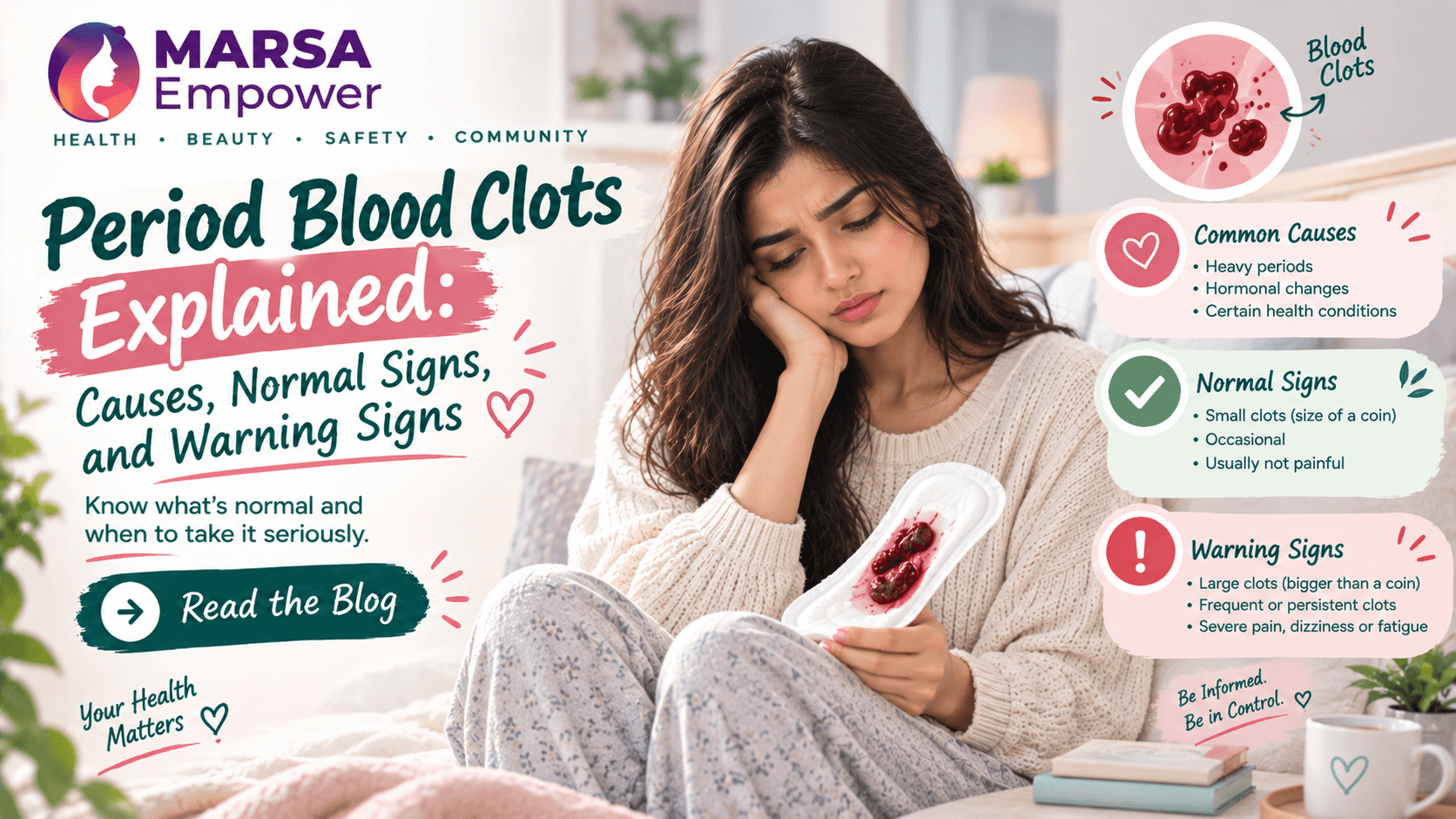
Small clots (smaller than approximately 2.5 cm, roughly the size of a ten-rupee coin) passed on the heaviest flow days are a common and normal feature of menstruation for many women. They reflect the normal physiological mechanism described above.
However, "common" does not mean "always normal" when clots are large, frequent, or accompanied by other features. And the use of clots as an indicator of menstrual health matters because they are one of the most accessible observable signals of whether menstrual flow is within the normal range.
The key questions when evaluating period blood clots are: How large are they? How frequently do they pass? Is the overall flow volume heavy? How long does the period last? Are there other symptoms alongside the clots?
Small clots, typically described as smaller than a grape or a ten-rupee coin, that appear occasionally during the first one to two days of the period fall well within the range of common menstrual variation. They may be bright red, dark red, or brownish in colour. Their passage is often accompanied by a heavier gush of flow.
On genuinely heavy flow days, it is common for several small to medium clots to be passed with each pad change. Bright red clots typically represent fresher blood while darker clots represent older blood that pooled for longer before passing. Both are normal in the context of heavy but not excessive flow.
The first two days of menstruation are typically the heaviest, and it is on these days that clotting is most likely in women who experience it. Clots that are limited to these peak-flow days and are not accompanied by extreme soaking, severe pain, or systemic symptoms are generally within the common range.
The most direct cause of period clots is heavier-than-usual flow. When menstrual flow is rapid, blood accumulates in the uterus and vagina more quickly than anticoagulants can prevent clotting. Some women naturally have heavier menstrual flow than others as a simple constitutional variation — and these women are more likely to pass small clots regularly.
Heavy menstrual bleeding is medically defined as losing more than 80 ml of blood per cycle, or soaking through a full pad every one to two hours on the heaviest days, or having periods that regularly last more than seven days. Many women with heavy periods have heavy flow as a normal variation for them. Others have heavy flow from specific underlying causes including the conditions described below.
Hormonal imbalances — particularly elevated oestrogen relative to progesterone — cause the endometrial lining to build up thickly during the cycle. When this thicker lining sheds at menstruation, the volume of blood and tissue is greater, increasing both overall flow volume and the likelihood of clotting.
Hormonal fluctuations at specific life stages — including puberty, perimenopause, and following pregnancy — are common contexts for changes in clotting patterns.
When cycles are irregular and the period is delayed or infrequent, the endometrial lining has more time to build up before being shed. When shedding eventually occurs, the volume of tissue and blood may be significantly greater — producing heavier flow and more clotting than would occur with regular monthly shedding.
Women with PCOS, for example, may have infrequent periods but when they arrive, the accumulated lining produces a heavier, more clot-filled period than they might have if their cycles were regular.
Structural changes to the uterus — particularly fibroids (non-cancerous growths of uterine muscle), polyps (small growths of the endometrial lining), and adenomyosis (endometrial tissue growing into the uterine wall) — can significantly increase menstrual flow volume and clotting by increasing the surface area of the endometrial lining, altering uterine blood vessel patterns, and impeding the smooth shedding of the lining.
Blood clotting disorders — conditions in which the blood's normal clotting or anticoagulating mechanisms are disrupted — can affect menstrual clotting patterns. Von Willebrand disease, a common inherited bleeding disorder, is associated with heavier periods and more significant clotting. Thyroid dysfunction can alter menstrual patterns including clotting. Iron deficiency anaemia, while more of a consequence than a cause of heavy periods, compounds the problem by affecting some aspects of blood function.
Period blood clots in teenage girls are common, particularly in the first few years after the first period when cycles are often irregular and hormonal patterns are still establishing themselves.
Irregular cycles in early adolescence mean that the uterine lining may build up over longer-than-usual intervals before being shed — producing heavier, more clotted periods when they do arrive.
For most teenage girls, clotting during early cycles is a temporary feature of the irregular phase that typically improves as cycles become more regular in the first two to three years after the first period.
However, teenage girls who pass very large clots regularly, have extremely heavy periods on a consistent basis, or have a family history of bleeding disorders deserve medical evaluation. Von Willebrand disease specifically often presents in teenage girls with heavy first periods, and delayed diagnosis means years of unnecessary heavy, clotted periods without appropriate management.
Any teenager whose period clotting and flow volume significantly affect her quality of life — missing school, needing to change pads very frequently, feeling dizzy or very weak during her period — deserves professional evaluation rather than the reassurance that heavy periods are normal.
As described above — irregular cycles, hormonal fluctuations, and the establishing of menstrual patterns produce variation in clotting during adolescence. Mild to moderate clotting in the early menstruating years is common.
During the established reproductive years, clotting that was not previously present or that has become significantly heavier than before warrants investigation. New or changing clotting patterns in this life stage more commonly reflect the development of an underlying condition — fibroids, adenomyosis, or hormonal changes — than simply a normal variation.
Postpartum periods when they return after delivery or breastfeeding may initially be heavier and more clotted than pre-pregnancy periods as the uterus re-establishes its cycling patterns. This is typically temporary.
However, very heavy, clotted bleeding in the immediate postpartum period (within the first six weeks after delivery) may indicate retained placental tissue or other postpartum complications, which require urgent medical assessment rather than being attributed to normal postpartum recovery.
The hormonal fluctuations of perimenopause — with irregular oestrogen and progesterone patterns — commonly produce heavier, more irregular, and more clotted periods in the years before menopause. The lining may build up unevenly and shed irregularly, producing the heavier, sometimes clot-containing periods that characterise perimenopause for many women.
Any very heavy or very irregular bleeding in this life stage deserves medical evaluation to rule out endometrial changes that warrant investigation in this age group.
The following features of period blood clots warrant medical attention rather than continued observation.
Clots larger than approximately 2.5 cm in diameter (roughly the size of a 50-rupee note folded in half) are considered large and are worth discussing with a healthcare provider, particularly if they occur regularly. Passing multiple large clots per period consistently — not just occasionally — is also worth investigating.
Clots that occur alongside bleeding so heavy that pads need to be changed every one to two hours on multiple consecutive hours, that require wearing two pads simultaneously for protection, or that cause bleeding through clothing despite full protection — indicate a level of flow that is medically heavy and warrants assessment.
When significant clotting is accompanied by severe period pain — pain that prevents attending school or work, that requires prescription-strength pain relief, or that is worsening over time — the combination may indicate a condition like endometriosis, adenomyosis, or fibroids that produces both heavier flow and more significant pain.
These symptoms alongside heavy, clotted periods suggest the possibility of significant blood loss and potentially iron deficiency anaemia from the cumulative monthly blood loss. Dizziness, significant fatigue, breathlessness on light exertion, pallor, and cold hands and feet during or after a heavy period warrant assessment including blood tests for anaemia and iron stores.
Periods consistently lasting longer than seven days, combined with heavy flow and clotting, indicate a total blood loss that is likely to produce or worsen iron deficiency anaemia over time.
Any significant bleeding that occurs outside the expected period — including large clots passed at unexpected times — warrants medical evaluation. Intermenstrual bleeding has a range of possible causes, not all of which are benign.
Uterine fibroids are non-cancerous growths of the uterine muscle wall. They are extremely common — affecting a significant proportion of women during their reproductive years, many without symptoms. When fibroids are located within or adjacent to the uterine cavity (submucous or intramural fibroids), they significantly increase the surface area of the endometrial lining and alter the blood vessel patterns within the uterus, producing heavier menstrual flow, more prolonged periods, and more significant clotting.
Fibroids are detectable on pelvic ultrasound and are treatable through multiple approaches ranging from medication to minimally invasive and surgical procedures, depending on their size, location, number, and the individual's symptoms and fertility plans.
Endometriosis involves endometrial-like tissue growing outside the uterus, typically on the ovaries, fallopian tubes, and peritoneum. While endometriosis is more commonly associated with severe period pain than specifically with clotting, it can contribute to heavier periods and more significant menstrual flow through its effects on the hormonal environment and the inflammatory responses of menstruation.
Adenomyosis occurs when endometrial tissue grows into the muscular wall of the uterus itself. This produces a diffusely enlarged uterus and causes heavy, prolonged, often severely crampy periods with significant clotting. Adenomyosis is more common in women in their thirties and forties and is often underdiagnosed.
Elevated oestrogen without adequate progesterone balance — from PCOS, thyroid dysfunction, perimenopause, or other hormonal conditions — causes excessive endometrial buildup that results in heavier, more clotted periods when the lining sheds.
Von Willebrand disease is the most common inherited bleeding disorder, affecting approximately one percent of the population. It impairs the blood's normal clotting mechanism in a way that primarily manifests as heavy menstrual bleeding in women — often from the very first period. Women with von Willebrand disease may pass more clots than typical because their blood's anticoagulant mechanisms are disordered, paradoxically producing more fibrin and clot formation alongside the heavier flow.
If very heavy periods with significant clotting have been present from the first period, and if there is a family history of bleeding or bruising disorders, von Willebrand disease is worth investigating.
Arrange a medical appointment in the following circumstances.
Clots are consistently larger than approximately 2.5 cm in diameter. You are soaking through pads faster than every two hours on multiple consecutive hours. Periods are consistently lasting more than seven days. Heavy, clotted periods are accompanied by significant fatigue, dizziness, breathlessness on exertion, or pale skin — suggesting possible iron deficiency anaemia. Period pain alongside heavy clotting is severe enough to prevent attending school or work, or is worsening over time. Your clotting pattern has significantly changed from your previous personal baseline. Heavy, clotted periods have been present from your first period and you have not been investigated for a possible bleeding disorder. You are passing large clots in the immediate postpartum period — this requires urgent evaluation. Any heavy or abnormal bleeding is occurring during pregnancy.
While investigating the cause of heavy clotting with appropriate medical evaluation is the most important step for women with significant symptoms, the following practical approaches support management in the meantime.
Consistent tracking of your period — including start and end date, number of pads soaked per day on peak flow days, approximate clot size, associated pain, and any other symptoms — provides the documented information most useful for a medical consultation. This transforms "I have heavy periods with clots" into "I consistently soak through four to five fully soaked pads per day on days one and two, pass several clots around 2 cm in diameter, and my periods last eight days" — a specific, actionable clinical description.
Heavy flow increases fluid requirements. Staying well hydrated supports overall circulatory function and reduces the dizziness and weakness associated with significant blood loss.
Women with heavy, clotted periods are at high risk of iron deficiency anaemia from cumulative monthly blood loss. Ensuring consistent intake of iron-rich foods (lentils, meat, eggs, fortified cereals) alongside vitamin C to maximise absorption, and avoiding chai for at least one hour after iron-containing meals, directly reduces the anaemia risk of heavy periods. Any woman with heavy periods should have serum ferritin tested periodically.
NSAIDs (ibuprofen, naproxen) taken at the onset of the period and maintained throughout the heavy days reduce both pain and — importantly — menstrual flow volume. NSAIDs inhibit prostaglandins that drive both uterine contractions and the vasodilation that increases menstrual blood flow. Studies show that consistent NSAID use during periods reduces menstrual blood loss by approximately 25 to 35 percent, making them both a pain treatment and a flow-reduction tool.
Understanding your personal baseline — what clotting is typical for you across multiple cycles — allows you to notice when something changes. A change from your personal norm is more clinically significant than any absolute description of clot size or frequency. Track for two to three cycles to establish your baseline and to identify when it changes.
Consistent, practical tracking does not need to be complicated.
Each period day, record: whether clots were passed and how many. The approximate size of the largest clot — using a coin, a piece of fruit, or another familiar reference for comparison. Whether the clot was passed with a gush of heavier flow, or independently. The colour of the clots — bright red, dark red, or brownish. The number of pads fully soaked per day. Any significant symptoms — pain level, dizziness, nausea, fatigue.
After two to three cycles of consistent recording, patterns become clear. If this is being tracked in Marsa's Health Hub alongside cycle dates and pain levels, the complete picture is documented in one place and is easily shared or described at a healthcare consultation.
A specific clinical description helps a healthcare provider make the most of a consultation about heavy, clotted periods.
Bring information about: how long you have been having heavy or clotted periods, and whether this is a new change or has been your pattern from the start. Your typical cycle length and period duration. How many pads you use per day on the heaviest days. The approximate size of the largest clots you typically pass. Whether you experience severe pain alongside the heavy flow. Whether you feel dizzy, excessively tired, or breathless during or after heavy periods. Any other symptoms — bleeding between periods, pain during intercourse, bowel or urinary symptoms. Any family history of heavy periods or bleeding disorders. Any current medications or contraceptives. Your age and whether you have had pregnancies or other relevant reproductive history.
This information allows a healthcare provider to assess the likelihood of specific causes, decide which investigations are most appropriate (typically pelvic ultrasound and blood tests including full blood count and ferritin), and determine whether specialist referral is warranted.
Marsa's Health Hub provides the most practical tool for documenting the menstrual patterns most relevant to blood clot assessment. Women can track their cycle start and end dates, flow volume by day, clotting, pain levels, and associated symptoms consistently over multiple cycles. This builds the documented record that is most clinically useful — transforming personal uncertainty about "whether this is normal" into an objective pattern that can be evaluated and acted upon.
For many women, the most valuable thing Marsa provides is the ability to see their own patterns clearly. A woman who tracks three cycles and sees that she consistently soaks five to six pads per day on the first two days, passes multiple clots she estimates at 2 to 3 cm, and rates her pain at seven to eight out of ten on those days now has specific, documented information rather than a vague sense that her periods are heavy. This specificity is transformative for both self-understanding and healthcare consultations.
Marsa's educational resources explain what distinguishes normal from concerning clotting patterns, which conditions are associated with heavy, clotted periods, the iron deficiency risk of heavy menstrual flow and how to address it nutritionally, and what to expect from a medical evaluation for heavy periods.
Marsa's AI health guidance through Digital Doctors provides educational support for women who are uncertain whether their specific clotting pattern warrants medical evaluation — helping them recognise the specific features that cross from common variation into territory worth discussing with a gynaecologist.
Important note. Marsa Empower is a health education and wellness companion. It does not diagnose the cause of heavy clotting or replace pelvic examination, ultrasound investigation, or clinical evaluation by a qualified healthcare professional. Women with significantly heavy, clotted periods deserve appropriate medical investigation.
Are blood clots during periods normal?
Small clots — smaller than approximately 2.5 cm — passed on the heaviest flow days are common and usually within the normal range of menstrual variation. They reflect heavier flow temporarily exceeding the uterus's natural anticoagulant capacity. Larger, more frequent clots, clots occurring throughout the period rather than only on the heaviest days, or clots accompanied by extremely heavy flow, severe pain, or systemic symptoms like dizziness and extreme fatigue warrant medical evaluation.
What size period clot is considered normal?
Clots smaller than approximately 2.5 cm (roughly the size of a ten-rupee coin) are generally within the commonly accepted normal range for occasional passage on heavy flow days. Clots larger than 2.5 cm that pass regularly are a feature worth discussing with a healthcare provider, particularly if they occur alongside very heavy flow.
Why do I get blood clots during my period?
Clots form when menstrual blood accumulates in the uterus or vagina faster than the body's natural anticoagulants can prevent it from clotting. This is most likely on the heaviest flow days of the period. It can be a normal feature of heavier flow or can be associated with conditions including fibroids, adenomyosis, hormonal imbalances, or bleeding disorders when clotting is large or frequent.
Are large period clots a sign of a health problem?
Consistently large clots — particularly larger than 2.5 cm — especially when accompanied by very heavy flow, severe pain, or symptoms suggesting anaemia, may indicate an underlying condition. Common causes include uterine fibroids, adenomyosis, hormonal imbalances, or in some women, a bleeding disorder. A pelvic ultrasound and blood tests are the typical first investigations to identify or rule out these causes.
Why are my period clots getting bigger?
A change in clotting pattern — particularly progressively larger or more frequent clots — is more clinically significant than a stable pattern, even if that stable pattern is already heavy. Worsening clotting over time may indicate that fibroids or adenomyosis are developing or growing, that hormonal changes from perimenopause are increasing endometrial buildup, or another evolving cause. This change warrants medical evaluation rather than continued observation.
Can teenagers have period blood clots?
Yes. Period blood clots are common in teenage girls, particularly in the first few years after the first period when cycles are often irregular and the lining may build up over longer intervals before shedding. Most teenage clotting during this irregular early phase is temporary and improves as cycles regularise. However, consistently very heavy periods with large clots from the first period onward, particularly with a family history of heavy periods or bleeding disorders, deserves evaluation for conditions including von Willebrand disease.
Can heavy periods cause anaemia?
Yes — iron deficiency anaemia is one of the most common complications of consistently heavy menstrual periods. The monthly blood loss depletes iron stores over time, reducing haemoglobin production and oxygen delivery to the body's cells. The symptoms of resulting anaemia include persistent fatigue, weakness, breathlessness on exertion, dizziness, cold hands and feet, pale skin, and difficulty concentrating. Any woman with consistently heavy periods should have serum ferritin tested periodically and ensure consistent dietary iron intake.
When should I see a doctor about period blood clots?
See a doctor if clots are consistently larger than 2.5 cm. If you soak through pads every one to two hours on multiple consecutive hours. If periods regularly last more than seven days. If heavy clotting is accompanied by significant fatigue, dizziness, or breathlessness suggesting anaemia. If severe pain accompanies the heavy, clotted flow. If your clotting pattern has significantly changed from your personal baseline. If very heavy clotted bleeding occurs in the immediate postpartum period.
Period blood clots are a common menstrual experience for many women, and small clots on heavy flow days are within the range of normal variation. They do not need to be alarming — but they do deserve attention, tracking, and honest assessment of whether their pattern is within the common range or whether it warrants medical investigation.
The features that move clots from "common" to "worth investigating" are specific and described clearly in this guide: consistent size larger than 2.5 cm, very heavy accompanying flow, severe pain, systemic symptoms of significant blood loss, or a change from a previous personal baseline.
Underlying conditions including fibroids, adenomyosis, hormonal imbalances, and bleeding disorders are all treatable — and the iron deficiency anaemia that heavy, clotted periods cause over time is correctable. But none of these can be addressed without first being identified.
Track your period. Know your pattern. Understand what warrants attention. And when your periods are heavy enough to significantly affect your quality of life or health — including through the anaemia that prolonged heavy loss produces — seek appropriate evaluation rather than simply managing month to month.
Educational Disclaimer
This article is for educational and awareness purposes only. It does not constitute medical advice, diagnosis, or treatment. If you have concerns about your menstrual clotting pattern, heavy periods, or related symptoms, please consult a qualified healthcare professional for personalised evaluation and guidance.
Marsa Empower | Care. Safety. Growth.
Visit marsaempower.com to track your period, flow volume, and symptoms, access women's menstrual health education, and explore wellness resources at every stage of life.
Medical Disclaimer
This article is for general informational and educational purposes only and is not a substitute for professional medical advice, diagnosis, or treatment. Always seek the advice of a qualified healthcare provider with any questions you may have regarding a medical condition. Never disregard professional medical advice or delay seeking it because of something you have read on MARSA Empower.
Written By
Maryam Mumtaz
Co-Founder & CEO
Co-Founder of MARSA Empower who leads the visual and strategic evolution of the platform. Maryam bridges technical complexity with human-centric design, architecting the team's official roadmap and ensuring MARSA effectively addresses the real-world needs of women. With deep expertise in agentic AI, full-stack development, and UI/UX design, she has delivered 50+ projects for 30+ satisfied clients.
Enjoyed this story?