Explore the anxiety symptoms crucial for women to recognize, ensuring better mental health awareness and management strategies.

Maryam Mumtaz
Co-Founder & CEO
13 min read•8/20/2026
Marsa Empower · Women's Mental Health & Wellness · For Girls & Women Aged 13 and Above · 13 min read
"Anxiety does not always look like panic. It can look like overthinking everything. It can look like constant tiredness. It can look like snapping at people you love. Knowing what to look for is the first step toward getting the right help."
There is a version of anxiety that most people recognise — the pounding heart before a job interview, the stomach churning before an exam, the breathlessness before giving a speech. This is anxiety as most people imagine it: acute, visible, tied to a specific triggering event.
But anxiety is frequently much quieter than this. It can be the persistent, low-level worry that hums in the background of every day. The inability to fall asleep because the mind will not stop turning over problems that cannot be solved at midnight. The way a small criticism feels disproportionately devastating. The avoidance of situations that should be manageable but feel inexplicably overwhelming. The physical symptoms — headaches, tight shoulders, churning stomach, exhaustion — that accumulate without a medical explanation.
For women and girls specifically, anxiety often goes unrecognised — or is dismissed as being "too emotional," "worrying too much," or "stressed about nothing" — for months or years before it is identified and addressed.
Understanding what anxiety actually looks and feels like — its full range of presentations — is not about self-diagnosing. It is about recognising when something deserves attention rather than simply pushing through it.
Anxiety is the body's natural response to perceived stress, threat, or uncertainty. It is a survival mechanism — the same biological system that helped our ancestors respond to danger by preparing the body for "fight or flight."
When this system activates, the brain releases stress hormones — primarily cortisol and adrenaline — that produce a cascade of physical and psychological changes designed to help cope with the perceived threat:
These responses are entirely appropriate when there is a real, immediate threat. The problem with anxiety as a clinical condition is that the threat is perceived rather than real — or proportionate, the response is excessive relative to the actual level of danger.
Occasional anxiety is a normal part of human experience. Feeling nervous before an exam, worried before a difficult conversation, or anxious during a stressful period is not a disorder. It is the nervous system doing its job.
An anxiety disorder is different in three ways:
These distinctions matter — not because occasional anxiety does not deserve acknowledgment, but because anxiety that has crossed into disorder territory responds best to specific, targeted support rather than general wellness advice alone.
| Everyday Stress | Possible Anxiety Problem |
|---|---|
| Usually connected to a specific, identifiable situation | May occur even without an obvious trigger |
| Typically improves when the situation changes or resolves | Can persist long after the triggering situation has ended |
| Usually feels proportionate to the situation | May feel difficult to control or disproportionate |
| Does not significantly disrupt daily life | Interferes with school, work, relationships, or sleep |
| Physical symptoms (elevated heart rate, tension) are temporary | Physical symptoms may be persistent or frequently recurring |
| Responds to rest, perspective, and time | Often does not fully resolve without specific support |
This comparison is not a diagnostic tool. Only a qualified healthcare professional or mental health practitioner can determine whether symptoms meet the criteria for an anxiety disorder. But it is useful for recognising when something may have moved beyond ordinary stress.
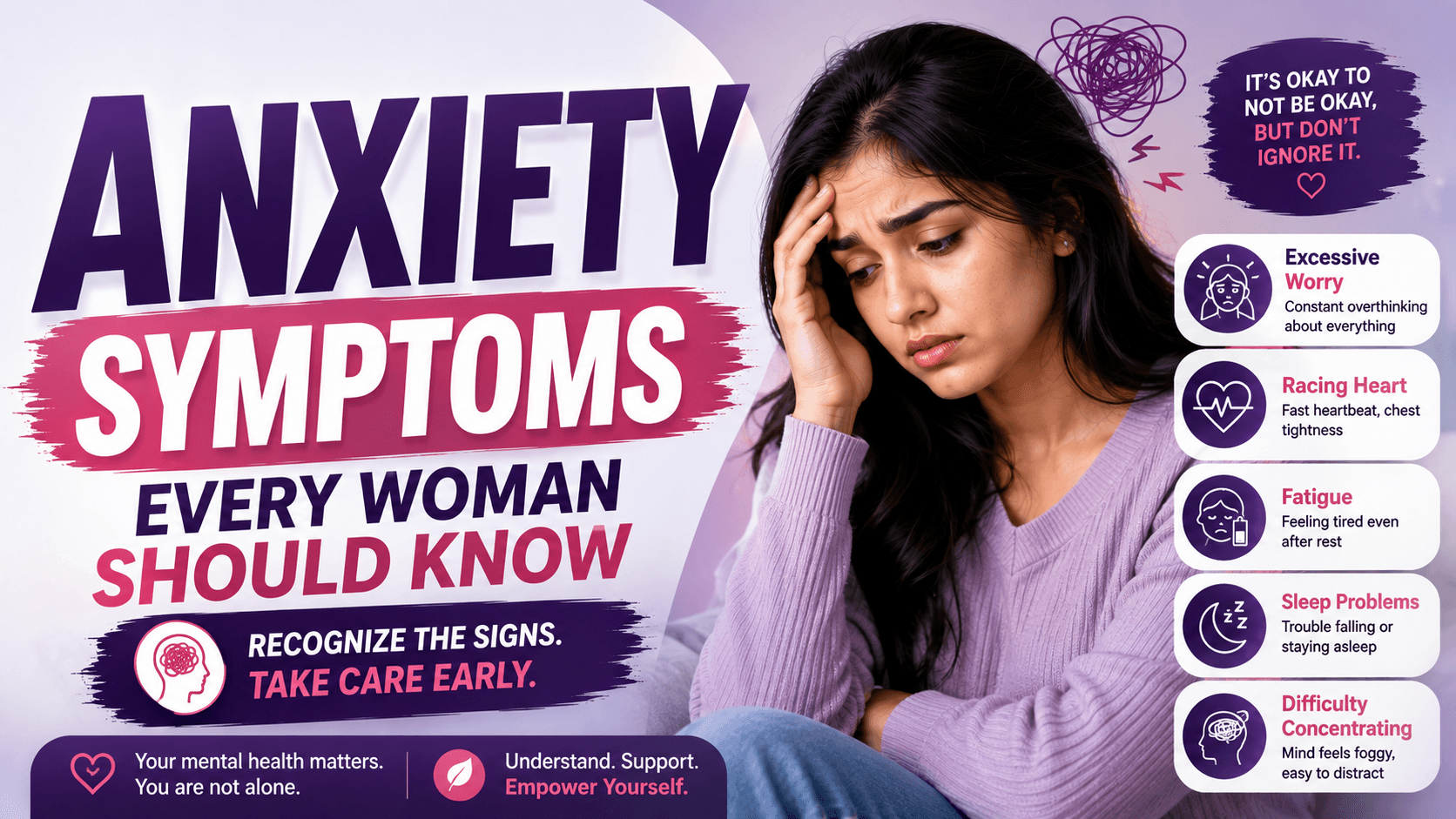
Anxiety produces a wide range of symptoms — physical, emotional, cognitive, and behavioural. Understanding the full picture matters because anxiety does not always look like the acute panic most people imagine. Many of its most common presentations are subtle, persistent, and easily attributed to other causes.
The most defining feature of generalised anxiety is worry that feels disproportionate to circumstances — and that continues even when there is no immediate problem or when the original worry has passed.
It might be worry about school or work performance. Worry about relationships and whether people are upset. Worry about health — yours or others'. Worry about the future and whether everything will work out. Worry about finances. Worry about things that have not happened and may never happen.
What distinguishes anxious worry from ordinary concern is its persistence, its intensity, and its resistance to reassurance. A person without anxiety can worry about something, receive reassurance, and let it go. A person with anxiety worries, receives reassurance, and then the mind finds another angle to worry from — or simply returns to the original worry within hours.
The anxious brain has an overactive threat-detection system — it evaluates situations for danger more frequently and rates them as more threatening than they are. It also has difficulty tolerating uncertainty — the not-knowing feels as distressing as a confirmed bad outcome, so the mind runs through every possible negative scenario repeatedly in an attempt to "prepare."
This is exhausting. And because the worry itself feels purposeful — like problem-solving — it is often difficult to recognise as a symptom.
A persistent sense that something is about to go wrong, even when nothing specific justifies this feeling. Difficulty relaxing even in circumstances that should be calm. Feeling unable to sit still, physically or mentally. A constant low-grade tension that makes it hard to enjoy moments of quiet.
Many women describe this as feeling "wired" despite being tired — the body is exhausted but the nervous system remains on high alert, unable to downregulate.
Chronic anxiety maintains the nervous system in a state of activation — the stress-response system remains engaged beyond its appropriate duration. The elevated cortisol and adrenaline that should spike briefly in response to acute stress remain chronically elevated, producing the persistent physical and psychological sense of being unable to relax.
A noticeably fast or pounding heartbeat — sometimes at rest, sometimes triggered by anxious thoughts or situations. Chest tightness. A feeling that the heart is "jumping" or skipping. This can be frightening — and the fear it produces can itself worsen the anxiety, creating a cycle.
Adrenaline released during the anxiety response directly accelerates heart rate and increases cardiac force — preparing the body for physical action that, in the context of psychological anxiety, never comes. The heart responds to a hormonal signal, not to the actual threat level of the situation.
Chest pain, palpitations, and shortness of breath can also be symptoms of cardiac and other medical conditions. Any new or severe cardiac symptoms — particularly chest pain, severe breathlessness, or palpitations accompanied by dizziness or fainting — should be medically evaluated rather than automatically attributed to anxiety. A healthcare provider can distinguish anxiety-related palpitations from those requiring cardiac investigation.
Rapid, shallow breathing. The sensation of not being able to get a satisfying deep breath. Feeling breathless even without physical exertion. Chest tightness that makes breathing feel effortful.
During acute anxiety or panic, this can escalate to hyperventilation — breathing so rapidly that carbon dioxide levels drop, producing dizziness, tingling in the hands and face, and further intensifying the sense of panic.
The anxiety response prepares the body for physical exertion by increasing breathing rate to maximise oxygen intake. In psychological anxiety, this physiological preparation is activated without the corresponding physical outlet, producing the sensation of breathing difficulty.
Sudden or severe breathing difficulty always deserves prompt medical assessment — not automatic attribution to anxiety. Several conditions including cardiac problems, severe asthma, and pulmonary embolism can present with acute breathlessness and require urgent evaluation.
Lying awake at night with a mind that will not stop. Thoughts cycling through worries, replaying conversations, planning for problems, rehearsing difficult scenarios. Difficulty falling asleep despite feeling exhausted. Waking at 3 or 4am with the mind immediately activated. Waking feeling unrefreshed despite having slept.
Many women with anxiety describe the nighttime as the most difficult period — daytime activity provides partial distraction, but at night, with no external stimulation, the anxious mind has free rein.
Cortisol — the primary stress hormone elevated in anxiety — naturally falls in the evening to support sleep onset. In chronic anxiety, cortisol remains elevated in the evening, maintaining the brain in an alert, vigilant state that conflicts with sleep initiation. The content of anxious thoughts (worries and hypothetical problems) also provides ongoing cognitive stimulation that prevents the mental quieting needed for sleep onset.
Poor sleep worsens anxiety — sleep deprivation reduces the prefrontal cortex's ability to regulate emotional responses, making worries feel more overwhelming and the world more threatening. More anxiety then worsens sleep further. This bidirectional cycle is one of the most common self-perpetuating features of anxiety disorders.
The mind drifts from the task at hand to worries, hypothetical problems, or internal rumination. Reading the same paragraph repeatedly without retention. Losing the thread of a conversation. Making errors because attention is elsewhere. Sitting down to study or work and finding that nothing sticks.
For teenage girls, this often shows up most clearly during exams or academic work — the time when concentration matters most is also the time when anxiety-driven worry is most active.
Working memory and executive function — the cognitive processes governing attention and concentration — are directly impaired by elevated cortisol. The anxious mind is simultaneously tracking a perceived threat (the object of its worry) while trying to attend to the present task — divided attention that reduces performance in both.
Additionally, the hypervigilance of anxiety — the constant scanning for danger signals — uses cognitive resources that would otherwise be available for the task at hand.
Snapping at people without wanting to. Feeling that very small frustrations are disproportionately upsetting. Crying more easily than usual. Feeling emotionally fragile or reactive. Difficulty tolerating the normal demands and minor frustrations of daily life.
This symptom is particularly commonly missed as an anxiety presentation — because irritability is more often attributed to "being in a bad mood" or "being hormonal" than to an underlying anxiety problem.
Chronic anxiety keeps the nervous system in a state of partial activation — and a system that is already under load has significantly less tolerance for additional demands. The emotional regulation system — dependent on prefrontal cortex function, which is impaired by elevated cortisol — loses its capacity to modulate responses proportionately.
Additionally, the exhaustion of sustained anxiety reduces the emotional reserve that normally allows people to respond with patience and perspective to minor provocations.
Persistent tightness or aching in the neck, shoulders, jaw, or upper back. Headaches — particularly tension headaches across the forehead or at the temples. Jaw clenching during the day or at night (bruxism — tooth grinding). A feeling of carrying physical heaviness throughout the body.
The fight-or-flight response primes muscles for physical action by increasing their tone — keeping them in a state of partial contraction ready for movement. In chronic anxiety, this muscle tension persists because the physical action (fighting or fleeing) never occurs. Over days and weeks, this persistent muscle tension produces the aching, tightness, and tension headaches that many anxious women describe without connecting them to their psychological state.
Nausea that comes and goes without a clear physical cause. Stomach cramping or discomfort associated with stressful situations. Diarrhoea before difficult events. Constipation during sustained stress periods. Changes in appetite — losing hunger completely, or experiencing intense hunger despite not being physically hungry. A general "knotted" or unsettled feeling in the stomach.
The gut and the brain are directly connected through the vagus nerve — forming what is called the gut-brain axis. The digestive system contains an extensive network of neurons (sometimes called the "second brain") that responds to emotional and stress signals from the central nervous system. When the anxiety response is activated, digestion slows or becomes irregular as blood flow is redirected away from the digestive system toward the muscles.
This gut-anxiety connection is bidirectional — gut discomfort also signals back to the brain in ways that can worsen anxiety and mood.
Persistent digestive symptoms — regardless of anxiety — should not be automatically attributed to stress without appropriate medical investigation. Irritable bowel syndrome, inflammatory bowel conditions, coeliac disease, and other gastrointestinal conditions can produce similar symptoms and require specific diagnosis and management.
Declining invitations to social events because the anticipated anxiety feels worse than the enjoyment the event might bring. Making excuses to avoid situations that feel overwhelming — presentations, crowded places, phone calls, confrontational conversations. Avoiding certain topics, people, or environments. Reducing the scope of daily life to manage the anxiety of navigating it.
Avoidance works — in the very short term. When the anxiety-provoking situation is avoided, the anticipatory anxiety immediately reduces, providing a relief response that reinforces the avoidance behaviour. Over time, the areas of life that feel safely manageable shrink, while the things being avoided feel increasingly impossible.
Avoidance is also one of the primary mechanisms through which anxiety becomes more severe over time — because the anxiety is never tested against reality, it grows unchallenged. This is why facing anxiety gradually — with appropriate support — is a core component of anxiety treatment.
A panic attack is a sudden, intense surge of fear or discomfort that peaks within minutes and is accompanied by a cluster of physical symptoms that can be frightening and feel life-threatening.
Panic attacks are not dangerous — despite how frightening they feel. They are the fight-or-flight response activating at full intensity without a physical threat. They peak within ten minutes and resolve completely without lasting harm.
However, several serious medical conditions — particularly cardiac conditions — can produce symptoms that resemble panic attacks. Any new episode of chest pain, severe breathlessness, or palpitations — particularly in someone without a prior anxiety diagnosis — should receive medical evaluation to rule out cardiac or other medical causes before being attributed to panic.
Women who experience recurrent panic attacks typically develop significant anticipatory anxiety about having more attacks — and begin avoiding situations associated with previous attacks. This pattern is called panic disorder and responds well to appropriate psychological treatment.
Teenage girls are one of the demographics most significantly affected by anxiety — and one of the groups whose anxiety is most consistently dismissed, minimised, or misattributed.
Neurological development: The adolescent brain is still completing the development of its prefrontal cortex — the region governing emotional regulation, rational perspective, and impulse control. This means that the teenage brain is neurologically more reactive to emotional stimulation, less able to regulate emotional responses proportionately, and more sensitive to social threat signals than the adult brain.
Academic pressure: Exam performance, university entry, and competitive academic environments create genuine, sustained stress loads that are appropriate for the nervous system to register as significant.
Social complexity: The social dynamics of adolescence — navigating peer acceptance, social hierarchies, romantic relationships, and identity formation — are genuinely complex and often genuinely painful. The teenage brain registers social rejection and exclusion as a serious threat.
Social media: The constant comparison environment of social media presents an unrelenting stream of curated images and social metrics — likes, follows, comments — that create both comparison anxiety and the anxiety of managing a social identity in a public digital space.
Body image: The physical changes of puberty, combined with the narrow body standards presented by media and social media, create significant body image anxiety for many teenage girls.
Puberty hormones: Oestrogen influences serotonin activity — and the hormonal fluctuations of puberty and early menstrual cycling affect the same brain chemistry systems involved in anxiety and mood regulation.
Teen anxiety does not always look like visible fear or panic. It often presents as:
Any teenage girl experiencing persistent anxiety that affects her school attendance, friendships, sleep, eating, or daily functioning deserves support — and that support should not require the anxiety to become a crisis before it is taken seriously.
Adult women frequently carry the heaviest combined stress loads of their lives — professional responsibilities, relationship management, caregiving for children and sometimes aging parents, domestic responsibilities, financial pressures, and the ongoing management of their own health and wellbeing.
This combination — often called the "triple burden" of work, family, and domestic management — creates a sustained stress load that maintains cortisol elevation, gradually depletes emotional and cognitive reserves, and creates the conditions for anxiety to develop or worsen.
Work-related anxiety: Performance anxiety, imposter syndrome (the persistent feeling that you are not competent and will eventually be "found out"), anxiety about job security, and the anxiety of managing professional relationships and workplace dynamics.
Relationship anxiety: Anxiety about the stability or quality of relationships — romantic, familial, or social. Persistent worry about whether relationships are "okay," whether people are upset, or whether something has shifted in an important connection.
Health anxiety: Disproportionate worry about physical symptoms and their possible implications — spending hours researching symptoms, repeatedly seeking medical reassurance, or avoiding medical care out of fear of a bad diagnosis.
Social anxiety: Significant discomfort in social situations — not just introversion, but genuine anxiety about being judged, embarrassed, or evaluated negatively by others. Social anxiety in women often presents not as dramatic social avoidance but as constant internal monitoring of performance in social situations.
Generalised anxiety: A persistent, broad worry that covers multiple domains of life simultaneously — work, health, relationships, finances, the future — without one specific primary concern.
The relationship between female hormones and anxiety is real — but it is more nuanced than "hormones cause anxiety."
Oestrogen has mood-stabilising effects — it supports serotonin and GABA activity in the brain, both of which reduce anxiety. When oestrogen falls — as it does in the premenstrual phase, after delivery, and during perimenopause and menopause — the support these systems provide to emotional regulation is reduced.
This is why many women notice worsened anxiety and emotional sensitivity in the premenstrual week, after childbirth, and during the perimenopausal transition. These are not imagined experiences — they reflect real neurobiological changes.
Attributing all anxiety in women to hormones is inaccurate and harmful — because it discourages investigation and treatment of anxiety as a legitimate condition in its own right. A woman who is told "it's just your hormones" when presenting with anxiety is being dismissed in a way that delays appropriate support.
Hormones can worsen or modulate anxiety that exists for other reasons — but anxiety also occurs independently of hormonal fluctuations, and should be assessed as such.
One of the most important things for women to understand about anxiety is how physical it is.
Many women — and many healthcare providers — fail to connect physical symptoms (headaches, stomach problems, fatigue, muscle tension, heart palpitations) to an underlying anxiety problem. This results in physical symptoms being investigated and treated medically — without the anxiety being identified and addressed.
The following patterns suggest that physical symptoms may have an anxiety component worth exploring:
This does not mean assuming anxiety whenever physical symptoms are present — genuine medical conditions always deserve investigation. But it does mean considering anxiety as a contributing factor when physical symptoms do not fully explain by medical investigation.
A range of strategies — from daily habits to professional treatment — support anxiety management. The right approach depends on the severity and nature of the anxiety.
Regular, adequate sleep: Sleep deprivation is one of the most consistent anxiety amplifiers. Seven to nine hours of consistent, quality sleep supports the emotional regulation and cortisol regulation that reduce anxiety. Everything discussed in the sleep section of Marsa Empower's health resources applies here.
Regular physical activity: Exercise is one of the most evidence-supported non-medication anxiolytic interventions available. Regular moderate exercise — even 30 minutes of walking most days — reduces cortisol, increases serotonin and dopamine, and directly improves emotional regulation capacity. The effect is both acute (a single session produces immediate anxiety reduction) and cumulative (regular exercise produces sustained reductions in baseline anxiety over weeks and months).
Balanced, regular meals: Skipping meals drops blood sugar and elevates cortisol — worsening anxiety. Eating regular, balanced meals at consistent times supports blood sugar stability and reduces the physiological stress response.
Reducing excess caffeine: Caffeine directly stimulates the same physiological anxiety response — elevated heart rate, increased cortisol, heightened alertness — that anxiety produces. For women who are already anxious, caffeine reliably worsens symptoms. Limiting caffeine to the morning, or reducing intake gradually, often produces noticeable anxiety improvement.
Breathwork: Slow, deliberate diaphragmatic breathing (inhaling for four counts, holding for four, exhaling for six) directly activates the parasympathetic nervous system — counteracting the cortisol-driven sympathetic activation of anxiety. Even five to ten minutes of deliberate slow breathing during periods of high anxiety produces measurable physiological calming.
Time outdoors and in nature: Exposure to natural environments measurably reduces cortisol and activates the parasympathetic nervous system. Regular time outdoors — even in a garden or a park — supports sustained anxiety reduction.
Journaling: Writing about worries — processing them through expression rather than rumination — reduces the physiological stress response and has been shown in multiple studies to reduce anxiety and improve immune function.
Talking to someone trusted: The act of verbalising anxious thoughts to a trusted, compassionate listener reduces their perceived intensity — and provides the social connection that is one of the most powerful biological buffers against anxiety.
While avoidance relieves anxiety in the short term, it worsens it over time. Gradually facing anxiety-provoking situations — starting with less challenging ones and building up — is one of the most effective anxiety management strategies. This is most effectively done with professional guidance, but can begin with small steps in daily life.
Mild, occasional anxiety that responds to lifestyle management does not necessarily require professional intervention. But professional support is appropriate — and important — when:
You do not have to wait until anxiety is overwhelming before asking for help. The most effective time to receive support is before anxiety becomes entrenched — when intervention is simpler and recovery faster.
Cognitive Behavioural Therapy (CBT): The most extensively evidence-supported psychological treatment for anxiety disorders. CBT addresses the thought patterns and behaviours that maintain anxiety — helping women identify catastrophic thinking, challenge disproportionate worry, and gradually face avoided situations. Available in individual, group, and increasingly in digital formats.
Acceptance and Commitment Therapy (ACT): Focuses on accepting anxious thoughts without fighting them and committing to values-based action despite anxiety — particularly helpful for chronic worry.
Exposure Therapy: Gradually and systematically facing feared situations — with appropriate support — is the most effective treatment for specific phobias and social anxiety.
CBT-I (Cognitive Behavioural Therapy for Insomnia): When anxiety is producing significant sleep problems, CBT-I directly addresses the sleep-anxiety cycle and is more effective long-term than sleep medications.
Several medication types are effective for anxiety disorders when psychological treatment alone is insufficient:
All medication decisions require assessment by a qualified healthcare professional. Medication is most effective when combined with psychological treatment rather than used alone.
The lifestyle approaches described above — exercise, sleep, nutrition, breathwork, social support — are most effective when implemented alongside professional treatment rather than as replacements for it. They are components of a comprehensive management approach, not standalone solutions for significant anxiety.
For women and girls navigating anxiety — often without a clear understanding of what they are experiencing or where to begin — Marsa Empower provides accessible, non-judgmental educational support.
Marsa's Mind and Soul ecosystem includes guided meditation, mood intelligence tools, stress recovery resources, and wellness companion support — providing practical, accessible tools for building daily habits that reduce anxiety and support emotional wellbeing.
Marsa's educational resources explain anxiety clearly and honestly — what it is, how it presents in women and girls, why it happens, and what helps — in language accessible to teenage girls and adult women alike.
Marsa's Health Hub allows women to track mood and anxiety alongside their menstrual cycle — helping identify whether anxiety has a hormonal pattern that suggests specific management approaches, or whether it is persistent regardless of cycle phase.
Marsa's Digital Doctors provide informational guidance on mental health topics — including anxiety — in a private, accessible format. This is particularly valuable for women who find it difficult to discuss mental health concerns in person.
Important: Marsa's AI guidance is informational and supportive — not a substitute for professional mental health assessment or treatment. Persistent, significant, or functionally impairing anxiety requires evaluation by a qualified healthcare professional or mental health practitioner.
Can anxiety cause physical symptoms?
Yes — significantly and commonly. Anxiety can produce a wide range of physical symptoms including rapid heartbeat, muscle tension, headaches, stomach problems, breathing difficulty, fatigue, and dizziness. These are physiological responses to stress hormones, not imagined or exaggerated. However, persistent physical symptoms should receive medical investigation — not automatic attribution to anxiety — to ensure other conditions are not missed.
Can teenage girls have anxiety disorders?
Yes. Anxiety disorders are among the most common mental health conditions in adolescence. Anxiety that is persistent, disproportionate to circumstances, and interferes with school, friendships, sleep, or daily functioning in a teenage girl deserves professional assessment — not dismissal as "just exam stress" or "being a teenager."
Can anxiety affect periods?
Yes — through the cortisol-stress mechanism. Chronic stress and anxiety elevate cortisol, which suppresses GnRH (the hormonal signal that initiates ovulation), disrupting the menstrual cycle. Irregular periods, missed periods, and worsened premenstrual symptoms are all common in women under significant anxiety and stress. However, irregular periods have many causes — a healthcare provider should evaluate persistent cycle changes rather than attributing them solely to anxiety.
Can anxiety cause headaches?
Yes. The muscle tension of chronic anxiety — particularly in the neck, shoulders, and jaw — directly contributes to tension headaches. Cortisol also affects blood vessel tone in ways that can trigger or worsen headaches. Managing the underlying anxiety often reduces headache frequency.
Can anxiety go away without treatment?
Mild anxiety often responds to lifestyle changes and reduced stress. Established anxiety disorders are less likely to fully resolve without specific treatment — and may worsen over time, particularly if avoidance behaviours are not addressed. Early intervention consistently produces better outcomes than waiting for anxiety to become severe before seeking help.
Is it anxiety or depression?
Anxiety and depression frequently co-occur — up to 50% of people with significant anxiety also experience depression. They can be difficult to distinguish because they share several symptoms (sleep problems, fatigue, difficulty concentrating, social withdrawal). The distinguishing features are the presence of persistent low mood, loss of pleasure in previously enjoyed activities, and hopelessness in depression — versus the persistent fear, worry, and physical arousal of anxiety. Many people experience both simultaneously. A healthcare professional can assess both.
| Anxiety Symptom | How It Appears | What Is Driving It |
|---|---|---|
| Constant worry | Persistent, uncontrollable rumination | Overactive threat-detection system |
| Restlessness | Unable to relax despite no obvious threat | Chronic stress hormone elevation |
| Racing heart | Pounding, rapid heartbeat | Adrenaline from fight-or-flight activation |
| Breathing difficulty | Rapid shallow breathing · Breathlessness | Respiratory response to stress hormones |
| Sleep problems | Difficulty falling asleep · Racing thoughts at night | Elevated evening cortisol · Cognitive activation |
| Poor concentration | Mind drifts to worries · Poor retention | Working memory impaired by cortisol |
| Irritability | Disproportionate emotional reactivity | Reduced emotional regulation from cortisol |
| Muscle tension and headaches | Tight neck/shoulders · Tension headaches | Sustained muscle tension from fight-or-flight |
| Stomach problems | Nausea · Bloating · Changed bowel habits | Gut-brain axis stress response |
| Avoidance | Avoiding feared situations · Life scope narrowing | Short-term relief that maintains anxiety long-term |
When to seek professional help: Frequent anxiety · Difficult to control · Interferes with daily functioning · Significant avoidance · Persistent physical symptoms · Co-occurring depression · Thoughts of self-harm
"Anxiety does not always announce itself as fear. More often it announces itself as exhaustion, irritability, a mind that will not quiet, and a life that keeps getting smaller. Recognising it is not weakness — it is the first step toward getting support that actually works."
Important Note
If you are experiencing thoughts of self-harm or suicide, please reach out to a trusted person, a healthcare provider, or a crisis support service immediately. You do not have to manage this alone.
Educational Disclaimer
This article is for educational and awareness purposes only. It does not constitute medical advice, diagnosis, or treatment. If you are experiencing persistent anxiety that affects your daily life, please consult a qualified healthcare professional or mental health practitioner for personalised evaluation and support.
Marsa Empower · Women's Mental Health · Mind & Soul Wellness · Care. Safety. Growth.
Medical Disclaimer
This article is for general informational and educational purposes only and is not a substitute for professional medical advice, diagnosis, or treatment. Always seek the advice of a qualified healthcare provider with any questions you may have regarding a medical condition. Never disregard professional medical advice or delay seeking it because of something you have read on MARSA Empower.
Written By
Maryam Mumtaz
Co-Founder & CEO
Co-Founder of MARSA Empower who leads the visual and strategic evolution of the platform. Maryam bridges technical complexity with human-centric design, architecting the team's official roadmap and ensuring MARSA effectively addresses the real-world needs of women. With deep expertise in agentic AI, full-stack development, and UI/UX design, she has delivered 50+ projects for 30+ satisfied clients.
Enjoyed this story?