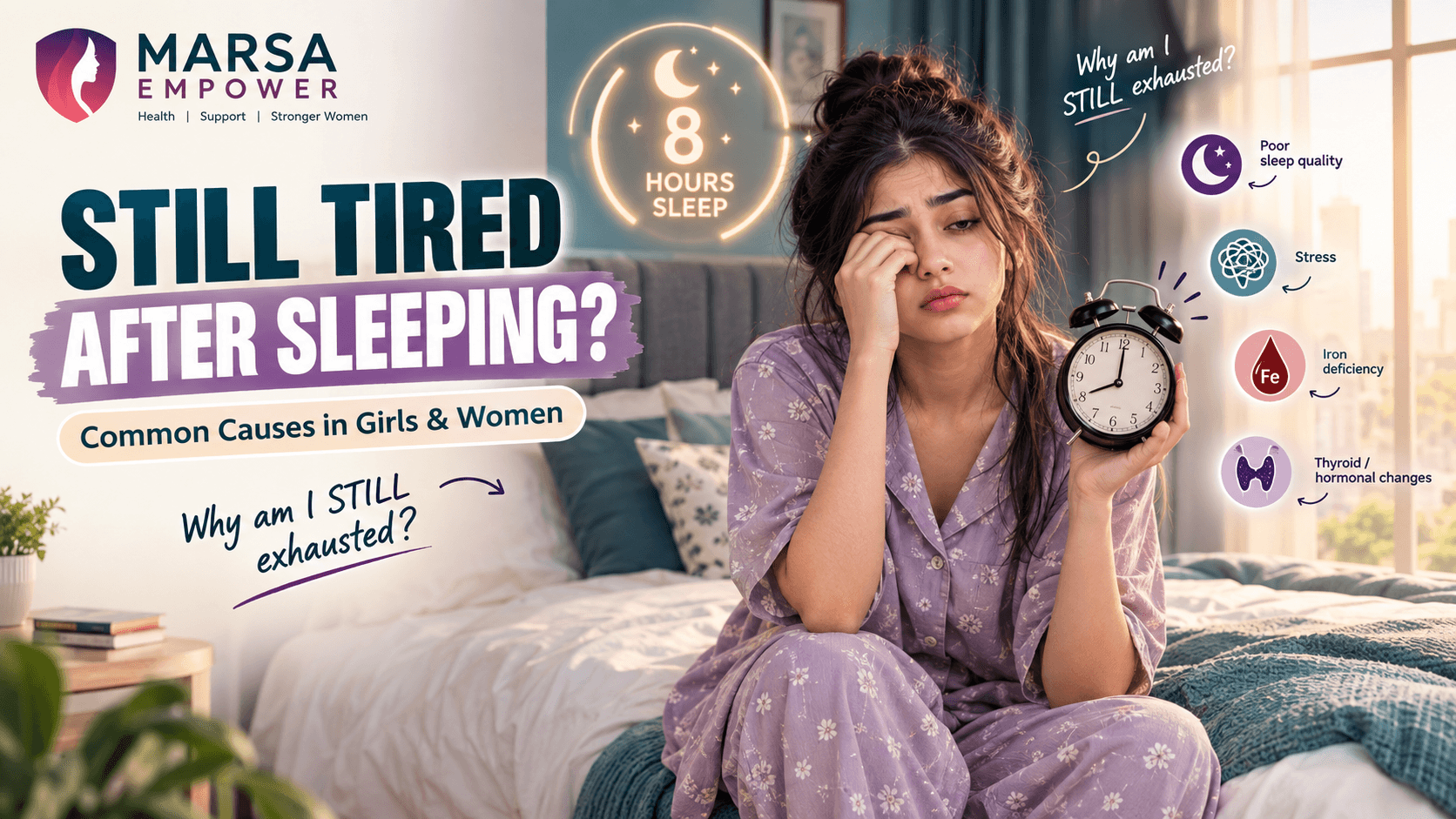
Feeling tired despite sleeping well? Discover the reasons behind fatigue in women and actionable tips to regain your energy.

Maryam Mumtaz
Co-Founder & CEO
13 min read•10/3/2026
Marsa Empower · Women's Health & Everyday Wellness · For Girls & Women Aged 13 and Above · 13 min read
Most people assume that feeling tired after sleep means they need more sleep. So they try to sleep longer — nine hours, ten hours — and still wake up exhausted. The fatigue persists through the morning and afternoon. Getting out of bed is difficult. Concentration is poor. The day feels like it requires significantly more effort than it should.
This pattern is one of the most common health complaints among women and girls, and one of the most frequently mismanaged because "just sleep more" does not address the actual problem in most cases.
Feeling tired despite adequate sleep is almost never simply about sleep quantity. It is about sleep quality, the physiological state the body is in during those sleep hours, and in many cases, an underlying condition — iron deficiency, thyroid dysfunction, vitamin D deficiency, hormonal changes, or depression — that impairs the restorative functions that sleep is supposed to provide.
This guide explains the full range of reasons women and girls feel tired even after sleeping, what each cause looks like, what genuinely helps, and when fatigue that persists despite lifestyle attention is a signal requiring medical investigation.
Waking up feeling tired, groggy, or unrefreshed — despite spending an adequate number of hours in bed — is medically described as non-restorative sleep or sleep inertia. It reflects a failure of sleep to provide the physiological recovery it is supposed to deliver.
Normal, restorative sleep produces measurable changes overnight: cortisol falls to its daily nadir and resets for the next day, growth hormone drives cellular repair, the brain consolidates memory and processes emotion, immune function rebuilds, and the body's energy reserves are restored. When any of these processes are impaired — because of poor sleep architecture, physiological conditions that interfere with sleep quality, or nutritional or hormonal states that prevent restoration even during adequate sleep — the person wakes feeling as though sleep did not fully work.
Understanding which of these processes is failing — and why — is the key to resolving post-sleep fatigue.
Sleep needs vary by age, with younger women and girls typically needing more sleep than older adults.
Children aged 6 to 12: nine to twelve hours per night. Teenagers aged 13 to 18: eight to ten hours per night. Adults aged 18 to 64: seven to nine hours per night. Adults aged 65 and above: seven to eight hours per night.
These are the amounts needed for the sleep to provide adequate restorative function — not the minimum to avoid falling asleep during the day, but the amount at which the body's overnight repair and maintenance processes can be completed effectively.
Most women and girls are getting less than the recommended amount — and this chronic sleep debt compounds over time into the persistent fatigue that affects daily function.
The critical distinction is between how long you sleep and how well you sleep.
Sleep is organised into cycles of approximately 90 minutes, each containing stages of light sleep, deep sleep (slow-wave sleep), and REM sleep. Deep sleep is when the most significant physical restoration occurs — growth hormone release, immune system repair, and cellular maintenance. REM sleep is when memory consolidation and emotional processing happen.
Spending eight hours in bed but spending most of those hours in light sleep — due to frequent arousals from noise, notifications, anxiety, or a sleep disorder — produces eight hours of poor quality sleep that does not deliver the restorative benefits of eight hours of good quality sleep. Many people who report sleeping eight hours but still feeling tired are spending much of that time in lighter, less restorative sleep stages.
Improving the quality of sleep — not just the quantity — is where most of the opportunity for resolving post-sleep fatigue lies.
Despite the discussion above, insufficient quantity is still the most common single cause. Consistently sleeping less than seven hours per night for adult women — or less than eight hours for teenage girls — produces a cumulative sleep debt whose fatigue does not fully resolve with occasional longer sleep periods. Consistent adequate duration is the starting point.
Light, fragmented, or interrupted sleep — from noise, light, temperature, anxiety, or underlying sleep disorders — fails to deliver adequate deep and REM sleep even within an adequate total duration.
Brief awakenings from notifications, noise, a restless partner, or the need to use the bathroom fragment sleep architecture and reduce the proportion of deep restorative sleep in the total sleep time.
Going to bed and waking at very different times on different days — particularly the common pattern of significantly later sleep on weekends — disrupts the circadian rhythm that governs when cortisol, growth hormone, and other sleep-regulating hormones are released. This disruption, sometimes called social jet lag, produces persistent fatigue even when total sleep hours are adequate.
Psychological activation at bedtime — worry, planning, replaying events — delays sleep onset, reduces sleep depth, and produces more frequent arousals during the night. Many women lie in bed for extended periods before falling asleep, reducing the effective sleep time, or experience sleep that is technically adequate in hours but superficial in quality because of sustained mental activity during the night.
Screens emit blue light that suppresses melatonin — the hormone that signals the body to initiate sleep. Using screens in the hour before bed delays the melatonin rise that triggers sleep onset, pushes sleep initiation later, and reduces the total proportion of deep sleep in the night's architecture.
Regular physical activity is one of the most consistent promoters of deep sleep. Sedentary women and girls have a lower proportion of slow-wave deep sleep and lighter, less restorative sleep architecture than those who exercise regularly. The effect of increasing physical activity on sleep quality is measurable within two to four weeks of consistent exercise.
The body's overnight repair processes require adequate nutritional raw materials. Iron, protein, zinc, magnesium, and B vitamins are all involved in the biochemical processes of overnight restoration. Nutritionally deficient states — even without clinical deficiency syndromes — can impair the quality of overnight restoration.
Mild dehydration impairs concentration, energy, and physical performance throughout the day — but it also affects sleep quality by producing restlessness, headaches, and nighttime muscle cramps that fragment sleep.
Consistently sleeping significantly more than needed — more than nine to ten hours per night — disrupts the circadian rhythm and is associated with daytime fatigue. In some cases, the desire to sleep excessively reflects an underlying condition (depression, thyroid dysfunction) rather than genuine sleep need.
Significant disruption to established daily schedules — from travel, illness, changing work hours, caring for others — disrupts circadian rhythms and can produce persistent fatigue until the routine stabilises again.
Teenage girls are among the most sleep-deprived and most chronically fatigued demographic groups — and the most likely to have their fatigue normalised or attributed to laziness rather than recognised as a genuine physiological problem requiring attention.
The teenage circadian clock is naturally shifted toward later sleep onset and later wake times — a genuine biological change of adolescence, not a preference. School start times typically conflict dramatically with this biological timing, producing what is effectively forced early rising against circadian rhythm for five days per week across the academic year.
Combined with academic pressure that extends studying into late evenings, late-night screen use that further delays melatonin and sleep onset, and the elevated sleep need of adolescent development (eight to ten hours for full restoration), the result is sustained significant sleep debt that produces the heavy, persistent fatigue common in teenage girls.
Iron deficiency is also particularly prevalent in teenage girls — from the combination of monthly period blood loss and dietary patterns that often do not adequately replace it — and is one of the most commonly missed causes of fatigue in this age group.
In the twenties, fatigue typically reflects the intersection of career and study demands, social pressures, relationship changes, and the lifestyle disruptions — irregular sleep, poor nutrition, high stress — that accompany significant life transitions. Iron deficiency remains important, particularly for women with heavy periods. The mental and emotional processing demands of major life decisions in this decade maintain the cortisol activation that impairs deep sleep.
The thirties often bring the most demanding combination of professional and family responsibilities — children, ageing parents, career development, and reduced personal time — that directly competes with the sleep hours the body needs. The mental load of managing complex households and work environments maintains a baseline of psychological activation that reduces sleep quality independently of sleep duration. Health conditions become more prevalent, and unaddressed thyroid dysfunction, iron deficiency, or the beginning hormonal changes of the late thirties add medical causes to the lifestyle burden.
Perimenopause introduces the specific sleep disruptions of hot flushes and night sweats that fragment sleep in the early morning hours, contributing to the profound fatigue many perimenopausal women describe. The hormonal changes of this transition also alter the architecture of sleep directly, reducing slow-wave deep sleep. These changes require specific recognition alongside the other causes described.
The relationship between diet and energy is direct and significant.
Not eating enough deprives the body of the fuel it needs for cellular function. Very low-calorie diets, meal skipping, and inadequate overall caloric intake produce fatigue that is physiological — the body is energy-deficient.
Iron deficiency is the single most important nutritional cause of fatigue in women, reducing the oxygen-carrying capacity of the blood so that every cell receives less oxygen for energy production. The fatigue of iron deficiency is characteristically heavy, persistent, and unresponsive to rest — because no amount of sleep improves the oxygen delivery impairment driving it. Any woman with persistent fatigue after adequate sleep should have serum ferritin tested.
Low protein intake provides insufficient amino acids for the repair and enzyme synthesis that underpin cellular energy metabolism. Protein adequacy is as important for energy as caloric adequacy.
Vitamin deficiencies — particularly vitamin D, vitamin B12, iron, and magnesium — all affect cellular energy production and contribute to fatigue when deficient. Vitamin D deficiency is extremely prevalent in South Asian women. B12 deficiency is more common in women following vegetarian or vegan diets.
Too much sugar — from sugary drinks, sweets, and high-glycaemic foods — produces rapid blood sugar rises followed by rapid falls that create the energy instability and afternoon crashes common in women eating high-sugar diets.
Skipping meals creates prolonged blood sugar drops that trigger cortisol release and energy crashes.
Not drinking enough water — even mild dehydration produces fatigue, headaches, and impaired concentration through its effects on blood volume and cellular function.
Eating a balanced diet — regular meals with adequate protein, complex carbohydrates, healthy fats, and a variety of vegetables and fruits — provides the stable, sustained energy that the body requires for both daytime function and overnight restoration.
Yes — menstruation affects energy through several specific, well-documented mechanisms.
Tiredness before your period — in the premenstrual phase — reflects falling oestrogen (which reduces serotonin) and rising progesterone (which has sedating effects and reduces sleep quality). Many women notice that their sleep in the premenstrual week feels lighter, that they wake more during the night, and that they feel less refreshed even after adequate hours.
Tiredness during your period is driven by prostaglandins (which cause the systemic discomfort of menstruation), by the energy cost of the uterine contractions of cramping, and in women with heavy periods, by the transient reduction in haemoglobin and blood volume from blood loss on the heaviest days.
Blood loss and iron — in women with heavy periods, each cycle removes significant iron from the body. Over months and years of heavy periods without adequate dietary replacement, progressive iron store depletion leads to iron deficiency anaemia — producing the persistent, sleep-resistant fatigue that is among the most common yet most missed diagnoses in women's health.
When period-related tiredness needs attention — tiredness that is limited to two to three days before and during the period is generally within the expected range. Fatigue that is severe, that significantly impairs function for more than a few days per month, or that is worsening over time warrants assessment including serum ferritin to identify possible iron deficiency from menstrual blood loss.
Chronic psychological stress produces fatigue through multiple direct physiological pathways.
Elevated cortisol from sustained stress impairs sleep architecture — reducing deep sleep and increasing light, fragmented sleep — while simultaneously maintaining the sympathetic nervous system activation that makes genuine rest difficult.
Cognitive overload from worry, planning, and problem-solving keeps the brain in a state of activation during the hours when it should be resting and consolidating. The mental exhaustion of chronic stress is as real and physiologically measurable as physical exhaustion.
Emotional stress — grief, relationship difficulties, anxiety, depression — depletes the emotional and cognitive reserves that sustain energy through the day, producing the heavy fatigue that many people describe as feeling as though everything requires twice the usual effort.
Stress and sleep quality — falling asleep is harder, sleep is lighter, early morning waking is more common, and the restorative quality of sleep is reduced. Women who report sleeping adequately but still feeling tired very commonly have high stress as the primary contributing factor — not sleep quantity, but sleep quality undermined by sustained psychological activation.
Simple ways to manage daily stress include regular physical activity (the most consistently effective cortisol-lowering intervention), consistent adequate sleep, breathwork and slow breathing exercises, time in natural environments, social connection with supportive people, and professional therapeutic support for significant anxiety or depression.
Described throughout — the most prevalent medical cause of post-sleep fatigue in women. Requires serum ferritin (not haemoglobin alone) to identify. Correctable with dietary improvement and supplementation where confirmed.
When iron deficiency progresses to affect haemoglobin production, or when anaemia arises from B12 deficiency, folate deficiency, or other causes, the resulting impairment of oxygen delivery to all tissues produces the profound, sleep-resistant fatigue of anaemia.
Hypothyroidism slows every metabolic process in the body, including cellular energy production. The fatigue of hypothyroidism is characteristically described as heavy, unrelenting, and unimproved by rest — the most common description offered by women who are eventually diagnosed. Hypothyroidism is five to eight times more common in women than men, is easily identified by TSH and free T4 blood tests, and responds well to hormone replacement therapy.
Vitamin D deficiency (extremely prevalent in South Asian women) impairs cellular energy metabolism through its effects on mitochondrial function. B12 deficiency impairs the neurological and haematological processes that support energy. Both produce fatigue that does not improve with sleep and respond to targeted supplementation based on confirmed deficiency.
Poorly controlled blood sugar — in undiagnosed or inadequately managed type 2 diabetes — impairs cellular energy metabolism throughout the body. The cells are literally unable to use glucose effectively for energy, producing persistent fatigue despite normal sleep.
Obstructive sleep apnoea — in which breathing repeatedly stops and restarts during sleep — is significantly under-diagnosed in women. The classic presentation in men (loud snoring, witnessed apnoeas) is less typical in women, who more often present with unrefreshing sleep, frequent nighttime waking, morning headaches, and excessive daytime sleepiness. Any woman with these features deserves sleep apnoea screening.
Restless leg syndrome and periodic limb movement disorder produce fragmented sleep through involuntary leg movements and sensations that cause arousals, reducing sleep quality without the affected person always being aware of the disturbance.
Insomnia — difficulty falling or staying asleep driven by anxiety, conditioned arousal, or other factors — is more prevalent in women than men and is one of the most common causes of daytime fatigue.
Depression produces profound fatigue alongside mood changes, loss of interest, appetite changes, and sleep disturbance — with fatigue often being the most prominent presenting feature in women. Fibromyalgia, chronic fatigue syndrome, autoimmune conditions, coeliac disease, and heart disease can all cause persistent fatigue as a primary or prominent feature.
Staying up too late reduces total sleep time and disrupts the circadian timing that governs sleep stage distribution.
Too much screen time — particularly in the evening — delays sleep onset through melatonin suppression.
Sitting for long periods reduces circulation and contributes to the afternoon energy slump that many sedentary women experience.
Lack of exercise reduces sleep quality, cardiovascular efficiency, and the mitochondrial capacity for energy production in cells.
Irregular meals produces blood sugar instability that drives energy crashes.
Not drinking enough water — maintaining consistent mild dehydration — impairs energy, concentration, and physical performance throughout the day.
Too much caffeine — particularly consumed in the afternoon and evening — directly impairs nighttime sleep quality even when it does not prevent sleep onset.
Poor sleep routine — no consistent wind-down, stimulating activities close to bed, irregular sleep and wake times — prevents the circadian consistency that supports good sleep quality.
Going to bed and waking at the same times every day — including weekends — is the single most impactful sleep hygiene practice. Consistency anchors the circadian rhythm that governs sleep stage timing and hormonal release during sleep.
A 30-minute wind-down period before sleep — calming activity, dim lighting, no screens, no work — signals the body that sleep is approaching and allows the melatonin rise and cortisol fall that initiate sleep.
Phones and tablets away from the bedroom or on aeroplane mode at least 60 minutes before sleep is the most impactful single sleep hygiene behaviour for most women and girls in the modern environment.
Cool temperature (approximately 18 to 20°C), darkness, and quiet create the physical environment most conducive to deep sleep. Blackout curtains, a fan for white noise, and a cooler bedroom temperature all support deeper, more restorative sleep.
Large, heavy meals within two hours of sleep impair sleep quality through digestive activation and temperature effects. A light snack containing protein and complex carbohydrates — if hungry before bed — is less disruptive.
Caffeine has a half-life of approximately five to six hours — a coffee at 4pm still has half its caffeine active at 9 to 10pm. Cutting caffeine after midday, or at the latest after 2pm, allows most of its stimulant effect to clear before the sleep window.
Thirty minutes of moderate exercise most days of the week — walking, swimming, yoga, or any sustained moderate-intensity activity — improves sleep quality measurably. Avoid vigorous exercise in the two hours before sleep.
Morning sunlight exposure — even through a window — anchors the circadian clock and promotes the cortisol rise that supports morning alertness and the melatonin timing that supports evening sleepiness. Women who work indoors in poorly lit environments often have disrupted circadian signalling that impairs sleep quality.
Addressing the psychological activation that impairs sleep quality is often more important than any sleep hygiene intervention for women whose fatigue is primarily stress-driven.
Iron-rich foods — lentils and daal, chicken, beef, eggs, sardines, chickpeas, spinach alongside vitamin C — consumed consistently, with chai avoided for at least an hour after iron-containing meals.
Protein-rich foods at every meal — eggs, chicken, fish, lentils, dairy, nuts, tofu — providing the amino acids for cellular repair, enzyme production, and the neurotransmitters that support alertness and mood.
Fruits and vegetables — providing vitamins C, A, B vitamins, potassium, and antioxidants that support cellular energy metabolism and reduce the inflammation that drives fatigue.
Whole grains — whole wheat atta, brown rice, oats — providing the complex carbohydrates and B vitamins that support sustained energy and stable blood sugar.
Healthy fats — from olive oil, nuts, avocado, and fatty fish — supporting brain function, hormone production, and the fat-soluble vitamin absorption that determines whether dietary vitamins A, D, E, and K are actually bioavailable.
Foods that support overall energy — consistent meals rather than sporadic large ones, adequate water throughout the day, and a dietary pattern varied enough to provide the full micronutrient spectrum the body needs for cellular energy production.
Track your sleep for two to four weeks — actual time in bed, estimated time to fall asleep, number of nighttime awakenings, and subjective morning refreshment rating. This provides the objective pattern most useful for identifying whether the issue is duration, timing consistency, quality, or a combination.
Track your energy levels through the day — noting when fatigue is worst, whether it improves after eating, whether it correlates with the menstrual cycle phase, and whether any activity or time of day reliably improves it. This pattern provides the context for identifying the most likely cause.
Look at your eating habits honestly — are meals regular and nutritionally adequate, or is there significant meal skipping, restricted intake, or very low protein and iron intake that could account for the fatigue?
Check your stress levels — is there sustained psychological pressure from work, study, relationships, or life circumstances that could be impairing sleep quality and depleting energy reserves?
Pay attention to your period — does fatigue worsen significantly premenstrually and during the period, suggesting a hormonal contribution? Is the period heavy, suggesting possible iron deficiency?
Make small daily changes — one change at a time, consistently for two to three weeks, to allow assessment of each change's effect. Trying to change sleep schedule, diet, exercise, and stress management simultaneously makes it impossible to identify what is actually helping.
Give your body time to adjust — circadian rhythm adjustment after changing sleep timing takes two to three weeks. Nutritional correction of iron deficiency takes weeks to months of consistent dietary or supplement change. Patience with genuine consistent effort is required.
Fatigue that has been present most days for four or more consecutive weeks, despite attention to sleep, nutrition, and lifestyle factors, is worth professional investigation.
Progressive worsening of fatigue over weeks or months suggests that an underlying cause is developing or becoming more significant — not simply a period of lifestyle disruption.
When fatigue is sufficiently impairing that academic performance, work productivity, or daily functioning is significantly affected, the threshold for professional evaluation has been reached.
Fatigue alongside dizziness, particularly dizziness when standing up quickly (orthostatic hypotension) or dizziness during exertion, suggests possible anaemia, low blood pressure, or other conditions warranting investigation.
Breathlessness on activities that were previously manageable alongside fatigue strongly suggests anaemia, cardiac conditions, or respiratory conditions requiring evaluation.
Fatigue alongside unexplained weight gain (suggesting hypothyroidism, insulin resistance, or other conditions) or weight loss (suggesting hyperthyroidism, diabetes, or other conditions) warrants blood testing.
Fatigue alongside cold intolerance, hair thinning, dry skin, or constipation suggests hypothyroidism. Fatigue alongside excessive thirst and urination suggests diabetes. Fatigue alongside persistent low mood, loss of interest, or changes in appetite suggests depression. Any new combination of fatigue with other systemic symptoms warrants professional assessment.
Seek professional evaluation when any of the following apply.
Extreme fatigue every day despite adequate sleep, nutrition, and lifestyle attention. Rest does not improve tiredness — fatigue is present regardless of how much sleep is obtained. Other persistent symptoms accompany the fatigue — cold intolerance, hair loss, menstrual irregularity, excessive thirst, or unexplained weight changes. Periods are very heavy — a consistent source of progressive iron depletion. Frequent dizziness or weakness, particularly on standing. Difficulty staying awake during the day — nodding off inappropriately in normal circumstances. The fatigue has been present most days for four or more weeks without clear lifestyle explanation.
Initial blood testing for persistent fatigue in women typically includes:
Full blood count — haemoglobin, red blood cell indices, white blood cell and platelet counts — to identify anaemia and general health status. Serum ferritin — the most important single test for fatigue in women, measuring iron stores directly with more sensitivity than haemoglobin alone. Thyroid function (TSH and free T4) — essential for any woman with unexplained persistent fatigue. Vitamin D (25-OH vitamin D) — particularly relevant in South Asian women with high deficiency prevalence. Vitamin B12 — particularly relevant for women following vegetarian or vegan diets. Fasting blood glucose — to assess for diabetes and insulin resistance. Other tests including inflammatory markers (ESR, CRP), HbA1c, liver and kidney function, and hormonal panels depending on associated symptoms.
Get enough quality sleep — seven to nine hours for adults, eight to ten for teenagers, with consistent timing and appropriate sleep hygiene.
Eat regular balanced meals — protein, iron, complex carbohydrates, healthy fats, and variety of vegetables and fruits at consistent mealtimes.
Stay hydrated — six to eight glasses of fluid daily, consistently throughout the day.
Stay physically active — regular moderate exercise improves sleep quality, reduces cortisol, and builds the cardiovascular and metabolic capacity that supports sustained energy.
Manage stress — treat stress management as a health priority rather than a personal indulgence, building effective stress reduction habits into daily life.
Follow a regular sleep schedule — consistent timing matters as much as duration for sleep quality and circadian function.
Take care of your overall health — annual blood tests for women with risk factors or symptoms, treatment of identified conditions early, and attention to menstrual health including iron status for women with heavy periods.
Marsa's Health Hub allows women to track sleep duration, sleep quality ratings, and morning energy levels consistently over time. This creates the objective pattern — actual sleep hours, subjective quality, and the resulting energy through the day — that identifies whether the issue is primarily duration, quality, timing consistency, or a factor independent of sleep itself.
Tracking the menstrual cycle alongside energy levels in Marsa's Health Hub reveals whether fatigue follows a consistent cyclical pattern — worsening premenstrually and during heavy flow days — which points toward hormonal and iron-related causes requiring specific attention.
Marsa's Smart Nutrition resources explain the specific foods and eating habits most relevant to energy — iron sources and absorption optimisation, protein adequacy, vitamin D, B12, and the consistent meal timing that supports stable blood sugar and sustained energy.
Recording energy levels, sleep quality, period symptoms, and other health observations together in the Health Hub builds the documented pattern most useful for healthcare consultations — transforming "I'm always tired" into "my energy has been consistently at 3 out of 10 for eight weeks, worsens in the week before my period, and is worst when I haven't slept well" — specific, actionable information.
Marsa's health education resources explain why fatigue persists after sleep, what the most common causes are in women and girls at different ages, and which features suggest a medical cause versus a lifestyle cause — providing the health literacy that allows women to respond appropriately.
Marsa's Digital Doctors and educational resources help women recognise when persistent fatigue has moved beyond lifestyle management into territory requiring blood tests and professional evaluation — reducing both unnecessary anxiety about common, manageable causes and inappropriate delay in investigating genuinely concerning patterns.
Important note. Marsa Empower is a health education and wellness companion. Persistent fatigue — particularly when accompanied by other symptoms or lasting more than four weeks despite lifestyle attention — requires evaluation by a qualified healthcare professional. Marsa supports preparation for that process, not substitution for it.
Why am I tired even after sleeping 8 hours?
The most likely reasons are poor sleep quality (light, fragmented, or insufficiently deep sleep), iron deficiency (which impairs cellular oxygen delivery regardless of sleep duration), thyroid dysfunction (which slows metabolic energy production), vitamin D or B12 deficiency, chronic stress impairing sleep architecture, or a sleep disorder such as sleep apnoea producing arousals that prevent restorative sleep.
Why do I wake up tired every morning?
Waking tired consistently suggests either that sleep quality is poor (not enough time in deep sleep), that sleep timing is inconsistent with the circadian rhythm, that cortisol is not rising normally with waking (as occurs in adrenal fatigue and some mood disorders), or that an underlying medical condition is impairing the restorative function of sleep.
Can stress make me tired even after sleeping?
Yes. Chronic stress maintains cortisol elevation that impairs deep sleep, maintains brain activation during sleep hours, and depletes cognitive and emotional reserves. Many women with stress-driven fatigue sleep adequate hours but in a lighter, less restorative state that leaves them feeling unrefreshed.
Can iron deficiency make me tired?
Yes — and it is the most common medical cause of post-sleep fatigue in women. The fatigue of iron deficiency is specifically resistant to rest because no amount of sleep corrects the impaired oxygen delivery driving it. Serum ferritin — not just haemoglobin — is the appropriate test.
Can my period make me feel tired?
Yes. Premenstrual hormonal changes reduce sleep quality. Menstrual blood loss transiently reduces haemoglobin on the heaviest days. In women with heavy periods, cumulative iron loss progressively produces iron deficiency anaemia. All of these produce fatigue that follows the cycle reliably.
Can poor sleep quality cause tiredness?
Yes — poor quality sleep is often a more significant cause of daytime tiredness than insufficient quantity. Eight hours of fragmented, light sleep does not provide the restoration of seven hours of deep, uninterrupted sleep.
Why am I tired during the day but awake at night?
This circadian reversal pattern is very common and reflects disrupted circadian signalling — often from excessive light exposure in the evening (screens), insufficient morning light exposure, irregular sleep timing, high evening cortisol from stress, or all of these together. Fixing the circadian rhythm through consistent wake timing, morning light, evening screen reduction, and consistent sleep timing resolves this pattern in most women.
Can dehydration make me feel tired?
Yes. Even mild dehydration impairs cognitive function, physical energy, and concentration. It also reduces blood volume, impairing oxygen delivery to tissues similarly (though less severely) to iron deficiency.
Can skipping meals make me tired?
Yes. Skipping meals allows blood sugar to drop, triggers cortisol release, and deprives the body of the consistent energy substrate it needs for cellular function. The mid-afternoon energy slump that many women experience is often partly driven by an inadequate or protein-deficient lunch.
Why do I feel tired all the time as a teen girl?
The most common causes in teen girls are: chronic sleep deprivation from late nights, early school times, and screens; iron deficiency from period blood loss and often inadequate dietary iron; the elevated sleep need of adolescent development being consistently unmet; and the effects of academic and social stress on sleep quality and cortisol. A blood test including serum ferritin and thyroid function identifies whether a medical cause is contributing.
When should tiredness be checked by a doctor?
Seek medical evaluation when fatigue has persisted for four or more weeks despite lifestyle attention, when rest does not improve it, when it is accompanied by other symptoms (cold intolerance, hair loss, weight changes, excessive thirst, dizziness), when periods are very heavy, or when fatigue is significantly affecting school, work, or daily function.
How can I wake up feeling more refreshed?
Consistent sleep and wake times every day, screens off 60 minutes before bed, a cool dark bedroom, morning light exposure upon waking, adequate iron and vitamin D status, regular moderate exercise, and managing the psychological stress that impairs sleep quality are the most evidence-supported practices for improving morning refreshment.
Feeling tired after sleeping is not simply a sign of needing more sleep. It is a signal that something about how the body is functioning — its sleep architecture, its nutritional status, its hormonal environment, its stress load, or its physiological health — is preventing sleep from providing the restoration it is designed to deliver.
In most cases, the cause is identifiable. Often it is addressable through consistent lifestyle changes — better sleep hygiene, improved nutrition, stress management, regular exercise. In a significant proportion of cases, particularly in women with heavy periods, it reflects iron deficiency that requires specific blood testing to confirm and targeted dietary or supplementation management to correct.
And when fatigue is persistent, worsening, accompanied by other symptoms, or not responding to appropriate lifestyle attention — blood testing is the next step, not simply trying harder to sleep more.
Know what restorative sleep requires. Build the habits that support it. Test for what your blood can tell you when lifestyle changes alone are insufficient. And give your body — and yourself — the actual rest it needs to function well.
Educational Disclaimer
This article is for educational and awareness purposes only. It does not constitute medical advice, diagnosis, or treatment. If you have persistent, significant, or worsening fatigue, please consult a qualified healthcare professional for personalised evaluation, appropriate testing, and guidance.
Marsa Empower | Care. Safety. Growth.
Visit marsaempower.com to track your sleep, energy, and health patterns, access women's health education, and explore wellness resources at every stage of life.
Medical Disclaimer
This article is for general informational and educational purposes only and is not a substitute for professional medical advice, diagnosis, or treatment. Always seek the advice of a qualified healthcare provider with any questions you may have regarding a medical condition. Never disregard professional medical advice or delay seeking it because of something you have read on MARSA Empower.
Written By
Maryam Mumtaz
Co-Founder & CEO
Co-Founder of MARSA Empower who leads the visual and strategic evolution of the platform. Maryam bridges technical complexity with human-centric design, architecting the team's official roadmap and ensuring MARSA effectively addresses the real-world needs of women. With deep expertise in agentic AI, full-stack development, and UI/UX design, she has delivered 50+ projects for 30+ satisfied clients.
Enjoyed this story?