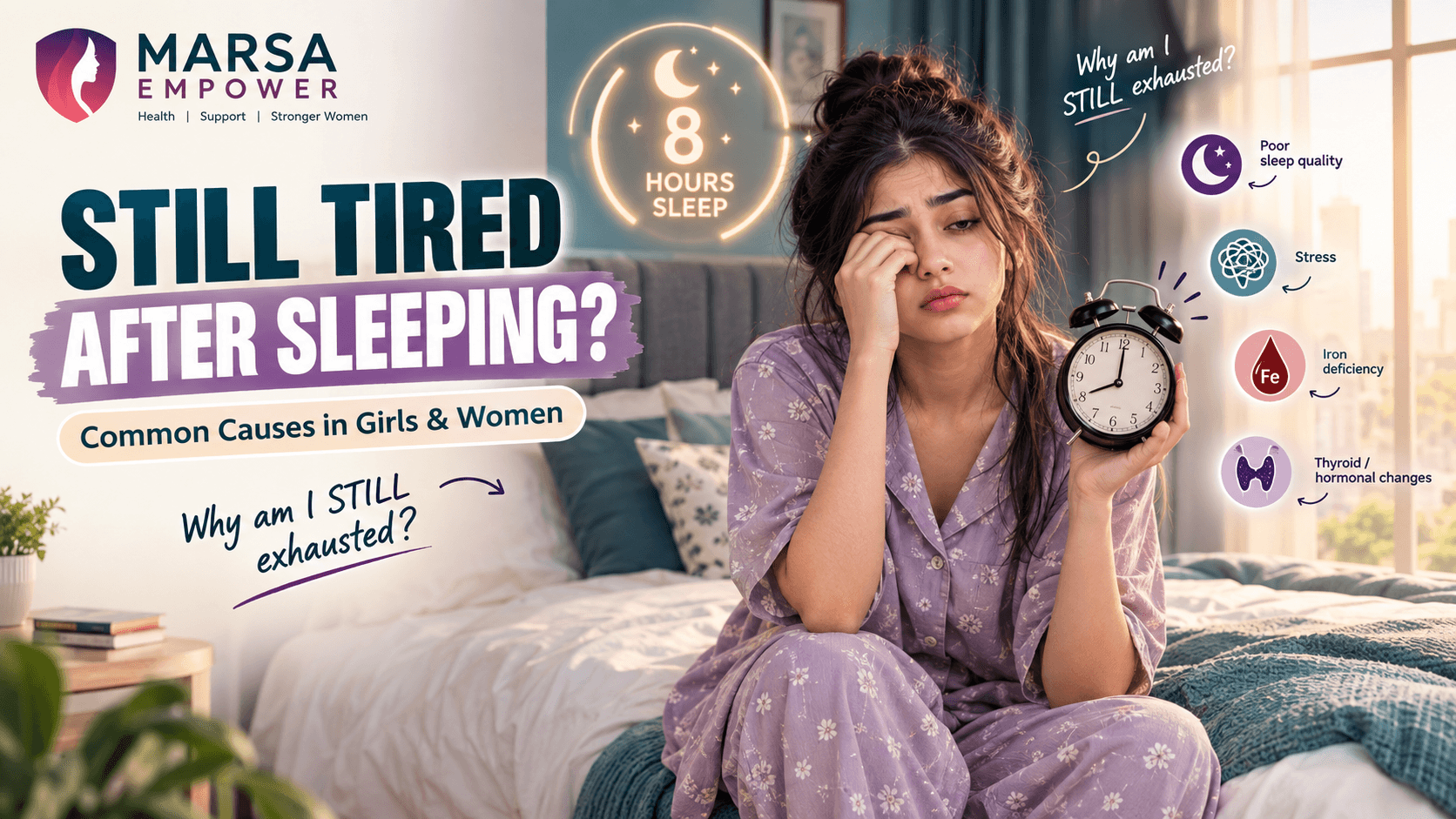
Discover why waking up exhausted and feeling constantly unwell is common among young women, even with normal test results. Uncover hidden causes and practical solutions to regain your vitality.

Maryam Mumtaz
Co-Founder & CEO
16 min read•10/15/2026
Subtitle: You wake up exhausted. You feel dizzy. You get colds constantly. Doctors say your tests are normal. But you know something is off. Here is what might actually be happening.
By Marsa Empower | Women's Health | For Ages 18 to 30 | 16 min read
"You're fine. Your tests are normal. Just eat well and rest." You have heard this before. But you don't feel fine. And you haven't felt fine in a long time.
You are 20 years old. Or somewhere close to it. You should feel energetic. You should be sleeping well, eating well, studying or working, and feeling like the world is yours.
Instead, you feel tired all the time. Not just a little tired. The kind of tired where waking up in the morning feels like an achievement. The kind where you sit down for five minutes and don't want to get back up. The kind where your body feels heavy even when you haven't done anything physically demanding.
And it is not just fatigue. It is:
You go to a doctor. They run some basic tests. The results come back and the doctor says: "There's nothing wrong with you."
But you go home and you still feel terrible.
This experience is more common than most young women are told. And the reason it happens is not because you are imagining things. It is because many of the things affecting young women at this age are either subtle, hormonal, nutritional, or lifestyle-related in ways that standard routine blood tests may not always capture on the first visit.
This guide will walk through what might actually be happening in your body, why it is so common at this age, and what you can do about it.
Fatigue in young women is almost never just "laziness." It is your body sending a signal that something it needs is either missing, out of balance, or under strain.
Here are the most common reasons:
This is the single most common nutritional reason for fatigue in young women, and it is frequently missed.
Iron is what allows your red blood cells to carry oxygen. When your iron levels are low, your cells don't get enough oxygen, and you feel:
The important thing to know: A standard CBC (Complete Blood Count) test can miss early iron deficiency. Ask your doctor specifically for a serum ferritin test, which measures your iron stores — not just the iron currently in your blood. You can have normal haemoglobin but low ferritin, and still feel every symptom of iron deficiency.
| Test | What It Measures | What It Might Miss |
|---|---|---|
| CBC / Haemoglobin | Current red blood cell levels | Early iron store depletion |
| Serum Ferritin | Iron stores in your body | Nothing — this is the gold standard |
| Serum Iron | Iron in the blood at that moment | Long-term depletion patterns |
Who is most at risk: Young women with heavy periods, those who eat little or no meat, and those with irregular or restricted diets.
Your thyroid is a small gland in your neck that controls your metabolism, your energy levels, your body temperature, your mood, and your weight. When it is not working properly, everything feels off.
Hypothyroidism (underactive thyroid) symptoms include:
The important test: Ask for a TSH (Thyroid Stimulating Hormone) test. A normal TSH does not always rule out subclinical thyroid dysfunction, which is when your levels are technically within range but at the edge where symptoms still appear.
Vitamin D is not just for bones. It affects immune function, mood, muscle strength, and energy levels. Deficiency is extraordinarily common — especially in South Asia, where sun exposure is limited by indoor lifestyles, cultural clothing habits, and air pollution.
Symptoms of low Vitamin D:
You may never know you are deficient without a 25(OH)D blood test. Supplements are inexpensive and widely available.
B12 is critical for nerve function and red blood cell production. People who eat primarily vegetarian or plant-based diets are at particular risk because B12 is found almost exclusively in animal products.
Symptoms include:
You might be sleeping eight hours but not getting restorative sleep. This is a different problem from not sleeping enough, and it produces the same result: you wake up feeling like you didn't sleep at all.
More on this in the next section.
Stress is physical. It raises cortisol, disrupts sleep, suppresses the immune system, and drains energy reserves. At age 20, you may be managing academic pressure, family expectations, financial stress, relationship dynamics, and uncertainty about the future, often all at once.
Your body does not distinguish between emotional stress and physical stress. Both drain the same energy reserves.
This is one of the most frustrating experiences: you feel exhausted all day, but when you lie down at night, your mind races, you cannot fall asleep, and you spend hours staring at the ceiling. By morning, you are more tired than when you went to bed.
This pattern has a name. It is called sleep phase disruption or circadian rhythm dysregulation, and it is incredibly common in people in their late teens and twenties.
Here is what is happening:
Your body has a natural 24-hour internal clock (circadian rhythm) that regulates when you feel sleepy and when you feel alert. This clock is largely governed by light exposure, meal timing, and activity patterns.
What disrupts it:
| Disruptor | Why It Matters |
|---|---|
| Screen use late at night | Blue light suppresses melatonin (your sleep hormone) |
| Irregular sleep and wake times | Your body clock loses its anchor |
| Caffeine in the afternoon or evening | Delays sleep onset by hours |
| Napping during the day | Reduces sleep pressure at night |
| Eating late at night | Keeps digestion active when the body needs to wind down |
| High stress before bed | Cortisol and adrenaline keep the brain alert |
When nighttime sleep is poor or insufficient, your body tries to make up for it during the day. You feel a strong pull to sleep in the afternoon, your concentration drops, and your energy crashes, often around 2 to 4 pm.
This is not laziness. It is your body's natural response to sleep debt.
Blood pressure is the force of blood pushing against the walls of your arteries. A reading below 90/60 mmHg is generally considered low blood pressure (hypotension).
Unlike high blood pressure, low blood pressure in young women is often overlooked or dismissed. But it can cause real, disruptive symptoms.
Important: Dizziness and weakness should not automatically be assumed to be low blood pressure. These symptoms can also be caused by dehydration, anaemia, low blood sugar, anxiety, thyroid issues, or inner ear problems. A proper clinical evaluation is needed to identify the actual cause.
Young women are more likely to have naturally lower blood pressure. Contributing factors include:
When to seek urgent care: If you faint without warning, experience chest pain with dizziness, or have severe breathlessness, see a doctor immediately. These are not normal low-BP symptoms.
One of the most common mistakes young women make is assuming every runny nose and congested feeling is a viral cold. It may not be.
| Condition | Key Signs | Trigger |
|---|---|---|
| Allergic rhinitis | Clear runny nose, sneezing, itchy eyes | Dust, pollen, pet dander, mould |
| Viral cold | Thick nasal discharge, mild fever, sore throat | Viral infection |
| Chronic sinusitis | Pressure around nose/eyes, thick discharge, facial pain | Bacterial infection or inflammation |
| Vasomotor rhinitis | Congestion without allergy, worse with temperature changes | Cold air, strong smells, stress |
| Low immunity | Frequent infections, slow recovery | Iron/Vitamin D deficiency, stress |
A major reason young women get sick frequently is a compromised immune system. And the most common reasons for this at age 20 are:
If you are getting sick more than four to five times a year with respiratory symptoms, your immune system deserves investigation, not just another antihistamine.
At age 20, eating habits are often irregular, nutritionally incomplete, and driven by convenience, cost, or appetite that has been suppressed by stress. This creates an energy deficit that no amount of rest can fully compensate for.
1. Skipping meals
When you skip meals — especially breakfast — your blood sugar drops. Your body responds by releasing cortisol (a stress hormone) to raise it. This gives you a short burst of energy followed by a crash, worsening fatigue, low mood, and difficulty concentrating.
2. Not eating enough protein
Protein is not just for building muscle. It is required for the production of neurotransmitters (like serotonin and dopamine), immune cells, and enzymes that regulate energy. Young women eating primarily rice, bread, and snacks with minimal protein often feel tired, unmotivated, and emotionally flat.
3. Insufficient iron intake
Iron-rich foods to include regularly:
| Food | Iron Content (per serving) |
|---|---|
| Red meat (beef/lamb) — 100g | 2.5 to 3.5 mg |
| Lentils (cooked) — 1 cup | 6.6 mg |
| Spinach (cooked) — 1 cup | 6.4 mg |
| Chickpeas (cooked) — 1 cup | 4.7 mg |
| Tofu — 100g | 3.4 mg |
| Fortified cereal — 1 serving | 4 to 18 mg |
Important tip: Eating Vitamin C (lemon juice, orange, tomato) alongside iron-rich plant foods significantly increases absorption. Avoid tea or coffee within one hour of iron-rich meals — tannins block iron absorption.
4. Dehydration
Most young women are mildly dehydrated for most of the day without realising it. Even mild dehydration causes:
Aim for 8 to 10 glasses of water per day, more if you are in a hot climate or physically active.
5. Restrictive or crash dieting
If you are restricting calories significantly to manage your weight, you are also restricting the nutrients your body needs to produce energy, regulate hormones, and support immune function. This is one of the most common hidden causes of exhaustion and frequent illness in young women.
Standard blood tests ordered by a general physician typically check:
What is frequently not checked:
| Condition | Test Required | Why It Is Often Missed |
|---|---|---|
| Iron deficiency without anaemia | Serum ferritin | Not part of standard CBC |
| Vitamin D deficiency | 25(OH)D | Rarely ordered unless requested |
| Subclinical hypothyroidism | TSH + Free T4 | TSH alone may appear borderline |
| PCOS | LH, FSH, testosterone, pelvic ultrasound | Requires specialist referral |
| Coeliac disease | Anti-tTG IgA antibody | Almost never tested in routine workup |
| Dysautonomia / POTS | Tilt table test, HR monitoring | Rarely diagnosed in primary care |
Polycystic Ovary Syndrome (PCOS)
Affects 1 in 10 women of reproductive age. Symptoms include irregular periods, weight changes, fatigue, skin issues, and mood changes. It is significantly underdiagnosed.
Postural Orthostatic Tachycardia Syndrome (POTS)
A condition where your heart rate increases abnormally when you stand up, causing dizziness, fatigue, and brain fog. It predominantly affects young women and is frequently dismissed as anxiety.
Coeliac Disease / Non-Coeliac Gluten Sensitivity
Can cause persistent fatigue, stomach discomfort, brain fog, and nutritional deficiencies while appearing outwardly healthy.
Anxiety and Depression
Both are physical illnesses with physical symptoms: fatigue, chest tightness, stomach pain, muscle tension, and disrupted sleep. They are not signs of weakness, and they are not imagined.
This guide does not offer a diagnosis. If you recognise yourself in multiple conditions listed here, speak to a doctor and ask specifically about these possibilities. Bring a written list of your symptoms to the appointment.
At age 20, your body is managing a remarkable amount simultaneously:
Stress is not just emotional. It is a physical state that:
This is why you might have a stomach ache, chest discomfort, headache, runny nose, fatigue, and low mood all at the same time, and your doctor's blood tests show nothing. These are not imaginary symptoms. They are the physical expression of a body under sustained strain.
Your energy, mood, sleep quality, and immune response all vary predictably across your menstrual cycle.
| Cycle Phase | Approximate Days | Common Experience |
|---|---|---|
| Menstruation | Days 1 to 5 | Fatigue, pain, low energy |
| Follicular | Days 6 to 13 | Rising energy, better mood |
| Ovulation | Around Day 14 | Peak energy and alertness |
| Luteal | Days 15 to 28 | Fatigue, mood changes, bloating |
If your fatigue follows this pattern, it is likely hormonal. Tracking your cycle alongside your energy levels will reveal this clearly over two to three months.
The following habits address the most common contributing factors to fatigue, poor sleep, dizziness, and frequent illness. They are not a substitute for medical care, but they can significantly improve how you feel while you work on identifying any underlying cause.
Sleep — Fix This First
Eating — The Energy Foundation
Movement
Stress
Tracking Symptoms
Keep a simple diary for two to four weeks recording:
This information is genuinely valuable when you speak to a doctor. It transforms vague complaints into documented patterns.
🚨 Fainting or near-fainting without clear cause
🚨 Chest pain or pressure
🚨 Severe or sudden shortness of breath
🚨 Heart palpitations that are rapid, irregular, or prolonged
🚨 Severe abdominal pain
🚨 High fever with severe headache or stiff neck
These symptoms require same-day or emergency medical evaluation, not a scheduled appointment.
Use this checklist daily for at least two weeks before your doctor's appointment.
Daily Tracking
Weekly Summary
Bring this record to your doctor. It provides objective data that is far more useful than trying to describe how you have felt over several weeks from memory.
Being told "you're fine" when you don't feel fine is one of the most frustrating medical experiences a young woman can have. It can make you doubt yourself. It can make you feel like you are exaggerating or being dramatic.
You are not.
Many of the most common conditions affecting young women — iron deficiency, thyroid dysfunction, Vitamin D deficiency, PCOS, dysautonomia, anxiety, and sleep disorders — can present with vague, overlapping symptoms that standard routine tests do not always detect on the first visit.
Your job is not to diagnose yourself. Your job is to:
Your body is communicating with you. Every symptom is a message. Some messages are minor. Some point to something that genuinely needs attention.
Neither possibility deserves to be ignored.
"The most important thing a young woman can do for her health is take her own symptoms seriously, track them, and advocate for herself in a medical setting. You deserve a doctor who listens. If you don't have one, find another."
| Resource | Purpose | Link |
|---|---|---|
| NHS — Iron Deficiency Anaemia | Symptoms, diagnosis, and treatment | https://www.nhs.uk/conditions/iron-deficiency-anaemia/ |
| NHS — Hypothyroidism | Underactive thyroid in women | https://www.nhs.uk/conditions/underactive-thyroid-hypothyroidism/ |
| Harvard Health — Vitamin D Deficiency | Symptoms and supplementation guidance | https://www.health.harvard.edu/a_to_z/vitamin-d-deficiency-a-to-z |
| Dysautonomia International — POTS | Overview of POTS and diagnosis | https://www.dysautonomiainternational.org/page/POTS |
| NHS — Polycystic Ovary Syndrome | PCOS overview and management | https://www.nhs.uk/conditions/polycystic-ovary-syndrome-pcos/ |
| Sleep Foundation — Circadian Rhythm Disorders | Sleep cycle disruption and recovery | https://www.sleepfoundation.org/circadian-rhythm |
| WHO — Iron Deficiency Anaemia | Global perspective and dietary guidance | https://www.who.int/nutrition/topics/ida/en/ |
| NICE Guidelines — Fatigue in Women | Clinical assessment and investigation | https://www.nice.org.uk |
| Pakistan NCCIA | Cyber safety and health scam reporting | https://complaint.nccia.gov.pk |
Medical Disclaimer
This article is for educational and informational purposes only. It does not constitute medical advice, diagnosis, or treatment. Always consult a qualified healthcare professional for any health concerns. Do not delay seeking medical advice based on content read in this article.
Marsa Empower | Care. Safety. Growth.
marsaempower.com — Supporting women's health, safety, and growth at every stage of life.
Medical Disclaimer
This article is for general informational and educational purposes only and is not a substitute for professional medical advice, diagnosis, or treatment. Always seek the advice of a qualified healthcare provider with any questions you may have regarding a medical condition. Never disregard professional medical advice or delay seeking it because of something you have read on MARSA Empower.
Written By
Maryam Mumtaz
Co-Founder & CEO
Co-Founder of MARSA Empower who leads the visual and strategic evolution of the platform. Maryam bridges technical complexity with human-centric design, architecting the team's official roadmap and ensuring MARSA effectively addresses the real-world needs of women. With deep expertise in agentic AI, full-stack development, and UI/UX design, she has delivered 50+ projects for 30+ satisfied clients.
Enjoyed this story?