Discover the critical role of Vitamin B12 in boosting women's energy. Uncover key insights, expert advice, and actionable tips.

Maryam Mumtaz
Co-Founder & CEO
11 min read•9/4/2026
Marsa Empower · Women's Health & Nutrition · For Girls & Women Aged 13 and Above · 11 min read
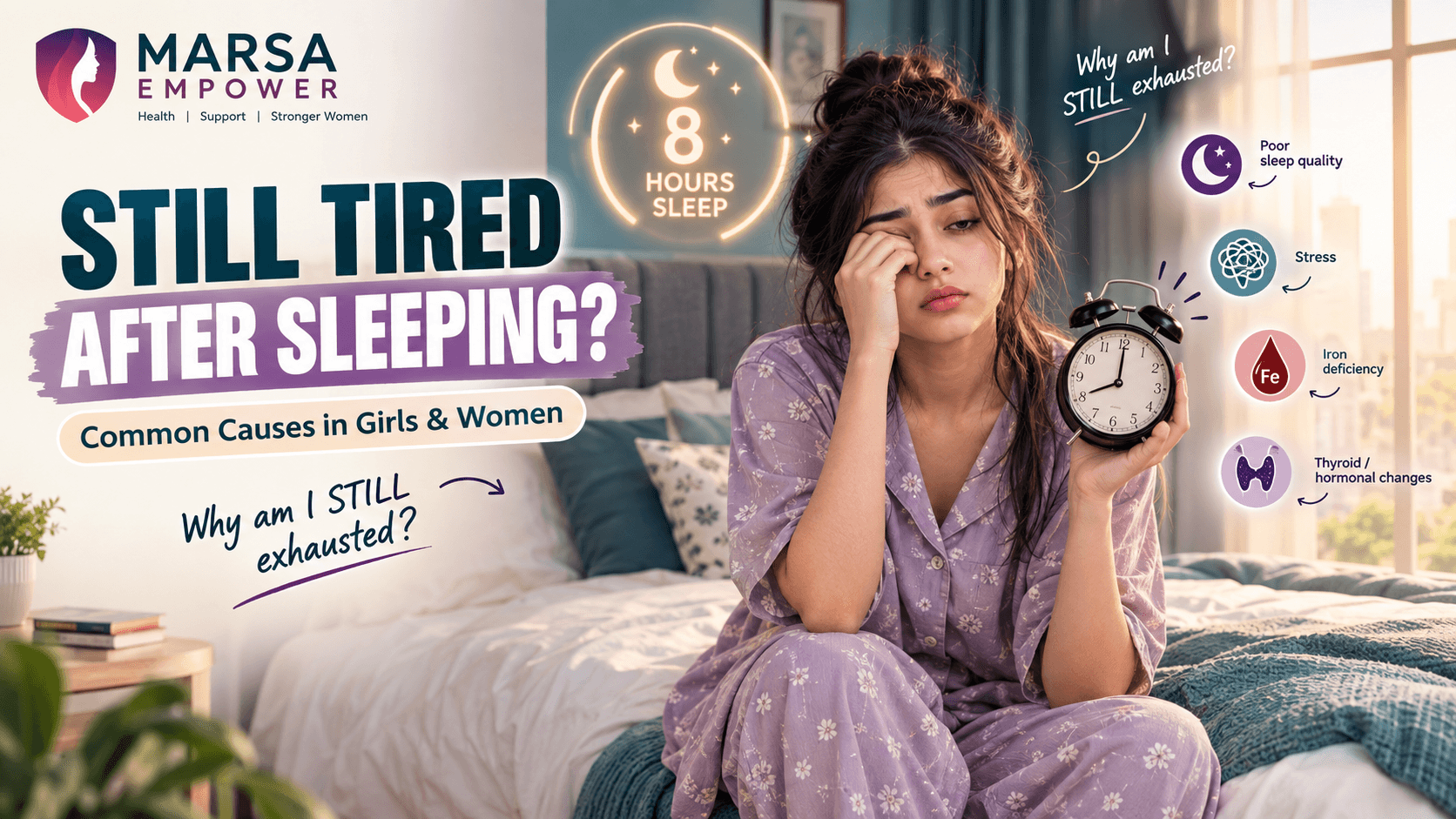
Feeling tired is one of the most universal experiences women describe when asked about their health. After a demanding week, limited sleep, and the ongoing management of multiple responsibilities, tiredness feels almost inevitable — and for many women, it is simply attributed to a busy life.
But for some women, persistent fatigue has a more specific and more correctable cause. Nutritional deficiencies — and vitamin B12 deficiency is among the most common and most consistently missed — can produce a distinctive, heavy tiredness that sleep alone does not resolve.
Understanding what B12 is, what it does in the body, who is at risk of deficiency, and what the appropriate response to low B12 symptoms involves is genuinely useful health knowledge. It is also knowledge that requires one important clarification at the outset: B12 is not an energy supplement in the way that caffeine or glucose provides a quick boost. For women who already have adequate B12, taking extra B12 does not improve energy. The benefit of B12 supplementation is specific to correcting a genuine deficiency — and the first step in knowing whether that applies to you is understanding what B12 actually does.
Vitamin B12 (also called cobalamin) is a water-soluble essential vitamin — meaning the body cannot make it and must obtain it from food or supplements. It is one of the B vitamins, a group of nutrients involved in energy metabolism and many other fundamental biological processes.
Vitamin B12 supports several critical functions in the body.
Healthy red blood cell formation. B12 is required for the DNA synthesis needed to produce red blood cells. Without adequate B12, red blood cell production is impaired — the cells become abnormally large and less functional, producing a type of anaemia called megaloblastic anaemia that significantly reduces the blood's capacity to carry oxygen.
Nervous system function. B12 is essential for the production and maintenance of myelin — the protective sheath surrounding nerve fibres that allows nerve impulses to travel efficiently. B12 deficiency progressively damages this myelin, producing the neurological symptoms that are some of the most serious and potentially irreversible consequences of long-term deficiency.
DNA synthesis. B12 is required as a cofactor in the synthesis of DNA, which is needed by every cell in the body when it divides and replicates.
Homocysteine metabolism. B12 is involved in converting homocysteine to methionine. Elevated homocysteine — which occurs when B12 is deficient — is associated with cardiovascular and neurological risks.
The connection between B12 and energy is real but specific — and it is important to understand it accurately to avoid both under-response (ignoring a real deficiency) and over-response (taking B12 as a general energy supplement when it is not the cause of fatigue).
When B12 deficiency is present, the production of healthy red blood cells is impaired. The resulting megaloblastic anaemia reduces the blood's capacity to carry oxygen efficiently to the body's cells and tissues. Muscles, the brain, and all other organs receive less oxygen than they need, producing the characteristic symptoms of anaemia: persistent fatigue, weakness, breathlessness on exertion, and dizziness.
This is the specific mechanism through which low B12 causes fatigue. It is not a vague, indirect effect — it is the measurable consequence of insufficient oxygen delivery to the body's cells.
However, this also means that when B12 levels are normal, supplementing with additional B12 does not provide extra energy. There is no additional oxygen-carrying capacity to unlock, because the red blood cell production system is already functioning adequately. The widespread marketing of B12 shots and high-dose B12 supplements as energy boosters for everyone is not supported by evidence in people who are not deficient.
B12 deficiency develops gradually over months or years because the liver stores a reserve of B12 that is slowly drawn upon as dietary intake falls short. By the time symptoms appear, deficiency is often significant.
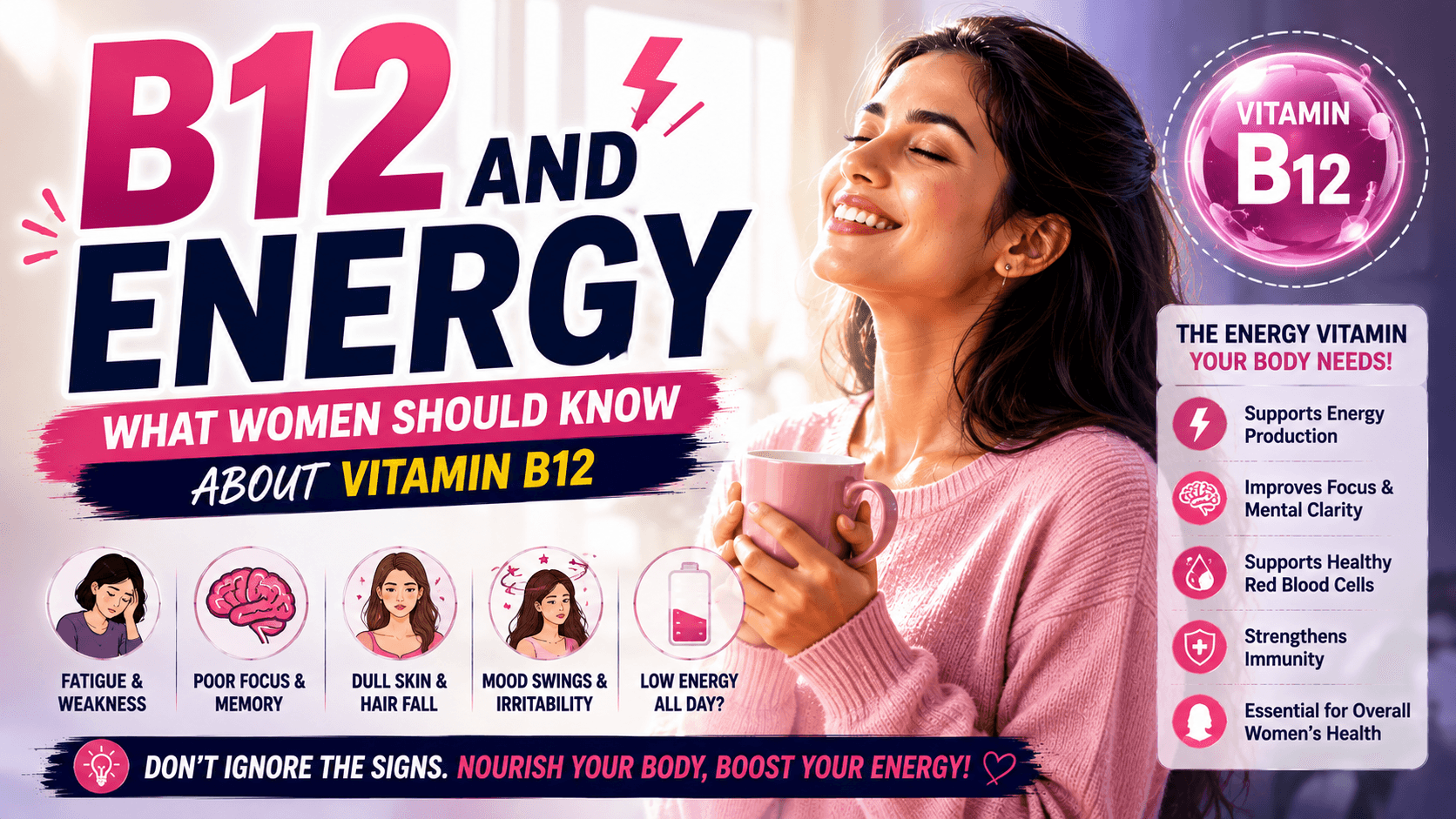
Persistent, heavy fatigue is the most commonly reported symptom. This is the tiredness of anaemia — a physical, bone-deep exhaustion that does not respond to additional sleep and is present throughout the day rather than only at the end of a demanding one.
Weakness is a related symptom — muscles that feel less capable than expected, difficulty sustaining physical effort, and a general sense of physical diminishment.
Pale or slightly yellow-tinged skin occurs because megaloblastic anaemia reduces the quantity of functional red blood cells and because the abnormal breakdown of dysfunctional red blood cells produces bilirubin, which gives skin a slightly yellowish tinge.
Dizziness and lightheadedness occur because reduced oxygen delivery to the brain, and sometimes reduced blood pressure from anaemia, impairs the brain's consistent oxygenation.
Shortness of breath on exertion is a consequence of reduced red blood cell function. Activities that would previously cause no breathlessness produce noticeable breathlessness in B12-deficient anaemia because the blood cannot carry sufficient oxygen for the increased demand of physical activity.
Numbness or tingling in the hands or feet is one of the most significant B12 deficiency symptoms because it reflects nerve damage rather than anaemia. The demyelination of peripheral nerve fibres produces the characteristic pins-and-needles sensation, typically starting at the extremities. This symptom indicates that deficiency has progressed to neurological involvement.
Balance and coordination problems can occur as B12 deficiency progresses to affect the nerves governing proprioception and coordination.
Cognitive changes including difficulty concentrating, memory problems, and mental fogginess are associated with B12 deficiency and its effects on neurological function.
A sore, swollen, or glossy tongue (glossitis) is a recognised physical sign of B12 deficiency that can be observed on examination.
B12 deficiency does not affect all women equally. Several factors significantly increase the risk.
Vegetarian or vegan diet. Vitamin B12 occurs naturally almost exclusively in animal-derived foods — meat, fish, eggs, and dairy. Women who follow a vegan diet have no reliable natural dietary source of B12 and will develop deficiency without consistent consumption of B12-fortified foods or a B12 supplement. Vegetarians who eat eggs and dairy are less at risk but may still have lower B12 intake than omnivores and should monitor their levels.
Digestive conditions that impair B12 absorption. Several gastrointestinal conditions reduce the absorption of B12 from food. These include atrophic gastritis (a progressive thinning of the stomach lining that reduces production of intrinsic factor — a protein essential for B12 absorption), Crohn's disease affecting the terminal ileum (where B12 is absorbed), coeliac disease, and others.
Pernicious anaemia. An autoimmune condition in which the immune system attacks the stomach cells that produce intrinsic factor, preventing B12 absorption from food regardless of dietary intake. This is one of the most significant causes of severe B12 deficiency and requires injectable or high-dose supplemental B12 rather than dietary correction alone.
Certain medications taken long-term. Metformin (used for type 2 diabetes and PCOS management) is associated with reduced B12 absorption with long-term use. Proton pump inhibitors and H2-receptor antagonists (acid-suppressing medications) reduce the gastric acid that helps release B12 from food, impairing absorption with prolonged use. Women on these medications should have their B12 levels monitored.
Previous gastrointestinal surgery. Bariatric surgery, gastrectomy, and surgery involving the terminal ileum all reduce the body's capacity to absorb B12, often requiring long-term supplementation.
Increasing age. The production of gastric acid and intrinsic factor decreases with age in many people, reducing B12 absorption efficiency. Older women have higher rates of B12 deficiency than younger women.
Pregnancy and breastfeeding. The demands of pregnancy and milk production increase B12 requirements, and women with marginal B12 status prior to pregnancy can become deficient during it. Infants born to or exclusively breastfed by B12-deficient mothers can develop severe B12 deficiency themselves.
The recommended daily intake for vitamin B12 varies by life stage.
For most adult women, the recommended dietary allowance is approximately 2.4 micrograms (mcg) per day. This is a modest amount — the quantities found in a single egg or a small serving of fish are already meaningful contributors.
During pregnancy, the recommended intake rises to approximately 2.6 mcg per day, reflecting the increased demands of fetal development. During breastfeeding, the recommendation is approximately 2.8 mcg per day, accounting for the B12 transferred through breast milk.
These recommendations apply to healthy women who absorb B12 normally. Women with conditions affecting absorption may need significantly higher amounts — sometimes hundreds or thousands of times the standard dietary recommendation — because only a small fraction is absorbed, and this is why the form of supplementation (oral versus injectable) can matter in cases of significant malabsorption.
Vitamin B12 is found naturally almost exclusively in animal-derived foods. The richest natural sources are:
Animal proteins: Beef liver (exceptionally high), clams and shellfish (exceptionally high), fish including salmon, sardines, mackerel, and tuna, beef and lamb, chicken, and pork.
Dairy and eggs: Milk, yogurt, cheese, and eggs all provide meaningful B12. Full-fat dairy tends to contain slightly more B12 than skimmed alternatives.
Fortified foods: Many countries add B12 to commonly consumed foods including breakfast cereals, plant-based milks (soy, oat, almond, coconut), nutritional yeast, and some other fortified products. Fortified foods are the primary dietary source of B12 for women following plant-based diets.
When choosing fortified foods, check the nutrition label, as B12 content varies significantly between brands and products. Not all plant-based milks are fortified, and not all cereals contain B12.
Women who follow vegetarian or vegan diets can maintain adequate B12, but they need to be deliberate about reliable sources — particularly if they are vegan.
For lacto-ovo vegetarians (who eat eggs and dairy), eggs, milk, yogurt, and cheese provide B12. Whether these sources provide sufficient B12 depends on the quantities consumed. Regular monitoring of B12 blood levels is a reasonable approach for vegetarians who are uncertain whether their dietary intake is meeting their needs.
For vegans, reliable B12 sources are limited to fortified foods and supplements. Algae, fermented foods, and other plant foods sometimes cited as B12 sources either do not contain bioavailable B12 or contain B12 analogues that may interfere with true B12 absorption. A dedicated B12 supplement or consistent consumption of B12-fortified foods is essential for women following a vegan diet, not optional.
Both iron deficiency and B12 deficiency can cause anaemia and fatigue. They are frequently confused because their symptoms overlap significantly. Understanding the difference matters because the treatments are entirely different, and treating one when the other is the cause produces no benefit.
Iron is required for the production of haemoglobin — the protein within red blood cells that physically carries oxygen. Iron deficiency produces microcytic anaemia — small, pale red blood cells that carry less oxygen than normal. This is the most common anaemia in women, particularly those with heavy menstrual periods.
B12 is required for the DNA synthesis involved in producing red blood cells. B12 deficiency produces megaloblastic anaemia — abnormally large red blood cells that do not function properly. It also produces the neurological consequences described above, which iron deficiency does not.
Both can coexist. A woman with heavy periods may be iron deficient, and if she also follows a plant-based diet, she may simultaneously be B12 deficient. Blood tests can distinguish between the two, which is one of the most important reasons to seek professional evaluation rather than self-treating persistent fatigue with supplementation that may not address the actual cause.
B12 is an effective intervention for tiredness that is caused by B12 deficiency. It is not a treatment for tiredness in general.
Fatigue is one of the most non-specific symptoms in medicine — it is a symptom of an enormous number of conditions and situations, ranging from the entirely normal (insufficient sleep, high stress, heavy workload) to the medical (iron deficiency anaemia, thyroid dysfunction, hypothyroidism, depression, diabetes, PCOS, chronic infection, and many others).
Taking B12 supplementation without confirming that B12 deficiency is present does not help fatigue caused by any other cause. It will not improve sleep-deprivation fatigue, iron deficiency anaemia, or thyroid-related fatigue. And it will not help even B12-related symptoms if the deficiency is caused by malabsorption rather than inadequate dietary intake, in which case a different form or route of B12 administration may be needed.
If you have persistent fatigue, the appropriate first step is understanding its cause — and that requires blood testing including B12 alongside iron (ferritin), thyroid function (TSH), haemoglobin, and blood glucose — rather than starting supplementation based on symptoms alone.
B12 supplementation is appropriate and recommended in specific circumstances. It is not universally necessary for all women.
Women who should consider B12 supplementation include those with confirmed B12 deficiency on blood testing. Women following a vegan diet without reliable fortified food sources. Women with conditions known to impair B12 absorption. Women who have had gastrointestinal surgery reducing their B12 absorption capacity. Women taking long-term medications associated with B12 reduction, including metformin or long-term proton pump inhibitors, where monitoring has shown declining levels. Women who are pregnant or planning pregnancy and have any risk factor for B12 deficiency.
The appropriate dose, form, and frequency of B12 supplementation depends on the reason for it. Mild dietary insufficiency may be addressed by dietary modification or a standard daily supplement. Absorption problems may require much higher oral doses or injectable B12. A healthcare professional should determine the appropriate approach based on the specific cause and severity of deficiency.
Vitamin B12 is considered safe even at doses substantially above the daily recommended intake. Because it is water-soluble, excess B12 that the body cannot use is excreted in urine rather than accumulating to toxic levels. Vitamin B12 toxicity has not been established even at very high supplemental doses in healthy people.
This relative safety means that many over-the-counter B12 supplements contain doses far higher than the daily requirement — 500 mcg, 1,000 mcg, or more — because only a small fraction of orally administered B12 is absorbed in people with normal absorption. For people with absorption issues, even these high doses may only provide a modest amount of usable B12.
However, the safety of high-dose B12 does not mean that supplementing unnecessarily is useful. If your B12 status is already normal, taking supplemental B12 provides no additional benefit to energy, health, or any other outcome. The appropriate approach is to test before supplementing and to supplement in the form and dose most appropriate for your specific situation, rather than to take B12 based on the assumption that it will improve general energy.
B12 deficiency is diagnosed through blood testing, typically as part of a broader investigation of symptoms including fatigue.
A serum vitamin B12 level measures the amount of B12 in the blood. However, the relationship between serum B12 and clinical deficiency is not perfectly straightforward — some people have low serum B12 without symptoms, while others have apparently normal serum B12 but show signs of functional deficiency.
When serum B12 is in an uncertain range (often described as low-normal), additional tests including methylmalonic acid (MMA) and homocysteine levels can identify functional B12 deficiency more sensitively. These metabolites accumulate when B12 is insufficient for its enzymatic roles, even when serum B12 appears borderline adequate.
A full blood count (haemoglobin, red blood cell size, and characteristics) helps identify whether megaloblastic anaemia is present. In pernicious anaemia or other absorption-related deficiencies, tests for intrinsic factor antibodies and gastric parietal cell antibodies may also be relevant.
A healthcare professional will determine which tests are most appropriate based on your symptoms, risk factors, dietary history, and current medications.
Recovery from B12 deficiency depends on the severity of the deficiency and whether the cause has been adequately addressed.
The symptoms related to anaemia — fatigue, breathlessness, dizziness, and weakness — typically begin to improve within a few weeks of starting adequate supplementation or dietary correction, as new healthy red blood cells are produced.
Neurological symptoms — numbness, tingling, balance problems, and cognitive changes — take longer to improve and may require months of treatment. In cases of severe or prolonged neurological involvement, some symptoms may not fully resolve even with adequate treatment. This is one of the most important reasons to identify and treat B12 deficiency before neurological symptoms develop or become established.
Follow-up blood testing after treatment confirms that levels have normalised and allows monitoring to ensure they remain adequate over time.
Teenage girls have high nutritional requirements because their bodies are still growing, developing bone density, establishing menstrual cycles, and building the foundations of long-term health. B12 is part of this nutritional picture — but it is one nutrient among many rather than a special supplement warranting independent attention in most teenage girls eating varied diets.
Teenage girls who eat eggs, dairy, fish, and meat obtain B12 from their food without needing supplementation. Those following vegetarian or vegan diets, which are increasingly common among teenage girls for ethical and environmental reasons, need to ensure they have reliable B12 sources through fortified foods or supplementation.
Persistent fatigue, weakness, dizziness, difficulty concentrating, or unusual neurological symptoms in a teenage girl should be discussed with a healthcare professional, who can assess the full picture including B12 alongside iron, thyroid function, and other relevant markers, rather than starting supplements without guidance.
B12 is an essential nutrient during pregnancy. It is involved in the neurological development of the fetus, normal blood cell production, and DNA synthesis — all of which are particularly critical during the first trimester.
Severe maternal B12 deficiency during pregnancy has been associated with neural tube defects in infants. Infants born to B12-deficient mothers — particularly those who are exclusively breastfed — can develop severe B12 deficiency themselves, with serious neurological consequences.
Women who are pregnant or planning pregnancy should ensure their diet includes reliable B12 sources. Women following vegan diets who are pregnant or planning pregnancy should discuss B12 supplementation with their healthcare provider as a specific priority. Women with a history of any condition affecting B12 absorption should discuss their B12 status and supplementation needs with their obstetrician or midwife.
Do not start high-dose supplementation during pregnancy without appropriate medical guidance.
Meeting B12 needs through food does not require complex or expensive meals. The following simple meal patterns provide meaningful B12 alongside other essential nutrients.
For breakfast, eggs with whole wheat toast and a glass of milk or yogurt provide protein, B12, calcium, and other nutrients in a simple, quickly prepared meal. Fortified breakfast cereal with fortified milk or plant milk is another accessible B12-containing breakfast for women with limited cooking time.
For lunch, fish (canned sardines, tuna, or salmon) with vegetables and whole grain provides an excellent combined source of B12, omega-3 fatty acids, protein, and fibre.
For dinner, a small portion of chicken, fish, or lean meat with vegetables and brown rice provides B12 alongside iron, zinc, and other minerals relevant to women's health.
For vegetarians, eggs and dairy consumed regularly alongside B12-fortified foods provide adequate B12 for most women. For vegans, consistent use of B12-fortified plant milk, fortified nutritional yeast, and where fortified food intake is uncertain, a reliable daily B12 supplement, provides the necessary coverage.
Vitamin B12 is one component of energy — but energy is a product of multiple overlapping systems that all need to be functioning adequately.
Getting consistent, adequate sleep provides the foundation of daily energy that no nutritional supplement can replace. Seven to nine hours per night for adults and eight to ten hours for teenagers is the evidence-based recommendation. Eating regular, balanced meals provides the sustained blood sugar and nutritional intake needed for consistent energy throughout the day. Skipping meals drops blood sugar and elevates cortisol, directly impeding energy. Staying adequately hydrated, as mild dehydration is a consistent and frequently overlooked energy drain. Eating sufficient iron-containing foods, particularly important for women with heavy periods who lose significant iron monthly. Getting regular moderate physical activity, which paradoxically improves energy by increasing cardiovascular efficiency, reducing cortisol, and improving sleep quality. Managing stress actively, since chronic cortisol elevation is one of the most significant energy-depleting factors in women's daily health.
Speak with a healthcare professional if any of the following are present.
Fatigue that is persistent, heavy, and not explained by identifiable lifestyle factors like sleep deprivation or high stress. Weakness, dizziness, or shortness of breath on activities that previously caused no difficulty. Numbness or tingling in the hands or feet. Balance or coordination changes. Memory, concentration, or cognitive difficulties that are new or worsening. Pale or yellow-tinged skin. A sore, inflamed tongue. Any combination of these symptoms, particularly in women following plant-based diets, taking metformin or long-term acid suppression medications, or with known gastrointestinal conditions.
Seek medical advice sooner if symptoms are severe, rapidly worsening, or significantly affecting daily functioning. Neurological symptoms of B12 deficiency in particular should prompt timely evaluation, as they are the most serious and potentially irreversible if treatment is delayed.
Marsa Empower's platform supports women in building the nutritional awareness and health literacy that helps them recognise when symptoms may warrant investigation.
Health education resources explain the most important nutritional needs for women at different life stages — including B12, iron, vitamin D, calcium, and other nutrients whose deficiencies disproportionately affect women — in clear and accessible language. Smart Nutrition guidance helps women understand which foods provide which nutrients and how to build dietary patterns that consistently meet their nutritional needs. AI health guidance through Digital Doctors provides educational information about nutritional deficiencies, their symptoms, and when blood testing and professional evaluation is appropriate.
Marsa Empower is a health education and wellness companion. It does not diagnose nutritional deficiencies, prescribe supplements, or replace blood testing and clinical evaluation by a qualified healthcare professional.
Does B12 give you energy?
B12 supports the energy metabolism system and is required for red blood cell production. When B12 deficiency is present, correcting it can improve symptoms including fatigue. However, B12 does not function like caffeine or a stimulant. For women who are not B12 deficient, supplementation does not improve energy.
What are the most common signs of B12 deficiency in women?
Persistent fatigue and weakness, dizziness, shortness of breath on exertion, pale skin, numbness or tingling in the extremities, and cognitive or memory changes are the most commonly reported symptoms.
Which foods are highest in B12?
Clams and shellfish, beef liver, and other organ meats are exceptionally high. Fish, meat, chicken, eggs, milk, yogurt, and cheese are all good everyday sources. Fortified plant milks, fortified cereals, and fortified nutritional yeast are the main sources for women following plant-based diets.
Can vegetarians and vegans get enough B12?
Vegetarians can obtain B12 from eggs and dairy if consumed regularly. Vegans need B12-fortified foods or a dedicated B12 supplement, as reliable natural plant sources of bioavailable B12 do not exist.
Should I take B12 if I am always tired?
Not automatically. Persistent fatigue has many possible causes. A healthcare professional can arrange blood testing to identify whether B12, iron, thyroid function, or another cause is responsible — and the appropriate treatment depends on the actual cause.
How is B12 deficiency different from iron deficiency?
Both can cause anaemia and fatigue. Iron deficiency produces small red blood cells with reduced haemoglobin. B12 deficiency produces large, abnormal red blood cells and also causes neurological damage that iron deficiency does not. Both require different treatments. Blood testing distinguishes between them.
Is B12 safe during pregnancy?
B12 is an essential nutrient during pregnancy and adequate intake is important for fetal neurological development. High-dose supplementation should be guided by a healthcare professional based on individual needs and deficiency status.
Educational Disclaimer
This article is for educational and awareness purposes only. It does not constitute medical advice, diagnosis, or treatment. If you have persistent symptoms that may suggest B12 deficiency, please consult a qualified healthcare professional for blood testing and personalised guidance before starting supplementation.
Marsa Empower | Care. Safety. Growth.
Visit marsaempower.com to access nutrition guidance, track your health, and explore educational resources built for every stage of a woman's life.
Medical Disclaimer
This article is for general informational and educational purposes only and is not a substitute for professional medical advice, diagnosis, or treatment. Always seek the advice of a qualified healthcare provider with any questions you may have regarding a medical condition. Never disregard professional medical advice or delay seeking it because of something you have read on MARSA Empower.
Written By
Maryam Mumtaz
Co-Founder & CEO
Co-Founder of MARSA Empower who leads the visual and strategic evolution of the platform. Maryam bridges technical complexity with human-centric design, architecting the team's official roadmap and ensuring MARSA effectively addresses the real-world needs of women. With deep expertise in agentic AI, full-stack development, and UI/UX design, she has delivered 50+ projects for 30+ satisfied clients.
Enjoyed this story?