One App. Every Woman.
One App. Every Woman.
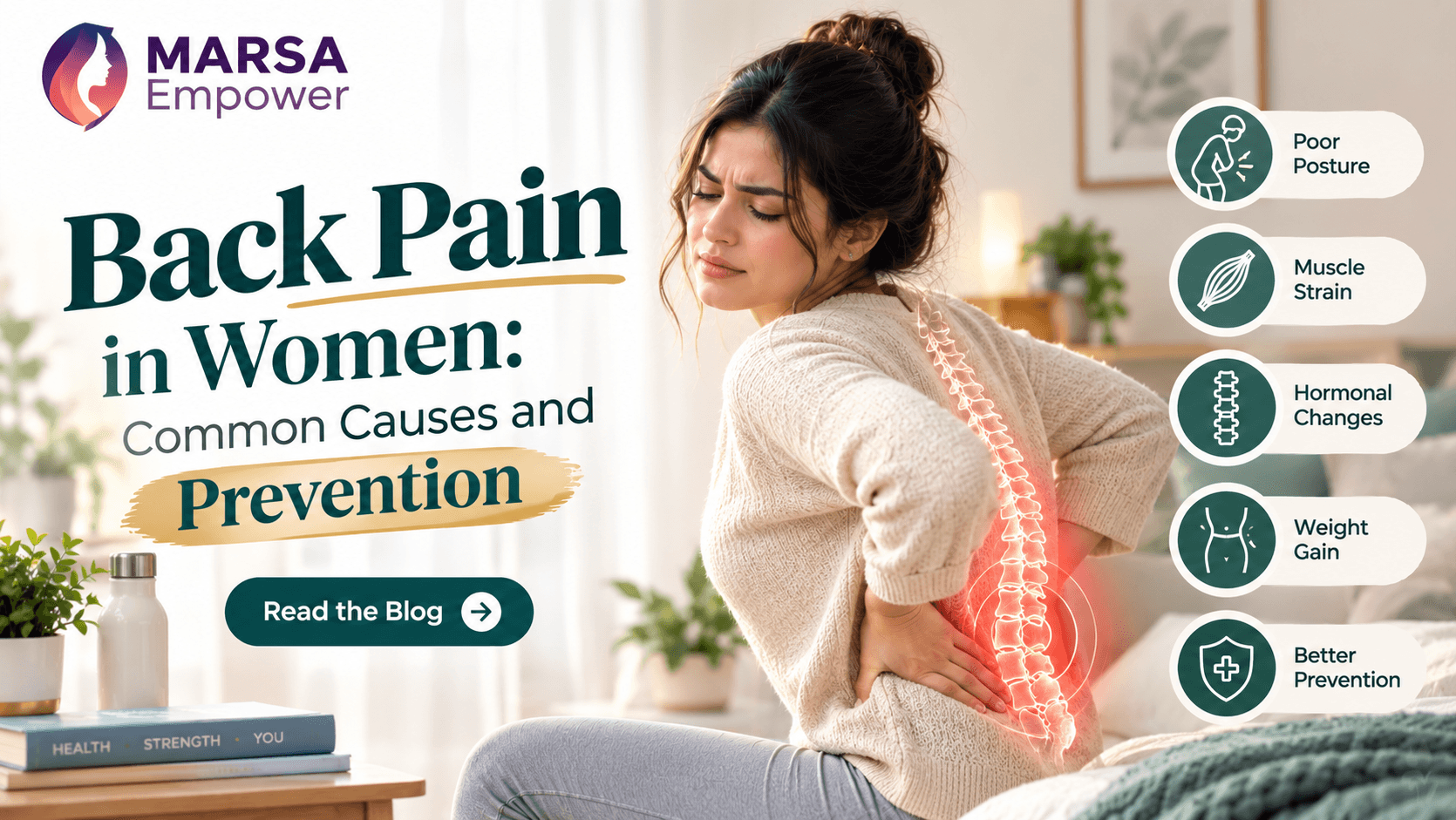
Discover the common causes of back pain in women and learn effective strategies for prevention and relief.
Maryam Mumtaz
Co-Founder & CEO
12 min read•9/16/2026
Marsa Empower · Women's Health & Everyday Wellness · For Girls & Women Aged 13 and Above · 12 min read
Back pain is one of the most common physical complaints among women — affecting girls in their early teens, working women spending long hours at desks, pregnant women navigating the demands of a growing body, and older women managing age-related spinal changes. Studies consistently identify back pain as one of the leading causes of disability and one of the most common reasons for medical consultations worldwide.
Despite this, back pain is frequently dismissed as an inevitable feature of modern life — something to be endured rather than understood and addressed. This guide offers a different perspective: most common back pain has identifiable causes, responds well to the right lifestyle adjustments, and can often be prevented or significantly reduced through consistent, practical habits.
Understanding what is causing back pain — whether it is poor posture at a desk, a weak core, menstrual-cycle changes, pregnancy, or a pattern that warrants medical attention — is the starting point for managing it effectively.
Back pain refers to pain, stiffness, aching, or discomfort anywhere along the back — from the base of the skull to the tailbone. It can range from a dull, persistent ache to a sharp, sudden pain that limits movement. It can be constant or intermittent, localised to one spot, or diffuse across a broad area.
Back pain can originate from several different structures:
Muscles and ligaments — the most common source of everyday back pain. Muscle tension, muscle strain, and ligament sprain from overuse, poor posture, or sudden awkward movement all produce the aching, stiff, and sometimes acutely painful back pain that most people experience at some point.
Intervertebral discs — the cushioning structures between vertebrae. Disc problems, including herniated (slipped) discs and degenerative disc disease, can press on nearby nerves and produce pain that radiates from the back into the legs (sciatica) or arms.
Vertebrae — the bones of the spine. Fractures (including the compression fractures of osteoporosis), arthritis, and other structural changes affect the vertebrae and produce characteristic pain patterns.
Nerves — when spinal structures press on or irritate nerve roots, the pain may travel along the nerve pathway, producing pain, numbness, tingling, or weakness in the legs, buttocks, or arms.
Organs near the spine — pain originating from the kidneys, uterus, or other pelvic organs can be felt in the back through a process called referred pain.
Posture is not about sitting perfectly still in one rigid position — it is about the alignment of the spine and surrounding structures over time, and how that alignment is maintained across different activities. When alignment is consistently poor — head forward of the shoulders, rounded upper back, slouched lumbar spine — the muscles, ligaments, and joints of the back are placed under sustained, unequal loading that produces tension, fatigue, and pain over hours and days.
Poor posture most commonly develops during prolonged activities: working at a screen, studying at a desk, looking down at a phone, standing for extended periods. The transition into worse posture is often gradual and unnoticed — but the accumulating muscular load is not.
The most impactful posture habits are ensuring the screen is at eye level rather than being looked down at, keeping the back supported by the chair's backrest rather than slouching forward, and — most importantly — changing position regularly. No single posture, however ergonomically correct, is healthy to maintain continuously for hours.
Prolonged sitting is one of the most consistent contributors to back pain in modern women's lives. When seated for extended periods:
The hip flexors — the muscles connecting the lower spine to the thighs — shorten and tighten, creating a pull on the lumbar spine that alters its natural curve. The gluteal muscles — which support the pelvis and lower back — are inactive and gradually weaken. The discs of the lumbar spine are loaded differently than when standing or moving, and sustained loading without movement impairs their nutrition (spinal discs receive nutrients through movement-driven fluid exchange). The muscles of the upper back and neck accumulate tension from holding the head in a sustained position.
The most effective intervention is not ergonomic perfection but movement — standing up, walking briefly, and changing position every 30 to 60 minutes throughout the working or studying day.
Acute muscle strain is one of the most common causes of sudden-onset back pain. It occurs when muscle fibres or the ligaments supporting the spine are overstretched or partially torn — typically from:
Lifting a heavy object using the back rather than the legs. A sudden awkward movement — twisting, reaching, or bending in an unguarded moment. Sustaining a repetitive movement that overloads a muscle group.
Muscle strain produces pain that worsens with movement and typically improves with rest, gentle heat, and over-the-counter pain relief. Most acute muscle strains resolve within two to four weeks with appropriate management.
A sedentary lifestyle weakens the muscles that support the spine — particularly the core muscles (abdominals, obliques, multifidus, and pelvic floor) and the gluteal muscles. Weak supporting muscles mean the spine's structural components — discs, facet joints, and ligaments — bear more of the load they are designed to share with surrounding musculature, producing increased vulnerability to pain from even normal daily activities.
Regular physical activity — walking, yoga, swimming, Pilates, or strength training — maintains the muscular support of the spine and reduces back pain risk substantially.
Lifting heavy loads incorrectly is one of the most common causes of acute back injury. When lifting with the back rounded and the weight held away from the body, enormous force is transferred to the lumbar discs and facet joints. Lifting safely — by bending the knees, keeping the load close to the body, and using the legs to generate the lifting force while keeping the back straight — distributes this load to the larger, stronger muscles of the legs.
For women who regularly carry heavy loads — including mothers who repeatedly carry young children, women in physically demanding occupations, and women who carry heavy bags — attention to lifting technique and load distribution is a direct back health intervention.
The core — a collective term for the deep and superficial muscles of the abdomen, back, and pelvis — functions as a natural corset for the spine, providing dynamic stability during movement and baseline support at rest. When core muscles are weak from inactivity, poor exercise habits, or the stretching of pregnancy, this stability is reduced and the spine relies more heavily on its passive structures, increasing vulnerability to pain and injury.
Core strengthening through exercises such as dead bugs, bird dogs, plank variations, and pelvic floor work is one of the most evidence-supported interventions for both preventing and managing lower back pain.
The experience of psychological stress produces real, measurable physical effects in the musculoskeletal system. Elevated cortisol and sustained sympathetic nervous system activation increase baseline muscle tension throughout the body, with the muscles of the neck, shoulders, and upper and lower back particularly affected. Many women notice that back and neck pain consistently worsen during or after stressful periods — this is a genuine physiological connection, not a psychological interpretation.
Managing stress through regular exercise, adequate sleep, breathwork, and other effective strategies is a genuine back health intervention for women whose back pain is closely correlated with stress.
Lower back pain in the days before and during menstruation is one of the most commonly reported period symptoms and is driven by specific physiological mechanisms.
During menstruation, the uterus produces prostaglandins — compounds that stimulate uterine muscle contraction to shed the endometrial lining. These same prostaglandins trigger local inflammation and muscle spasm that can radiate from the uterus into the lower back and thighs, producing the back pain many women experience as part of their period.
This premenstrual and menstrual back pain typically follows the cycle reliably — arriving with or just before the period and improving as menstruation ends. It responds to similar management approaches as menstrual cramping: warm heat applied to the lower back, over-the-counter anti-inflammatory medications (ibuprofen/naproxen), gentle movement, and omega-3 fatty acid intake over the longer term.
However, significantly severe or worsening menstrual back pain — particularly if it occurs outside the period as well, or if it is accompanied by other symptoms — may indicate conditions including endometriosis or adenomyosis that produce their own back pain through different mechanisms and warrant medical evaluation.
Back pain is one of the most universal pregnancy experiences, driven by multiple pregnancy-specific mechanisms.
The growing uterus shifts the body's centre of gravity forward, requiring the lower back muscles to work harder to maintain balance. Progesterone and relaxin (a pregnancy hormone) loosen ligaments throughout the body — including those supporting the sacroiliac joints of the pelvis and the lumbar spine — increasing joint mobility and reducing the passive stability the ligaments normally provide. The abdominal muscles stretch and separate (diastasis recti) as the uterus grows, reducing the core support available to the spine. Weight gain across the pregnancy increases the total load on the spinal structures.
Pregnancy-related back pain is discussed in more detail in the dedicated section below.
Significant weight change — particularly weight gain that is concentrated in the abdomen — alters the body's centre of gravity and increases the load on the lumbar spine in ways comparable to (though distinct from) the changes of pregnancy. The forward pull of abdominal weight increases the curvature of the lumbar spine (hyperlordosis) and the compensatory tension in the lower back muscles.
The spinal structures change with age in ways that increase back pain risk in the mid-to-later years. Intervertebral discs lose water content and height, reducing their cushioning capacity. Facet joints develop the cartilage changes of osteoarthritis. Bone density reductions — particularly significant after menopause — affect vertebral structural integrity. The muscles supporting the spine lose mass and strength with age.
These changes are influenced by the lifestyle factors described throughout this guide — physical activity, strength training, and adequate nutrition slow many of the musculoskeletal changes of aging significantly.
Upper back pain (between the shoulder blades and across the upper back) is most commonly driven by posture — particularly the sustained forward head posture and rounded shoulders of prolonged screen use and phone use. The muscles of the upper back and neck must work against gravity to hold the head in a forward position, accumulating tension and fatigue that produces the familiar aching stiffness between the shoulder blades and across the tops of the shoulders.
Upper back pain from posture typically improves with movement breaks, posture correction, and targeted stretching and strengthening of the upper back muscles.
Mid-back pain (between the lower end of the shoulder blades and the waist) is less common as isolated muscle-related pain and — when persistent or significant — warrants more consideration of referred pain from internal organs, including the kidneys. Kidney-related pain typically presents as a deep ache in the flanks (the areas on either side of the spine at roughly waist level) and may be accompanied by urinary symptoms, fever, or a feeling of being unwell.
Lower back pain is the most common type of back pain overall and has the broadest range of causes — from the extremely common (muscle tension from sitting, poor lifting technique, menstrual prostaglandins, pregnancy) to those requiring medical evaluation (disc herniation, kidney problems, sacroiliac joint dysfunction, pelvic conditions).
Lower back pain that is associated with leg pain, numbness, tingling, or weakness may indicate nerve involvement and warrants medical assessment.
Back pain is not exclusively an adult concern. Teenage girls experience back pain at significant rates, and the causes in adolescence include several factors specific to this life stage.
Heavy school bags carried on one shoulder or with excessive weight create asymmetrical spinal loading. School furniture that does not support appropriate seating posture, combined with hours of studying and screen use, accumulates the postural burden described above. Physical education activities without adequate warm-up and recovery can produce muscle strains. The onset of menstrual cycles adds the cycle-related lower back pain component.
For teenage girls who are very active in sports, inadequate recovery time, insufficient core strength relative to athletic demands, and rapid growth (which can temporarily outpace the development of muscular support) all contribute to back pain risk.
The management principles are the same as for adult women — posture awareness, regular movement breaks, core strengthening, appropriate bag-carrying habits (using both shoulder straps, reducing unnecessary weight), and managing period-related pain appropriately.
Any teenage girl with persistent, severe, or worsening back pain — particularly pain that awakens her from sleep, is associated with fever or other systemic symptoms, or significantly limits her activities — should be seen by a healthcare professional.
Most everyday back pain is the cumulative result of daily habits rather than a single event. The following common patterns are the most significant contributors.
Sitting with the back unsupported and rounded for hours creates sustained muscular fatigue and ligamentous strain. Looking down at a phone for extended periods adds enormous compressive force to the cervical and upper thoracic spine — the head weighs approximately 5 kg in neutral position, but the compressive force at the neck increases to 15 to 25 kg when tilted forward at typical phone-viewing angles.
Sleeping on a mattress that does not provide appropriate spinal support allows the spine to fall into poor alignment for the eight or more hours of sleep — accumulating into significant morning stiffness and pain over time.
Wearing high heels or unsupportive footwear shifts the pelvis into an anteriorly tilted position that increases lumbar lordosis (inward curve) and lower back muscular tension.
Carrying a heavy bag consistently on one shoulder creates lateral spinal loading imbalance and sustained muscular compensation on the opposite side.
Skipping warm-up before exercise and not allowing adequate recovery between training sessions increases muscle strain and joint injury risk.
Position screens at eye level to prevent downward head tilt. Keep the back supported against the chair's backrest. Keep feet flat on the floor or on a footrest. Relax shoulders rather than allowing them to roll forward. For phone use, bring the phone up to eye level rather than looking down at it.
But remember — consistent position changes matter more than perfect posture at any moment. The best position is the next one.
Stand up and walk for two to three minutes every 30 to 60 minutes of desk or study work. Walk to get water, use a bathroom on another floor, take a brief outdoor walk during lunch, stand during phone calls. These brief movement interruptions reset muscular tension patterns, lubricate spinal joints through movement-driven fluid exchange, and significantly reduce the accumulated tension that produces end-of-day back pain.
A strong core provides dynamic spinal support that no amount of postural correction or ergonomic equipment can fully substitute for. Effective core exercises include:
Dead bug (lying on back, extending opposite arm and leg while maintaining lumbar contact with the floor). Bird dog (on hands and knees, extending opposite arm and leg while maintaining neutral spine). Plank hold (forearms and toes, body flat, engaging abdominals). Pelvic floor engagement (deliberate Kegel exercises). Glute bridges (lying on back, feet flat, lifting the hips while engaging gluteal muscles).
Two to three sessions per week of targeted core work, alongside regular physical activity more broadly, produces meaningful improvement in core muscular support over weeks.
Daily gentle stretching of the hip flexors, hamstrings, gluteal muscles, and upper back releases the accumulated tension that contributes to back pain. Even five to ten minutes of stretching in the morning or evening provides meaningful benefit.
Useful stretches for back pain prevention include a standing hip flexor stretch, a seated or reclined piriformis stretch, a child's pose, a cat-cow spinal movement sequence, and a doorframe chest stretch for the upper back and anterior shoulders.
Bend at the knees and hips, not the waist. Keep the load as close to the body as possible. Engage the core before lifting. Avoid twisting the spine while holding a load — pivot the whole body instead. Ask for help with loads that are too heavy to lift safely alone.
Shoes with appropriate arch support and cushioning reduce the shock transmitted through the legs and spine with each step. High heels, flat unsupportive sandals, and worn-out footwear all alter spinal alignment and loading. For women who stand for extended periods at work, supportive footwear is particularly important.
Regular aerobic exercise, adequate sleep, stress management, healthy weight maintenance, and a balanced diet that includes the calcium, vitamin D, and protein needed for musculoskeletal health all contribute to back pain resilience. These are not separate from back health — they are foundational to it.
For ordinary, non-severe back pain from muscle tension or strain, the following approaches provide relief and support recovery without requiring medical intervention.
Apply warmth to the affected area. A warm water bottle or heat pad applied to the painful area for 15 to 20 minutes reduces muscle spasm and improves local blood flow. Warmth is generally more effective than cold for non-acute back pain from muscle tension.
Continue gentle movement. Complete rest is not recommended for most back pain. Gentle walking, stretching, and light activity maintain circulation to the affected tissues and prevent the deconditioning that worsens recovery. Avoid activities that significantly aggravate the pain, but do not rest completely.
Take appropriate over-the-counter pain relief. Ibuprofen or naproxen (anti-inflammatory) are more effective than paracetamol alone for most musculoskeletal back pain because they address the inflammatory component of the pain. Follow dosage instructions and use for the shortest effective period.
Improve the sleeping position. Sleeping on the side with a pillow between the knees reduces twisting stress on the lower spine. Sleeping on the back with a pillow under the knees reduces lumbar extension pressure. Sleeping on the stomach (prone) is generally least favourable for lower back pain as it increases lumbar extension.
Review habits that may be contributing. If the back pain developed or worsened after starting a new work or study setup, changing the position of screens, the height of chairs, or the duration of sitting without breaks may address the contributing factor directly.
Most acute back pain from muscle strain or tension significantly improves within two to four weeks with these approaches.
Back pain during pregnancy deserves specific attention because it is nearly universal (affecting approximately two-thirds of pregnant women) and has specific causes and management considerations distinct from non-pregnancy back pain.
The combination of the growing uterus shifting the centre of gravity forward, relaxin-mediated ligamentous laxity, abdominal muscle stretching, and weight gain creates the perfect physiological environment for back pain during pregnancy. Sacroiliac joint pain (pain in the joints connecting the sacrum to the pelvis, felt in the lower back and buttock area), lumbar pain, and pelvic girdle pain are the most common presentations.
Management approaches appropriate during pregnancy:
Prenatal yoga and specific pregnancy-appropriate stretching maintain flexibility and reduce muscle tension without overloading the relaxed ligamentous support.
Regular gentle walking is one of the most consistently helpful activities — maintaining cardiovascular fitness, reducing overall muscle tension, and supporting the physical stamina needed for labour.
Swimming and aqua exercises provide both cardiovascular benefit and effective relief from the compressive load of gravity — the buoyancy of water takes the weight of the pregnancy off the spine and pelvis.
Heat applied to the lower back can relieve muscle tension, though avoid heat on the abdomen during pregnancy.
A maternity support belt or pelvic girdle support belt may reduce sacroiliac and pelvic girdle pain significantly in some women.
Sleeping on the side (left side preferred from the second trimester) with a pregnancy pillow between the knees and supporting the abdomen reduces lumbar and sacroiliac stress during sleep.
When pregnancy back pain requires medical attention:
Severe or sudden-onset back pain. Back pain accompanied by vaginal bleeding or discharge changes. Back pain accompanied by difficulty walking or signs of nerve compression. Back pain alongside fever or feeling very unwell. Any pain pattern that significantly worsens or seems unusual compared to the background pain of pregnancy.
Most common back pain does not require urgent medical attention and improves with the approaches described in this guide. However, professional evaluation is appropriate in the following circumstances.
Back pain that has not improved meaningfully after four to six weeks of consistent self-management. Back pain that significantly limits daily activities, work, or sleep. Back pain that is recurrent — repeatedly returning after brief resolution. Back pain associated with symptoms suggesting nerve involvement — pain, numbness, tingling, or weakness radiating into the legs. Significant morning stiffness that takes more than 30 minutes to ease — this pattern may suggest inflammatory spinal conditions including ankylosing spondylitis, which is under-diagnosed in women. Back pain in the context of osteoporosis risk factors in a postmenopausal woman — vertebral compression fractures from osteoporosis can present as back pain and require appropriate investigation. Back pain that began after a fall, impact, or significant injury.
The following features of back pain require prompt medical evaluation — they may indicate conditions that are serious or require urgent investigation rather than watchful waiting.
Loss of bladder or bowel control alongside back pain — this is a medical emergency that may indicate cauda equina syndrome (compression of the nerve roots supplying the bladder and bowel). Seek emergency care immediately.
Sudden, severe back pain in a postmenopausal woman — particularly pain felt in the spine — may indicate a vertebral compression fracture requiring prompt evaluation and management.
Back pain with fever, chills, and feeling very unwell — may indicate spinal infection or kidney infection, both requiring prompt medical treatment.
Back pain following significant trauma — a fall, road traffic accident, or other significant impact — may involve a fracture or spinal injury requiring imaging.
Back pain accompanied by unexplained weight loss — this combination warrants investigation.
Progressive, worsening neurological symptoms — increasing weakness, numbness, or reduced coordination in the legs — require urgent evaluation.
Back pain during pregnancy alongside vaginal bleeding, severe headache, visual changes, or other concerning symptoms — requires immediate obstetric assessment.
Back pain is often a cumulative condition — the result of daily posture and movement habits, hormonal cycle patterns, and general physical health. Marsa Empower supports women in understanding these connections and building the habits that reduce back pain risk.
Where Marsa helps — Health Hub symptom and cycle tracking. Women who notice that back pain consistently worsens in the premenstrual and menstrual phase can track this pattern in Marsa's Health Hub alongside cycle data, confirming the connection and providing documented evidence for healthcare consultations about menstrual management. For women with endometriosis whose back pain is a prominent feature, cycle and symptom tracking is particularly valuable for demonstrating the cyclical pattern central to diagnosis.
Why it matters. Many women do not recognise that their back pain has a hormonal component — they experience consistent premenstrual lower back pain and attribute it to posture or stress without recognising its cyclical nature. Tracking pain alongside the cycle makes this pattern visible, enabling more targeted management.
Smart Nutrition resources. Marsa's nutritional guidance explains the role of calcium, vitamin D, protein, omega-3 fatty acids, and magnesium in musculoskeletal health — all of which contribute to the muscular and skeletal support that protects against back pain and the bone quality that prevents osteoporotic spinal fractures.
Health education resources. Marsa's educational content covers posture, menstrual health, exercise for women, bone health, and the connections between hormonal health and musculoskeletal wellbeing — providing the knowledge foundation for understanding back pain in the context of overall women's health.
AI health guidance — Digital Doctors. Women with back pain questions — whether about when their pain warrants professional evaluation, what exercises are safe during pregnancy, or whether menstrual back pain is within the normal range — can access Marsa's Digital Doctors for clear, educational guidance and help in recognising which symptoms require prompt professional attention.
Important note. Marsa Empower is a health education and wellness companion. It does not diagnose back pain causes, prescribe treatment, or replace clinical evaluation. Persistent, severe, or back pain with warning signs requires assessment by a qualified healthcare professional.
Why do women get lower back pain more often than men?
Several factors contribute to women's higher rates of back pain. The hormonal changes of the menstrual cycle — particularly prostaglandin production during menstruation — produce cyclical lower back pain that men do not experience. Pregnancy produces significant postural and ligamentous changes affecting the lower back. Postmenopausal bone loss increases vertebral fracture risk. Women are also more susceptible to certain conditions including inflammatory sacroiliitis and certain disc conditions. Lifestyle factors including prolonged sitting at desks, heavy bag-carrying, and high heel use are also relevant.
Can sitting for long hours cause back pain?
Yes, significantly. Prolonged sitting shortens the hip flexors, deactivates the gluteal muscles, loads the lumbar discs in a sustained compression pattern, and accumulates muscular tension in the upper back and neck. The most effective preventive approach is not ergonomic optimisation alone but regular movement breaks every 30 to 60 minutes — standing, walking briefly, and changing the loading pattern on the spine.
Can periods cause back pain?
Yes. Prostaglandins produced by the uterus during menstruation stimulate muscle contractions and local inflammation that can radiate to the lower back. This produces the cyclical lower back pain that many women experience as part of their period. It typically follows the cycle reliably and responds to similar management as menstrual cramping. Significantly severe menstrual back pain may indicate endometriosis or adenomyosis and warrants medical evaluation.
Is back pain common during pregnancy?
Very common — affecting approximately two-thirds of pregnant women. It is driven by the combination of postural changes from the growing uterus, ligamentous laxity from relaxin, core muscle stretching, and weight gain. Prenatal yoga, gentle walking, swimming, side-sleeping with a pregnancy pillow, and a pelvic support belt are the most effective management approaches.
How can I prevent back pain while working or studying?
Position your screen at eye level. Use a chair that supports your back. Keep feet flat on the floor or a footrest. Stand and walk for two to three minutes every 30 to 60 minutes. Strengthen your core with two to three weekly sessions of targeted exercises. Stretch the hip flexors, hamstrings, and upper back daily. Reduce heavy bag weight and always use both straps.
When is back pain a sign of something serious?
Back pain warrants urgent medical attention when accompanied by loss of bladder or bowel control (which is a medical emergency), fever and feeling very unwell, sudden severe pain in a postmenopausal woman (possible vertebral fracture), progressive leg weakness or numbness, unexplained significant weight loss, or pain following significant trauma. Back pain that is not improving after four to six weeks of appropriate self-management, or that significantly limits daily life, warrants non-urgent professional evaluation.
Back pain is common — but it is rarely inevitable. Most everyday back pain has identifiable causes that respond well to practical, consistent habits: regular movement through the day, core strength, stretching, safe lifting technique, posture awareness, stress management, and appropriate nutritional support for musculoskeletal health.
Understanding the specific causes most relevant to your situation — whether that is prolonged sitting, menstrual cycle changes, pregnancy, or the bone changes of the postmenopausal years — allows management to be targeted rather than generic.
Know the warning signs. Seek evaluation when back pain persists, worsens, or presents with features that suggest something beyond muscle tension. And build the daily movement and strength habits that protect your back over a lifetime — not as a response to pain, but as an ongoing investment in your physical resilience and quality of life.
Educational Disclaimer
This article is for educational and awareness purposes only. It does not constitute medical advice, diagnosis, or treatment. If you have persistent, severe, or concerning back pain, or back pain with any of the warning signs described in this guide, please consult a qualified healthcare professional for personalised evaluation and guidance.
Marsa Empower | Care. Safety. Growth.
Visit marsaempower.com to track your health symptoms, access women's wellness education, and explore resources supporting your physical health at every stage of life.
Medical Disclaimer
This article is for general informational and educational purposes only and is not a substitute for professional medical advice, diagnosis, or treatment. Always seek the advice of a qualified healthcare provider with any questions you may have regarding a medical condition. Never disregard professional medical advice or delay seeking it because of something you have read on MARSA Empower.
Written By
Maryam Mumtaz
Co-Founder & CEO
Co-Founder of MARSA Empower who leads the visual and strategic evolution of the platform. Maryam bridges technical complexity with human-centric design, architecting the team's official roadmap and ensuring MARSA effectively addresses the real-world needs of women. With deep expertise in agentic AI, full-stack development, and UI/UX design, she has delivered 50+ projects for 30+ satisfied clients.
Enjoyed this story?