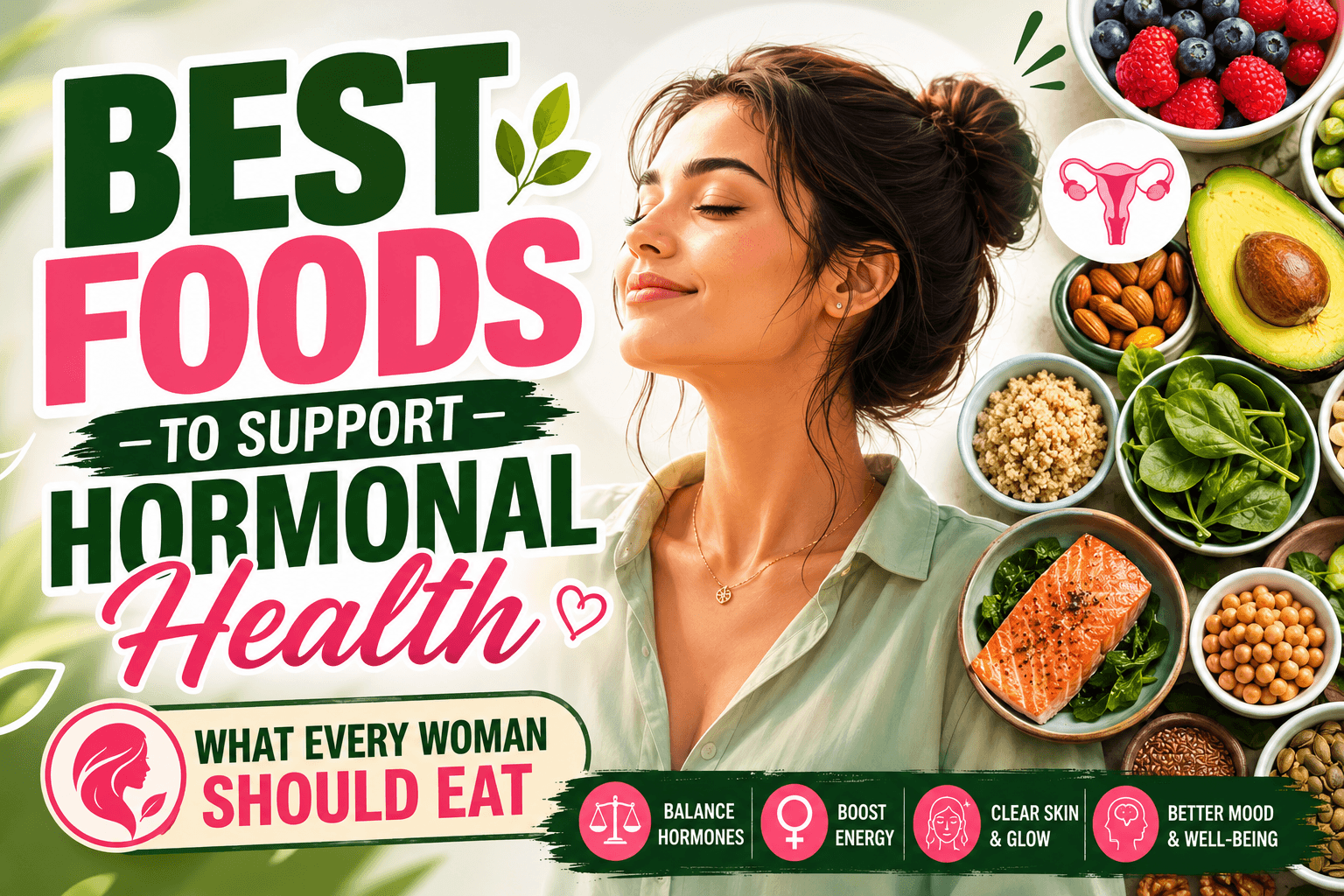
Explore essential foods that support hormonal health in women. From leafy greens to fatty fish, discover what to eat for balance.

Maryam Mumtaz
Co-Founder & CEO
14 min read•8/22/2026
Marsa Empower · Women's Nutrition & Hormonal Health · For Girls & Women Aged 13 and Above · 14 min read
"No single food will balance your hormones. But consistent, nourishing eating patterns genuinely support the metabolic and reproductive systems that hormones govern — and that is worth understanding clearly."
Search online for "foods to balance hormones" and you will find thousands of articles confidently claiming that specific foods — seed cycling, adaptogenic herbs, certain teas, particular supplements — will fix your hormones, regulate your periods, clear your acne, and resolve your PCOS.
Most of this is exaggerated. Some of it is simply wrong.
This guide takes a different approach — one grounded in what the evidence actually shows.
The honest truth: No individual food magically balances hormones. But overall nutritional patterns genuinely do influence the metabolic and hormonal systems that govern women's health — in ways that are meaningful, specific, and worth understanding clearly.
The right nutritional approach does not replace medical care for diagnosed hormonal conditions. But it is a genuinely important foundation — and many women find that thoughtful dietary changes produce real, noticeable improvements in energy, period regularity, acne, mood, and overall wellbeing.
This guide explains what those changes are, what the evidence supports, and how to apply them practically in everyday life.
"Hormonal balance" is a phrase used constantly in wellness content — and almost never clearly defined.
Hormones are chemical messengers that regulate virtually every function in the female body — reproduction, metabolism, mood, sleep, immune function, bone density, skin health, and more. Every woman's hormonal profile is unique and changes naturally across the menstrual cycle, across life stages, and in response to health conditions.
"Balance" does not mean that every hormone is at a specific fixed level. It means that the hormonal systems governing the body are functioning within the range that allows normal biological processes — ovulation, menstruation, energy production, bone maintenance — to occur reliably and without significant disruption.
Hormonal imbalance means something specific: one or more hormones are consistently outside the range that allows these processes to function normally. Examples include:
These imbalances have specific causes, specific symptoms, and in most significant cases — specific medical diagnoses and treatments. Good nutrition supports the systems involved, but it does not replace medical management when a genuine hormonal condition is present.
Yes — but with important nuance.
Provide the raw materials for hormone production: Hormones are built from cholesterol (for steroid hormones including oestrogen, progesterone, and testosterone), protein (for peptide hormones including insulin), and specific micronutrients (iodine and selenium for thyroid hormones, zinc for ovulatory hormones). Without adequate dietary supply of these building blocks, hormone production is impaired.
Influence insulin sensitivity: Dietary patterns — particularly the glycaemic load of the diet — directly affect insulin levels. Since elevated insulin drives androgen production in PCOS and contributes to metabolic disruption across multiple hormonal systems, this is one of the most meaningful dietary-hormonal connections.
Support the gut microbiome: The gut microbiome plays a direct role in oestrogen metabolism through the estrobolome — a group of gut bacteria that regulate how much oestrogen is recycled versus excreted. A diet rich in fibre and fermented foods supports gut diversity, which supports more balanced oestrogen metabolism.
Reduce chronic inflammation: Chronic inflammation disrupts hormonal signalling and worsens conditions including PCOS and endometriosis. Anti-inflammatory dietary patterns — rich in omega-3 fatty acids, antioxidants, and whole foods — reduce this inflammatory burden.
Replace nutrients lost through menstruation: Iron loss through monthly periods, increased calcium demands during growth and pregnancy, and widespread vitamin D deficiency all represent specific nutritional needs that diet must meet for normal hormonal function to be maintained.
Food cannot cure PCOS, treat hypothyroidism, diagnose endometriosis, or replace the clinical management of a confirmed hormonal disorder. Persistent symptoms — irregular or absent periods, severe acne, unexplained weight changes, significant hair loss — require medical evaluation, not only dietary modification.
The following sections cover the most important food categories for women's hormonal health — what they provide, why it matters, and how to include them practically.
Protein is the structural and functional material of the body — every cell, enzyme, immune molecule, and peptide hormone (including insulin and growth hormone) is built from amino acids obtained from dietary protein.
For women's hormonal health specifically, protein:
Inadequate protein intake — from skipping meals, very restrictive diets, or predominantly low-protein eating — impairs multiple hormonal pathways simultaneously.
| Food | Key Nutrients | How to Include |
|---|---|---|
| Eggs | Complete protein · Zinc · B12 · Vitamin D · Choline | Breakfast daily · Boiled as a snack |
| Chicken and lean meat | High-quality protein · Iron (haem) · Zinc · B12 | Lunch and dinner rotation |
| Fatty fish (salmon, sardines) | Protein · Omega-3 · Vitamin D · B12 | 2 to 3 times per week |
| Lentils and chickpeas | Plant protein · Iron · Zinc · Folate · Fibre | Daily in daal, curries, or salads |
| Greek yogurt | Protein (higher than regular yogurt) · Calcium · Probiotics | Breakfast or snack |
| Paneer | Protein · Calcium | In curries or as a side |
| Nuts and seeds | Plant protein · Healthy fats · Zinc · Magnesium | Handful as a daily snack |
Leafy greens are among the most nutrient-dense foods available — providing vitamins A, C, E, K, and several B vitamins, along with iron, calcium, magnesium, and folate. Their anti-inflammatory properties and fibre content make them particularly valuable for hormonal health.
Iron in leafy greens: Spinach, methi (fenugreek leaves), kale, and other dark leafy greens provide non-haem iron — the plant-based form. Pairing them with vitamin C (lemon juice, tomatoes, bell peppers) significantly improves absorption.
Folate: Particularly important for women of reproductive age — folate is essential for healthy cell division and is critically protective during early pregnancy (reducing neural tube defect risk).
Magnesium: Supports insulin sensitivity, reduces PMS symptoms, improves sleep quality, and reduces period pain. Many women are magnesium deficient without knowing it.
Indole-3-carbinol: A compound found in cruciferous greens (broccoli, cauliflower, kale, Brussels sprouts) that supports the liver's clearance of excess oestrogen — potentially helping women with oestrogen dominance.
Spinach · Methi (fenugreek) · Kale · Broccoli · Cauliflower · Cabbage · Rocket · Mustard greens (sarson) · Chard
Practical tip: Add a handful of spinach to daal, scrambled eggs, or smoothies. Steam broccoli as a side. Make methi paratha with whole wheat atta.
Fruit provides vitamins (particularly vitamin C), antioxidants, fibre, and natural sugars in a form that is absorbed more slowly than processed sugar — due to the fibre matrix of the fruit.
Vitamin C is one of the most important nutrients for hormonal health:
Antioxidants in fruits — particularly berries, pomegranate, guava, and mango — protect cells from the oxidative damage associated with chronic inflammation and hormonal conditions.
Fibre in fruits slows sugar absorption, supports stable blood sugar, and feeds the gut microbiome.
| Fruit | Key Benefit |
|---|---|
| Berries (strawberries, blueberries, raspberries) | Very high antioxidants · Low glycaemic · Vitamin C |
| Oranges and citrus | High vitamin C · Folate · Supports iron absorption |
| Guava | Exceptionally high vitamin C · Fibre |
| Amla (Indian gooseberry) | Highest vitamin C content of any common fruit · Anti-inflammatory |
| Pomegranate | Antioxidants · Iron · Folate · Some evidence for anti-androgenic effects |
| Apples and pears | Fibre · Quercetin antioxidant |
| Bananas | Potassium · Vitamin B6 (supports serotonin synthesis) · Magnesium |
| Avocado | Healthy fats · Potassium · Magnesium · B vitamins |
Whole grains provide complex carbohydrates — which release energy slowly — alongside fibre, B vitamins, iron, and zinc. They are significantly more supportive of hormonal health than their refined counterparts because they do not produce the rapid blood sugar spikes that drive insulin surges.
High-glycaemic foods (white bread, white rice, refined flour products, sugary foods and drinks) cause rapid blood sugar spikes followed by rapid insulin surges. Chronically elevated insulin:
Replacing refined grains with whole grains reduces these insulin spikes — directly benefiting hormonal health for most women, and particularly for those with PCOS.
| Grain | How to Use |
|---|---|
| Whole wheat atta | Replace maida in all chapati and paratha |
| Brown rice | Replace white rice in meals |
| Oats | Porridge · Overnight oats · Smoothies |
| Barley (jau) | High fibre · Add to soups and stews |
| Whole wheat bread | Replace white bread in sandwiches and toast |
| Quinoa | Complete protein + whole grain · Use as rice substitute |
Lentils, chickpeas, kidney beans, black beans, and other legumes are nutritional keystones for women's hormonal health — providing protein, iron, zinc, folate, fibre, and complex carbohydrates in a single food.
Plant protein and iron: For women who eat little meat — or none — legumes are the most accessible combined source of protein and iron. Daal consumed daily with a squeeze of lemon (vitamin C) is one of the most effective dietary strategies for maintaining iron levels in vegetarian women.
Fibre for insulin regulation: The high fibre content of legumes significantly slows glucose absorption — reducing post-meal insulin spikes and supporting stable blood sugar throughout the day.
Lignans: Some legumes (particularly lentils and chickpeas) contain lignans — plant compounds that interact with oestrogen receptors in ways that may help moderate oestrogen activity. The evidence is modest but the overall nutritional profile makes legumes highly worth including regardless.
Zinc: Essential for ovulatory function — the LH surge that triggers ovulation depends on adequate zinc. Plant-based zinc from legumes is less bioavailable than animal zinc, but soaking and cooking legumes reduces the phytates that inhibit zinc absorption.
A small daily handful of mixed nuts and seeds provides a concentrated source of nutrients directly relevant to hormonal health — without requiring major dietary changes.
Pumpkin seeds: Among the richest dietary sources of zinc — essential for ovulatory function and testosterone regulation. Also provide magnesium and plant-based omega-3.
Walnuts: The richest plant-based source of omega-3 fatty acids. Also provide vitamin E, zinc, and antioxidants. Anti-inflammatory and specifically associated with improved insulin sensitivity in research.
Flaxseeds (ground): Rich in lignans — plant compounds that modulate oestrogen activity. Also provide omega-3 fatty acids and fibre. Must be ground to be bioavailable. Add to yogurt, smoothies, or oatmeal.
Chia seeds: Excellent source of plant-based omega-3, fibre, calcium, and magnesium. Soak in water or milk before eating.
Sesame seeds and tahini: Among the highest calcium contents of any plant food. Also provide zinc, magnesium, and lignans.
Almonds: Vitamin E · Magnesium · Calcium · Healthy fats. Well-studied for insulin sensitivity support.
Brazil nuts: The most concentrated dietary source of selenium — essential for converting T4 to the active thyroid hormone T3, and for protecting thyroid cells from oxidative damage. One to two Brazil nuts daily provides adequate selenium.
A small handful of mixed nuts and seeds as a daily snack — pumpkin seeds, walnuts, almonds, and chia or flax added to yogurt or a smoothie — adds a meaningful nutritional contribution across multiple hormonal support pathways without requiring a major dietary overhaul.
Dietary fat is not the enemy of hormonal health. Adequate healthy fat intake is essential for it.
All steroid hormones — including oestrogen, progesterone, testosterone, cortisol, and vitamin D — are produced from cholesterol, which is derived from dietary fat. A very low-fat diet deprives the body of the raw material needed for hormone synthesis. This is one reason that severely fat-restricted diets and eating disorders that produce very low body fat consistently disrupt menstrual function.
The key is the type of fat:
Omega-3 fatty acids (anti-inflammatory):
Monounsaturated fats (heart-healthy and anti-inflammatory):
Saturated fats in moderation:
Trans fats (avoid):
Plain yogurt — particularly full-fat or Greek yogurt — provides:
Some research suggests that high dairy intake — particularly skimmed milk — may worsen acne and potentially influence androgen activity in some women with PCOS. The evidence is not definitive, and most women with PCOS tolerate moderate dairy consumption well. Fermented dairy (yogurt) is generally better tolerated than unfermented milk and provides the added benefit of probiotics.
If you notice that dairy consistently worsens your acne, reducing intake and observing whether skin improves is a reasonable self-experiment.
Fatty fish — salmon, sardines, mackerel, anchovies, and tuna — are the richest dietary source of omega-3 EPA and DHA. These long-chain omega-3 fatty acids have specific, well-documented effects on women's hormonal health:
Reduce period pain: Omega-3s compete with arachidonic acid (the precursor to inflammatory prostaglandins) in the body's enzymatic pathways — reducing the amount of inflammatory prostaglandins produced during menstruation, and therefore reducing cramping. Multiple studies have shown fish oil to be as effective as ibuprofen for reducing period pain in some women.
Reduce androgens in PCOS: Regular omega-3 intake measurably reduces free testosterone levels in women with PCOS — directly reducing androgen-driven symptoms including acne and hirsutism.
Support mood and brain health: DHA is the primary structural fat of the brain. Adequate omega-3 intake supports serotonin and dopamine activity — the neurotransmitter systems governing mood, motivation, and emotional regulation.
Reduce inflammation: Chronic low-grade inflammation worsens insulin resistance, PCOS symptoms, and endometriosis. The anti-inflammatory effect of regular omega-3 intake reduces this inflammatory burden.
Practical target: Two to three servings of fatty fish per week. Canned sardines are an affordable, widely available, and nutritionally excellent option — particularly when eaten with bones (also providing calcium).
For women who do not eat fish: walnuts, chia seeds, flaxseeds (ground), and hemp seeds provide ALA (the plant form of omega-3). The body converts ALA to EPA and DHA but less efficiently — an algae-based DHA supplement bridges this gap for vegetarians and vegans.
Iron deficiency is the most common nutritional deficiency in women worldwide — and for good reason. Women lose iron monthly through menstruation and require it in greater amounts during pregnancy and breastfeeding.
Iron is essential for haemoglobin production — the protein that carries oxygen in red blood cells. Without adequate iron, oxygen delivery to every cell falls — including the cells involved in hormone production and the reproductive system.
Iron deficiency also directly impairs thyroid hormone production — iodine cannot be incorporated into thyroid hormones without iron-dependent enzymes. This means iron deficiency can produce thyroid-like symptoms even when the thyroid itself is functioning normally.
Haem iron (animal sources — best absorbed, 15 to 35% absorption):
| Food | Iron Per Serving |
|---|---|
| Chicken liver | ~11 mg per 85g |
| Lean beef or lamb | ~2.5–3.5 mg per 85g |
| Chicken (dark meat) | ~1.1 mg per 85g |
| Canned sardines | ~2.5 mg per 100g |
| Eggs | ~1 mg per egg |
Non-haem iron (plant sources — 2 to 20% absorption, improved by vitamin C):
| Food | Iron Per Serving |
|---|---|
| Lentils (cooked) | ~3.3 mg per 100g |
| Tofu (firm) | ~3.4 mg per 100g |
| Spinach (cooked) | ~3.6 mg per 100g |
| Chickpeas (cooked) | ~2.9 mg per 100g |
| Pumpkin seeds | ~2.5 mg per 30g |
| Fortified cereal | Varies — check label |
The most important iron tip: Always pair plant-based iron sources with vitamin C — lemon juice on lentils, tomatoes with spinach, orange juice with fortified cereal. Vitamin C converts plant iron to a form the body can absorb two to four times more efficiently.
Equally important: Avoid drinking tea or coffee with iron-rich meals. The tannins in both bind to iron and reduce absorption by up to 70%. Wait at least one hour after an iron-rich meal before drinking chai.
Calcium is the primary mineral in bone tissue — and the teenage years are the most critical window for building the bone density that protects against osteoporosis decades later. Women aged 14 to 18 need 1,300 mg of calcium daily — significantly more than adults.
Vitamin D is essential for calcium absorption from food. Without adequate vitamin D, the intestine absorbs only 10 to 15% of dietary calcium rather than the 30 to 40% possible with sufficient vitamin D.
| Food | Calcium Per Serving |
|---|---|
| Milk (250ml) | ~300 mg |
| Yogurt (1 cup) | ~250–300 mg |
| Paneer (100g) | ~190 mg |
| Calcium-set tofu (100g) | ~350 mg |
| Sardines with bones (85g) | ~325 mg |
| Sesame seeds or tahini (30g) | ~270 mg |
| Spinach (cooked, 100g) | ~99 mg |
| Almonds (30g) | ~75 mg |
Vitamin D is found in very few foods in significant amounts — which is why deficiency is so widespread. The primary source is sunlight.
| Source | Vitamin D |
|---|---|
| Sunlight on skin (10–20 min midday on forearms) | Significant production |
| Salmon (85g, cooked) | ~400–600 IU |
| Sardines (85g) | ~200–300 IU |
| Eggs (1 yolk) | ~40–50 IU |
| Fortified milk (250ml) | ~100–150 IU |
| Fortified cereal (1 serving) | ~40–100 IU |
For most Pakistani women — given indoor lifestyles, skin coverage, and darker skin tones requiring longer sun exposure — dietary sources alone are rarely sufficient to maintain adequate vitamin D. A 25-OH vitamin D blood test identifies deficiency, and supplementation (typically 1,000 to 2,000 IU daily) corrects it.
The week before and during menstruation creates specific nutritional needs — driven by blood loss, hormonal shifts, prostaglandin activity, and the physical demands of uterine contraction.
Iron: Every period involves iron loss. Including iron-rich foods during and around menstruation — and consistently throughout the month — maintains iron stores. Heavy periods in particular require consistent dietary attention to iron.
Magnesium: Reduces the intensity of uterine contractions (cramps), supports mood stability during the progesterone fall of menstruation, and improves sleep quality. Best sources: dark chocolate (70%+) · pumpkin seeds · spinach · almonds · black beans.
Omega-3 fatty acids: Reduce prostaglandin production, directly reducing cramping intensity. Eating fatty fish two to three times per week throughout the month reduces period pain over time.
Vitamin C: Supports iron absorption and is an antioxidant that reduces the oxidative stress associated with inflammation during menstruation.
Water: Staying well hydrated reduces bloating and headaches during menstruation, and supports the overall metabolic processes of a period.
Ginger contains compounds (gingerols and shogaols) with measurable anti-prostaglandin activity. Studies have found ginger tea to be as effective as ibuprofen for reducing period pain intensity in some women when consumed from the day before menstruation begins. Two to three cups of fresh ginger tea daily during the period is a genuinely evidence-supported natural remedy.
Turmeric (curcumin), chamomile tea, and fennel tea also have anti-inflammatory properties that may reduce period symptoms — though the evidence for each is less robust than for ginger.
PCOS is driven by insulin resistance in the majority of women — meaning diet has a more direct impact on PCOS than on most other hormonal conditions. The most evidence-supported dietary approach for PCOS is a low-glycaemic, anti-inflammatory eating pattern.
Reduce high-glycaemic foods: This is the single most impactful dietary change for most women with PCOS. High-glycaemic foods cause rapid insulin spikes, which signal the ovaries to produce more androgens — worsening acne, hair changes, and cycle disruption. Reducing refined carbohydrates, sugary drinks, white bread, and processed snacks consistently over weeks produces measurable improvements in androgen levels and hormonal symptoms.
Include protein at every meal: Protein stabilises blood sugar, reduces insulin spikes, and supports satiety. Adequate protein also prevents the muscle loss that worsens insulin resistance over time.
Eat plenty of fibre: Fibre slows glucose absorption, feeds the gut microbiome, and supports oestrogen clearance. Aim for at least 25 to 30g per day from vegetables, legumes, whole grains, and seeds.
Prioritise omega-3 rich foods: Directly reduce the androgen levels driving PCOS symptoms and reduce the chronic inflammation associated with insulin resistance.
Include anti-inflammatory spices: Cinnamon has mild insulin-sensitising properties — adding half a teaspoon to morning oats, tea, or cooking is an easy, flavourful addition. Turmeric has anti-inflammatory properties relevant to the inflammatory component of PCOS.
Prioritise: Lentils · Chickpeas · Eggs · Fatty fish · Leafy greens · Berries · Avocado · Walnuts · Pumpkin seeds · Whole grains · Greek yogurt (moderate) · Olive oil · Cinnamon
Reduce significantly: Sugary drinks · White bread and white rice · Packaged biscuits and chips · Sweets and mithai · Fried fast food · Excess caffeine
The menstrual cycle produces predictable hormonal shifts that create different nutritional needs across its four phases. This does not mean following a rigid meal plan — it means being aware of which nutrients your body uses most at each phase.
| Cycle Phase | Hormonal Environment | Nutritional Focus | Why |
|---|---|---|---|
| Menstruation (Days 1–5) | Low oestrogen and progesterone | Iron · Magnesium · Vitamin C · Omega-3 | Replace blood loss · Reduce cramping · Support mood during hormonal low |
| Follicular (Days 6–13) | Rising oestrogen | Varied, balanced nutrition · Fermented foods | Support the energy and wellbeing of rising oestrogen · Feed gut microbiome |
| Ovulation (Day 14) | Peak oestrogen | Antioxidant-rich foods | Support oxidative protection during peak hormonal activity |
| Luteal (Days 15–28) | Progesterone dominant | Magnesium · Complex carbohydrates · Reduce caffeine and salt | Reduce PMS · Manage bloating · Support progesterone's sleep-promoting effect |
The most practical application: Eat iron-rich foods and pair them with vitamin C during and around your period. Include magnesium-rich foods (dark chocolate, pumpkin seeds, almonds, leafy greens) in the week before your period to reduce PMS symptoms. Include probiotic foods (yogurt, lassi) and plenty of fibre consistently throughout the month.
Being honest about what to limit is as important as celebrating what to include. These are not foods to eliminate entirely — they are foods to reduce, because consistent overconsumption genuinely worsens the hormonal and metabolic processes governing women's health.
Why to limit: Rapid blood sugar spikes → rapid insulin spikes → increased androgen production → worsened PCOS symptoms, increased acne, promoted abdominal fat storage, increased inflammation.
What to reduce: Sugary drinks (cola, packaged juices, sweet chai) · White bread, white rice, maida products · Packaged biscuits, chips, and processed snacks · Sweets, mithai, and candy
Not a ban: One piece of mithai at a celebration will not disrupt your hormones. Daily consumption of high-sugar foods throughout the month will, over time, worsen insulin resistance and its consequences.
Why to limit: Typically high in refined carbohydrates, trans fats, sodium, and artificial additives — while low in the micronutrients (iron, zinc, magnesium, B vitamins) that hormonal health requires. They crowd out more nutritious foods rather than contributing to health.
Why to limit: Alcohol impairs the liver's ability to metabolise and clear hormones — particularly oestrogen. Chronic alcohol consumption is associated with elevated oestrogen levels, disrupted menstrual cycles, and impaired fertility. It also disrupts sleep quality (worsening all hormonal regulation) and depletes zinc and B vitamins essential for hormonal function.
Occasional modest consumption: Unlikely to produce significant hormonal disruption. Consistent heavy consumption is a genuine hormonal disruptor.
Why to limit: Caffeine directly stimulates cortisol release. Elevated cortisol suppresses reproductive hormones and disrupts the sleep that is essential for hormonal regulation. High caffeine intake also reduces iron absorption from food and depletes magnesium.
Practical target: Limit to one to two caffeinated drinks daily. Avoid caffeine after midday — its six-hour half-life means a 3pm chai is partially active at 9pm, disrupting sleep.
This does not mean giving up chai entirely. It means being thoughtful about timing and quantity.
Supplements are aggressively marketed to women with hormonal concerns — and the honest answer to whether they balance hormones is: it depends entirely on which supplement, at what dose, and for what purpose.
| Supplement | Evidence Level | What It Does | Who Benefits |
|---|---|---|---|
| Myo-inositol | Strong | Improves insulin sensitivity · Reduces androgens · Restores ovulation | Women with PCOS |
| Vitamin D | Moderate-Strong | Improves insulin sensitivity · Supports thyroid function · Improves cycle regularity in deficient women | Women with confirmed deficiency |
| Omega-3 (fish oil) | Moderate-Strong | Reduces inflammation · Reduces androgens in PCOS · Reduces period pain | Most women — particularly with PCOS or heavy periods |
| Magnesium | Moderate | Reduces PMS and period pain · Improves insulin sensitivity · Improves sleep | Women with PMS, poor sleep, or PCOS |
| Iron | Essential when deficient | Restores oxygen delivery · Supports thyroid function · Reduces fatigue | Women with confirmed iron deficiency (test ferritin first) |
| Zinc | Moderate | Supports ovulation · Reduces acne · Regulates androgen activity | Women with PCOS or significant acne |
The most important rule: Test before supplementing for anything that requires blood testing (iron, vitamin D, B12). Supplementing without testing may give you what you do not need while missing what you do.
This is not a strict prescription. It is a practical illustration of how the nutritional principles above can look in everyday eating — using foods accessible in Pakistan.
Why: Protein + calcium + vitamin C (boosts iron from eggs) + omega-3 from walnuts
Why: Potassium + B6 + magnesium + zinc + healthy fats
Why: Iron + protein + vitamin C (lemon on daal boosts iron absorption) + calcium + probiotics + fibre
Why: Fibre + protein + calcium + antioxidants
Why: Omega-3 from fish + protein + vitamin C from the salad + anti-inflammatory olive oil
| The Myth | The Truth |
|---|---|
| "Seed cycling balances hormones" | Flaxseeds, pumpkin seeds, sesame seeds, and sunflower seeds are genuinely nutritious. There is very limited clinical evidence that the specific seed cycling protocol (alternating seed types across cycle phases) meaningfully alters hormone levels. The seeds are worth eating — the protocol's specific hormone-balancing claims are not well-supported. |
| "Dairy causes hormonal imbalance in all women" | Moderate dairy consumption is well-tolerated by most women and provides important calcium, protein, and B12. Some women with acne or PCOS notice improvement when reducing dairy. For others, it makes no difference. Individual response matters more than a blanket rule. |
| "Green smoothies can reset your hormones" | Vegetable smoothies are nutritious but do not "reset" hormones — which are regulated by complex feedback systems that a smoothie cannot override. |
| "Soy foods are dangerous for women's hormones" | Moderate consumption of whole soy foods (tofu, edamame, tempeh) is safe for most women and is associated with health benefits. The phytoestrogens in soy are weak — they do not significantly alter oestrogen levels in most women at typical dietary amounts. |
| "Sugar causes PCOS" | Excess sugar worsens insulin resistance, which worsens PCOS symptoms. But PCOS has genetic and hormonal roots — sugar does not cause it. |
| "Going dairy-free cures PCOS" | Dairy elimination is not a documented PCOS treatment. The most evidence-supported dietary approach is low-glycaemic eating, regular exercise, and — where indicated — myo-inositol supplementation. |
| "Eating more fat increases oestrogen" | Adequate healthy fat intake is necessary for hormone production. Severely fat-restricted diets can impair hormonal function. This does not mean eating unlimited fat increases oestrogen — hormones are tightly regulated through feedback mechanisms. |
This is perhaps the most important section in this guide.
Good nutrition supports hormonal health. But nutrition is not a substitute for medical evaluation when symptoms suggest a specific hormonal condition that requires diagnosis and treatment.
| Symptom | Why It Warrants Attention |
|---|---|
| Periods consistently absent or fewer than 8 per year | May indicate PCOS, thyroid dysfunction, or hypothalamic amenorrhoea |
| Very heavy periods soaking a pad every 1 to 2 hours | Risk of iron deficiency anaemia · May indicate fibroids or hormonal imbalance |
| Severe period pain preventing normal daily activities | May indicate endometriosis or adenomyosis |
| Persistent acne concentrated along the jawline, unresponsive to skincare | May indicate elevated androgens from PCOS |
| Noticeable excess facial or body hair | Clinical indicator of androgen excess — warrants hormonal testing |
| Significant unexplained hair loss | May indicate iron deficiency, thyroid dysfunction, or PCOS |
| Unexplained weight gain despite healthy diet | May indicate thyroid dysfunction, insulin resistance, or PCOS |
| Persistent heavy fatigue not improved by adequate sleep | May indicate iron deficiency anaemia, thyroid dysfunction, or vitamin D deficiency |
No dietary change alone resolves a confirmed medical diagnosis. Eating well supports treatment. It does not replace it.
Marsa's Smart Nutrition resources help women understand which foods and nutrients are most relevant to their specific health picture — whether they are managing PCOS, recovering from iron deficiency, supporting bone health through the teenage years, or simply trying to eat more consistently well.
Marsa's Health Hub allows women to track their menstrual cycles, energy levels, symptoms, and food patterns together — revealing the connections between dietary choices and hormonal symptoms that become visible over months of consistent tracking.
Marsa's health education library explains nutritional science clearly, without oversimplification or the exaggeration that characterises much online wellness content — helping women distinguish what is genuinely evidence-supported from what is marketing.
Marsa's Digital Doctors provide informational guidance on nutrition and hormonal health topics in a private, accessible format — helping women understand their symptoms and prepare for medical consultations.
Important: Marsa's resources are educational and informational. For specific health conditions, personalised medical nutrition advice, or any health concern that has been present for more than two to three weeks, please consult a qualified healthcare professional or registered dietitian.
Can what I eat really affect my hormones?
Yes — through specific, well-documented mechanisms. Diet influences insulin levels (which affect androgen production), provides the raw materials for hormone synthesis, affects the gut microbiome (which regulates oestrogen metabolism), and reduces or worsens chronic inflammation that disrupts hormonal signalling. However, food is one input among many — genetics, sleep, stress, body weight, medications, and underlying medical conditions all also affect hormonal health.
What is the best diet for PCOS?
The most evidence-supported dietary approach for PCOS is a low-glycaemic, anti-inflammatory eating pattern — one that reduces refined carbohydrates and sugar, includes protein at every meal, prioritises whole grains and legumes over refined alternatives, includes omega-3 rich foods regularly, and emphasises anti-inflammatory vegetables and fruits.
Which single food is best for hormonal health?
No single food significantly balances hormones. The evidence supports overall dietary patterns rather than individual foods. If forced to name the most impactful single dietary change: reducing sugary drinks and replacing them with water — because this change reduces insulin spikes that drive androgen production and metabolic disruption across multiple hormonal pathways.
Should I take supplements for hormonal health?
Only where a specific deficiency or clinical indication exists. Iron and vitamin D supplementation are appropriate for women with confirmed deficiency (tested via blood test). Myo-inositol has strong evidence for PCOS specifically. Omega-3 supplementation is appropriate for women who cannot eat fatty fish regularly. General "hormone balancing" supplement blends have limited evidence and should be approached with scepticism. Discuss any supplementation with a healthcare professional.
Can I eat my way out of PCOS or thyroid disease?
No. Dietary changes can significantly improve the symptoms and metabolic consequences of PCOS — and many women with PCOS experience remarkable symptom improvement through diet and lifestyle changes. But PCOS is not cured by food, and thyroid conditions require medical management. Nutrition supports treatment — it does not replace it.
| Nutritional Priority | Key Foods | Why It Matters |
|---|---|---|
| Protein at every meal | Eggs · Lentils · Chicken · Fish · Greek yogurt | Builds hormones · Stabilises blood sugar |
| Reduce high-glycaemic foods | Less sugar, white bread, and processed carbs | Reduces insulin → reduces androgens |
| Iron + Vitamin C together | Lentils + lemon · Meat + tomato · Spinach + peppers | Prevents iron deficiency and its hormonal consequences |
| Omega-3 fatty acids | Fatty fish 2–3x/week · Walnuts · Chia · Flax | Reduces inflammation · Reduces androgens · Reduces period pain |
| Magnesium daily | Pumpkin seeds · Dark chocolate · Spinach · Almonds | Reduces PMS · Supports insulin sensitivity · Improves sleep |
| Calcium and Vitamin D | Dairy or fortified alternatives · Fatty fish · Sunlight | Builds and maintains bone density |
| Whole grains over refined | Brown rice · Whole wheat atta · Oats · Barley | Stable blood sugar → better insulin regulation |
| Legumes daily | Lentil daal · Chickpeas · Kidney beans | Plant protein + iron + fibre + zinc |
| Selenium | 1–2 Brazil nuts daily | Supports thyroid hormone conversion |
| Zinc | Pumpkin seeds · Meat · Chickpeas · Cashews | Supports ovulation · Reduces androgens |
"Eating well for your hormones is not about finding the perfect list of foods to eat and the perfect list to avoid. It is about building a consistent, nourishing eating pattern that gives your body what it needs — most of the time — over months and years. That consistency is what produces real, lasting change."
Educational Disclaimer
This article is for educational and awareness purposes only. It does not constitute medical advice, diagnosis, or treatment. If you have persistent hormonal symptoms, please consult a qualified healthcare professional or registered dietitian for personalised evaluation and guidance. Do not begin iron or other supplementation without appropriate blood testing.
Marsa Empower · Women's Nutrition · Hormonal Health · Care. Safety. Growth.
Medical Disclaimer
This article is for general informational and educational purposes only and is not a substitute for professional medical advice, diagnosis, or treatment. Always seek the advice of a qualified healthcare provider with any questions you may have regarding a medical condition. Never disregard professional medical advice or delay seeking it because of something you have read on MARSA Empower.
Written By
Maryam Mumtaz
Co-Founder & CEO
Co-Founder of MARSA Empower who leads the visual and strategic evolution of the platform. Maryam bridges technical complexity with human-centric design, architecting the team's official roadmap and ensuring MARSA effectively addresses the real-world needs of women. With deep expertise in agentic AI, full-stack development, and UI/UX design, she has delivered 50+ projects for 30+ satisfied clients.
Enjoyed this story?



