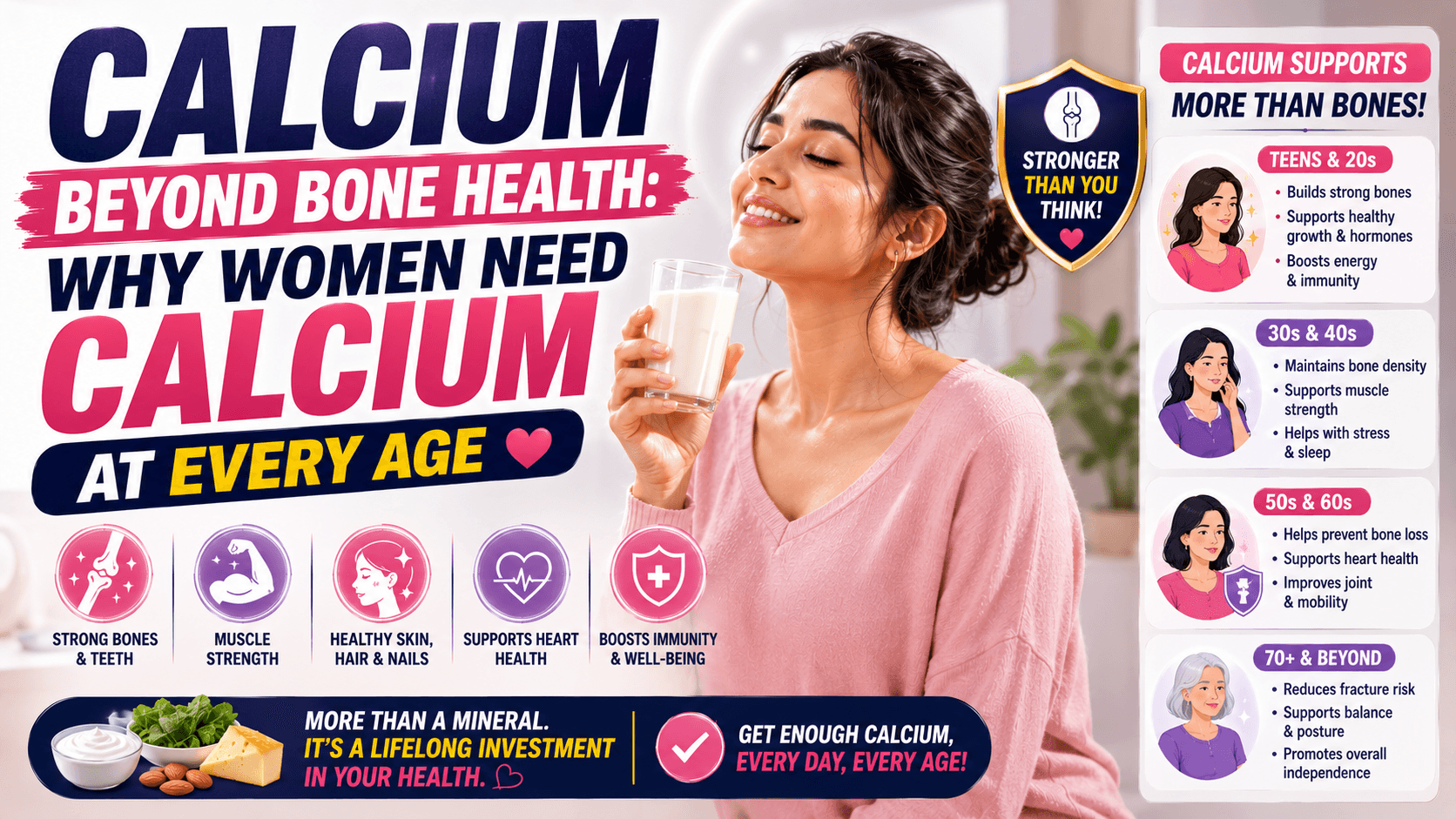
Explore the vital role calcium plays in women's health at every age, from strengthening bones to regulating hormones and beyond.

Maryam Mumtaz
Co-Founder & CEO
12 min read•9/4/2026
Marsa Empower · Women's Nutrition & Wellness · For Girls & Women Aged 13 and Above · 12 min read
When calcium is mentioned in a health context, the conversation almost immediately moves to bones. Drink your milk for strong bones. Take a calcium supplement after menopause to prevent osteoporosis. Make sure teenagers get enough calcium for their skeleton.
These points are all valid and important. But they represent only one dimension of what calcium actually does in the body — and the narrowness of the bone-focused conversation means that many women underestimate how essential calcium is for their health throughout every stage of life and in multiple body systems simultaneously.
Calcium is the most abundant mineral in the human body. Its primary structural role is in the bones and teeth, which contain approximately 99 percent of the body's total calcium. But the remaining one percent circulates through the blood and tissues — and that fraction performs functions without which normal muscle contraction, nerve signalling, cardiac function, blood clotting, and cellular communication would all fail.
Understanding calcium as a nutrient for the whole body — not only for bones — changes how you think about meeting your daily calcium needs. This guide explains what calcium does across every system that depends on it, how much women at different life stages need, where to find it in food, and when supplementation is appropriate.
Beyond its structural role in bones and teeth, calcium is involved in several other essential biological processes.
Muscle contraction. Every time a muscle contracts — whether you are walking, breathing, exercising, or swallowing — calcium is directly involved in triggering and regulating that contraction. When a nerve signal tells a muscle to contract, calcium is released within the muscle cell, enabling the proteins that generate muscle movement to interact. When the signal ends, calcium is actively removed to allow the muscle to relax. This calcium-dependent contraction mechanism applies to all muscle tissue, including skeletal muscles, the smooth muscle of the digestive and vascular systems, and the cardiac muscle of the heart.
Nerve signalling. The transmission of nerve impulses depends on carefully regulated calcium levels both outside and inside nerve cells. Calcium is involved in the release of neurotransmitters at the junctions between nerve cells, enabling the nervous system's communication pathways to function.
Cardiac function. The heart muscle contracts in response to calcium signalling — the same fundamental mechanism as skeletal muscle. The careful regulation of calcium within heart muscle cells is essential for maintaining a normal, consistent heartbeat and for the heart's ability to pump blood with the appropriate force and rhythm.
Blood clotting. Calcium is an essential cofactor in multiple steps of the blood coagulation cascade — the series of biochemical reactions that produce a blood clot when a vessel is injured. Without adequate calcium, clotting would be impaired.
Hormone and enzyme activity. Calcium acts as a second messenger within cells for multiple hormonal signalling pathways, including those governing insulin secretion, cell division, and various metabolic processes.
Cellular communication. Many intracellular signalling pathways involve calcium as a regulatory messenger — meaning that calcium fluctuations inside cells help translate external signals into cellular responses.
Because calcium serves all of these functions simultaneously, the body maintains blood calcium within a very narrow range through a sophisticated hormonal regulation system involving parathyroid hormone, calcitonin, and vitamin D. When dietary calcium is consistently insufficient over time, this system draws calcium from the skeleton to maintain blood levels — which is one mechanism through which chronic low calcium intake affects bone health.
Adolescence is the most critical period for bone mass development in a woman's entire life. The skeleton grows rapidly during the teenage years, and peak bone mass — the maximum amount of bone tissue accumulated — is reached in the early twenties. The bone density a woman has at her peak directly determines her long-term bone health, including her risk of osteoporosis and fractures in later life.
Teenage girls have the highest calcium requirement of any life stage: approximately 1,300 mg per day. This reflects the exceptional demands of the growing skeleton during this period.
Adequate calcium intake during adolescence is genuinely a long-term investment. The habits established in the teenage years — calcium-rich foods, regular physical activity, adequate vitamin D, and not smoking — create the bone density reserve that protects against bone loss in the decades following menopause.
For teenage girls following vegan or restrictive diets, calcium deserves specific attention. Plant-based diets can provide adequate calcium, but doing so requires consistent inclusion of calcium-fortified foods or supplementation, and this needs to be planned rather than assumed.
Bone development continues into the early twenties. The window for maximising peak bone mass remains open through approximately age 25 to 30, after which bone density plateaus before eventually beginning a gradual age-related decline.
For women in their twenties and thirties, consistent adequate calcium intake alongside regular weight-bearing exercise, adequate vitamin D, and sufficient protein intake supports bone health while also serving the ongoing physiological functions — muscle, nerve, cardiac — that calcium contributes to throughout adult life.
Most women in this age group can meet their calcium needs (approximately 1,000 mg per day) through a varied diet that includes dairy or fortified alternatives, legumes, fish with edible bones, and calcium-containing vegetables, without requiring supplementation.
Pregnancy significantly increases the body's physiological demands across multiple nutritional areas, and calcium is among them. The developing baby's skeleton, teeth, and organ systems all require calcium, and the maternal cardiovascular and musculoskeletal systems continue to need it for their own normal function throughout pregnancy.
The recommended calcium intake for pregnant women aged 19 to 50 remains approximately 1,000 mg per day — the same as the non-pregnant adult recommendation — because the body upregulates calcium absorption efficiency during pregnancy to meet the increased demands without raising the dietary recommendation.
However, this assumes adequate vitamin D (which enables that increased absorption) and a diet consistently providing calcium from food sources. Women whose pre-pregnancy calcium intake was already inadequate, who follow restrictive diets, or who have conditions affecting calcium absorption may benefit from supplementation guided by their healthcare provider.
Do not take high-dose calcium supplements during pregnancy without professional guidance. Excessive supplementation carries risks and is not beneficial beyond meeting established requirements.
Calcium is transferred from the mother into breast milk throughout the breastfeeding period, providing the infant with the calcium it needs for early development. The mother's body has mechanisms that increase calcium absorption and mobilise calcium from the skeleton during breastfeeding.
The recommended intake for breastfeeding women aged 19 to 50 is approximately 1,000 mg per day. Research generally shows that bone density changes associated with breastfeeding are largely reversible after weaning in women who have adequate overall nutritional status.
Continuing to include good calcium sources — dairy or dairy alternatives, fortified foods, fish with edible bones, legumes, and tofu — throughout breastfeeding supports both maternal and infant calcium needs.
Menopause brings a significant change in the calcium and bone health picture. The decline in oestrogen that defines the menopausal transition increases bone resorption — the rate at which old bone is broken down — while bone formation does not increase proportionately. The result is accelerated bone loss, typically most rapid in the first five to ten years after menopause.
For this reason, the recommended calcium intake increases to approximately 1,200 mg per day for women aged 51 and older. This higher recommendation reflects the increased importance of dietary calcium in supporting bone maintenance when the oestrogen-mediated protection of bone is reduced.
However, it is essential to understand that calcium alone is not sufficient to prevent osteoporosis or fractures in postmenopausal women. Bone health after menopause depends on multiple interconnected factors. These include regular weight-bearing and resistance exercise, which directly stimulates bone tissue maintenance. Adequate vitamin D, which is essential for calcium absorption. Adequate protein, which provides the structural material for bone matrix. Not smoking, since smoking significantly accelerates bone loss. Moderate alcohol intake, since excess alcohol impairs bone formation. Genetic predisposition and family history of osteoporosis. Certain medications, including corticosteroids, that are associated with bone loss when used long-term.
A healthcare professional can assess individual bone health risk and recommend appropriate management, which may include dietary approaches, lifestyle changes, calcium and vitamin D supplementation, and in some women, prescription medications for osteoporosis.
The connection between calcium and muscle function is direct and operates moment to moment in every voluntary and involuntary muscle movement the body makes.
When a motor nerve sends a signal to a muscle fibre, this signal triggers the release of calcium stored within the muscle cell into the surrounding cellular fluid. This calcium then binds to proteins (specifically troponin, which regulates myosin-actin interaction) that enable the mechanical shortening of muscle fibres — the actual contraction. When the nerve signal ends, calcium is actively pumped back into storage within the cell, allowing the contraction to end and the muscle to relax.
This process repeats billions of times daily across all muscle tissue in the body, from the diaphragm contracting with every breath to the leg muscles propelling each step, to the facial muscles used in expression. Every one of these contractions requires calcium.
The blood maintains tight control of the calcium available for this purpose. Significant abnormalities in blood calcium — whether from severe deficiency, certain medical conditions, or hormonal problems affecting calcium regulation — can produce muscle cramps, spasms, weakness, or abnormal contractions. However, ordinary day-to-day variation in dietary calcium intake does not typically produce dramatic acute muscle symptoms in otherwise healthy women, because the regulatory system adjusts to maintain blood calcium within an appropriate range.
The nervous system depends on precisely regulated calcium levels to transmit signals effectively. Calcium ions play a direct role in the release of neurotransmitters at synapses — the junctions where one nerve cell communicates with another or with a muscle or other target cell.
When a nerve impulse reaches the end of a nerve fibre, calcium influx into the nerve terminal triggers the release of neurotransmitter-containing vesicles into the synapse. The neurotransmitter then crosses the synapse and binds to receptors on the target cell, propagating or modulating the signal.
This calcium-dependent neurotransmitter release is fundamental to all nervous system function — sensory perception, motor control, autonomic regulation, cognitive function, and the entire network of nerve-muscle and nerve-organ communication throughout the body.
This is why calcium is described as an essential nutrient rather than simply a "bone vitamin." Its role in nervous system function is as fundamental as its structural role in the skeleton.
The cardiac muscle that makes up the heart wall contracts in response to the same calcium-dependent mechanism as skeletal muscle, but with important regulatory differences that maintain the heart's rhythmic, coordinated pumping function.
Calcium enters cardiac muscle cells from the blood during each heartbeat and triggers further calcium release from internal stores, producing the strong, coordinated contraction of the heart. The precise timing and magnitude of this calcium cycling determines heart rate, contraction strength, and the coordination between different areas of the heart.
Calcium levels in the blood and cardiac cells are maintained within a very narrow range. Both extremes — severely low blood calcium (hypocalcaemia) and severely elevated blood calcium (hypercalcaemia) — can produce cardiac arrhythmias and other serious cardiovascular effects. This is managed by the body's hormonal calcium regulation system and, when necessary, by medical intervention.
This does not mean that taking more calcium supplements will strengthen the heart or improve cardiovascular health beyond what is achieved by adequate nutritional calcium. The goal is adequate calcium — not excess. High-dose calcium supplementation has been associated with cardiovascular concerns in some research, which is one reason supplementation should be targeted to genuine need rather than taken indiscriminately.
Teeth are composed primarily of calcium and phosphate mineral, forming the hydroxyapatite crystal structure that gives dental enamel and dentine their hardness. Adequate calcium intake supports the mineralisation of teeth during development and the maintenance of dental mineral density throughout life.
However, dental health depends on far more than calcium intake alone. Good dental hygiene practices — brushing twice daily with fluoride toothpaste, cleaning between teeth daily, attending regular dental checkups, and limiting frequency of sugary and acidic food and drink consumption — are the primary determinants of dental health, alongside adequate nutrition.
The following table summarises the general daily calcium recommendations for women at different life stages.
| Age or Life Stage | Recommended Calcium Per Day |
|---|---|
| Girls aged 9 to 18 years | 1,300 mg |
| Women aged 19 to 50 years | 1,000 mg |
| Pregnant women aged 19 to 50 years | 1,000 mg |
| Breastfeeding women aged 19 to 50 years | 1,000 mg |
| Women aged 51 and older | 1,200 mg |
These are population-level recommendations representing the intake estimated to meet the needs of most women in each group. Individual requirements may vary depending on health conditions, digestive function, medications, overall dietary pattern, and vitamin D status.
It is also important to note that these figures represent total dietary calcium from all food sources combined — not supplements alone or a single food group.
Meeting calcium requirements through food is achievable for most women when a variety of calcium-containing foods are included regularly across the day.
Dairy foods provide some of the most concentrated and best-absorbed calcium available. Milk, yogurt, and cheese all provide significant calcium per serving. Plain yogurt is particularly versatile — it provides calcium alongside protein, probiotics, and other nutrients.
Calcium-fortified plant milks are the primary dairy alternative calcium source for women who do not consume cow's milk. Soy milk, oat milk, almond milk, and other plant-based milks are often fortified with calcium at levels comparable to cow's milk. However, not all brands are fortified equally — checking the nutrition label is important, as calcium content varies significantly between products.
Calcium-set tofu is an excellent plant-based calcium source — the calcium sulphate or calcium chloride used to set the tofu produces a product that can contain as much calcium per serving as dairy. The calcium content varies by brand and product, so checking the label is worthwhile.
Canned fish with edible bones — particularly sardines and salmon — provide highly bioavailable calcium from the softened, edible bones. A small can of sardines can provide 300 mg or more of calcium depending on the serving size.
Legumes — lentils, chickpeas, kidney beans, and other beans — provide modest amounts of calcium alongside protein, iron, fibre, and other nutrients that women need. They are not the most concentrated calcium source but contribute meaningfully within an overall varied diet.
Certain leafy green vegetables contain calcium — cooked spinach and kale are sometimes cited. However, some leafy greens high in calcium are also high in oxalates, which reduce calcium absorption. Kale, bok choy, and broccoli are generally better absorbed calcium sources from vegetables than spinach, which despite its calcium content has very low absorption due to high oxalate content.
Sesame seeds and tahini provide meaningful calcium and are easy to incorporate into cooking and dressings.
Fortified breakfast cereals vary considerably in their calcium content. Checking the label is necessary to identify those that provide a meaningful calcium contribution.
Vitamin D is essential for calcium absorption in the small intestine. Without adequate vitamin D, the intestine absorbs only approximately 10 to 15 percent of the calcium in food. With sufficient vitamin D, absorption rises to 30 to 40 percent or more.
This means that even a diet consistently providing the recommended daily calcium will not fully support the body's calcium needs if vitamin D is significantly deficient — because most of the dietary calcium will simply not be absorbed.
Women can obtain vitamin D through sunlight exposure on the skin (10 to 20 minutes of midday sun on the forearms on most days), from fatty fish, egg yolks, and fortified foods, and through supplementation where sun exposure and dietary sources are insufficient. Vitamin D deficiency is extremely common in Pakistani women due to indoor lifestyles, skin coverage, and the reduced efficiency of darker skin tones at producing vitamin D from sunlight. Blood testing identifies deficiency and guides appropriate supplementation.
When considering calcium intake, always consider vitamin D status alongside it — the two work together.
Yes. While dairy products are among the most convenient and well-absorbed calcium sources, adequate calcium intake is achievable without them through appropriate use of fortified foods, calcium-set tofu, fish with edible bones, legumes, and other plant sources.
For lacto-vegetarian women who eat dairy, calcium requirements are generally easily met. For vegan women, meeting calcium needs requires deliberate inclusion of calcium-fortified plant milks, calcium-set tofu, and other calcium-containing plant foods. A vegan diet without attention to calcium sources can easily fall significantly short of recommendations.
Women following dairy-free or vegan diets who are uncertain whether their calcium intake is adequate should discuss their dietary pattern with a healthcare professional or registered dietitian.
Long-term inadequate calcium intake does not typically produce obvious acute symptoms in most otherwise healthy adults — because the body's calcium regulation system actively maintains blood calcium within a narrow range by increasing calcium absorption from the gut and, when necessary, drawing calcium from the skeleton.
This compensatory mechanism is protective in the short term but creates a long-term cost: the progressive depletion of bone mineral reserves when dietary calcium is chronically insufficient. Over years, this contributes to reduced bone density and increased fracture risk.
Severe abnormalities in blood calcium — whether from medical conditions, hormonal disorders, or extreme dietary deficiency — can produce symptoms including muscle cramps, spasms, numbness, tingling, weakness, and in severe cases, cardiac arrhythmias. These conditions require medical diagnosis and management rather than simple dietary correction.
Persistent muscle cramps or the other symptoms described above have many possible causes and should be evaluated by a healthcare professional rather than automatically attributed to calcium deficiency or self-treated with supplementation.
Not automatically. Many women can meet their calcium needs through a varied diet that includes calcium-rich foods consistently, without requiring supplementation.
Calcium supplements are most appropriate for women who cannot obtain adequate calcium from food sources due to dietary restrictions, absorption problems, or other individual factors. They may also be recommended by a healthcare professional for women with specific conditions affecting bone health, or for women in life stages where intake is otherwise consistently insufficient.
When supplementation is used, the dose should aim to bridge the gap between dietary intake and the recommended target — not to provide the entire daily requirement from supplements alone. Calcium from food alongside a targeted supplement where needed is generally preferable to very high-dose supplementation as the primary calcium source.
The form of calcium supplement also matters. Calcium carbonate is the most common and most affordable form, but it requires stomach acid for absorption and is best taken with food. Calcium citrate is better absorbed independently of food and may be preferable for women taking acid-suppressing medications or those with reduced stomach acid production.
Yes. While calcium is an essential nutrient, excessive intake — particularly from supplements — is not beneficial and may cause harm in some circumstances.
Very high calcium intake, primarily from supplements rather than food, has been associated with increased risk of kidney stones in susceptible individuals. In some research, very high supplemental calcium intake has raised questions about cardiovascular risks, though this area remains under investigation and the evidence is not definitive. Excessive calcium can also cause constipation and, at very high levels, produce a condition called hypercalcaemia with symptoms including nausea, confusion, excessive thirst, and kidney problems.
The safe upper limit for total daily calcium from all sources is generally considered to be approximately 2,500 mg per day for most adults, decreasing to 2,000 mg per day for women over 50. These limits are far above what most women obtain from food alone, making toxicity from dietary sources alone uncommon in healthy women.
The concern is primarily with high-dose supplementation. Taking supplements that provide 1,000 mg or more of calcium per day on top of an already calcium-adequate diet can bring total daily intake close to or above safe upper limits. Supplements should be used to meet genuine gaps in dietary intake, not to maximise calcium intake beyond what the body needs.
Both calcium and iron are important nutrients for women — and they interact in a way worth understanding.
Calcium can interfere with iron absorption when consumed together in certain circumstances. High amounts of calcium consumed simultaneously with iron-rich foods or iron supplements can reduce the iron absorbed from that meal or dose.
This practical consideration is most relevant for women who have been diagnosed with iron deficiency and are taking prescribed iron supplements. In this situation, healthcare professionals typically advise taking iron supplements at a time separated from calcium-rich meals or calcium supplements to minimise this interaction.
For women eating a varied diet who are not taking iron supplements, the interaction is generally less clinically significant. Consuming a wide variety of foods across the day, including both calcium and iron sources at different meals and snacks, helps ensure adequate intake of both without the interaction producing a meaningful nutritional deficit.
Do not stop either calcium or iron supplementation on your own if both have been recommended by a healthcare professional. Instead, discuss the timing and scheduling of supplements with them.
Calcium is an essential component of bone health, but it is far from the only one. Exercise — specifically weight-bearing and resistance exercise — is one of the most important non-nutritional determinants of bone density at every life stage.
Weight-bearing activities require the skeleton to support body weight against gravity. Examples include walking, jogging, dancing, stair climbing, hiking, and most team sports. The mechanical loading of bone during these activities stimulates bone cells (osteoblasts) to build new bone tissue, maintaining and increasing bone density.
Resistance exercise — using body weight, bands, weights, or machines to work against resistance — has similar bone-stimulating effects and additionally builds and maintains the muscle strength that reduces fall risk. For women particularly, the period after menopause when bone loss accelerates is also when maintaining muscle strength through resistance exercise becomes a direct fracture risk-reduction strategy.
Swimming and cycling, while excellent for cardiovascular health, are low- or non-impact activities that provide less bone-building stimulus than weight-bearing exercise. They are valuable additions to an activity portfolio but should not be the only forms of exercise for women concerned about bone health.
Meeting calcium requirements does not require elaborate meal planning. The following simple combinations illustrate how to include calcium across the day.
For breakfast, fortified cereal with cow's milk or fortified plant milk provides calcium alongside other nutrients. Plain yogurt with fruit provides protein, calcium, and probiotics in a quick, practical meal.
For lunch, a meal built around beans — lentil daal, chickpea salad, kidney bean curry — alongside whole grain provides plant-based calcium, protein, and iron. A small can of sardines with salad and whole grain bread provides calcium from the fish bones alongside omega-3 fatty acids and protein.
For snacks, a small pot of plain yogurt, a handful of almonds, a piece of cheese, or tahini with vegetables all contribute meaningfully to daily calcium intake without requiring preparation.
For dinner, calcium-set tofu with vegetables and brown rice provides a complete plant-based meal with meaningful calcium. Fish (salmon, sardines, or mackerel) provides calcium and omega-3 alongside protein. Dairy-based dishes including yogurt raita, paneer, or milk-based lentil preparations integrate calcium into familiar Pakistani cooking patterns.
Speak with a healthcare professional or registered dietitian about your calcium needs if any of the following apply.
You rarely eat calcium-rich foods or follow a very restrictive diet. You follow a vegan diet and are uncertain whether your calcium intake is adequate. You have a diagnosed condition that affects nutrient absorption, such as coeliac disease, Crohn's disease, or another gastrointestinal condition. You have been told you have low bone density or osteoporosis. You take medications associated with bone loss, including corticosteroids. You have kidney problems, since calcium management is more complex in kidney disease. You are pregnant or breastfeeding and have specific questions about your nutritional needs. You take high-dose calcium supplements without a clear medical reason.
Use the following to reflect on your calcium and bone health habits. You do not need to complete every item perfectly — the goal is consistent attention over time.
Do you regularly include calcium-rich foods in your meals? Do you eat a varied diet that includes multiple calcium sources? Do you get adequate vitamin D through sunlight, food, or supplementation? Do you engage in regular weight-bearing or resistance exercise? Do you avoid smoking? Do you have any questions about supplements or deficiency to raise with a healthcare professional?
Discuss calcium and bone health with a healthcare professional if you have been told you have low bone density or osteoporosis. If you have a condition known to affect calcium absorption or bone health. If you are taking long-term medications associated with bone loss. If you are pregnant and have questions about nutritional needs. If you have persistent muscle cramps, spasms, or neurological symptoms that may suggest calcium or mineral imbalance. If you are considering starting high-dose calcium supplementation. If you are unsure whether your dietary calcium intake is meeting your needs based on your diet or life stage.
Marsa Empower supports women in building nutritional awareness and the consistent daily habits that underpin long-term health.
Smart Nutrition resources explain the most important nutritional needs for women at different life stages — including calcium, vitamin D, iron, B12, omega-3, and protein — in clear and accessible language, helping women understand which foods provide which nutrients and how to build dietary patterns that meet their needs. Health education resources explain how nutrition connects to hormonal health, bone health, cardiovascular health, and overall wellbeing across a lifetime. AI health guidance through Digital Doctors provides educational information about nutritional needs, common deficiencies, and when professional evaluation is appropriate.
Marsa Empower is a health education and wellness companion. It does not diagnose nutritional deficiencies, prescribe supplements, or replace professional nutritional assessment by a qualified healthcare professional or registered dietitian. If you have specific concerns about calcium intake, bone health, supplementation, or a medical condition affecting nutrition, please consult a qualified professional.
Why is calcium important for women?
Calcium supports normal bones and teeth, muscle contraction (including the heart muscle), nerve signalling, blood clotting, and multiple other biological processes. Women need calcium at every life stage, though the amount recommended changes with age and circumstances.
How much calcium does a teenage girl need?
Girls aged 9 to 18 generally need approximately 1,300 mg of calcium per day — the highest requirement of any life stage — reflecting the rapid bone development of adolescence.
How much calcium does an adult woman need?
Women aged 19 to 50 generally need approximately 1,000 mg per day. Women aged 51 and older generally need approximately 1,200 mg per day to support bone health maintenance after the menopausal hormonal shift.
Can women get enough calcium without dairy?
Yes, with deliberate inclusion of calcium-fortified plant milks, calcium-set tofu, canned fish with edible bones, legumes, and other calcium-containing plant foods. A vegan or dairy-free diet can provide adequate calcium but requires more planning than an omnivore diet.
Does vitamin D affect calcium absorption?
Yes, significantly. Without adequate vitamin D, very little dietary calcium is absorbed by the intestine. Ensuring adequate vitamin D status is as important as meeting calcium intake targets.
Should every woman take a calcium supplement?
No. Many women meet their calcium needs through food and do not need supplementation. Supplements are appropriate when dietary intake genuinely cannot meet requirements, when a healthcare professional recommends them, or when specific conditions increase requirements beyond what food can provide.
Can too much calcium be harmful?
Yes. Very high calcium intake, primarily from supplements, can increase the risk of kidney stones, constipation, and potentially other complications. Supplements should be used to meet genuine gaps in dietary intake rather than to maximise calcium beyond what the body needs.
Is calcium important after menopause?
Yes. Post-menopause is the period when maintaining adequate calcium intake, alongside vitamin D, regular weight-bearing exercise, and other healthy habits, becomes most important for preserving bone density as oestrogen-related protection is reduced.
Educational Disclaimer
This article is for educational and awareness purposes only. It does not constitute medical advice, diagnosis, or treatment. If you have specific questions about your calcium needs, bone health, supplementation, or a medical condition affecting nutrition, please consult a qualified healthcare professional or registered dietitian for personalised guidance.
Marsa Empower | Care. Safety. Growth.
Visit marsaempower.com to access nutrition guidance, health education, and wellness resources built for every stage of a woman's life.
Medical Disclaimer
This article is for general informational and educational purposes only and is not a substitute for professional medical advice, diagnosis, or treatment. Always seek the advice of a qualified healthcare provider with any questions you may have regarding a medical condition. Never disregard professional medical advice or delay seeking it because of something you have read on MARSA Empower.
Written By
Maryam Mumtaz
Co-Founder & CEO
Co-Founder of MARSA Empower who leads the visual and strategic evolution of the platform. Maryam bridges technical complexity with human-centric design, architecting the team's official roadmap and ensuring MARSA effectively addresses the real-world needs of women. With deep expertise in agentic AI, full-stack development, and UI/UX design, she has delivered 50+ projects for 30+ satisfied clients.
Enjoyed this story?