One App. Every Woman.
One App. Every Woman.
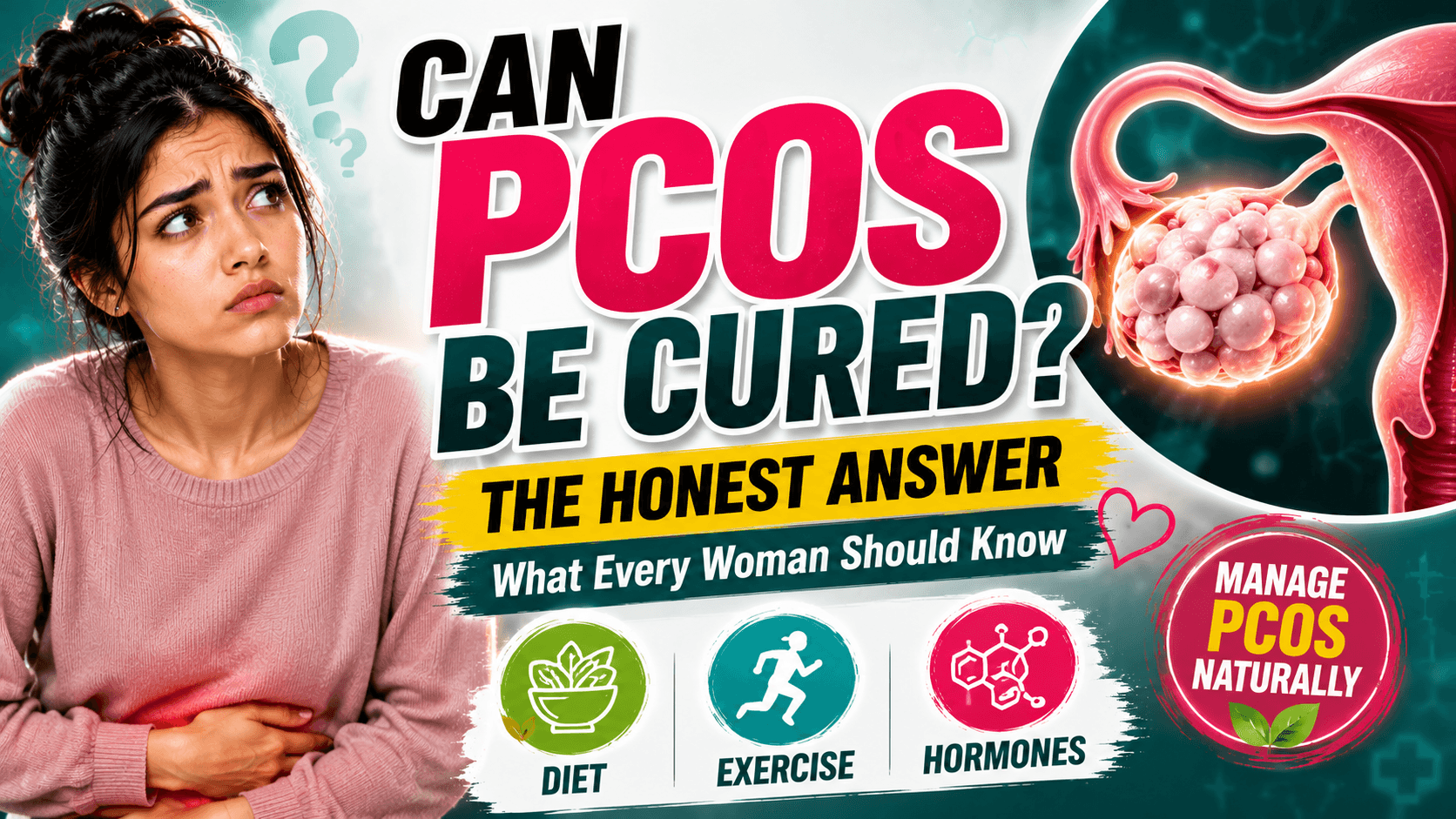
Explore whether PCOS can be cured naturally and what effective lifestyle changes and treatments can manage its symptoms.

Maryam Mumtaz
Co-Founder & CEO
14 min read•8/5/2026
Marsa Empower · Women's Hormonal Health · PCOS Awareness · For Girls & Women Aged 13 and Above · 14 min read
"PCOS cannot currently be cured — but it can be managed so effectively that many women live completely full, healthy, and active lives. Understanding the difference between curing and managing is the starting point of genuinely helpful care."
After receiving a PCOS diagnosis, one of the first things most women do is search online for a way to fix it. To cure it. To make it go away completely. The internet responds with an overwhelming flood of promises — miracle diets, supplement protocols, herbal cures, elimination plans, and stories of women who claim to have "reversed" their PCOS entirely through one specific approach.
It is completely understandable to want this. Living with irregular periods, persistent acne, unexplained weight changes, excess hair growth, fatigue, and the cloud of fertility concerns is genuinely hard. The desire for a cure — not just management — is human and reasonable.
But it deserves an honest answer. Not false hope. Not despair. An accurate, complete, and genuinely useful understanding of what PCOS is, what can realistically be done about it, and why the real picture — though it does not include a cure — is far more hopeful than many women realise.
This guide gives you that honest answer.
Polycystic Ovary Syndrome — PCOS — is one of the most common hormonal conditions affecting women and girls of reproductive age worldwide. Estimates suggest it affects approximately 1 in 10 women globally, with rates in Pakistan and South Asia potentially higher — though under-diagnosis remains a significant problem.
PCOS is not, despite its name, primarily a condition of the ovaries. It is a hormonal and metabolic syndrome — meaning it affects multiple body systems simultaneously through a web of interconnected hormonal disruptions.
At its core, three things are happening in most women with PCOS:
Elevated androgens: Androgens are hormones present in all women in small amounts — including testosterone and its derivatives. In PCOS, the ovaries produce androgens in greater quantities than normal. This androgen excess drives many of the most visible PCOS symptoms — acne (particularly along the jawline and chin), excess facial or body hair (hirsutism), and scalp hair thinning.
Disrupted ovulation: Regular ovulation — the monthly release of an egg from the ovary — depends on a precise sequence of hormonal signals. In PCOS, this sequence is disrupted. Ovulation becomes irregular, infrequent, or absent — producing the unpredictable periods that are most often the first visible sign of PCOS.
Insulin resistance: The majority of women with PCOS — including lean women, not only those who are overweight — have some degree of insulin resistance. Their cells respond less efficiently to insulin's signal, requiring the pancreas to produce more. High insulin levels then signal the ovaries to produce more androgens — creating the self-reinforcing cycle at the heart of PCOS: insulin resistance → more androgens → more disrupted ovulation → more irregular periods.
| Symptom | What Is Driving It |
|---|---|
| Irregular or absent periods | Disrupted ovulation |
| Persistent cystic acne — particularly jawline and chin | Elevated androgens stimulating oil glands |
| Excess facial or body hair (hirsutism) | Elevated androgens stimulating hair follicles |
| Scalp hair thinning at crown and temples | DHT (a potent androgen) miniaturising follicles |
| Unexplained weight gain — particularly abdominal | Insulin resistance promoting fat storage |
| Difficulty losing weight despite healthy habits | Metabolic effect of insulin resistance |
| Dark skin patches — neck, underarms, groin | Acanthosis nigricans — a sign of insulin resistance |
| Persistent fatigue | Insulin resistance impairing cellular energy use |
| Mood changes — anxiety and depression | Hormonal disruption affecting brain chemistry |
| Difficulty conceiving | Irregular or absent ovulation |
Not every woman with PCOS experiences all of these symptoms. The presentation varies significantly — some women have mostly cycle irregularity, others predominantly skin and hair symptoms, others primarily metabolic symptoms.
This is the question at the heart of this guide — and it deserves a direct, honest answer.
No. There is currently no known cure for PCOS — natural or medical.
PCOS is not an infection that can be eliminated with the right antibiotic. It is not a deficiency that can be corrected by replacing a missing substance. It is a complex syndrome driven by a combination of genetic predisposition, hormonal dysregulation, and metabolic factors that cannot currently be permanently reversed by any intervention — dietary, herbal, lifestyle-based, or pharmaceutical.
This is not a pessimistic statement. It is an accurate one — and accuracy matters because it redirects energy from the search for a cure toward something genuinely achievable and genuinely valuable:
Effective management.
And the evidence for what effective PCOS management can achieve is genuinely remarkable. When the right combination of lifestyle changes and, where needed, medical treatment is consistently applied:
Women who understand this — who stop searching for a cure and start building an effective management approach — often describe transformative improvements in quality of life and symptoms. Not because PCOS is gone. Because it is well-managed.
Understanding why the "natural cure" narrative is so persistent helps navigate it more clearly.
Frustration with conventional medicine: Many women with PCOS feel that conventional medicine offers them limited options — the pill to regulate periods, metformin for insulin resistance, and advice to lose weight. When these feel inadequate or carry unwanted side effects, the promise of a natural solution is appealing.
Real improvements from lifestyle changes: Lifestyle interventions genuinely do produce significant symptom improvement in PCOS. When a woman reduces sugar, starts walking regularly, and sees her periods become more regular, her acne improve, and her energy return — it can feel like the PCOS has been "cured." What has actually happened is that the driving factors have been reduced, bringing symptoms below the visible threshold. The underlying genetic and biological predisposition remains.
Social media and wellness industry claims: The wellness industry has significant financial incentive to promote "cures" — and social media provides a platform for individual testimonials that can be genuinely misleading when generalised. A woman whose PCOS symptoms were driven primarily by lifestyle factors and who experienced dramatic improvement through dietary changes may genuinely believe she was cured — and her story, while true for her, may not translate to women whose PCOS has a stronger genetic component.
The "natural" framing: Many women are appropriately cautious about pharmaceutical interventions and prefer to address health concerns through food, lifestyle, and natural compounds first. This instinct is often well-founded — lifestyle interventions for PCOS are genuinely powerful. The problem arises when "natural" is presented as equivalent to "curative."
Although PCOS cannot be cured naturally, lifestyle changes are among the most evidence-based and most effective PCOS management tools available. In many cases, they produce improvements comparable to or exceeding those of pharmaceutical interventions — and they address the root metabolic causes rather than simply managing symptoms.
Because insulin resistance is central to PCOS in the majority of women, dietary choices that reduce insulin levels and improve cellular insulin sensitivity have a direct, measurable effect on the hormonal environment driving PCOS symptoms.
When insulin falls — because blood sugar is more stable — the ovaries produce less androgen. When androgen levels fall, acne improves, hair changes slow, and ovulation becomes more regular. This is not metaphorical. It is a measurable hormonal chain reaction triggered by improved insulin sensitivity.
A low-glycaemic diet — one that prioritises foods releasing energy slowly and minimises foods causing rapid blood sugar spikes — is the most consistently evidence-supported dietary pattern for PCOS.
What to include more of:
| Food Group | Examples | Why for PCOS |
|---|---|---|
| Non-starchy vegetables | Spinach, broccoli, cauliflower, cucumber, tomatoes, peppers | Low glycaemic · High fibre · Anti-inflammatory |
| Whole grains | Brown rice, whole wheat atta, oats, barley | Slower sugar release than refined alternatives |
| Legumes | Lentils, chickpeas, kidney beans, black beans | High protein + high fibre + low glycaemic index |
| Quality protein | Eggs, chicken, fish, Greek yogurt, tofu | Stabilises blood sugar · Supports satiety |
| Healthy fats | Olive oil, avocado, nuts, seeds, fatty fish | Slow sugar absorption · Reduce inflammation · Support hormone production |
| Berries and low-sugar fruits | Strawberries, blueberries, apples, pears | Lower glycaemic than tropical or very sweet fruits |
What to reduce significantly:
| Food to Limit | Why |
|---|---|
| Sugary drinks (cola, juices, sweet chai) | Directly spike insulin — most significant dietary driver of PCOS-related insulin resistance |
| White bread, white rice, refined flour products | High glycaemic — rapid insulin spikes |
| Packaged biscuits, chips, and processed snacks | Trans fats + refined carbs + excess sugar |
| Sweets and mithai | Pure sugar with negligible nutrients |
| Excessive dairy (some women) | Some evidence links excess dairy intake — particularly skimmed milk — to worsened acne and androgen activity in PCOS |
PCOS involves chronic low-grade inflammation — which worsens insulin resistance and androgen production. An anti-inflammatory dietary pattern supports PCOS management:
Exercise is not simply general wellness advice for PCOS — it is one of the most potent tools available for directly improving the insulin resistance that drives the condition.
During physical activity, muscles can take up glucose from the bloodstream without requiring insulin — bypassing the insulin resistance mechanism. With regular exercise, this effect becomes more sustained: insulin sensitivity improves over weeks and months, reducing the insulin levels that drive androgen production.
Multiple studies consistently show that regular exercise:
Aerobic exercise: Brisk walking, cycling, swimming, dancing — 30 minutes most days of the week. Most consistently evidence-supported for insulin sensitivity improvement. Walking is the most accessible and one of the most effective.
Resistance training: Strength-based exercise — bodyweight exercises, light weights, resistance bands — builds muscle mass, which improves long-term insulin sensitivity by increasing the body's glucose storage capacity.
Yoga: Particularly beneficial for PCOS because it simultaneously improves insulin sensitivity, reduces cortisol (which worsens insulin resistance), and addresses the anxiety and depression burden of PCOS.
Consistency over intensity: Regular, moderate, enjoyable exercise done consistently produces more PCOS benefit than intense sporadic exercise. The goal is a lifelong habit, not a punishing programme.
For women with PCOS who are overweight, weight loss is one of the most evidence-supported interventions for restoring cycle regularity and reducing symptoms — even modest weight loss of 5 to 10% of total body weight consistently restores ovulation in a significant proportion of women.
This is because weight loss:
However, it is critically important to acknowledge that:
PCOS is not caused by being overweight. Lean women develop PCOS. The insulin resistance of PCOS can make weight gain more likely — and make weight loss more difficult — meaning that excess weight in PCOS is often a consequence of the condition, not solely its cause.
Weight loss in PCOS requires patience and a different approach than standard dieting. Because insulin resistance impairs the body's ability to use stored fat for energy, conventional calorie restriction often produces disappointing results. Approaches that specifically target insulin resistance — low-glycaemic diet, regular exercise, adequate sleep, stress management, and inositol supplementation — are more effective than simple calorie counting.
Shame and blame are not helpful. Telling a woman with PCOS to "just lose weight" without addressing the metabolic barriers to weight loss in this condition is clinically inadequate and psychologically harmful.
Sleep is one of the most undervalued PCOS management tools — and also one of the most consistently disrupted by the condition itself.
Cortisol: Sleep deprivation elevates evening cortisol. Elevated cortisol worsens insulin resistance — directly exacerbating the core metabolic mechanism of PCOS. A single night of poor sleep measurably worsens next-day insulin sensitivity.
Testosterone: Studies show that sleep deprivation increases testosterone levels in women — worsening androgen excess and its downstream effects (acne, hair changes, cycle disruption).
Melatonin: Melatonin has been shown in some studies to reduce androgen levels and improve insulin sensitivity in women with PCOS. Quality sleep supports natural melatonin production.
Hunger hormones: Poor sleep disrupts leptin (the fullness hormone) and ghrelin (the hunger hormone) — increasing appetite for calorie-dense, high-glycaemic foods. This worsens insulin resistance through dietary patterns driven by sleep-disrupted hunger signals.
Research shows that women with PCOS have significantly higher rates of sleep disorders — particularly sleep apnoea and insomnia — than women without the condition. Treating sleep disorders in PCOS produces measurable improvements in insulin sensitivity and hormonal profiles.
For women with PCOS, stress management is not optional wellness advice. It is a clinical necessity.
Cortisol — the primary stress hormone — worsens every core mechanism of PCOS:
Regular moderate exercise: The most evidence-supported cortisol-reducing intervention available. Even 20 minutes of walking measurably reduces cortisol.
Mindfulness and breathwork: Slow, deep breathing activates the parasympathetic nervous system — directly countering the cortisol-driven stress response. Clinical studies show mindfulness-based interventions reduce cortisol, improve insulin sensitivity, and reduce PCOS symptom burden.
Adequate rest: Rest is not laziness. For women with PCOS, periods of genuine rest — not just sleep, but also unscheduled time, time in nature, creative activity — are physiologically important for cortisol normalisation.
Professional support: Anxiety and depression occur in women with PCOS at two to three times the rate of women without the condition. This mental health burden is both a cause of elevated cortisol and a consequence of PCOS symptom burden. Professional therapeutic support is appropriate, evidence-based care — not an admission of weakness.
Several nutritional supplements have clinical evidence supporting their use in PCOS management. These complement — not replace — dietary and lifestyle changes.
| Supplement | Evidence Level | What It Does for PCOS | Typical Dose |
|---|---|---|---|
| Myo-inositol | Strong | Improves insulin sensitivity · Restores ovulation · Reduces androgens · Comparable to metformin in studies | 2,000–4,000 mg daily |
| D-chiro-inositol | Strong (in combination with myo-inositol) | Works synergistically with myo-inositol — 40:1 ratio is most studied | As directed in combined formulation |
| Vitamin D | Moderate | Deficiency worsens insulin resistance and PCOS severity · Supplementation improves insulin sensitivity and cycle regularity | 1,000–4,000 IU daily — test first |
| Omega-3 fatty acids | Moderate | Reduces inflammation · Reduces triglycerides · Reduces androgens · Improves insulin sensitivity | 2,000 mg EPA+DHA daily |
| Magnesium | Moderate | Improves insulin sensitivity · Reduces cortisol · Supports sleep | 250–400 mg daily (glycinate or citrate) |
| Zinc | Moderate | Reduces hirsutism · Improves acne · Supports ovulation | 30 mg daily |
| N-Acetyl Cysteine (NAC) | Moderate | Improves insulin sensitivity · Reduces androgens · May support ovulation | 600 mg two to three times daily |
| Berberine | Moderate | Comparable to metformin for insulin sensitisation in some studies | 500 mg two to three times daily with meals |
| Spearmint tea | Low to moderate | Mild anti-androgen effect — reduces free testosterone | 2 cups daily |
Important notes:
While natural interventions are genuinely powerful for PCOS management, medical treatment is an important and appropriate part of care — particularly for moderate to severe symptoms, fertility concerns, or when lifestyle changes alone are insufficient.
Combined oral contraceptive pill (OCP): The most commonly prescribed treatment for cycle regulation in PCOS. The synthetic oestrogen and progestogen in the pill suppress androgen production, regulate bleeding, reduce acne, and reduce excess hair growth. It does not address the underlying insulin resistance but manages many symptoms effectively.
Progestogen-only therapy: For women who cannot take combined contraceptives, periodic progestogen (synthetic progesterone) induces a withdrawal bleed and protects the uterine lining from the risks of prolonged absence of progestogen.
Metformin: Originally developed for type 2 diabetes, metformin improves cellular insulin sensitivity and is widely used for PCOS — particularly in women with evidence of insulin resistance. It reduces insulin levels, which reduces androgen production, and in many women restores more regular ovulation. It is often used alongside lifestyle changes.
Anti-androgen medications (spironolactone, cyproterone acetate): Block androgen receptors in the skin and hair follicles, reducing acne and hirsutism. Prescription only. Very effective for androgen-driven symptoms but not suitable during pregnancy.
Topical treatments: Prescription topical retinoids and antibiotics for acne. Eflornithine cream for facial hair.
Hair removal options: Laser hair removal and electrolysis provide longer-lasting reduction of excess hair — addressing the cosmetic impact while androgen management works on the underlying cause.
When fertility is the primary concern and ovulation is not occurring, medical ovulation induction is appropriate:
Letrozole: An aromatase inhibitor used as first-line ovulation induction for PCOS — shown to produce higher ovulation and live birth rates than the older clomiphene citrate in women with PCOS.
Clomiphene citrate: An older first-line option — still widely used and effective.
Gonadotropins: Injectable hormones used when oral ovulation induction has not succeeded — require specialist monitoring.
IVF: For cases where simpler interventions have not resulted in pregnancy.
One of the most anxiety-inducing aspects of a PCOS diagnosis is the fertility implication. Here is what the evidence actually shows:
PCOS is the most common hormonal cause of difficulty conceiving — but it is also one of the most treatable. Many women with PCOS conceive naturally, particularly with lifestyle optimisation. Many more conceive with straightforward medical ovulation induction.
PCOS does not mean infertility. It means irregular or absent ovulation — which reduces the monthly opportunity for conception. This is very different from being unable to conceive.
Early management significantly improves long-term fertility outcomes. A woman who manages her PCOS effectively in her twenties — improving insulin sensitivity, restoring cycle regularity, and maintaining a healthy weight — preserves far more reproductive options than one who receives a diagnosis only when she is struggling to conceive.
The lifestyle changes that improve PCOS symptoms also improve fertility. Dietary improvement, regular exercise, and weight management consistently restore ovulation in women with PCOS — making the same habits that help with symptoms also directly supportive of conception.
The truth: No single diet cures PCOS. Dietary changes — particularly a low-glycaemic, anti-inflammatory approach — are among the most powerful PCOS management tools available and can produce dramatic symptom improvement. But they manage PCOS, not cure it. The improvements that occur when diet improves reflect reduced insulin resistance and androgen levels — not elimination of the underlying condition. If the diet is abandoned, symptoms return.
The truth: Supplements — particularly myo-inositol and vitamin D — have genuine clinical evidence for improving PCOS symptoms. They are valuable additions to a management plan. But no supplement, herbal compound, or natural remedy has been shown to permanently cure PCOS. Their benefits are real but require ongoing use and work best alongside dietary and lifestyle changes.
The truth: This myth causes significant and unnecessary distress. The majority of women with PCOS who want to conceive do so — some naturally, many with relatively simple medical assistance. PCOS is the most treatable hormonal cause of ovulatory infertility. Early diagnosis and management dramatically improve fertility outcomes.
The truth: PCOS affects women of all body types and sizes. Lean women — with normal or even low body weight — develop PCOS due to the genetic and hormonal factors driving the condition. Insulin resistance in PCOS exists independently of body weight, though excess weight worsens it.
The truth: Regular periods are a sign that ovulation has been restored and PCOS symptoms are well-managed. This is genuinely excellent news. But it is not the same as the condition being gone. If the lifestyle changes or medical treatment enabling regular periods are discontinued, symptoms will typically return because the underlying biological predisposition has not changed.
The truth: Some women experience improvements in PCOS symptoms after pregnancy — but this is not universal, reliable, or a reason to delay management. Pregnancy does not treat PCOS, and the metabolic and hormonal features of the condition persist after childbirth.
The truth: PCOS begins during puberty and can be diagnosed in teenage girls. Its reproductive symptoms naturally resolve after menopause — but the metabolic features (insulin resistance, cardiovascular risk) continue throughout life and require ongoing attention.
Early evaluation produces better outcomes. Many of the long-term health risks of PCOS — type 2 diabetes, cardiovascular disease, endometrial cancer risk from prolonged absent periods — are significantly reduced when the condition is identified and managed early.
Can losing weight improve PCOS symptoms?
Yes — significantly, for women with PCOS who are overweight. Weight loss of just 5 to 10% of total body weight consistently improves cycle regularity, reduces androgen levels, improves insulin sensitivity, and reduces PCOS symptom burden in the majority of women who achieve it. The mechanism is direct: less weight means less insulin resistance means less androgen excess means more regular ovulation.
The important nuance: PCOS itself makes weight loss more difficult through insulin resistance — which is why a specific, targeted approach (low-glycaemic diet + exercise + inositol supplementation) works better than standard calorie restriction.
Can PCOS go away on its own?
Some women notice that PCOS symptoms improve over time without significant intervention — particularly after the hormonal turbulence of puberty settles, or naturally with age. However, this is not reliable or predictable, and "waiting to see if it goes away" is not a management strategy. PCOS does not go away in the sense of being permanently resolved — though symptoms can become much less prominent with consistent management.
Is PCOS permanent?
PCOS as a condition — the underlying biological predisposition — does not currently have a permanent cure. However, the reproductive symptoms (irregular periods, fertility concerns) naturally resolve after menopause, and many women experience significant periods of symptom improvement with effective management. The metabolic features (insulin resistance, cardiovascular risk) continue after menopause and require ongoing management.
Can teenagers have PCOS?
Yes. PCOS begins during puberty and can be diagnosed in teenage girls. However, diagnosis in teenagers requires care — because some features of PCOS (irregular periods, acne, anovulatory cycles) are also normal in the first one to two years after menarche as the hormonal system matures. A PCOS diagnosis in teenagers typically requires persistence of symptoms beyond the first two years of menstruation alongside clinical or laboratory evidence of androgen excess.
What foods are good for PCOS?
The most beneficial foods for PCOS are those that support insulin sensitivity, reduce inflammation, and provide the nutrients needed for hormonal health:
The most important change: reducing sugary drinks, white refined carbohydrates, and ultra-processed foods.
What is the most effective natural treatment for PCOS?
No single natural intervention is most effective in isolation — the most evidence-supported approach combines multiple strategies. The most impactful combination is:
This combination addresses insulin resistance from multiple angles simultaneously — producing greater improvement than any single intervention alone.
The most important shift a woman with PCOS can make is moving from searching for a cure to building an effective management approach. These two orientations lead to completely different experiences of living with PCOS.
Searching for a cure means constant experimentation with new protocols, disappointment when no single intervention "fixes" the condition, and the exhausting cycle of hope and disillusionment that characterises the experience of many women who spend years online looking for the answer they have not found yet.
Building effective management means choosing evidence-based interventions, applying them consistently over months rather than weeks, accepting that this is ongoing work rather than a one-time fix, and — importantly — noticing and valuing the very real improvements that consistent management produces.
Thousands of women are living with PCOS while experiencing regular or near-regular periods, clear or significantly improved skin, managed hair changes, stable energy, good mental health, and — when they choose it — successful pregnancies.
This is not because their PCOS is cured. It is because they have built a management approach that consistently reduces the hormonal disruption driving their symptoms.
That is genuinely achievable. For most women with PCOS, it is the realistic goal — and one that produces a quality of life far better than the one that comes from waiting for a cure that does not yet exist.
"PCOS cannot currently be cured — but it can be managed with remarkable effectiveness. The goal is not a perfect hormonal system. It is a well-supported one. And that is entirely within reach."
Educational Disclaimer
This article is for educational and awareness purposes only. It does not constitute medical advice, diagnosis, or treatment. If you have been diagnosed with PCOS or suspect you may have it, please consult a qualified gynaecologist or endocrinologist for personalised evaluation, diagnosis, and management guidance.
Marsa Empower · Women's Hormonal Health · PCOS Awareness · Education & Empowerment
| Topic | Key Takeaway |
|---|---|
| Can PCOS be cured naturally? | No — there is no current cure. But symptoms can be managed very effectively. |
| Most powerful natural tool | Reducing insulin resistance through low-glycaemic diet + regular exercise |
| Best dietary approach | Low-glycaemic · Anti-inflammatory · High fibre · Reduce sugar and refined carbs |
| Best exercise | 150 min moderate activity per week · Walking + resistance training + yoga |
| Most evidence-supported supplement | Myo-inositol (2,000–4,000 mg daily) |
| Sleep and PCOS | Poor sleep worsens insulin resistance and androgen levels — prioritise 7–9 hours |
| Stress and PCOS | Cortisol directly worsens insulin resistance and disrupts ovulation |
| Medical options | Contraceptive pill · Metformin · Anti-androgens · Letrozole for fertility |
| PCOS and fertility | Most common treatable hormonal cause of ovulatory infertility — not the same as infertility |
| Most important myth to correct | PCOS does not mean you cannot get pregnant |
| When to see a doctor | Absent or very irregular periods · Severe acne or hirsutism · Difficulty conceiving · Multiple PCOS symptoms |
| The right goal | Not a cure — effective, sustained management that allows a full, active, healthy life |
Medical Disclaimer
This article is for general informational and educational purposes only and is not a substitute for professional medical advice, diagnosis, or treatment. Always seek the advice of a qualified healthcare provider with any questions you may have regarding a medical condition. Never disregard professional medical advice or delay seeking it because of something you have read on MARSA Empower.
Written By
Maryam Mumtaz
Co-Founder & CEO
Co-Founder of MARSA Empower who leads the visual and strategic evolution of the platform. Maryam bridges technical complexity with human-centric design, architecting the team's official roadmap and ensuring MARSA effectively addresses the real-world needs of women. With deep expertise in agentic AI, full-stack development, and UI/UX design, she has delivered 50+ projects for 30+ satisfied clients.
Enjoyed this story?