One App. Every Woman.
One App. Every Woman.
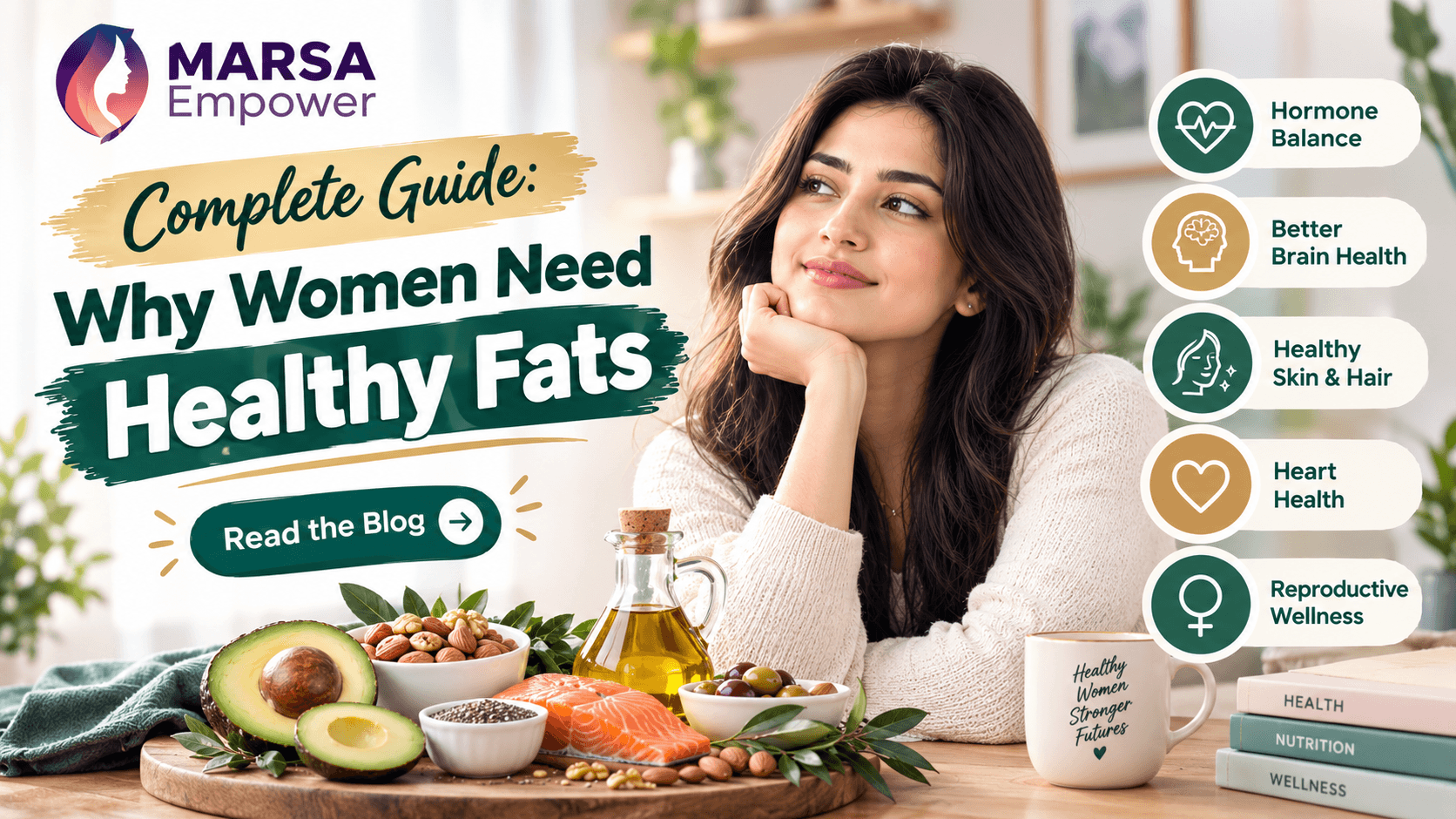
Healthy fats are vital for women's health, supporting hormone balance, brain function, and more. Learn how to incorporate them into your diet for better well-being.

Maryam Mumtaz
Co-Founder & CEO
12 min read•9/17/2026
Marsa Empower · Women's Nutrition & Wellness · For Girls & Women Aged 13 and Above · 12 min read
For decades, dietary fat was positioned as the primary cause of weight gain, heart disease, and poor health. Low-fat diets became mainstream. Products proudly advertised "fat-free" on their labels. Women were told to minimise fat intake as a cornerstone of healthy eating.
The evidence that has accumulated since then tells a more nuanced and more accurate story. Not all fats are the same. While some types of dietary fat — particularly trans fats and certain patterns of saturated fat — are genuinely harmful to health, others are not only harmless but essential. Essential in the true sense: the body cannot function without them.
For women specifically, adequate intake of healthy fats is not a lifestyle preference or a nutritional bonus. It is a fundamental requirement for hormonal health, brain function, cardiovascular health, skin integrity, vitamin absorption, and reproductive function. Women who consistently avoid dietary fat because they believe it is always harmful may be compromising their health in ways they have not been warned about.
This guide explains what healthy fats are, why women's bodies specifically depend on them, where to find them in food, and how to include them practically in daily eating without anxiety or confusion.
Dietary fats are classified by their chemical structure — specifically by the type and arrangement of carbon-carbon bonds in their fatty acid chains. These structural differences determine how they behave in the body, which ones are beneficial, which are neutral in moderation, and which are harmful.
Unsaturated fats — those with one or more double bonds in their carbon chain — are the primary category of "healthy fats." They include:
Monounsaturated fats (MUFAs): Found in olive oil, avocado, almonds, cashews, and other nuts. Associated with cardiovascular protection, reduced LDL cholesterol, reduced inflammation, and support for insulin sensitivity.
Polyunsaturated fats (PUFAs): A category that includes the essential fatty acids — omega-3 and omega-6 fatty acids. These are called "essential" because the body cannot synthesise them from other nutrients and must obtain them from food. Omega-3 fatty acids are found in fatty fish, walnuts, flaxseeds, chia seeds, and hemp seeds. Omega-6 fatty acids are found in most vegetable oils, nuts, and seeds.
Saturated fats: Found in animal products (meat, dairy, ghee) and some plant sources (coconut oil, palm oil). The relationship between saturated fat and health is more nuanced than either "always harmful" or "completely fine" — the type of saturated fat, the food source, and the overall dietary pattern all matter. Moderate amounts of saturated fat from whole food sources (dairy, eggs, lean meats) are part of a balanced diet for most women.
Trans fats: The genuinely harmful category. Industrially produced trans fats — found in partially hydrogenated vegetable oils used in manufactured biscuits, packaged snacks, fried fast food, and commercial baked goods — have clear, well-established cardiovascular harm. They raise LDL (bad) cholesterol, lower HDL (good) cholesterol, increase inflammation, and worsen insulin resistance. There is no safe level of trans fat consumption. Avoiding them is one of the most impactful dietary changes any woman can make for cardiovascular health.
Fat is important for everyone — but several of the body's systems that depend most critically on adequate dietary fat are particularly relevant to women's health.
Hormonal health. All steroid hormones — including oestrogen, progesterone, testosterone, and cortisol — are synthesised from cholesterol, which is produced from dietary fat. A diet severely deficient in fat removes the raw material from which these hormones are made. Women who restrict fat intake very aggressively, or who have very low body fat percentage, commonly experience hormonal disruption — irregular or absent periods, fertility difficulties, and mood instability — as a direct consequence.
Reproductive development. During the teenage years, adequate fat intake is essential for the development and establishment of reproductive hormone production. Girls who follow very low-fat diets during puberty risk delayed puberty, absent periods, and impaired development of the hormonal systems that will govern their reproductive years.
Brain development and function. The brain is approximately 60 percent fat, with DHA (an omega-3 fatty acid) being the predominant structural fat. Adequate omega-3 and dietary fat broadly are essential for brain development, cognitive function, mood regulation, and neurological health across all life stages — but particularly during the rapid brain development of adolescence and in the third trimester of pregnancy when the fetal brain develops rapidly.
Vitamin absorption. Vitamins A, D, E, and K are fat-soluble — meaning they are absorbed from the digestive tract alongside dietary fat. Women who eat vegetables and take vitamin supplements while following a very low-fat diet may be absorbing far less of these vitamins than they think. Vitamin D absorption — already a widespread issue for women in Pakistan due to limited sun exposure — is further compromised by very low dietary fat intake.
Every steroid hormone in the body — including all the reproductive hormones that govern the menstrual cycle, fertility, bone health, and mood — is built from cholesterol. Cholesterol is produced by the liver from dietary fat and is the essential precursor molecule from which oestrogen, progesterone, testosterone, cortisol, vitamin D (a steroid hormone), and other steroid compounds are synthesised.
This is why adequate dietary fat is not optional for hormonal health. It is foundational. The liver cannot produce adequate cholesterol for hormone synthesis from a diet severely lacking in fat. The consequences include the hormonal disruption — irregular or absent periods, low libido, poor stress response, impaired mood regulation — that is documented in women with very low dietary fat intake or very low body fat.
Approximately 60 percent of the brain's dry weight is fat, and omega-3 fatty acids — particularly DHA (docosahexaenoic acid) — are the primary structural fat of brain tissue. DHA is incorporated into the neuronal cell membranes that govern the speed and efficiency of nerve impulse transmission, and is particularly concentrated in the prefrontal cortex (responsible for decision-making and emotional regulation) and the hippocampus (responsible for memory and learning).
Adequate dietary omega-3 supports cognitive function, mood stability, the structural maintenance of brain tissue, and the transmission of serotonin and dopamine — the neurotransmitters governing mood, motivation, and emotional wellbeing. Deficiency is associated with increased risk of depression, anxiety, impaired cognitive function, and difficulties with emotional regulation.
The cardiovascular effects of different dietary fats are well studied. Monounsaturated fats (olive oil, avocado, most nuts) and omega-3 fatty acids both produce favourable effects on cardiovascular risk markers.
Omega-3 fatty acids reduce triglycerides (blood fats), reduce inflammatory markers associated with atherosclerosis, support healthy arterial elasticity, reduce platelet aggregation (clotting tendency), and reduce the risk of dangerous cardiac arrhythmias. These effects are well-documented through decades of clinical research.
Monounsaturated fats reduce LDL cholesterol (the atherogenic fraction) while maintaining or raising HDL cholesterol (the cardioprotective fraction) — producing a favourable shift in the cholesterol profile associated with reduced cardiovascular risk.
The Mediterranean dietary pattern — which is rich in olive oil, nuts, fatty fish, and vegetables — is one of the most consistently evidence-supported dietary patterns for cardiovascular health, and its high fat content from these healthy sources is central to its benefit rather than incidental to it.
The fat-soluble vitamins A, D, E, and K require dietary fat to be absorbed from the digestive tract. Without co-ingested fat, these vitamins pass through the gut largely unabsorbed regardless of how much is consumed.
This has practical consequences. Eating a salad containing fat-soluble vitamins (including vitamin K from leafy greens and beta-carotene from carrots) without any fat in the dressing significantly reduces the absorption of these nutrients compared to the same salad with an olive oil-based dressing. Taking vitamin D supplements with a fat-containing meal improves absorption compared to taking them on an empty, fat-free stomach.
For women in Pakistan, where vitamin D deficiency is extremely prevalent and where vitamin A is important for immune and reproductive health, ensuring fat-soluble vitamin absorption through adequate dietary fat is a genuinely important nutritional consideration.
Skin is composed partly of lipid-containing structures — the lipid bilayer of cell membranes, the lipid matrix of the skin's surface barrier layer, and the sebum produced by sebaceous glands. Adequate dietary fat is essential for maintaining the integrity of these structures.
Omega-3 fatty acids specifically reduce the skin's inflammatory response, modulate sebum production, and support the skin barrier's ability to retain moisture. Women with very low omega-3 intake often have drier, more reactive, or more prone-to-inflammation skin.
Hair is produced by follicles that require adequate fat-soluble vitamins, omega-3 fatty acids, and the cholesterol-derived hormones that regulate the hair growth cycle. Severe dietary fat restriction is one of the causes of diffuse hair thinning, alongside iron deficiency and thyroid dysfunction.
Fats are the most energy-dense macronutrient, providing nine calories per gram compared to four calories per gram from carbohydrates and protein. While this caloric density is sometimes cited as a reason to restrict fat, it is also why fat is the most effective macronutrient for producing sustained satiety after meals.
Fat slows gastric emptying — food stays in the stomach longer when fat is present, extending the period of fullness. Including healthy fat at each meal reduces the rapid return of hunger that follows fat-free or very low-fat meals and reduces the frequency of snacking on high-sugar, high-calorie foods in the hours after eating.
This satiety effect makes adequate fat intake a practical tool for stable, sustainable eating patterns — not an obstacle to them.
| Fat Type | Examples | Effect on Health |
|---|---|---|
| Monounsaturated (MUFA) | Olive oil · Avocado · Almonds · Cashews | Reduces LDL cholesterol · Heart-protective · Anti-inflammatory |
| Omega-3 PUFA | Fatty fish · Walnuts · Chia · Flaxseed | Anti-inflammatory · Brain and heart health · Reduces triglycerides |
| Omega-6 PUFA | Most vegetable oils · Sunflower · Corn | Essential but most diets already have sufficient — balance with omega-3 is important |
| Saturated fat (moderate amounts) | Ghee · Butter · Meat · Full-fat dairy | Neutral to mildly harmful in excess from processed sources; less concerning from whole food sources in moderate amounts |
| Trans fats (avoid) | Packaged biscuits · Commercial fried food · Partially hydrogenated oils | Raises LDL · Lowers HDL · Promotes inflammation · Increases heart disease risk · Avoid completely |
The most important fat-related dietary change for most women is not reducing total fat intake. It is replacing trans fats and the heavily processed sources of saturated fat with monounsaturated fats and omega-3 rich foods.
Nuts and seeds are among the most nutritionally concentrated healthy fat sources available, providing monounsaturated and polyunsaturated fats alongside protein, zinc, magnesium, vitamin E, and other micronutrients.
Walnuts are the richest plant source of omega-3 ALA, providing approximately 2.5g per 30g serving. They also contain polyphenols with antioxidant properties.
Almonds provide monounsaturated fat, vitamin E, magnesium, and calcium — a small daily handful supports both cardiovascular and bone health.
Pumpkin seeds are particularly valuable for women — providing omega-3, zinc, magnesium, and iron in a versatile, easy-to-add form.
Chia seeds and flaxseeds (ground) are excellent plant-based omega-3 sources that also provide fibre and lignans. Flaxseed must be ground to release its fat content.
Sesame seeds and tahini provide monounsaturated fat, calcium, and zinc — easily incorporated into cooking, dressings, and dips.
Avocados are one of the few fruits that are naturally high in fat — primarily monounsaturated oleic acid, the same fat that dominates olive oil. They are rich in potassium, folate, vitamin K, vitamin C, and fibre alongside their fat content.
The combination of fat and fibre in avocado produces strong satiety, and the monounsaturated fat supports cardiovascular health and fat-soluble vitamin absorption. Adding sliced avocado to salads, spreading it on whole grain bread, or including it in mixed dishes makes healthy fat inclusion easy and versatile.
Extra virgin olive oil is among the most studied and most consistently evidence-supported dietary fats for human health. It is rich in oleic acid (monounsaturated), polyphenol antioxidants that are unique to olive oil, and vitamin E. Its anti-inflammatory and cardiovascular protective effects are well-documented across decades of research.
Using olive oil as the primary cooking and dressing fat — replacing commercially produced vegetable oils, margarine, and cooking fats made with partially hydrogenated oils — is one of the most impactful dietary changes for both everyday cooking and long-term health.
Fatty fish — salmon, sardines, mackerel, anchovies, and tuna — are the richest dietary sources of EPA and DHA, the long-chain omega-3 fatty acids with the strongest evidence for cardiovascular, brain, and anti-inflammatory benefits.
Two to three servings of fatty fish per week provides the omega-3 intake associated with reduced cardiovascular risk, reduced inflammatory markers, reduced period pain, and mood stability benefits. Canned sardines are one of the most accessible, affordable, and nutritionally rich options — particularly the canned-with-bones variety, which provides calcium alongside omega-3.
Eggs provide a combination of protein, monounsaturated and polyunsaturated fats, cholesterol (which the body uses to produce hormones and vitamin D), fat-soluble vitamins (A, D, E, K), B12, iron, zinc, and choline (essential for brain development and liver function).
The long-standing advice to limit egg intake due to cholesterol concerns has been significantly revised — current evidence does not support limiting eggs for most healthy people, and the combination of nutrients they provide makes them one of the most nutritionally complete everyday foods available.
Full-fat and reduced-fat dairy products provide a combination of saturated fat, protein, calcium, vitamin D (in fortified varieties), and B vitamins. The fat in dairy improves the absorption of fat-soluble vitamins it contains, and full-fat dairy products produce stronger satiety than fat-free equivalents.
Plain yogurt is particularly nutritious — it provides protein, calcium, probiotics, and healthy fat without the added sugars of flavoured alternatives.
While beans and legumes are not typically thought of as fat sources, they contain meaningful amounts of unsaturated fats alongside their protein and fibre. They also provide the phytochemicals and fibre that support the overall dietary pattern within which healthy fats contribute most effectively to health.
Edamame (young soybeans) and tofu are particularly notable within the legume category for their fat content — both contain omega-3 ALA alongside significant protein, and soy products have specific evidence for cardiovascular health and hormone balance in women.
Omega-3 fatty acids deserve specific attention within the broader healthy fat category because their effects on women's health are both wide-ranging and particularly well-documented.
Reducing period pain: Omega-3 fatty acids compete with arachidonic acid (the precursor of inflammatory prostaglandins) in the body's enzymatic pathways, reducing the production of the prostaglandins that drive uterine contractions and period pain. Several studies have found that omega-3 supplementation or regular fatty fish consumption reduces period pain severity comparably to ibuprofen in some women.
Reducing androgen activity in PCOS: Regular omega-3 intake measurably reduces free testosterone and total androgen levels in women with PCOS — directly reducing the androgen-driven symptoms including acne, hirsutism, and scalp thinning.
Mood and mental health: DHA and EPA are required for the synthesis and function of serotonin and dopamine, the neurotransmitters that govern mood, motivation, and emotional regulation. Multiple studies associate omega-3 intake with reduced depression and anxiety severity, and with reduced risk of postpartum depression.
Cardiovascular protection: Omega-3 fatty acids reduce triglycerides, reduce inflammatory markers, support arterial health, and reduce arrhythmia risk — all relevant to women's cardiovascular health, particularly post-menopause.
Pregnancy: DHA is the primary structural fat of the fetal brain and retina, with 70 percent of its accumulation occurring in the third trimester. Adequate maternal omega-3 intake supports fetal brain development and is associated with better infant cognitive and visual development outcomes.
The plant vs. animal source distinction: Plant sources of omega-3 (walnuts, flaxseed, chia seeds) provide ALA — the short-chain omega-3. The body converts ALA to EPA and DHA, but this conversion is inefficient — only approximately 5 to 10 percent of ALA is converted to EPA, and less to DHA. Women who do not eat fatty fish and rely on plant sources alone for omega-3 should consider an algae-based DHA supplement, which provides DHA directly without animal-sourced products.
The teenage years are a period of exceptional nutritional demand, and fat is not exempt from this. Adolescent girls require adequate dietary fat for:
Reproductive development. The hormonal axis governing the menstrual cycle requires cholesterol (derived from dietary fat) for sex hormone production. Girls who follow very low-fat diets during puberty risk delayed or disrupted hormonal development, absent or irregular periods, and impaired development of the reproductive system.
Brain development. The adolescent brain continues developing significantly, with omega-3 fatty acids playing a structural and functional role in neural development. Adequate omega-3 and dietary fat broadly support cognitive function, mood regulation, and the neurological maturation of the teenage years.
Fat-soluble vitamin absorption. Calcium absorption from food is supported by vitamin D, and vitamin D absorption requires fat. Teen girls in Pakistan — already at high risk of vitamin D deficiency — further compromise vitamin D absorption when following very low-fat diets.
Physical growth and energy. The rapid physical growth of adolescence requires adequate total energy, and fat is the most energy-dense macronutrient. Teen girls who restrict fat intake heavily often fall short of the total caloric intake needed to support growth.
The most important message for teenage girls regarding fat is this: eating nuts, seeds, avocado, eggs, yogurt, olive oil, and fish is not eating "unhealthy food." These are among the most nutritious foods available, and avoiding them out of a fear of dietary fat creates real nutritional deficits during a critical developmental period.
Pregnancy significantly increases the importance of adequate healthy fat intake — particularly omega-3 fatty acids — because of the demands of fetal brain and nervous system development.
DHA for fetal brain development. The fetal brain, retina, and nervous system all incorporate DHA during development, with the most rapid DHA accumulation occurring in the third trimester. Pregnant women's dietary DHA intake directly influences the DHA available for fetal brain building. Adequate maternal omega-3 intake is associated with better infant visual acuity, cognitive development, and reduced risk of preterm delivery.
Pregnancy guidelines recommend two to three servings of low-mercury fatty fish per week. Oily fish high in mercury — large fish such as shark, swordfish, king mackerel, and tilefish — should be avoided during pregnancy due to mercury accumulation. Safer high-omega-3 choices include sardines, salmon, mackerel (Atlantic), trout, and canned light tuna in moderate amounts.
For women who do not eat fish: An algae-based DHA supplement is the recommended alternative for obtaining DHA during pregnancy, providing DHA directly without any mercury exposure concern.
Fat and fat-soluble vitamins in pregnancy. Adequate dietary fat during pregnancy supports the absorption of vitamins A, D, E, and K — all important for maternal and fetal health. Vitamin D in particular requires fat for absorption and is critical for fetal bone development and immune function.
General dietary guidelines recommend that fat provide approximately 20 to 35 percent of total daily caloric intake, with the emphasis on the quality and type of fat rather than strict quantification.
For a moderately active adult woman consuming approximately 2,000 calories per day, this represents approximately 44 to 78 grams of fat per day from all sources. For teenage girls or more active women, total caloric intake — and therefore fat intake — is proportionally higher.
The specific omega-3 recommendation for most adult women is approximately 1.1 grams of ALA per day from plant sources, with guidance also to include EPA and DHA from fatty fish two to three times per week. Pregnant women have higher DHA requirements of approximately 300 mg per day.
Rather than counting fat grams, the most practical approach for most women is ensuring that each meal includes a meaningful healthy fat source — cooking with olive oil, adding nuts or seeds to meals or snacks, including eggs, fatty fish, or avocado regularly, and choosing full-fat or reduced-fat dairy rather than fat-free alternatives.
Add a small handful of mixed nuts (almonds, walnuts, cashews, pumpkin seeds) as a daily snack. This single habit provides a meaningful daily contribution of monounsaturated fats, omega-3, zinc, magnesium, and vitamin E.
Use olive oil as the primary cooking and dressing fat. Drizzle it on vegetables, use it to cook sabzi and eggs, mix it into salad dressings. Replacing commercial vegetable oils and margarine with olive oil significantly improves the fat quality of everyday cooking.
Include fatty fish two to three times per week. Canned sardines are accessible, affordable, and exceptionally nutritious. Salmon, mackerel, and other oily fish are excellent additions to weekly meal rotation.
Add ground flaxseed or chia seeds to yogurt, oatmeal, or smoothies daily. A tablespoon provides meaningful plant omega-3, fibre, and lignan content without requiring significant dietary change.
Include eggs regularly. One to two eggs daily provides protein, fat-soluble vitamins, choline, and healthy fat in a versatile, quick-to-prepare form.
Eat avocado when available. On whole grain toast, sliced in salads, or as guacamole alongside meals.
Choose plain full-fat or reduced-fat yogurt rather than fat-free alternatives, which contain more sugar to compensate for the reduced satiety of removed fat.
Add tahini (sesame seed paste) to dressings, dips, or as a spread on bread — it provides calcium, zinc, and monounsaturated fat in a versatile condiment.
Following a very low-fat diet. Dietary fat below approximately 20 percent of total calories impairs hormone production, reduces fat-soluble vitamin absorption, disrupts the skin barrier, affects brain function, and undermines the satiety that prevents overconsumption of high-sugar foods. Very low-fat diets are not supported by current nutritional evidence as a beneficial dietary pattern for most women.
Fearing all fat equally. Trans fats and heavily processed saturated fat sources are genuinely harmful. Olive oil, nuts, fatty fish, eggs, and avocado are not. Treating all fats as equivalent is one of the most significant nutritional misconceptions persisting from the low-fat diet era.
Using fat-free products without checking what replaces the fat. Fat-free yogurt, fat-free salad dressings, and fat-free packaged products frequently replace the fat with sugar, starch, or artificial ingredients to compensate for the lost flavour and texture. These substitutions often worsen the nutritional quality of the product compared to the full-fat original.
Avoiding healthy fat to manage weight. Healthy fats produce stronger satiety than equivalent calories from carbohydrates. Including them in meals typically reduces total caloric intake compared to low-fat, high-carbohydrate alternatives by extending the period of fullness and reducing between-meal hunger.
Consuming omega-6 fats in excess relative to omega-3. Most modern diets — particularly those relying heavily on refined vegetable oils (sunflower, corn, soy) — are significantly higher in omega-6 than omega-3. An excessive omega-6:omega-3 ratio promotes inflammation. Reducing refined vegetable oil use and increasing omega-3 sources (fatty fish, walnuts, flaxseed, chia) improves this ratio.
This question reflects one of the most persistent nutrition misconceptions. The honest answer is nuanced.
Dietary fat is calorie-dense — nine calories per gram compared to four calories per gram from protein or carbohydrates. Consuming large amounts of any calorie-dense food, including healthy fats, in excess of the body's total caloric needs will contribute to weight gain. This is straightforward energy balance.
However, the fear that moderate inclusion of healthy fat in a balanced diet causes weight gain is not supported by evidence. Research consistently shows that dietary patterns emphasising olive oil, nuts, fatty fish, and avocado (such as the Mediterranean diet) are associated with healthy weight maintenance and reduced obesity risk — not with weight gain.
The mechanism is largely explained by satiety. Fat slows gastric emptying and activates hormonal satiety signals more effectively than equivalent calories from refined carbohydrates. Women who include adequate healthy fat in their meals feel fuller for longer, consume fewer total calories over the day, and are less likely to eat high-sugar, calorie-dense snacks between meals.
The key is appropriate portion sizes and a balanced overall dietary pattern — not fat avoidance.
Seek professional guidance in the following situations.
You have a history of very low-fat dietary restriction and are experiencing irregular or absent periods, significant hair loss, mood difficulties, or other symptoms that may be related to hormonal or nutritional deficiency.
You have a diagnosed lipid disorder (high cholesterol or triglycerides) and are uncertain how to adjust dietary fat intake appropriately for your specific situation.
You are pregnant and have questions about omega-3 intake, safe fish consumption, or fat-soluble vitamin supplementation.
You have a condition that affects fat digestion or absorption (including coeliac disease, Crohn's disease, or pancreatic insufficiency) and are uncertain whether your fat intake and fat-soluble vitamin absorption are adequate.
You are following a vegetarian or vegan diet and want guidance on ensuring adequate omega-3 and fat-soluble vitamin intake without animal foods.
Where Marsa helps — Smart Nutrition resources. Marsa's nutritional guidance explains the role of healthy fats in women's health at different life stages — from the hormonal and brain development importance in teenage girls, to the omega-3 demands of pregnancy, to the cardiovascular and anti-inflammatory benefits for adult women. This education helps women understand which foods provide which fat types and how to build practical, enjoyable eating habits that include adequate healthy fat.
Why it matters for women's health. Fat fear and dietary fat restriction driven by outdated nutritional advice continues to affect many women's eating patterns, particularly in teenage girls navigating diet culture alongside rapid biological development. Marsa's educational resources provide accurate, evidence-based counter-information that helps women understand what their bodies actually need.
Health Hub tracking and menstrual health. For women who notice that irregular periods or significant period pain may be related to dietary patterns including very low fat intake, Marsa's cycle and symptom tracking helps build the documented picture that makes connections visible and supports productive medical consultations.
AI health guidance — Digital Doctors. Women who have questions about healthy fats — which sources to prioritise, how much is appropriate, how to manage dietary fat intake during pregnancy, or whether omega-3 supplementation is appropriate for their specific situation — can access Marsa's Digital Doctors for clear, educational guidance and appropriate recommendations about when professional dietary assessment is warranted.
Important note. Marsa Empower is a health education and wellness companion. For significant nutritional deficiencies, diagnosed lipid disorders, pregnancy-specific nutritional needs, or complex dietary situations, a qualified healthcare professional or registered dietitian provides the personalised assessment that a digital platform cannot substitute for.
Are healthy fats good for weight management?
Yes — when included in appropriate amounts as part of an overall balanced diet. Healthy fats from nuts, olive oil, avocado, fatty fish, and eggs produce stronger and more sustained satiety than equivalent calories from refined carbohydrates, reducing between-meal hunger and helping women eat fewer total calories over the day. The Mediterranean dietary pattern, which is high in healthy fat sources, is one of the dietary patterns most consistently associated with healthy weight maintenance.
Which foods contain healthy fats?
The most important healthy fat sources for women include olive oil, nuts (walnuts, almonds, cashews), seeds (chia, flax, pumpkin, sesame), avocado, fatty fish (sardines, salmon, mackerel), eggs, full-fat or reduced-fat yogurt and other dairy, and soy products such as tofu and edamame.
Why do women need omega-3 fatty acids?
Omega-3 fatty acids are directly relevant to several aspects of women's health: they reduce period pain through their anti-prostaglandin effects, reduce androgen activity in PCOS, support brain development and mood regulation, protect cardiovascular health, support fetal brain development during pregnancy, and contribute to skin health. Both food sources (fatty fish, walnuts, flaxseed) and supplementation are appropriate ways to ensure adequate intake.
Can teenage girls eat healthy fats?
Yes — and they should. Adequate fat intake during the teenage years is essential for hormonal development, brain function, fat-soluble vitamin absorption, skin and hair health, and maintaining the total energy intake needed to support rapid physical growth. Low-fat diets during adolescence can disrupt reproductive development, impair cognitive function, and create nutritional deficiencies during the most biologically demanding period of a girl's development.
Are healthy fats important during pregnancy?
Very much so. DHA — the omega-3 fatty acid found in fatty fish and algae-based supplements — is essential for fetal brain and retinal development, with the most critical accumulation occurring in the third trimester. Fat-soluble vitamins (A, D, E, K) require dietary fat for absorption during pregnancy. And adequate total fat intake supports the hormonal production and energy needs of pregnancy. Pregnant women should include two to three servings of low-mercury fatty fish weekly or take an algae-based DHA supplement if they do not eat fish.
What is the difference between healthy and unhealthy fats?
Healthy fats — primarily monounsaturated fats and omega-3 and omega-6 polyunsaturated fats from whole food sources — reduce inflammation, support cardiovascular health, and are essential for multiple body systems. Trans fats — found in partially hydrogenated vegetable oils used in commercially manufactured biscuits, packaged snacks, and fried fast food — are the genuinely harmful category: they raise LDL cholesterol, lower HDL cholesterol, increase inflammation, and are clearly associated with cardiovascular disease risk. Saturated fats occupy a middle position — moderate amounts from whole food sources (dairy, eggs, lean meats) are compatible with good health, while excessive intake from highly processed sources is less favourable.
The era of "fat is bad for you" is over — and understanding why is genuinely important for women's health.
Healthy fats are not a dietary luxury or a nutritional optional extra. They are the raw material of hormones, the structural foundation of the brain, the enabler of fat-soluble vitamin absorption, the foundation of skin and hair health, and one of the most powerful tools for cardiovascular protection available through diet.
Women who chronically avoid dietary fat — out of fear of weight gain or out of outdated dietary beliefs — may be compromising their hormonal health, their brain function, their skin, their mood, their period health, and their reproductive capacity. The consequences are real, even when they are not immediately obvious.
Including olive oil in cooking, nuts in snacks, fatty fish in weekly meals, eggs at breakfast, and avocado in salads is not a treat or an indulgence. It is the nutritional foundation that supports a healthy, functioning, resilient woman's body.
Eat the good fats. Your body needs them.
Educational Disclaimer
This article is for educational and awareness purposes only. It does not constitute medical or nutritional advice. For personalised guidance on dietary fat intake, specific health conditions related to fat metabolism, or nutrition during pregnancy, please consult a qualified healthcare professional or registered dietitian.
Marsa Empower | Care. Safety. Growth.
Visit marsaempower.com to access women's nutrition guidance, health education, and wellness resources built for every stage of a woman's life.
Medical Disclaimer
This article is for general informational and educational purposes only and is not a substitute for professional medical advice, diagnosis, or treatment. Always seek the advice of a qualified healthcare provider with any questions you may have regarding a medical condition. Never disregard professional medical advice or delay seeking it because of something you have read on MARSA Empower.
Written By
Maryam Mumtaz
Co-Founder & CEO
Co-Founder of MARSA Empower who leads the visual and strategic evolution of the platform. Maryam bridges technical complexity with human-centric design, architecting the team's official roadmap and ensuring MARSA effectively addresses the real-world needs of women. With deep expertise in agentic AI, full-stack development, and UI/UX design, she has delivered 50+ projects for 30+ satisfied clients.
Enjoyed this story?