One App. Every Woman.
One App. Every Woman.
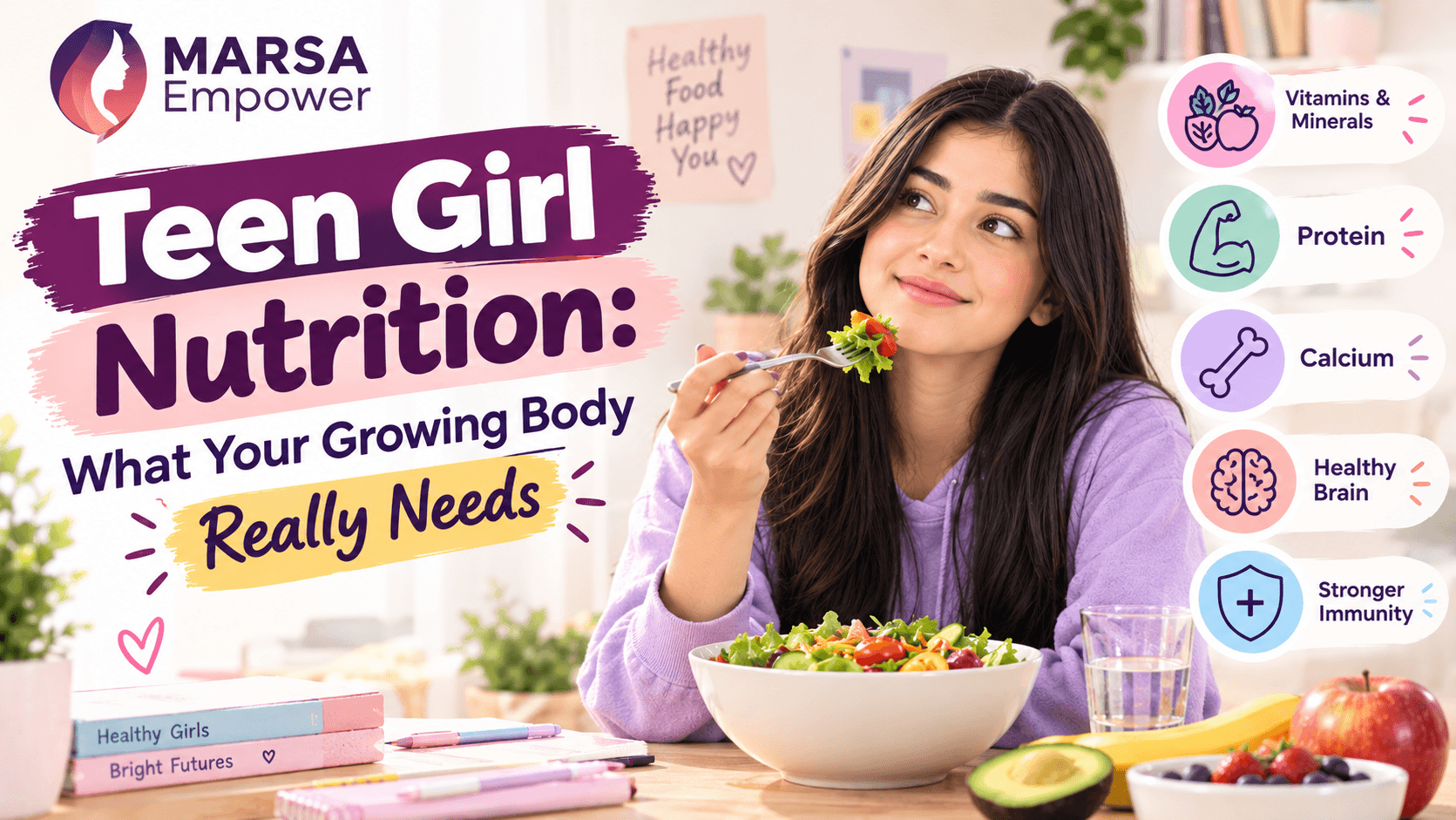
Explore how the right nutrition can support the growth and health of teen girls. Learn about essential nutrients, expert insights, and practical tips.

Maryam Mumtaz
Co-Founder & CEO
14 min read•9/15/2026
Marsa Empower · Teen Girls' Health · Nutrition & Wellness · For Girls Aged 10 and Above · 14 min read
The teenage years are one of the most nutritionally demanding periods of a person's life — and one of the periods when nutrition is most frequently compromised by busy schedules, social pressures, irregular eating habits, and diet culture messaging that actively discourages adequate food intake.
This is a significant problem. Between the ages of approximately 10 and 18, a girl's body is doing more nutritional work simultaneously than it will at almost any other time in life: growing taller, building peak bone density, developing reproductive hormones, establishing menstrual cycles, and building the brain architecture of adolescence — all at once.
Every one of these processes requires specific nutrients in specific amounts. When those nutrients are consistently unavailable because of skipped meals, restrictive eating, or diets driven by appearance goals rather than health, the consequences are real and sometimes lasting: stunted growth, reduced bone density, iron deficiency anaemia, disrupted periods, impaired immune function, and difficulty with mood, concentration, and energy.
This guide explains exactly what teenage girls need nutritionally, where to find it, how to build practical, enjoyable eating habits that support a growing body, and how to navigate the body image pressures that make adequate teen nutrition harder than it should be.
During the teenage years, several major biological processes are happening simultaneously, each with specific nutritional requirements.
Rapid skeletal growth. Girls typically have their fastest height growth in the years just before and around their first period. The skeleton is laying down bone tissue rapidly, and the density of that bone tissue is heavily determined by calcium, vitamin D, and weight-bearing activity during this period. The bone density built before age 25 is largely the bone density a woman will have for the rest of her life — building it adequately during the teenage years is an investment in bone health for decades to come.
Reproductive development. The hormonal axis governing the menstrual cycle matures during adolescence. Adequate nutrition — particularly adequate total calories, iron, zinc, and healthy fat intake — is essential for this hormonal system to develop and function properly. Teenage girls who under-eat, restrict fat intake heavily, or have very low body weight often experience disrupted or absent periods, which is the body's way of down-regulating the energy-costly reproductive system when insufficient nutrition is available.
Brain development. The adolescent brain is undergoing significant structural and functional development, including the development of the prefrontal cortex that governs decision-making, emotional regulation, and impulse control. This development continues into the mid-twenties, and it requires adequate nutrition — particularly omega-3 fatty acids, iron, zinc, and B vitamins — throughout.
Immune system development. Adequate zinc, iron, vitamin C, and vitamin D are all critical to building and maintaining the immune function that protects against illness throughout life.
Blood formation. From the first period, girls begin losing iron monthly through menstrual blood loss. This creates an ongoing iron need that, if not met consistently through diet, produces iron deficiency anaemia — the most common nutritional deficiency among teenage girls worldwide.
Protein provides the building material for every cell, tissue, hormone, enzyme, and immune molecule in the body. During the growth of adolescence, protein needs are elevated relative to adult requirements.
Protein supports muscle growth and maintenance, hormone production, immune function, wound healing, and the structural development of every organ. It also produces the strongest satiety (feeling of fullness) per calorie of any macronutrient, supporting stable energy throughout the day.
Teen girls need approximately 46 grams of protein per day as a minimum, with higher needs for those who are athletic or in periods of rapid growth.
Good daily protein sources include eggs, chicken, fish, beef or lamb, lentils and daal, chickpeas, beans, milk, yogurt, paneer, tofu, and nuts.
Iron deserves its own section, and gets one below. As a nutrient category introduction: iron is essential for haemoglobin production, which carries oxygen in red blood cells. Teen girls need 15 mg per day (significantly more than the 8 mg needed by adult men). Once periods begin, monthly iron loss through blood means consistent daily iron intake from food is not optional — it is essential.
Teen girls aged 9 to 18 need 1,300 mg of calcium per day — the highest calcium requirement of any life stage. This reflects the rapid bone building of adolescence, when most of the bone density that will protect against osteoporosis in later life is being laid down. Most teen girls do not reach this target, creating a long-term bone health gap.
Good calcium sources: milk, yogurt, cheese, fortified plant milks, tofu (calcium-set), sardines with bones, sesame seeds and tahini, calcium-fortified cereals.
Vitamin D is essential for calcium absorption. Without adequate vitamin D, the body absorbs only a fraction of dietary calcium regardless of how much calcium is consumed. Teen girls in Pakistan and South Asia are at high risk of vitamin D deficiency due to indoor lifestyles, skin coverage that reduces sunlight exposure, and darker skin tones that produce vitamin D less efficiently from equivalent sun exposure.
Regular limited sunlight exposure (10 to 20 minutes on arms and face in midday sun), fatty fish, egg yolks, fortified foods, and supplementation guided by blood testing all contribute to vitamin D status.
Zinc supports immune function, growth, wound healing, skin health, reproductive development, and many other processes. Teen girls need 9 mg per day — slightly higher than adult non-pregnant women.
Good zinc sources: meat, eggs, dairy, pumpkin seeds, cashews, lentils, chickpeas, and whole grains.
Dietary fat is not the enemy of teen health — it is essential for it. Fats are required for hormone production (all sex hormones are derived from cholesterol), brain development (the brain is approximately 60 percent fat), absorption of fat-soluble vitamins (A, D, E, K), and cellular membrane structure throughout every organ system.
Teen girls who follow very low-fat diets or who have a significant fear of fat in food risk hormonal disruption, poor brain development support, and vitamin deficiency through impaired absorption.
Best fat sources: olive oil, nuts and nut butters, seeds, avocado, eggs, fatty fish, full-fat yogurt, ghee in moderate amounts.
Dietary fibre from whole grains, vegetables, fruits, and legumes supports gut health, stabilises blood sugar, reduces the risk of constipation, and feeds the beneficial gut bacteria that support immune function and overall wellbeing.
Aim for 25 grams of fibre per day from a variety of whole food sources. Most teenage girls fall short of this target because of high processed food and low vegetable and legume intake.
Beyond the nutrients above, teen girls benefit from consistent intake of:
Folate (found in leafy greens, lentils, fortified foods) — essential for DNA synthesis and cellular division during rapid growth, and critically important for neural tube protection in the event of pregnancy.
Vitamin B12 (found in animal foods and fortified alternatives) — essential for nervous system function and red blood cell production. Particularly important for vegetarian and vegan teens who do not eat animal foods.
Vitamin C (found in citrus, guava, amla, bell peppers, tomatoes) — essential for iron absorption, immune function, and collagen production for skin and connective tissue.
Magnesium (found in pumpkin seeds, almonds, spinach, dark chocolate, whole grains) — involved in over 300 enzymatic processes including muscle function, sleep quality, and reducing period cramps.
Omega-3 fatty acids (found in fatty fish, walnuts, chia seeds, flaxseeds) — essential for brain development, hormone production, and reducing inflammation including period pain.
Teenage girls are frequently exposed to messaging that suggests eating less is healthier, that restricting food is a form of discipline, or that their bodies should be smaller than they naturally are during a period of significant growth.
This messaging is both culturally pervasive and biologically incorrect.
Teen girls need substantial amounts of food. The approximate daily caloric needs during adolescence depend on age, size, and activity level, but are generally:
These are ranges, not precise prescriptions, and individual needs vary. The most reliable guide is eating in response to hunger and fullness signals, choosing nutrient-dense foods most of the time, and not imposing caloric restriction motivated by appearance goals during a period of biological growth.
A teenage girl who is hungry should eat. A body that is growing needs fuel.
Fruits and vegetables provide vitamins C and A, potassium, folate, fibre, antioxidants, and phytonutrients across an enormous variety of forms. Aim for at least five portions per day across a variety of types and colours.
Practically: include a fruit or vegetable at every meal and snack. Fresh, frozen, and canned (without excessive added salt or sugar) all count. Saag, daal with tomatoes, vegetable sabzi, fruit chaat, cucumber and carrot sticks — all contribute.
Whole wheat atta for chapati, brown rice, oats, and whole grain bread provide fibre, B vitamins, zinc, magnesium, and sustained energy from their complex carbohydrate content — unlike refined equivalents that provide calories without the accompanying nutrients.
Replacing maida with whole wheat atta wherever possible, and choosing whole grain cereals for breakfast, are the most impactful whole grain changes most teen girls can make.
Eggs are one of the most nutritionally complete foods available — providing complete protein, iron, zinc, vitamin B12, vitamin D, choline (essential for brain development), and healthy fats in a package that is quick to prepare and accessible. One to two eggs daily is a practical and nutritionally valuable habit for most teen girls.
Chicken, beef, and lamb provide haem iron (the most absorbable form), complete protein, zinc, and B12. Consuming them several times per week alongside vegetables and whole grains provides comprehensive nutritional support.
Fatty fish — sardines, salmon, mackerel — provide omega-3 fatty acids, vitamin D, calcium (from soft edible bones in canned sardines), and complete protein. Two to three portions per week is beneficial.
Milk, yogurt, and cheese are among the most concentrated and best-absorbed calcium sources available. For teen girls with their elevated calcium needs, including dairy two to three times per day provides a straightforward foundation for meeting calcium requirements.
Plain yogurt is particularly valuable — it provides calcium, protein, probiotics, and B vitamins in a versatile, affordable form that suits both meals and snacks.
Lentil daal, chickpea curry, bean-based dishes — legumes are nutritional powerhouses that provide plant protein, iron, zinc, folate, fibre, and complex carbohydrates in every serving. They are particularly important for teen girls who eat little meat.
Eating lentil daal with a squeeze of lemon juice daily is one of the simplest and most nutritionally impactful dietary habits a teen girl can build — the vitamin C from the lemon dramatically improves iron absorption from the lentils.
A small daily handful of mixed nuts and seeds provides healthy fats, protein, zinc, magnesium, calcium (from sesame seeds), and vitamin E. Almonds, walnuts, pumpkin seeds, and sesame seeds are all excellent choices.
Nut butters — peanut butter, almond butter — applied to whole grain bread or eaten with fruit provide a quick, nutritious snack that combines protein, healthy fat, and fibre.
Iron deficiency is the most common nutritional deficiency among teenage girls worldwide, and its consequences are more significant than most girls realise.
Once periods begin, a teenage girl loses iron monthly through menstrual blood loss. This ongoing loss, combined with the iron demands of rapid growth, creates a daily iron requirement of 15 mg — approximately double the adult male requirement and significantly above what most teenage girls consistently obtain from their diets.
Iron is required for haemoglobin production — the protein that carries oxygen in red blood cells. When iron stores are depleted and haemoglobin falls, the result is iron deficiency anaemia. This produces:
Iron deficiency anaemia in teenagers is often attributed to a busy lifestyle or exam stress rather than identified and corrected. Any teenage girl with persistent, heavy fatigue should have serum ferritin (iron stores) tested.
The most iron-rich foods: Chicken liver (exceptional), beef and lamb, chicken, canned sardines, eggs, lentils, chickpeas, spinach (cooked), fortified cereals.
The most important tip: Always eat plant-based iron sources alongside vitamin C. A glass of orange juice with lentil daal, a squeeze of lemon on spinach, tomatoes alongside beans — vitamin C converts plant iron into a form the body can absorb two to four times more efficiently.
Equally important: Do not drink chai or coffee within an hour of eating iron-rich foods. The tannins in tea significantly reduce iron absorption.
The days around and during a period create specific nutritional needs that are worth paying deliberate attention to.
Iron is most important during and after the period. Blood loss during menstruation directly removes iron from the body. Eating iron-rich foods on period days — and consistently throughout the month to maintain iron stores — is the most important nutritional action a menstruating teenage girl can take. Heavy periods require even more consistent dietary attention to iron.
Magnesium may reduce period cramps. Magnesium supports muscle relaxation, including uterine muscle, and may reduce cramping intensity. Good sources: pumpkin seeds, almonds, dark chocolate, spinach, oats. Including these foods in the days before and during the period may help.
Omega-3 fatty acids reduce prostaglandins. Prostaglandins are the compounds that drive uterine contractions (cramps) during menstruation. Omega-3 fatty acids compete with the precursors of prostaglandins, potentially reducing cramping severity. Including fatty fish, walnuts, chia seeds, and flaxseed regularly throughout the month — not only during the period — produces the most benefit.
Stay hydrated. Adequate water intake reduces bloating and headaches during menstruation. Some teen girls reduce fluid intake to manage period bloating, which is counterproductive — bloating is driven by hormonal fluid retention, not by fluid intake itself.
Do not skip meals during your period. Energy requirements do not decrease during menstruation, and blood loss creates additional nutritional needs rather than fewer. Skipping meals during periods worsens fatigue, worsens cramping, and reduces the nutritional resources available for recovery.
Breakfast is the meal most commonly skipped by teenage girls — and one of the most important not to skip. Skipping breakfast elevates cortisol, drops blood sugar, impairs morning concentration, and leads to larger, less nutrient-dense compensatory eating later in the day.
A good breakfast provides protein, complex carbohydrates, and ideally a fruit or vegetable — taking approximately 5 to 10 minutes to prepare.
Eggs with whole wheat toast and a glass of milk or fortified plant milk. The eggs provide protein, zinc, and vitamin D. The toast provides whole grain carbohydrate. The milk provides calcium and protein.
Oatmeal (porridge) with milk, topped with fruit and a small handful of nuts. Provides fibre, calcium, protein, healthy fat, and vitamins across a single bowl.
Full-fat or low-fat yogurt with fruit and a tablespoon of pumpkin seeds. Provides protein, calcium, probiotics, healthy fat, zinc, and vitamins in a no-cook option.
Whole wheat paratha with yogurt and fruit. A practical option aligned with familiar Pakistani eating patterns — particularly if made with whole wheat atta and a minimal amount of ghee.
Smoothie made with milk or yogurt, a banana, nut butter, and oats. Provides protein, calcium, healthy fat, and fibre in a portable form for busy mornings.
Teen girls are often hungry between meals because of the elevated energy demands of a growing body — and snacking is a normal, appropriate part of meeting those demands. The key is choosing snacks that provide genuine nutrition alongside the energy.
A handful of mixed nuts and a piece of fruit. Provides healthy fat, protein, fibre, vitamins, and minerals in a portable, no-preparation combination.
Yogurt with fruit or a drizzle of honey. Provides protein, calcium, and probiotics.
Whole wheat crackers or toast with nut butter. Provides whole grain carbohydrate, protein, and healthy fat.
A hard-boiled egg with cucumber and tomato. Provides protein, iron, and vitamins in a satisfying savoury snack.
Hummus with vegetable sticks (carrot, cucumber, bell pepper). Provides plant protein, fibre, and vitamins with a satisfying dipping experience.
A small portion of dates and almonds. A nutritious traditional snack providing natural sugars for energy, healthy fat, and minerals.
Milk or fortified plant milk. A simple, nutritious drink that contributes protein and calcium to the day's intake.
Teen girls need approximately six to eight glasses of fluid per day under normal conditions, more during hot weather, exercise, or illness.
Water is the best everyday hydration choice. It provides fluid with no additional sugar, calories, or additives.
Tea and milk also contribute to total fluid intake. Sugary drinks — cola, packaged juices, energy drinks — provide fluid but at the cost of significant added sugar that contributes to blood sugar spikes, dental health problems, and excess caloric intake without nutritional benefit.
Signs of inadequate hydration in teens: dark yellow urine, headaches in the afternoon, difficulty concentrating, and fatigue that improves after drinking water.
Practical hydration habits for teen girls: carry a water bottle to school and refill it at least twice. Drink water with every meal. Drink before and after exercise. Choose water or milk over sugary drinks as the default.
Packaged biscuits, chips, instant noodles, fast food, and highly processed snacks provide calories without the protein, fibre, vitamins, and minerals that a growing body needs. Eaten occasionally, they are not harmful. Eaten as the primary source of daily energy, they crowd out the nutritious foods that support growth, bone development, reproductive health, and immune function.
The goal is not to eliminate these foods but to ensure they are additions to an otherwise nutrient-rich diet rather than replacements for it.
Cola, packaged fruit juices, sweetened tea, energy drinks, and flavoured milk with significant added sugar deliver large amounts of rapidly absorbed sugar without the fibre that would slow its effect on blood sugar. Consistent high intake is associated with worsened insulin resistance, dental health problems, weight gain, and the displacement of more nutritious beverages (milk, water).
Replacing sugary drinks with water, plain milk, or unsweetened alternatives is one of the most impactful simple changes available for teen nutrition.
Energy drinks are particularly concerning for teenage girls. They typically contain high caffeine alongside sugar, B vitamins, and other stimulants — at doses that are not appropriate for developing bodies. High caffeine intake in adolescence disrupts sleep, contributes to anxiety, elevates heart rate and blood pressure, and reduces calcium absorption. Energy drinks are not an appropriate substitute for adequate sleep, meals, or hydration.
Skipping meals is one of the most common and most counterproductive teen nutrition habits. The consequences include impaired concentration and academic performance, worsened energy through the day, disrupted appetite regulation, compensatory overeating later, worsened mood and emotional regulation, and — for teen girls specifically — reduced nutritional intake during a period when nutritional needs are exceptionally high.
Eating breakfast, lunch, and dinner every day — with nutritious snacks when hungry — supports the consistent nutrient supply that a growing body depends on.
Vegetarian and vegan diets can support healthy development during the teenage years — but they require more planning than omnivore diets because several key nutrients are found primarily in animal foods.
Iron is found in plant foods as non-haem iron, which is significantly less bioavailable than the haem iron in meat. Vegetarian teen girls need to consume iron-rich plant foods (lentils, beans, tofu, fortified cereals, spinach) consistently and always alongside vitamin C to improve absorption. Avoiding tea and coffee within an hour of iron-rich meals is important.
Calcium is well-provided by dairy for lacto-vegetarian girls. For vegan teens, fortified plant milks, calcium-set tofu, sesame seeds and tahini, and fortified foods must be included deliberately to meet the 1,300 mg daily requirement.
Vitamin B12 is found only in animal foods and fortified alternatives. Vegan teen girls must use B12-fortified foods (fortified plant milk, fortified nutritional yeast) or a B12 supplement consistently, without exception. B12 deficiency in a teenage vegan can produce serious neurological consequences.
Zinc from plant foods is less bioavailable than from animal foods due to phytates. Vegan teen girls should include pumpkin seeds, hemp seeds, tofu, legumes, and whole grains and consider whether intake is adequate.
Omega-3 fatty acids from plant sources (ALA in flaxseed, chia seeds, walnuts) are converted to EPA and DHA less efficiently than animal-sourced omega-3. An algae-based DHA supplement is the most effective way to ensure adequate omega-3 for brain development in vegan teen girls.
Teen girls who are physically active in sports, dance, or regular exercise have higher nutritional needs than their less active peers. This is not a problem — it is an opportunity to build healthy, performance-supporting eating habits.
Active teen girls need more calories overall to support both growth and athletic activity. Inadequate caloric intake alongside high athletic demand — a pattern called the Female Athlete Triad (or its updated term, Relative Energy Deficiency in Sport, RED-S) — produces serious consequences: impaired athletic performance, bone stress fractures from reduced bone density, disrupted or absent periods, and impaired development.
Any teen girl involved in significant athletic training should ensure her total food intake is sufficient for both her growth needs and her training demands. This means eating more on training days, not restricting food to maintain a particular weight or appearance. Sports that emphasise leanness — gymnastics, dance, some track events — carry particular risk of under-fuelling and its consequences.
Protein needs are higher for athletic teen girls — approximately 1.2 to 1.6 grams of protein per kilogram of body weight daily. Iron needs are also higher from the combination of growth, menstrual losses, and iron lost through sweat and foot-strike haemolysis during running sports.
This section is important, and it deserves honesty.
Teen girls are exposed to a relentless volume of messaging that their bodies should be smaller, thinner, or differently shaped than they naturally are. This messaging comes through social media, peer culture, dieting content, and sometimes from well-intentioned adults. Its consequences are significant: teenage girls have higher rates of disordered eating than any other demographic, and the restriction, binging, and compensatory behaviours associated with disordered eating cause genuine harm — nutritional, hormonal, and psychological.
Eating well during the teenage years is not about achieving or maintaining a particular body shape. It is about providing the nutrients a growing body needs to develop normally, stay healthy, perform well, and lay the foundation for lifelong wellbeing.
A teenage body that is growing, gaining curves, and changing shape during puberty is a healthy body. The weight and shape changes of puberty are driven by normal hormonal development, not by eating "too much." Trying to prevent or reverse these changes through restriction is working against healthy biological development.
Healthy eating for teen girls is about consistent, varied, adequate nutrition — not counting, restricting, or judging food choices. The most important nutritional quality a teenage girl can develop is not the ability to restrict food effectively. It is a comfortable, sustainable, nourishing relationship with eating.
If food has become a source of significant anxiety, if eating feels out of control in either direction, or if the relationship with food and body is significantly affecting daily life, this deserves compassionate professional support rather than more nutrition information. A trusted adult, school counsellor, or healthcare provider are all appropriate starting points.
Skipping breakfast because there is no time or because they are trying to reduce caloric intake. Breakfast sets up blood sugar, energy, and concentration for the entire morning and provides the first iron, calcium, and protein of the day.
Eating very little iron-rich food without realising that monthly period blood loss requires daily iron replenishment. Iron deficiency is the most common nutritional consequence of this gap.
Drinking more sugary drinks than water — cola, packaged juice, and sweetened tea as the primary daily beverages reduce nutritional quality, contribute to blood sugar instability, and provide no calcium for bone development.
Following restrictive internet diets designed for adults trying to lose weight — which are nutritionally inappropriate for growing teenagers and can actively harm growth, bone density, hormone development, and the relationship with food.
Not eating enough calcium-rich foods while calcium requirements are at their lifetime peak.
Relying on supplements rather than food for nutritional needs — most teen girls do not need supplements if they eat a varied, balanced diet, but many take random supplements while neglecting the dietary foundation that provides nutrients in the forms and combinations the body uses most effectively.
Eating most calories late in the day by skipping meals and then eating a large dinner — which disrupts appetite regulation, blood sugar, and sleep quality.
The following can indicate that nutritional intake is consistently insufficient to support the demands of a growing teenage body.
Persistent fatigue and low energy that is not explained by insufficient sleep. Difficulty concentrating, poor memory, or impaired academic performance compared to previous levels. Frequent illness suggesting impaired immune function. Hair thinning or increased hair shedding. Pale skin — particularly pale inner lower eyelids — that may suggest anaemia. Periods that are absent, very irregular, or very heavy (heavy periods may worsen iron deficiency; absent periods may indicate under-fuelling). Feeling cold when others are comfortable — a sign of insufficient caloric intake. Slow wound healing or persistent infections. Bone pain or stress fractures — can indicate vitamin D and calcium insufficiency. Poor physical performance in sports or physical activity compared to peers.
Speak with a healthcare professional or registered dietitian if any of the following apply.
Persistent fatigue despite adequate sleep — a ferritin (iron stores) test is appropriate. Irregular, absent, or very heavy periods — these can be nutritionally-related or may indicate a hormonal condition. Symptoms suggesting vitamin D or B12 deficiency, particularly in teens following vegetarian or vegan diets. Significant or persistent concerns about food, eating, weight, or body image — these deserve professional support, not more information. Regular athletic training at a high level — a sports dietitian can provide individualised nutritional guidance. A parent or guardian who has concerns about a teen's growth, development, or eating patterns.
Good nutrition during the teenage years is the foundation of lifelong health — and Marsa Empower provides the resources and tools to support teenage girls and their families in building it.
Where Marsa helps — Smart Nutrition resources. Marsa's nutritional education explains the most important nutrients for teenage girls in accessible, practical terms — iron, calcium, vitamin D, zinc, omega-3, and others — alongside the specific foods that provide them and practical ways to include them in everyday eating. This resource is particularly valuable for teenage girls following vegetarian or vegan diets, where planning is more important.
Why it matters specifically for teens. Diet culture messaging — about eating less, achieving a particular shape, avoiding specific food groups — is pervasive in the social media environment teenage girls inhabit. Marsa provides counter-programming: honest, evidence-based information about what a growing body actually needs, framed around health and nourishment rather than restriction and appearance.
Health Hub cycle tracking. Marsa's Health Hub allows teenage girls to track their menstrual cycle, symptoms, energy, and mood over time. For a teen girl whose periods are irregular or who experiences significant fatigue around her period, this tracking builds the documented pattern that makes a healthcare consultation more productive — and helps identify whether nutritional factors (particularly iron) may be contributing to her experience.
Menstrual health education. Marsa explains the nutritional demands of menstruation — particularly iron loss and the dietary strategies for replacing it — in clear, age-appropriate language. Many teenage girls do not know that their period increases their iron needs, or that the fatigue they experience premenstrually and during their period can be addressed through dietary attention to iron.
AI health guidance — Digital Doctors. Teen girls who have questions about nutrition, periods, energy, and health that feel too embarrassing or awkward to ask a parent or school nurse can access Marsa's Digital Doctors for private, educational guidance. Questions like "why am I so tired all the time," "is it bad to skip breakfast," or "why is my hair falling out" receive informative, honest answers alongside guidance on when professional evaluation is appropriate.
Important note. Marsa Empower is a health education and wellness companion. It is not a substitute for professional medical or nutritional assessment. Any teen girl with significant nutritional concerns, very irregular or absent periods, significant fatigue, or a difficult relationship with food deserves professional evaluation by a qualified healthcare professional or registered dietitian.
What should a teenage girl eat every day?
A balanced daily diet for a teen girl includes protein at every meal (eggs, chicken, fish, lentils, dairy), calcium-rich foods two to three times a day (milk, yogurt, cheese, or fortified alternatives), fruits and vegetables at most meals, whole grains (whole wheat atta, brown rice, oats), healthy fats (nuts, seeds, olive oil, fatty fish), and adequate water throughout the day. The goal is variety and consistency — not perfection or restriction.
Why do teen girls need more iron?
From the first period, teen girls lose iron monthly through menstrual blood loss. Combined with the iron demands of rapid adolescent growth, this creates a daily iron requirement of 15 mg — approximately double the requirement for adult men. Iron deficiency anaemia is the most common nutritional deficiency among teenage girls and produces significant fatigue, impaired concentration, and reduced immune function.
Is skipping breakfast bad for teenagers?
Yes. Skipping breakfast drops blood sugar, elevates cortisol, impairs morning concentration and academic performance, and leads to higher caloric compensation later in the day — often from less nutritious foods. For teen girls in particular, skipping breakfast means missing the first calcium, protein, and iron intake of the day, making it harder to meet already elevated nutritional needs.
How much water should a teenage girl drink?
Approximately six to eight glasses of fluid daily under normal conditions, more during hot weather, exercise, or illness. Water is the best everyday hydration choice. Pale yellow urine throughout the day is the simplest indicator of adequate hydration.
Are snacks important for growing girls?
Yes. Teenage girls have elevated energy and nutritional needs and are genuinely hungry between meals. Nutritious snacks — yogurt, nuts, fruit, eggs, hummus — are an appropriate and important part of meeting those needs, not something to avoid. The goal is choosing snacks that provide genuine nutrition alongside energy.
Should teenage girls take vitamins or supplements?
Most teenage girls who eat a varied, balanced diet do not need most supplements. Exceptions: vitamin D supplementation is appropriate for girls with limited sun exposure (very common in Pakistan), particularly guided by blood testing. Vitamin B12 supplementation is essential for vegan teen girls. Iron supplementation is appropriate for those with confirmed iron deficiency — but should be based on a ferritin blood test rather than assumed. A healthcare provider or dietitian can assess individual needs.
How can I eat healthy without going on a strict diet?
Healthy eating for teenage girls is not a strict diet — it is building the habit of including nutritious foods most of the time without eliminating anything completely. Focus on adding rather than removing: add a vegetable to lunch, add a handful of nuts as a snack, add lemon to lentil daal for better iron absorption, swap white bread for whole wheat. Small, consistent additions create healthier eating patterns over time without the restriction, rules, and stress that strict diets produce.
The most important message in this guide is this: teenage girls need to eat enough — enough calories, enough protein, enough calcium, enough iron, enough of everything that a rapidly growing body requires.
The cultural pressure to eat less, weigh less, and take up less space is powerful and persistent during the teenage years. And it is in direct conflict with the biological reality that a growing teenage girl's body needs substantial nourishment to do the extraordinary work it is doing.
Good nutrition during the teenage years is not about following diet rules or achieving a particular appearance. It is about giving a growing body the specific nutrients it needs to build strong bones, establish hormonal health, develop a functioning immune system, support a developing brain, and lay the foundation for the decades of health that follow.
You deserve to eat well. Your body deserves to be nourished. And the relationship with food that you build during these years — comfortable, varied, and generous — is one of the most important health investments you will ever make.
Educational Disclaimer
This article is for educational and awareness purposes only. It does not constitute medical or nutritional advice. If you have specific nutritional concerns, persistent fatigue, irregular periods, or a difficult relationship with food or your body, please consult a qualified healthcare professional or registered dietitian for personalised guidance.
Marsa Empower | Care. Safety. Growth.
Visit marsaempower.com to explore health and nutrition resources for teenage girls, track your menstrual cycle and energy patterns, and access educational guidance built for every stage of a woman's life.
Medical Disclaimer
This article is for general informational and educational purposes only and is not a substitute for professional medical advice, diagnosis, or treatment. Always seek the advice of a qualified healthcare provider with any questions you may have regarding a medical condition. Never disregard professional medical advice or delay seeking it because of something you have read on MARSA Empower.
Written By
Maryam Mumtaz
Co-Founder & CEO
Co-Founder of MARSA Empower who leads the visual and strategic evolution of the platform. Maryam bridges technical complexity with human-centric design, architecting the team's official roadmap and ensuring MARSA effectively addresses the real-world needs of women. With deep expertise in agentic AI, full-stack development, and UI/UX design, she has delivered 50+ projects for 30+ satisfied clients.
Enjoyed this story?