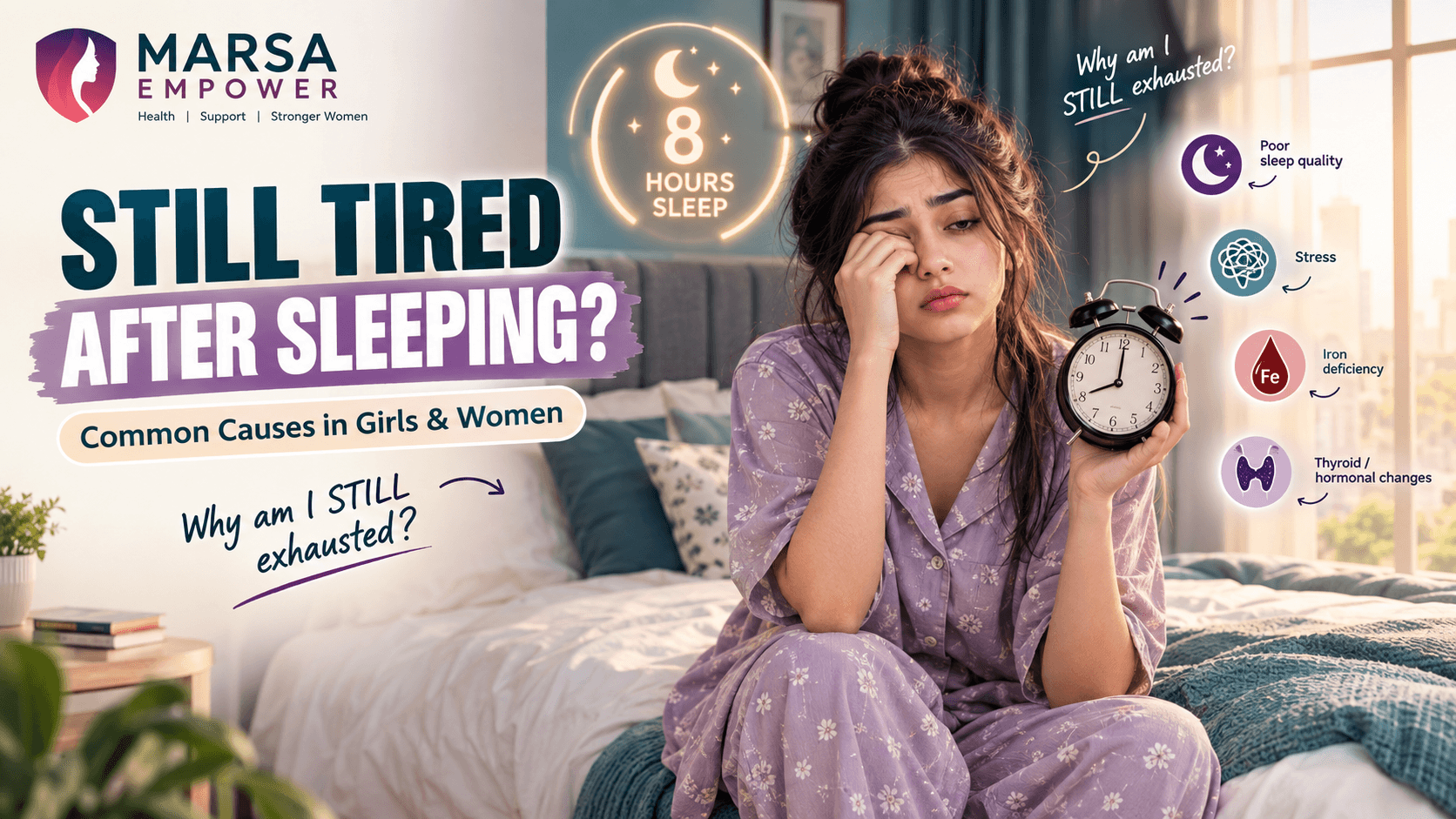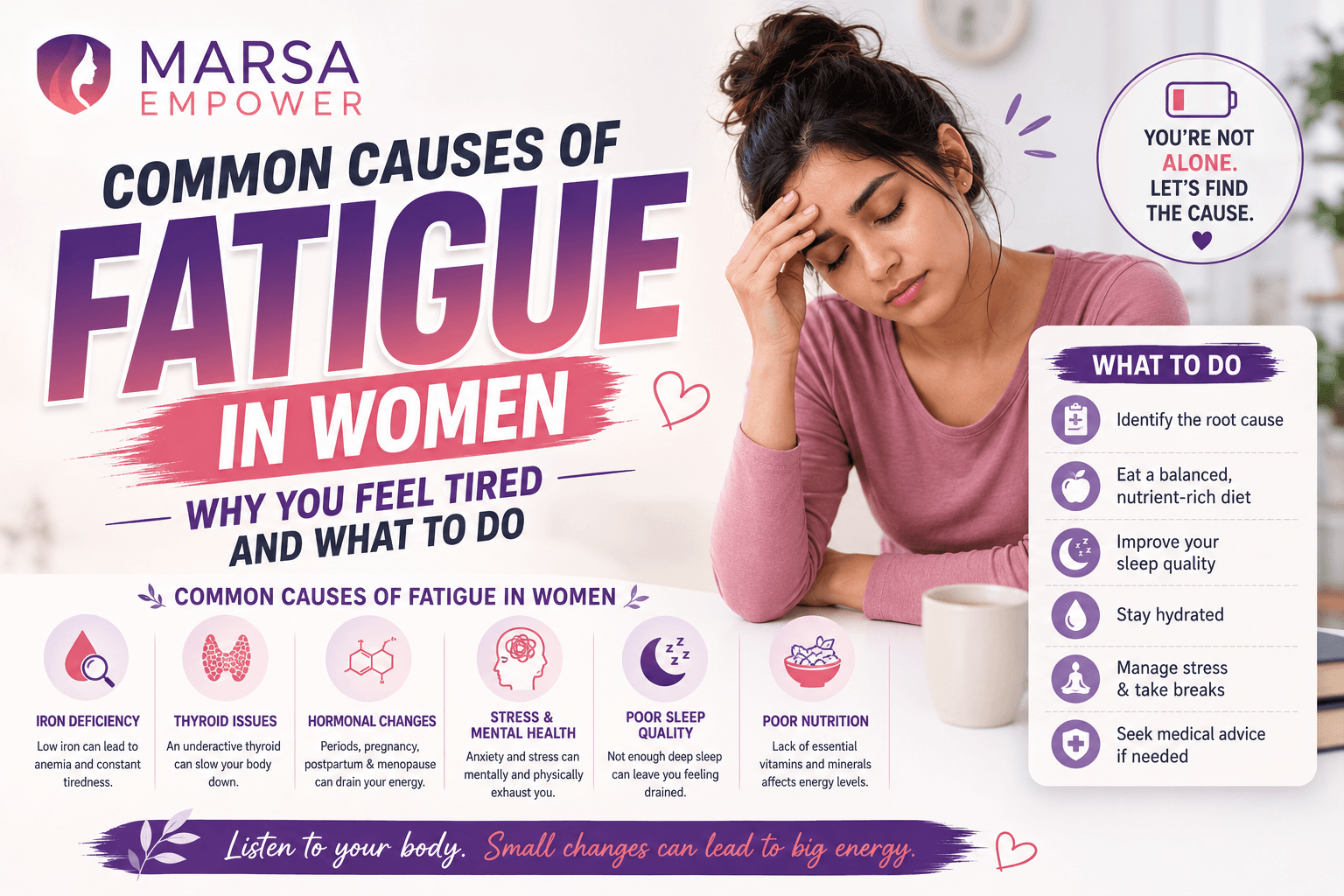
Explore the common causes of fatigue in women and discover actionable solutions to regain energy and vitality.

Maryam Mumtaz
Co-Founder & CEO
14 min read•8/12/2026
Marsa Empower · Women's Health & Everyday Wellness · For Girls & Women Aged 13 and Above · 14 min read
"Persistent tiredness is not simply the price of a busy life. In many cases, it is the body communicating something specific and important — and it deserves the same attention as any other health signal."
Almost every woman has said it at some point:
"I am just so tired."
Sometimes this is the natural, appropriate response to a genuinely demanding period of life — a busy week at work, inadequate sleep, a stressful family situation, or the physical demands of menstruation. This kind of tiredness is real, understandable, and resolves when circumstances change.
But many women describe a different kind of tiredness — heavier, more persistent, and stubbornly unresponsive to sleep. A tiredness that is present every morning regardless of how many hours were slept the night before. A tiredness that reduces the capacity to concentrate, to exercise, to engage fully with daily life. A tiredness that has become the background of every day, normalised over months or years until it simply feels like the price of being a woman with responsibilities.
This kind of tiredness — persistent, disproportionate to circumstances, unresolved by rest — is fatigue. And fatigue, in the vast majority of cases, has an identifiable cause.
Understanding the difference between normal tiredness and persistent fatigue, and knowing the most common causes in women specifically, is the starting point of addressing it effectively — rather than simply accepting it.
The distinction between normal tiredness and clinical fatigue matters — because it determines whether rest alone is the answer or whether investigation is needed.
Normal tiredness is proportionate to its cause and resolves with rest.
You had a late night and an early morning — you feel tired. You slept eight hours — you feel better. You had a particularly stressful week — you feel drained by Friday. You rest over the weekend — you feel restored on Monday.
This tiredness-recovery pattern is normal. The body demands rest, the rest is provided, and function is restored.
Fatigue is different in both quality and behaviour.
Fatigue of this character is a symptom — the body's communication that something in its internal environment is not functioning optimally. Treating it as simply a lifestyle issue and pushing through it is not the appropriate response. Identifying and addressing the cause is.
Fatigue in women is driven by a wide range of causes — physiological, hormonal, nutritional, metabolic, and psychological. The causes frequently overlap and compound each other. Understanding which applies to your situation is the starting point of addressing it effectively.
This is the most obvious and most common cause — and the one most consistently underestimated in its impact.
Many women consistently fall significantly short of these targets — not because of a single late night, but because of structural sleep shortfall built into their daily schedule. Work starts early, responsibilities run late, and eight hours simply does not fit into the available time.
Sleep is not passive rest. It is the period during which the brain consolidates memory, the immune system performs maintenance, cortisol rhythms reset, growth hormone supports cellular repair, and the adenosine that accumulates during waking hours is cleared. When sleep is consistently insufficient, none of these processes complete fully. The result is progressive accumulation of the cognitive and physical fatigue that adequate sleep would resolve — but which partial sleep never quite clears.
A woman sleeping six hours per night when she needs eight is accumulating a "sleep debt" that cannot be fully repaid by a single long sleep on the weekend. Consistent, adequate nightly sleep is the only thing that fully restores function.
A woman sleeping eight hours of light, fragmented, frequently interrupted sleep does not receive the same restorative benefit as one sleeping seven hours of deep, continuous sleep. Conditions including sleep apnoea (which is significantly under-diagnosed in women), restless legs syndrome, and chronic pain can fragment sleep enough to produce fatigue despite apparently adequate hours.
Chronic psychological stress is one of the most consistent and most pervasive causes of fatigue in women — and one of the most frequently overlooked because the fatigue it produces feels like it should be solvable by rest, but is not.
When the body is under chronic stress, the adrenal glands produce sustained elevated levels of cortisol. Cortisol is the primary stress hormone — appropriate in short bursts, damaging when chronically elevated.
Chronically high cortisol:
The fatigue of chronic stress is not the tiredness of physical exertion. It is the tiredness of a nervous system that has been on high alert for too long — and it does not resolve with sleep alone, because cortisol disrupts the very sleep that should restore it.
Beyond physiological cortisol effects, the cognitive and emotional demands of chronic stress produce emotional exhaustion — a depletion of the mental and emotional resources that enable engagement with daily life. A woman who is emotionally exhausted may have physically slept but wakes feeling no less depleted than before sleep. This is a recognised component of burnout, and it requires reducing the demands on the nervous system — not just adding more sleep.
The body produces energy through cellular metabolism — a process that requires specific nutrients as both fuel and as enzymatic cofactors. When the diet consistently fails to provide these nutrients, energy production is impaired at the cellular level, producing fatigue that sleep cannot resolve.
Insufficient total caloric intake: When the body receives fewer calories than it needs to sustain its energy demands, it reduces non-essential functions and produces fatigue as a conservation mechanism. This is common in women who skip meals, follow very restrictive diets, or are simply too busy to eat adequately.
Insufficient protein: Protein provides the amino acids from which energy-producing enzymes, haemoglobin, and muscle tissue are built. Consistent under-consumption of protein impairs these systems — contributing to fatigue.
Deficient iron, vitamin D, B12, and magnesium: These specific micronutrients are most directly associated with fatigue when deficient — each through a specific mechanism explained in their dedicated sections below.
High sugar and refined carbohydrate intake: A diet high in refined carbohydrates and sugar produces blood sugar spikes followed by crashes — the post-meal energy dip and mid-afternoon fatigue that many women attribute to "normal afternoon tiredness" but is actually the physiological consequence of blood sugar dysregulation.
Mild chronic dehydration — a fluid deficit of just 1 to 2% of body weight — produces measurable reductions in energy, concentration, and physical performance before any sensation of thirst is experienced.
Many women are mildly chronically dehydrated — not dramatically enough to feel acutely thirsty, but consistently enough that their cells are operating in a state of reduced fluid availability that impairs every biological process, including energy production.
Fatigue that improves noticeably with increased water intake is often a sign of mild chronic dehydration — and it is one of the most immediately correctable causes of low energy available.
Physical inactivity is a direct cause of fatigue — not an absence of a cause, but an active driver. This seems counterintuitive — using energy should cause fatigue. But the biology works in the opposite direction.
Regular moderate exercise:
Women who are completely sedentary often describe a pervasive low energy that is not caused by exertion — it is the baseline energy level of a body that has not received the cardiovascular and metabolic stimulus of regular movement. Starting a consistent walking habit — even 20 to 30 minutes three to four times per week — typically produces noticeable energy improvement within two to four weeks.
The opposite extreme also causes fatigue — and is worth noting because it affects women who are health-conscious and active but over-training without adequate recovery.
Very high-volume or very high-intensity exercise, particularly when combined with insufficient caloric intake, produces a state called overtraining syndrome — characterised by persistent fatigue, reduced performance, increased illness susceptibility, and mood changes. The body's systems cannot complete their recovery before the next training demand is placed on them.
For most women, this applies to elite athletes and women dramatically increasing training volume rapidly. But for any active woman whose fatigue has worsened alongside increased exercise — particularly if combined with under-eating — reducing training volume and increasing caloric intake is the appropriate first response.
Every menstrual period involves blood loss — and blood loss means iron loss and fluid loss. For women with normal flow, this monthly loss is replaced adequately by diet and the body's recovery mechanisms.
For women with heavy periods — defined medically as blood loss exceeding 80 ml per cycle, which in practical terms means soaking a full pad more frequently than every one to two hours on the heaviest days — this balance is disrupted.
Heavy menstrual blood loss produces:
Acute fatigue during and immediately after menstruation: The physical demands of significant blood loss — reduced red blood cell count, temporary fluid loss, prostaglandin-driven uterine contractions — all contribute to the fatigue of the heaviest period days. This is expected and is a direct physiological response to blood loss.
Cumulative iron depletion over months: If heavy periods are not compensated by adequate dietary iron, the monthly iron deficit compounds. After several months of this cumulative depletion, iron stores fall — and fatigue associated with iron deficiency develops.
The importance of tracking: Women who track both their menstrual flow and their fatigue levels across several cycles often identify a clear pattern — fatigue peaking in the days around the heaviest flow and gradually improving in the weeks between periods. This pattern is clinically significant and worth documenting for a healthcare provider.
Iron deficiency is the most common nutritional deficiency in women worldwide — and fatigue is its most universal symptom.
Iron is the mineral at the centre of haemoglobin — the protein in red blood cells that carries oxygen from the lungs to every cell in the body. When iron is insufficient, haemoglobin production falls. When haemoglobin falls, oxygen delivery to cells is reduced. When cells receive less oxygen:
The fatigue of iron deficiency is characteristically heavy, persistent, and unresponsive to sleep — because the underlying cause (inadequate oxygen delivery) is not addressed by rest.
Women lose iron monthly through menstruation and require it in higher amounts during pregnancy and breastfeeding. Teenage girls — who are simultaneously losing iron monthly and growing rapidly — have some of the highest iron requirements of any demographic.
Iron deficiency is frequently missed because standard blood tests measure haemoglobin — which may remain within the normal range in early iron deficiency. Serum ferritin — which measures stored iron reserves — is the more sensitive marker. Many women with significant iron deficiency and clear fatigue symptoms have normal haemoglobin but critically low ferritin.
If you suspect iron deficiency, specifically ask for a serum ferritin test. Do not accept "your blood test is normal" as a complete answer if fatigue persists — ask whether ferritin was tested.
Vitamin D deficiency is extremely prevalent in Pakistani women — with some studies finding deficiency in the majority of women tested — and fatigue is one of its most consistent symptoms.
Vitamin D receptors are present throughout the body — including in the mitochondria (the cellular energy generators). Vitamin D is directly involved in the cellular energy production process. When vitamin D is insufficient, cellular energy production is impaired — producing the heavy, persistent, seemingly sourceless fatigue that characterises deficiency.
Vitamin D deficiency also:
Vitamin D deficiency is diagnosed by a 25-hydroxyvitamin D blood test. If you have not had this tested alongside iron, thyroid, and B12 when investigating unexplained fatigue, it should be on the list.
The thyroid gland produces hormones that regulate the metabolic rate of every cell in the body. When it underperforms — a condition called hypothyroidism — the metabolic slowdown affects every system.
Fatigue is the most common symptom of hypothyroidism — and in many women, it is the presenting complaint that eventually leads to diagnosis. The fatigue of hypothyroidism is typically described as:
Women are five to eight times more likely than men to develop thyroid disorders. The most common cause — Hashimoto's thyroiditis — is an autoimmune condition that develops gradually, producing slowly worsening fatigue over months or years before other symptoms become prominent enough to prompt investigation.
Thyroid function is tested with a TSH (thyroid-stimulating hormone) blood test. When fatigue is the primary complaint, TSH should be included in the initial blood panel — ideally alongside free T4 and thyroid antibodies.
While iron deficiency is the most common cause of anaemia in women, other types of anaemia also produce significant fatigue:
Vitamin B12 deficiency anaemia: B12 is required for DNA synthesis, including in rapidly dividing red blood cells. Without adequate B12, abnormally large, poorly functional red blood cells are produced. B12 deficiency is particularly common in vegetarians, vegans, and older adults. It produces fatigue alongside neurological symptoms — tingling in the hands and feet, cognitive difficulties, and balance problems.
Folate deficiency anaemia: Folate (vitamin B9) is similarly involved in red blood cell production. Deficiency produces the same large, inefficient cells as B12 deficiency.
Anaemia of chronic disease: Chronic inflammation — from conditions including rheumatoid arthritis, chronic kidney disease, or other inflammatory conditions — can impair red blood cell production independently of iron intake.
Both type 1 and type 2 diabetes, and the pre-diabetic state of insulin resistance, produce significant fatigue through cellular energy impairment.
When insulin resistance is present — which is common in women with PCOS, in overweight women, and in women in the prediabetic range — cells cannot efficiently use glucose for energy even when adequate glucose is available. The result is cellular energy deficiency — cells that are literally unable to convert available fuel into usable energy.
This produces fatigue that is characteristically worse after meals (particularly carbohydrate-heavy meals that spike blood sugar) and is often accompanied by increased thirst, frequent urination, and blurred vision.
Fasting blood glucose and fasting insulin are the appropriate tests when diabetes or insulin resistance is suspected as a cause of fatigue.
Several commonly used medications list fatigue as a side effect:
If fatigue began or worsened after starting a new medication, or if you are on any of the above types of medications, discuss this with the prescribing doctor. Dose adjustment, timing changes, or alternative formulations may be appropriate.
Period-related fatigue is real, physiological, and experienced to varying degrees by most menstruating women. Understanding its causes makes it more manageable — and identifying when it goes beyond normal helps distinguish expected period fatigue from something requiring medical attention.
Blood loss: The physical demand of menstrual bleeding — even at normal volumes — involves a temporary reduction in circulating red blood cells and fluid volume. The body compensates, but this compensation itself requires energy.
Prostaglandins: The chemicals that drive uterine contractions during menstruation also affect other systems — causing fatigue, nausea, digestive changes, and whole-body discomfort in addition to cramping.
Hormonal shifts: The dramatic fall in oestrogen and progesterone just before and during menstruation affects serotonin, dopamine, and the brain's sleep regulation — producing mood changes and sleep disruption that compound physical fatigue.
Iron loss: In women with consistently heavy periods, the monthly iron loss drives progressive iron depletion over months — producing fatigue that worsens across periods rather than returning to baseline between them.
Recording both flow volume (light, moderate, heavy, very heavy) and fatigue level (on a simple 1 to 10 scale) on each day of the period over two to three cycles reveals whether fatigue correlates tightly with heaviest flow days (expected), worsens across cycles (suggesting cumulative iron depletion), or exists independently of cycle phase (suggesting causes unrelated to menstruation).
This data — available through Marsa's Health Hub cycle tracking — is genuinely useful for healthcare providers assessing whether period-related fatigue is within normal range or warrants investigation.
Teenage girls report high rates of fatigue — and the causes are often multiple and overlapping.
Academic pressure, social complexity, the neurological intensity of adolescent brain development, and the emotional demands of navigating teenage relationships and identity create a significant stress load that elevates cortisol and impairs sleep — producing the fatigue of a nervous system that rarely gets to genuinely rest.
Teenagers biologically need 8 to 10 hours of sleep per night — and most get significantly less. The combination of early school start times, late social and screen activity, and the natural circadian shift toward a later sleep schedule in adolescence creates a structural sleep deficit in most teenagers. This sleep debt is the most direct and most significant cause of fatigue in teenage girls.
Many teenage girls skip breakfast, skip meals to "save calories," or follow restrictive diets driven by body image concerns. Each of these reduces total nutrient intake — iron, vitamin D, B vitamins, protein — creating the deficiencies that produce fatigue while simultaneously reducing the caloric fuel available for energy production.
The physical demands of the adolescent growth spurt — which is second only to the first year of life in its biological intensity — require significant nutritional resources. A teenage girl whose diet does not keep pace with these demands will experience fatigue as one of the first signs that the body's resources are insufficient for its demands.
Many teenage girls who experience heavy periods in their first few years of menstruation — before understanding what "heavy" means relative to normal — develop progressive iron deficiency without connecting it to their periods. Fatigue that appears or worsens after periods begin is worth investigating with a ferritin blood test, regardless of age.
Iron, vitamin D, and B12 deficiency are all common in teenage girls — for the reasons described in their dedicated sections above. Any teenage girl with persistent, unexplained fatigue deserves a blood panel including ferritin, 25-hydroxyvitamin D, B12, and TSH.
Adult women — particularly those in their twenties through fifties — often carry the heaviest stress loads of their lives, with the fewest built-in rest periods and the strongest cultural messaging that exhaustion is simply what responsible women feel.
High professional demands — long hours, significant responsibility, performance pressure, and often the additional burden of navigating gender dynamics in professional environments — create sustained cortisol elevation that impairs sleep, energy, and recovery. Fatigue in this context is often attributed to being "busy" — which is partially accurate but ignores the physiological mechanisms that determine how the body handles the demands of a demanding career.
Women disproportionately carry the caregiving burden for children, elderly parents, and other family members alongside professional and domestic responsibilities. This triple burden — career, family, and domestic management — is one of the most consistent predictors of burnout and fatigue in adult women. The mental load of caregiving — the constant anticipatory planning, organising, and managing — is exhausting in ways that are difficult to quantify but very real in their physiological consequences.
Women caring for young children or elderly family members experience significant sleep fragmentation — multiple nighttime awakenings that prevent the deep, restorative sleep stages that fully restore energy. Chronic sleep fragmentation of this kind produces fatigue as consistently as total sleep deprivation.
The hormonal fluctuations of perimenopause — which typically begin in the mid-to-late forties — produce fatigue through several direct mechanisms: disrupted sleep (hot flashes and night sweats interrupt sleep throughout the night), oestrogen-related changes in serotonin and dopamine activity that affect mood and energy, and thyroid function changes that frequently accompany the hormonal transition of this period.
Iron deficiency from years of heavy periods. Vitamin D deficiency from years of indoor work and limited sun exposure. B12 deficiency from years of predominantly plant-based eating without attention to supplementation. These deficiencies accumulate over years and often go undetected until fatigue becomes significant enough to prompt investigation.
Before fatigue requires medical investigation, several consistent lifestyle changes address the most common non-medical causes:
The most impactful single change for most women. Target seven to nine hours consistently (eight to ten for teenagers). A consistent sleep and wake time — even on weekends — is more important than total hours alone. Remove screens from the bedroom or stop using them 30 to 60 minutes before bed. Keep the bedroom cool, dark, and quiet.
Three meals per day at consistent times, each containing protein, complex carbohydrates, healthy fats, and vegetables. Do not skip breakfast. Reduce high-sugar and high-refined-carbohydrate foods that produce the blood sugar spikes and crashes that drive afternoon fatigue.
Six to eight glasses of water per day as a baseline. Dehydration is one of the most immediately correctable causes of low energy — and one of the most commonly overlooked.
Even 20 to 30 minutes of brisk walking three to four times per week produces measurable energy improvement within two to four weeks. The short-term energy cost of exercise is far outweighed by the medium and long-term energy gain from improved cardiovascular efficiency, better sleep, and reduced cortisol.
Continuous work without adequate rest reduces cognitive and physical performance and compounds fatigue. Short breaks every 60 to 90 minutes — away from screens, ideally with movement or fresh air — allow partial restoration of attention and energy.
Walking, breathwork, adequate sleep, social connection, and professional support where needed are the most evidence-based stress management interventions. Reducing cortisol through genuine stress management directly improves energy — not by eliminating demands, but by improving the body's capacity to manage them.
Caffeine provides temporary alertness by blocking adenosine — the chemical that creates sleep pressure. It does not provide energy; it borrows alertness from future rest periods. High caffeine intake, particularly after early afternoon, disrupts sleep quality and creates a dependency cycle that worsens underlying fatigue over time. Gradually reducing caffeine — while addressing the underlying causes of fatigue — produces more sustainable energy than increasing it.
Most fatigue has an identifiable and manageable cause. But some fatigue patterns indicate conditions that require prompt medical evaluation.
| Accompanying Symptom | Why It Warrants Prompt Evaluation |
|---|---|
| Shortness of breath at rest or with minimal activity | May indicate cardiac, pulmonary, or severe anaemia |
| Chest pain or tightness | Requires urgent cardiac evaluation |
| Dizziness or fainting | Multiple possible serious causes requiring investigation |
| Unexplained weight loss | May indicate thyroid disease, diabetes, or other systemic condition |
| Unexplained weight gain | May indicate hypothyroidism or other hormonal condition |
| Persistent fever lasting more than one week | May indicate infection or inflammatory condition |
| Swollen lymph nodes | Warrants evaluation |
| Significant hair loss alongside fatigue | Points toward thyroid, iron, or hormonal cause |
| Mood changes — persistent depression or anxiety | May be driving fatigue OR be driven by the same underlying cause |
| Bruising easily or prolonged bleeding | May indicate a bleeding disorder contributing to anaemia |
| Joint pain or muscle weakness alongside fatigue | May indicate autoimmune or inflammatory condition |
Marsa Empower's platform brings together several tools that directly support understanding and managing fatigue — particularly for women who want to track their symptoms, understand their health patterns, and know when to seek professional evaluation.
Marsa's Health Hub allows women to track their menstrual flow, symptoms, energy levels, and mood across cycles — revealing the patterns that connect fatigue to menstrual blood loss, hormonal shifts, or other cycle-related factors. Three to four months of tracked data provides the baseline that distinguishes normal period-related fatigue from the progressive fatigue of iron depletion.
Marsa's Digital Doctors provide accessible, educational information about the conditions most commonly associated with fatigue in women — including iron deficiency, vitamin D deficiency, thyroid disorders, PCOS, and hormonal changes. Understanding what to look for, what tests to request, and what symptoms warrant prompt evaluation is the kind of health literacy that turns fatigue from a vague complaint into a specific, actionable concern.
Marsa's Smart Nutrition resources help women build the dietary habits that directly address nutritional causes of fatigue — including practical guidance on iron-rich foods, vitamin D sources, B12 for vegetarians and vegans, and the blood-sugar-stabilising dietary patterns that reduce energy crashes.
For women managing conditions associated with fatigue — thyroid disorders, anaemia, PCOS — consistent medication adherence is clinically important. Marsa's medication scheduling support helps women maintain the consistency their treatment requires.
Marsa's health education resources — including detailed blogs covering iron deficiency, thyroid health, vitamin D, PCOS, period health, and nutritional wellness — provide the clear, accessible information that helps women recognise when fatigue is a symptom worth investigating rather than simply a feature of a busy life.
Important: Marsa Empower's AI guidance and educational resources are informational and supportive — they do not replace professional medical diagnosis or treatment. Persistent or unexplained fatigue, particularly when accompanied by other symptoms, should always be evaluated by a qualified healthcare professional.
Why am I always tired even when I sleep enough?
Sleep quality and sleep quantity are different things. Eight hours of fragmented or shallow sleep does not provide the same restoration as seven hours of deep, continuous sleep. Beyond sleep quality, persistent fatigue despite adequate sleep strongly suggests an underlying cause — iron deficiency, vitamin D deficiency, thyroid dysfunction, or another medical condition — that warrants blood testing. "Enough sleep" alone does not rule out a medical cause of fatigue.
What blood tests should I ask for when investigating fatigue?
A comprehensive fatigue blood panel for women should include: serum ferritin (iron stores — specifically request this, not just haemoglobin), full blood count (haemoglobin and red blood cell indices), TSH and free T4 (thyroid function), 25-hydroxyvitamin D (vitamin D status), vitamin B12, fasting glucose (blood sugar), and depending on other symptoms, fasting insulin and thyroid antibodies.
Is period fatigue normal?
Mild to moderate fatigue on the heaviest days of a period — driven by blood loss, prostaglandins, and hormonal shifts — is expected and normal. Fatigue that is severe, that prevents normal activity, that worsens across consecutive periods, or that persists significantly between periods is not normal and warrants investigation. The most common medical explanation is iron deficiency from heavy periods.
Can PCOS cause fatigue?
Yes — through several mechanisms. Insulin resistance (the core metabolic feature of PCOS) impairs cellular energy production. The elevated androgens of PCOS affect sleep quality and mood. The mental health burden of managing a chronic hormonal condition contributes to emotional exhaustion. And the hormonal disruptions of PCOS can cause or worsen iron deficiency (through heavy or irregular periods) and vitamin D deficiency — both of which cause fatigue independently.
Can stress alone cause fatigue this severe?
Yes. Chronic psychological stress produces cortisol-mediated sleep disruption, inflammation, immune suppression, and hormonal dysregulation — all of which produce significant, persistent fatigue. Stress-related fatigue often cannot be resolved by rest alone — because cortisol disrupts the very sleep that would restore energy. Addressing the source and physiological effects of chronic stress is necessary.
How long does it take to recover from iron deficiency fatigue?
With appropriate iron supplementation (prescribed and monitored by a doctor), haemoglobin typically normalises within four to eight weeks. However, supplementation should continue for three to six months after normalisation to rebuild iron stores (ferritin) to an adequate level. Energy improvement typically begins within two to four weeks of starting treatment — though full restoration may take several months.
| Cause | Key Indicator | Most Important Action |
|---|---|---|
| Insufficient sleep | Fatigue resolves on holidays · Improves with more sleep | Increase sleep consistently · Address sleep quality |
| Chronic stress | Fatigue despite rest · Accompanied by anxiety or low mood | Active stress management · Professional support if needed |
| Poor nutrition | Skipping meals · Restrictive diet · High sugar intake | Regular balanced meals · Reduce refined carbohydrates |
| Dehydration | Fatigue improves with water · Low daily fluid intake | 6–8 glasses of water daily |
| Inactivity | Fatigue is pervasive · Not worsened by gentle movement | Begin consistent moderate exercise |
| Heavy periods | Fatigue worst on heavy flow days · Worsening across cycles | Track flow and fatigue · Test ferritin |
| Iron deficiency | Persistent fatigue · Pale skin · Breathlessness · Cold hands | Test serum ferritin specifically |
| Vitamin D deficiency | Bone/muscle aches · Frequent illness · Low mood alongside fatigue | Test 25-OH vitamin D · Supplement if low |
| Thyroid dysfunction | Weight changes · Cold/heat intolerance · Hair changes alongside fatigue | Test TSH and free T4 |
| Diabetes/insulin resistance | Fatigue worse after meals · Increased thirst · Abdominal weight | Test fasting glucose and insulin |
| Medications | Fatigue began after starting a new medication | Discuss with prescribing doctor |
| Warning signs | Chest pain · Shortness of breath · Fever · Unexplained weight change | Seek medical evaluation promptly |
"Fatigue is not simply the price of being a busy woman. It is a health signal — one that, in the vast majority of cases, has an identifiable cause and an effective solution. You deserve to feel well. The first step is taking the fatigue seriously enough to find out why it is there."
Educational Disclaimer
This article is for educational and awareness purposes only. It does not constitute medical advice, diagnosis, or treatment. If you are experiencing persistent or unexplained fatigue, please consult a qualified healthcare professional for personalised blood testing, evaluation, and guidance.
Marsa Empower · Women's Health · Everyday Wellness · Fatigue Awareness and Education
Medical Disclaimer
This article is for general informational and educational purposes only and is not a substitute for professional medical advice, diagnosis, or treatment. Always seek the advice of a qualified healthcare provider with any questions you may have regarding a medical condition. Never disregard professional medical advice or delay seeking it because of something you have read on MARSA Empower.
Written By
Maryam Mumtaz
Co-Founder & CEO
Co-Founder of MARSA Empower who leads the visual and strategic evolution of the platform. Maryam bridges technical complexity with human-centric design, architecting the team's official roadmap and ensuring MARSA effectively addresses the real-world needs of women. With deep expertise in agentic AI, full-stack development, and UI/UX design, she has delivered 50+ projects for 30+ satisfied clients.
Enjoyed this story?