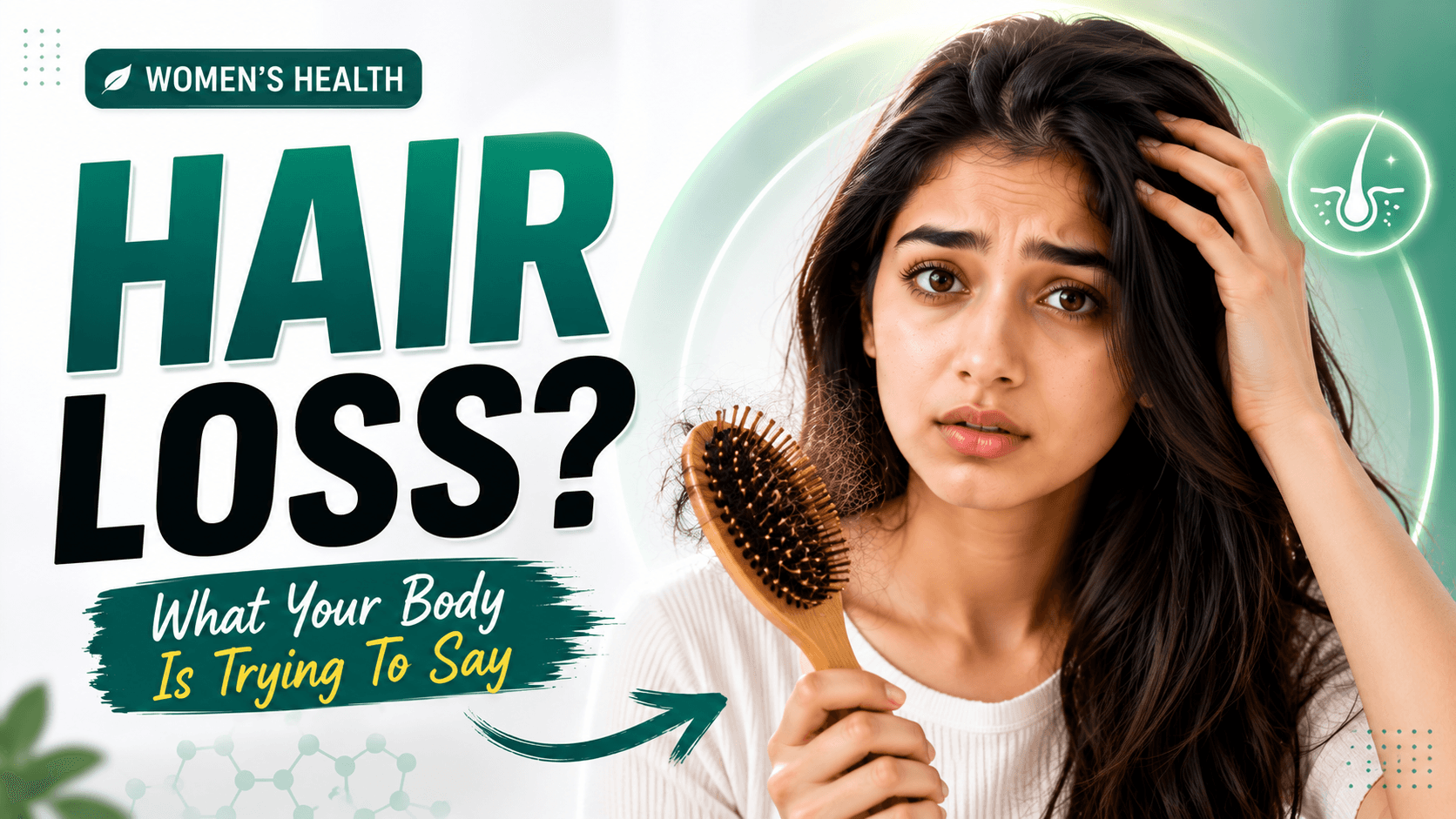
Hair loss in women often signals deeper health issues. Discover the common causes and what they mean for your well-being.

Maryam Mumtaz
Co-Founder & CEO
12 min read•7/13/2026
Marsa Empower · Women's Health · Dermatology & Hormonal Wellness · 12 min read
"Your hair is not the problem. Your hair is the symptom. And symptoms, when understood correctly, point directly toward solutions."
She noticed more hair on her pillow every morning. More on the shower drain. More on her brush than she ever remembered. She tried new shampoos, changed her diet, switched to gentler styling. She waited — hoping it would stop on its own.
But nobody told her that her hair was not the problem.
Her hair was the symptom.
Hair loss is one of the most emotionally distressing health concerns women experience — and one of the most consistently misunderstood. Most women treat the hair itself, investing in products, serums, and scalp treatments that address the surface while the real cause continues unaddressed beneath it — in iron levels, in thyroid function, in hormonal balance, in nutritional status, in chronic stress.
The hair follicle is exquisitely sensitive to the body's internal environment. When something disrupts that environment — a nutritional deficiency, a hormonal shift, a sustained stress load, a systemic condition — the follicle responds by entering its resting phase early and shedding. The hair loss visible in the shower drain or on the brush is simply the follicle communicating that something upstream has changed.
This guide explains what that upstream cause is likely to be — and what to do about it.
Before identifying the causes of hair loss, it helps to understand the normal hair growth cycle — because understanding this cycle explains why hair loss often appears weeks or months after the triggering event, and why this delay confuses so many women.
Each hair follicle cycles independently through three distinct phases:
Anagen — the growth phase. This is the active period during which the hair shaft is produced. It lasts between 2 and 7 years, depending on genetics and health. Approximately 85 to 90 percent of scalp hair is in this phase at any given time.
Catagen — the transition phase. A brief 2 to 3 week period during which the follicle shrinks and detaches from its blood supply, preparing to rest.
Telogen — the resting phase. The follicle rests for approximately 3 months before the hair sheds and a new anagen phase begins. Normally, about 10 to 15 percent of follicles are in this phase simultaneously — accounting for the 50 to 100 hairs shed daily that is considered normal.
When a significant stressor disrupts the body's internal environment — whether nutritional, hormonal, physical, or emotional — a large proportion of follicles can be pushed simultaneously from the anagen phase into the telogen phase. Three months later, when those follicles shed, the volume of hair loss can be alarming. This pattern is called telogen effluvium, and the two to three month delay between trigger and visible shedding is what makes the cause so difficult to identify without understanding this mechanism.
Iron is essential for producing haemoglobin — the protein in red blood cells that transports oxygen through the bloodstream to every cell and organ in the body, including the hair follicle. Follicles are among the most metabolically active cells in the body and require a consistent, oxygen-rich blood supply to sustain the rapid cell division of the growth phase. When iron stores fall, follicles are among the first tissues to be deprioritised as the body redirects available oxygen to essential organs.
The result is premature entry into the telogen phase and increased shedding — often diffuse across the scalp rather than concentrated in one area.
Why this is particularly common in women: Iron is lost with every menstrual cycle. Women with heavy periods lose considerably more than the average diet replaces, making progressive iron depletion one of the most common and most overlooked contributors to hair loss in women of reproductive age.
The critical distinction in testing: Standard blood tests measuring haemoglobin alone can miss iron deficiency in its early stages. Serum ferritin — which measures the body's stored iron reserves — is the more sensitive marker and can reveal deficiency weeks or months before haemoglobin falls. Many women with significant hair loss have normal haemoglobin but critically low ferritin. When investigating hair loss, always request ferritin specifically.
The hair follicle contains receptors for oestrogen, progesterone, androgens, and thyroid hormones — making it directly responsive to hormonal fluctuations throughout a woman's reproductive life. Any significant hormonal shift can alter the balance between the growth and resting phases of the hair cycle.
During puberty, rising androgen levels stimulate oil gland activity and can alter follicle behaviour — contributing to the hair texture and density changes many girls notice in early adolescence.
During pregnancy, elevated oestrogen prolongs the anagen phase, keeping more follicles in active growth and reducing normal daily shedding. Many pregnant women notice their hair becoming fuller and thicker. After delivery, oestrogen drops rapidly — and the follicles that had been held in the extended growth phase shift simultaneously into telogen. Two to four months later, the resulting shedding can be dramatic and alarming, though it is temporary and typically resolves within six to twelve months.
In PCOS, elevated androgens — particularly dihydrotestosterone (DHT) — act on follicles at the temples and crown that are genetically sensitive to androgens, causing them to miniaturise progressively. This produces the characteristic crown and temple thinning of androgenic alopecia in women.
During perimenopause and menopause, declining oestrogen relative to androgens shifts the hormonal balance toward androgen dominance — accelerating any existing androgenic hair thinning.
Both acute and chronic stress can trigger telogen effluvium — the pattern of diffuse hair shedding described above. Under conditions of significant physical or psychological stress, the body activates its survival response, redirecting energy and resources toward essential organ systems and away from non-critical functions, including hair growth.
The shedding that results typically appears two to three months after the stressful period — a delay that prevents most women from connecting the two events without guidance. A woman who loses a significant amount of hair in March may have experienced the triggering stressor in December or January.
It is important to note that this pattern is typically self-limiting: once the stressor resolves and the body returns to equilibrium, follicles re-enter the growth phase and hair density gradually recovers over six to twelve months. However, when chronic stress is sustained over an extended period without resolution, the cycle of disruption can repeat.
Managing stress as a genuine health priority — not a lifestyle preference — is therefore directly relevant to hair health.
Both hypothyroidism (underactive thyroid) and hyperthyroidism (overactive thyroid) disrupt the hair growth cycle — though through different mechanisms and with somewhat different clinical patterns.
In hypothyroidism, slowed metabolic rate reduces cellular energy production throughout the body, including in follicles. Hair growth requires significant energy, and when energy production is reduced, follicles shed prematurely and produce thinner, weaker hair shafts. The pattern is typically diffuse — affecting the entire scalp — and may also involve thinning of the outer third of the eyebrows, which is a relatively specific clinical indicator of thyroid dysfunction.
In hyperthyroidism, excess thyroid hormone accelerates cellular turnover but also disrupts the hormonal signalling that maintains the growth phase, again producing diffuse shedding.
Thyroid-related hair loss is one of the most consistently missed causes of unexplained hair shedding in women — partly because the other symptoms of thyroid dysfunction (fatigue, weight changes, temperature sensitivity, mood changes) are similarly gradual and non-specific, and partly because thyroid screening is not routine in many clinical settings.
If hair loss is accompanied by unexplained fatigue, weight changes, sensitivity to cold or heat, constipation, or mood changes, thyroid function testing is essential.
The hair shaft is composed primarily of keratin — a structural protein built from amino acids. The follicle requires a consistent supply of specific nutrients to produce and maintain the hair shaft: protein for structural integrity, iron and B12 for oxygen delivery, zinc for follicle cell repair and division, biotin for keratin synthesis, and vitamin D for follicle cycling and new follicle activation.
When any of these nutrients are consistently deficient — through restrictive eating, irregular meals, limited dietary diversity, or absorption issues — the follicle cannot function optimally. Hair becomes thinner, weaker, and more prone to shedding.
This is particularly relevant for young women who skip meals, follow highly restrictive diets, or eat a limited range of foods. The consequences for hair health are real and measurable — but typically delayed by three to six months, making the dietary connection easy to miss.
Significant, rapid weight loss — whether intentional through crash dieting or unintentional through illness — places considerable physical stress on the body. Caloric restriction reduces the energy available for non-essential functions, and the body's triage response deprioritises hair growth in favour of essential organ maintenance.
This triggers the same telogen effluvium mechanism as emotional stress, with shedding becoming visible two to three months after the period of rapid weight loss. The hair loss can be substantial and alarming — particularly because it often occurs during a period when a person may otherwise be feeling good about dietary changes they have made.
Crash dieting is one of the most common yet under-recognised causes of hair shedding in young women — and addressing it requires not only resuming adequate nutritional intake but also allowing the three to six months for follicles to complete the telogen phase and return to active growth.
Traction alopecia is hair loss caused by sustained mechanical tension on the hair shaft and follicle — produced by hairstyles that pull the hair tightly over extended periods. Ponytails worn very tightly every day, braids pulled close to the scalp, extensions that add significant weight, and buns that create sustained tension at the hairline all contribute to this pattern.
The follicle damage from traction begins as reversible inflammation and follicle irritation — and at this stage, removing the source of tension allows recovery. However, if sustained over months or years, the chronic inflammation can lead to follicle scarring and permanent hair loss — particularly along the hairline, temples, and the areas most subject to tension.
Traction alopecia is identifiable by its pattern: hair loss concentrated precisely where hairstyling creates the greatest tension, often along the frontal hairline or at the temples.
A number of commonly prescribed medications list hair loss as a recognised side effect — a fact that is not always communicated clearly at the time of prescription, and that many women do not connect to their hair changes without guidance.
Medications most commonly associated with hair loss include blood thinners (anticoagulants), certain hormonal contraceptives (particularly those with higher androgenic activity), some antidepressants, beta-blockers, retinoids (used for severe acne), and some cholesterol-lowering medications.
The pattern is typically diffuse shedding that begins within three months of starting the medication and improves when the medication is changed or discontinued — though this decision should always be made in consultation with the prescribing clinician rather than independently.
If you have noticed hair changes that coincided with starting a new medication, this is worth raising with your doctor. There is often an alternative with a better side effect profile.
Sleep is the period during which the body conducts its most intensive cellular maintenance — including the hormonal signalling and cellular repair that sustain healthy hair follicle function. Growth hormone, which supports cell regeneration and hair growth, is primarily secreted during deep sleep. Cortisol, which at elevated levels suppresses hair growth, is regulated by the sleep-wake cycle — with chronic sleep deprivation maintaining cortisol at persistently higher levels throughout the day.
While poor sleep is rarely the sole cause of significant hair loss, it is a meaningful contributing factor in women who are already experiencing hair shedding from another cause — and addressing sleep quality is part of any comprehensive approach to hair health restoration.
Seven to eight hours of consistent, quality sleep is the target. Consistent sleep and wake times — even at weekends — support the circadian hormonal rhythms that underpin both sleep quality and hormonal balance.
Female pattern hair loss — androgenetic alopecia — is the most common form of hair loss in women overall, affecting a significant proportion of women by the time they reach their fifties and sixties. It is influenced by genetic inheritance of sensitivity to dihydrotestosterone (DHT) in certain follicles, and is typically characterised by gradual widening of the central parting line and diffuse thinning at the crown — with the frontal hairline generally preserved, unlike the male pattern.
Genetic hair loss tends to develop gradually over years rather than appearing suddenly, and it is often accelerated by hormonal changes — particularly during perimenopause when declining oestrogen shifts the hormonal balance toward relative androgen dominance.
Family history is a relevant piece of clinical information: if female relatives on either side of the family experienced significant hair thinning, this increases the likelihood that genetic alopecia is contributing. However, genetic predisposition does not exclude the coexistence of other treatable causes — iron deficiency, thyroid dysfunction, or nutritional gaps — and these should always be investigated and addressed before concluding that genetics is the primary driver.
Not all hair loss requires urgent attention. Normal daily shedding of 50 to 100 hairs is expected, and mild increases during seasonal changes or periods of stress are common. However, certain patterns and accompanying symptoms indicate that medical evaluation is necessary.
Seek professional assessment if you experience any of the following:
Asymmetric, patchy, sudden hair loss warrants prompt evaluation to rule out alopecia areata — an autoimmune condition requiring specific treatment — or scalp conditions including fungal infection, seborrheic dermatitis, or psoriasis.
A targeted blood panel identifies the most common treatable causes of hair loss within days. When presenting to a doctor with hair loss concerns, request the following investigations:
| Investigation | What It Assesses |
|---|---|
| Serum Ferritin | Iron stores — the most sensitive marker for iron deficiency; request specifically alongside FBC |
| Full Blood Count (FBC) | Overall blood health; haemoglobin for anaemia |
| TSH and Free Thyroid Hormones | Thyroid function — both hypo and hyperthyroidism |
| 25-Hydroxyvitamin D | Vitamin D status |
| Vitamin B12 and Folate | Neurological and cellular health markers |
| Testosterone and DHEAS | Androgen levels — particularly relevant if PCOS or androgenic alopecia is suspected |
| Fasting Glucose and Insulin | Metabolic health and insulin resistance |
| Zinc | Nutritional marker directly relevant to follicle function |
A pelvic ultrasound may be added if PCOS is suspected based on accompanying symptoms.
While the right treatment for hair loss depends on its underlying cause, these evidence-based lifestyle practices support hair follicle health across the majority of causes and should form the foundation of any hair health approach.
Prioritise adequate protein at every meal. Hair is built from protein. Insufficient dietary protein directly impairs the follicle's ability to produce the keratin that forms the hair shaft. Eggs, lean meat, lentils, legumes, dairy, and nuts are good sources.
Address iron through diet and, where indicated, supplementation. Iron-rich foods — red meat, lentils, dark leafy greens, fortified grains — support follicle oxygenation. If blood tests confirm iron deficiency, supplementation under medical guidance is necessary alongside dietary improvement. Consuming vitamin C-rich foods alongside iron-rich meals significantly improves iron absorption.
Stay consistently hydrated. Every cellular process — including those sustaining follicle function — requires adequate hydration. Chronic mild dehydration impairs scalp circulation and follicle health over time.
Manage stress as a clinical priority. Chronic elevated cortisol is one of the most consistent hair follicle disruptors. Strategies that genuinely reduce cortisol load — regular moderate exercise, adequate sleep, manageable commitments, and professional support where needed — directly support hair health.
Handle hair gently. Minimise heat styling tools, particularly at high temperatures. Reduce the frequency of chemical treatments. Avoid tight hairstyles worn daily. Use a wide-toothed comb rather than a bristle brush on wet hair, which is at its most fragile.
Ensure seven to eight hours of quality sleep nightly. Consistent sleep supports growth hormone secretion, cortisol regulation, and the hormonal balance that sustains normal follicle cycling.
Seek evaluation when shedding is persistent. Self-management has limits. When hair loss continues despite lifestyle attention, a blood panel and professional assessment are the necessary next steps — not more topical products.
She spent months trying new shampoos. She changed her diet in ways that felt arbitrary. She waited. The hair kept falling.
What she needed was not a better product. She needed an explanation — one that directed her attention from her hair to the system driving it. Iron levels. Thyroid function. Hormonal balance. Nutritional status. Stress load. Sleep quality. These are where hair loss originates. These are where meaningful intervention occurs.
Hair loss in women is almost never about the hair. It is about the internal environment the hair follicle is responding to. And that internal environment is, in the vast majority of cases, both identifiable and treatable.
The path from persistent shedding to recovery begins not with a serum but with a blood test and an accurate diagnosis. It continues with targeted treatment of the underlying cause, supported by the lifestyle practices that give follicles the best possible environment in which to recover.
Your hair is speaking. The most important thing you can do is learn to listen — and then act on what it is telling you.
| Cause | Characteristic Pattern | First Step |
|---|---|---|
| Iron Deficiency | Diffuse shedding — especially with heavy periods | Serum ferritin blood test |
| Hormonal Changes | Postpartum, PCOS, perimenopause — varied patterns | Hormonal blood panel |
| Chronic Stress | Diffuse shedding 2–3 months after stressful period | Stress management + time |
| Thyroid Disorders | Diffuse thinning — may include eyebrows | TSH + free thyroid hormones |
| Poor Nutrition | Diffuse shedding with dietary restriction | Nutritional blood panel |
| Rapid Weight Loss | Diffuse shedding 2–3 months after weight loss | Resume adequate nutrition |
| Tight Hairstyles | Hairline and temple loss — pattern follows tension | Change hairstyling practices |
| Medications | Diffuse shedding after starting new medication | Discuss with prescribing clinician |
| Poor Sleep | Contributing factor — worsens other causes | Sleep quality intervention |
| Genetics | Gradual crown and parting thinning | Dermatologist evaluation |
"Your hair is one of the most visible indicators of your internal health. Learning to read what it is telling you — and responding to that signal with investigation rather than products — changes everything."
Educational Disclaimer
This article is for educational and awareness purposes only. It does not constitute medical advice, diagnosis, or treatment. If you are experiencing persistent or significant hair loss, please consult a qualified dermatologist or healthcare professional for personalised evaluation and guidance.
Marsa Empower · Women's Health · Dermatology and Hormonal Wellness
Medical Disclaimer
This article is for general informational and educational purposes only and is not a substitute for professional medical advice, diagnosis, or treatment. Always seek the advice of a qualified healthcare provider with any questions you may have regarding a medical condition. Never disregard professional medical advice or delay seeking it because of something you have read on MARSA Empower.
Written By
Maryam Mumtaz
Co-Founder & CEO
Co-Founder of MARSA Empower who leads the visual and strategic evolution of the platform. Maryam bridges technical complexity with human-centric design, architecting the team's official roadmap and ensuring MARSA effectively addresses the real-world needs of women. With deep expertise in agentic AI, full-stack development, and UI/UX design, she has delivered 50+ projects for 30+ satisfied clients.
Enjoyed this story?



