Explore how much water women should drink daily, featuring expert insights, practical tips, and answers to common hydration questions.

Maryam Mumtaz
Co-Founder & CEO
11 min read•9/2/2026
Marsa Empower · Women's Health & Everyday Wellness · For Girls & Women Aged 13 and Above · 11 min read
Water is essential to life — and yet, consistently drinking enough of it is something most people struggle with at some point. For many women, the day passes quickly between work, study, caregiving, and other responsibilities, and deliberate water intake falls to the bottom of the priority list.
The question of exactly how much water a woman should drink is also more complicated than the commonly cited "eight glasses a day" suggestion implies. That advice is a useful starting point, but hydration needs are genuinely individual — affected by body size, activity level, climate, diet, pregnancy, breastfeeding, and health conditions.
This guide explains how to think clearly about hydration: what the body actually needs water for, what the evidence says about daily intake, what influences your personal requirements, what the signs of inadequate hydration look like, and the simple practical strategies that make consistent hydration genuinely easier.
There is no single universally correct amount of water that applies to every woman in every circumstance. However, the most widely referenced guideline from the US National Academies of Sciences provides a useful reference point.
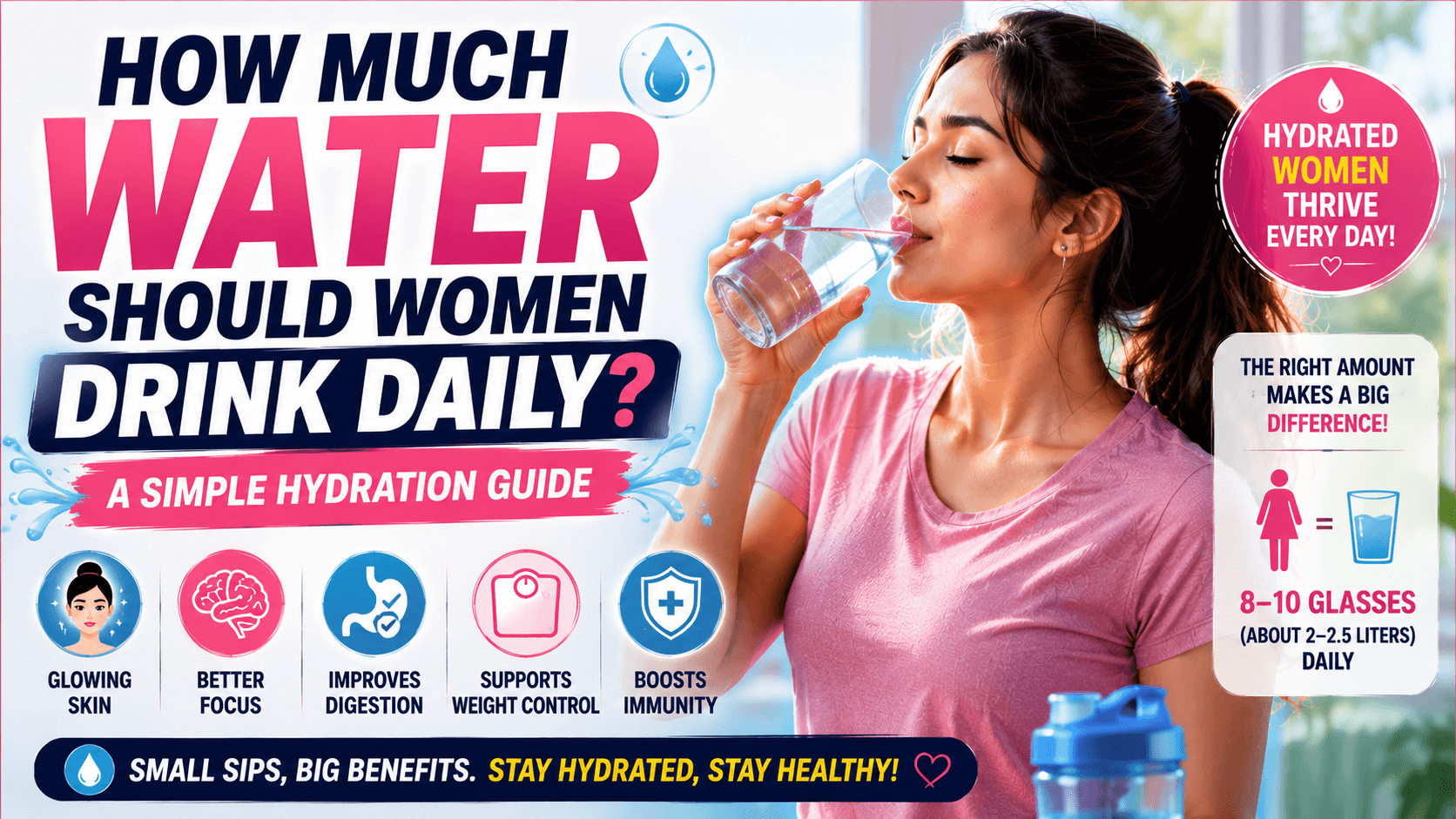
The adequate intake for total daily water is approximately 2.7 litres per day for adult women. This is a total figure, not a plain water drinking target. It includes water obtained from all sources — drinking water, other beverages including tea and milk, and the water content of foods.
This reference is a population average, not a precise individual requirement. Women who are larger, more physically active, in hot climates, pregnant, or breastfeeding typically need more. Women who eat diets particularly rich in fruits, vegetables, soups, and other high-water foods obtain more of their total water intake from food and may not need to drink as much plain water to reach an equivalent total.
The practical takeaway is not to count every millilitre of water you consume against a fixed daily target. It is to stay consistently hydrated throughout the day, to drink more in the circumstances that increase fluid needs, and to pay attention to the body's signals — particularly urine colour and thirst — as day-to-day guides to whether you are meeting your needs.
Total water includes every source from which the body receives fluid — not only plain drinking water.
Plain water is the most straightforward and most recommended everyday hydration source. It provides fluid without additional calories, sugar, or other substances.
Other beverages also contribute to total fluid intake. Tea, coffee, milk, lassi, coconut water, and other drinks all contain water that the body can use for hydration. The common belief that caffeinated beverages are entirely dehydrating is not accurate — while caffeine has a mild diuretic effect, typical amounts of tea and coffee still produce net positive hydration.
Food contributes meaningfully to total water intake, more than most people realise. Many commonly eaten foods have very high water content. Watermelon, cucumber, tomatoes, strawberries, oranges, yogurt, soups, and many other fruits and vegetables contain 80 to 95 percent water by weight. A diet rich in these foods contributes a significant volume of water toward daily needs without any conscious water drinking.
This is one reason why the simple instruction to drink eight glasses of water per day does not work equally well for all women. A woman eating an abundance of fresh fruits, vegetables, and soups every day obtains substantially more water from food than one whose diet consists primarily of dried, processed, or cooked-down foods.
Water is involved in virtually every biological process the body performs. Understanding what it is used for reinforces why consistent hydration matters beyond simply feeling thirsty.
Temperature regulation. The body dissipates heat primarily through sweating, which requires water. During exercise, hot weather, or fever, significant fluid is lost through sweat and must be replaced to maintain normal body temperature.
Digestion and nutrient absorption. Water is essential for the chemical processes of digestion, the movement of food through the digestive tract, and the absorption of nutrients through the intestinal wall.
Blood volume and circulation. Blood is approximately 90 percent water. Adequate hydration maintains blood volume, which is essential for delivering oxygen and nutrients to every cell and removing waste products.
Joint lubrication. Synovial fluid, which lubricates the joints and prevents cartilage from grinding against bone, is water-based. Dehydration can reduce its protective function.
Kidney function and waste removal. The kidneys filter waste products from the blood and excrete them through urine. Adequate water intake maintains the volume of urine needed for efficient waste clearance and reduces the concentration of substances that can form kidney stones.
Cognitive function. The brain is approximately 75 percent water. Even mild dehydration — before any sensation of thirst — measurably reduces concentration, working memory, and reaction time.
Skin health. The skin requires adequate hydration to maintain its barrier function, elasticity, and appearance. Dehydration contributes to dryness, reduced elasticity, and the appearance of fine lines.
Mild dehydration often develops gradually and without dramatic symptoms. By the time obvious thirst is felt, a mild fluid deficit has often already developed. Being aware of the earlier signs of inadequate hydration allows women to respond before dehydration becomes more significant.
Thirst is the most direct signal. While not always the earliest indicator, consistent thirst throughout the day is a reliable sign that fluid intake is insufficient.
Dark yellow urine is one of the most accessible and practical indicators of hydration status. Pale straw-coloured urine suggests adequate hydration. Dark yellow or amber urine suggests the kidneys are concentrating urine to conserve water, indicating that more fluid is needed.
Urinating less frequently than usual, when not explained by deliberate fluid restriction, suggests the body is conserving water due to insufficient intake.
Headaches, particularly in the afternoon when the effects of morning dehydration accumulate, can be triggered or worsened by mild dehydration.
Tiredness and low energy in the absence of other explanations can indicate mild dehydration. Even a one to two percent reduction in body water content measurably reduces physical and cognitive performance.
Dry mouth and reduced saliva production are signs of inadequate hydration.
Reduced physical performance during exercise — premature fatigue, reduced endurance, or feeling weaker than usual — can indicate that fluid intake before or during exercise was insufficient.
Dizziness when standing quickly can be worsened by mild dehydration reducing blood volume.
Urine colour is the most practical at-home hydration indicator available. The general guide is:
Pale yellow to light straw colour suggests adequate hydration. This is the target.
Dark yellow or amber suggests the kidneys are concentrating urine and more fluid is needed.
Clear or nearly colourless urine may indicate more fluid is being consumed than necessary, though this is rarely harmful in healthy people.
Very dark brown urine — more like tea or cola — can indicate severe dehydration or, if persistent, other medical causes requiring investigation.
Orange or bright yellow urine is often caused by B vitamins, particularly vitamin B2 (riboflavin), rather than dehydration.
Pink or red urine, if not explained by recently eating beetroot or deeply coloured foods, warrants medical evaluation as it may indicate blood in the urine.
Urine colour is a useful general guide, not a definitive hydration test, as medications, certain foods, vitamins, and medical conditions can all influence colour independently of hydration status.
Several specific circumstances reliably increase fluid requirements beyond typical daily needs.
During exercise. Physical activity increases body temperature, which the body regulates through sweating. Fluid loss during exercise ranges from a relatively small amount during brief, low-intensity activity to more than a litre per hour during intense exercise in hot conditions. Drinking before, during, and after exercise according to thirst and perceived sweat loss is appropriate for most women in most exercise contexts.
During hot or humid weather. Environmental heat increases sweating even at rest, significantly increasing daily fluid requirements. Women who live in or travel to hot climates, or who spend time outdoors in summer, need substantially more fluid than their usual routine provides.
During illness. Fever increases metabolic rate and fluid loss. Vomiting and diarrhoea produce rapid and significant fluid loss. In illnesses involving these symptoms, fluid replacement is genuinely important and, in severe cases involving young children, elderly women, or significant illness, may require oral rehydration solutions containing electrolytes rather than plain water alone.
During pregnancy. The fluid volume of the body expands significantly during pregnancy to support increased blood volume, amniotic fluid, and the developing placenta. Pregnant women have increased daily fluid needs and should discuss specific recommendations with their healthcare provider.
During breastfeeding. Breast milk production requires significant daily fluid. Breastfeeding women typically have increased fluid needs and should pay consistent attention to hydration, guided by thirst as a primary signal.
Yes, and this is worth addressing because the prevalent message that "more water is always better" is not medically accurate.
Drinking an excessively large volume of water in a short period can lower sodium concentration in the blood to a dangerous level — a condition called hyponatremia or water intoxication. Symptoms of severe hyponatremia include headache, nausea, confusion, seizures, and in very severe cases, loss of consciousness. This is a medical emergency.
Hyponatremia from excessive water intake is uncommon in healthy people who drink according to normal thirst and common sense. It is most likely to occur in endurance athletes who drink very large volumes during prolonged activity, in people who deliberately drink excessive amounts of water based on the mistaken belief that more is always better, or in women with certain health conditions or on certain medications that affect how the body regulates water and sodium.
The practical guidance is to drink according to thirst, maintain pale yellow urine, and avoid forcing yourself to drink volumes far beyond what feels natural or what the body is requesting through thirst signals.
Yes. Despite the widespread belief that caffeinated beverages are dehydrating and should not be counted toward daily fluid intake, the evidence does not support this in the amounts most people consume.
Caffeine does have a mild diuretic effect — it slightly increases urinary output. However, the volume of fluid in a cup of tea or coffee significantly exceeds the additional urine produced in response to the caffeine. The net effect is still positive hydration. Research consistently shows that moderate caffeine consumption — up to approximately 400 mg per day, equivalent to roughly three to four cups of coffee — does not cause dehydration in people who regularly consume caffeine.
Tea and coffee can therefore be reasonably counted as part of total daily fluid intake. The more relevant concern is the sugar, milk, and other additions that may accompany these beverages, and whether relying heavily on caffeinated beverages rather than water as a primary hydration source is creating other nutritional issues.
Soft drinks and energy drinks do contain water and therefore do contribute to total fluid intake. However, they are not recommended as everyday hydration choices for several reasons.
Most soft drinks contain significant amounts of added sugar — a single 330ml can may contain 35 grams or more. Consumed regularly as a hydration source, this adds substantial sugar and associated calories to the diet. The sugar content also makes soft drinks actively counterproductive for blood sugar management, particularly for women with PCOS or insulin resistance.
Energy drinks additionally contain high levels of caffeine, often combined with other stimulants, making them inappropriate as a hydration source for everyday use, and particularly inappropriate for teenage girls.
For everyday hydration, water is the simplest, most accessible, and most universally appropriate choice. Herbal teas, plain milk, diluted fresh lime or lemon water, and plain lassi are also reasonable hydration sources for most women.
Water is not a weight loss solution. But it plays several genuinely useful supporting roles in a weight management approach.
Replacing high-calorie sugary beverages with water directly reduces caloric intake. A woman who replaces two daily cans of cola or a sweetened chai with plain water reduces her daily caloric intake by 300 to 400 calories — a meaningful reduction achieved without changing any food intake.
Drinking water before meals may support a feeling of fullness that reduces the amount eaten at that meal for some people. The evidence for this is modest but plausible.
Adequate hydration supports the metabolic processes involved in fat oxidation and overall energy metabolism. Mild dehydration may slightly impair these processes.
However, no amount of water consumption replaces the core elements of sustainable weight management: consistent balanced nutrition, regular physical activity, adequate sleep, and appropriate medical management of any conditions affecting metabolism. Attempting to manage weight by replacing food with water is dangerous and nutritionally harmful.
Adequate hydration supports skin health in several ways. The skin's barrier function, elasticity, and ability to maintain its protective layer depend partly on adequate hydration. Chronic dehydration produces visibly dry, less elastic skin with a duller appearance.
However, simply drinking more water than your body needs does not produce dramatically clearer or more youthful-looking skin. Skin health is determined by a complex interaction of genetics, hormones, nutrition (including zinc, vitamin C, omega-3 fatty acids, and other nutrients), sun protection, sleep quality, topical skincare, and environmental factors. Hydration is one component of this picture, not the whole picture.
Women who notice persistent skin dryness, unusual skin changes, or rashes that do not respond to adequate hydration and basic skincare should consult a dermatologist or healthcare professional rather than primarily attributing the issue to insufficient water intake.
Dehydration is a genuine and common headache trigger for many people. A headache that arrives after a day of insufficient fluid intake and improves after rehydrating is likely dehydration-related, and increasing fluid intake can reduce the frequency of this type of headache.
However, frequent headaches should not be automatically attributed to dehydration. Many headache types have other causes, including hormonal changes, stress, muscle tension, migraine disorder, and other medical conditions. Headaches that persist despite adequate hydration, that are worsening, that are accompanied by neurological symptoms, or that arrive with other concerning features warrant medical evaluation.
If consistently drinking enough is a challenge, small, practical changes produce the biggest improvements in hydration habits.
Keep water within arm's reach throughout the day. A reusable bottle on your desk, study table, or workstation removes the barrier of having to go somewhere to get water. Visible water is drunk more often than water that requires effort to access.
Drink a glass of water when you wake up. After six to eight hours of sleep without any fluid intake, the body is mildly dehydrated. Starting the day with water before anything else establishes a healthy hydration baseline and builds the habit of drinking early.
Drink water with every meal. Pairing water intake with established daily meals means at least three deliberate hydration moments per day without requiring separate habit formation.
Eat water-rich foods consistently. Fruits and vegetables at meals and as snacks contribute meaningfully to total daily water intake. A diet that includes cucumber, tomatoes, watermelon, oranges, yogurt, and soup significantly reduces the volume of plain water needed to reach adequate hydration.
Set phone reminders if you consistently forget. A brief reminder every ninety minutes to drink something is enough to significantly increase daily fluid intake for most people.
If plain water is unappealing, add natural flavouring. A slice of lemon, a sprig of mint, a few slices of cucumber, or a small piece of ginger make plain water more pleasant for many women and are a preferable alternative to flavoured commercial drinks with added sugar.
Rather than tracking specific volumes, building water intake into established daily moments produces the most sustainable hydration habits.
On waking, drink one glass of water before any food, tea, or other beverage. This addresses overnight fluid deficit immediately and sets the tone for the day.
At breakfast, lunch, and dinner, drink water with the meal. Three glasses from meals alone contributes meaningfully to daily intake.
During work or study, keep a water bottle visible and accessible. Drink whenever it catches your eye or whenever you take a break.
Before, during, and after exercise, drink according to your thirst and the intensity and duration of the activity. For exercise lasting more than sixty minutes in warm conditions, be more deliberate about pre-hydration and fluid replacement during exercise.
In the evening, drink according to thirst rather than forcing additional water, particularly close to bedtime. Drinking large volumes immediately before sleep disrupts sleep quality through nighttime urination without providing significant hydration benefit over and above what the day has already provided.
Teenage girls frequently become dehydrated during busy school days because they do not have consistent access to water, because social contexts during school hours make deliberate water drinking difficult, and because sugary drinks are more readily available and more appealing than plain water for many teenagers.
Practical strategies for teenage girls include carrying a reusable water bottle to school and drinking from it during class transitions and breaks. Drinking water with school meals. Drinking before and after sports and physical activity. Choosing water more often than sugary drinks when given a choice. Drinking more than usual on hot days and during active days. Paying attention to thirst rather than ignoring it during busy days.
Schools and parents can support teenage girl hydration by ensuring clean water is freely available and accessible, normalising water drinking, and making water a standard accompaniment to meals.
Women who spend most of their working day at a desk face a particular hydration challenge: the absence of natural movement means that getting water requires a deliberate decision rather than occurring as a byproduct of activity.
Practical strategies for working women include keeping a full water bottle on the desk at the start of each workday and aiming to finish it by the end of the working hours. Using the need to refill the bottle as a built-in movement break from the desk. Drinking with morning tea or coffee rather than using caffeinated beverages as a substitute for water. Eating lunch away from the desk and including a glass of water with the meal. Increasing fluid intake on days with more physical activity or hotter temperatures.
Mild dehydration produces the manageable symptoms described earlier in this guide and responds well to drinking fluids. Severe dehydration, however, requires medical attention.
Seek urgent medical help for any of the following. Confusion or significant mental disorientation. Fainting or near-fainting. Very little or no urination over many hours. Inability to keep fluids down due to persistent vomiting. Rapid heartbeat at rest. Severe dizziness preventing normal movement. These symptoms can indicate dehydration severe enough to require intravenous fluid replacement rather than oral hydration.
Severe dehydration in young children, older women, and women who are pregnant or have chronic health conditions warrants particularly prompt evaluation.
The hydration guidance in this article applies to healthy women without specific medical conditions affecting fluid balance. Some women require different, medically individualised fluid recommendations.
Women with certain kidney conditions may need to limit total fluid intake to prevent fluid accumulation. Women with certain heart conditions or liver conditions affecting fluid balance have specific requirements. Women taking medications that affect kidney function or fluid regulation need guidance from their prescribing doctor. Women on dialysis have strict fluid restrictions.
If you have a medical condition and have received specific instructions from a healthcare professional about how much fluid to consume, follow that professional advice rather than the general guidance in this article.
Use the following as a simple daily awareness tool. Consistency across most days is what matters rather than perfection every day.
Did you drink fluids regularly throughout the day rather than all at once? Did you keep water accessible and visible during work or study? Did you drink more on days with exercise, heat, or illness? Did you pay attention to thirst and respond to it promptly? Did you include water-rich fruits and vegetables in your meals? Did you limit sugary drinks and energy drinks? Did you check urine colour periodically — pale yellow is the target? Did you avoid forcing excessive volumes of water beyond normal thirst?
Marsa Empower's platform supports women in building the consistent daily health habits that support overall wellbeing, including hydration.
Health education resources explain the nutrition and hydration principles most relevant to women's health at different life stages. Smart Nutrition guidance supports women in building dietary habits that contribute to overall health including adequate fluid and water-rich food intake. Health tracking tools allow women to monitor how their daily habits, including fluid intake, correlate with their energy, headache frequency, and other wellbeing markers over time.
Marsa Empower is a health education and wellness companion. It is not a substitute for professional medical advice. If you have a health condition affecting your fluid needs, or if you have specific symptoms suggesting dehydration or other health concerns, please consult a qualified healthcare professional.
How many glasses of water should a woman drink each day?
There is no exact number that is correct for every woman. A general reference is approximately 2.7 litres of total water per day for adult women, from all sources including food and beverages. The most practical guidance is to stay consistently hydrated, maintain pale yellow urine, and drink more when exercising, in heat, or during illness.
Is 2 litres of water enough for a woman?
For many women in most circumstances, 2 litres of plain water per day plus additional water from food and other beverages is adequate. Women who are very active, in hot climates, pregnant, or breastfeeding typically need more.
Do tea and coffee count towards daily water intake?
Yes. Despite the common belief that caffeinated beverages are entirely dehydrating, moderate amounts of tea and coffee contribute net positive hydration.
How do I know if I am dehydrated?
Thirst, dark yellow urine, dry mouth, reduced urine frequency, headache, fatigue, and dizziness are common signs. Pale yellow urine is the simplest practical indicator of adequate hydration.
Can drinking more water make my skin clearer?
Adequate hydration supports skin health, but drinking more water than the body needs does not guarantee clearer skin. Skin health is affected by multiple factors including hormones, nutrition, sleep, sun protection, and skincare.
Can too much water be harmful?
Yes. Drinking an excessive volume of water in a short period can dangerously lower blood sodium levels (hyponatremia). Drink according to thirst and common sense rather than forcing large volumes.
Should I drink more water during my period?
There is no specific fixed extra requirement during menstruation for most women. Staying adequately hydrated is important at all times, and drinking more may be appropriate if you are experiencing vomiting, diarrhoea, or heavy sweating alongside your period.
Do I need sports drinks for exercise?
For most women doing moderate exercise lasting less than sixty minutes, plain water is sufficient for hydration. Sports drinks containing electrolytes may be appropriate for prolonged, intense exercise in hot conditions that produces significant sweat loss. For everyday exercise, plain water is both adequate and preferable to the sugar in most sports drinks.
Educational Disclaimer
This article is for educational and awareness purposes only. It does not constitute medical advice. If you have a medical condition that affects your fluid requirements, or if you have symptoms suggesting significant dehydration, please consult a qualified healthcare professional for personalised guidance.
Marsa Empower | Care. Safety. Growth.
Visit marsaempower.com to track your health habits, access wellness guidance, and explore educational resources built for every stage of a woman's life.
Medical Disclaimer
This article is for general informational and educational purposes only and is not a substitute for professional medical advice, diagnosis, or treatment. Always seek the advice of a qualified healthcare provider with any questions you may have regarding a medical condition. Never disregard professional medical advice or delay seeking it because of something you have read on MARSA Empower.
Written By
Maryam Mumtaz
Co-Founder & CEO
Co-Founder of MARSA Empower who leads the visual and strategic evolution of the platform. Maryam bridges technical complexity with human-centric design, architecting the team's official roadmap and ensuring MARSA effectively addresses the real-world needs of women. With deep expertise in agentic AI, full-stack development, and UI/UX design, she has delivered 50+ projects for 30+ satisfied clients.
Enjoyed this story?