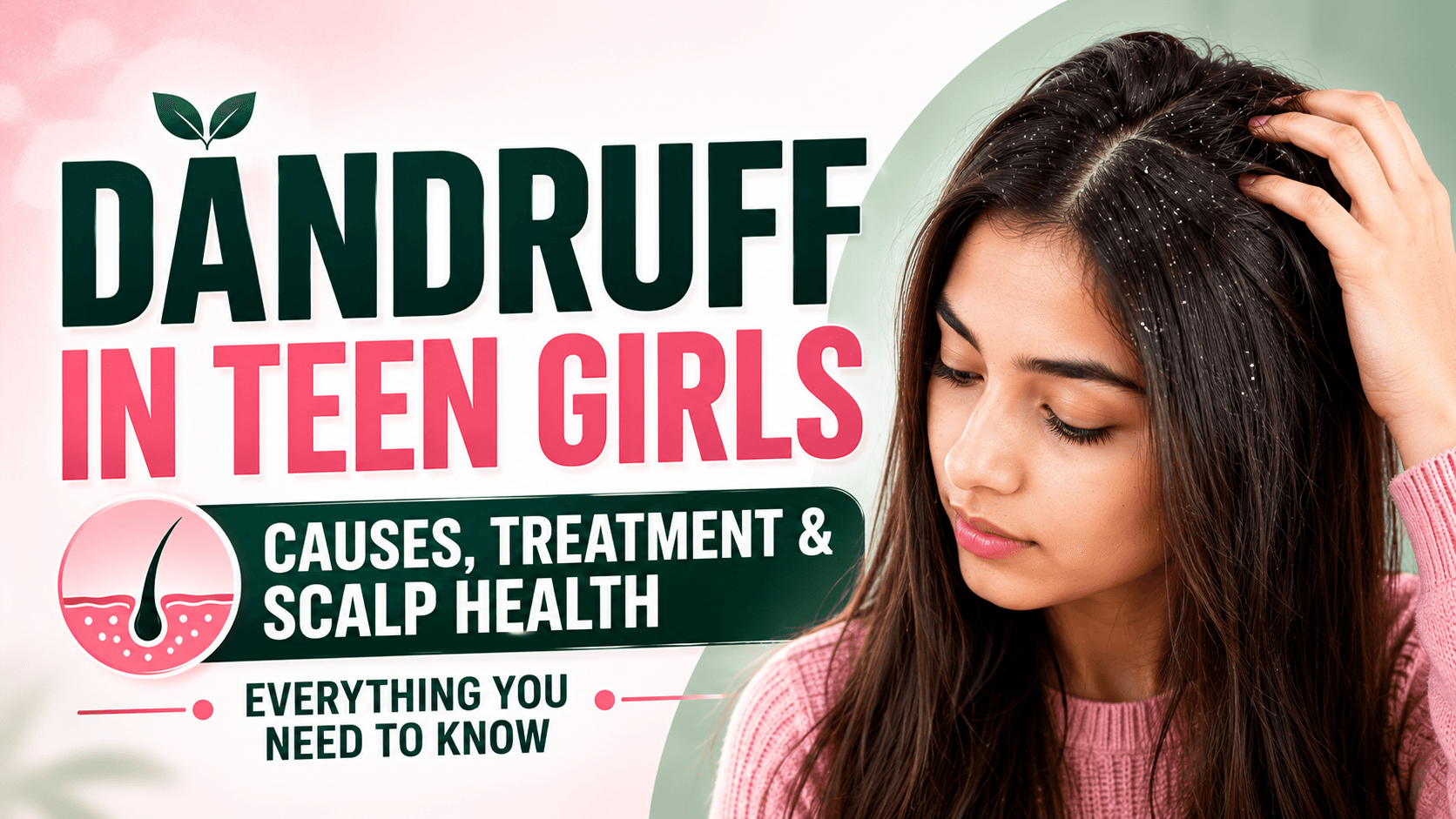
Explore the causes and solutions for dandruff in teen girls. Learn effective treatments and tips for maintaining a healthy scalp.
Maryam Mumtaz
Co-Founder & CEO
12 min read•7/27/2026
Marsa Empower · Hair & Scalp Health · Skin Wellness · For Girls & Women Aged 13 and Above · 13 min read
"Dandruff is one of the most common scalp conditions in the world. It is not a sign of uncleanliness, not a sign of poor personal care, and not something to be embarrassed about. It is a treatable skin condition — and understanding it is the first step to managing it."
You notice white flakes on your dark school uniform. You check your shoulders before sitting down somewhere. You feel an itching, uncomfortable awareness of your scalp that is hard to ignore. You wonder if anyone else can see it.
If this sounds familiar, you are in very good company. Dandruff is one of the most common scalp conditions in the world — affecting up to 50% of the adult population at some point in their lives and particularly common during the teenage years, when hormonal changes significantly affect the scalp's oil production and skin cell turnover.
Despite how common it is, dandruff carries an unfair social stigma. Many girls and women feel embarrassed by flakes on their clothing or hair, assuming it reflects poor hygiene or inadequate self-care. It does neither. Dandruff is a skin condition with identifiable causes and effective treatments — and the sooner it is understood accurately, the sooner it can be managed effectively.
This guide explains everything clearly, simply, and without judgment.
Dandruff is a common, chronic scalp condition in which the skin on the scalp sheds dead cells at a significantly faster rate than normal.
To understand this, it helps to know that the skin — including the skin of the scalp — is constantly renewing itself. Old skin cells die and shed from the surface while new ones form underneath. Under normal circumstances, this process happens gradually and invisibly. Individual dead skin cells are too small to be seen by the naked eye and are simply washed away during normal hair washing.
In dandruff, this skin cell turnover accelerates. Dead skin cells are shed more rapidly, in larger clusters, producing the visible white or yellowish flakes characteristic of the condition. These flakes accumulate on the scalp and in the hair and fall onto clothing.
Dandruff is not contagious — it cannot be passed from one person to another. It is not caused by dirty hair or poor hygiene, though infrequent hair washing can worsen its visible symptoms. And it is not dangerous — it does not damage the scalp or cause permanent hair loss in its typical form.
It is, however, chronic — meaning it tends to come and go rather than resolving completely and permanently. This is why management is more the goal than cure.
Recognising dandruff accurately is important — because several scalp conditions produce flakes and itching, and treating them correctly requires knowing which one you are dealing with.
| Symptom | What It Looks or Feels Like |
|---|---|
| White or yellowish flakes | Visible on the scalp and in the hair · Fall onto clothing and shoulders |
| Itchy scalp | Mild to moderate persistent itching — often the most immediately bothersome symptom |
| Oily or greasy scalp | In seborrhoeic dermatitis-related dandruff — the most common form in teens |
| Dry scalp | In dry-type dandruff — flakes are smaller and drier than the oily type |
| Mild scalp redness | Particularly in seborrhoeic dermatitis — mild irritation around the hairline and scalp |
| Dull-looking hair | Caused by flake buildup weighing the hair down and reducing its natural shine |
| Flakes along the hairline | Particularly on the forehead — a common presentation in teens |
Dandruff symptoms typically worsen during:
This is one of the most important distinctions in scalp health — because treating dandruff and dry scalp incorrectly can make both conditions worse.
Dandruff and a dry scalp both produce flakes and cause itching, but they have different causes and require different treatment approaches.
| Feature | Dandruff | Dry Scalp |
|---|---|---|
| Flake appearance | Larger · Oily · White or yellow · Stick to hair | Smaller · Dry · White · Fall freely |
| Scalp feel | Oily or greasy · May feel irritated | Dry · Tight · Sometimes rough |
| Skin elsewhere | Often normal | May also have dry skin on face or body |
| Cause | Malassezia yeast overgrowth · Sebaceous gland overactivity | Insufficient moisture · Environmental dryness · Harsh products |
| Treatment | Anti-dandruff shampoo with antifungal or zinc ingredients | Gentle, hydrating shampoo · Scalp moisturiser · Reduce harsh products |
If you have a dry scalp and treat it with an anti-dandruff shampoo designed for oily, Malassezia-driven dandruff, you may dry the scalp further and worsen flaking. If you have oily dandruff and treat it with a moisturising shampoo, you may make the scalp oilier and worsen the condition.
The quick test: if your scalp feels oily and the flakes are large and yellow-tinged — it is more likely true dandruff. If your scalp feels dry and tight and the flakes are small, dry, and white — it is more likely a dry scalp issue.
Dandruff is rarely caused by a single factor. It is almost always the result of a combination of conditions that together create an environment on the scalp where skin cell turnover accelerates and flaking occurs.
This is the most important and most direct cause of the most common form of dandruff.
Malassezia is a naturally occurring yeast that lives on almost everyone's scalp without causing any problem. It feeds on the natural oils (sebum) produced by the scalp's sebaceous glands. In most people, the scalp and the yeast maintain a balanced coexistence.
In some individuals — for reasons that are partly genetic and partly environmental — Malassezia overgrows or the scalp's immune response to its presence becomes exaggerated. When this happens, the yeast's metabolic byproducts (particularly oleic acid, produced as it breaks down scalp oils) irritate the scalp and trigger an accelerated skin cell turnover response. The scalp sheds its cells faster than usual, producing the visible flakes of dandruff.
This is why the most effective anti-dandruff treatments are antifungal — they reduce the population of Malassezia on the scalp, which reduces the irritation that drives excessive cell shedding.
During puberty, rising androgen hormone levels significantly increase the activity of the sebaceous (oil) glands across the body — including on the scalp. An oilier scalp provides a richer food source for Malassezia, which can promote its overgrowth. Excess scalp oil also clumps dead skin cells together into the larger, more visible flakes characteristic of dandruff.
This is why dandruff is so common during the teenage years — the hormonal surge of puberty dramatically increases scalp oil production, creating ideal conditions for dandruff to develop even in girls who previously had no scalp concerns.
A dry scalp — whether from environmental causes (cold weather, air conditioning), from overwashing with harsh shampoos, or from not moisturising the scalp adequately — produces smaller, drier flakes that are sometimes mistaken for true dandruff. The mechanism is different from Malassezia-driven dandruff — the scalp is simply too dry to maintain normal skin barrier function, and cells shed in visible clusters.
Seborrhoeic dermatitis is the medical term for a more pronounced version of dandruff — in which skin cell turnover is significantly elevated, producing heavier flaking, more noticeable redness and irritation, and sometimes greasy, yellowish scales. It most commonly affects the scalp but can also affect the face — particularly around the nose, eyebrows, ears, and hairline.
Seborrhoeic dermatitis is driven by the same Malassezia mechanism as ordinary dandruff but involves a more significant immune response. It is more common in teenagers and young adults (due to the high sebum production of adolescence) and in people under significant stress.
It is treated with the same antifungal shampoos as regular dandruff, but often requires more consistent, longer-term management.
When hair is washed infrequently, oil, sweat, dead skin cells, and product residue accumulate on the scalp. This creates an environment that encourages Malassezia overgrowth and makes flaking more pronounced. It also means that existing dandruff flakes are not regularly removed, making the condition appear worse.
The right frequency of hair washing varies by hair type:
There is no single correct washing frequency — the goal is to keep the scalp clean enough that oil and dead skin cells do not accumulate to the point of feeding Malassezia overgrowth.
Many hair products — heavy oils, waxes, gels, hair sprays, and certain conditioners — can irritate the scalp, clog the follicles, or create a residue that feeds Malassezia and worsens dandruff. Some girls notice that their dandruff worsens significantly when they use particular products.
If you notice a correlation between using a specific product and worsened scalp flaking or itching, remove that product from your routine for two to three weeks and assess whether the scalp improves.
Stress does not directly cause dandruff — but it significantly worsens it. Chronic stress affects immune function, which reduces the scalp's ability to keep Malassezia populations in check. It also worsens the inflammatory response to the yeast, producing more severe flaking and irritation.
Many girls notice that their dandruff worsens during exam periods, family difficulties, or other high-stress times. This is a real, physiological connection — not coincidence.
Deficiencies in certain nutrients directly impair scalp health and can worsen dandruff:
These nutritional connections mean that what you eat genuinely influences your scalp health — not as a direct cause of dandruff, but as a modifier of its severity.
| Risk Factor | Why It Increases Risk |
|---|---|
| Being a teenager | Hormonal surge increases sebum production — ideal conditions for Malassezia |
| Oily hair and scalp | More food for Malassezia — promotes overgrowth |
| Family history of dandruff | Genetic sensitivity to Malassezia and tendency toward sebaceous gland overactivity |
| Stress | Impairs immune regulation of Malassezia and worsens inflammation |
| Using many hair styling products | Creates buildup that feeds yeast and irritates the scalp |
| Infrequent hair washing | Accumulates oil, dead cells, and product residue |
| Sweating frequently | Creates warm, moist scalp environment favourable to Malassezia |
| Nutritional deficiencies (zinc, B vitamins, omega-3) | Impairs scalp immunity and cell regulation |
The good news about dandruff is that it is very manageable — most cases respond well to the right anti-dandruff shampoo used consistently. The key words are "right" and "consistently" — choosing a shampoo with an effective active ingredient and using it regularly, not just once or twice.
Anti-dandruff shampoos are the most effective and most accessible treatment for the vast majority of dandruff cases. They work by reducing Malassezia populations on the scalp, reducing scalp inflammation, or slowing the rate of skin cell turnover — depending on their active ingredient.
How to use anti-dandruff shampoo effectively:
How often: Initially, use anti-dandruff shampoo every wash for two to four weeks. Once dandruff is controlled, reduce to once or twice per week as a maintenance routine.
How long before results: Most people see noticeable improvement within two to four weeks of consistent use. If no improvement after four to six weeks, try a different active ingredient or see a dermatologist.
On days when you are not using anti-dandruff shampoo, gentle scalp exfoliation — using a soft scalp brush or massaging the scalp gently with the pads of your fingers while shampooing — helps physically remove dead skin cell buildup, improve scalp circulation, and allow active ingredients to penetrate more effectively.
Do not scratch the scalp with nails — this damages the skin, increases inflammation, and can introduce infection.
For girls with very oily scalps, dry shampoo used between washes absorbs excess oil and reduces the accumulation that feeds Malassezia. Avoid heavy hair oils applied directly to the scalp — while nourishing for the hair shaft, oils applied to an already oily scalp worsen dandruff.
Since stress demonstrably worsens dandruff, treating the dandruff without addressing the stress load often produces incomplete results. Exercise, adequate sleep, appropriate boundaries around academic and social demands, and professional support where needed all contribute to scalp health through the stress-immunity pathway.
Not all anti-dandruff shampoos work the same way. Understanding the active ingredient helps you choose the most appropriate product for your specific situation.
| Active Ingredient | How It Works | Best For |
|---|---|---|
| Zinc pyrithione | Antifungal and antibacterial — reduces Malassezia · Anti-inflammatory | Mild to moderate dandruff · First-line treatment for most people · Available in most pharmacy brands |
| Ketoconazole | Powerful antifungal — specifically targets Malassezia | Moderate to severe dandruff · Seborrhoeic dermatitis · When milder shampoos have not worked |
| Selenium sulphide | Antifungal · Slows skin cell turnover | Moderate dandruff · Oily scalp type |
| Salicylic acid | Softens and helps remove scale buildup from the scalp | Flaky, scaly buildup · Seborrhoeic dermatitis · Works best combined with another active ingredient |
| Coal tar | Slows skin cell production · Anti-inflammatory | Stubborn or severe dandruff · Scalp psoriasis (distinct from dandruff) |
| Pyroctone olamine | Antifungal similar to zinc pyrithione | Mild to moderate dandruff · Often found in gentler anti-dandruff formulas |
For most teenage girls with mild to moderate dandruff, a shampoo containing zinc pyrithione or ketoconazole is the most effective starting point. These ingredients directly address Malassezia — the most common cause of dandruff in this age group.
If one ingredient is not producing adequate results after four to six weeks of consistent use, switch to a different active ingredient rather than simply trying a different brand with the same ingredient.
Antifungal shampoos (ketoconazole particularly) are highly effective but may require careful use:
Many girls explore natural remedies for dandruff alongside or instead of medicated shampoos. Here is an honest assessment of the evidence:
Evidence level: Moderate. Tea tree oil has genuine antifungal properties and has been shown in some studies to reduce Malassezia populations. A shampoo containing 5% tea tree oil showed significant reduction in dandruff in one clinical study. Add 2 to 3 drops of tea tree oil to a small amount of regular shampoo before each wash, or use a shampoo that already contains it. Do not apply neat tea tree oil directly to the scalp — it causes significant irritation in undiluted form.
Evidence level: Limited. ACV is widely promoted as a dandruff remedy. Its acidic pH may help restore scalp pH balance and has some mild antifungal properties. However, there is limited clinical evidence for its effectiveness for dandruff specifically, and applying it to an irritated or broken scalp can cause significant stinging. If you try it, dilute 1 part ACV in 3 parts water, apply after shampooing, leave for a few minutes, and rinse thoroughly.
Evidence level: Mixed. Coconut oil has some antifungal properties and is moisturising for the scalp. However, it is also a heavy oil that can worsen dandruff in girls with oily scalps by increasing the oil available for Malassezia to feed on. If your dandruff is associated with a dry, flaky scalp rather than an oily one, coconut oil may help. If your scalp is oily, it is likely to make things worse.
Evidence level: Moderate. Aloe vera has anti-inflammatory and antifungal properties that can reduce scalp irritation and itching. Applying pure aloe vera gel to the scalp for 15 to 20 minutes before washing can provide soothing relief, particularly for the itching and redness component of dandruff. It does not, however, adequately address Malassezia overgrowth as a standalone treatment for significant dandruff.
Evidence level: Not recommended. Despite their popularity as home remedies, none of these have adequate clinical evidence for dandruff treatment, and all carry real risks of scalp irritation, burning, or disruption of the scalp's natural pH. Lemon juice is acidic enough to cause chemical irritation on a sensitive scalp. Baking soda is alkaline and can disrupt the scalp's natural acid balance, worsening sensitivity. These remedies are best avoided.
Good daily hair care habits prevent dandruff from worsening and support the effectiveness of treatment.
As discussed, the right frequency varies by scalp type. Overwashing strips the scalp of its natural oils and can trigger more oil production in response. Underwashing allows oil and dead cells to accumulate and feeds Malassezia. Find the frequency that keeps your scalp clean without feeling stripped.
Choose products appropriate for your scalp type. Avoid shampoos with sulphates if your scalp is sensitive or dry. If you have oily dandruff, use a light, oil-free conditioner applied only to the ends of the hair — not the scalp.
Leaving shampoo or conditioner residue on the scalp provides material for Malassezia to feed on and irritates the scalp. Rinse until the water runs completely clear.
Brushing the scalp helps distribute natural oils from the roots through the hair shaft and removes loose flakes and dead skin cells. Brush gently — aggressive brushing scratches the scalp and increases irritation. Use a clean brush with natural bristles or widely-spaced plastic bristles.
Wash hairbrushes and combs weekly using warm water and a small amount of shampoo. Dirty brushes redeposit oil, dead skin cells, and potentially bacteria onto a freshly cleaned scalp.
While dandruff itself is not contagious, sharing combs, brushes, hats, and towels can transfer scalp conditions, bacteria, and fungi between people. Use your own tools.
Wearing very tight hairstyles — tight ponytails, braids, or styles that press against the scalp — reduces airflow to the scalp and can worsen oil accumulation and irritation. Alternate tight styles with looser ones that allow the scalp to breathe.
Avoid applying heavy oils (coconut oil, argan oil, castor oil), waxes, heavy gels, or dry shampoos directly to the scalp if dandruff is active. These products can clog follicles, feed Malassezia, and worsen flaking and itching.
What you eat does not cause or cure dandruff — but specific nutritional patterns directly influence scalp health and dandruff severity.
Zinc is directly relevant to dandruff — it has antifungal properties, regulates sebum production, and supports the immune response that keeps Malassezia in check. Studies have shown measurable improvements in dandruff severity with adequate zinc intake. Good dietary sources include pumpkin seeds, lentils, chickpeas, meat, nuts, and whole grains.
Omega-3 fatty acids reduce the scalp inflammation that drives seborrhoeic dermatitis and dandruff. Found in fatty fish (salmon, sardines, mackerel), walnuts, chia seeds, and flaxseed. For girls who do not eat fish regularly, walnuts and chia seeds are good plant-based sources.
B vitamins — particularly B6, B12, and biotin — support healthy skin cell production and sebum regulation. Sources include eggs, meat, dairy, lentils, whole grains, and leafy green vegetables.
Vitamin D deficiency has been associated with worsened seborrhoeic dermatitis. Ensure adequate sun exposure, dietary sources (eggs, fatty fish, fortified foods), or discuss supplementation with a doctor if you have low levels.
Protein is the building material for every cell in the body — including scalp skin cells. Adequate dietary protein supports healthy skin cell production and turnover. Sources include eggs, chicken, fish, lentils, daal, dairy, and nuts.
| Food | Why It May Worsen Dandruff |
|---|---|
| High-sugar foods and drinks | May promote Malassezia growth · Worsen inflammation |
| Refined carbohydrates (white bread, white rice) | Similar insulin-spiking and inflammatory mechanisms |
| Highly processed and fried foods | Pro-inflammatory — may worsen scalp inflammation |
| Excessive alcohol | Depletes zinc and B vitamins · Worsens inflammation |
This connection is real, well-researched, and one of the most underappreciated aspects of dandruff management.
When you are stressed, the body produces cortisol — the primary stress hormone. Elevated cortisol has several effects that directly worsen dandruff:
This is why many girls notice that their dandruff flares up significantly during exams, family stress, or periods of social difficulty. Treating dandruff during these periods without addressing the stress load often produces incomplete or temporary results.
Androgens — the group of hormones that rise significantly during puberty — directly stimulate sebaceous gland activity throughout the body. This is the same mechanism that produces increased acne and oily skin during the teenage years. On the scalp, increased sebum production from androgen stimulation creates the ideal environment for Malassezia overgrowth — which is precisely why dandruff is so common during the teenage years and often improves in adulthood as hormone levels stabilise.
Understanding this connection explains why dandruff can seem to appear "out of nowhere" in early adolescence and why it often improves as girls move through their twenties — even without dramatic changes in hair care routine.
| The Myth | The Truth |
|---|---|
| "Dandruff means your hair is dirty" | Dandruff is caused by Malassezia yeast activity, scalp oil production, and skin cell turnover — not by inadequate hygiene. Some people with very clean hair still experience significant dandruff. |
| "Dandruff causes permanent hair loss" | Dandruff itself does not cause permanent hair loss. Severe, chronic scratching of the scalp can cause temporary shedding by damaging follicles — but this resolves when scratching stops and the scalp heals. |
| "Oiling your hair will cure dandruff" | Hair oil does not treat dandruff and typically makes an oily scalp worse by providing additional food for Malassezia. Some oils have mild antifungal properties (coconut oil), but none are effective standalone treatments for true dandruff. |
| "Anti-dandruff shampoos make hair dry and damaged" | Many modern anti-dandruff shampoos are formulated with conditioning agents that are gentle on the hair. Used as directed, they do not cause significant dryness or damage. |
| "Dandruff is contagious" | Dandruff is not contagious. The Malassezia yeast is already present on most people's scalps — the difference between those who develop dandruff and those who do not lies in the scalp's immune response and sebum production, not in exposure. |
| "Once you have dandruff, you always will" | Dandruff can be very effectively managed and may improve significantly or resolve entirely as hormone levels change, stress is managed, and the right treatment is used consistently. |
| "Expensive shampoos work better than affordable ones" | The effectiveness of an anti-dandruff shampoo is determined by its active ingredient and concentration — not its price. Many affordable pharmacy-brand shampoos containing zinc pyrithione or ketoconazole are as effective as premium brands. |
Most dandruff responds well to appropriate anti-dandruff shampoo used consistently for two to four weeks. However, there are situations where professional evaluation is needed.
See a doctor or dermatologist if:
| Situation | Why It Needs Medical Attention |
|---|---|
| Dandruff does not improve after 4 to 6 weeks of consistent anti-dandruff shampoo use | May need a different active ingredient, prescription-strength treatment, or investigation for another condition |
| Scalp becomes very red, swollen, or painful | Indicates significant inflammation or possible infection requiring medical treatment |
| You notice thick yellow or white scales or crusts | May indicate seborrhoeic dermatitis requiring prescription treatment, or scalp psoriasis |
| Severe itching that disrupts sleep or daily life | May require prescription anti-inflammatory or antifungal treatment |
| Significant hair loss alongside scalp symptoms | May indicate another condition such as alopecia areata, scalp infection, or hormonal imbalance |
| Flaking and redness spread to the face — eyebrows, nose, ears, hairline | Classic presentation of seborrhoeic dermatitis requiring broader treatment |
| You suspect a fungal infection (tinea capitis) — patchy hair loss with broken hairs and scaling | Requires prescription antifungal medication, not anti-dandruff shampoo |
A dermatologist can also perform a scalp examination to distinguish between dandruff, seborrhoeic dermatitis, scalp psoriasis, and fungal infection — conditions that can look similar but require different treatments.
| Topic | Key Takeaway |
|---|---|
| What is dandruff | Accelerated scalp skin cell shedding — most commonly driven by Malassezia yeast overgrowth |
| Main cause in teen girls | Hormonal surge of puberty increases scalp oil → more food for Malassezia → more flaking |
| Dandruff vs dry scalp | Dandruff = oily scalp + large, yellowish flakes. Dry scalp = dry, tight scalp + small, white flakes |
| Most effective treatment | Anti-dandruff shampoo with antifungal ingredient (zinc pyrithione or ketoconazole) — left on scalp for 3 to 5 minutes |
| Best first-line ingredient | Zinc pyrithione for mild dandruff · Ketoconazole for moderate–severe dandruff |
| How long to see results | 2 to 4 weeks of consistent use |
| Dietary support | Zinc · Omega-3 · B vitamins · Vitamin D · Adequate protein |
| Stress connection | Real — cortisol impairs immune control of Malassezia and increases scalp oil production |
| Natural remedies that have some evidence | Tea tree oil (diluted) · Aloe vera (for soothing) |
| Products to avoid | Heavy scalp oils · Harsh gels and sprays · Lemon juice · Baking soda |
| When to see a doctor | No improvement after 4 to 6 weeks · Scalp very red or painful · Thick crusts · Hair loss |
| Most important myth to correct | Dandruff is not caused by dirty hair — it is a skin condition with identifiable causes |
"Dandruff is common, manageable, and not your fault. With the right shampoo, the right habits, and a little patience, most people achieve very good control. You do not have to be self-conscious about your scalp — you just need the right information."
Educational Disclaimer
This article is for educational and awareness purposes only. It does not constitute medical advice, diagnosis, or treatment. If you have persistent scalp symptoms, significant hair loss, or severe scalp redness or pain, please consult a qualified dermatologist or healthcare professional for personalised evaluation and guidance.
Marsa Empower · Hair & Scalp Health · Skin Wellness · Teen Health Education
Medical Disclaimer
This article is for general informational and educational purposes only and is not a substitute for professional medical advice, diagnosis, or treatment. Always seek the advice of a qualified healthcare provider with any questions you may have regarding a medical condition. Never disregard professional medical advice or delay seeking it because of something you have read on MARSA Empower.
Written By
Maryam Mumtaz
Co-Founder & CEO
Co-Founder of MARSA Empower who leads the visual and strategic evolution of the platform. Maryam bridges technical complexity with human-centric design, architecting the team's official roadmap and ensuring MARSA effectively addresses the real-world needs of women. With deep expertise in agentic AI, full-stack development, and UI/UX design, she has delivered 50+ projects for 30+ satisfied clients.
Enjoyed this story?