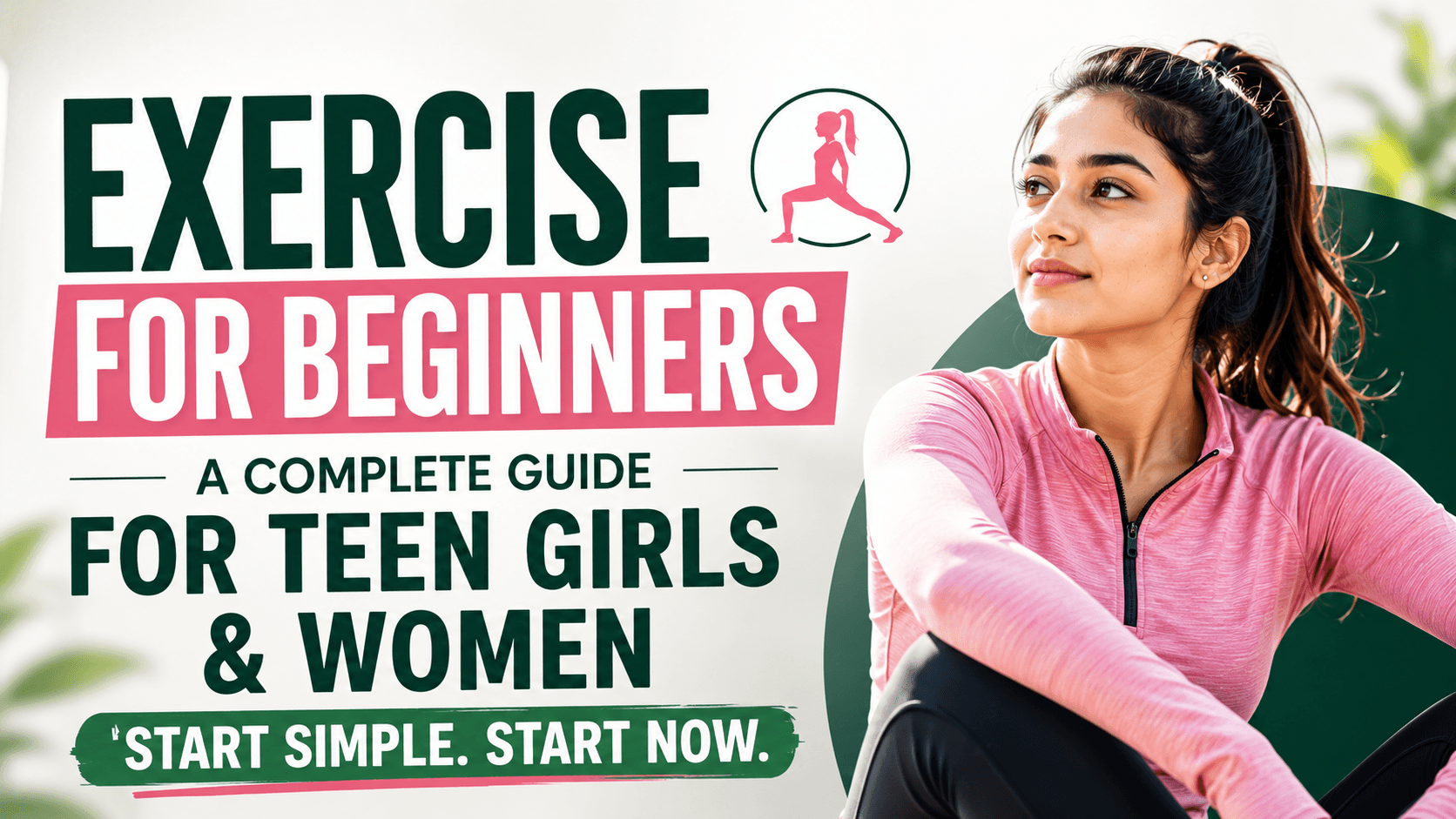
Learn why exercise is vital for women and teen girls, how to start safely, and tips to maintain a healthy routine.

Maryam Mumtaz
Co-Founder & CEO
12 min read•7/23/2026
Marsa Empower · Health & Wellness · Fitness for Women · For Girls & Women Aged 13 and Above · 16 min read
"You do not need a gym membership, expensive equipment, or a perfect body to start exercising. You need a pair of comfortable shoes, ten minutes, and the decision to begin."
Let us be honest about something first. For many girls and women, the word "exercise" brings up complicated feelings. Maybe it feels like something you should be doing but are not. Maybe it feels like something only very fit or very motivated people actually do consistently. Maybe you have tried before, started strongly, then stopped after a few weeks and felt bad about yourself for it.
If any of that sounds familiar — this guide is for you.
Exercise is not about punishment. It is not about changing the size of your body. It is not about becoming someone else. Exercise is about giving your body what it was designed for — movement — and receiving in return some of the most powerful health benefits available to a human being.
When you move your body regularly, your heart gets stronger. Your bones get denser. Your mood improves. Your sleep deepens. Your energy increases. Your stress reduces. Your hormones balance. Your immune system strengthens. And gradually, you start to feel at home in your body in a way that is genuinely difficult to achieve any other way.
You do not have to be fit to start. You do not have to exercise for a long time. You do not have to do anything complicated. You just have to start — at your own level, at your own pace, with your own body exactly as it is today.
This guide will show you how.
Exercise affects almost every system in the female body — and the effects are overwhelmingly positive. Understanding what exercise actually does inside your body helps you value it beyond simply its visible effects on your shape.
The heart is a muscle. Like every other muscle in the body, it becomes stronger and more efficient when it is regularly challenged through physical activity. Regular aerobic exercise — walking, cycling, swimming, dancing — makes the heart pump more blood with each beat, which means it does not have to work as hard at rest. Over time, this reduces blood pressure and significantly lowers the risk of heart disease, which is the leading cause of death in women globally.
This matters particularly for women because the cardiovascular protection provided by oestrogen decreases after menopause — making the heart-strengthening effects of exercise increasingly important as women move through their forties and beyond.
Bone density is built primarily in the teenage years and early twenties and begins to gradually decline after the age of 30. After menopause, when oestrogen falls dramatically, bone loss accelerates significantly — increasing the risk of osteoporosis and fractures.
Weight-bearing exercise — any exercise that puts load on the skeleton, including walking, running, dancing, and strength training — directly stimulates bone formation and slows bone loss at every age. Starting this habit in the teenage years builds maximum bone density. Continuing it through the twenties and thirties maintains it. Persisting through midlife and beyond protects against the fracture risk that increases after menopause.
Muscle strength matters too. Strong muscles protect joints, support good posture, make everyday physical tasks easier, and maintain the metabolic rate — the speed at which the body burns energy — which tends to slow with age.
Exercise is one of the most effective mood-improving interventions available — and unlike medication, it has no negative side effects. During and after physical activity, the brain releases a group of chemicals called endorphins — natural pain-relieving and mood-elevating compounds. Exercise also increases the availability of serotonin and dopamine in the brain — the same neurotransmitters targeted by antidepressant medications.
Research consistently shows that regular moderate exercise reduces symptoms of anxiety and depression, often as effectively as medication in mild to moderate cases. For many women, exercise is the single most reliable daily mood tool available.
Regular physical activity improves both the ease of falling asleep and the quality of sleep once achieved. Exercise reduces cortisol (the stress hormone that disrupts sleep when elevated in the evening), improves the natural deepening of sleep stages, and supports the circadian rhythm — the body's internal clock — that governs when we feel sleepy and when we feel alert.
Women who exercise regularly typically fall asleep faster, sleep more deeply, and wake feeling more refreshed than those who do not. This benefit accumulates over time — consistent exercise is one of the most evidence-supported non-medication treatments for insomnia.
It seems counterintuitive that using energy through exercise would produce more energy — but this is exactly what happens. Exercise improves cardiovascular efficiency, which means the heart and lungs deliver oxygen to cells more effectively. It improves mitochondrial function — the cellular process through which food is converted into usable energy. And it reduces the chronic fatigue that comes from stress, poor sleep, and hormonal imbalance — all of which exercise directly addresses.
Women who exercise regularly consistently report higher energy levels throughout the day compared to when they were sedentary — particularly in the first 30 minutes after exercise, and over longer periods as fitness improves.
Exercise contributes to healthy weight management through multiple pathways — it burns calories directly, increases metabolic rate, builds muscle mass (which burns more calories at rest than fat tissue), reduces insulin resistance, and regulates the appetite hormones that govern hunger and fullness.
It is important to note, however, that weight management is not the only or even the most important reason to exercise. The mood, sleep, bone, heart, and hormonal benefits of exercise are completely independent of any effect on body weight. A woman who exercises regularly and gains no weight change is still receiving enormous health benefits. Exercise is a health behaviour, not simply a weight control tool.
The teenage years are one of the most important periods to establish an exercise habit — not because teenage girls need to manage their weight or achieve a particular appearance, but because the health benefits of exercise during this life stage are both immediate and lifelong.
During puberty, the body is building the physical foundation it will carry for decades. Exercise supports this process by strengthening developing muscles and joints, building bone density that will protect against osteoporosis later in life, supporting healthy cardiovascular development, and contributing to the hormonal balance that governs growth and development.
As explained above, bone density peaks in the twenties. The habits established during the teenage years directly determine how much bone density a woman reaches at her peak — and therefore how much protection she has against bone loss in later decades. Weight-bearing exercise during the teen years is one of the most impactful investments a girl can make in her long-term physical health.
Exercise builds confidence in a way that goes beyond appearance. When a girl discovers what her body can do — that she can run further than she could last month, hold a plank longer, lift something heavier — she develops a relationship with her body based on its capability rather than its appearance. This functional confidence is more stable and more durable than appearance-based confidence, which fluctuates with fashion trends and social comparison.
Academic pressure, social dynamics, family expectations, and the general intensity of adolescent emotional life create significant stress loads for many teenage girls. Exercise is one of the most effective and most immediately accessible stress reduction tools available — reducing cortisol, releasing endorphins, and providing a genuine mental break from the sources of stress.
Teenagers naturally need more sleep than adults — between 8 and 10 hours per night — but many get significantly less, due to academic demands, screen use, and the natural shift in the teenage circadian clock. Regular exercise improves sleep quality and helps regulate the sleep-wake rhythm, supporting the cognitive function, hormonal development, and emotional regulation that depend on adequate rest.
The energy boost produced by regular exercise directly supports academic performance, concentration, and the general capacity to engage with the demands of teenage life. Studies consistently show that physically active teenagers perform better academically and report higher levels of concentration and mental clarity than their sedentary peers.
As women move into their twenties, thirties, and forties, exercise becomes relevant to a wider and wider range of health considerations. The immediate benefits of mood improvement and energy remain — but longer-term protective benefits become increasingly important.
Metabolic rate — the speed at which the body converts food to energy — tends to decrease gradually from the late twenties onward, partly because muscle mass naturally declines without consistent resistance activity. Exercise — particularly strength or resistance training — helps maintain muscle mass and metabolic rate, making weight management significantly easier over time.
Exercise has direct and significant effects on the hormones most relevant to women's health. Regular moderate exercise reduces insulin resistance, which reduces androgen excess in PCOS and directly improves cycle regularity and skin health. It reduces cortisol when practised consistently, protecting reproductive hormones from stress-driven suppression. It supports oestrogen balance throughout the menstrual cycle.
For women with PCOS, hypothyroidism, or hormonal irregularity, exercise is not a lifestyle option — it is a clinical intervention with measurable hormonal effects.
The mental health benefits of exercise do not diminish with age — they become more significant. Women in their thirties and forties face peak career pressure, the demands of family life, and often the beginning of hormonal transitions that can affect mood stability. Exercise provides a consistent, reliable tool for managing the psychological load of these decades.
Heart disease risk rises significantly after menopause, when oestrogen's protective effects are lost. The cardiovascular fitness built through consistent exercise over the twenties, thirties, and forties provides meaningful protection as this risk rises — a benefit that compounds over years of consistent activity.
Regular exercise is one of the most evidence-supported interventions for healthy aging. Women who exercise consistently through their thirties and forties enter their fifties with better cardiovascular fitness, higher bone density, greater muscle strength, better hormonal balance, and significantly lower risk of the chronic diseases — type 2 diabetes, cardiovascular disease, osteoporosis — that become most common after menopause.
If you are starting exercise for the first time — or returning after a long break — the goal is to begin gently and build gradually. Starting too intensely too quickly is the most common reason people stop exercising. The exercises below are safe, effective, beginner-friendly, and require no equipment.
Walking is the most underrated exercise available. It is completely free, requires no equipment beyond comfortable shoes, can be done anywhere, and is gentle enough to be sustainable for virtually every level of fitness.
A 30-minute brisk walk — at a pace where you can hold a conversation but are breathing slightly harder than normal — provides significant cardiovascular benefit, supports bone health through its weight-bearing nature, reduces cortisol, improves mood, and counts toward the 150 minutes of moderate activity per week recommended for health.
For complete beginners, starting with 10 to 15 minutes daily and building gradually to 30 minutes is the most sustainable approach. Walking is also the exercise most likely to become a genuine daily habit — it requires no preparation, no special location, and fits into ordinary daily life.
Cycling — on a bicycle outdoors or on a stationary bike — is a low-impact cardiovascular exercise that is particularly good for women who have knee or joint concerns, as it puts less stress on the joints than running. It builds leg strength, improves cardiovascular fitness, and can be adjusted easily to any level of intensity.
Even slow, gentle cycling for 20 to 30 minutes produces meaningful cardiovascular benefit for beginners.
Swimming is one of the most complete forms of exercise available — working the cardiovascular system, building strength in the arms, legs, and core, and being completely joint-friendly because the water supports body weight. It is particularly beneficial for women with arthritis, joint pain, back problems, or significant weight to carry.
For beginners, simply swimming at a comfortable pace without stopping for 10 to 20 minutes is a meaningful starting point.
Stretching is often dismissed as less important than cardiovascular or strength exercise — but it is a genuinely valuable component of a complete fitness routine. Regular stretching improves flexibility, reduces muscle tension, supports good posture, decreases the risk of injury, and can be deeply relaxing — particularly for women carrying significant stress loads.
Ten minutes of gentle stretching daily — focusing on the neck, shoulders, back, hips, and legs — produces noticeable improvements in how the body feels within two to three weeks.
Bodyweight exercises — exercises that use your own body weight as resistance, requiring no gym or equipment — are among the most effective and most accessible forms of strength training. They build muscle, improve balance and coordination, support bone density, and increase metabolic rate.
Key bodyweight exercises for beginners include:
Squats — strengthen the legs, glutes, and core. Stand with feet shoulder-width apart, lower yourself as if sitting into a chair, keeping your back straight and knees over your toes. Rise back to standing. Start with 8 to 10 repetitions.
Wall push-ups — strengthen the chest, shoulders, and arms at a gentler angle than floor push-ups. Stand facing a wall, place hands on the wall at shoulder height and width, bend your elbows to bring your chest toward the wall, then push back. Start with 8 to 10 repetitions.
Plank — builds core strength and stability. Support yourself on your forearms and toes (or knees for an easier version), keeping your body in a straight line from head to heel. Hold for 10 to 20 seconds to start, increasing as you get stronger.
Glute bridges — strengthen the glutes, hamstrings, and lower back. Lie on your back with knees bent, feet flat on the floor. Push through your heels to lift your hips until your body forms a straight line from shoulders to knees. Hold for two seconds, then lower. Start with 10 repetitions.
Standing calf raises — strengthen the calves and improve ankle stability. Stand with feet hip-width apart, rise onto your toes, hold for two seconds, then lower. Start with 12 to 15 repetitions.
Yoga combines physical movement with breathing and mindfulness — offering cardiovascular, strength, flexibility, and mental health benefits in a single practice. For women dealing with high stress, hormonal disruption, or anxiety alongside a desire to build physical fitness, yoga is particularly beneficial.
Beginner yoga videos and classes are widely available online and require no equipment beyond a mat or a non-slip surface. Even 15 to 20 minutes of gentle yoga three times per week produces noticeable improvements in flexibility, posture, stress levels, and sleep quality within a few weeks.
Dancing is exercise disguised as joy — it improves cardiovascular fitness, coordination, mood, and self-expression simultaneously. For women who find conventional exercise tedious, dancing is one of the most sustainable and genuinely enjoyable alternatives. Put on music you love and move for 20 minutes — this is exercise. It counts.
Here is a simple, realistic four-week plan designed specifically for beginners. It requires no equipment, no gym, and no prior fitness. The goal is to build a consistent habit — not to achieve extreme fitness in four weeks.
Target: 3 days this week with at least one rest day between each session.
Each session:
| Activity | Duration |
|---|---|
| Gentle 5-minute warm-up walk | 5 minutes |
| Brisk walk | 15 minutes |
| Wall push-ups | 8 repetitions × 2 sets |
| Squats | 8 repetitions × 2 sets |
| Plank (on knees) | 10 seconds × 2 sets |
| Gentle stretching (neck, shoulders, legs) | 10 minutes |
Total session time: Approximately 40 minutes.
Focus this week: Simply showing up on three days. Do not worry about how easy or hard it feels. The only goal is consistency.
Target: 3 to 4 days this week.
Each session:
| Activity | Duration or Reps |
|---|---|
| Warm-up walk | 5 minutes |
| Brisk walk | 20 minutes |
| Wall push-ups | 10 repetitions × 2 sets |
| Squats | 10 repetitions × 2 sets |
| Glute bridges | 10 repetitions × 2 sets |
| Plank (on knees or toes) | 15 seconds × 2 sets |
| Calf raises | 12 repetitions × 2 sets |
| Stretching | 10 minutes |
Total session time: Approximately 50 minutes.
Focus this week: Notice that it is getting slightly easier. That is your body adapting. That is fitness improving.
Target: 4 days this week.
Session A (3 days):
| Activity | Duration or Reps |
|---|---|
| Warm-up walk | 5 minutes |
| Brisk walk | 25 minutes |
| Squats | 12 repetitions × 3 sets |
| Wall push-ups | 12 repetitions × 2 sets |
| Glute bridges | 12 repetitions × 3 sets |
| Plank | 20 seconds × 2 sets |
| Stretching | 10 minutes |
Session B (1 day — active recovery):
Focus this week: Add one new activity. Try a 15-minute yoga video. Go for a walk in a new place. Dance to three songs.
Target: 4 days this week.
Each session:
| Activity | Duration or Reps |
|---|---|
| Warm-up | 5 minutes |
| Brisk walk OR cycling OR swimming | 30 minutes |
| Squats | 15 repetitions × 3 sets |
| Push-ups (wall or floor) | 10 repetitions × 3 sets |
| Glute bridges | 15 repetitions × 3 sets |
| Plank | 25 seconds × 3 sets |
| Calf raises | 15 repetitions × 2 sets |
| Cool-down stretching | 10 minutes |
Total session time: Approximately 60 minutes.
Focus this week: You have been exercising consistently for a month. Notice what has changed — not just physically, but in your energy, your sleep, your mood, your confidence. That is the point.
Continue building at your own pace. Each week, try to add a small amount of challenge — a few more repetitions, a minute more of walking, a slightly harder variation of an exercise. Progress does not need to be dramatic to be real.
The most important next step after four weeks is simply to continue. Fitness is built over months and years — not weeks.
Warming up and cooling down are two of the most skipped parts of exercise — and two of the most important. Skipping them increases the risk of injury, reduces performance, and makes post-exercise soreness worse.
A warm-up gradually raises the heart rate, increases blood flow to the muscles, improves flexibility by warming the soft tissue, and mentally prepares you for the exercise ahead. Cold muscles are less flexible and more prone to strains and tears. A five to ten minute warm-up significantly reduces injury risk.
Simple warm-up routine:
A cool-down gradually lowers the heart rate back to its resting level, helps remove waste products from the muscles, and begins the recovery process. Stopping exercise abruptly can cause dizziness and blood pooling in the legs. A cool-down also significantly reduces muscle soreness in the following days.
Simple cool-down routine:
Motivation is not a reliable foundation for a long-term exercise habit. Everyone feels motivated at the beginning. Almost everyone feels less motivated after a few weeks. The women who exercise consistently for years are not more motivated than those who stop — they are more habitual. They have built exercise into their routine in a way that does not depend on how they feel on any given day.
Here are the strategies that actually work:
The biggest mistake beginners make is starting too ambitiously. Starting with 60-minute daily workouts is not sustainable and almost always leads to stopping. Starting with 15 minutes three days a week is sustainable — and far more likely to grow into a lifelong habit.
Starting too small is not a sign of low ambition. It is a sign of understanding how habits actually form.
Habits form most reliably when they are linked to existing behaviours. Walk after dinner. Do ten minutes of yoga before your shower. Do squats while waiting for water to boil. Linking exercise to an established routine dramatically increases the likelihood of consistency.
Track consistency, not results. Put a tick on the calendar every day you exercise. After a month, look at the calendar and see a visual record of what you have built. This consistency record is more motivating than tracking weight or physical changes, which take longer to appear and fluctuate daily.
If you hate running, do not force yourself to run. You will stop. Find the movement that feels less like a chore and more like something you look forward to — even slightly. Walking with a podcast. Dancing in your room. Yoga videos. Badminton with a friend. The best exercise is the one you will actually do.
Social accountability is one of the most powerful motivational tools available. A friend who is expecting you to show up for a walk dramatically increases the likelihood that you will actually go. If in-person exercise partners are not available, online communities, group fitness classes, and simply sharing your goals with someone who will ask you about them all provide meaningful accountability.
Missing one session does not matter. Missing two sessions in a row starts to matter. The goal is never perfection — it is returning. If you miss a workout, the only question is: when is the next one?
Starting with intense daily exercise feels motivated and committed — and almost always leads to injury, exhaustion, or burnout within two to three weeks. The body needs time to adapt to the new demands being placed on it. Build gradually: three days per week before four, 20 minutes before 45, comfortable intensity before challenging intensity.
The warm-up feels like wasted time when you are eager to start. But exercising with cold muscles significantly increases the risk of strains, pulls, and other soft tissue injuries that can set back your progress by weeks. Five minutes of warm-up is always worth it.
Watching other people in a gym, comparing your abilities to a friend's, or measuring your progress against what you see on social media are reliable ways to feel inadequate and lose motivation. You are not racing anyone. You are building your own fitness, from your own starting point, at your own pace. Your only relevant comparison is you, one month ago.
Exercise increases the body's water needs. Even mild dehydration — a deficit of one to two percent of body weight — reduces physical performance, increases fatigue, and worsens muscle soreness. Drink a glass of water before exercising, sip during longer sessions, and drink water afterward to begin rehydration.
Physical fitness changes are real but slow. Cardiovascular improvement begins within two to three weeks. Strength improvements become noticeable within three to four weeks. Visible physical changes typically take six to eight weeks or longer. Expecting dramatic results in one week is a reliable path to discouragement.
The results are coming. They are just building invisibly before they become visible.
Normal exercise produces muscle tiredness and mild discomfort during effort. It should not produce sharp pain, joint pain, or pain that persists significantly after exercise ends. Exercising through pain risks serious injury. Learn to distinguish between the normal discomfort of effort and the warning signal of pain — and stop when you feel the latter.
Rest days are not lazy days. They are the days when the body adapts to the training load — repairing micro-damage in muscle fibres, rebuilding stronger, and recovering from cardiovascular effort. Without adequate rest, the body cannot make the improvements that exercise stimulates. Beginners should plan at least two to three rest days per week.
Exercise works best when it is supported by complementary healthy habits. Without these foundations, exercise alone can only do so much.
Food is the fuel that powers exercise and the raw material from which the body rebuilds after it. Eating enough protein — from eggs, meat, lentils, dairy, and nuts — supports muscle repair and growth. Eating enough carbohydrates — from whole grains, fruits, and vegetables — provides the energy that exercise demands. Eating enough healthy fats — from nuts, seeds, olive oil, and avocados — supports hormonal health and reduces inflammation.
The most common dietary mistake among women who exercise is under-eating — reducing food intake while simultaneously increasing energy expenditure. This creates an energy deficit that causes fatigue, poor recovery, hormonal disruption, and eventually the abandonment of exercise. Exercise more and eat well. Do not exercise more and eat less.
Muscle repair, hormonal recovery, memory consolidation for motor skills, and metabolic restoration all happen during sleep. Without adequate sleep, exercise produces less benefit and more fatigue. If you are exercising consistently and not sleeping enough, you are significantly reducing the return on your investment in movement.
Drink water consistently throughout the day — not just around exercise sessions. Chronic mild dehydration is extremely common and directly reduces energy levels, cognitive function, and physical performance even before any exercise is factored in.
A moderate workout done three times a week for a year produces far greater health benefit than an intense workout done sporadically with long gaps in between. The accumulation of consistent, manageable effort is what produces lasting fitness.
Plan them. Protect them. Value them as much as you value your training days. Rest days are when fitness is actually built.
The relationship between physical activity and mental health is one of the most robust findings in health research. Exercise is not simply good for mental health — it is one of the most powerful tools available for managing anxiety, depression, stress, and low mood.
When you exercise, the brain releases endorphins — natural chemicals that reduce pain and elevate mood. It also increases the production and activity of serotonin and dopamine — the same neurotransmitters that antidepressant medications target. Exercise reduces cortisol — the hormone that drives the physical symptoms of anxiety. And it activates the prefrontal cortex — the brain region responsible for emotional regulation and rational thinking.
These effects begin within a single exercise session and build with consistency. Women who exercise regularly describe it as their most reliable mood management tool — more immediate than almost anything else they have available.
For teenage girls dealing with academic pressure, social anxiety, or the emotional intensity of adolescence, exercise is particularly valuable — both as an immediate stress release and as a long-term foundation for mental resilience.
For women in their twenties, thirties, and forties managing the compounding demands of career, family, and health, exercise provides a consistent window of genuine stress relief that is genuinely difficult to replicate any other way.
Exercise has direct, clinically significant effects on the hormones most relevant to women's health — and understanding this connection helps women use exercise more intentionally as a health tool rather than purely as a fitness pursuit.
Insulin sensitivity: Regular moderate exercise — particularly walking, cycling, and strength training — directly improves the body's response to insulin. This reduces insulin resistance, which is the core metabolic mechanism driving PCOS, weight gain around the abdomen, and increased androgen production. For women with PCOS or pre-diabetes, exercise is one of the most powerful interventions available.
Cortisol regulation: Chronic stress keeps cortisol elevated, which suppresses reproductive hormones, disrupts the menstrual cycle, drives abdominal weight gain, and worsens skin and hair conditions. Regular moderate exercise reduces average cortisol levels over time, protecting the hormonal balance that governs reproductive health.
Oestrogen balance: Exercise helps regulate oestrogen metabolism — reducing the risk of oestrogen dominance that can contribute to heavy periods, PMS, and certain hormone-sensitive conditions. This effect is particularly important in midlife as the hormonal transitions of perimenopause begin.
Thyroid function: Regular exercise supports healthy thyroid function by improving metabolic health and reducing the inflammation that can impair thyroid activity.
The key word throughout all of these hormonal effects is moderate. Very intense exercise — particularly when combined with insufficient caloric intake — can actually disrupt hormonal health by activating the same stress response as emotional stress, suppressing reproductive hormones and causing irregular or absent periods. The goal is consistent, manageable movement — not extreme training.
Rest is not the opposite of exercise. It is an essential part of it. Knowing when to rest is as important as knowing when to train.
Rest when:
Rest does not mean complete inactivity. Gentle walking, stretching, or yoga on rest days supports recovery without the demand of a full training session.
Most healthy people can begin gentle exercise — walking, gentle yoga, light stretching — without medical clearance. However, it is advisable to speak to a doctor before beginning a new exercise programme if:
A doctor can provide guidance on the most appropriate type and intensity of exercise for your specific health situation.
At Marsa Empower, we understand that beginning and maintaining an exercise habit — particularly for girls and women navigating hormonal conditions, busy lives, and limited access to information — is not always straightforward. The platform supports women in building and sustaining healthy active habits through several resources.
Health education: Clear, simple explanations of why exercise matters at different life stages — including its effects on hormones, mood, bone health, and reproductive health — help women understand the specific value of movement for their individual situation.
Wellness guidance: Personalised wellness content that connects exercise recommendations to a woman's specific health picture — whether she is managing PCOS, navigating menopause, recovering from iron deficiency, or simply starting her fitness journey for the first time.
Healthy lifestyle resources: Tools including the Health Hub Tracker allow women to monitor their activity alongside other health markers — sleep, mood, energy, and cycle patterns — building a comprehensive picture of how lifestyle habits affect overall health.
Women's health awareness: Education about the specific connection between exercise and hormonal conditions — PCOS, thyroid health, perimenopausal changes — helps women use exercise as a targeted health intervention rather than a generic wellness activity.
Building sustainable habits: Support for building consistency in healthy behaviours — including exercise — through evidence-based habit formation strategies that acknowledge the real demands and constraints of women's lives.
| Topic | Key Takeaway |
|---|---|
| Why exercise matters | Heart health · Bone density · Mood · Sleep · Energy · Hormonal balance |
| For teen girls | Builds bone density for life · Improves confidence · Reduces stress · Supports growth |
| For women 20–40+ | Maintains metabolic health · Supports hormones · Protects heart · Slows aging |
| Best beginner exercises | Walking · Cycling · Swimming · Bodyweight exercises · Yoga · Dancing |
| Beginner plan | 3 to 4 days per week · 20 to 30 minutes · Warm-up + main exercise + cool-down |
| Most important rule | Start small and build gradually — not the other way around |
| Common mistake | Starting too intensely too quickly — leads to stopping |
| Motivation strategy | Build habit and routine — do not rely on motivation alone |
| Diet connection | Eat enough to fuel exercise — do not under-eat while increasing activity |
| Hormonal connection | Moderate exercise improves insulin sensitivity · reduces cortisol · supports oestrogen balance |
| Rest days | Essential — plan at least 2 to 3 per week |
| Mental health | Exercise is one of the most powerful mood and anxiety tools available |
| When to see a doctor | Known heart conditions · Dizziness during light activity · Diagnosed hormonal conditions |
"Exercise is not a punishment for what you ate. It is not a requirement for earning the right to rest. It is not a tool for achieving someone else's idea of what your body should look like. It is a gift you give yourself — one that improves your mood, protects your heart, strengthens your bones, balances your hormones, and makes you feel at home in your body in a way that very little else can. Start small. Start today. And keep going."
Educational Disclaimer
This article is for educational and awareness purposes only. It does not constitute medical advice, diagnosis, or treatment. If you have any health conditions or concerns before beginning an exercise programme, please consult a qualified healthcare professional for personalised guidance.
Marsa Empower · Health & Wellness · Fitness for Women · Teen Wellness · Every Body, Every Age
Medical Disclaimer
This article is for general informational and educational purposes only and is not a substitute for professional medical advice, diagnosis, or treatment. Always seek the advice of a qualified healthcare provider with any questions you may have regarding a medical condition. Never disregard professional medical advice or delay seeking it because of something you have read on MARSA Empower.
Written By
Maryam Mumtaz
Co-Founder & CEO
Co-Founder of MARSA Empower who leads the visual and strategic evolution of the platform. Maryam bridges technical complexity with human-centric design, architecting the team's official roadmap and ensuring MARSA effectively addresses the real-world needs of women. With deep expertise in agentic AI, full-stack development, and UI/UX design, she has delivered 50+ projects for 30+ satisfied clients.
Enjoyed this story?