One App. Every Woman.
One App. Every Woman.
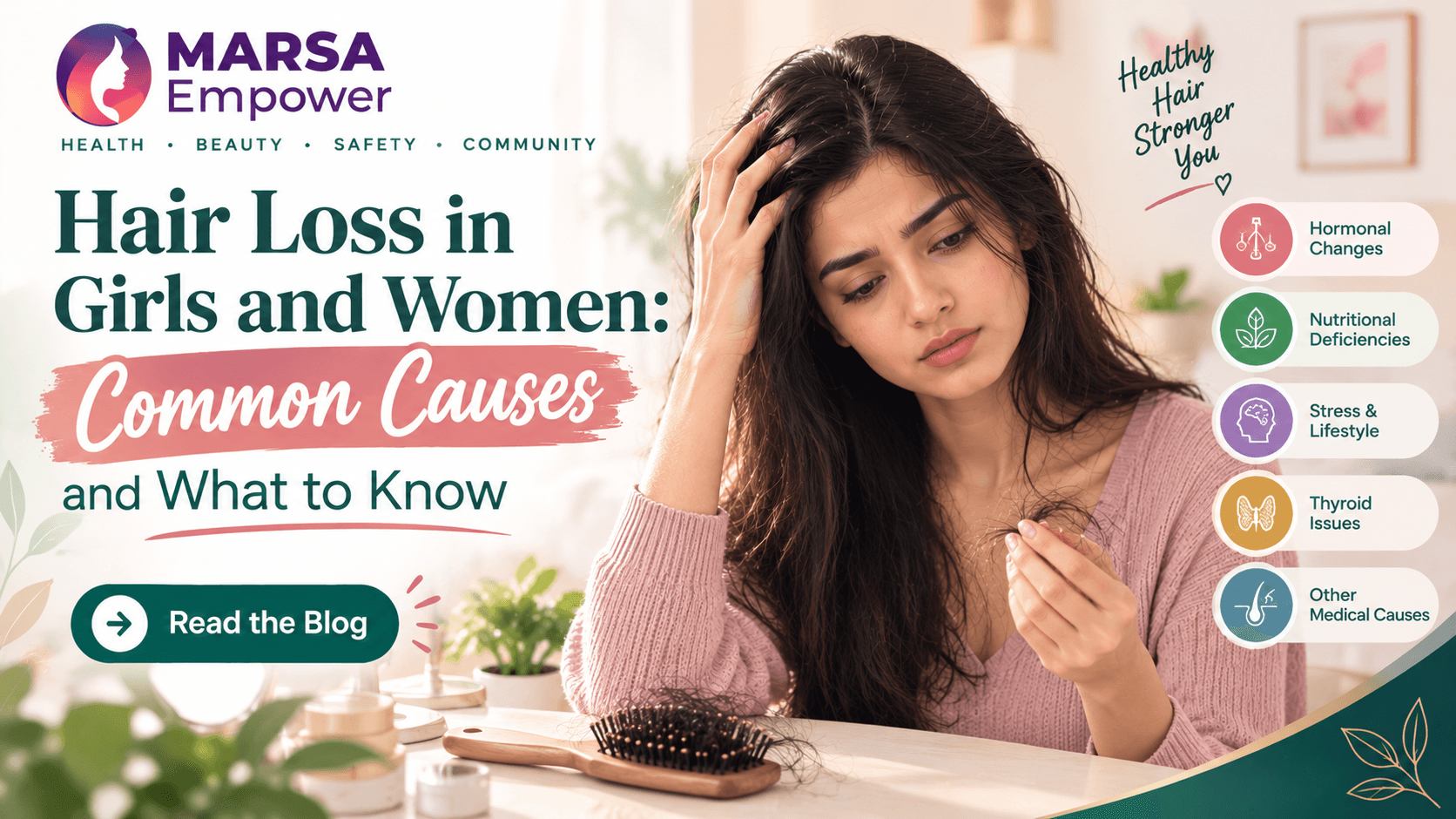
Discover the factors behind female hair loss and learn actionable steps to address it. Explore expert insights and practical solutions.
Maryam Mumtaz
Co-Founder & CEO
13 min read•9/24/2026
Marsa Empower · Women's Health & Wellness · For Girls & Women Aged 13 and Above · 13 min read
Hair loss is one of the most emotionally distressing health experiences for women and girls. Unlike most physical health concerns, hair loss is immediately visible — to the woman herself every time she looks in the mirror, to others, and in the accumulating evidence in the shower drain, on the brush, and on pillow covers.
The emotional impact is real and significant. Hair is deeply tied to identity, femininity, self-image, and social confidence in most cultures, and its loss — whether gradual or sudden — can feel profoundly threatening. For teenage girls especially, hair changes during a period of intense self-consciousness and identity formation can be particularly distressing.
Yet despite its emotional weight, hair loss is rarely discussed with the clinical frankness it deserves. Women are often told "it's normal" or "it's stress" without the investigation that would identify whether a treatable cause is present. And there are almost always treatable causes.
The most important thing to understand about hair loss in women and girls is this: the majority of cases have identifiable causes, and the majority of those causes respond to appropriate management. Iron deficiency — the most common nutritional cause of hair loss in women worldwide — is correctable. Thyroid dysfunction is treatable. PCOS is manageable. Hormonal causes respond to appropriate medical management. Even the psychological burden of the hair loss itself, once the cause is understood and addressed, diminishes significantly.
This guide provides the clearest, most complete explanation of hair loss in women — from normal shedding to significant loss, from nutritional causes to hormonal ones, from hair care habits to medical conditions — alongside honest guidance on when investigation is warranted and what that investigation involves.
The first and most reassuring piece of information about hair loss is that a significant amount of daily hair shedding is entirely normal.
The average scalp contains approximately 80,000 to 120,000 individual hair follicles. At any given time, approximately 85 to 90 percent of these are in the active growth phase (anagen), which lasts two to seven years per follicle. The remaining 10 to 15 percent are in the transition (catagen) or resting and shedding (telogen) phases. When a telogen follicle sheds its hair, it is released at the root and falls out — this is the normal, healthy shedding that accounts for the hair that appears on brushes, in drains, and on surfaces.
The average woman sheds 50 to 100 hairs per day through this normal cycle. On days after not washing the hair — when fewer hairs were shed in the day before — more may appear to fall at once when the hair is washed or brushed. This can feel alarming but is simply the accumulated normal shedding of a day or two.
Hair shedding becomes clinically relevant when it exceeds this normal range, particularly when it is accompanied by visible reduction in hair density, when the parting appears wider than previously, when the ponytail is noticeably thinner, or when bald patches appear.
Hair loss (alopecia) refers to a reduction in total hair density on the scalp that goes beyond normal daily shedding. It can manifest in different ways — diffuse shedding throughout the scalp, specific patterns of thinning, complete loss in discrete patches, or hairline recession — each reflecting a different underlying mechanism.
Understanding the difference between increased shedding and actual hair loss matters because they have different implications. Increased shedding (telogen effluvium) is the sudden or increased release of resting hairs from their follicles — a response to physiological stress, nutritional changes, hormonal shifts, or illness. The follicles themselves are intact and the hair will regrow if the trigger is addressed. This is the most common type of hair loss in women and girls and is generally reversible.
True hair loss in the sense of follicle damage or miniaturisation — where the follicle itself is affected and hair becomes progressively thinner and shorter before stopping entirely — represents conditions including androgenetic alopecia (female pattern hair loss) or autoimmune alopecia areata, which have different management implications.
Significant physical or psychological stress is one of the most common triggers of increased hair shedding. The mechanism is telogen effluvium — a stress-induced shift of hair follicles from the active growth phase into the resting and shedding phase.
The key characteristic of telogen effluvium is its timing: significant hair shedding typically begins two to four months after the triggering stress event — not immediately. This delay is because the follicle that enters telogen when stressed takes several months to complete the resting phase and shed its hair. This means that increased shedding in October may reflect a stressful event in July, making the connection non-obvious without this knowledge.
Common triggers include prolonged psychological stress (exams, relationship difficulties, bereavement, significant life changes), acute physical stress such as major illness, surgery, significant infection, or the demands of childbirth. Crash dieting and dramatic caloric restriction are also significant stressors that trigger telogen effluvium.
Hair typically regrows once the triggering stress resolves, though the timeline of regrowth (two to six months after shedding resolves) means the process from trigger to full recovery can span six to twelve months.
Hair follicles are among the most metabolically active structures in the body, and they are sensitive to nutritional status. Insufficient calories, protein, iron, zinc, and certain vitamins all affect the hair growth cycle.
Poor nutrition may not cause dramatic hair loss immediately — the deficiency must typically be sustained for weeks to months before hair shedding increases significantly. But when it does, the pattern is typically diffuse increased shedding across the entire scalp.
Women following very restrictive diets, those who skip meals regularly, those following plant-based diets without adequate attention to nutrient-dense foods, and those in periods of significantly reduced appetite from illness or stress are at elevated risk of nutrition-related hair loss.
Iron deficiency is the single most common nutritional cause of hair loss in women and girls, and it is among the most consistently overlooked because it is often missed by standard haemoglobin testing.
The mechanism by which iron deficiency causes hair loss involves iron's role in DNA synthesis in the rapidly dividing cells of the hair follicle, its role in the enzymatic processes of cellular energy production within follicle cells, and its effects on the normal hair growth cycle. Iron-deficient follicles shift prematurely from the growth phase into the resting and shedding phase, producing the diffuse, increased shedding of iron deficiency hair loss.
The specific indicator for iron-related hair loss is serum ferritin — the measure of iron stores — rather than haemoglobin. A woman can have iron deficiency significant enough to cause hair loss with a normal haemoglobin. Many dermatologists and trichologists consider serum ferritin below 30 to 40 µg/L as potentially contributing to hair loss even when the laboratory reference range is technically normal.
Any woman with unexplained diffuse hair loss should have serum ferritin specifically tested, alongside thyroid function and a full blood count. Correcting iron deficiency typically results in reduced shedding within two to three months and visible hair density improvement over six to twelve months of sustained iron repletion.
Several other nutritional deficiencies are associated with hair loss alongside iron.
Vitamin D has receptors in hair follicles and plays a role in regulating the hair growth cycle. Vitamin D deficiency — extremely prevalent in South Asian women — is associated with diffuse hair shedding, and some studies show improvement in hair loss with vitamin D supplementation in deficient individuals.
Zinc is required for protein synthesis and cell division in hair follicles. Zinc deficiency can cause diffuse hair shedding, and hair loss is a recognised clinical feature of significant zinc deficiency. Women following plant-based diets, those with heavy menstrual losses, and those with malabsorption conditions may be at risk.
Vitamin B12 deficiency, more common in women following vegan diets and in those on long-term metformin, can contribute to hair changes alongside its other effects on cellular metabolism and nervous system function.
Biotin (vitamin B7) deficiency is rare in women eating varied diets, despite the extraordinary number of biotin supplements marketed for hair growth. Biotin supplementation only benefits hair in the uncommon setting of actual biotin deficiency. Most women with hair loss taking biotin supplements are not biotin deficient, and the supplements provide no additional benefit.
Female reproductive hormones — oestrogen, progesterone, and the androgens (including testosterone and DHT) — all affect hair follicle function. Changes in the balance of these hormones, across the menstrual cycle, in pregnancy, in PCOS, and at menopause, can all produce hair changes.
Both hypothyroidism and hyperthyroidism can cause diffuse hair loss.
Hypothyroidism (underactive thyroid) is the thyroid condition most commonly associated with hair loss. Thyroid hormone is required for the normal regulation of the hair growth cycle, and when it is insufficient, hair follicles spend more time in the resting phase and hair sheds without adequate replacement. The hair loss of hypothyroidism is diffuse and may also include thinning of the outer third of the eyebrows — a relatively specific sign. It is accompanied by other hypothyroid symptoms: persistent fatigue, weight gain, cold intolerance, dry skin, and constipation.
Hyperthyroidism (overactive thyroid) can also cause diffuse hair thinning, alongside its other symptoms of weight loss despite increased appetite, heat intolerance, anxiety, and rapid heartbeat.
Thyroid function testing (TSH and free T4) is a critical early investigation for any woman with new or unexplained hair loss.
Polycystic Ovary Syndrome (PCOS) causes hair loss through its characteristic androgen excess. Elevated DHT (a potent androgen) miniaturises hair follicles on the scalp — causing the follicles to produce progressively thinner, shorter hairs before eventually stopping production. This produces the female pattern hair thinning (thinning at the crown and widening of the parting) characteristic of androgen-related hair loss.
Women with PCOS may simultaneously experience scalp hair thinning and increased body or facial hair growth (hirsutism) — both driven by the same androgen excess affecting different follicle types (scalp follicles are androgen-sensitive and miniaturise with DHT; body and facial follicles are androgen-sensitive in the opposite direction and grow more).
Managing the hormonal drivers of PCOS — through a low-glycaemic diet, regular exercise, myo-inositol supplementation, and medical management where indicated — directly reduces the androgen burden that drives PCOS-related hair loss.
Hair typically thrives during pregnancy. The elevated oestrogen of pregnancy extends the active growth phase of hair follicles, reducing normal shedding and producing the fuller, thicker hair many women notice during pregnancy.
After delivery, oestrogen falls rapidly to pre-pregnancy levels. The large number of follicles that had been maintained in the growth phase through the pregnancy now shift simultaneously into the resting and shedding phase. The result — typically beginning two to four months after delivery — is dramatic, often alarming hair shedding that can continue for several months.
This postpartum hair loss is normal physiologically, is known as postpartum telogen effluvium, and typically resolves spontaneously within six to twelve months after delivery. However, it can be significantly worsened by the iron deficiency that is common in the postpartum period from the combination of pregnancy iron demands and delivery blood loss. Postpartum women with heavy hair shedding should have serum ferritin checked and iron deficiency treated if present.
The reduction in oestrogen at menopause removes the oestrogen-mediated protection of hair follicles, and the relative increase in androgens (as androgens decline less dramatically than oestrogen at menopause) can produce a pattern of progressive hair thinning — diffuse at first, then with a typical female pattern of crown and parting thinning.
This androgenetic alopecia in postmenopausal women is the same hormonal mechanism as PCOS-related hair loss but driven by the changed androgen-to-oestrogen ratio of the postmenopausal state rather than absolute androgen elevation.
Several commonly used medications list hair loss as a side effect. These include certain blood pressure medications (ACE inhibitors, beta blockers), anticoagulants (blood thinners), some antidepressants and mood stabilisers, retinoids (including high-dose vitamin A), and chemotherapy agents (through a different, more complete mechanism than the other medications listed).
If hair loss began after starting a new medication, this temporal relationship is worth discussing with the prescribing healthcare provider, who can assess whether the medication is a likely cause and whether alternatives are available.
Hair loss in teenage girls is both more common than many realise and more emotionally impactful given the social sensitivity of this developmental period.
The most common causes in this age group are iron deficiency (from the combination of monthly blood loss and dietary patterns that often do not consistently replace it), nutritional insufficiency from meal skipping and restricted eating, stress from academic and social pressures, and the hormonal changes of establishing menstrual cycles.
PCOS-related hair thinning can begin during adolescence if PCOS presents in the teenage years — typically accompanied by other features such as irregular periods, persistent acne, and excess facial or body hair.
For teenage girls with significant hair shedding, the most appropriate first step is blood testing: serum ferritin, thyroid function (TSH), full blood count, vitamin D, and zinc. Identifying a correctable cause — particularly iron deficiency — and addressing it produces meaningful improvement in hair over several months.
It is also important to gently assess whether dietary restriction that may be contributing to hair loss reflects broader concerns about food or body image that deserve supportive attention.
Hair shedding (telogen effluvium) is the most common type — diffuse increased shedding throughout the scalp in response to a physiological trigger. The scalp itself looks normal, and the loss is even throughout the scalp rather than in a specific pattern. It is generally reversible when the trigger is addressed.
Thinning hair (androgenetic alopecia / female pattern hair loss) is the progressive miniaturisation of hair follicles from androgen sensitivity, producing gradually finer and shorter hairs and eventually sparse growth. In women, this most typically affects the crown of the scalp and widens the parting, with the frontal hairline often preserved. It is the most common permanent pattern of hair loss in women.
Receding hairline — frontal fibrosing alopecia is a specific form of scarring hair loss that produces a gradually receding hairline and loss of eyebrow hair. It is increasingly recognised in postmenopausal women and requires dermatological evaluation.
Patchy hair loss (alopecia areata) is an autoimmune condition in which the immune system attacks hair follicles, producing distinct circular or oval patches of complete hair loss on the scalp or elsewhere. It can affect eyebrows and eyelashes as well as scalp hair. It is unpredictable in course but often responds to treatment, and spontaneous regrowth occurs in many cases.
The menstrual cycle influences hair health through two distinct mechanisms.
First, monthly blood loss removes iron from the body — and iron is essential for healthy hair follicle function, as described above. Women with heavy periods are at highest risk of the iron deficiency that is one of the most common causes of diffuse hair loss in women. The relationship is often not recognised because the hair loss develops gradually over months of progressive iron store depletion rather than immediately following any single period.
Second, the hormonal fluctuations of the menstrual cycle — including the premenstrual fall in oestrogen and progesterone — may contribute to minor cycle-related variations in hair shedding, though this is a less clinically significant contribution than the cumulative iron loss from heavy periods.
For any woman with hair loss and heavy or long periods, serum ferritin is the most important first investigation, and addressing the iron deficiency and, if possible, the cause of the heavy bleeding, is the most impactful intervention available.
Hair follicles are nutritionally demanding structures — they are among the most metabolically active in the body — and their health reflects the nutritional environment they are sustained by.
Protein is the most fundamental dietary requirement for hair. Hair is composed of keratin — a fibrous protein — and the follicle cells that produce it require a consistent supply of amino acids. Women who consume inadequate protein — from meal skipping, very low-calorie diets, or primarily carbohydrate-dominated eating patterns — may notice hair quality decline and increased shedding.
Iron as discussed above is the most commonly deficient and most commonly implicated nutritional cause of hair loss in women.
Zinc supports cell division and protein synthesis in follicle cells. It is found in meat, eggs, dairy, pumpkin seeds, cashews, lentils, and chickpeas.
Biotin and B vitamins are involved in follicle cell energy metabolism and protein synthesis. B vitamins including biotin, B12, and folate are found in eggs, meat, dairy, and fortified foods. Genuine biotin deficiency is uncommon in women eating varied diets; B12 deficiency is more relevant for women on plant-based diets.
Omega-3 fatty acids support scalp health and reduce the inflammation that can affect follicle function. They are found in fatty fish, walnuts, chia seeds, and flaxseeds.
Vitamin C supports collagen production in the follicle structure and improves iron absorption from plant-based foods — making it doubly relevant for hair health in women who eat limited meat.
Crash diets and very low-calorie diets trigger telogen effluvium through both the nutritional deprivation they create and the physical stress the sudden caloric restriction represents. Hair loss is one of the most consistent physiological consequences of dramatic short-term dietary restriction.
Traction alopecia is hair loss caused by sustained tension on hair follicles from tight hairstyles — pulled-back ponytails, tight braids, tight buns, and extensions attached to existing hair. The repeated mechanical stress on the follicle causes a gradual inflammatory response that, if sustained, can permanently damage the follicle. Traction alopecia typically presents as thinning along the hairline and at the temples where tension is greatest.
Allowing the hair to be worn loose regularly, alternating tight and loose styles, and avoiding very heavy extensions all reduce traction alopecia risk.
Regular use of blow dryers, straighteners, and curling irons at high temperatures damages the hair shaft — causing breakage rather than true follicle hair loss. The result is short, broken hairs and reduced overall hair length and density that may look similar to hair loss but does not involve follicle damage. Reducing heat styling frequency, using lower temperatures, and applying heat-protective products before styling reduce shaft damage.
Chemical processes including bleaching, perming, relaxing, and repeated dyeing progressively damage the hair shaft's structural integrity, leading to increased breakage. Very frequent chemical processing can damage follicles at the scalp, contributing to genuine hair loss in addition to shaft breakage.
Aggressive brushing — particularly when hair is wet and most vulnerable to breakage — causes significant mechanical breakage. A wide-toothed comb on wet hair, detangling from the ends upward rather than from the roots downward, and avoiding brushing tightly knotted hair before detangling all reduce mechanical breakage.
The scalp is the skin from which hair grows, and its health directly affects follicle function. Significant dandruff (seborrhoeic dermatitis) causes scalp inflammation that can affect follicle health. Buildup of product residue, oils, and dead skin cells can block follicles. Scalp psoriasis can produce scarring in severe cases.
Gentle regular cleansing with a mild shampoo appropriate for the scalp type, addressing dandruff or seborrhoeic dermatitis with appropriate products when present, and avoiding heavy product buildup at the scalp all support scalp health.
The most impactful dietary foundation for hair health is a varied, nutrient-rich diet that consistently provides protein, iron, zinc, B vitamins, vitamin D, omega-3 fatty acids, and adequate total calories. Specific additions with the most direct hair benefit: eggs (protein, biotin, iron, zinc), fatty fish (omega-3, vitamin D, protein), lentils and legumes (plant protein, iron, zinc, folate), nuts and seeds (zinc, healthy fats, vitamin E), and leafy green vegetables with citrus or other vitamin C sources alongside (iron and vitamin C together for absorption benefit).
Include a quality protein source at every meal. For hair specifically, protein adequacy is the most fundamental dietary requirement — the follicle cannot produce keratin without sufficient amino acid supply.
Build iron-rich foods into the daily routine, always alongside vitamin C to maximise absorption from plant sources. Delay chai or coffee for at least one hour after iron-containing meals to avoid the tannin-mediated absorption inhibition discussed in more detail in Marsa's iron deficiency guide.
Use a wide-toothed comb on wet hair. Detangle from the ends upward. Reduce heat styling. Alternate tight and loose hairstyles. Allow the hair to air-dry when practical. These changes reduce the mechanical and thermal damage that contributes to breakage and shaft thinning.
The consistent, well-documented relationship between prolonged stress and telogen effluvium means that stress management is a genuine and direct hair health intervention. Regular exercise, adequate sleep, social connection, breathwork, and professional support where needed all reduce the physiological stress burden on the hair growth cycle.
Sleep is one of the primary regulators of the hormonal environment that governs hair growth. Growth hormone — secreted primarily during deep sleep — stimulates hair follicle cell division and growth. Chronic sleep insufficiency maintains cortisol at elevated levels that are associated with hair loss. Seven to nine hours per night consistently is the most impactful sleep target for hair and overall health.
Most everyday hair shedding from identifiable triggers — stress, iron deficiency, postpartum telogen effluvium — does not need urgent evaluation if the trigger is clear and being addressed. However, professional assessment is appropriate when the following apply.
Hair loss is sudden and significant — losing large amounts rapidly rather than a gradually increasing shed over weeks. Hair loss is patchy — circular or irregular bald patches appearing on the scalp, eyebrows, or elsewhere. Hair loss is progressive over months without an identifiable trigger or without response to dietary and lifestyle improvement. Hair loss is accompanied by other symptoms — fatigue, weight change, menstrual changes, excess facial hair, scalp redness or scaling, or other systemic features. The hairline is receding, particularly in younger women or in a pattern that suggests scarring alopecia. Hair quality has significantly worsened alongside shedding — thin, fine, brittle, or with significantly reduced growth rate.
Arrange a medical or dermatological appointment in any of the above circumstances and additionally when:
Blood testing has identified iron deficiency, thyroid dysfunction, or another nutritional deficiency, and you want guidance on correcting it appropriately. Hair loss is causing significant emotional distress that is affecting daily life, self-image, or social confidence. You suspect PCOS may be contributing and want appropriate hormonal assessment. You have postpartum hair loss that is more severe than expected or is not showing signs of improvement after six months. You are taking a medication that may be causing hair loss and want to discuss alternatives.
A dermatologist or trichologist (hair specialist) can assess the type of hair loss, the scalp appearance, the pattern of loss, and the clinical history to guide appropriate investigation and management — including topical or systemic treatments where indicated.
The clinical evaluation of hair loss involves several components.
Medical history is the most important component — when the loss began, how quickly it has progressed, what pattern it follows, what medications and supplements are being taken, menstrual history and cycle regularity, family history of hair loss, nutritional patterns, and recent stressful events.
Scalp examination — visual inspection of the scalp, the hair parting width, the hair density in different areas, the condition of the scalp skin, and in some cases dermoscopy (magnified scalp examination) to assess follicle structure.
Blood tests routinely relevant to hair loss evaluation include: serum ferritin (iron stores), full blood count (haemoglobin, red blood cell indices), thyroid function (TSH and free T4), 25-OH vitamin D, zinc, B12, and depending on clinical suspicion, hormonal panels (androgens, SHBG, prolactin) and ANA (antinuclear antibodies for autoimmune assessment).
Trichoscopy — dermoscopic examination of the scalp and hair shafts — provides specific information about follicle miniaturisation, scarring, and other structural changes that help distinguish different hair loss types.
Scalp biopsy — taking a small skin sample from the scalp for microscopic examination — is occasionally needed to definitively characterise the type of hair loss when the clinical picture is unclear.
Hair loss is one of the most emotionally significant health concerns for women, and Marsa Empower provides tools and resources that support understanding and addressing its most common causes.
Where Marsa helps — Health Hub cycle and symptom tracking. For women whose hair loss may be related to heavy periods and iron deficiency — the most common nutritional cause — Marsa's Health Hub allows tracking of menstrual flow volume and symptoms alongside energy levels and other health patterns. This documented information reveals whether heavy periods are a consistent feature and helps quantify flow in the objective terms most useful for medical consultations.
Why this matters. Many women with iron deficiency-related hair loss do not connect the two. They notice more hair falling out but attribute it to stress or shampoo changes, not recognising that heavy monthly blood loss has been depleting iron stores over months. Tracking both the period and the hair loss together — and seeing that heavy flow precedes by months the increase in shedding — makes the connection visible and actionable.
Smart Nutrition resources. Marsa's nutrition content explains the specific foods most relevant to hair health — protein, iron, zinc, vitamin D, biotin, omega-3 — in accessible, practical terms with Pakistani food context, helping women build dietary habits that support hair health alongside general wellness.
Health education resources. Marsa's educational content explains the specific mechanisms of the most common hair loss causes in women — iron deficiency, thyroid dysfunction, PCOS, postpartum telogen effluvium, stress — helping women understand what is causing their hair loss rather than simply experiencing it as a mysterious and distressing change.
AI health guidance — Digital Doctors. Women who are concerned about hair loss, want to understand whether their pattern suggests a specific cause, or want guidance on whether blood testing is warranted can access Marsa's Digital Doctors for clear, educational information and appropriate direction toward professional care.
Important note. Marsa Empower is a health education and wellness companion. Diagnosing the cause of hair loss requires clinical assessment and blood testing by a qualified healthcare professional. If hair loss is significant, progressive, patchy, or accompanied by other symptoms, please consult a doctor or dermatologist.
Is some hair shedding normal?
Yes. Losing 50 to 100 hairs per day is entirely within the normal range for most women. On days after not washing the hair, more hairs may appear to fall at once because the previous day's normal shedding was retained. Hair loss becomes clinically relevant when shedding clearly exceeds this range over multiple weeks, when visible thinning is apparent, or when bald patches develop.
Why are teenage girls losing hair?
The most common causes of hair loss in teenage girls are iron deficiency (from the combination of monthly period blood loss and dietary patterns that often do not adequately replace it), nutritional insufficiency from meal skipping or restricted eating, stress from academic and social pressure, and the hormonal changes of establishing menstrual cycles. Less commonly, thyroid dysfunction or PCOS may be contributing. Blood testing including serum ferritin and thyroid function is the appropriate first investigation.
Can low iron cause hair loss?
Yes — iron deficiency is the single most common nutritional cause of diffuse hair loss in women. The mechanism involves iron's role in cellular energy production and DNA synthesis in hair follicle cells. The most informative test is serum ferritin (iron stores), not haemoglobin alone. Correcting iron deficiency through dietary improvement and supplementation where indicated typically reduces shedding within two to three months and improves visible density over six to twelve months.
Can stress cause hair shedding?
Yes. Significant physical or psychological stress triggers telogen effluvium — a shift of hair follicles into the resting and shedding phase. The shedding typically begins two to four months after the stress event, not immediately. Once the trigger resolves, hair normally regrows, though the full process from trigger to visible regrowth can take six to twelve months.
Can hormonal changes cause hair loss?
Yes. The fluctuations of reproductive hormones across the menstrual cycle, the hormonal surge and fall of pregnancy and postpartum, the androgen excess of PCOS, thyroid hormone disruption, and the oestrogen decline of menopause all affect hair follicle function in ways that can produce hair loss. The type and pattern of hair loss differs between these hormonal causes, and identifying the specific mechanism guides appropriate management.
Can PCOS cause hair thinning?
Yes. Elevated androgens in PCOS — particularly DHT — cause follicle miniaturisation on the scalp, producing the female pattern hair thinning characterised by crown and parting thinning with a preserved frontal hairline. Managing PCOS through dietary changes, exercise, appropriate medical treatment, and anti-androgen interventions where indicated reduces the androgen burden that drives this thinning.
Does cutting your hair reduce hair loss?
No. Hair loss occurs at the follicle level — at the root, not along the shaft. Cutting the hair does not affect how many follicles shed or how the growth cycle progresses. Shorter hair may appear less dramatic when it sheds (because shorter hairs are less visible than long ones in the shower drain) and may look fuller because the weight of the hair is reduced, but it does not reduce the rate of loss.
When should hair loss be checked by a doctor?
Seek medical assessment when: hair loss is sudden and significant. When patchy bald areas appear. When hair loss is progressive without a clear trigger or without response to dietary improvement. When hairline recession is occurring. When hair loss is accompanied by other symptoms (fatigue, menstrual changes, weight changes, excess facial hair). When hair loss is causing significant emotional distress affecting daily life.
Hair loss in women and girls is common, varied in cause, and — most importantly — more often treatable than it appears in the midst of the emotional distress it produces.
The most impactful approach is identifying the specific cause — which almost always requires blood testing, particularly serum ferritin, thyroid function, and vitamin D as a minimum. Once the cause is known, the management is specific: iron deficiency responds to dietary improvement and supplementation. Thyroid dysfunction responds to treatment. PCOS-related androgen excess responds to hormonal and metabolic management. Stress-related telogen effluvium resolves when the trigger resolves and adequate nutrition is maintained.
The combination of dismissing hair loss as "just stress" or "just hormones" without investigation, and of reaching for biotin supplements and special shampoos without identifying the underlying cause, is what keeps women in a cycle of hair loss and frustration that could instead be a cycle of investigation, diagnosis, and recovery.
Your hair is telling you something. Listen to it, investigate it properly, and give your body what it needs to grow it back.
Educational Disclaimer
This article is for educational and awareness purposes only. It does not constitute medical advice, diagnosis, or treatment. If you experience significant, progressive, or patchy hair loss, or hair loss accompanied by other symptoms, please consult a qualified healthcare professional or dermatologist for personalised evaluation and guidance.
Marsa Empower | Care. Safety. Growth.
Visit marsaempower.com to track your menstrual health and symptoms, access nutrition guidance, and explore women's health education at every stage of life.
Medical Disclaimer
This article is for general informational and educational purposes only and is not a substitute for professional medical advice, diagnosis, or treatment. Always seek the advice of a qualified healthcare provider with any questions you may have regarding a medical condition. Never disregard professional medical advice or delay seeking it because of something you have read on MARSA Empower.
Written By
Maryam Mumtaz
Co-Founder & CEO
Co-Founder of MARSA Empower who leads the visual and strategic evolution of the platform. Maryam bridges technical complexity with human-centric design, architecting the team's official roadmap and ensuring MARSA effectively addresses the real-world needs of women. With deep expertise in agentic AI, full-stack development, and UI/UX design, she has delivered 50+ projects for 30+ satisfied clients.
Enjoyed this story?