One App. Every Woman.
One App. Every Woman.
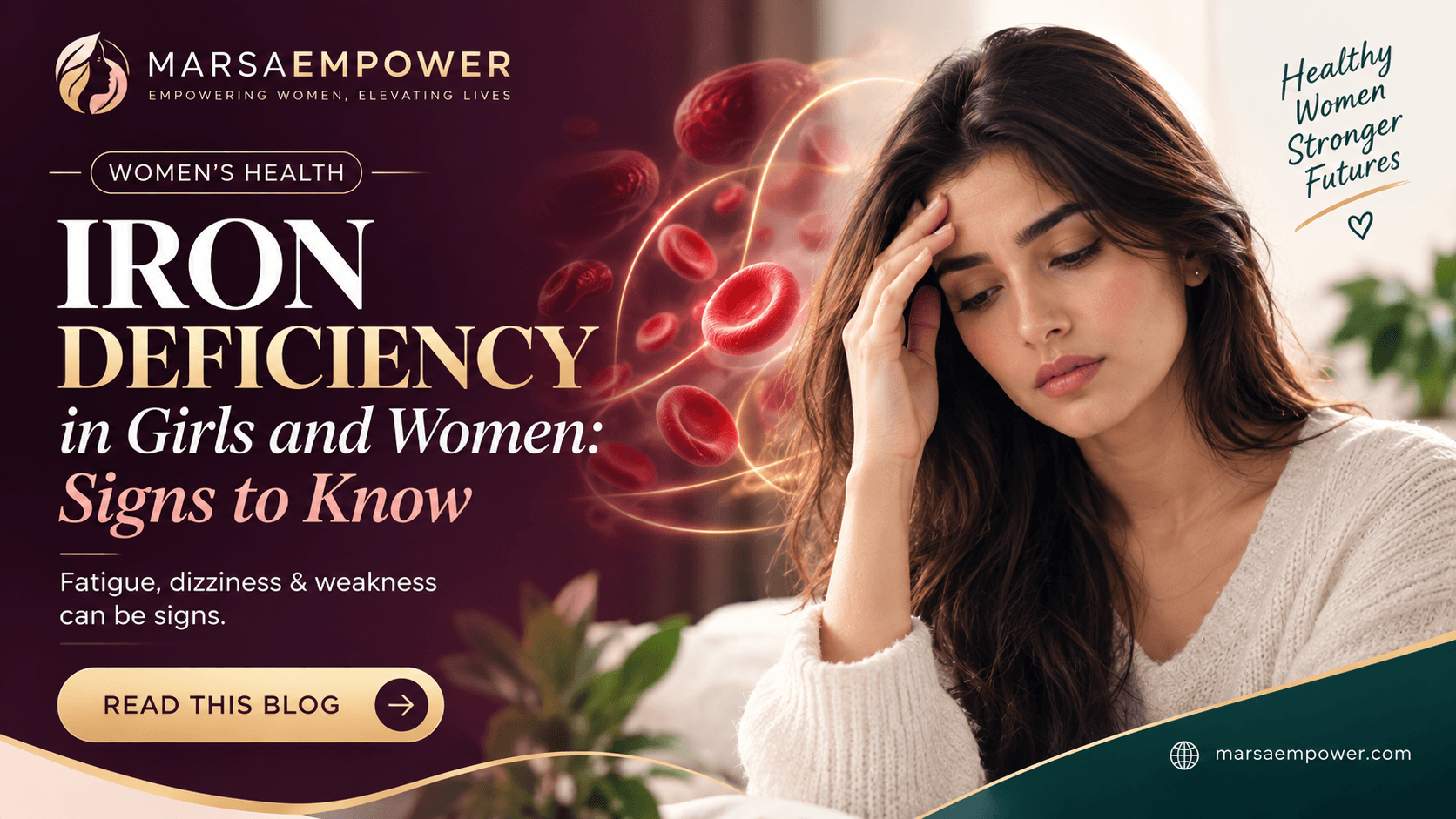
Iron deficiency is a prevalent issue among women, affecting energy levels and overall health. Learn to recognize its signs and explore effective solutions.
Maryam Mumtaz
Co-Founder & CEO
13 min read•9/23/2026
Marsa Empower · Women's Health & Nutrition · For Girls & Women Aged 13 and Above · 13 min read
Iron deficiency is the most common nutritional deficiency in the world — and women are disproportionately affected. It affects an estimated one in three women of reproductive age globally, with rates significantly higher in regions including Pakistan and South Asia. Yet despite this extraordinary prevalence, it is among the most consistently missed diagnoses in women's health.
The reason it is missed is deceptively simple: its symptoms — persistent tiredness, weakness, cold hands and feet, difficulty concentrating, hair loss — are extraordinarily common in modern women's lives and are almost universally attributed to the demands of being busy, stressed, not sleeping enough, or simply being a woman. The fatigue of iron deficiency is real, it is physiological, it is impactful — and it is correctable. But it cannot be corrected if it is never identified.
This guide explains what iron deficiency is, why women are so much more vulnerable to it than men, what it feels like across the spectrum from early deficiency to overt anaemia, where iron is found in food, how to maximise absorption, and — most importantly — when to get tested and what that testing should include.
Iron is an essential mineral required for multiple critical biological functions. Its most critical role is in haemoglobin — the protein in red blood cells that carries oxygen from the lungs to every cell in the body. Haemoglobin gives blood its characteristic red colour, and its oxygen-carrying capacity determines how well every tissue and organ is supplied with the oxygen it needs to function.
Beyond haemoglobin, iron is also a component of myoglobin (the oxygen-storage protein in muscle), a cofactor in multiple metabolic enzymes involved in energy production, and essential for immune cell production and thyroid hormone metabolism.
When iron stores are depleted, these functions are progressively impaired. The body prioritises maintaining haemoglobin production as long as possible by drawing on stored iron — but when stores are exhausted, haemoglobin production falls and iron deficiency anaemia develops.
Iron deficiency exists on a spectrum:
Stage 1 — Iron store depletion: The body's iron stores (measured by serum ferritin) are reduced, but haemoglobin is still normal. Symptoms may be mild or absent, but cellular iron-dependent functions are already sub-optimal.
Stage 2 — Iron-deficient erythropoiesis: Iron supply to bone marrow for red blood cell production is inadequate, though haemoglobin has not yet fallen significantly. Symptoms become more noticeable.
Stage 3 — Iron deficiency anaemia: Haemoglobin falls below the normal range, red blood cells become small and pale (microcytic, hypochromic), and the full symptomatic picture of iron deficiency anaemia is present.
The critical implication of this spectrum is that women may have significant symptoms from iron deficiency long before their haemoglobin falls below the anaemia threshold. This is why testing haemoglobin alone — the most common clinical approach — misses iron deficiency in its most treatable early and intermediate stages.
Several factors specific to the female body and reproductive life stage create a significantly higher iron requirement and a significantly higher deficiency risk compared to men.
Monthly menstrual blood loss. Every menstrual period removes iron from the body in the blood shed. The average period involves a blood loss of 30 to 80 ml — representing a loss of 15 to 40 mg of iron per cycle. Women with heavier periods (medically defined as more than 80 ml per cycle) lose proportionately more. Over months and years of menstruation, a diet that does not consistently replace this loss leads to progressive iron store depletion.
Higher iron requirements during adolescence. The teenage years combine rapid growth (with its elevated iron demands for increased muscle mass and blood volume expansion) with the onset of menstruation. The resulting iron requirement of 15 mg per day for teenage girls is approximately double the adult male requirement — and most teenage girls do not consistently meet it.
Pregnancy. Pregnancy dramatically increases iron requirements — the developing fetus and placenta require iron, blood volume expands by 40 to 50 percent requiring additional haemoglobin synthesis, and the iron losses of childbirth add further demand. Iron requirements in the second and third trimesters are approximately 27 mg per day — more than three times the non-pregnant adult female requirement.
Dietary patterns. Women generally eat less food by volume than men, and a higher proportion of women follow plant-based, vegetarian, or lower-meat diets. Since animal-sourced haem iron is the most bioavailable dietary iron source, women who eat little or no meat face a higher barrier to meeting their iron requirements.
Lower meat intake combined with higher tea consumption. In Pakistan and South Asia specifically, high chai (tea) consumption alongside meals is a dietary pattern that significantly impairs iron absorption from plant-based foods — compounding the iron sufficiency challenge.
The symptoms of iron deficiency develop gradually as iron stores and ultimately haemoglobin fall progressively. Early deficiency may produce mild or vague symptoms that are easy to dismiss. More advanced deficiency produces a recognisable and impactful symptom cluster.
This is the most universal and most impactful symptom. Iron deficiency produces a particular quality of fatigue — heavy, persistent, and not relieved by what feels like adequate sleep. Women describe it as feeling exhausted upon waking, struggling through the day on minimal energy reserves, and needing to rest in ways that feel disproportionate to their activity level.
This fatigue is specifically driven by reduced oxygen delivery to cells when haemoglobin is impaired. Every cell in the body receives less oxygen than it needs to produce energy efficiently. The result is not just tiredness but a fundamental impairment of cellular energy metabolism that affects physical performance, cognitive function, and mood simultaneously.
Physical weakness — a reduction in actual muscle strength and endurance — accompanies the fatigue of iron deficiency. Muscles require oxygen for both their aerobic energy production and their ability to contract effectively. When oxygen delivery is reduced, physical tasks that were previously manageable feel effortful, and physical endurance is significantly reduced.
When haemoglobin is significantly reduced, the brain — which is exceptionally sensitive to oxygen supply — may not receive adequate oxygen, particularly with sudden position changes or mild exertion. The result is dizziness or lightheadedness that may be brief or sustained.
Insufficient oxygen delivery to the brain triggers vasodilation (widening of blood vessels) as the body attempts to compensate for low oxygen by increasing blood flow. This vasodilation produces the headaches characteristic of iron deficiency anaemia — particularly in the temporal region (sides of the head).
The red colour of healthy skin is partly a reflection of haemoglobin in the blood vessels beneath the skin. When haemoglobin falls, the skin loses this colour and appears pale. This pallor is most visible in areas with thin skin and many blood vessels close to the surface — particularly the inner surface of the lower eyelid (which normally appears bright red), the gums, the nail beds, and the palms.
Checking the inner lower eyelid — pulling it gently downward and looking at the colour — is a simple, accessible way to assess pallor. Bright red suggests adequate haemoglobin. Pale pink or white suggests possible anaemia warranting testing.
When blood carries less oxygen per volume, the body must either increase cardiac output (heart rate) or breathing rate to compensate. The breathlessness of iron deficiency is typically noticed on activities that previously caused no difficulty — climbing stairs, walking quickly, or carrying groceries — rather than at rest.
The heart compensates for reduced blood oxygen delivery by increasing its rate and force of contraction. This produces the awareness of the heartbeat — palpitations — that is a recognised feature of iron deficiency and iron deficiency anaemia.
Reduced oxygen in the blood impairs the normal heat generation of metabolic processes in the peripheral tissues. Additionally, the body prioritises blood flow to vital organs when oxygen delivery is limited, further reducing flow to the hands and feet. The result is the characteristically cold extremities of iron deficiency even in temperatures that would not normally cause this.
The brain consumes approximately 20 percent of the body's total oxygen supply despite comprising only two percent of body weight. It is the organ most acutely sensitive to any reduction in oxygen delivery. Even mild iron deficiency — before haemoglobin has fallen significantly — is associated with reduced cognitive performance: slower processing speed, impaired working memory, difficulty with attention and sustained concentration, and the "brain fog" that many iron-deficient women describe.
Academic performance, work performance, and the quality of thinking and decision-making are all measurably affected by iron deficiency, often before the physical symptoms become prominent.
Hair follicles are among the most rapidly dividing cells in the body, and their function is sensitive to nutritional status. Iron deficiency is one of the most common nutritional causes of diffuse hair shedding — typically presenting as increased hair in the shower drain, on the brush, and on surfaces, with a gradual reduction in overall hair density rather than patchy loss.
Nails may become brittle, ridged, or in severe deficiency, develop a characteristic concave or spoon-shaped deformity called koilonychia — though this is more characteristic of severe, prolonged deficiency.
Understanding the distinction between iron deficiency and iron deficiency anaemia matters because they require different tests to identify and women in the earlier, non-anaemic stage are often told their blood results are "normal" when the most relevant test (ferritin) has not been ordered.
Iron deficiency refers to depleted iron stores, measured by serum ferritin. A woman can have iron deficiency with a normal haemoglobin — meaning her body is drawing on the last of its iron reserves to maintain haemoglobin production, and is already experiencing symptoms, but has not yet crossed the threshold into anaemia as clinically defined.
Iron deficiency anaemia occurs when iron stores are sufficiently depleted that haemoglobin production is impaired and haemoglobin falls below the lower limit of normal. At this stage, both ferritin and haemoglobin (and red blood cell indices) are abnormal.
The critical clinical point: A haemoglobin test alone will miss iron deficiency until it has progressed to full anaemia. A woman with a ferritin of 8 µg/L (severely depleted stores) but a haemoglobin of 115 g/L (technically borderline but not yet below the anaemia threshold) will be told her "iron test is normal" if only haemoglobin is measured — and yet she may have profound fatigue, hair loss, cold extremities, and impaired cognitive function that will not improve until her iron stores are repleted.
Always request serum ferritin specifically. This is the appropriate first test for iron status assessment in any woman with symptoms consistent with iron deficiency.
Heavy menstrual bleeding (menorrhagia) is the most common cause of iron deficiency in women of reproductive age. Periods that soak through pads more frequently than every two hours on the heaviest days, that require overnight protection, or that regularly last longer than seven days remove significantly more iron per cycle than the dietary intake of many women can replace.
Women who have consistently heavy periods may not realise they are heavy because they have known no other pattern — heavy periods can normalise over time as an individual's personal baseline. Tracking flow objectively (using a period tracking app, noting how many pads are soaked per day) provides the clearest picture.
Insufficient dietary iron is the second major contributing cause, particularly for women following plant-based, vegetarian, or low-meat diets. Animal-sourced iron (haem iron from meat, fish, and poultry) is absorbed at approximately 15 to 35 percent efficiency. Plant-sourced iron (non-haem iron from lentils, beans, spinach, fortified cereals) is absorbed at only 2 to 20 percent efficiency, depending on the co-consumed enhancers and inhibitors.
A diet that provides adequate iron on paper but is composed primarily of plant sources, without optimising absorption, may deliver insufficient absorbed iron to meet daily requirements.
As described above, pregnancy dramatically increases iron requirements. Women entering pregnancy with depleted iron stores — which is common — are at high risk of significant iron deficiency anaemia in the second and third trimesters.
Teenage girls require 15 mg of iron per day — significantly more than adult women (18 mg but from a starting point of already having established stores) and far more than adult men (8 mg). Many teenage girls consume substantially less than this.
Any source of significant blood loss — including gastrointestinal bleeding from ulcers, inflammatory bowel disease, or polyps — can cause iron deficiency. In older women and postmenopausal women, gastrointestinal blood loss rather than menstrual loss is the most likely cause of new iron deficiency, and this should always be investigated rather than assumed to be dietary.
Several conditions impair iron absorption from food: coeliac disease (immune-mediated intestinal damage from gluten that reduces absorptive capacity), Crohn's disease affecting the small intestine, gastric acid reduction (from proton pump inhibitor medications or atrophic gastritis), and other gastrointestinal conditions. Women with iron deficiency that does not respond to dietary improvement or supplementation may have an underlying absorption problem worth investigating.
Iron deficiency is the most common nutritional deficiency among teenage girls globally, yet it is among the least consistently identified and addressed in this age group.
The convergence of rapid growth, the onset of menstruation, a dietary period when nutritional quality often declines (less home cooking, more processed food, meal skipping), and the social pressures toward dietary restriction that affect teenage girls more than any other group creates the perfect conditions for iron deficiency to develop and persist.
For many teenage girls, the symptoms of iron deficiency — persistent tiredness, difficulty concentrating, reduced academic performance, headaches, cold hands and feet, increased hair shedding — are attributed to school stress, poor sleep, or being a teenager rather than to a specific nutritional cause with a specific correction.
Any teenage girl with persistent fatigue that affects school performance or quality of life should have serum ferritin tested as a priority — alongside thyroid function and vitamin D — rather than being reassured without investigation.
Building iron-rich dietary habits in the teenage years is also a direct health investment: entering the adult reproductive years with good iron stores provides a buffer against the monthly iron losses of menstruation that otherwise gradually deplete stores over time.
| Life Stage | Recommended Daily Iron | Key Reason |
|---|---|---|
| Girls 9 to 13 years | 8 mg | Growth and development |
| Teen girls 14 to 18 years | 15 mg | Growth plus menstrual losses |
| Adult women 19 to 50 years | 18 mg | Ongoing menstrual losses |
| Pregnant women | 27 mg | Fetal development, blood volume expansion |
| Breastfeeding women 19 to 50 | 9 mg | Reduced (no menstrual losses) |
| Women 51 and above | 8 mg | No menstrual losses |
These are the recommended dietary allowances — the amounts estimated to meet the needs of most healthy women. Women with heavy periods, malabsorption conditions, or other risk factors may have higher individual requirements.
Haem iron from animal sources is absorbed at 15 to 35 percent efficiency regardless of other dietary factors. These are the most efficient iron sources available.
| Food | Approximate Iron Content |
|---|---|
| Chicken liver (85g, cooked) | 9 to 11 mg |
| Beef or lamb (85g, cooked) | 2.5 to 3.5 mg |
| Chicken, dark meat (85g, cooked) | 1.1 mg |
| Canned sardines (85g) | 2.5 mg |
| Salmon (85g, cooked) | 0.7 mg |
| Eggs (2 large) | 1.2 mg |
| Food | Approximate Iron Content |
|---|---|
| Lentils, cooked (100g) | 3.3 mg |
| Chickpeas, cooked (100g) | 2.9 mg |
| Kidney beans, cooked (100g) | 2.2 mg |
| Tofu, firm (100g) | 3.4 mg |
Spinach and other leafy greens contain iron, but spinach specifically is high in oxalates that reduce iron absorption. Better-absorbed vegetable iron sources include kale, broccoli, and bok choy. Regardless of source, pairing with vitamin C significantly improves absorption.
Pumpkin seeds (2.5 mg per 30g), sesame seeds and tahini (2.6 mg per 30g), and cashews (1.9 mg per 30g) provide meaningful plant iron alongside other nutrients.
Many breakfast cereals and some other foods are fortified with iron. Check the nutrition label — some provide 6 to 18 mg of iron per serving, making them significant contributors to daily iron intake, particularly for women who eat them with a vitamin C-containing fruit or juice.
The most important nutritional strategy for iron status is not only eating iron-rich foods — it is maximising the proportion of dietary iron that is actually absorbed. Several practical strategies produce meaningful improvements in absorption.
Always eat plant-based iron sources alongside vitamin C. This is the single most impactful absorption strategy. Vitamin C (ascorbic acid) reduces ferric iron (the form in which non-haem iron exists in food) to ferrous iron, which is absorbed significantly more efficiently. The effect is substantial — adding 50 to 100 mg of vitamin C to an iron-rich meal (the amount in a small glass of orange juice, the juice of half a lemon, or a portion of bell peppers or tomatoes) can increase iron absorption by two to four times compared to the same meal without vitamin C.
Practical applications: squeeze lemon juice over lentil daal before eating, include tomatoes or bell peppers in iron-containing vegetable dishes, drink fresh orange or amla juice with iron-fortified cereal.
Eat haem iron sources alongside non-haem sources. The presence of meat in a meal enhances the absorption of non-haem iron consumed at the same meal — a phenomenon called the "meat factor." Even a small portion of meat can improve the absorption of iron from the plant foods consumed in the same sitting.
Soak and cook legumes. Soaking dried lentils and beans before cooking reduces the phytate content that inhibits iron absorption. This makes the iron in cooked legumes more bioavailable than in dried, unsoaked legumes.
Yes — and this is one of the most clinically significant and most consistently overlooked aspects of iron nutrition in South Asian women.
Tea (chai) and coffee contain polyphenols — particularly tannins — that bind to dietary iron in the digestive tract and form compounds that are poorly absorbed. Consuming chai with or immediately after an iron-rich meal can reduce iron absorption by 50 to 70 percent.
For women who drink multiple cups of chai per day — a common pattern in Pakistan and South Asia — the cumulative impact on iron absorption from meals throughout the day is substantial. This is a major contributor to the high prevalence of iron deficiency in South Asian women even when dietary iron intake appears adequate on paper.
The practical guidance is straightforward: wait at least one to two hours after eating an iron-rich meal before drinking chai or coffee. Drinking chai between meals, rather than with or immediately after food, largely eliminates its impact on iron absorption from those meals.
Iron supplementation is appropriate and effective when iron deficiency has been confirmed by blood testing. It is not necessary or appropriate for all women as a default preventive measure, and high-dose iron supplementation without confirmed deficiency can cause gastrointestinal side effects and, in very high doses, toxicity.
When supplements are appropriate: When serum ferritin is below the laboratory reference range or clinically low (often below 30 µg/L for women with symptoms). When dietary correction is being pursued but stores need to be rebuilt more quickly. During pregnancy, when iron requirements substantially exceed what most diets reliably provide.
Forms of iron supplement: Ferrous sulphate is the most commonly prescribed and most effective form. Ferrous gluconate and ferrous fumarate are gentler alternatives for women who experience significant gastrointestinal side effects (nausea, constipation, stomach discomfort) from ferrous sulphate. Liquid iron preparations may be better tolerated by some women. Iron bisglycinate (a chelated form) has better gastrointestinal tolerability and is a reasonable option for women who experience significant side effects.
How to take iron supplements effectively: Take on an empty stomach or with a small amount of vitamin C-rich food or juice — absorption is significantly better than when taken with a meal. Avoid taking within two hours of consuming dairy, tea, coffee, antacids, or calcium supplements — all of which impair absorption. Taking every other day rather than daily has emerging evidence for improving absorption by allowing intestinal iron transport mechanisms to reset between doses.
Common side effects: Nausea, constipation, dark stools, and stomach discomfort are the most common. If side effects are significant, discuss the timing, form, or dose with a healthcare provider rather than stopping supplementation.
Do not supplement without testing first: Symptoms of iron deficiency overlap with symptoms of many other conditions. Taking iron supplements without a confirmed deficiency means treating an unconfirmed diagnosis while potentially missing a different cause of fatigue. And in the rare circumstance of a woman with a blood disorder causing elevated iron (haemochromatosis), iron supplementation would be directly harmful.
Blood testing for iron status is appropriate in the following circumstances.
Persistent, significant fatigue that does not clearly improve with adequate sleep, nutrition, and stress management. Fatigue accompanied by any of the additional symptoms described in this guide — pallor, hair loss, cold extremities, breathlessness on exertion, heart palpitations, difficulty concentrating. Heavy menstrual periods — defined as bleeding that soaks through pads faster than every two hours on the heaviest days, periods lasting more than seven days, or periods requiring double protection. Any time prior iron deficiency has been treated and recovery needs to be confirmed. In pregnancy — ideally before conception and then at scheduled antenatal appointments. Before and after significant surgeries or procedures involving blood loss. Women following vegetarian or vegan diets who have not had iron status checked in the past year. Teenage girls with persistent fatigue, particularly those with recently started periods or heavy periods.
Serum ferritin is the most important test for iron deficiency. It directly measures the body's iron stores and identifies deficiency before haemoglobin falls. The laboratory reference range for ferritin varies, but clinically, ferritin below 30 µg/L is often considered suboptimal for women with symptoms, even if technically within the "normal" range of many laboratories. Requesting ferritin specifically — not just a "blood test" or "iron test" — ensures the most informative measure is obtained.
Full blood count (FBC) assesses haemoglobin, red blood cell count, and red blood cell characteristics (size and haemoglobin content). In iron deficiency anaemia, red blood cells become small (microcytic) and pale (hypochromic) — characteristics visible on FBC. A normal FBC does not rule out iron deficiency — it rules out iron deficiency anaemia, which is the more advanced stage.
Serum iron and transferrin saturation provide additional information about the current iron supply to the bone marrow and may be measured alongside ferritin in some clinical contexts.
C-reactive protein (CRP) or ESR (erythrocyte sedimentation rate) may be measured alongside ferritin because inflammation and infection can falsely elevate ferritin — meaning a seemingly normal or elevated ferritin in the context of active inflammation may not accurately reflect iron stores.
Most iron deficiency in women has straightforward causes — heavy periods and insufficient dietary iron — and responds well to dietary improvement and supplementation. However, professional evaluation and medical investigation are appropriate in several circumstances.
When iron deficiency is confirmed and heavy periods may be the cause — heavy menstrual bleeding can itself have treatable causes including fibroids, polyps, hormonal imbalances, and PCOS. Addressing the underlying cause of heavy bleeding is as important as replacing iron.
When iron deficiency is severe — haemoglobin significantly below the anaemia threshold or ferritin extremely low — intravenous iron or specific medical management may be required.
When iron deficiency does not respond to appropriate dietary improvement and oral supplementation — suggesting a malabsorption issue that warrants investigation.
When iron deficiency develops in a postmenopausal woman or a woman without heavy periods — gastrointestinal blood loss is a significant possibility and should be investigated appropriately.
Iron deficiency is one of the most common and most consequential nutritional issues affecting Marsa Empower's users, and the platform provides specific, practical tools for understanding and addressing it.
Where Marsa helps — Health Hub cycle and symptom tracking. Marsa's Health Hub allows women to track their menstrual flow volume, cycle symptoms, energy levels, and other health patterns over time. For women who suspect heavy periods may be driving iron depletion, tracking flow — number of pads used per day, heaviest flow days — provides the documented pattern that is most useful for medical consultations about menstrual management and its impact on iron status.
Why this matters. Many women with heavy periods do not recognise them as heavy because they have no other reference point. When periods are tracked systematically and the flow pattern is documented, the objective information — five or six fully soaked pads on peak flow days, periods lasting nine days — makes the clinical picture clear in ways that "I think my periods are heavy" does not.
Smart Nutrition resources. Marsa's nutritional guidance explains the specific iron-rich foods most available and accessible for women in Pakistan and South Asia, the vitamin C pairing strategy that maximally improves iron absorption, the chai timing adjustment that reduces absorption inhibition, and the practical meal ideas that build iron-sufficient eating habits into everyday cooking.
Health education resources. Marsa's educational content explains the difference between serum ferritin and haemoglobin, why a "normal blood test" may miss iron deficiency, and how to advocate for the specific testing most relevant to iron status — helping women arrive at medical consultations informed and prepared to request what they need.
AI health guidance — Digital Doctors. Women who have questions about whether their symptoms could be iron deficiency, whether they should ask for a blood test, what the test results mean, or how to improve their iron intake can access Marsa's Digital Doctors for clear, educational guidance and appropriate direction toward professional care.
Important note. Marsa Empower is a health education and wellness companion. Diagnosing iron deficiency requires blood testing ordered and interpreted by a qualified healthcare professional. Supplementation should be based on confirmed test results rather than symptoms alone. If you suspect iron deficiency, please consult a healthcare provider for appropriate testing and management.
What are the first signs of iron deficiency?
The earliest signs of iron deficiency are often fatigue and reduced energy — the cumulative effect of falling iron stores on cellular energy metabolism and oxygen delivery. These may be accompanied by difficulty concentrating, cold hands and feet, and headaches before more visible signs like pallor and significant breathlessness develop. Serum ferritin testing can identify iron deficiency at this early stage, before haemoglobin has fallen.
Can iron deficiency make you feel tired?
Yes — this is the most universal and most impactful symptom of iron deficiency. The fatigue is driven directly by reduced oxygen delivery when haemoglobin falls, and by the impaired cellular energy metabolism that occurs when iron-dependent enzymatic processes are compromised. It is a specific, physiological fatigue — heavy and persistent — not simply tiredness from a busy schedule.
Can heavy periods cause low iron?
Yes, directly. Menstrual blood contains iron, and heavy periods remove significantly more iron per cycle than lighter ones. Women who consistently have heavy periods are in a state of ongoing net iron loss that progressively depletes stores over months and years if dietary intake does not compensate. Identifying and treating the cause of heavy periods, alongside replacing iron, is the most complete approach.
Can teenage girls become iron deficient?
Yes, and they are among the groups at highest risk. The combination of rapid growth, new menstrual losses, dietary patterns that often lack iron-rich foods, and the elevated iron requirements of this life stage (15 mg per day) creates the conditions for iron deficiency to develop. Any teenage girl with persistent fatigue, poor academic concentration, hair shedding, or pallor should have serum ferritin tested.
Can iron deficiency cause hair loss?
Yes. Hair follicles are among the most metabolically active and rapidly dividing cells in the body, and they are sensitive to nutritional status including iron. Iron deficiency is one of the most common nutritional causes of diffuse hair shedding — characteristically presenting as increased hair loss throughout the scalp rather than specific patchy loss. Hair shedding from iron deficiency typically responds to iron repletion, though improvement may take several months as the hair growth cycle restarts.
Should I take an iron supplement without a test?
No. Iron supplements are appropriate when iron deficiency has been confirmed by blood testing. Taking them without a test means treating a possible cause of fatigue without knowing whether iron deficiency is actually present — potentially missing the actual cause while experiencing the gastrointestinal side effects of iron. In the rare case of iron overload conditions (haemochromatosis), iron supplementation without confirmed deficiency could cause harm. A serum ferritin blood test is quick, accessible, and the appropriate first step.
How can I get more iron from food?
The most impactful changes are including haem iron sources (meat, chicken, fish, eggs) regularly if you eat animal foods; including plant-based iron sources (lentils, chickpeas, beans, tofu, pumpkin seeds) at most meals if vegetarian or vegan; always pairing iron-rich foods with vitamin C (lemon juice on daal, orange juice with fortified cereal, tomatoes in spinach dishes); and waiting at least one hour after iron-rich meals before drinking chai or coffee.
Iron deficiency is common, correctable, and consistently underdiagnosed in girls and women. Its signature symptom — persistent, heavy fatigue — is routinely attributed to lifestyle demands rather than recognised as a specific physiological consequence of depleted iron stores with a specific, testable, treatable cause.
The most important action any woman with persistent fatigue can take is to ask for a serum ferritin blood test — not just a haemoglobin check, which misses early and intermediate iron deficiency. Understanding what the result means, and what to do about it based on that result, puts the most common and most treatable cause of women's fatigue within reach.
Iron deficiency does not have to be lived with. Once identified, it is straightforward to address — through dietary attention, absorption optimisation, appropriate supplementation, and when indicated, management of the heavy periods that are driving ongoing loss.
Your fatigue is not simply a feature of being a busy woman. It may be telling you something specific. Test for it. Find out. And if iron is the answer, restore it.
Educational Disclaimer
This article is for educational and awareness purposes only. It does not constitute medical advice, diagnosis, or treatment. If you suspect iron deficiency, please consult a qualified healthcare professional for blood testing and personalised guidance before beginning iron supplementation.
Marsa Empower | Care. Safety. Growth.
Visit marsaempower.com to track your menstrual health, access nutrition guidance, and explore educational resources built for every stage of a woman's life.
Medical Disclaimer
This article is for general informational and educational purposes only and is not a substitute for professional medical advice, diagnosis, or treatment. Always seek the advice of a qualified healthcare provider with any questions you may have regarding a medical condition. Never disregard professional medical advice or delay seeking it because of something you have read on MARSA Empower.
Written By
Maryam Mumtaz
Co-Founder & CEO
Co-Founder of MARSA Empower who leads the visual and strategic evolution of the platform. Maryam bridges technical complexity with human-centric design, architecting the team's official roadmap and ensuring MARSA effectively addresses the real-world needs of women. With deep expertise in agentic AI, full-stack development, and UI/UX design, she has delivered 50+ projects for 30+ satisfied clients.
Enjoyed this story?