One App. Every Woman.
One App. Every Woman.
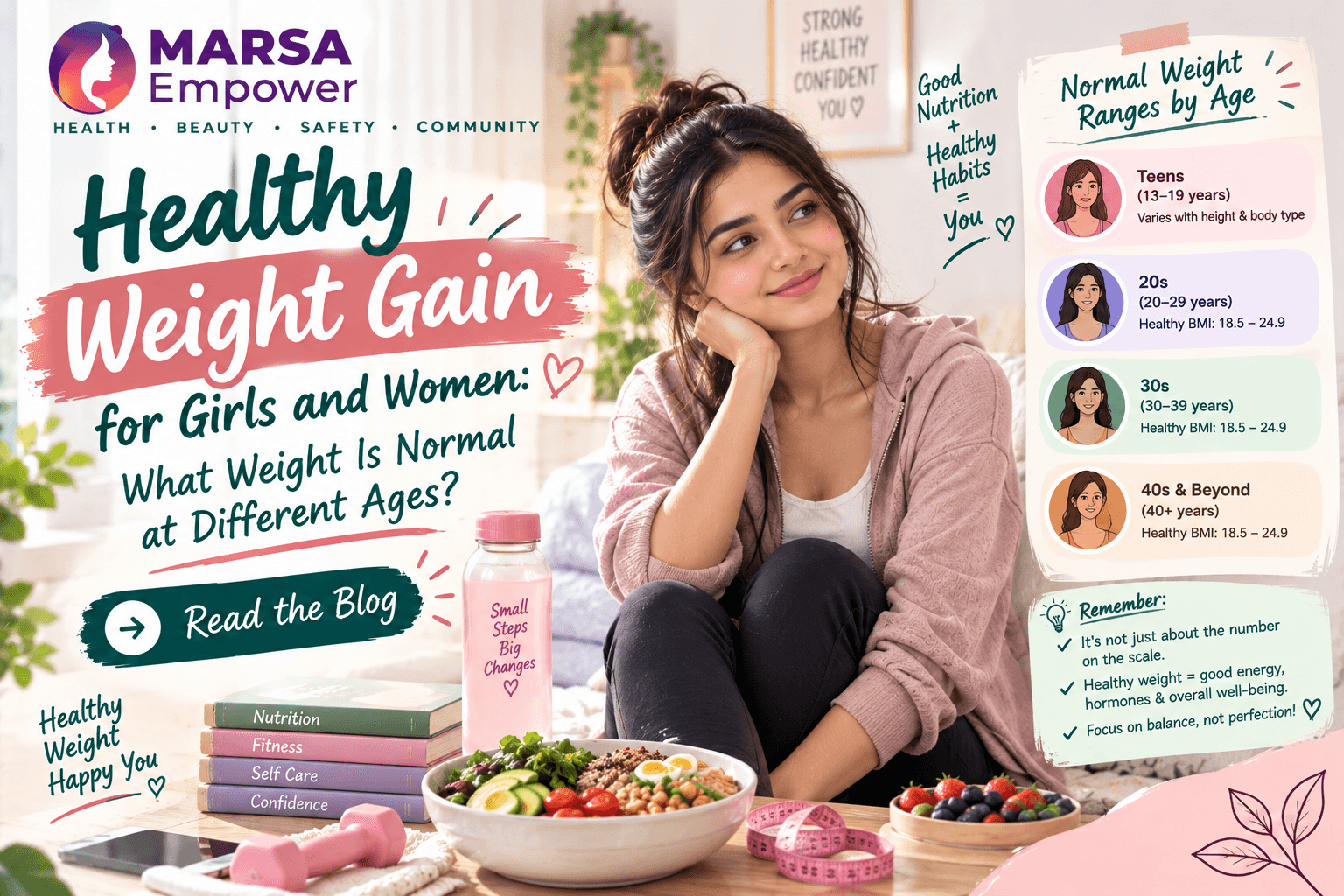
Explore age-specific guidelines and expert advice on healthy weight gain for girls and women. Learn what is considered normal at different life stages to support wellness.

Maryam Mumtaz
Co-Founder & CEO
13 min read•9/27/2026
Marsa Empower · Women's Health & Nutrition · For Girls & Women Aged 10 and Above · 13 min read
Most health conversations about body weight focus on losing it. Diet culture, social media, and even some health messaging are saturated with advice about reducing body weight, often at the expense of honest discussion about the women and girls for whom underweight status — not excess weight — is the real health concern.
For some women and girls, reaching and maintaining a healthy weight is a genuine challenge. Whether from a naturally lean constitution, insufficient caloric intake, high activity levels that outpace food intake, chronic illness, nutritional deficiencies, or the hormonal disruption that comes from being significantly underweight, the health consequences of being underweight are real and serious — and deserve the same clear, honest attention that overweight does.
This guide is for girls and women who want to understand what a healthy weight actually means at different ages and life stages, what being underweight involves and what it can cause, and how to gain weight in a way that nourishes the body rather than simply adding processed calories to a nutrient-deficient diet.
It is also a guide about the complexity of weight — how it cannot be captured by a single number, why comparison between women is neither useful nor valid, and why the goal of healthy weight is always health and function, not the achievement of a particular appearance or the matching of an external ideal.
A healthy weight is one that supports the body's normal biological functions, does not place additional burden on any organ system, and allows a person to live with the energy, physical capability, and hormonal health that underpin long-term wellbeing.
It is not a single fixed number. It is a range — and that range is specific to the individual, influenced by height, frame size, age, muscle mass, and developmental stage.
A healthy weight:
A healthy weight is not:
No. There is no single normal weight for any age category. Weight is highly individual — influenced by height, frame size, genetic inheritance, muscle mass, developmental stage, and many other factors. A healthy weight for a girl of 5 feet 2 inches is different from a healthy weight for a girl of 5 feet 7 inches at the same age.
Tables that list specific weight targets by age without reference to height are not clinically meaningful. They can cause unnecessary concern in women and girls who are outside the listed range for perfectly healthy reasons, and false reassurance in those who are technically within a weight range but have concerning body composition.
The appropriate frame for understanding healthy weight involves height-adjusted measurements — primarily Body Mass Index (BMI) alongside other indicators of health — combined with clinical context and individual assessment.
Body Mass Index (BMI) is the most widely used population-level indicator of weight status. It is calculated by dividing body weight in kilograms by height in metres squared.
The standard BMI categories for adults are:
| BMI | Category |
|---|---|
| Below 18.5 | Underweight |
| 18.5 to 24.9 | Normal range |
| 25.0 to 29.9 | Overweight |
| 30.0 and above | Obese |
BMI is a useful screening tool at the population level but has important limitations for individual assessment. It does not distinguish between weight from muscle and weight from fat — a very muscular woman may have a BMI in the overweight range with a healthy body composition. It does not account for body fat distribution. And for South Asian women, there is evidence that the health risks associated with excess body fat begin at lower BMI values than those established for European populations.
BMI is a starting point, not the whole picture.
For children and teenagers, standard adult BMI thresholds do not apply because BMI changes significantly throughout childhood and adolescence as the body grows. A BMI value that would indicate underweight in an adult woman might be entirely appropriate for a thirteen-year-old at a particular growth stage.
For girls under 18, weight status is assessed using BMI-for-age percentiles — comparing the individual's BMI to the distribution of BMIs for other girls of the same age and sex. A BMI below the 5th percentile is classified as underweight for age, and a BMI above the 85th percentile is classified as overweight for age.
This age-adjusted approach recognises that what is a healthy weight at eleven is different from what is a healthy weight at fifteen or seventeen.
Height directly determines what weight is appropriate for a body frame. Age matters because the body's composition changes throughout childhood, adolescence, and adulthood — with muscle mass, bone density, body fat percentage, and organ size all shifting in ways that affect what a healthy weight looks and feels like.
Two women of the same height and weight can have completely different health profiles depending on their body composition. A woman with more muscle mass and less fat is healthier at the same weight than a woman with less muscle and more fat. A woman who is clinically underweight but eating an otherwise excellent diet is in a different situation from one who is underweight because of severe caloric restriction.
Weight is one data point. The fuller picture includes energy levels, menstrual regularity, physical capability, nutritional status, bone density, and overall function — all of which matter alongside the number on the scale.
These are approximate healthy BMI-based weight ranges for reference at different height points. They are broad guidelines, not precise prescriptions. Individual healthy weight may fall slightly outside these ranges for entirely valid physiological reasons, and clinical assessment by a healthcare professional or dietitian provides a more personalised picture than general tables.
This age group is typically in the earlier stages of puberty, with significant variation in developmental stage between individual girls. Weight changes during this period are driven by growth spurts and the beginning of the hormonal changes of puberty. Girls in this age group should be gaining weight as part of normal healthy development, and any significant weight loss or failure to gain weight alongside growth warrants attention.
The range of healthy weights is very broad because the range of heights and developmental stages at this age is large. A girl who is tall and entering puberty earlier will appropriately weigh more than a girl of the same age who is shorter and earlier in her development.
This is typically the period of the most significant puberty changes for most girls — rapid height growth, breast development, widening of the hips, and an increase in body fat percentage that is a normal feature of female pubertal development.
Weight gain during this period is expected, normal, and necessary for healthy hormonal function. Girls who resist or restrict this weight gain risk impaired hormonal development, delayed or absent periods, reduced bone density, and the nutritional deficiencies of under-fuelling during a period of exceptionally high physiological demand.
Most girls will have achieved close to their final adult height by this stage, and growth has slowed. Weight may continue to shift as muscle mass develops and the adult body composition becomes more established. The weight range appropriate for this age group is similar to the young adult range.
For most women, a BMI between 18.5 and 24.9 at their height represents a healthy weight range, with the understanding that the limitations of BMI apply. The most clinically relevant indicators at this age are energy levels, menstrual regularity, physical capability, and the absence of nutritional deficiencies — not the achievement of a specific number.
Some modest weight increase through the thirties and early forties is common and does not automatically indicate poor health. Changes in body composition — with some reduction in muscle mass if activity is reduced and some increase in body fat — can occur even without weight change. Maintaining physical activity, particularly strength training, is particularly important for preserving the muscle mass that supports metabolic health and long-term function.
The hormonal changes of perimenopause and menopause alter body composition and fat distribution. Weight that was previously distributed relatively evenly may shift toward abdominal accumulation. These changes reflect real biological shifts, not personal failure, and the approach to managing them emphasises strength training, nutritional quality, and metabolic health rather than simply reducing weight.
The most fundamental determinant of what weight is healthy for a given individual. A taller woman with a larger frame will have a higher healthy weight than a shorter woman with a smaller frame at the same BMI.
Genetic factors account for approximately 40 to 70 percent of the variance in body weight between people. Women from families that tend toward leaner builds may find maintaining weight genuinely challenging despite adequate intake. Recognising the genetic component removes inappropriate self-blame from weight challenges.
The developmental stage of a teenage girl directly affects her weight, and appropriate weight gain during puberty is a sign of healthy development rather than a problem to prevent or reverse.
High levels of physical activity — particularly endurance sports, dance, and gymnastics — significantly increase caloric expenditure. Women and girls who are very physically active need higher caloric intake to maintain a healthy weight than those who are less active. When intake does not keep pace with expenditure, weight falls below healthy range.
Several hormonal conditions affect weight. Hyperthyroidism significantly increases metabolic rate, producing weight loss despite adequate intake. Type 1 diabetes and conditions involving malabsorption reduce the energy available from food eaten. Eating disorders are associated with significant unintentional as well as intentional weight loss.
Insufficient total caloric intake — from meal skipping, restricted eating, inadequate access to food, or poor appetite from illness — directly reduces weight below healthy range.
Chronic stress and insufficient sleep affect appetite and the hormonal systems governing energy balance. Some women lose weight significantly during prolonged high-stress periods from the combination of reduced appetite and elevated cortisol affecting the body's energy use.
Pregnancy produces significant and expected weight gain. Postpartum, post-illness, and other recovery periods may produce weight changes that require specific nutritional support.
Being underweight — typically defined as a BMI below 18.5 in adults, or below the 5th percentile for age in children and teenagers — means that body weight is insufficient to support the body's normal biological functions adequately.
The health consequences of being underweight include:
Hormonal disruption. Body fat produces oestrogen. When body fat falls below a critical threshold, oestrogen production falls — disrupting or stopping the menstrual cycle (hypothalamic amenorrhoea), reducing bone density, impairing fertility, and affecting mood and cognitive function.
Bone density loss. The combination of low oestrogen and insufficient nutritional intake for bone maintenance produces reduced bone mineral density that increases fracture risk — with consequences that extend decades into the future.
Impaired immune function. The immune system requires adequate protein, energy, and micronutrients to produce immune cells and mount effective responses to infection. Underweight women typically have measurably impaired immune function and are more susceptible to and slower to recover from infections.
Cardiovascular changes. Significant underweight can cause cardiac muscle loss, electrolyte abnormalities, and heart rhythm disturbances — particularly in the context of severe restriction.
Nutritional deficiencies. Women who are underweight often have multiple co-existing nutritional deficiencies — particularly iron, calcium, vitamin D, zinc, and B vitamins — that further compound the health consequences of low body weight.
Losing weight without trying — without any change in diet or activity — always warrants investigation. Unintentional weight loss may indicate an underlying medical condition including hyperthyroidism, diabetes, malabsorption, or other conditions affecting energy metabolism or nutrient absorption.
Persistent fatigue that is disproportionate to activity level or sleep, particularly when accompanied by other signs of insufficient intake, may indicate that caloric intake is not meeting the body's energy demands.
Physical weakness and dizziness — particularly when standing up quickly, during light physical activity, or after a period without food — may indicate insufficient calories and nutrient stores for the body's basic physiological demands.
A consistently poor appetite that makes it difficult to eat adequate amounts — whether from stress, illness, depression, anxiety, or other causes — can perpetuate a cycle of insufficient intake and weight below the healthy range.
One of the most clinically significant signs that body weight or fat percentage has fallen too low is menstrual disruption — cycles that become irregular, very light, or stop altogether (amenorrhoea). Losing your period without pregnancy is not a benign side effect of being lean — it is the body's signal that energy availability is insufficient to support the energy-costly reproductive system. This is known as hypothalamic amenorrhoea when driven by low energy availability, and it carries real consequences for bone density and long-term hormonal health.
Despite regular exercise, being unable to build or maintain muscle mass may indicate that protein and caloric intake are insufficient to support the anabolic processes of muscle building alongside energy demands.
Recurrent infections, slow recovery from illness, or feeling immune-compromised may reflect the impaired immune function associated with underweight and inadequate nutritional status.
Healthy weight gain is not about eating as much processed, calorie-dense food as possible as quickly as possible. It is about consistently eating more energy than the body expends, from nutritious sources that provide the protein, healthy fats, micronutrients, and energy the body needs — building both fat stores and, where appropriate, muscle mass.
The foundation of healthy weight gain is nutrient-dense food — foods that provide a significant amount of vitamins, minerals, and macronutrients alongside their calories. This differs from calorie-dense junk food, which provides energy without the nutritional value the body needs.
Nutrient-dense high-calorie foods include: full-fat dairy products, eggs, oily fish, avocado, olive oil, nuts and nut butters, legumes, whole grains, and lean meats. These provide energy alongside the protein, healthy fats, vitamins, and minerals that the body needs to function well and to build healthy tissue.
Protein is the building material of muscle tissue. For women and girls who are underweight and want to gain healthy weight — including muscle mass alongside appropriate fat stores — adequate protein intake is essential. Include a quality protein source at every meal: eggs, chicken, fish, lentils, dairy, tofu, or nuts.
A rough guide: approximately 1.2 to 1.6 grams of protein per kilogram of current body weight per day supports muscle building in women engaged in strength exercise alongside increased caloric intake.
Fat is the most calorie-dense macronutrient (nine calories per gram compared to four for carbohydrates and protein), making it the most efficient way to increase caloric intake without dramatically increasing food volume. Choosing healthy fat sources — olive oil, nuts and nut butters, avocado, eggs, full-fat yogurt, fatty fish — adds significant calories while providing the essential fatty acids, fat-soluble vitamins, and other nutrients the body needs.
For women and girls who struggle to eat enough at mealtimes — from poor appetite, limited meal time, or satiety from high-fibre foods — adding nutritious, calorie-dense snacks between meals can meaningfully increase total daily intake without requiring larger portions at main meals.
Effective snack additions: a handful of mixed nuts or nut butter on whole grain bread, a glass of full-fat milk or a smoothie with milk, yogurt, and banana, a boiled egg with cheese, dates and almonds, or a small portion of avocado.
Consistency of meal timing supports appetite regulation and ensures that food intake is distributed through the day rather than concentrated in one large meal that is difficult to complete. Eating three main meals and two to three snacks daily is a practical structure for increasing total intake.
Liquids add calories without producing the same satiety as solid food, making them useful for increasing total intake when appetite is limited. Nutritious high-calorie beverages include full-fat milk, fortified plant milks, smoothies made with milk, yogurt, banana, nut butter, and oats, and traditional drinks like doodh (milk with added dates or dried fruit) that are calorie-dense and nutritious.
Avoid replacing meals with sugary soft drinks or fruit juices that add calories without nutritional value.
Whole grain carbohydrates — brown rice, whole wheat atta, oats, lentils, and other legumes — provide the energy needed to fuel daily activity and support the protein-sparing effect that allows dietary protein to be used for muscle building rather than energy provision.
Strength training — using bodyweight, resistance bands, or weights — provides the specific stimulus that signals the body to build muscle rather than simply storing additional dietary energy as fat. Women who aim to gain healthy weight, particularly muscle mass, benefit significantly from adding strength training two to three times per week alongside increasing caloric intake.
This combined approach (increased caloric intake alongside strength training) produces healthier weight gain — more lean muscle, less disproportionate fat storage — than caloric increase alone.
Growth hormone — the primary anabolic (tissue-building) hormone — is secreted primarily during the deep sleep stages of the night. Adequate, quality sleep (seven to nine hours for adults, eight to ten for teenagers) is not only a recovery mechanism but an active driver of the muscle building and tissue repair that produce healthy weight gain.
Eggs are one of the most complete nutritional packages available — providing protein, healthy fat, fat-soluble vitamins, iron, zinc, and choline in a versatile, affordable form. Full-fat milk, yogurt, cheese, and paneer provide calcium, protein, and fat in forms accessible in Pakistani households.
Chicken, beef, lamb, and fatty fish provide haem iron, protein, zinc, and B vitamins alongside their caloric contribution. Including a portion of quality protein at every meal is the most impactful change for women working to build muscle alongside weight gain.
Calorie-dense, nutritious, and easy to include in snacks and meals. Almonds, walnuts, cashews, pumpkin seeds, and peanut butter or almond butter all provide protein, healthy fat, magnesium, and zinc alongside their caloric density.
Brown rice, whole wheat atta, oats, and barley provide complex carbohydrates, fibre, B vitamins, iron, and zinc. Choosing whole grain over refined alternatives provides better nutritional quality alongside comparable or greater caloric density.
Fresh fruits provide vitamins, antioxidants, and moderate calories. Dried fruits (dates, raisins, apricots, figs) are significantly more calorie-dense than their fresh equivalents — a small serving of dates provides meaningful calories alongside fibre, potassium, and iron. Bananas are one of the most accessible calorie-dense fresh fruits and pair well with yogurt or nut butter in snacks.
Lentil daal, chickpea curries, kidney beans — legumes provide plant protein, iron, zinc, fibre, and complex carbohydrates. They are a daily dietary staple in most Pakistani households and an excellent base for nutritious, calorie-adequate meals.
Avocado provides monounsaturated fat, potassium, folate, and vitamins C, E, and K alongside its caloric density. Olive oil and ghee in appropriate amounts add healthy fats to cooking and increase the caloric density of meals without requiring larger food volumes.
The most important context for teen girls seeking healthy weight gain is this: the weight changes of puberty are not only acceptable but biologically necessary.
The increase in body fat that occurs during puberty is driven by oestrogen and is essential for normal hormonal function — including the establishment and maintenance of regular periods. Girls who resist these changes through dietary restriction often experience the consequences of hormonal disruption (absent or irregular periods, reduced bone density, impaired mood) that demonstrate what the body needs the additional weight for.
Teen girls who are genuinely underweight — whether from constitutional leanness, insufficient dietary intake, high athletic demands, or illness — should focus on:
Eating three balanced meals every day without skipping. Including protein at every meal. Adding nutritious snacks between meals. Including calorie-dense healthy fat sources (nuts, avocado, olive oil, full-fat dairy). Drinking fortified milk or nutritious smoothies if solid food volume is challenging. Engaging in strength exercise to build muscle alongside appropriate fat stores. Ensuring the nutritional adequacy of the diet — sufficient iron, calcium, vitamin D, zinc, and B vitamins — not only its caloric adequacy.
Teen girls should not use weight-gain supplements, protein powders, or commercial weight-gain products without guidance from a healthcare professional or registered dietitian. These products are not tested or approved for adolescent use and their safety in this context is not established.
Adult women working to reach or maintain a healthy weight should follow the same nutritional principles as teen girls — nutrient-dense foods, adequate protein, consistent meals, healthy fat inclusion, strength training — with the understanding that recovery from significant underweight takes time and is best supported by professional guidance.
For women with a history of disordered eating, significant caloric restriction, or eating disorders, weight restoration should ideally be overseen by a healthcare team including a physician and a registered dietitian who specialises in eating disorder recovery. The physiological and psychological complexity of recovery from significant restriction is beyond what a nutritional guide can address.
For women who are simply naturally lean and would like to increase their weight toward the healthy range, the practical approach is consistent: eat more than current intake, choose calorie-dense nutritious foods, add strength training, protect sleep, and track progress over weeks rather than days.
Commercial fried food, packaged sweets, sugary drinks, and highly processed snacks provide calories without the protein, vitamins, minerals, and healthy fats that support healthy weight gain. They may produce weight increase but at the cost of nutritional quality that undermines the health goal of healthy weight.
Skipping meals and then trying to compensate with a single large meal produces worse weight gain results than consistent, regular, smaller meals across the day.
Many commercially marketed weight-gain supplements, protein powders, and mass-gaining products are not regulated for safety in women or in teenagers. Their ingredients, doses, and interactions with other medications or conditions are not verified, and their use without medical guidance is not appropriate.
Forcing food intake to the point of discomfort creates a negative association with eating and is unlikely to be sustainable. The goal is consistent, moderate increases in intake over time — not dramatically forcing large portions.
Extremely high-fat or high-protein dietary approaches recommended in some online content are not appropriate or evidence-supported for healthy weight gain in women or teenagers.
For women who are underweight, the appropriate rate and total amount of weight gain is highly individual and depends on the degree of underweight, current health status, age and developmental stage, and underlying cause of the low weight.
A general guide for sustainable healthy weight gain is approximately 0.25 to 0.5 kg per week — slow enough to support primarily lean mass gain (rather than disproportionate fat storage) and slow enough to be sustainable over months rather than a dramatic short-term change.
For teenage girls in active growth phases, slightly faster weight gain is appropriate and expected.
A healthcare professional or registered dietitian provides the most accurate and individualised guidance on appropriate weight targets and timelines based on a full assessment.
Weigh yourself once per week at the same time of day (morning, after using the bathroom, before eating) and in the same clothing. Weekly measurement reduces the day-to-day noise of normal fluid fluctuation and provides a more meaningful trend line.
Track alongside energy levels, mood, sleep quality, and for women of menstruating age, menstrual cycle regularity. Returning menstrual periods after a period of amenorrhoea is one of the most meaningful indicators that weight has reached a level that supports normal hormonal function.
Do not weigh daily — the day-to-day variability of two or more kilograms from normal fluid balance creates misleading information that produces unnecessary anxiety and does not reflect true weight change.
Unintentional weight loss — losing weight without any deliberate dietary change — always warrants investigation. The most common medical causes include hyperthyroidism, uncontrolled diabetes, coeliac disease (which impairs nutrient absorption from food), inflammatory bowel disease, chronic infections, and malignancy.
Any woman or girl who notices consistent unintentional weight loss — particularly alongside other symptoms like fatigue, increased appetite with weight loss, changed bowel habits, fever, or night sweats — should seek medical evaluation promptly.
Speak with a healthcare professional if:
BMI is below 18.5 (in adults) or below the 5th percentile for age (in teenagers). Periods are irregular or absent without pregnancy — this always warrants medical assessment. Unintentional weight loss has occurred without dietary change. Significant fatigue, weakness, dizziness, or frequent illness accompanies low weight. There are concerns about a teenager's relationship with food, eating, or body image. Weight has not responded to appropriate dietary increases over several months. There is any suspicion of an eating disorder — in which case, a healthcare team with eating disorder expertise is the appropriate support rather than a nutrition guide alone.
Marsa's Smart Nutrition resources explain the specific foods and nutrients most relevant for healthy weight in women and girls at different life stages — providing practical, accessible guidance on calorie-dense nutritious foods, protein sources, and meal planning that supports both weight goals and nutritional quality.
Marsa's Health Hub allows women to track their menstrual cycle alongside energy levels and other health patterns. For women who have been underweight, the return of regular periods after weight restoration is one of the most meaningful health indicators — and tracking cycle regularity over time documents this recovery clearly.
Tracking energy levels, sleep quality, mood, and physical wellbeing alongside weight in Marsa's Health Hub provides the comprehensive picture of how the body is responding to nutritional changes — not just the number on the scale.
Marsa's AI health guidance through Digital Doctors provides educational information on healthy weight, nutritional approaches to weight gain, and when professional medical or dietitian assessment is warranted — helping women access the information they need to understand their situation and take appropriate action.
Important note. Marsa Empower is a health education and wellness companion. For significant underweight, suspected eating disorders, or medically indicated weight restoration, a healthcare professional — including a physician and ideally a registered dietitian — provides the individualised assessment and monitoring that a digital platform cannot substitute for.
What is a healthy weight for a teenage girl?
Healthy weight for a teenage girl depends on her height and age — there is no single healthy weight for all girls of a given age. Healthcare providers use BMI-for-age percentiles, which compare a girl's BMI to other girls of the same age and sex. A BMI between the 5th and 85th percentile for age is generally within the healthy range. A healthcare professional or school nurse can provide an accurate assessment for a specific teenager.
What is a healthy weight for an adult woman?
For most adult women, a BMI between 18.5 and 24.9 — calculated from height and weight — is considered within the healthy range, though BMI has limitations and body composition matters alongside the number. A healthcare professional provides a more complete assessment that considers health indicators beyond BMI.
How can I gain weight without eating unhealthy food?
Focus on calorie-dense nutritious foods: full-fat dairy, eggs, nuts and nut butters, avocado, olive oil, fatty fish, whole grains, lentils, and dried fruits. Add healthy snacks between meals and consider nutritious smoothies made with milk, yogurt, nut butter, and banana. Include strength training to build muscle alongside fat stores.
How many meals should I eat to gain weight?
Three main meals and two to three nutritious snacks per day is a practical and effective structure for most women working to increase their intake. Eating consistently throughout the day prevents the prolonged gaps that reduce total daily intake.
Can exercise help me gain weight?
Strength training stimulates muscle building and is an important part of healthy weight gain — it helps ensure that gained weight includes muscle mass rather than only fat. However, exercise also increases caloric expenditure, so women and girls working to gain weight who add exercise must also increase their food intake to account for the added expenditure.
Why am I losing weight without trying?
Unintentional weight loss has several possible medical causes including hyperthyroidism, diabetes, coeliac disease, inflammatory bowel disease, and others. Any unintentional weight loss — losing weight without any deliberate dietary change — warrants prompt medical evaluation to identify and address the cause.
Can being underweight affect periods?
Yes, significantly. Body fat below a critical threshold reduces oestrogen production, which can disrupt or stop the menstrual cycle (hypothalamic amenorrhoea). Loss of periods from underweight or low energy availability is not a benign side effect — it carries real consequences for bone density, fertility, and long-term hormonal health. Returning to a healthy weight typically restores menstrual function over several months.
How long does healthy weight gain take?
Sustainable healthy weight gain occurs at approximately 0.25 to 0.5 kg per week. Reaching a healthy weight from significantly underweight may take several months to over a year at this rate — which is appropriate and preferable to faster gain that is harder to maintain and less likely to produce healthy body composition. Progress is measured in weeks to months, not days.
Healthy weight is not a single number. It is a range that is specific to each individual woman and girl — shaped by height, age, developmental stage, genetics, and the body's functional needs. And it matters not for how it looks, but for what it enables: normal hormonal function, adequate bone density, sufficient energy for daily life, regular menstrual cycles, and the nutritional reserves to stay healthy across different life stages and demands.
For women and girls who are below a healthy weight, the path to healthy weight gain is consistent, nutrient-dense eating — not processed calories, not extreme supplements, and not dramatic short-term overconsumption, but reliable, repeated nourishment from quality food sources alongside the strength training that helps build the healthy body composition the weight increase is meant to support.
If you are concerned about your weight, your periods, your energy, or your relationship with food, speak with a healthcare professional or registered dietitian. These concerns are worth professional attention — not private management alone.
You deserve to be nourished. Your body was built to function well. And giving it what it needs to do that is one of the most important health investments you can make.
Educational Disclaimer
This article is for educational and awareness purposes only. It does not constitute medical or nutritional advice. For personalised assessment of healthy weight, nutritional guidance for weight gain, or any concerns about underweight, eating disorders, or related health conditions, please consult a qualified healthcare professional or registered dietitian.
Note on Eating Disorders
If you or someone you know may have an eating disorder, please seek support from a qualified healthcare professional with eating disorder expertise. Eating disorders have serious health consequences and benefit from specialist professional support rather than self-directed nutritional management alone.
Marsa Empower | Care. Safety. Growth.
Visit marsaempower.com to track your menstrual cycle, energy, and health patterns, access nutrition guidance, and explore educational resources built for every stage of a woman's life.
Medical Disclaimer
This article is for general informational and educational purposes only and is not a substitute for professional medical advice, diagnosis, or treatment. Always seek the advice of a qualified healthcare provider with any questions you may have regarding a medical condition. Never disregard professional medical advice or delay seeking it because of something you have read on MARSA Empower.
Written By
Maryam Mumtaz
Co-Founder & CEO
Co-Founder of MARSA Empower who leads the visual and strategic evolution of the platform. Maryam bridges technical complexity with human-centric design, architecting the team's official roadmap and ensuring MARSA effectively addresses the real-world needs of women. With deep expertise in agentic AI, full-stack development, and UI/UX design, she has delivered 50+ projects for 30+ satisfied clients.
Enjoyed this story?