One App. Every Woman.
One App. Every Woman.
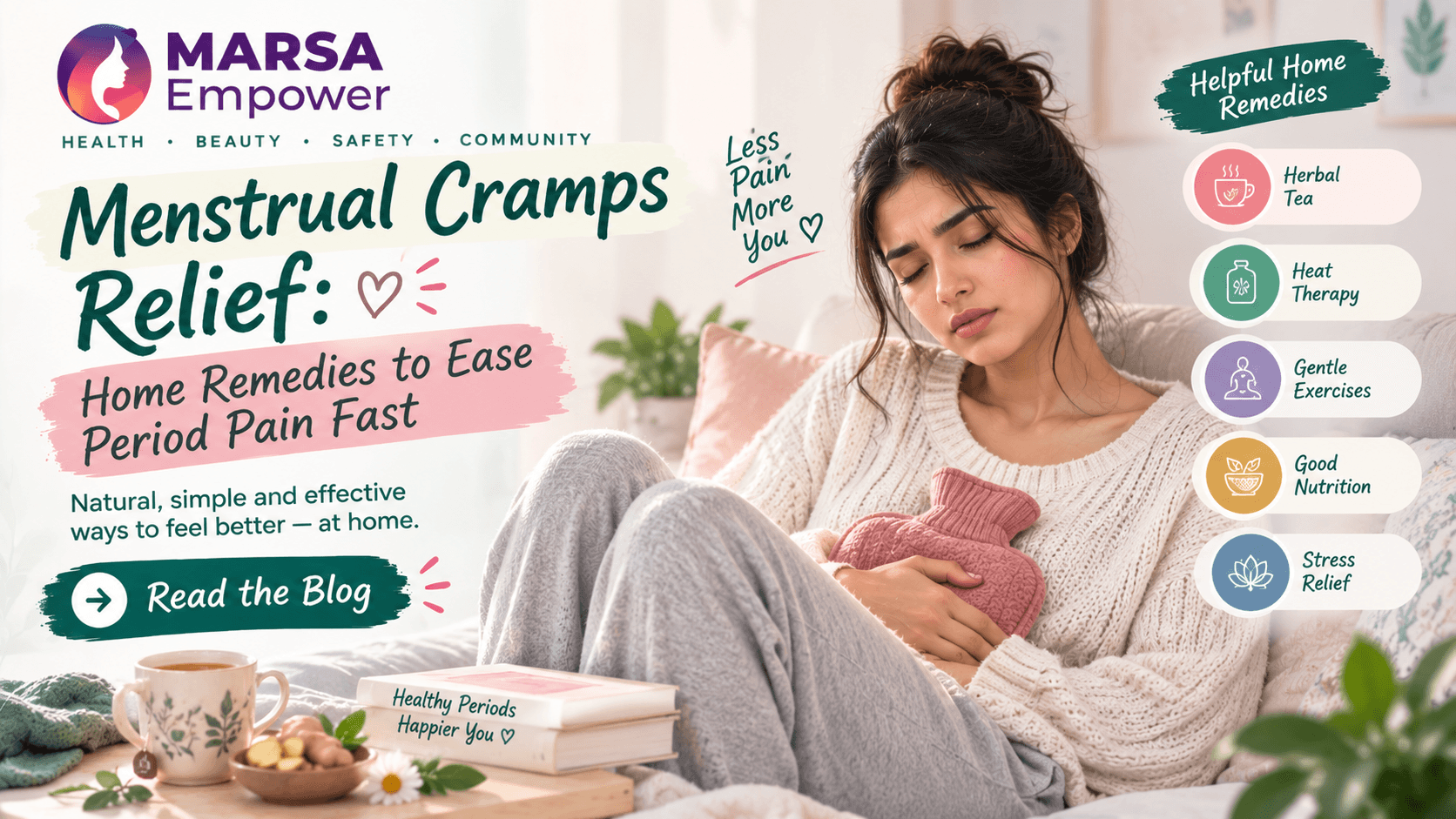
Suffering from menstrual cramps? Our comprehensive guide offers effective home remedies to ease the pain swiftly. Learn from expert insights and practical tips for fast relief.

Maryam Mumtaz
Co-Founder & CEO
12 min read•9/25/2026
Marsa Empower · Women's Menstrual Health · For Girls & Women Aged 13 and Above · 12 min read
Menstrual cramps are one of the most common experiences in women's health — and one of the most consistently dismissed. Millions of women and girls go through days of significant lower abdominal pain, lower back ache, nausea, and exhaustion every month, and are routinely told that this is simply what periods feel like and that they should manage as best they can.
This dismissal has real consequences. Women endure years of monthly pain that interferes with school attendance, work performance, and daily life while believing that nothing can help. And for some, severe period pain that could be investigated and treated is instead accepted as an unavoidable feature of womanhood — delaying diagnosis of conditions like endometriosis by an average of seven to ten years.
This guide provides what women actually need: a clear explanation of why period pain happens, what genuinely helps it, the evidence behind the most effective home remedies, what to avoid, when over-the-counter medication is appropriate and how to use it most effectively, and — critically — when period pain is telling you something more than a normal painful period.
Because while period pain is common, severe, debilitating period pain is not something every woman simply has to accept.
Menstrual cramps — medically called dysmenorrhoea — are the painful muscle contractions that occur during menstruation as the uterus sheds its endometrial lining. They are the most common gynaecological complaint among women of reproductive age.
There are two categories:
Primary dysmenorrhoea refers to period pain without an underlying medical cause — the pain arises directly from the normal physiological process of menstruation. This is the most common type, particularly in younger women and teenagers. It typically begins within one to two years of the first period.
Secondary dysmenorrhoea refers to period pain caused by an underlying medical condition — most commonly endometriosis, adenomyosis, uterine fibroids, or pelvic inflammatory disease. This type tends to develop after years of relatively normal periods, or is characterised by pain more severe than typical menstrual cramping. It often requires specific medical management of the underlying condition rather than general pain relief alone.
Understanding the mechanism of period pain helps explain why certain remedies work and others do not.
During menstruation, the endometrial lining of the uterus produces compounds called prostaglandins — specifically prostaglandin E2 and F2alpha. These prostaglandins stimulate the smooth muscle of the uterus to contract — the contractions that cause the lining to shed.
The stronger and more frequent these contractions, the more blood flow to the uterus is temporarily restricted, and the more prostaglandin-driven inflammation surrounds the uterine muscle. Both the contractions and the reduced blood flow produce the cramping pain of menstruation.
This is why certain foods, supplements, and medications help period pain — and why others do not.
Non-steroidal anti-inflammatory drugs (NSAIDs) like ibuprofen and naproxen work specifically against prostaglandins — they inhibit the enzymes (COX-1 and COX-2) that produce prostaglandins in the first place. Less prostaglandin means less uterine contraction, less restricted blood flow, and less pain.
Omega-3 fatty acids (from fish, walnuts, and flaxseed) compete with arachidonic acid — the precursor from which prostaglandins are made — reducing the amount of prostaglandin produced in the first place when consumed regularly over weeks.
Heat increases blood flow to the uterus and reduces the muscle spasm of contractions — directly addressing the restricted blood flow component of the pain.
Exercise increases blood flow, reduces prostaglandin levels through its anti-inflammatory effects, and triggers endorphin release that modulates pain perception.
The most characteristic symptom — a cramping, aching, or throbbing pain in the lower abdomen, typically concentrated centrally below the navel. In primary dysmenorrhoea, it usually begins one to two days before the period starts and peaks on the first or second day of menstrual flow, then gradually subsides.
The same prostaglandins that cause uterine contractions can affect the muscles and ligaments of the lower back and pelvis, producing the aching lower back pain that many women experience alongside abdominal cramps. The pain may feel like a deep, dull ache or a more intense throbbing sensation across the lower back.
Prostaglandins can also affect the muscles of the inner thighs, producing pain that radiates down the legs from the pelvic area. Some women describe heavy, aching thigh pain particularly on the first day of their period.
Prostaglandins affect more than just the uterus — they also stimulate smooth muscle in the digestive tract. High prostaglandin levels can produce nausea and sometimes vomiting alongside menstrual cramps. This is the physiological explanation for the nausea that many women experience on the first day of their period, even in the absence of a large amount of pain medication.
Hormonal changes during menstruation — particularly the drop in oestrogen that precedes and accompanies the period — can trigger headaches or migraines in susceptible women. Pain medication effects on prostaglandins can also influence vascular function in ways that affect headache patterns.
The physiological effort of menstruation — the immune activity, the hormonal shift, the discomfort of cramping — combined with the sleep disruption that often accompanies painful periods produces significant fatigue on the heaviest days. Fatigue is also worsened in women with iron deficiency from heavy periods.
Prostaglandins affect the smooth muscle of the digestive tract, increasing motility and often producing looser stools, increased bowel frequency, or diarrhoea in the first one to two days of the period. This is physiological — not caused by something eaten — and typically resolves as prostaglandin levels fall.
The following remedies have varying degrees of evidence supporting them, ranging from strong and well-established to modest but consistently reported. They are listed in order of their evidence strength and practical accessibility.
Heat applied to the lower abdomen is one of the most consistently effective and most consistently recommended non-pharmacological interventions for menstrual cramps. A clinical trial published in Evidence-Based Nursing found that a heat patch applied to the lower abdomen was as effective as ibuprofen for reducing period pain severity.
Heat works through two mechanisms: it relaxes the smooth muscle of the uterus, reducing the intensity of contractions; and it increases blood flow to the uterine area, addressing the restricted circulation that contributes to cramping pain.
A warm water bottle or heat pad applied to the lower abdomen for 15 to 20 minutes provides meaningful relief for most women. Apply to the lower back as well if back pain is prominent. The temperature should be comfortably warm — not so hot as to risk skin irritation or burns through direct prolonged contact.
A warm towel is an accessible alternative when a hot water bottle is not available. Warming a towel with hot water, wringing it out, and applying it to the lower abdomen provides similar thermal benefit at no cost.
A warm bath provides the same thermal benefit as a hot water bottle, with the additional benefit of whole-body muscle relaxation, psychological comfort, and the opportunity to be away from screens and stress during the most uncomfortable period days. Some women find that adding Epsom salts (magnesium sulphate) to the bath provides additional muscle-relaxing benefit.
Exercise is counterintuitive as a period pain remedy — it is the last thing many women feel like doing when cramping — but it is consistently supported by evidence for reducing dysmenorrhoea severity.
The mechanisms include: increased blood flow to the pelvic region, reducing the ischaemia (restricted blood flow) component of cramping; endorphin release, which modulates pain perception; and a reduction in prostaglandin levels through regular exercise's anti-inflammatory effects.
The evidence suggests that gentle to moderate exercise during the period produces meaningful benefit — not intense or high-impact training, which may worsen pain in some women, but light walking, yoga, swimming, or gentle stretching. Even a twenty-minute gentle walk can reduce cramping intensity for many women.
Yoga poses specifically relevant to menstrual cramps include child's pose, reclined bound angle pose (supta baddha konasana), legs-up-the-wall, and supine twist — all of which open the hips and pelvis gently while encouraging the parasympathetic (rest-and-digest) nervous system response that counters the pain-amplifying sympathetic activation of severe cramping.
Gentle circular massage of the lower abdomen — using the fingertips or the heel of the palm in slow, light circular movements — can provide meaningful relief during cramping. A small study showed that aromatherapy massage (using a diluted blend of essential oils including lavender, marjoram, and clary sage in a carrier oil) significantly reduced the severity and duration of menstrual cramps compared to no treatment. Even massage without essential oils provides benefit through its direct muscle-relaxing and circulation-improving effects.
Massage of the lower back, particularly using both thumbs in firm circular motions along the sides of the lumbar spine, addresses the lower back pain component of dysmenorrhoea effectively.
Dehydration worsens cramping by reducing blood volume and impairing the efficient clearing of prostaglandins from the uterine tissue. Staying well hydrated — drinking at least six to eight glasses of water daily, and more if sweating or in hot weather — supports blood flow to the uterus and reduces the bloating and water retention that can worsen the uncomfortable physical experience of menstruation.
Warm or hot water is often more soothing than cold during cramping — warm fluids relax smooth muscle and improve circulation in a similar way to external heat.
Heavy, greasy, or very spicy meals can worsen nausea and digestive discomfort during a painful period. Light, warm, balanced meals — including adequate protein, complex carbohydrates, and vegetables — provide the nutritional support the body needs for menstruation without the digestive burden of a heavy or highly processed meal.
Ginger has specific evidence for reducing menstrual pain — it contains compounds (gingerols and shogaols) that inhibit prostaglandin synthesis. Several clinical trials have found ginger (as a standardised supplement or as fresh ginger tea) comparable to ibuprofen for reducing primary dysmenorrhoea severity. Two to three cups of fresh ginger tea during the period is a practical and evidence-based addition to menstrual pain management.
Chamomile tea has evidence for reducing menstrual cramp severity through its anti-spasmodic and anti-inflammatory properties, alongside its well-known calming and sleep-supporting effects.
Fennel seeds, used widely in South Asian households, have been studied for dysmenorrhoea with positive results — fennel extract has shown reduction in menstrual pain in clinical trials. A cup of fennel tea during painful periods is consistent with both traditional practice and emerging clinical evidence.
Sleep deprivation worsens pain perception — the brain's pain-modulating systems are supported by adequate sleep and impaired by its absence. Prioritising sleep during the most painful period days, and creating conditions for comfortable sleep (warm blankets, a comfortable position with a pillow between the knees, gentle heat at the lower abdomen), directly reduces the experience of period pain.
Slow, diaphragmatic breathing — breathing deeply into the lower abdomen with a long, slow exhale — activates the parasympathetic nervous system, counteracting the sympathetic activation that amplifies pain perception. This is not a placebo effect: parasympathetic activation is physiologically calming, reduces cortisol, decreases muscle tension (including uterine muscle tension), and alters the brain's processing of pain signals.
A simple breathing practice during severe cramping: breathe in slowly for four counts, hold for two counts, breathe out for six to eight counts. Repeat for five to ten minutes. This can be used alongside heat and gentle positioning to manage severe cramp episodes without immediately reaching for medication.
Ginger — anti-inflammatory, anti-nausea, and specifically anti-prostaglandin. As tea, grated into warm water with honey, or in cooking.
Turmeric — curcumin has anti-inflammatory effects that may reduce the prostaglandin-driven inflammation of menstruation. Add to milk, tea, or cooking.
Fennel — anti-spasmodic effects supported by clinical evidence for dysmenorrhoea. As a tea or eaten with meals.
Dark chocolate (70 percent or higher) — provides magnesium, which supports uterine muscle relaxation and has evidence for reducing PMS and period pain.
Pumpkin seeds and almonds — rich in magnesium, relevant for the same reasons.
Oily fish, walnuts, chia seeds, flaxseeds — omega-3 fatty acids that reduce prostaglandin production when consumed consistently throughout the month.
Whole grains, lentils, and legumes — complex carbohydrates that support stable blood sugar, reducing the cortisol fluctuations that can worsen pain perception.
Warm soups, daal, and broths — easy to digest, warming, hydrating, and nutritious during the often low-appetite days of a heavy period.
Caffeine causes vasoconstriction (narrowing of blood vessels) that can worsen the restricted blood flow to the uterus during cramping. It can also worsen nausea and disrupt sleep. Reducing chai, coffee, and caffeinated drinks to one or two cups on the most painful days — and replacing the remainder with warm water, herbal teas, or ginger tea — may reduce cramping intensity for some women.
High sodium intake promotes water retention, which worsens the bloating and pelvic pressure that compounds menstrual discomfort. Processed foods, packaged snacks, and heavily salted foods are the primary sodium contributors in most diets. Moderating these during the perimenstrual period reduces the bloating component of period discomfort.
Smoking has documented associations with increased menstrual pain severity. Nicotine causes vasoconstriction, reducing blood flow to the uterus and worsening the ischaemic component of cramping pain.
Low blood sugar worsens pain perception, reduces energy for managing discomfort, and impairs the mood regulation needed to cope with a painful period. Eating regular, balanced meals — even when appetite is reduced by nausea — provides the nutritional support the body needs during menstruation.
As described above, sleep deprivation worsens pain sensitivity and reduces the body's ability to modulate and tolerate pain. Protecting sleep during the most painful period days is a direct pain management strategy.
Over-the-counter pain medications are among the most effective management options for primary dysmenorrhoea, and using them appropriately — at the right time and at the right dose — produces significantly better results than taking them only when pain is already severe.
NSAIDs (ibuprofen, naproxen, mefenamic acid) are the most effective class for period pain specifically — because they work directly against prostaglandins, the mechanism driving the pain, rather than simply masking pain signals. They reduce both the pain intensity and the uterine contractions that produce it.
The most important timing point: NSAIDs are most effective when started before the pain peaks — either one to two days before the expected period start (for women with predictable cycles) or at the very first sign of cramping or flow. Taking ibuprofen at 400 mg every six to eight hours (not exceeding the daily limit on the package), starting before pain is severe, consistently outperforms taking it only when pain becomes unbearable.
Paracetamol (acetaminophen) is less effective for period pain specifically because it does not inhibit prostaglandins. It can provide some mild pain relief and may be appropriate for women who cannot take NSAIDs (due to stomach sensitivity, kidney conditions, or other contraindications), but should not be the first-choice recommendation for dysmenorrhoea.
Important: Always follow the dosage instructions on the packaging. Do not take ibuprofen or other NSAIDs on an empty stomach — food reduces stomach irritation. If one NSAID is not effective after two to three cycles of appropriate use, a different NSAID may work better for that individual, and a healthcare provider can advise on alternatives. Women with stomach ulcers, kidney conditions, or other contraindications should discuss alternatives with a healthcare professional.
Menstrual cramps are often most severe in the first few years after the first period — when prostaglandin production is often highest and the hormonal axis is still establishing its mature rhythm. Many teenage girls experience their most painful periods in their mid-teens.
For teenage girls, period pain management deserves the same evidence-based approach as for adult women: heat applied to the lower abdomen, gentle movement, appropriate use of age-appropriate doses of ibuprofen when needed, omega-3 rich diet, and adequate sleep.
Equally important is providing teenage girls with honest information: mild to moderate cramping is common and expected, but pain severe enough to prevent attending school, requiring them to stay in bed, or requiring strong pain medication is not simply what every girl has to accept. This level of pain deserves evaluation.
Many teenage girls suffer through severely painful periods for years before anyone tells them this — and some have endometriosis that is diagnosed only years later. Early medical evaluation of severe adolescent dysmenorrhoea is appropriate and important.
Every woman's period involves some discomfort. Mild cramping, some lower back ache, and general menstrual heaviness are common and expected features of menstruation.
Period pain has moved into the territory that warrants medical evaluation when:
Pain prevents normal daily activities. Missing school, work, or planned activities because of period pain on a consistent basis is clinically significant pain, not mild discomfort to be endured.
Pain requires strong pain medication. Needing prescription-strength pain relief to manage monthly period pain is a signal worth investigating.
Pain is worsening over time. Worsening period pain — cycles that are becoming progressively more painful over months and years — is one of the characteristic features of endometriosis and adenomyosis and is a specific clinical red flag.
Pain begins before the period or persists long after it ends. Pain that starts days before the period or persists for more than a few days after it ends suggests something beyond normal prostaglandin-driven primary dysmenorrhoea.
Pain occurs during other activities. Pain during sexual intercourse (dyspareunia), pain during bowel movements or urination (particularly around the period), or chronic pelvic pain outside the period are all features more suggestive of secondary dysmenorrhoea from an underlying condition.
Endometriosis is a condition in which tissue similar to the endometrial lining grows outside the uterus — on the ovaries, fallopian tubes, the peritoneum, the bowel, or elsewhere. This tissue responds to the hormonal cycle by building up and attempting to shed during menstruation, causing inflammation, scarring, and adhesions.
Endometriosis produces the most severe menstrual pain of any common gynaecological condition. It is characterised by pain that begins before the period, is more severe than typical cramping, may be accompanied by pain during intercourse or bowel movements, and tends to worsen progressively over time.
Endometriosis affects approximately 10 percent of women of reproductive age and has an average diagnostic delay of seven to ten years from symptom onset. This delay is directly caused by the normalisation of severe period pain — women are repeatedly told that their pain is normal or that they are over-sensitive, and the diagnosis is not pursued until years of suffering have accumulated.
Adenomyosis occurs when endometrial tissue grows into the muscle wall of the uterus (myometrium), rather than remaining confined to the inner lining. It causes the uterus to enlarge and produces severe, heavy, crampy periods along with painful periods that often have a deep, bruising quality.
Adenomyosis is more common in women in their thirties and forties and may coexist with endometriosis.
Uterine fibroids are non-cancerous growths of uterine muscle tissue. They are very common and many are asymptomatic. When located within or submucous to the uterine cavity, they can cause heavy, painful periods and contribute to cramping.
Pelvic inflammatory disease (PID) — infection of the uterus, fallopian tubes, or ovaries — can produce pelvic pain that is worsened during menstruation. It is typically accompanied by abnormal discharge, fever, and a feeling of being generally unwell, and requires prompt antibiotic treatment.
Arrange a medical appointment if any of the following apply.
Period pain is preventing normal daily activities — school attendance, work, or planned commitments — on a regular basis. Pain is requiring strong pain medication or over-the-counter NSAIDs are not providing adequate relief at appropriate doses. Pain has been worsening progressively over months or years. Pain occurs alongside pain during intercourse, pain during bowel movements, or chronic pelvic pain outside the period. Periods are very heavy — soaking more than a pad every two hours on the heaviest days, passing large clots, or lasting longer than seven days — alongside significant pain. A teenager has been experiencing severely painful periods and has not been evaluated by a healthcare professional. Pain is accompanied by fever, unusual discharge, or feeling very unwell — which may indicate infection requiring prompt attention.
Do not accept "all women have period pain" as a complete clinical response to severely painful periods. If pain is significantly impairing quality of life, you deserve appropriate investigation, not only reassurance.
Consistent tracking of period pain — alongside cycle timing, flow volume, and associated symptoms — provides the documented information most useful for medical consultations and for identifying patterns that may indicate secondary dysmenorrhoea.
Record the first and last day of each period. Rate pain on each day (on a scale of one to ten). Note where the pain is — lower abdomen, lower back, legs. Record how many pain-relief doses are needed per day. Note whether pain prevents any activities — describe specifically what was affected. Note any associated symptoms — nausea, bowel changes, pain during specific activities.
After two to three cycles of consistent tracking, patterns emerge: whether pain consistently starts before the period, whether it peaks on day one or day two, whether it is worsening over time, and how heavy the flow is alongside the pain level. This documented pattern is substantially more useful for a medical consultation than a general description of "bad period pain."
Period pain is one of the most common and most practically impactful concerns among Marsa Empower's users, and the platform provides specific tools designed to support its management.
Where Marsa helps — Health Hub cycle and pain tracking. Marsa's Health Hub allows women to track their menstrual cycle, pain severity by day, flow volume, associated symptoms, and pain medication use consistently over multiple cycles. This creates the documented pattern that is most clinically useful — revealing whether pain is worsening over time, whether it precedes the period, and whether it is consistently accompanied by other features that warrant investigation.
Why this matters for period pain specifically. Many women with endometriosis wait years for diagnosis because their pain is normalised — by themselves and by healthcare providers. Systematic tracking with consistent severity ratings across multiple cycles provides the objective evidence of consistent, severe, and often worsening pain that supports more productive medical consultations and appropriate investigation rather than repeated reassurance.
Health education resources. Marsa's educational content explains the prostaglandin mechanism of period pain, why NSAIDs work better than paracetamol for dysmenorrhoea, why timing medication before peak pain is important, the evidence behind home remedies including heat and omega-3, and the distinction between primary and secondary dysmenorrhoea — helping women understand their pain and manage it more effectively.
AI health guidance — Digital Doctors. Women who want to understand whether their period pain pattern warrants medical evaluation, what to expect from a gynaecological consultation for painful periods, or what investigations might be appropriate can access Marsa's Digital Doctors for clear, educational guidance.
Smart Nutrition resources. Marsa's nutritional guidance explains the omega-3 fatty acid and magnesium dietary approaches with the most evidence for reducing period pain when maintained consistently — helping women build the longer-term nutritional habits that reduce prostaglandin production throughout the month, not only during the period.
Important note. Marsa Empower is a health education and wellness companion. Diagnosing the cause of severe period pain — including ruling out endometriosis, adenomyosis, or other causes — requires clinical examination and appropriate investigation by a qualified gynaecologist. If your period pain is severe, worsening, or significantly affecting your life, please consult a healthcare professional.
How can I reduce period cramps quickly?
The fastest-acting combination for most women is applying a heating pad or warm water bottle to the lower abdomen and taking an NSAID such as ibuprofen at the appropriate dose. Heat relaxes uterine muscle and improves local blood flow within minutes. Ibuprofen begins reducing prostaglandin levels within 30 to 60 minutes. Taking ibuprofen at the first sign of cramping — rather than waiting until pain is severe — significantly improves its effectiveness.
Does heat help menstrual cramps?
Yes — heat is one of the most evidence-supported home remedies for period pain. Clinical research has found heat patches and hot water bottles comparable to ibuprofen in reducing menstrual pain severity. Heat works by relaxing uterine smooth muscle and increasing blood flow to the pelvic area, addressing two of the primary mechanisms of cramping pain.
Can exercise reduce period pain?
Yes. Gentle exercise during the period — walking, yoga, swimming, or light stretching — increases pelvic blood flow, stimulates endorphin release, and has anti-inflammatory effects that reduce prostaglandin activity. The evidence consistently shows benefit from moderate exercise during menstruation. Intense, high-impact exercise may not be appropriate on the most painful days for some women, but gentle movement is beneficial and widely supported by evidence.
What foods are good during painful periods?
Ginger tea (has evidence for reducing prostaglandin-driven pain), warm daal and soups (nutritious, easy to digest, warming), dark chocolate (provides magnesium for muscle relaxation), foods high in omega-3 fatty acids consumed regularly throughout the month (fatty fish, walnuts, chia seeds), and magnesium-rich foods (pumpkin seeds, almonds, leafy greens) all support period comfort. Foods high in omega-3 reduce prostaglandin production most effectively when consumed consistently throughout the month rather than only during the period.
Why are my period cramps getting worse?
Progressively worsening period pain — cramps that are more severe than they were one, two, or three years ago — is one of the most important clinical indicators of secondary dysmenorrhoea and is a characteristic feature of endometriosis. This pattern should not be normalised or attributed simply to "hormones." It warrants medical evaluation by a gynaecologist. Other causes of worsening period pain include adenomyosis, uterine fibroids, and other conditions that benefit from specific diagnosis and management.
How do I know if my cramps are normal?
Mild to moderate cramping in the first one to two days of a period that responds to standard pain management and does not prevent normal activities is within the range of common primary dysmenorrhoea. Pain that prevents attending school or work, requires strong medication, begins before the period, persists long after it ends, is accompanied by pain during intercourse or bowel movements, or is progressively worsening over time is not something to simply accept. These patterns warrant medical evaluation.
When should I see a doctor for period pain?
See a doctor if period pain regularly prevents normal daily activities. If it requires prescription-strength pain relief or over-the-counter NSAIDs do not adequately manage it at appropriate doses. If pain has been worsening progressively. If pain occurs during intercourse, bowel movements, or outside the period itself. If you are a teenager with severe menstrual pain that has not been evaluated. If periods are very heavy alongside severe cramping.
Period pain is common — but common does not mean something to simply endure without management or investigation.
The most effective approach combines evidence-based home remedies (heat, gentle exercise, ginger tea, warm water) with appropriate timing of NSAIDs before pain peaks, consistent nutritional habits that reduce prostaglandin production throughout the month (omega-3, magnesium, anti-inflammatory foods), and honest assessment of whether pain patterns warrant medical evaluation.
Most importantly: if your period pain is severe, worsening, or significantly affecting your quality of life — missing school, missing work, spending days in bed every month — you deserve more than reassurance that this is normal. You deserve investigation, and the possibility that your pain has a specific, treatable cause.
Track your pain. Know the warning signs. Use what works. And advocate for proper evaluation when what you are experiencing falls outside the range of manageable menstrual discomfort.
Educational Disclaimer
This article is for educational and awareness purposes only. It does not constitute medical advice, diagnosis, or treatment. If your period pain is severe, worsening, or accompanied by features suggesting secondary dysmenorrhoea, please consult a qualified gynaecologist or healthcare professional for personalised evaluation and guidance.
Marsa Empower | Care. Safety. Growth.
Visit marsaempower.com to track your period, pain levels, and symptoms, access women's health education, and explore wellness resources at every stage of life.
Medical Disclaimer
This article is for general informational and educational purposes only and is not a substitute for professional medical advice, diagnosis, or treatment. Always seek the advice of a qualified healthcare provider with any questions you may have regarding a medical condition. Never disregard professional medical advice or delay seeking it because of something you have read on MARSA Empower.
Written By
Maryam Mumtaz
Co-Founder & CEO
Co-Founder of MARSA Empower who leads the visual and strategic evolution of the platform. Maryam bridges technical complexity with human-centric design, architecting the team's official roadmap and ensuring MARSA effectively addresses the real-world needs of women. With deep expertise in agentic AI, full-stack development, and UI/UX design, she has delivered 50+ projects for 30+ satisfied clients.
Enjoyed this story?