Feeling tired all the time? Explore the 10 hidden reasons women feel exhausted and learn how to reclaim your energy with actionable steps.

Maryam Mumtaz
Co-Founder & CEO
12 min read•7/1/2026
"Fatigue is not a personality trait. It is a signal. And it deserves to be investigated."
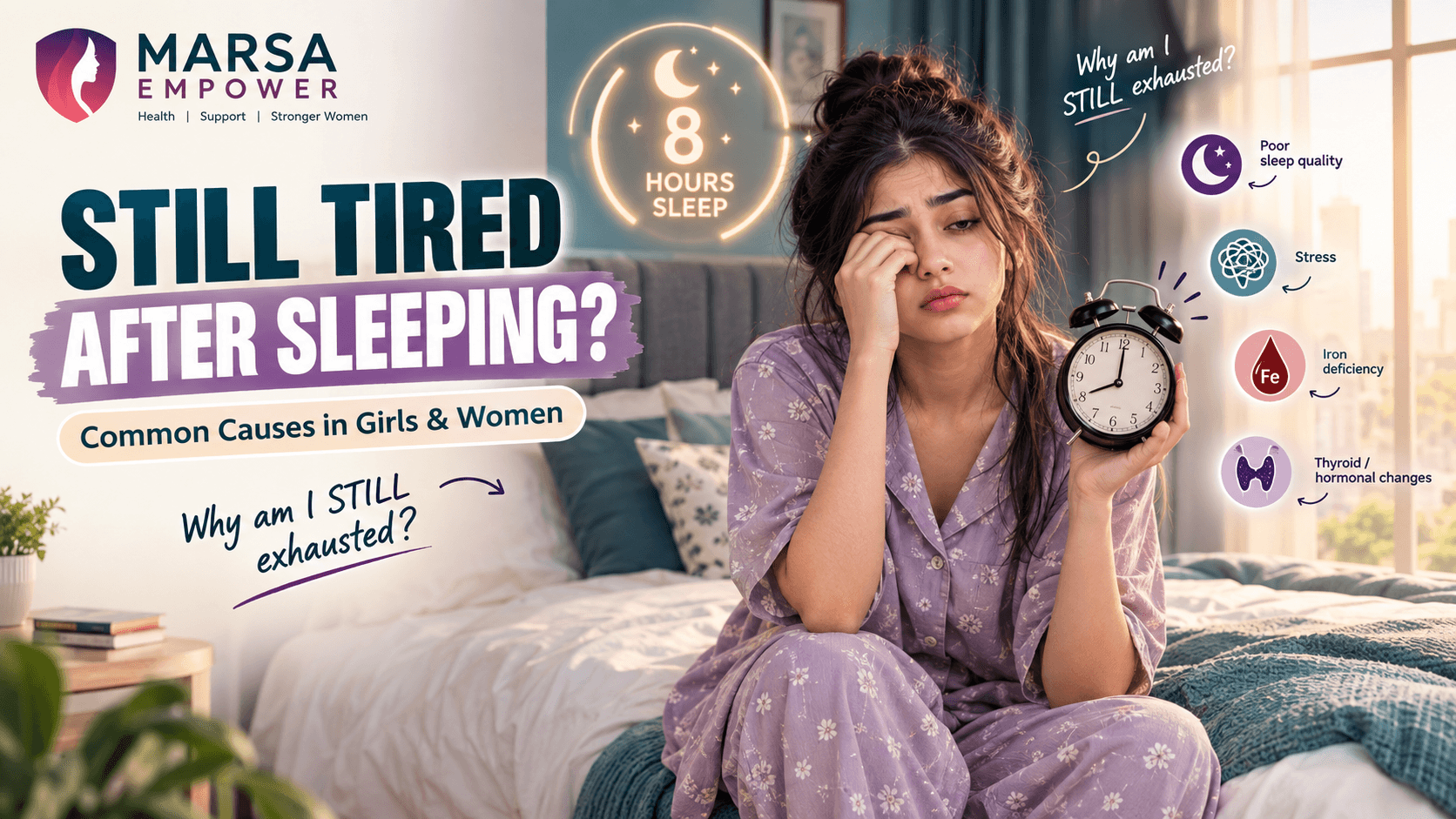
She slept eight hours last night. She woke up exhausted.
She rested the entire weekend. She still felt drained by Monday morning.
She has cut back on commitments, tried sleeping earlier, tried drinking more coffee, tried pushing through. Nothing works. And every time she mentions it — to a doctor, a family member, a friend — she is told the same thing: you are probably just stressed, try to rest more.
But she is resting. And she is still tired.
Here is what nobody tells her: persistent, unrelenting fatigue in women is rarely about not resting enough. It is almost always about something deeper — a nutritional deficiency, a hormonal imbalance, an underlying condition, a sleep quality problem — something her body has been trying to communicate for weeks, months, or sometimes years, while everyone around her dismissed it as stress or laziness.
Fatigue is one of the most common and most dismissed health complaints among women of all ages. Yet behind that exhaustion, there are very real, very identifiable, and very treatable causes.
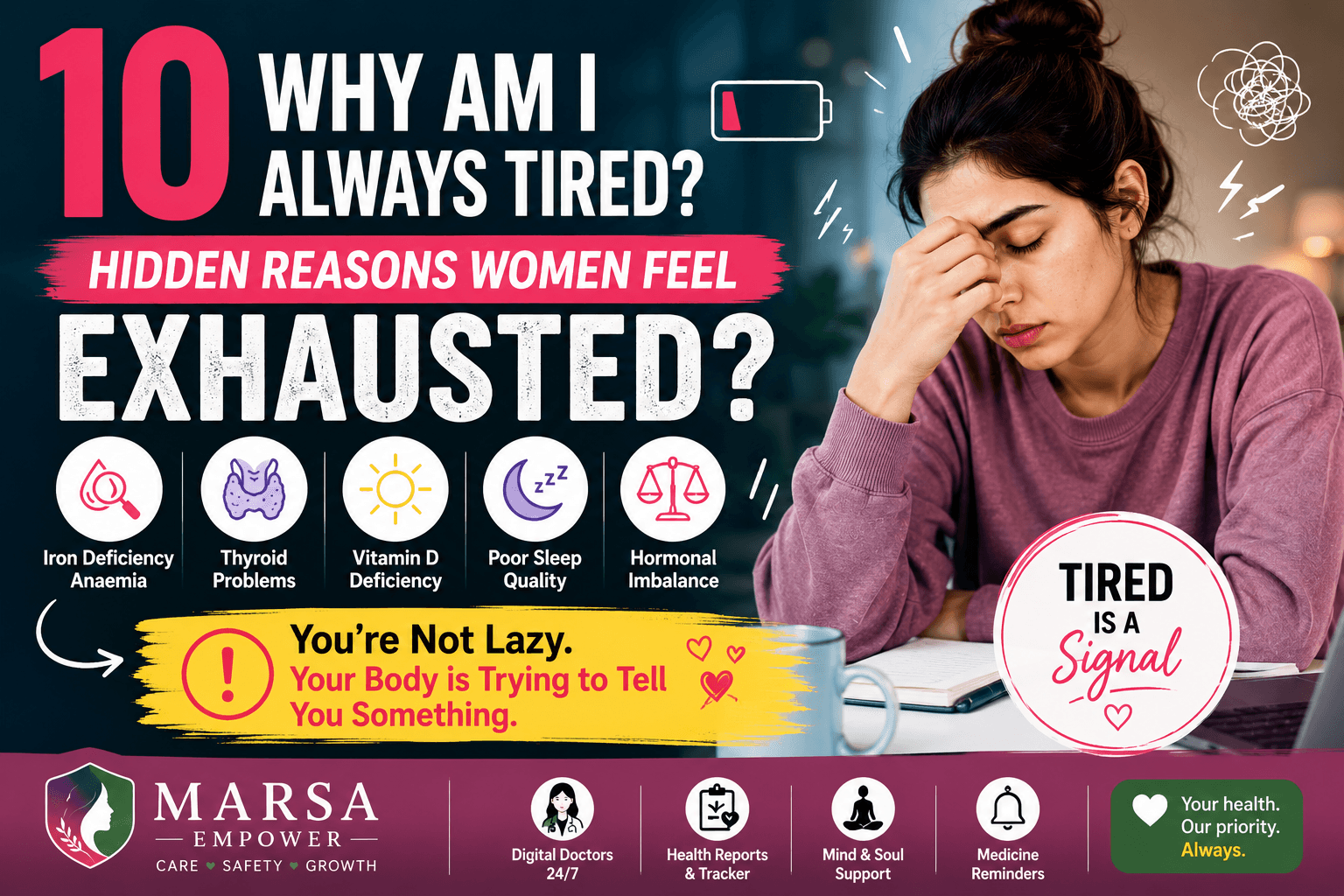
Here are ten of the most important ones — explained clearly, so you can finally understand what your body may be trying to tell you.
| # | Hidden Cause | Key System Affected |
|---|---|---|
| 1 | Iron Deficiency Anaemia | Blood & Oxygen Transport |
| 2 | Thyroid Dysfunction | Metabolism & Energy Production |
| 3 | Vitamin D Deficiency | Cellular Energy & Immune Function |
| 4 | Poor Sleep Quality | Neurological Recovery & Hormones |
| 5 | Hormonal Imbalance | Reproductive & Energy Hormones |
| 6 | Chronic Stress & Cortisol Dysregulation | Adrenal & Nervous System |
| 7 | Dehydration | Cellular Function & Circulation |
| 8 | Poor Nutrition & Skipping Meals | Blood Sugar & Metabolic Stability |
| 9 | PCOS & Reproductive Hormonal Conditions | Insulin & Hormonal Balance |
| 10 | Anxiety & Depression | Mental & Physical Energy Reserves |
Iron deficiency anaemia is one of the most widespread causes of chronic fatigue in women globally — and one of the most frequently missed. It is not dramatic. It creeps in slowly. You feel a little more tired than usual, then a little more, until exhaustion becomes your baseline and you stop questioning it.
Iron is essential for producing haemoglobin — the protein in red blood cells responsible for carrying oxygen throughout the body. When iron levels fall, every cell in your body receives less oxygen. Less oxygen means less energy. The result is profound tiredness, weakness, breathlessness on mild exertion, difficulty concentrating, and pallor.
Women lose iron every month through menstruation. Women with heavy periods lose significantly more — sometimes far more than diet alone can replace. Add to this the widespread dietary iron deficiency common across Pakistan and South Asia, and iron deficiency anaemia becomes not just common but genuinely epidemic among women of reproductive age.
A simple blood test measuring haemoglobin, serum ferritin, and serum iron can confirm iron deficiency within days. If you have heavy periods and chronic fatigue — this is the first test to ask for.
The thyroid gland — a small butterfly-shaped structure in the front of the neck — produces hormones that regulate the metabolic rate of virtually every cell in the body. When the thyroid is underactive (hypothyroidism), it produces insufficient hormone. The consequence is that the body's energy production slows dramatically — and no amount of sleep, coffee, or willpower can compensate.
Thyroid-related fatigue is distinct from ordinary tiredness. It is heavy, persistent, and unresponsive to rest. Women with hypothyroidism often describe it as feeling like they are moving through thick fog — mentally slow, physically sluggish, needing far more sleep than usual and waking unrefreshed regardless. It commonly occurs alongside weight gain, hair thinning, cold sensitivity, constipation, dry skin, and low mood.
Thyroid disorders are among the most under-diagnosed conditions in women worldwide. The symptoms develop gradually and are easily attributed to stress, aging, or simply "how things are." Many women live with untreated hypothyroidism for years before receiving an accurate diagnosis. In Pakistan, where iodine deficiency has historically been prevalent and thyroid screening is not routine, the under-diagnosis rate is particularly significant.
A blood test measuring TSH (thyroid-stimulating hormone) and free thyroid hormones provides a clear picture of thyroid function. If you have unexplained fatigue alongside weight changes, hair loss, or cold sensitivity — thyroid testing is essential.
Vitamin D is often associated with bone health, but its role extends far beyond the skeleton. It influences energy regulation, immune function, mood, muscle strength, and cellular metabolism. Deficiency — which is extraordinarily common among women in Pakistan — is directly linked to chronic fatigue, persistent low mood, muscle weakness, and increased susceptibility to illness.
Despite Pakistan's sunny climate, Vitamin D deficiency is paradoxically prevalent among Pakistani women. Limited outdoor time, cultural clothing practices that reduce skin sun exposure, indoor-centred lifestyles, and diets low in Vitamin D-rich foods (oily fish, fortified dairy, eggs) all contribute to a population-wide deficiency that affects energy levels in ways that are frequently overlooked.
Vitamin D receptors are found in nearly every tissue in the body, including muscle cells and brain cells. When Vitamin D is insufficient, these tissues cannot function optimally — leading to the physical fatigue, muscle aches, and mental heaviness that many deficient women describe. The connection is direct, biological, and measurable.
A blood test measuring 25-hydroxyvitamin D levels reveals deficiency rapidly. For many women, targeted supplementation under medical guidance produces noticeable improvements in energy, mood, and overall vitality within weeks.
There is a crucial distinction between sleep duration and sleep quality — and it is one of the most important things to understand about chronic fatigue. You can spend nine hours in bed and wake up genuinely unrefreshed if the quality of that sleep is poor. Hours in bed measure quantity. What matters equally, and often more, is the depth and restorative quality of the sleep within those hours.
If you are consistently waking unrefreshed despite adequate sleep time, the problem is almost certainly sleep quality — not sleep duration. This distinction changes the entire approach to solving it.
The menstrual cycle is not simply a reproductive event. It is a monthly hormonal cycle that affects energy, mood, cognition, physical strength, and appetite in measurable, predictable ways. When this hormonal orchestration is balanced, these fluctuations are manageable. When hormones are disrupted, the energy consequences can be debilitating.
Many women experience significant fatigue in the week before their period — the late luteal phase — when progesterone peaks and then drops sharply before menstruation begins. This hormonal shift is directly linked to the fatigue, mood changes, and physical heaviness many women experience premenstrually.
Hormonal imbalance extends beyond the monthly cycle. Low oestrogen — in perimenopause, in conditions like hypothalamic amenorrhea, or in PCOS — directly affects mitochondrial energy production. Elevated androgens in conditions like PCOS interfere with insulin regulation and energy metabolism. The result is fatigue that is not simply tied to the menstrual calendar but is persistent and pervasive.
If your fatigue follows a clear pattern — consistently worsening at a specific phase of your cycle — this is a hormonal signal, and it is worth tracking and discussing with a healthcare provider.
Cortisol is the body's primary stress hormone — produced by the adrenal glands and designed to mobilise energy in response to immediate threat. It is enormously useful in the short term. But the human body was never designed to sustain high cortisol levels indefinitely, and modern life — with its relentless work pressure, financial anxiety, family demands, and digital overstimulation — asks it to do exactly that.
When cortisol is chronically elevated, the body remains in a state of constant low-grade alert — burning through energy reserves faster than they can be replenished. Over time, this sustained demand on the adrenal system leads to dysregulated cortisol patterns — where cortisol is too low in the morning (causing that impossible-to-wake feeling) and too high in the evening (causing wired-but-tired sleeplessness).
The result is a woman who cannot wake up properly in the morning and cannot wind down properly at night — perpetually exhausted regardless of how many hours she spends in bed.
Chronic stress is not just emotionally draining — it is physiologically exhausting. Managing stress is not a luxury or a self-indulgence. For many women, it is the most direct route to recovering functional energy.
Dehydration as a cause of fatigue is both extremely common and extremely underestimated. Most people think of dehydration as an extreme state — parched, dizzy, unable to function. But research consistently shows that even mild dehydration — a fluid deficit of just one to two percent — causes measurable drops in energy, mood, concentration, and physical performance.
Water is required for virtually every biological process in the body — nutrient transport, temperature regulation, joint lubrication, cellular metabolism, and blood volume maintenance. When fluid intake is insufficient, blood becomes slightly thicker, the heart must work harder to circulate it, and cells throughout the body receive nutrients and oxygen less efficiently. The result is physical sluggishness and mental fog that many women mistake for tiredness requiring sleep — when what the body actually needs is water.
Most women significantly underestimate their daily fluid needs. Before reaching for caffeine when energy drops in the afternoon, drink a full glass of water and wait fifteen minutes. The frequency with which this resolves the energy dip reveals how chronically mild dehydration is contributing to fatigue.
Food is the body's fuel source. Not just in a general sense — but at the level of blood glucose, which the brain and muscles depend upon for moment-to-moment energy. When eating patterns are irregular, meals are skipped, or diet is dominated by ultra-processed foods and refined carbohydrates, blood sugar levels spike and crash repeatedly throughout the day. These crashes produce the energy dips, brain fog, irritability, and persistent tiredness that characterise poor nutritional energy management.
Skipping breakfast — extremely common among busy women — sets up a blood sugar deficit from the very beginning of the day that cascades through every subsequent hour. Relying on caffeine to compensate delays the crash rather than preventing it. And over time, the chronic blood sugar instability driven by poor eating patterns contributes to insulin resistance, which further compounds fatigue.
Specific nutritional deficiencies also play a direct role. Magnesium is required for over 300 enzymatic processes in the body, including energy production — and deficiency causes fatigue, muscle cramps, and poor sleep. B vitamins are essential for converting food into cellular energy — and deficiencies are common in women with restricted or unvaried diets.
Eating regularly, building meals around whole foods, and avoiding prolonged fasting periods is not just dietary advice — it is energy management. For many women, stabilising blood sugar alone produces dramatic improvements in daily energy.
Polycystic Ovary Syndrome is the most common hormonal condition in women of reproductive age — affecting approximately one in ten women, and likely more in South Asia where diagnostic rates remain low. While it is most commonly associated with irregular periods, acne, and fertility concerns, persistent fatigue is one of its most debilitating and least discussed daily symptoms.
PCOS is fundamentally linked to insulin resistance — a state in which the body's cells become less responsive to insulin, requiring more of it to move glucose from the blood into cells where it can be used for energy. Chronically elevated insulin levels, combined with the hormonal disruptions of elevated androgens and disrupted oestrogen-progesterone balance, create a metabolic environment that generates persistent physical exhaustion.
Many women with PCOS describe their fatigue not as simple tiredness but as a heaviness — a low-grade, constant physical depletion that does not resolve with rest and that profoundly affects their ability to function day to day.
If you have irregular periods, unexplained weight changes, acne, or excess hair growth alongside persistent fatigue — PCOS screening should be part of any fatigue investigation. The condition is highly manageable with the right support.
Anxiety and depression are frequently misunderstood as purely emotional or psychological conditions. In reality, both produce profound physical exhaustion that is just as real and just as debilitating as fatigue caused by any physical illness — and often more so.
The energy required to manage persistent anxiety — the constant low-grade hypervigilance, the racing thoughts, the physical tension held in muscles throughout the day — is enormous. Anxiety keeps the nervous system in a sustained state of alert that is physiologically expensive. The body burns through energy reserves maintaining this state even when the person appears externally calm.
Depression affects cellular energy production, disrupts sleep architecture, reduces motivation to eat or move, and creates a pervasive physical heaviness that many people describe as feeling physically unwell — not just emotionally low. The fatigue of depression is neurobiological, not a choice, and it does not respond to being told to "think more positively."
If persistent fatigue is accompanied by low mood, loss of interest in things you previously enjoyed, persistent worry, or emotional exhaustion — please speak to a mental health professional. These are treatable conditions, and treatment significantly and measurably improves both emotional and physical energy.
Understanding the potential causes is the first step. Taking action is the next. Here is where to start:
Before seeing a doctor, spend one to two weeks noticing patterns:
Patterns reveal causes. Causes point toward solutions.
A basic fatigue panel is one of the most valuable things you can do. Ask your doctor to check:
| Test | What It Reveals |
|---|---|
| Full Blood Count (FBC) | Anaemia and overall blood health |
| Serum Ferritin & Iron | Iron stores and iron deficiency |
| TSH & Thyroid Hormones | Thyroid function |
| 25-Hydroxyvitamin D | Vitamin D status |
| Fasting Glucose & Insulin | Blood sugar regulation and insulin resistance |
| B12 & Folate | Nutritional deficiencies affecting energy |
While awaiting investigation results, implement these evidence-based changes:
If fatigue persists beyond two to three weeks despite lifestyle adjustments, or if it is significantly affecting your daily functioning, consult a healthcare provider. Do not accept "you are probably just stressed" as a complete answer without investigation. Persistent fatigue has identifiable causes. You deserve a proper evaluation.
There is a deeply harmful cultural narrative around women's fatigue — one that frames exhaustion as the expected price of being a woman, a mother, a worker, a caregiver. Of course you are tired. You are doing so much. This framing normalises fatigue rather than investigating it, and it leaves women suffering from genuinely treatable conditions without the help they need and deserve.
Fatigue is not weakness. It is not laziness. It is not just stress. In the vast majority of cases, persistent fatigue in women is a signal — from the blood, from the thyroid, from the hormonal system, from the nervous system, from the gut — that something specific needs attention.
You do not have to accept exhaustion as your default state. Your energy matters. Your health matters. And you deserve to feel well.
"Behind that persistent exhaustion, there are often very real, very identifiable, and very treatable causes. You deserve answers — not just reassurance."
This article is for educational and awareness purposes only. It does not constitute medical advice, diagnosis, or treatment. If you are experiencing persistent fatigue that affects your daily functioning, please consult a qualified healthcare professional for personalised evaluation and guidance.
MARSA Empower is an AI-powered women's empowerment platform offering private, multilingual tools for health, beauty, and safety. From 11 specialized AI health doctors and a personalized Beauty & Glow advisor to a built-in safety system with SOS alerts, MARSA helps women take charge of their wellbeing — accessibly and securely.
Medical Disclaimer
This article is for general informational and educational purposes only and is not a substitute for professional medical advice, diagnosis, or treatment. Always seek the advice of a qualified healthcare provider with any questions you may have regarding a medical condition. Never disregard professional medical advice or delay seeking it because of something you have read on MARSA Empower.
Written By
Maryam Mumtaz
Co-Founder & CEO
Co-Founder of MARSA Empower who leads the visual and strategic evolution of the platform. Maryam bridges technical complexity with human-centric design, architecting the team's official roadmap and ensuring MARSA effectively addresses the real-world needs of women. With deep expertise in agentic AI, full-stack development, and UI/UX design, she has delivered 50+ projects for 30+ satisfied clients.
Enjoyed this story?