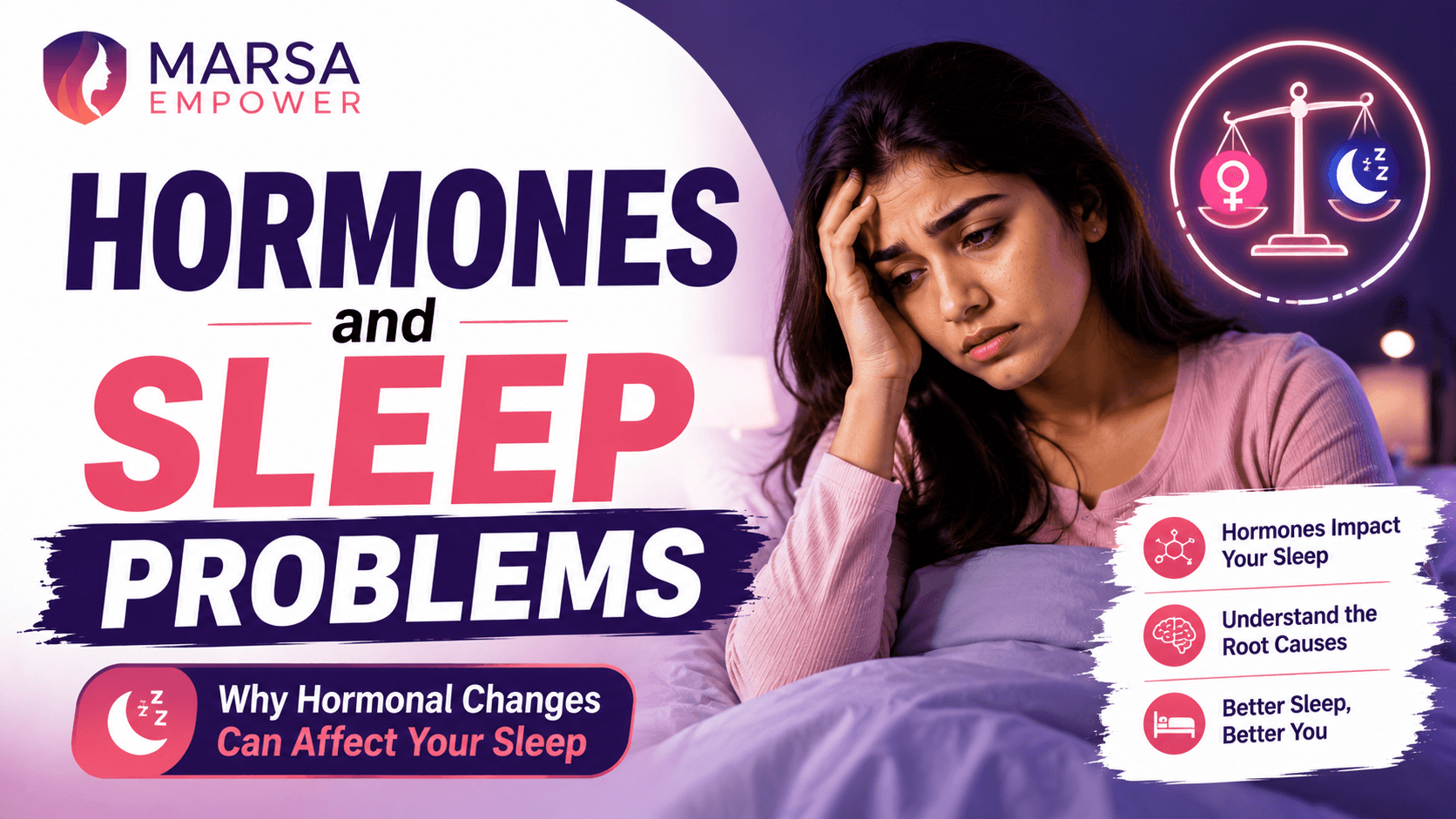
Discover how hormonal shifts can disrupt your sleep and learn effective strategies to improve your sleep quality.

Maryam Mumtaz
Co-Founder & CEO
13 min read•8/19/2026
Marsa Empower · Women's Health & Everyday Wellness · For Girls & Women Aged 13 and Above · 13 min read
"Sleep is not just rest. It is one of the most biologically active and hormonally critical states the body enters — and when hormones shift, sleep is often the first thing to show it."
Sleeplessness is not equally distributed. Women are significantly more likely than men to report insomnia, difficulty falling asleep, frequent nighttime waking, and poor sleep quality — across every decade of life. Research consistently documents this gender gap, and its explanation lies largely in biology.
Women's bodies undergo more hormonal transitions across a lifetime than men's do — puberty, monthly menstrual cycles, pregnancy, postpartum recovery, perimenopause, and menopause. Each of these transitions brings hormonal shifts that directly interact with the body's sleep regulation systems. The result is that sleep in women is not just sensitive to the same lifestyle factors that affect men — it is also uniquely sensitive to a hormonal landscape that changes continuously.
This does not mean that every sleep problem in every woman is hormonal. Sleep is affected by stress, nutrition, screen use, anxiety, work schedules, caregiving responsibilities, and many other factors that have nothing to do with reproductive hormones. But understanding the hormonal dimension of women's sleep — which is rarely discussed clearly or completely — allows women to recognise patterns, address the right causes, and know when to seek help.
Hormones are chemical messengers produced by glands throughout the body — the brain, the ovaries, the adrenal glands, the thyroid, and others. They travel through the bloodstream and deliver instructions to cells and organs — governing processes including growth, metabolism, reproduction, mood, appetite, body temperature, immune function, and sleep.
The connection between hormones and sleep is not a side note — it is fundamental. The very process of sleep is hormonally orchestrated. The timing of when we feel sleepy (governed by melatonin and the circadian clock), the depth of sleep achieved (influenced by growth hormone and progesterone), the quality of sleep throughout the night (affected by oestrogen and cortisol), and the feeling of restoration upon waking (related to the completeness of hormonal cycling through the night) — all of these are hormonal processes.
When the hormones involved in these processes change — as they do throughout a woman's reproductive life — sleep changes with them.
Melatonin is the hormone most directly associated with sleep onset. It is produced by the pineal gland in the brain in response to darkness — rising in the evening to signal that sleep time is approaching, and falling in the morning as light suppresses its production.
Melatonin production is influenced by light exposure, screen use, and age. During puberty, the timing of melatonin secretion shifts later — producing the "night owl" tendency that is neurologically normal in teenagers. After menopause, melatonin production decreases — which contributes to the lighter, more easily disrupted sleep of later life.
Cortisol is the body's primary stress hormone — but it is also a circadian hormone that follows a natural daily rhythm. Cortisol is highest in the early morning (helping to produce the alertness of waking) and lowest in the late evening (supporting the transition to sleep).
When chronic stress or disrupted routines maintain elevated evening cortisol, sleep onset is impaired — because the body is receiving contradictory signals. This is one of the most common mechanisms through which stress disrupts sleep.
Oestrogen supports several sleep-related functions:
When oestrogen falls — as it does in the premenstrual phase, after delivery, and during perimenopause and menopause — sleep quality falls with it.
Progesterone has a natural sedative quality — it metabolises in the brain into compounds (particularly allopregnanolone) that activate GABA receptors, promoting relaxation and sleep. This is why the luteal phase of the menstrual cycle (when progesterone is highest) is often associated with increased sleepiness — and why the sharp fall in progesterone just before a period can disrupt sleep.
During pregnancy, progesterone rises significantly — which can cause daytime sleepiness in the first trimester. After delivery, progesterone falls dramatically — contributing to the sleep difficulties and mood changes of the postpartum period.
Growth hormone is secreted primarily during the first hours of deep sleep (slow-wave sleep) — supporting cellular repair, immune function, and tissue maintenance. Sleep deprivation reduces growth hormone secretion. Hormonal conditions that disrupt deep sleep (including the night sweats of perimenopause and the fragmented sleep of postpartum life) reduce growth hormone release, impairing physical recovery.
Hormonal changes affect sleep through several specific pathways:
Temperature regulation: Oestrogen and progesterone help regulate body temperature. A slight drop in core body temperature is essential for sleep onset and maintenance. When these hormones fluctuate — particularly the hot flashes of perimenopause — temperature dysregulation directly disrupts sleep.
Sleep architecture: The proportion of time spent in different sleep stages — light sleep, deep sleep, and REM sleep — is hormonally regulated. Falling oestrogen reduces REM sleep. Falling progesterone reduces deep slow-wave sleep. Both produce lighter, less restorative sleep despite apparently adequate hours.
Mood and anxiety: Oestrogen supports serotonin activity, and progesterone supports GABA activity — both of which are crucial for emotional regulation and the ability to "switch off" anxious thoughts at night. When these hormones fall, anxiety and low mood increase — which are among the most consistent predictors of insomnia.
Physical symptoms: Period cramps, breast tenderness, bloating, nausea of pregnancy, and hot flashes of menopause all disrupt sleep through direct physical discomfort — not just through hormonal brain effects.
Puberty is not just a physical transformation. It is also a neurological one — and one of its most consistent and most disruptive effects on daily life is a shift in the body's internal sleep timing.
During puberty, the circadian clock — the body's internal 24-hour timer that governs when melatonin is secreted, when alertness peaks, and when the drive to sleep accumulates — shifts significantly later. This is called the circadian phase delay, and it is a genuine biological change driven by puberty hormones.
In practical terms, it means that a teenager's melatonin does not begin rising until significantly later in the evening than it did in childhood — making it genuinely neurologically difficult to fall asleep before 11pm or midnight, regardless of how long they have been in bed. And their morning alertness naturally peaks later — making early rising feel genuinely difficult rather than simply lazy.
This is not a choice. It is neurology.
The problem is that school schedules are typically designed for adult circadian timing — starting early in the morning when the teenage brain is biologically at its sleepiest. The result is a structural sleep deprivation that affects the majority of secondary school students worldwide.
Teenagers genuinely need 8 to 10 hours of sleep per night — more than adults. Getting less than this consistently produces:
Consistent sleep and wake times: Even on weekends. Irregular schedules worsen the circadian disruption rather than resolving it.
Screens off 60 minutes before bed: The blue light from phones and tablets directly suppresses melatonin — delaying the already-late melatonin onset of adolescence further. This is not a parental opinion. It is sleep physiology. Putting the phone in another room at bedtime is the single most impactful sleep habit for most teenagers.
No caffeine after 2pm: Caffeine has a half-life of five to six hours — meaning half the caffeine from a 4pm chai is still active at 10pm. Late caffeine significantly impairs both the ease of falling asleep and the depth of sleep achieved.
A dark, cool, quiet bedroom: These three environmental conditions consistently support better sleep. Darkness is particularly important for melatonin production.
A wind-down routine: 20 to 30 minutes of calm, non-stimulating activity before bed — reading, gentle stretching, writing, or prayer — signals to the nervous system that sleep is approaching. The contrast between high stimulation (social media, games, intense study) and immediate sleep is too abrupt for the brain to manage easily.
The menstrual cycle produces monthly hormonal fluctuations that directly and predictably affect sleep quality — in ways that many women recognise but few receive a clear explanation for.
Menstruation (Days 1–5): Oestrogen and progesterone are at their lowest. For many women, this is actually when sleep improves — the heavy hormonal influence on sleep that occurred premenstrually is lifted. However, period symptoms — cramps, back pain, headaches, bloating — can make physically comfortable sleep difficult, particularly on the heaviest days.
Follicular Phase (Days 6–13): As oestrogen rises, mood, energy, and sleep quality typically improve for most women. This is generally the best sleep phase of the month — oestrogen's serotonin-supporting effect promotes positive mood and easier sleep onset.
Ovulation (Around Day 14): A brief rise in luteinising hormone (LH) around ovulation is associated with a mild, temporary increase in core body temperature in many women — which can slightly disturb sleep on ovulation days.
Luteal Phase (Days 15–28): Progesterone rises and produces its sedative effect — many women feel noticeably sleepier in the early luteal phase. However, as the luteal phase progresses and both progesterone and oestrogen begin falling in the week before the period, sleep quality typically deteriorates:
This premenstrual sleep disruption is the most commonly reported cycle-related sleep problem — and it is a genuine, physiological phenomenon, not simply "being stressed before your period."
Recording sleep quality (a simple 1 to 10 rating each morning) alongside your cycle phase over two to three months reveals your personal sleep pattern clearly. Many women are surprised to see how consistent the relationship is — and how much of their "poor sleep" is cyclical rather than random. This pattern recognition is the first step toward targeted management.
Pregnancy produces the most dramatic hormonal changes in a woman's life — and sleep is affected in ways that evolve across the three trimesters.
Surging progesterone produces significant daytime sleepiness — many women feel the need for afternoon naps for the first time in years. This sedating effect of progesterone is normal and appropriate. However, nighttime sleep is often disrupted by nausea (which can strike at any hour), frequent urination (as blood volume and kidney function increase), breast tenderness, and anxiety about the pregnancy.
Many women report their best sleep of pregnancy in the second trimester — the nausea of the first trimester has usually eased, the physical bulk of the third has not yet arrived, and progesterone's sedating effect supports more consistent sleep.
Physical discomfort dominates third-trimester sleep — finding a comfortable position becomes increasingly difficult as the abdomen grows, heartburn worsens with the diaphragm compressed upward, frequent urination intensifies, and leg cramps (driven by mineral shifts) may wake women repeatedly. Anxiety about labour and delivery adds a psychological component.
Most women in late pregnancy are significantly sleep-deprived — which is genuinely difficult given that labour and early newborn care require significant physical and emotional reserves.
The postpartum period brings one of the most severe sleep disruptions a woman will experience — and it is not only the newborn's feeding schedule that causes it.
After delivery, oestrogen and progesterone fall from their pregnancy peaks to their lowest levels since before puberty — within days. This precipitous hormonal drop directly affects sleep architecture, mood stability, and stress resilience.
This is the same hormonal drop that produces the "baby blues" — the weeping, emotional instability, and exhaustion that most new mothers experience in the first week after delivery. For most women, this resolves as hormones begin to stabilise. For some — approximately 10 to 15% — this develops into postpartum depression, which significantly worsens sleep and requires appropriate professional support.
Beyond the hormonal component, the physical demands of newborn care — feeding every two to three hours, day and night — produce sleep fragmentation that prevents the deep sleep stages (slow-wave and REM) from completing fully. This type of fragmented sleep is more physiologically disruptive than shorter but continuous sleep.
The hormonal transition of perimenopause and menopause produces the most significant and most consistent sleep disruption of any phase of a woman's reproductive life.
Perimenopause is the transitional period — typically lasting four to eight years — during which oestrogen and progesterone levels begin fluctuating widely before eventually declining to the lower levels of menopause. It typically begins in the mid-to-late forties and produces symptoms that many women find confusing and distressing: erratic periods, mood changes, and increasingly disrupted sleep.
Hot flashes and night sweats: The most widely recognised sleep disruptor of menopause. Hot flashes are brief episodes of intense heat — lasting two to five minutes — that are driven by the hypothalamus (the brain's temperature regulator) losing the oestrogen signals that stabilised its temperature calibration. Night sweats are hot flashes occurring during sleep — waking women repeatedly, often in sweat-soaked discomfort. Some women experience these multiple times per night, for years.
Reduced sleep depth: Without adequate oestrogen and progesterone, deep slow-wave sleep is reduced — producing lighter, more easily disrupted sleep that is less restorative even when total hours are adequate.
Increased anxiety and mood disruption: Falling oestrogen reduces serotonin activity — increasing anxiety, low mood, and the hyperarousal (inability to "switch off" at night) that is one of the most consistent features of perimenopausal and menopausal insomnia.
Sleep apnoea: The risk of obstructive sleep apnoea — a condition in which the airway collapses repeatedly during sleep, causing breathing interruptions and significant sleep fragmentation — increases substantially after menopause. Women with sleep apnoea are frequently undiagnosed because their presentations differ from the classical male pattern (loud snoring) and may instead manifest as insomnia, fatigue, and mood disturbance.
Lifestyle first: A cool sleep environment, loose breathable nightwear, avoiding caffeine and alcohol (particularly in the evening), regular exercise, stress management, and consistent sleep timing all reduce menopausal sleep disruption.
Medical options: For women with significant menopausal sleep disruption, a healthcare provider can discuss:
PCOS and sleep have a bidirectional relationship that is significantly under-recognised.
Women with PCOS have substantially higher rates of sleep disorders — particularly sleep apnoea (estimated to affect 30 to 70% of women with PCOS, compared to approximately 3 to 7% of the general female population) and insomnia. This is driven by:
Sleep disruption in PCOS is not just a quality-of-life issue. Poor sleep worsens insulin resistance — exacerbating the core metabolic mechanism of PCOS — creating a cycle where PCOS disrupts sleep and disrupted sleep worsens PCOS.
Any woman with PCOS who has significant, persistent sleep difficulties — particularly if accompanied by loud snoring, gasping during sleep, or unrefreshing sleep despite adequate hours — should discuss sleep apnoea screening with her healthcare provider.
Both hypothyroidism (underactive thyroid) and hyperthyroidism (overactive thyroid) disrupt sleep — through entirely opposite mechanisms.
Hypothyroidism slows the metabolic rate, reducing the efficiency of energy production throughout the body — including in the brain systems governing alertness and wakefulness. Many women with hypothyroidism experience excessive daytime sleepiness, difficulty waking in the morning, and generally heavy, low-energy fatigue — despite apparently adequate sleep.
Hypothyroidism is also associated with sleep apnoea (the slowed metabolism reduces upper airway muscle tone) and restless legs syndrome.
Hyperthyroidism over-stimulates the nervous system — producing anxiety, racing thoughts, elevated heart rate, and temperature dysregulation that make it very difficult to fall asleep or stay asleep. Women with hyperthyroidism frequently describe lying awake despite exhaustion, or waking early with a racing heart and inability to return to sleep.
Any woman with significant sleep problems alongside fatigue, weight changes, cold or heat intolerance, hair changes, or menstrual disruption should have TSH and free thyroid hormone levels tested.
Stress and poor sleep have a bidirectional relationship that is one of the most common — and most self-perpetuating — sleep problems in adult women.
When the body is under stress, the hypothalamic-pituitary-adrenal (HPA) axis activates — releasing cortisol and adrenaline to prepare the body for the perceived threat. Elevated cortisol:
Sleep deprivation increases cortisol production. It reduces the activity of the prefrontal cortex — the brain region governing rational, proportionate emotional responses — while increasing reactivity of the amygdala (the brain's threat-detection centre). The result is a brain that is less able to regulate emotional responses to stress, and more likely to perceive neutral events as threatening.
This creates the self-reinforcing cycle:
Stress → Elevated cortisol → Poor sleep → More reactive to stress → More elevated cortisol → Worse sleep
The most effective intervention for this cycle is simultaneously addressing both components:
Reducing stress physiologically: Exercise (the most evidence-supported cortisol reducer), breathwork (directly activates the parasympathetic nervous system, reducing cortisol), addressing modifiable sources of stress, and — where stress is severe — professional therapeutic support.
Supporting sleep hygiene: Consistent sleep timing, controlled bedroom environment, avoiding caffeine and alcohol, and reducing pre-sleep screen exposure.
Neither intervention alone fully resolves the cycle. Both together produce significantly better results.
Go to bed and wake up at the same time every day — including weekends. This is the single most impactful sleep habit available. Consistency sets and maintains the circadian clock that governs melatonin timing and morning cortisol patterns.
Irregular sleep schedules — even when total sleep hours are adequate — disrupt circadian rhythm in ways that worsen sleep quality over time.
Stop using phones, tablets, and computers 30 to 60 minutes before your target bedtime. The blue light emitted by screens suppresses melatonin production — delaying the hormonal signal that initiates the transition to sleep.
This advice is resisted most consistently and produces improvement most reliably of almost any sleep hygiene change.
A consistent pre-sleep routine signals to the nervous system that sleep is approaching — much like Pavlovian conditioning. Over time, the activities of the routine themselves begin to trigger the physiological transition toward sleep.
Effective wind-down activities include: gentle stretching, reading (a physical book rather than a screen), prayer or meditation, deep breathing, journaling, or a warm shower or bath. The warm bath or shower in particular is highly effective — it raises skin temperature, and the subsequent heat loss causes a drop in core body temperature that facilitates sleep onset.
Caffeine has a half-life of five to six hours in most adults — meaning half of the caffeine consumed at 4pm is still active at 10pm. Caffeine consumed in the afternoon or evening reduces both sleep quantity (delaying sleep onset) and sleep quality (reducing deep sleep stages even when sleep occurs).
For women with sleep problems, limiting caffeine to the morning — and avoiding it entirely after midday — produces meaningful sleep improvement within one to two weeks.
Regular moderate exercise is one of the most consistently evidence-supported sleep improvement interventions available. It reduces cortisol, increases sleep drive, improves mood, and directly improves sleep architecture — increasing deep slow-wave sleep.
Timing matters for some women: vigorous exercise within two hours of bedtime can elevate heart rate and cortisol in ways that delay sleep onset. For most women, exercise at any time during the day improves sleep — but morning or afternoon exercise is often optimal.
If sleep difficulties persist despite consistent lifestyle improvements for two to three weeks, the cause may be more specific — a hormonal condition, sleep disorder, mental health condition, or medical factor — that requires professional assessment.
Attributing all sleep problems to "just stress" or "hormones" without investigation delays appropriate treatment. Persistent insomnia has effective treatments — but receiving them requires seeking evaluation.
Sleep hygiene refers to the collection of habits and conditions that support consistent, quality sleep. For women — whose sleep is additionally affected by hormonal fluctuations — the basics of sleep hygiene are foundational but may need to be supplemented with cycle-specific awareness.
One hour before bed:
30 minutes before bed:
At bedtime:
Morning:
Magnesium: One of the most consistently associated nutrients with sleep quality. Magnesium supports GABA activity (the inhibitory neurotransmitter that promotes relaxation) and helps regulate melatonin. Magnesium deficiency is very common in women and is associated with worse sleep. Best sources: dark chocolate, pumpkin seeds, spinach, almonds, black beans.
Tryptophan-rich foods: Tryptophan is an amino acid that is the precursor to serotonin and melatonin. Adequate dietary tryptophan supports both mood and sleep. Best sources: eggs, chicken, turkey, milk, cheese, nuts, and seeds.
Complex carbohydrates in the evening: Including some complex carbohydrate with dinner supports tryptophan transport into the brain. A meal of protein and vegetables alone at dinner is sometimes associated with more difficulty sleeping than one that includes whole grain carbohydrate as well.
Warm milk or herbal teas: Chamomile tea has mild GABA-receptor-modulating properties that support relaxation. Warm milk contains tryptophan and may have a mild sleep-supporting effect through both nutritional and psychological (comfort) pathways.
Caffeine after noon: As described above.
Alcohol: Alcohol is a common — and counterproductive — sleep aid. It does help with sleep onset (making it easier to fall asleep) but significantly disrupts sleep architecture across the night — suppressing REM sleep, causing more frequent nighttime arousals in the second half of the night, and worsening sleep apnoea. The result is sleep that feels adequate but is significantly less restorative. Women metabolise alcohol more slowly than men — making the disruptive effects more pronounced per unit consumed.
Large meals close to bedtime: Digestion raises body temperature and can cause heartburn or discomfort — both of which disrupt sleep. Aim to finish eating at least two to three hours before bedtime.
High-sugar foods and refined carbohydrates in the evening: These produce blood sugar spikes followed by drops that can cause nighttime awakening as blood sugar falls and the body activates stress hormones to restore it.
Most sleep problems have identifiable lifestyle, hormonal, or psychological causes that respond to the strategies discussed in this guide. But some sleep problem patterns indicate conditions requiring medical assessment.
Snoring loudly or gasping during sleep: These are the primary symptoms of obstructive sleep apnoea — a condition in which the airway collapses repeatedly during sleep, causing breathing interruptions that disrupt sleep without the sleeper being fully aware. Sleep apnoea in women is significantly under-diagnosed because its presentation in women differs from the classical male pattern. Women with sleep apnoea more often present with insomnia, fatigue, headaches, and mood changes rather than obvious snoring — leading to missed diagnosis.
Restless legs or periodic limb movements: An uncomfortable urge to move the legs — particularly at night — is restless legs syndrome, which significantly disrupts sleep and has treatable causes including iron deficiency (extremely common in women with heavy periods).
Sleep that does not restore despite adequate hours: Waking after eight hours feeling as unrefreshed as before sleeping consistently suggests either poor sleep quality (light, fragmented sleep) or a specific sleep disorder rather than simply insufficient sleep.
Sudden, dramatic changes in sleep pattern: Without an obvious lifestyle explanation — warrants investigation for thyroid, hormonal, or other medical changes.
A healthcare provider can assess whether hormones, stress, a sleep disorder, a mental health condition, nutritional deficiency, thyroid dysfunction, or another medical factor is the primary driver — and recommend appropriate management.
Marsa Empower's platform supports women in understanding and tracking the health patterns — including sleep — that are most relevant to their wellbeing.
Marsa's Health Hub allows women to track their menstrual cycle, symptoms, mood, and energy levels alongside each other — revealing the patterns that connect sleep quality to specific cycle phases. Documented tracking over two to three months provides a clear picture of whether sleep problems are cyclical (suggesting hormonal management approaches) or persistent regardless of cycle phase (suggesting investigation for other causes).
Marsa's educational resources explain the hormonal connections to sleep, what specific symptoms suggest specific conditions, and when symptoms warrant professional evaluation — in clear, accessible language without requiring prior medical knowledge.
Marsa's Digital Doctors provide informational guidance on sleep, hormonal health, and the conditions most commonly associated with sleep disruption in women — helping women understand their symptoms and arrive at healthcare appointments with specific, well-formed questions.
Important: Marsa's AI guidance is informational and educational — it does not diagnose sleep disorders, prescribe treatment, or replace professional assessment. Persistent or significant sleep problems require evaluation by a qualified healthcare professional.
For women managing conditions that affect sleep — thyroid medication, PCOS management, or medications with timing-related effects on sleep — Marsa's medication scheduling support helps maintain the consistency that effective treatment requires.
Can hormones cause insomnia?
Yes — hormonal changes are one of the most common contributors to insomnia in women. Falling oestrogen before periods, after delivery, and during perimenopause reduces the serotonin and GABA activity that supports sleep. Falling progesterone removes its natural sedating effect. Elevated cortisol from stress disrupts the circadian cortisol rhythm needed for sleep onset. However, not all insomnia in women is hormonal — other causes including anxiety, depression, sleep disorders, and lifestyle factors all contribute and should be assessed.
Why do I sleep worse before my period?
The premenstrual week — when both oestrogen and progesterone are falling — consistently produces lighter, more easily disrupted sleep for many women. Falling oestrogen reduces REM sleep quality and serotonin-supported mood. Falling progesterone removes its GABA-activating sedating effect. The result is more frequent nighttime arousals, more anxious thoughts at bedtime, and less restorative sleep in the week before menstruation. This pattern is physiological — not psychological — and tracking it helps distinguish it from other causes.
Why do teenagers have trouble sleeping?
Puberty produces a genuine neurological shift in circadian timing — melatonin begins secreting later in teenagers than in children or adults, making it biologically difficult to feel sleepy before 11pm regardless of effort. This is compounded by screens (which further suppress melatonin), irregular schedules, stress, and caffeine. Early school start times create a structural mismatch with the teenage circadian clock that produces chronic sleep deprivation in the majority of secondary school students.
Can menopause cause insomnia?
Yes — and significantly. Hot flashes and night sweats disrupt sleep through nighttime temperature dysregulation. Falling oestrogen reduces REM sleep and serotonin activity, increasing anxiety and hyperarousal. Falling progesterone reduces the sedating effect that supported sleep in the reproductive years. The result is often the most significant sustained sleep disruption of a woman's life — lasting years in some women.
Should I take supplements for sleep?
Do not start supplements simply because sleep is difficult — and particularly not hormone supplements. Several supplements have evidence for mild sleep support (magnesium glycinate for sleep quality, melatonin for circadian rhythm disruption) but should be discussed with a healthcare professional before use, particularly if you are on other medications or have health conditions. The sleep benefits of addressing underlying hormonal, nutritional, or lifestyle causes are significantly greater than those of supplements alone.
| Life Stage | Primary Sleep Disruptors | Key Management Approaches |
|---|---|---|
| Teenage girls | Circadian phase delay · Screens · Stress · Caffeine | Consistent schedule · Screens off 60 min before bed · No caffeine after noon |
| Menstrual cycle | Premenstrual oestrogen/progesterone fall · Period symptoms | Track cycle-sleep patterns · Manage PMS symptoms · Good sleep hygiene |
| Pregnancy | Physical discomfort · Nausea · Frequent urination · Anxiety | Side sleeping · Pregnancy pillow · Small frequent meals · Discuss concerns with provider |
| Postpartum | Fragmented feeding schedule · Hormonal drop | Sleep when baby sleeps · Accept help · Professional support for mood changes |
| Perimenopause/Menopause | Hot flashes · Falling oestrogen and progesterone · Anxiety | Cool bedroom · Breathable nightwear · Discuss hormone therapy or alternatives with doctor |
| PCOS | Sleep apnoea · Insulin resistance · Anxiety | Screen for sleep apnoea · Manage PCOS metabolically · Address mood |
| Thyroid disorders | Hypothyroid: daytime sleepiness · Hyperthyroid: hyperarousal | TSH testing · Appropriate treatment of thyroid condition |
| Chronic stress | Elevated cortisol · Hyperarousal · Poor sleep architecture | Exercise · Breathwork · Stress source management · CBT-I if persistent |
"Good sleep is not a luxury for women who can afford the time. It is a physiological requirement — and understanding what your hormones are doing to it is the first step toward protecting it."
Educational Disclaimer
This article is for educational and awareness purposes only. It does not constitute medical advice, diagnosis, or treatment. If you have persistent or significant sleep problems, please consult a qualified healthcare professional for personalised evaluation and guidance. Do not start hormone or sleep supplements without medical advice.
Marsa Empower · Women's Health · Sleep & Hormonal Wellness · Care. Safety. Growth.
Medical Disclaimer
This article is for general informational and educational purposes only and is not a substitute for professional medical advice, diagnosis, or treatment. Always seek the advice of a qualified healthcare provider with any questions you may have regarding a medical condition. Never disregard professional medical advice or delay seeking it because of something you have read on MARSA Empower.
Written By
Maryam Mumtaz
Co-Founder & CEO
Co-Founder of MARSA Empower who leads the visual and strategic evolution of the platform. Maryam bridges technical complexity with human-centric design, architecting the team's official roadmap and ensuring MARSA effectively addresses the real-world needs of women. With deep expertise in agentic AI, full-stack development, and UI/UX design, she has delivered 50+ projects for 30+ satisfied clients.
Enjoyed this story?