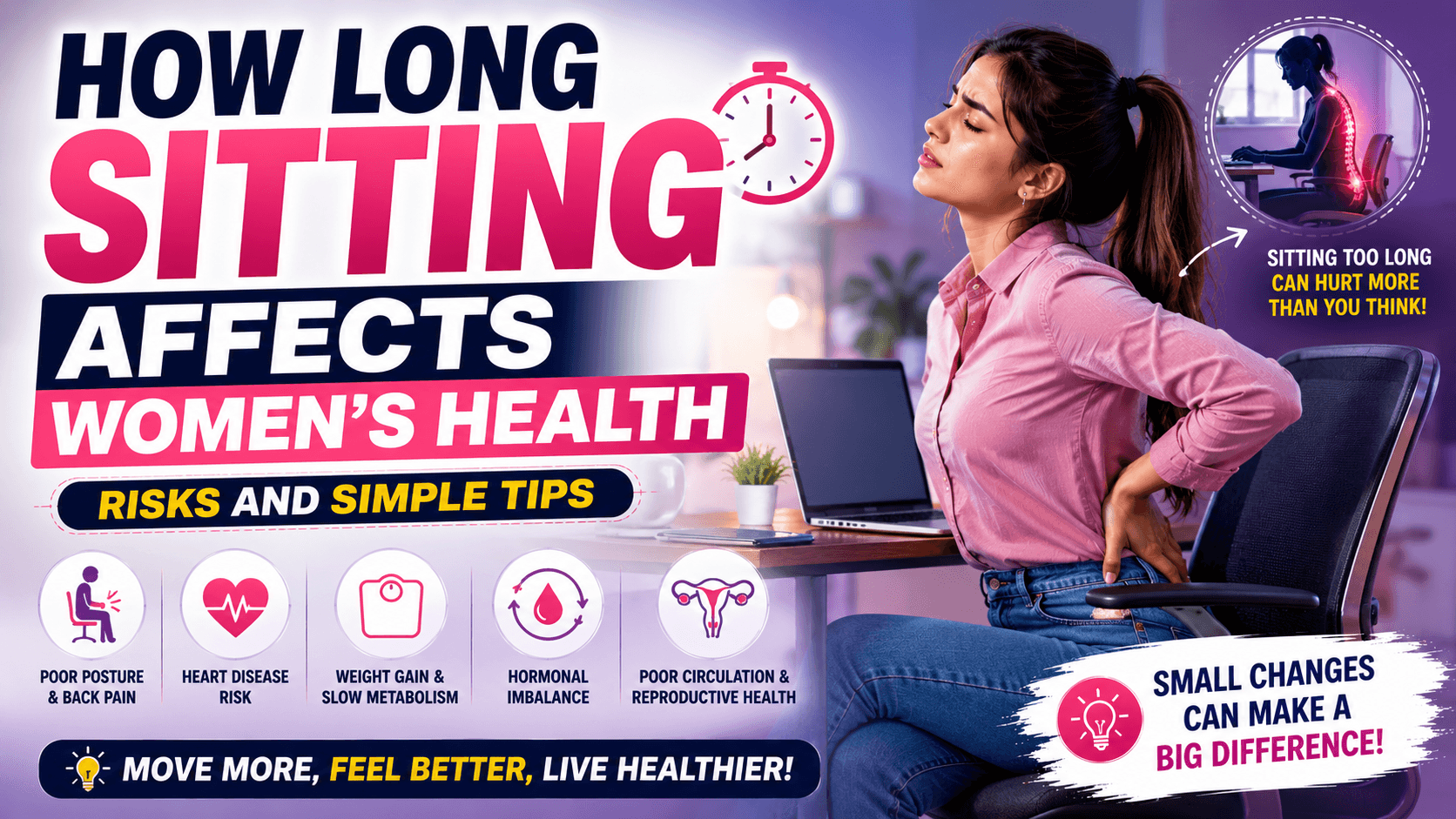
Discover how prolonged sitting impacts women's health, the associated risks, and practical tips to counteract these effects.

Maryam Mumtaz
Co-Founder & CEO
12 min read•9/2/2026
Marsa Empower · Women's Health & Everyday Wellness · For Girls & Women Aged 13 and Above · 12 min read
Modern life has made sitting feel almost unavoidable. You sit in school or university. You sit at work. You sit during the commute. You sit while using your phone, watching television, studying, or working on a computer. By the time the day ends, many women have spent the majority of their waking hours seated.
A few hours of sitting on a particular day is not a health concern. But when sitting occupies the largest portion of most days, week after week and month after month, it becomes what researchers call a sedentary lifestyle — and a sedentary lifestyle has real, well-documented consequences for women's health.
The good news is that you do not need to become an athlete or transform your schedule to address this. The most effective changes are also the most accessible: standing up regularly, taking short walking breaks, stretching when you feel stiff, and making movement a consistent part of your daily routine rather than a special event.
This guide explains what sitting for long periods does to the body, who is most at risk, and what simple changes produce the most meaningful improvement.
There is no single number of hours that is considered harmful for every woman. The concern is not about any individual period of sitting but about spending the large majority of the day inactive, and particularly about sitting for long, uninterrupted stretches without movement breaks.
A woman might sit for hours during university lectures. Then sit at a desk for a work shift. Then sit during the commute home. Then sit on the sofa for the evening. Even if she goes for a thirty-minute walk somewhere in the middle, she has still spent most of her waking hours sedentary. Research consistently shows that the health risks of prolonged sitting are not fully offset by a single daily exercise session, particularly if the remaining hours are largely inactive.
The goal is not to avoid sitting entirely. Sitting is normal, comfortable, and necessary for many activities. The goal is to add more movement throughout the day, reduce long uninterrupted sitting periods, and ensure that physical activity is distributed through the day rather than concentrated in one block.
One of the most immediate and most noticeable effects of prolonged sitting is its impact on posture. When you sit for hours — particularly at a desk or while looking down at a phone — the body tends to drift into positions that place sustained strain on the spine, neck, and surrounding muscles.
Common patterns include rounded shoulders, where the chest collapses inward and the shoulder blades separate. Forward head posture, where the head moves ahead of its balanced position above the spine, placing significant load on the cervical spine. Slouching through the lower back, flattening the lumbar curve and increasing disc pressure. Tightening of the hip flexors, which shorten when the hips are held at ninety degrees for extended periods.
None of these posture changes cause immediate harm. But sustained in the same position for hours daily, they produce the muscle imbalances, joint strain, and chronic discomfort — particularly in the neck, shoulders, and lower back — that many desk-working and studying women experience.
The most effective postural intervention is movement, not perfect posture. No single position, however ergonomically ideal, is healthy to maintain for hours without change. The body benefits from regular position changes, standing, and walking — not from sitting more correctly.
Practical adjustments include positioning your screen at a comfortable eye height rather than looking down. Keeping your back supported by the chair back. Keeping feet comfortably resting on the floor or a footrest. Relaxing the shoulders rather than holding them raised. And most importantly, changing position and standing up regularly.
When the body remains in one position for an extended period, the muscles and joints that are not being used gradually shorten, stiffen, and become uncomfortable. The hip flexors — the muscles at the front of the hips that hold the thighs at a right angle to the torso during sitting — are particularly affected. The gluteal muscles (the bottom) become underactivated. The hamstrings (back of the thighs) shorten. The muscles of the upper back and neck accumulate tension from supporting the head in a sustained position.
This accumulation of stiffness and muscular tension is one of the most commonly reported physical experiences among women who study or work at a desk. After two or three hours of uninterrupted sitting, many women notice that standing feels stiff and uncomfortable initially, that their lower back or hips ache, and that stretching provides significant relief.
Short, regular movement breaks throughout the day are the most effective way to prevent this stiffness from accumulating to a problematic level. Standing up, walking to another room, doing a brief series of stretches, or simply changing position interrupts the sustained muscular shortening that causes discomfort.
The large muscles of the legs — particularly the calves and thighs — function partly as a circulatory pump, helping return blood from the lower extremities to the heart. When these muscles are inactive during prolonged sitting, this pumping action is reduced.
The practical consequences include a feeling of heaviness or tiredness in the legs after prolonged sitting, temporary swelling of the ankles and feet as fluid accumulates in the lower extremities, and stiffness in the lower legs. These experiences are common and generally resolve quickly with walking.
Getting up and walking periodically restores muscular pumping action and significantly improves lower limb circulation. Even a two to three minute walk every hour is sufficient to meaningfully reduce the circulatory effects of prolonged sitting.
One important note: sudden or significant swelling, pain, warmth, or redness in one leg — particularly one that is asymmetric, meaning one leg is much more swollen or painful than the other — should not be dismissed as a normal effect of sitting. These can be symptoms of deep vein thrombosis (DVT), a blood clot in the deep veins that requires prompt medical evaluation. Seek medical attention for these symptoms, particularly if accompanied by chest pain or difficulty breathing.
This is perhaps the most significant indirect effect of a sedentary lifestyle. When sitting occupies most of the day, there is simply less time, energy, and opportunity for other movement. The body's daily energy expenditure — through walking, standing, household tasks, incidental movement, and deliberate exercise — decreases substantially.
Research on non-exercise activity thermogenesis (NEAT), the calories burned through all movement that is not structured exercise, shows that small reductions in incidental daily movement add up significantly over time. A woman who walks between rooms, takes stairs, stands while on the phone, and moves through normal household activity burns substantially more energy per day than one who remains seated throughout the equivalent time.
The cumulative effect of reduced daily movement — even without any change in diet — can contribute to changes in body weight and composition, reduced cardiovascular fitness, decreased muscular strength, and reduced overall physical capability over months and years.
This may seem counterintuitive, but prolonged inactivity often produces fatigue rather than conserving energy. Many women who spend long days studying or working at a desk report feeling more tired and sluggish than on days that include more physical movement.
The mechanism involves several factors. Prolonged sitting reduces blood flow throughout the body, including to the brain, reducing mental alertness and physical readiness. It maintains low levels of circulating adrenaline and other hormones that support energy and motivation. It reduces the release of mood-supporting neurotransmitters including serotonin and dopamine that are stimulated by physical movement. And it often correlates with reduced exposure to natural light and fresh air, both of which support daytime energy and alertness.
A short walk of even ten to fifteen minutes provides a measurable boost in energy and alertness for many women — more reliably than a comparable period of rest spent seated. Using movement breaks as an energy management strategy during long work or study sessions is both evidence-supported and practically effective.
Sitting itself does not automatically cause weight gain. The relationship between sedentary behaviour and body weight is more complex than a direct causal one.
However, spending the majority of the day inactive does reduce daily caloric expenditure. When this reduced expenditure is combined with patterns that commonly accompany a sedentary lifestyle — including frequent eating while distracted, irregular meals, poor sleep (which disrupts appetite hormones ghrelin and leptin), and limited deliberate exercise — the cumulative effect can contribute to gradual weight gain over time.
For women with PCOS, the relationship is particularly significant. Insulin resistance — the core metabolic mechanism of PCOS — is worsened by physical inactivity and improved by regular movement, particularly the combination of aerobic activity and strength training. A sedentary lifestyle directly worsens the hormonal environment that makes weight management harder for women with PCOS.
Weight management is influenced by multiple factors including nutrition, physical activity, sleep, hormones, genetics, medications, and health conditions. Adding more movement to the day is an important component of weight management, but it works most effectively as part of a broader approach that includes nutritional quality and adequate sleep.
Research consistently associates a predominantly sedentary lifestyle with elevated long-term health risks, particularly when combined with insufficient regular physical activity. These associations include elevated cardiovascular disease risk, driven by reduced cardiovascular fitness, higher blood pressure, and the metabolic consequences of chronic inactivity. Increased risk of type 2 diabetes, related to the worsening insulin resistance that prolonged inactivity produces. Reduced bone density over time, since weight-bearing movement is the primary stimulus for maintaining bone strength. Increased risk of several cancers, including breast cancer, which has been associated with physical inactivity in multiple large studies.
These are population-level findings reflecting the cumulative effect of decades of sedentary behaviour. They do not mean that sitting at a desk for a day, a week, or a month causes disease. They mean that building more movement into everyday life across years produces genuinely better long-term health outcomes than a predominantly sedentary lifestyle.
Prolonged sitting affects women and girls across many different life situations, and the specific patterns differ depending on age and circumstances.
Teenage girls accumulate significant sitting time through school, homework, phone use, social media, gaming, and streaming. The combination of a compulsory sitting school day followed by leisure time that is also primarily sedentary can leave very little space for meaningful daily movement.
University students face extended periods of sitting through lectures, seminars, computer-based assignments, and exam preparation. Study sessions can extend for several hours without natural movement breaks, and the demands of academic deadlines can make exercise feel like an unaffordable luxury.
Working women in office roles spend the majority of working hours at a desk. For women who also work from home, the transition from work to personal time may involve little physical change in setting or position.
Women with caregiving responsibilities, including mothers of young children or caregivers for elderly relatives, may spend significant time sitting during feeding, rocking, helping with homework, or managing administrative caregiving tasks, even though they are simultaneously very busy.
Older women may face declining mobility that makes sustained physical activity harder, making intentional movement breaks and seated stretching exercises increasingly important for maintaining the movement the body needs.
The practical solution needs to be realistic for each woman's specific circumstances. What is achievable for a university student differs from what is achievable for a full-time working mother. The focus is on progress — more movement than currently present — rather than perfection.
There is no single universal rule about exactly when every woman must stand up. General guidance from physical activity research suggests that breaking up sitting time approximately every thirty to sixty minutes produces meaningful health benefits compared to remaining seated for several hours.
This does not require a formal exercise break each time. Standing up, walking to another room, filling a water glass, taking a short walk around the office or home, stretching briefly, or completing a quick household task all interrupt the uninterrupted sitting period in a way the body benefits from.
A practical approach is to associate specific regular activities with standing up. Standing whenever you take a phone call. Walking to another floor or room rather than sending a message. Getting water or making tea at regular intervals. Stretching during the transition between study subjects or work tasks.
The following practical suggestions require no equipment, no gym membership, and no major schedule change. They are starting points — choose what is realistic for your current situation and build from there.
At work or studying, stand and stretch between tasks rather than immediately moving to the next screen or document. Walk to speak to a colleague or family member in another room rather than messaging. Take phone calls while standing or walking when possible. Take a brief walking break at lunchtime even if only around the building or the block. Use stairs instead of the lift where practical.
While studying at home, set a timer for fifty minutes of focused work followed by a ten-minute break that includes standing and moving. Walk around while reviewing notes or listening to an audio revision. Stretch between subjects. Avoid studying continuously for several hours without any movement.
At home in the evenings, use advertising breaks during television to stand, stretch, or complete a small household task. Walk around while on personal phone calls. Take a short walk after dinner, which also has specific metabolic benefits in reducing post-meal blood sugar elevation. Avoid transitioning directly from a work or study session to several hours of seated leisure without any movement in between.
While using your phone, be aware of how long you have been sitting while scrolling. Set your phone down and stand up at natural pauses. Walk around the room while consuming audio content like podcasts or music.
Regular deliberate exercise — walking, cycling, swimming, strength training, yoga, or any other sustained physical activity — is unquestionably valuable for women's health and should be part of any woman's routine.
However, research shows that the health risks of prolonged sitting are not fully reversed by a single daily exercise session when the remainder of the day is largely sedentary. A woman who exercises for thirty minutes and then sits for the remaining nine or ten waking hours retains a significantly more sedentary daily profile than one who exercises for thirty minutes and also incorporates regular movement breaks throughout the day.
This does not mean exercise is not worth doing — it absolutely is, and its benefits are extensive. It means that exercise and everyday movement are both important and that they are not interchangeable. The goal is to have both: regular deliberate exercise and consistent incidental movement distributed through the day.
The best exercise is any exercise that is genuinely enjoyable enough to maintain consistently. Walking remains the most sustainable form for most women because it requires no equipment, no scheduling, no cost, and can be integrated into the existing daily routine rather than requiring time set aside specifically for it.
Sitting itself is not a direct cause of irregular or painful periods. However, a predominantly sedentary lifestyle can contribute to the overall pattern of physical health that influences menstrual regularity.
Regular physical activity supports insulin sensitivity, reduces cortisol, improves sleep quality, and supports the hormonal balance that governs the menstrual cycle. A lifestyle with very little physical activity may worsen insulin resistance (relevant for women with PCOS), increase cortisol from chronic inactivity stress, and disrupt sleep — all of which can influence menstrual patterns.
This is not the same as saying that sitting causes period problems. It means that building more movement into daily life, as part of an overall healthy lifestyle, supports menstrual health alongside everything else.
If your periods become significantly irregular, unusually heavy, extremely painful, or otherwise different from your established pattern, the cause is unlikely to be sitting specifically and warrants medical evaluation rather than lifestyle adjustment alone.
Long periods of screen-based sitting — particularly those involving social media, news, and emotionally activating content — can have effects on mental wellbeing beyond the purely physical.
Spending many hours in the same position looking at a screen reduces exposure to natural light, outdoor environments, and the physical space-changing movement that provides mental as well as physical refreshment. It also reduces the natural cortisol-lowering effect of physical activity and the mood-supporting neurotransmitter release that movement produces.
A short outdoor walk serves multiple functions simultaneously: it interrupts the sedentary period, provides exposure to natural light (which supports the circadian clock and vitamin D production), provides a change of environment that reduces the mental preoccupation associated with sustained focused work, and produces the endorphin and serotonin release associated with physical movement.
Regular physical movement is a well-evidenced component of mental health maintenance. It is not a substitute for professional mental health support when that is needed, but its contribution to daily mood, stress management, and cognitive function is well-established and practically significant.
You do not need to transform your schedule to move more. A simple daily framework reduces uninterrupted sitting without requiring additional hours in the day.
In the morning, get out of bed and move around before immediately sitting with your phone or screen. Make breakfast standing. Walk around the home while getting ready.
During study or work, take a brief standing and movement break every forty-five to sixty minutes. Walk to another room for water. Stretch while waiting for something to load. Stand and walk during phone calls.
During lunchtime or midday, take at least a ten-minute walk outside if possible. Change your environment and your posture for at least part of the break.
In the afternoon, continue regular movement breaks during work or study. Walk to collect children, run a brief errand on foot, or take any available opportunity to add steps.
In the evening, avoid moving directly from work or study sitting to several more hours of seated television or phone use. Take a gentle walk, complete some light household activity, or do some brief stretching before settling into the evening.
In the hour before bed, reduce screen-based sitting and include some gentle stretching or mobility work to release any accumulated muscle tension before sleep.
Use the following checklist as a simple daily awareness tool. You do not need to complete every item perfectly every day. Consistency across most days is what matters over time.
Did you take regular movement breaks from sitting throughout the day? Did you walk or move for at least some of your breaks? Did you stand and stretch when you felt stiff? Did you spend some time away from a screen? Did you include some deliberate physical activity — even a short walk? Did you avoid sitting continuously for more than one hour without getting up? Did you drink enough water throughout the day? Did you get adequate sleep?
Most of the effects of prolonged sitting described in this guide are addressed effectively by the movement and lifestyle changes discussed above and do not require medical attention on their own.
However, professional evaluation is appropriate for the following. Persistent back or neck pain that does not improve with movement and postural adjustment. Joint pain that is limiting normal daily activities. Leg swelling, particularly swelling that is one-sided, accompanied by pain or warmth, or combined with other symptoms. Numbness or weakness in the legs or arms. Severe fatigue that does not improve with more movement and better sleep. Sudden difficulty breathing or chest pain, which require emergency medical attention.
Do not assume that significant, persistent, or sudden symptoms are simply the result of sitting too much. They deserve proper evaluation to determine their actual cause.
Marsa Empower's platform supports women in building the health awareness and daily habits that make a genuine difference to their physical and emotional wellbeing.
Health tracking tools including cycle and symptom monitoring allow women to observe connections between their activity levels, energy, mood, and physical symptoms over time. Identifying that energy is consistently lower on days with the least movement, or that certain symptoms correlate with prolonged sedentary periods, provides the kind of pattern awareness that motivates sustainable change.
Health education resources explain the effects of sedentary behaviour on women's health, the specific risks relevant to conditions including PCOS, and the practical changes most likely to produce meaningful improvement for different life situations.
AI health guidance through Digital Doctors provides educational information on movement, nutrition, and women's wellness, helping women understand the habits most worth building and identify when symptoms warrant professional medical evaluation.
Marsa Empower is a health education and wellness companion. It is not a substitute for professional medical advice, and any persistent or concerning symptoms should be discussed with a qualified healthcare professional.
Is sitting for eight hours a day bad for women?
Spending the majority of the day sitting, particularly in long uninterrupted blocks, is associated with reduced fitness, poorer cardiovascular health, and other health risks over time. The most effective response is to break up sitting time regularly throughout the day and ensure that daily physical activity is a consistent part of the routine, not a single occasional event.
Can sitting cause back pain?
Prolonged sitting, particularly with poor ergonomics, minimal position changes, and no movement breaks, can contribute significantly to lower back, neck, and shoulder discomfort. Regular movement breaks, position changes, and basic postural awareness are the most effective prevention. Persistent or significant back pain that does not respond to these measures warrants medical evaluation.
Is walking enough to reduce the health effects of sitting?
Walking is an excellent and highly accessible form of physical activity that produces genuine health benefits. Distributing walking breaks throughout the day — rather than only walking for a single block — provides the greatest benefit for offsetting prolonged sitting. Walking is also one of the most sustainable forms of exercise for most women.
Should I stand all day instead of sitting?
No. Standing for the entire day is not the goal and creates its own physical problems including leg fatigue, varicose veins, and lower back discomfort. The goal is varied posture — alternating between sitting, standing, and walking throughout the day — rather than replacing one static position with another.
Can sitting cause weight gain?
A sedentary lifestyle reduces daily caloric expenditure and may contribute to gradual weight gain over time, particularly when combined with other factors including poor nutritional quality and inadequate sleep. Body weight is influenced by multiple factors, and adding more movement to the day is one component of a broader healthy lifestyle approach.
How can I sit less while studying?
Set a timer for fifty-minute study blocks followed by ten-minute movement breaks. Stand and stretch between subjects. Walk around while reviewing notes. Avoid sitting at a desk for more than one continuous hour without getting up. Standing desks or elevated surfaces can allow brief periods of standing study for some tasks.
What is the easiest way to start moving more?
Start with one change: get up every time you finish a task, every time you make or receive a phone call, or every time you refill your water. Build from there. The goal is consistent small changes rather than dramatic overhauls that are difficult to maintain.
Educational Disclaimer
This article is for educational and awareness purposes only. It does not constitute medical advice, diagnosis, or treatment. If you have persistent pain, concerning symptoms, or a health condition, please consult a qualified healthcare professional for personalised evaluation and guidance.
Marsa Empower | Care. Safety. Growth.
Visit marsaempower.com to track your health, build healthier habits, and access educational guidance built for every stage of a woman's life.
Medical Disclaimer
This article is for general informational and educational purposes only and is not a substitute for professional medical advice, diagnosis, or treatment. Always seek the advice of a qualified healthcare provider with any questions you may have regarding a medical condition. Never disregard professional medical advice or delay seeking it because of something you have read on MARSA Empower.
Written By
Maryam Mumtaz
Co-Founder & CEO
Co-Founder of MARSA Empower who leads the visual and strategic evolution of the platform. Maryam bridges technical complexity with human-centric design, architecting the team's official roadmap and ensuring MARSA effectively addresses the real-world needs of women. With deep expertise in agentic AI, full-stack development, and UI/UX design, she has delivered 50+ projects for 30+ satisfied clients.
Enjoyed this story?