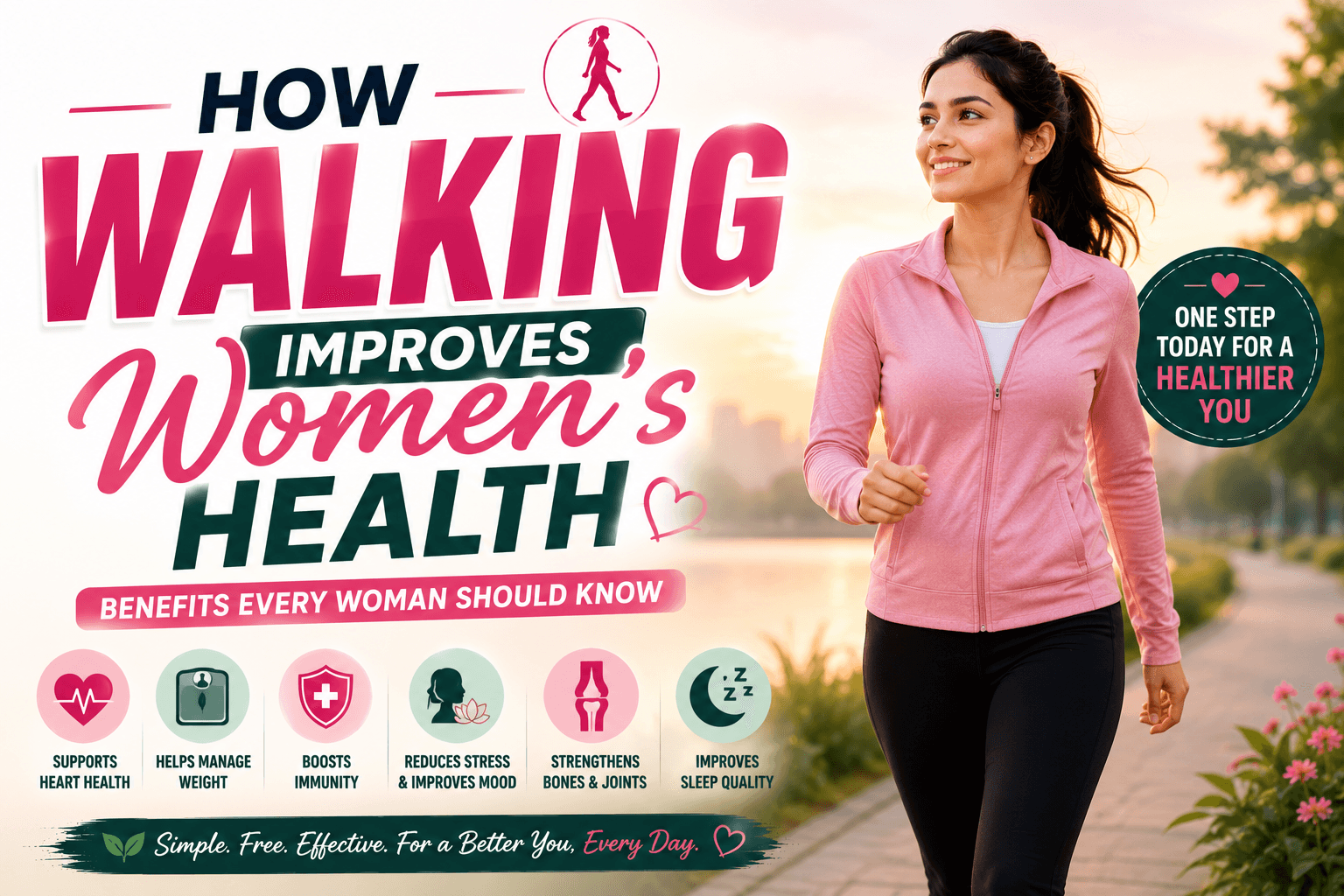
Walking is a simple yet powerful way to boost women's health. Learn how it supports heart health, mood, and more, plus tips for beginners.

Maryam Mumtaz
Co-Founder & CEO
13 min read•8/10/2026
Marsa Empower · Women's Health & Everyday Wellness · For Girls & Women Aged 13 and Above · 13 min read
"Walking is the closest thing to a perfect exercise. It is free, accessible to almost everyone, requires no equipment, and produces real, measurable health benefits across almost every system in the body."
Of all the health advice available to women — the supplements, the programmes, the gym memberships, the equipment, the complex dietary protocols — the single most consistently evidence-supported physical intervention for long-term health is also the simplest:
Walk. Regularly. At a pace that makes you breathe a little harder than usual.
That is it.
Walking is not an inferior form of exercise that women do when they cannot manage something more intense. It is, for most of the population, the most sustainable, most accessible, and one of the most genuinely effective forms of physical activity available.
Research involving millions of participants across decades consistently shows that regular walking reduces cardiovascular disease risk, improves metabolic health, supports mental wellbeing, protects bone density, reduces chronic pain, supports healthy weight management, and extends healthy lifespan. These are not modest effects. They are significant, clinically meaningful, and achievable with a commitment of as little as 30 minutes of brisk walking most days.
This guide explains what walking actually does in the body, how it specifically benefits women at different life stages, how to start if you are not currently walking regularly, and how to build the habit that produces these benefits over time.
Walking works across so many health dimensions because it engages multiple body systems simultaneously — the cardiovascular system, the muscular system, the skeletal system, the hormonal system, and the brain — all at once, without the joint stress and recovery demands of higher-impact exercise.
For women specifically, walking is particularly valuable because:
It fits into real life. A woman who is managing career, family, and domestic responsibilities alongside her own health needs does not always have two hours and a gym membership. Walking to school, around the neighbourhood, or during a lunch break is genuinely available to most women in ways that structured gym exercise is not.
It is hormonal medicine. Walking improves insulin sensitivity — one of the most powerful tools for managing PCOS, stabilising blood sugar, and reducing the androgen excess that drives irregular periods, acne, and weight gain. It reduces cortisol — protecting the hormonal balance that governs the menstrual cycle. These are direct, measurable hormonal benefits.
It is appropriate at every life stage. A 13-year-old girl building bone density, a 28-year-old managing PCOS, a 35-year-old managing work stress and irregular cycles, a 50-year-old protecting bone and heart health — walking provides relevant, appropriate benefit at every one of these stages.
It does not require fitness to begin. Unlike running, gym exercise, or sports, walking begins where you are. A woman who is entirely sedentary can begin with a 10-minute walk at a comfortable pace and build from there. The barrier to entry is genuinely low.
The heart is a muscle. Like all muscles, it responds to regular demand by becoming stronger and more efficient. Regular brisk walking — at a pace that elevates the heart rate and breathing rate above their resting levels — provides exactly the progressive demand the heart needs to adapt.
With consistent walking:
Studies consistently show that women who walk regularly have significantly lower rates of cardiovascular disease — the leading cause of death in women globally — compared to sedentary women. The reduction in cardiovascular risk begins with as little as 30 minutes of brisk walking five days per week and increases further with greater consistency.
This matters particularly for women approaching and after menopause, when oestrogen's protective cardiovascular effects are lost and heart disease risk rises substantially.
High blood pressure (hypertension) is one of the most common and most preventable cardiovascular risk factors — and regular walking is one of the most consistently evidence-supported lifestyle interventions for reducing it.
Walking lowers blood pressure through several mechanisms:
Studies show that a programme of regular brisk walking produces blood pressure reductions comparable to those achieved by some antihypertensive medications in people with mild to moderate hypertension — and does so without side effects.
Walking contributes to healthy weight management through several interconnected mechanisms — though it is important to be honest about the specific ways it works, rather than oversimplifying the relationship.
Walking burns calories — approximately 200 to 400 kilocalories per hour depending on body weight, pace, and terrain. This direct caloric expenditure contributes to the overall energy balance equation that influences body weight.
This is arguably walking's most important contribution to weight management — particularly for women. Insulin resistance is the core metabolic mechanism that makes weight gain easier and weight loss harder for many women, particularly those with PCOS.
During and after exercise, muscle cells can take up glucose from the bloodstream without requiring insulin — bypassing the insulin resistance mechanism. With regular walking, this effect becomes more sustained: insulin sensitivity improves over weeks and months, reducing the chronically elevated insulin levels that promote fat storage and make weight loss difficult.
Regular physical activity supports resting metabolic rate — the amount of energy the body burns at rest. This effect is more modest from walking than from strength training, but it is real and contributes to long-term weight management.
Regular moderate exercise (including walking) has been shown to improve the regulation of appetite hormones — leptin (fullness) and ghrelin (hunger) — reducing the overeating that often accompanies sedentary lifestyles.
Walking is a genuinely valuable component of healthy weight management — but it works best as part of an overall approach that includes nutritional quality, adequate sleep, and stress management. Walking while consistently eating a poor diet will produce limited weight-related results. The combination of walking and better nutritional choices produces far greater benefit than either alone.
Walking engages the major muscle groups of the lower body — quadriceps, hamstrings, glutes, and calves — as well as the core stabilisers that maintain upright posture. Regular walking maintains functional strength in these muscles, reducing the age-related muscle loss (sarcopenia) that begins in the late twenties and accelerates after menopause.
Walking on varied terrain — slight inclines, uneven surfaces — increases the muscular demand and the strengthening effect.
Walking is a weight-bearing exercise — meaning it places gravitational load on the skeleton, directly stimulating bone formation. Every step taken on foot creates small mechanical stresses in the bones of the feet, legs, spine, and hips — and bone tissue responds to this mechanical loading by laying down new mineral content.
This is critically important for women across all life stages:
Teenage girls: The bone density built through weight-bearing activity during adolescence directly determines peak bone mass — which protects against osteoporosis in later decades. Walking in the teenage years is an investment in long-term bone health.
Women in their twenties and thirties: Maintaining bone density built during adolescence requires ongoing weight-bearing activity. Walking is the most sustainable way to provide this stimulus.
Women approaching menopause and beyond: As oestrogen declines and bone loss accelerates, weight-bearing exercise becomes increasingly important. Women who walk regularly throughout midlife enter menopause with significantly greater bone density reserve — and maintain it more effectively.
This benefit surprises many people — because it seems counterintuitive that using energy through walking would produce more energy. But it is consistently true, and the biology is well-understood.
Regular walking:
The improvement in energy is gradual — becoming noticeable after two to four weeks of consistent walking — but it is real and reliable. Women who build a consistent walking habit consistently report higher daily energy than during periods of inactivity.
Regular physical activity — including walking — is one of the most consistently evidence-supported non-pharmacological interventions for improving sleep quality.
Walking improves sleep through several pathways:
Studies consistently show that women who walk regularly fall asleep faster, sleep more deeply, and wake feeling more refreshed than those who are sedentary.
Timing note: Vigorous exercise within two hours of bedtime can raise the heart rate and cortisol in ways that delay sleep onset for some people. A brisk evening walk is generally fine — but very intense late-night workouts may be counterproductive for sleep.
Walking is one of the most reliably mood-improving activities available — and the mechanisms are well-understood.
Endorphin release: Physical movement stimulates the release of endorphins — the brain's natural pain-relieving and mood-elevating chemicals. This is the "feel-good" effect of exercise.
Serotonin and dopamine: Walking increases the activity of serotonin and dopamine — the neurotransmitters most closely associated with mood stability, motivation, and a sense of wellbeing. These are the same neurotransmitters targeted by antidepressant medications — and walking increases their activity through natural, side-effect-free mechanisms.
Reduced rumination: There is evidence that walking — particularly in natural environments — reduces rumination (repetitive, self-critical thinking) by reducing activity in the prefrontal cortex in ways that improve emotional regulation.
Sense of accomplishment: Completing a walk — particularly when motivation was low — provides a small but genuine sense of accomplishment that compounds over time into a more positive relationship with the body and with daily habits.
For women managing anxiety, low mood, PMS-related emotional changes, or the emotional impact of hormonal conditions like PCOS, walking is not just nice-to-have. It is one of the most practical and accessible tools available.
Stress is one of the most pervasive women's health concerns — and walking is one of the most accessible tools for managing it.
Cortisol — the body's primary stress hormone — is directly reduced by moderate physical activity. During a brisk walk, cortisol initially rises (as part of the body's normal exercise response) and then falls below baseline during the recovery period. With regular walking, the average daily cortisol level decreases over time — reducing the chronic cortisol burden that impairs immune function, disrupts the menstrual cycle, worsens insulin resistance, and contributes to mental health difficulties.
Research consistently shows that walking in green spaces — parks, gardens, tree-lined streets, natural settings — produces greater cortisol reduction and mood improvement than walking in urban or indoor environments. Even urban green spaces produce this effect. For women who can access green walking environments, prioritising them amplifies walking's already significant stress-reducing benefit.
Despite the common misconception that exercise wears out joints, regular moderate walking is associated with significantly better joint health outcomes than inactivity. This is particularly true for the knees and hips.
Walking lubricates the joints — stimulating the production and distribution of synovial fluid, which cushions and nourishes the cartilage surfaces that allow smooth joint movement. Women who walk regularly have lower rates of osteoarthritis progression compared to sedentary women — partly because of this lubrication effect and partly because the muscles strengthened by walking reduce the mechanical load on the joint itself.
Walking trains balance by requiring constant micro-adjustments from the muscles and nervous system — particularly when done on varied terrain. For women in their forties and beyond, maintaining balance through regular walking directly reduces the risk of falls — one of the most significant health risks for women with reduced bone density.
Regular walking maintains the range of motion in the hips, knees, and ankles. Inactivity causes these joints to stiffen progressively — a process that regular walking prevents. Women who walk consistently into their fifties and sixties maintain significantly better physical mobility than those who are sedentary.
All exercise is only beneficial if it is done consistently — and consistency requires sustainability.
Walking is uniquely sustainable because:
The most impactful exercise is the one that actually gets done. For the majority of women, walking is the exercise most likely to become a genuine, decades-long daily habit.
One of the most common questions women ask about exercise is whether to walk during their period — and the answer is nuanced and empowering.
For most women during most days of their period, gentle to brisk walking is not only safe but actively beneficial for period symptoms:
Reduces cramps: Walking releases endorphins that act as natural pain relievers — reducing the perceived intensity of the prostaglandin-driven cramping that causes period pain. It also improves pelvic blood flow, reducing the ischaemia (muscle oxygen deprivation) that contributes to cramping.
Reduces bloating: Gentle movement improves circulation and supports the lymphatic drainage that reduces the fluid retention and bloating of the premenstrual and early menstrual days.
Improves mood: The serotonin and endorphin release from walking directly counteracts the hormonal mood changes of menstruation.
Reduces fatigue: The energy-boosting effects of even a short walk often exceed the energy cost — many women find that a 15 to 20 minute period-day walk leaves them feeling noticeably better than staying still.
On days of very heavy bleeding, severe cramping, dizziness, or genuine exhaustion — particularly the first one to two days of a heavy period — rest is appropriate and wise. Gentler options such as restorative yoga, light stretching, or a slow, short walk are better choices than vigorous exercise on the most challenging days.
Listening to the body is the most important guide: if walking feels manageable and makes you feel better — continue. If it feels genuinely overwhelming on a particularly difficult period day — rest without guilt.
For women with PCOS, regular walking is not merely "good for general health." It is a direct and evidence-based component of managing the core mechanisms of the condition.
Improves insulin sensitivity: This is the most important benefit. Insulin resistance is the central metabolic mechanism driving PCOS — contributing to elevated androgens, irregular ovulation, difficulty managing weight, and increased long-term diabetes risk. During and after walking, muscles take up glucose without requiring insulin, bypassing the resistance mechanism. With consistent walking, insulin sensitivity improves measurably over weeks and months — directly reducing the hormonal cascade driving PCOS symptoms.
Reduces androgen levels: Improved insulin sensitivity reduces the elevated insulin that signals the ovaries to produce excess androgens. Lower insulin → lower androgens → less acne, slower hair changes, more regular ovulation.
Supports cycle regularity: By reducing insulin resistance and cortisol — both of which disrupt ovulation — regular walking supports the hormonal environment needed for more regular menstrual cycles.
Reduces cortisol: Chronic stress worsens PCOS through cortisol's effects on insulin resistance and androgen production. Walking is one of the most accessible cortisol-reducing interventions available.
Supports weight management: For women with PCOS who are overweight, the combination of insulin sensitisation and caloric expenditure from walking supports the modest weight loss that consistently and significantly improves PCOS symptoms.
Walking manages PCOS. It does not cure it. The underlying biological predisposition remains. But consistent walking — alongside appropriate dietary changes and, where needed, medical management — produces real, meaningful, and clinically significant improvement in PCOS symptoms for most women who maintain it.
Walking for teenage girls is about far more than physical fitness — though the physical benefits are real and significant. It is about building a relationship with movement that supports health, confidence, and wellbeing for decades.
Bone density building: Every weight-bearing step taken during the teenage years contributes to the peak bone density that protects against osteoporosis in later life. Walking is one of the most natural and accessible ways to build this protective reserve.
Mood and mental health support: Teenage girls experience some of the highest rates of anxiety and depression of any demographic. Walking consistently reduces cortisol, increases serotonin, and provides genuine, reliable mood improvement. It is one of the most accessible mental health tools available — free, immediate, and without side effects.
Energy for learning: Regular physical activity improves concentration, memory, and cognitive function — directly supporting academic performance. Studies consistently show that physically active teenagers perform better academically than sedentary peers.
Social connection: Walking with friends, family members, or schoolmates combines physical activity with social connection — a powerful combination for teenage wellbeing.
A positive relationship with movement: Girls who experience exercise as enjoyable, social, and achievable — rather than punishing, performance-based, or appearance-driven — are significantly more likely to maintain active lifestyles into adulthood.
Weight loss. Changing body shape. Earning food. Punishing the body for how it looks. These framings of exercise are harmful for teenage girls and create disordered relationships with movement that can last decades.
Walking is movement for health, strength, energy, mood, and joy. Not for weight.
Women in their twenties and thirties frequently find that time is the primary barrier to exercise — career demands, relationship responsibilities, and domestic life compress the time available for health habits. Walking offers a unique solution: it can be integrated into daily life rather than requiring a separate time block.
Walking to work or to the bus stop. Walking during a lunch break. An evening walk after dinner. Walking to the market instead of driving. These are not "less than" a gym workout. They are sustainable, daily accumulations of exactly the physical activity that produces long-term health benefit.
The cardiovascular habits established in the twenties and thirties create the health foundation that determines cardiovascular disease risk in the forties and beyond. Regular walking during this decade — when life is often too busy to notice its absence — is an investment that pays health dividends for decades.
The stress loads of this life stage — career pressure, relationship dynamics, sometimes the demands of early parenthood — create chronic cortisol elevation that disrupts hormonal health. Walking is the most accessible cortisol-reducing intervention available, and its hormonal benefits (improved insulin sensitivity, reduced cortisol, supported cycle regularity) are most relevant and most impactful during the reproductive years.
After childbirth, walking is often the first and most appropriate form of exercise — beginning as early as the first week postpartum for uncomplicated deliveries. It is gentle enough for healing tissue, beneficial for postpartum mood (postpartum depression risk is significantly reduced by regular moderate activity), and practical enough to do with a pram or sleeping baby.
The popular target of 10,000 steps per day is widely cited — but it is worth understanding where this number comes from and how to use it.
10,000 steps was originally a marketing slogan from a Japanese pedometer company in the 1960s — not a scientifically derived health target. It was not based on research. That said, subsequent research has found that 10,000 steps per day does correlate with meaningful health benefits — not because the number itself is magic, but because it represents approximately 8 kilometres of walking, which is a reasonable daily activity level.
More recent and more rigorous research suggests that the relationship between steps and health benefit is not a cliff edge at 10,000 — it is a gradual curve:
Rather than fixating on a specific step count, consider:
Choose appropriate footwear: Shoes with adequate cushioning and support for your foot type make walking significantly more comfortable and reduce the risk of foot, knee, and lower back discomfort. You do not need expensive specialist shoes — but worn-out, flat, or ill-fitting footwear consistently causes problems.
Stay hydrated: Drink water before, during (for longer walks), and after walking. Dehydration reduces energy and increases fatigue during exercise.
Warm up the first five minutes: Begin every walk at a slower pace for the first three to five minutes. This gradually raises the heart rate and increases muscle temperature — reducing injury risk. The walk itself is the warm-up for brisk walking — no additional warm-up exercises are required.
Cool down the last five minutes: End every walk at a slower pace for the final three to five minutes to gradually lower the heart rate before stopping.
Track your progress: A step counter, a phone app, or simply recording the date and duration of each walk in a notebook provides the visible progress record that maintains motivation. Seeing three weeks of consistent walks on a calendar is genuinely motivating.
Choose enjoyable routes: Walking in pleasant environments — parks, tree-lined streets, markets, by the water — is measurably more enjoyable and more likely to become a lasting habit than walking the same indoor corridor. Fresh air and changing scenery are not trivial additions — they are genuine contributors to the mental health benefit of walking.
A single week of motivated walking does not produce health benefits. Months and years of consistent walking do. Building a genuine habit requires understanding how habits form.
Habits form most reliably when linked to something already established. Walk after breakfast. Walk after the evening meal. Walk during the school run. Walk during a lunch break. The specific time matters less than the anchor — once walking becomes automatic at a specific time and in response to a specific trigger, the habit is building.
Walking with a friend, family member, or colleague simultaneously provides social connection and exercise — two of the most powerful wellbeing supports available — and creates accountability that makes skipping more difficult. A friend who is expecting you is a more reliable motivator than internal motivation alone on low-energy days.
A paper calendar with a tick for each walk. A step counter. A phone app. The simplest form of tracking that shows consistent effort across weeks is enough. The visual record of consistency is motivating.
Missing a walk is inevitable. The habit is built in the response to missing — which is simply to walk the next scheduled day. Missing two days in a row makes returning harder. Missing one day and returning the next is normal, sustainable habit building.
The most common cause of walking-related soreness and injury is increasing intensity too fast — doubling walking distance in week two, or immediately walking at a very fast pace before the body has adapted. Build gradually: increase duration by five minutes per week, increase pace only once comfortable duration has been established.
Mild muscle fatigue during and after walking is normal. Sharp pain, persistent joint pain, or pain that does not resolve within 24 to 48 hours is a signal to reduce intensity and — if it persists — to seek medical advice. Walking through warning pain risks converting a minor issue into a significant injury.
Worn-out shoes without adequate cushioning, high heels, or shoes that do not fit properly all increase the mechanical stress on feet, ankles, knees, and lower back. Walking discomfort that appears soon after beginning a programme is often footwear-related. A pair of comfortable, cushioned trainers suitable for walking is the only equipment investment genuinely worth making.
10,000 steps walked slowly is not equivalent to 7,000 steps walked briskly. Pace produces the cardiovascular stimulus. Steps alone — without adequate pace — may not provide the heart rate elevation needed for cardiovascular benefit. Aim for a pace at which breathing is noticeably elevated, but conversation is still possible in short sentences.
Cardiovascular improvement begins within two to three weeks of consistent walking. Mood and energy improvements begin sooner — often after the first session. Visible physical changes — body composition, skin, physical capacity — take six to eight weeks of consistent walking before becoming apparent. Expecting dramatic results in the first week and stopping when they do not appear prevents walking from ever producing the benefits it is capable of.
Motivation is not a reliable foundation for long-term habits. Most days of consistent exercise are not driven by high motivation — they are driven by habit, routine, and the understanding that the benefits come from consistency rather than enthusiasm. The habit of going, regardless of motivation, is what produces the health outcomes.
Stop walking and seek medical advice if you experience:
Seek medical advice before beginning a walking programme if:
Is walking enough exercise on its own?
For most health goals, yes — regular brisk walking meets or exceeds the physical activity recommendations for cardiovascular health, mood, sleep, and metabolic health. For goals that specifically require muscle building, strength training is a valuable addition. But walking alone is a genuinely sufficient exercise for the vast majority of women's health goals.
Is a 15-minute walk worth it?
Yes. Research shows that even short bouts of walking — 10 to 15 minutes — produce measurable health benefits, including mood improvement, blood sugar reduction, and cardiovascular stimulation. A 15-minute walk is significantly better than no walk. Do not let the absence of a full 30-minute window prevent shorter walking from happening.
Can walking help with period pain?
For many women, yes. Walking releases endorphins that naturally reduce pain perception and improves pelvic blood flow that reduces the muscle cramping driving period pain. Many women find a 20 to 30 minute gentle walk provides noticeable cramp relief on period days. On very heavy or very painful days, gentler movement or rest is appropriate.
Is walking in the morning or evening better?
Both are beneficial. Morning walking in natural light reinforces the circadian rhythm that supports better sleep at night. Evening walking after meals reduces post-meal blood sugar elevation, which is particularly beneficial for insulin sensitivity. The best time is the time you will actually do it consistently.
Can walking help with PCOS?
Yes — directly and significantly. Walking improves insulin sensitivity, which is the core metabolic mechanism of PCOS. This reduces elevated insulin levels, which in turn reduces androgen production from the ovaries — improving the hormonal environment that governs acne, hair changes, and cycle regularity. Walking does not cure PCOS, but it is one of the most evidence-supported lifestyle interventions for managing it.
Does walking barefoot on grass provide additional benefit?
Walking on natural surfaces — grass, sand, uneven terrain — provides greater balance and proprioception (body position awareness) challenge than walking on flat smooth surfaces. This is genuinely beneficial for balance and coordination. "Earthing" (direct contact between bare feet and the ground) has some limited research suggesting physiological effects — but the evidence base is not as robust as the evidence for walking itself.
| Benefit | What Happens | Who It Helps Most |
|---|---|---|
| Heart health | Stronger heart · Lower resting heart rate · Better cholesterol | All women — particularly important post-menopause |
| Blood pressure | Improved arterial elasticity · Reduced cortisol · Supports healthy weight | Women with elevated or borderline blood pressure |
| Weight management | Improved insulin sensitivity · Direct caloric expenditure | All women — particularly those with PCOS or insulin resistance |
| Muscles and bones | Maintains leg and glute strength · Weight-bearing bone stimulus | Teen girls (bone building) · All women (bone maintenance) |
| Energy and stamina | Improved cardiovascular efficiency · Better mitochondrial function | Women with fatigue — particularly iron-replete women still feeling tired |
| Sleep | Reduced cortisol · Increased sleep drive · Better circadian rhythm | Women with insomnia or poor sleep quality |
| Mood | Endorphin + serotonin + dopamine release · Reduced rumination | Women with low mood, anxiety, or PMS-related emotional changes |
| Stress | Direct cortisol reduction · Amplified in nature | Women under chronic work, family, or life stress |
| Mobility and joints | Joint lubrication · Balance training · Maintained range of motion | Women in their 40s and beyond |
| Sustainability | No barrier to access · Integrable into daily life | All women — the most universally sustainable form of exercise |
| Starting Level | First Week Target | Pace |
|---|---|---|
| Fully sedentary | 10 minutes · 3 days per week | Comfortable |
| Occasionally active | 15 to 20 minutes · 3 to 4 days per week | Comfortable to slightly brisk |
| Some existing activity | 20 to 25 minutes · 4 to 5 days per week | Brisk |
| Building to target | 30 minutes · 5 days per week | Brisk |
"Every step counts. Every walk matters. The woman who walks 20 minutes three times this week has started something that — if she keeps going — will produce measurable, meaningful, long-term health benefits. That is not nothing. That is everything."
Educational Disclaimer
This article is for educational and awareness purposes only. It does not constitute medical advice. If you have any health conditions or concerns before beginning a walking programme, please consult a qualified healthcare professional for personalised guidance.
Marsa Empower · Women's Health · Everyday Wellness · Movement for Every Stage of Life
Medical Disclaimer
This article is for general informational and educational purposes only and is not a substitute for professional medical advice, diagnosis, or treatment. Always seek the advice of a qualified healthcare provider with any questions you may have regarding a medical condition. Never disregard professional medical advice or delay seeking it because of something you have read on MARSA Empower.
Written By
Maryam Mumtaz
Co-Founder & CEO
Co-Founder of MARSA Empower who leads the visual and strategic evolution of the platform. Maryam bridges technical complexity with human-centric design, architecting the team's official roadmap and ensuring MARSA effectively addresses the real-world needs of women. With deep expertise in agentic AI, full-stack development, and UI/UX design, she has delivered 50+ projects for 30+ satisfied clients.
Enjoyed this story?



