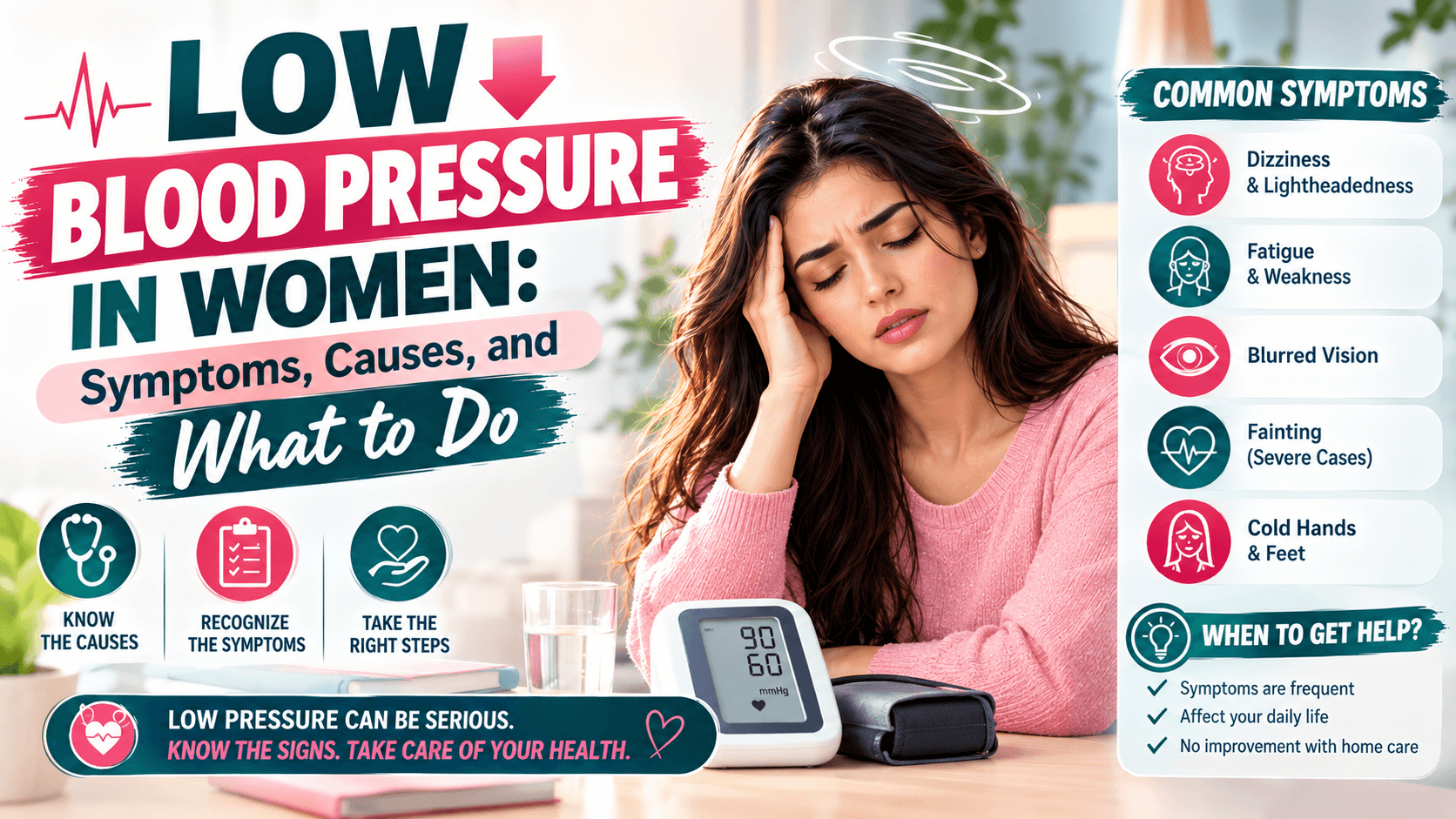
Discover the symptoms, causes, and actionable solutions for low blood pressure in women. Learn from expert insights and practical tips to manage this condition effectively.

Maryam Mumtaz
Co-Founder & CEO
11 min read•9/8/2026
Marsa Empower · Women's Health · Cardiovascular Wellness · For Girls & Women Aged 13 and Above · 11 min read
Most health conversations about blood pressure focus on high blood pressure — and with good reason, since high blood pressure is one of the most significant cardiovascular risk factors worldwide. But low blood pressure is also a common experience for many women, and one that deserves clear, practical information.
Some women have naturally low blood pressure throughout their lives without any symptoms or problems. For them, it is simply a characteristic of their cardiovascular physiology rather than a medical concern. But other women experience low blood pressure that produces symptoms — dizziness, lightheadedness, fainting, fatigue, blurred vision — that affect their daily life and deserve attention.
Understanding the difference between low blood pressure that is normal for you and low blood pressure that warrants concern is the foundation of appropriate management. This guide explains what blood pressure is, what the low range means, why it occurs in women, what it feels like, what simple self-care steps can help, and when professional evaluation is important.
Blood pressure is the force that blood exerts against the walls of the arteries as the heart pumps it around the body. It is measured in millimetres of mercury (mmHg) and expressed as two numbers — for example, 120/80 mmHg.
The first, higher number is the systolic pressure — the pressure when the heart beats and pumps blood outward. The second, lower number is the diastolic pressure — the pressure when the heart rests between beats.
Blood pressure fluctuates throughout the day in response to body position, activity level, emotional state, hydration, and many other factors. These fluctuations are normal. The measured reading at any one time reflects that moment's pressure, and clinical assessment considers readings across multiple measurements rather than a single data point.
Low blood pressure, known medically as hypotension, is generally defined as a blood pressure reading below 90/60 mmHg. However, this threshold is not absolute — some women have blood pressure consistently in this range or even lower without any symptoms or health consequences, while others develop noticeable symptoms at readings that are technically above this threshold.
This is why symptoms matter as much as numbers when evaluating low blood pressure. The relevant clinical question is not only "what is the reading?" but "is this person experiencing symptoms attributable to their blood pressure, and is this affecting their quality of life or health?"
No. Many women have naturally low blood pressure — readings consistently around 90 to 100 systolic — without any symptoms, without any underlying medical condition, and without any health consequences. For these women, low blood pressure is simply a personal characteristic. They may even have some health advantage from it, as lower blood pressure is associated with reduced long-term cardiovascular risk.
Low blood pressure becomes a concern when it is producing symptoms — particularly dizziness, lightheadedness, fainting, or significant fatigue — that are affecting daily life. It also becomes a concern when it drops suddenly and significantly from an established baseline, or when it occurs in the context of conditions that can cause dangerous reductions in blood pressure.
The goal of management is not to raise blood pressure to a specific target number, but to reduce or eliminate symptoms and prevent the falls and injuries that episodes of significant dizziness or fainting can cause.
Not everyone with low blood pressure has symptoms. When symptoms do occur, they reflect the consequences of reduced blood flow to the brain and other organs.
Dizziness and lightheadedness are the most commonly reported symptoms. They occur because when blood pressure falls, blood flow to the brain temporarily decreases, triggering the sensation of unsteadiness or feeling as though the world is tilting or spinning.
Fainting or near-fainting (syncope) occurs when blood pressure drops sufficiently that blood flow to the brain is briefly inadequate to maintain consciousness. Pre-fainting symptoms typically include lightheadedness, warmth, nausea, visual changes, and a sense of weakness or heaviness before the loss of consciousness occurs.
Fatigue and low energy can accompany chronically low blood pressure, reflecting the generally reduced perfusion pressure throughout the body.
Blurred vision may occur transiently when blood pressure drops, as reduced blood flow to the visual cortex and retina temporarily affects vision.
Nausea sometimes accompanies significant blood pressure drops, particularly during near-fainting episodes.
Difficulty concentrating and cognitive fogginess can occur with chronically low blood pressure, reflecting reduced cerebral blood flow.
Cold, pale, or clammy skin is sometimes present during significant hypotensive episodes, as the body attempts to redirect available blood flow to vital organs.
Understanding which type of low blood pressure is occurring helps identify both the cause and the most appropriate management.
Orthostatic hypotension (postural hypotension) is the most common type experienced by women. It occurs when blood pressure drops significantly when moving from a lying or seated position to standing. Normally, the body rapidly compensates for the gravitational shift when standing — constricting blood vessels and briefly increasing heart rate to maintain blood pressure. When this compensation is inadequate or slow, blood pressure temporarily falls, producing dizziness or near-fainting within the first few seconds to minutes of standing. This is defined as a drop of 20 mmHg or more in systolic pressure, or 10 mmHg or more in diastolic pressure, within three minutes of standing.
Neurally mediated hypotension (vasovagal syncope) occurs when a reflex response — often triggered by prolonged standing, emotional stress, heat, pain, the sight of blood, or other triggers — causes the heart rate to slow and the blood vessels to dilate, producing a sudden drop in blood pressure and fainting. This is the most common cause of fainting in otherwise healthy young women.
Postprandial hypotension is a drop in blood pressure that occurs one to two hours after eating, as blood is redirected toward the digestive system. It is more common in older women and those with certain neurological or autonomic conditions.
Chronic low blood pressure refers to consistently low readings without an identifiable acute trigger, which is simply a characteristic of the individual's cardiovascular physiology in many cases.
Shock is a severe, acute, life-threatening form of blood pressure drop caused by significant blood loss, severe infection, allergic reaction, or other acute crises. This is always a medical emergency and is an entirely different clinical situation from the everyday low blood pressure discussed in the rest of this guide.
Low blood pressure in women occurs for a range of reasons, from normal physiological variation to specific medical conditions.
Dehydration is one of the most common causes of symptomatic low blood pressure. When fluid intake is inadequate — from insufficient drinking, hot weather, exercise, illness involving vomiting or diarrhoea, or heavy menstrual bleeding — blood volume decreases. Reduced blood volume directly reduces blood pressure, and the cardiovascular system may not be able to fully compensate, producing symptoms particularly on standing.
Constitutional low blood pressure refers to chronically low blood pressure without an identifiable cause — simply a characteristic of how the individual's cardiovascular system is calibrated. This is more common in thin, young women and is generally not associated with adverse health outcomes when asymptomatic.
Prolonged standing or sitting in one position without movement reduces blood return from the legs to the heart, allowing blood to pool in the lower extremities. This can lower blood pressure sufficiently to produce dizziness or fainting, particularly in warm environments that cause vasodilation.
Nutritional deficiencies — particularly iron deficiency anaemia, vitamin B12 deficiency, and folate deficiency — can lower blood pressure by reducing the production of functional red blood cells and impairing the cardiovascular system's compensatory capacity.
Heavy menstrual bleeding reduces blood volume directly, and for women with consistently heavy periods, blood loss may contribute to both anaemia and low blood pressure symptoms.
Pregnancy produces significant cardiovascular changes including relative blood pressure lowering, particularly in the first and second trimesters — described in detail in the dedicated section below.
Emotional or physical triggers including anxiety, pain, fasting, heat exposure, and the sight of blood can trigger the vasovagal reflex that causes sudden blood pressure drop and fainting in susceptible women.
Certain medications can cause or worsen low blood pressure as a side effect. These include medications for high blood pressure, heart conditions, depression (some antidepressants and antipsychotics), Parkinson's disease, and erectile dysfunction (PDE5 inhibitors). Diuretics (water tablets) can also lower blood pressure through fluid reduction. Women who develop new symptoms of low blood pressure after starting a new medication should discuss this with their prescribing doctor.
Medical conditions that can cause or contribute to low blood pressure include heart conditions affecting cardiac output, severe infection (sepsis), significant blood loss from any cause, adrenal insufficiency (insufficient cortisol and aldosterone production), thyroid conditions (both hypothyroidism and hyperthyroidism can affect blood pressure), and diabetes (particularly through its effects on the autonomic nervous system and through dehydration from elevated blood sugar).
Teenage girls are among the groups most commonly affected by symptomatic low blood pressure — particularly the orthostatic and vasovagal types.
Several factors contribute to this pattern. Teenage girls are often in a period of rapid growth in which cardiovascular regulatory mechanisms may not have fully matured. They may have inadequate fluid intake throughout busy school days. Many teenage girls have iron deficiency from menstrual losses, which impairs cardiovascular compensation. Prolonged standing in warm environments — during school assemblies, sports events, or queues — is a consistent trigger for vasovagal episodes in teenage girls.
Many teenage girls experience their first fainting episode during adolescence. While this can be frightening, vasovagal fainting in the context of a clear trigger and without accompanying neurological symptoms is usually not dangerous. However, any fainting episode in a young person should be evaluated by a healthcare professional to rule out cardiac causes, which are rare but require different management.
Practical measures including adequate hydration, not skipping meals, recognising early warning signs of impending fainting, and sitting or lying down promptly when feeling faint are the most important day-to-day management approaches for teenage girls with recurrent low blood pressure symptoms.
Low blood pressure is common and expected during pregnancy, particularly in the first and second trimesters, and understanding this helps women manage it appropriately.
Pregnancy produces significant cardiovascular changes. Blood volume expands substantially — by approximately 50 percent by the third trimester. Blood vessels also dilate in response to progesterone and other pregnancy hormones, creating a larger vascular system for the increased blood volume to fill. In the early stages of pregnancy, blood volume expansion and vascular dilation do not occur at exactly the same rate, and blood pressure often falls as a result.
Symptoms of low blood pressure during pregnancy — dizziness on standing, lightheadedness, or near-fainting — are common, particularly in the first and second trimesters. They typically improve in the third trimester as blood volume increases further.
Practical management during pregnancy includes maintaining good hydration, rising from seated or lying positions slowly, avoiding prolonged standing without movement, and eating regular small meals rather than large infrequent ones. Lying on the side rather than the back during rest and sleep in the second and third trimesters helps prevent the pregnant uterus from compressing the inferior vena cava (the large vein returning blood from the lower body to the heart), which can worsen blood pressure when lying flat.
Any significant, new, or worsening low blood pressure symptoms during pregnancy should be discussed with the healthcare provider managing the pregnancy. While most low blood pressure in pregnancy is the normal physiological effect described above, other causes should be appropriately evaluated.
Most episodes of low blood pressure — a moment of dizziness on standing, a vasovagal fainting episode — are not medical emergencies. However, several patterns represent situations requiring immediate emergency care.
Sudden, severe blood pressure drop accompanied by confusion or altered consciousness, rapid or weak pulse, cold and clammy skin, pallor, and significant weakness requires emergency medical attention. These can be signs of shock from internal bleeding, severe infection, severe allergic reaction (anaphylaxis), or a cardiac event.
A fainting episode accompanied by any of the following requires emergency evaluation: the person does not regain consciousness promptly (within one to two minutes), they have a seizure during or after the episode, they sustain a significant injury in falling, they have chest pain, palpitations, or shortness of breath associated with the episode, or they have no identifiable trigger for the fainting.
A significant new fall in blood pressure that is not explained by position change or a benign trigger — particularly if it comes on rapidly and is associated with feeling very unwell — warrants urgent medical assessment.
For many women with symptomatic low blood pressure — particularly orthostatic hypotension and vasovagal episodes without an underlying medical cause — the following practical measures significantly reduce symptom frequency and severity.
Maintaining adequate hydration is the single most consistently effective self-management step for low blood pressure related to dehydration or orthostatic hypotension. Adequate fluid intake maintains blood volume, which directly supports blood pressure.
Aim to stay consistently hydrated throughout the day — approximately six to eight glasses of fluid for most adult women under normal circumstances, with more during exercise, hot weather, or illness. Carrying a water bottle and drinking regularly rather than waiting until thirst is strong prevents the gradual fluid deficit that contributes to low blood pressure symptoms.
During episodes of acute dehydration from illness (particularly vomiting or diarrhoea), deliberate rehydration with oral rehydration solution — which replaces both fluid and electrolytes — is more effective than plain water alone.
For women with orthostatic hypotension, the most practical and most immediately effective management strategy is changing position slowly and deliberately.
Before getting out of bed in the morning — when orthostatic symptoms are often most pronounced after the prolonged horizontal position of sleep — sit on the edge of the bed for 30 to 60 seconds before standing. Allow your cardiovascular system time to begin compensating before committing to the full postural change. The same principle applies to rising from chairs or from the floor.
Clenching the muscles of the legs and bottom (gluteal muscles) while rising from a seated position or while standing increases venous return to the heart through muscular compression of the veins, and can reduce orthostatic blood pressure drops. This is a specific, practical technique worth practicing deliberately.
Large meals direct significant blood flow to the digestive system, reducing the supply available for other parts of the body. This can lower blood pressure significantly in the one to two hours following a large meal, causing the postprandial hypotension described earlier.
Eating smaller, more frequent meals rather than large infrequent ones reduces this effect by distributing the digestive blood flow demand throughout the day rather than concentrating it in a single large postprandial episode. Eating breakfast consistently — rather than skipping the morning meal — prevents the blood pressure and blood sugar effects of fasting that contribute to morning symptoms.
Including complex carbohydrates, protein, and adequate fluid with each meal supports more stable blood pressure and energy levels throughout the day.
For women with consistent orthostatic hypotension who have not adequately responded to other measures, graduated compression stockings can reduce blood pooling in the legs when standing, supporting venous return to the heart and maintaining blood pressure more effectively on standing.
Compression stockings are available in different grades of compression and different styles. A healthcare professional can advise on the appropriate compression grade for individual circumstances. Stockings should be put on before getting out of bed in the morning, before the blood has had a chance to pool in the lower extremities.
For women with consistently low blood pressure who are otherwise healthy and not restricting salt for another reason, a modest increase in dietary salt intake may help raise blood pressure by increasing fluid retention and blood volume.
This is a situation where the usual recommendation to limit sodium intake for cardiovascular health is reversed — because for some women with symptomatic low blood pressure, slightly higher salt intake is a useful management tool.
However, this approach is not appropriate for all women and should not be self-initiated without discussion with a healthcare professional. Women with certain medical conditions, kidney problems, heart conditions, or other factors affecting sodium and fluid balance need individualised guidance rather than a general self-management recommendation. And increasing salt intake is not beneficial for low blood pressure that is not related to volume depletion.
Certain habits and situations reliably worsen low blood pressure symptoms and are worth avoiding or managing deliberately.
Prolonged standing without movement — particularly in warm environments — promotes blood pooling in the legs and triggers vasovagal responses. If prolonged standing cannot be avoided, regular shifting of weight, gentle marching in place, and deliberate leg muscle contractions help maintain venous return.
Hot environments including hot showers, hot baths, saunas, and very warm weather cause vasodilation that can lower blood pressure significantly. Managing these situations through cooler temperatures, sitting down, and ensuring adequate hydration before exposure reduces risk.
Alcohol consumption causes vasodilation and diuresis, both of which lower blood pressure. Women with symptomatic low blood pressure should limit alcohol intake.
Fasting and skipping meals reduces blood volume and blood sugar, both of which can worsen blood pressure symptoms. Regular meal timing is a practical prevention strategy.
Getting out of bed quickly in the morning, without the pause described above, is a consistent trigger for orthostatic symptoms and is worth addressing specifically.
Most episodes of occasional dizziness on standing or a single fainting episode in a clearly triggered situation (prolonged standing in the heat, emotional shock, the sight of blood) do not require urgent medical evaluation, though they are worth mentioning at routine health visits.
Professional evaluation is appropriate when low blood pressure symptoms are frequent, worsening, or significantly affecting daily life. When a fainting episode occurs without a clear identifiable trigger. When fainting is accompanied by chest pain, palpitations, neurological symptoms, or injury. When dizziness is severe enough to affect normal activities. When symptoms are new rather than longstanding. When blood pressure is consistently very low in association with other symptoms suggesting an underlying condition. When a woman is pregnant and experiences worsening low blood pressure symptoms.
A healthcare professional evaluating low blood pressure will take a detailed history of symptoms — when they occur, what triggers them, how long they last, what relieves them, and what other symptoms accompany them. Medical history, current medications, and family history are all relevant.
Blood pressure will typically be measured in multiple positions — lying, sitting, and standing — to assess for orthostatic hypotension. Multiple measurements over time may be needed to characterise the pattern.
Blood tests may be requested to check for contributing factors including anaemia (haemoglobin and full blood count), iron stores (ferritin), thyroid function (TSH), electrolytes, and blood glucose. A urine test may assess hydration status and kidney function.
Depending on the clinical picture, further investigations including an electrocardiogram (ECG) to assess heart rhythm, a tilt table test to assess orthostatic responses, or other specific investigations may be recommended.
Most women with symptomatic low blood pressure respond well to the self-care measures described in this guide and do not require medical treatment beyond identifying and addressing any underlying cause.
When an underlying cause is identified — iron deficiency anaemia, a medication side effect, adrenal insufficiency, thyroid dysfunction, or another specific condition — treating that cause typically resolves or significantly improves the blood pressure problem.
For women with persistent symptomatic low blood pressure not adequately managed by lifestyle measures, several medications can be used to raise blood pressure. These include fludrocortisone (which increases sodium retention and blood volume), midodrine (which increases arterial constriction), and occasionally pyridostigmine (which improves autonomic nerve function). These medications are not appropriate for all women with low blood pressure, require medical supervision, and are reserved for situations where non-pharmacological approaches are insufficient.
The appropriate management approach depends on the cause, severity, and individual health picture of each woman. Medical decisions should be made with a qualified healthcare professional rather than from general guidance.
Marsa Empower supports women in tracking health patterns and building the awareness that makes health consultations more productive.
Health Hub tracking allows women to record blood pressure readings, symptom episodes, dizziness, fainting, fatigue, and other relevant daily observations over time, creating the pattern documentation most useful for clinical assessment. Health education resources explain cardiovascular health, the range of blood pressure patterns seen in women, and the specific management considerations relevant to different life stages. AI health guidance through Digital Doctors provides informational support on symptoms including dizziness, low blood pressure, and fainting, helping women recognise which patterns warrant prompt evaluation and which can be managed with lifestyle approaches.
Marsa Empower is an educational and health awareness companion. It does not measure blood pressure, diagnose hypotension, or replace clinical evaluation. If you experience significant, new, or worsening low blood pressure symptoms, please consult a qualified healthcare professional.
What is considered low blood pressure in women?
Low blood pressure is generally defined as a reading below 90/60 mmHg. However, what matters most is whether symptoms are present — some women have consistently low readings without any symptoms and are entirely healthy, while others develop symptoms at readings that are technically within the normal range.
What causes low blood pressure in women?
Common causes include dehydration, constitutional low blood pressure (simply how some women's cardiovascular system is calibrated), nutritional deficiencies including iron deficiency anaemia, pregnancy, prolonged standing, emotional triggers, heat exposure, and certain medications. Medical conditions can also cause low blood pressure.
Is low blood pressure dangerous?
In many women, chronically low blood pressure without symptoms is not dangerous and may even be associated with reduced long-term cardiovascular risk. Low blood pressure that causes fainting, falls, or significant symptom burden warrants attention. Sudden, severe blood pressure drops associated with feeling very unwell, confusion, rapid weak pulse, or cold clammy skin are medical emergencies.
What can I do when I feel dizzy from low blood pressure?
Sit or lie down immediately rather than remaining standing. This is the most important immediate action as it reduces the risk of fainting and injury. Drink water if dehydrated. Rest in a cool environment. Elevating the legs while lying down (if comfortable) helps blood return to the heart. Do not stand until symptoms have passed completely.
Is low blood pressure common in teenage girls?
Yes. Teenage girls are one of the most commonly affected groups, particularly for vasovagal fainting and orthostatic dizziness. Adequate hydration, regular meals, recognising triggers, and sitting down promptly when feeling faint are the most useful management strategies.
Does low blood pressure in pregnancy need treatment?
Low blood pressure is common and expected in the first and second trimesters of pregnancy due to normal cardiovascular changes. Most cases are managed through hydration, positional awareness, small frequent meals, and rising slowly. Worsening, significant, or new low blood pressure symptoms during pregnancy should be discussed with the healthcare provider managing the pregnancy.
| Topic | Key Points |
|---|---|
| Definition | Generally below 90/60 mmHg — but symptoms matter as much as the reading |
| Most common symptoms | Dizziness on standing · Lightheadedness · Fainting · Fatigue · Blurred vision |
| Most common types | Orthostatic (on standing) · Vasovagal (triggered reflex) · Dehydration-related |
| Common causes | Dehydration · Constitutional · Iron deficiency · Pregnancy · Medications · Prolonged standing |
| Most effective self-care | Stay hydrated · Stand up slowly · Eat smaller more frequent meals · Avoid heat and prolonged standing |
| When it's an emergency | Sudden severe drop · Confusion · Cold clammy skin · Rapid weak pulse · Prolonged unconsciousness |
| When to see a doctor | Frequent or worsening symptoms · Fainting without trigger · Symptoms affecting daily life · New symptoms |
Educational Disclaimer
This article is for educational and awareness purposes only. It does not constitute medical advice, diagnosis, or treatment. If you experience significant, worsening, or concerning blood pressure symptoms, please consult a qualified healthcare professional for personalised evaluation and guidance. In an emergency, call emergency services immediately.
Marsa Empower | Care. Safety. Growth.
Visit marsaempower.com to track your health, access educational guidance, and build the daily habits that support your wellbeing at every stage of life.
Medical Disclaimer
This article is for general informational and educational purposes only and is not a substitute for professional medical advice, diagnosis, or treatment. Always seek the advice of a qualified healthcare provider with any questions you may have regarding a medical condition. Never disregard professional medical advice or delay seeking it because of something you have read on MARSA Empower.
Written By
Maryam Mumtaz
Co-Founder & CEO
Co-Founder of MARSA Empower who leads the visual and strategic evolution of the platform. Maryam bridges technical complexity with human-centric design, architecting the team's official roadmap and ensuring MARSA effectively addresses the real-world needs of women. With deep expertise in agentic AI, full-stack development, and UI/UX design, she has delivered 50+ projects for 30+ satisfied clients.
Enjoyed this story?