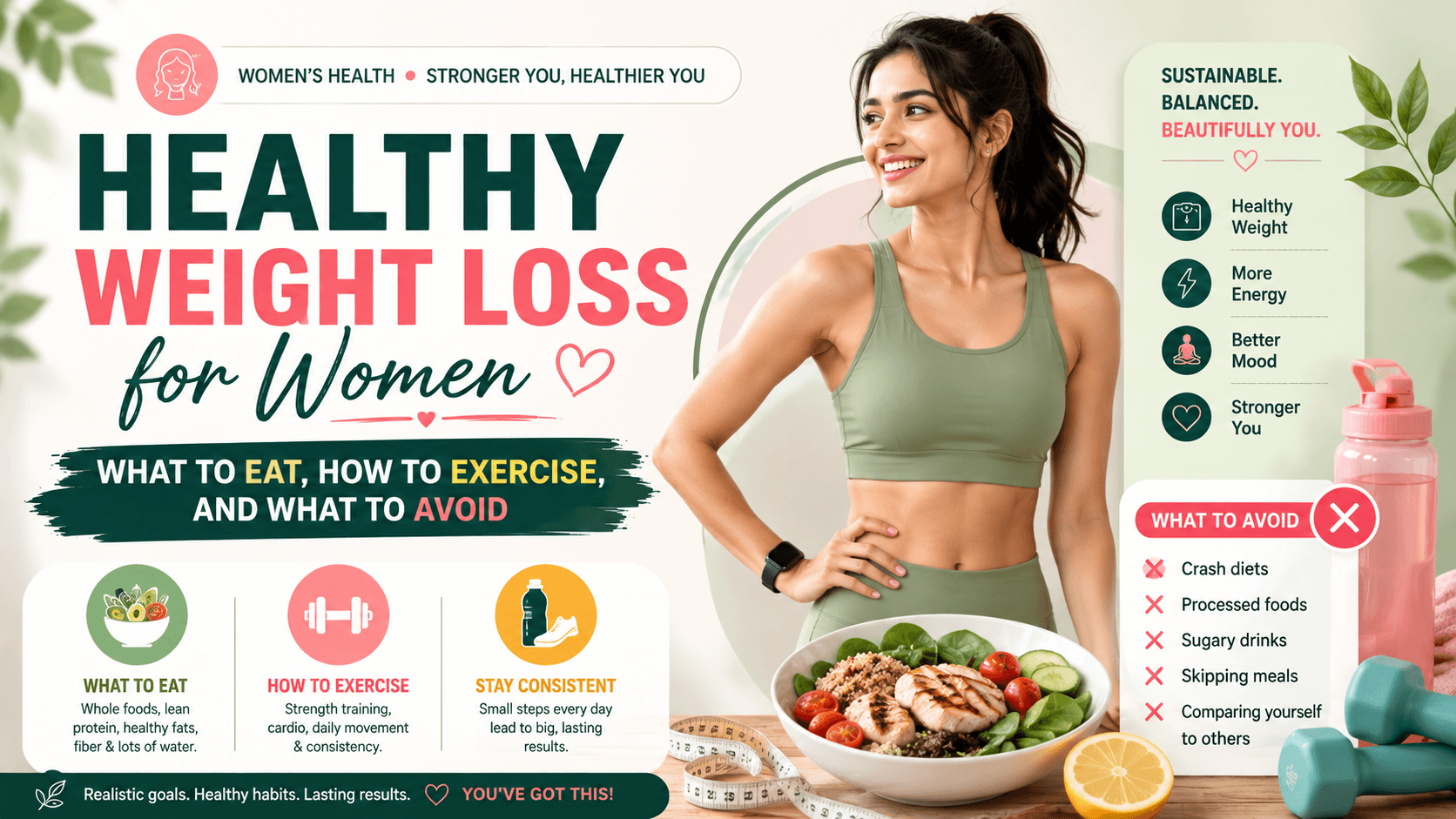
Uncover expert insights and practical tips on losing weight naturally using food and exercise. Designed specifically for women, this guide offers sustainable strategies for a healthier lifestyle.

Maryam Mumtaz
Co-Founder & CEO
14 min read•8/26/2026
Marsa Empower · Women's Health & Nutrition · For Women Aged 18 and Above · 14 min read
"Sustainable weight management is not about eating as little as possible or exercising as much as you can stand. It is about building the consistent habits that support a healthy body — one that functions well, feels energised, and remains healthy for decades."
The weight loss industry is worth billions of dollars — and a significant proportion of that money is spent convincing women that their bodies are problems requiring increasingly extreme solutions. New diets promise rapid results. Supplements promise effortless change. Exercise programmes promise transformation in thirty days.
Most of these promises are not kept.
And behind the unfulfilled promises is genuine harm — women who have spent years cycling through restrictive diets that produce short-term loss followed by rebound gain, leaving them more frustrated, more confused about nutrition, and sometimes with a more disrupted relationship with food and their body than before they started.
This guide takes a different approach. Not because sustainable, evidence-based weight management is less interesting than the latest diet trend — but because it is far more likely to actually work.
The approach here is not about restriction, deprivation, or achieving a specific appearance. It is about understanding the factors that influence body weight, building the consistent habits that produce genuine, lasting change, and recognising when weight concerns have a medical component that deserves investigation rather than more willpower.
Healthy weight management is not:
Healthy weight management is:
The most effective weight management approach is the one a person can maintain for years — not the one that produces the fastest initial change before becoming impossible to sustain.
Severe caloric restriction (eating far too little) triggers several biological responses that work against weight loss:
These are not personal failings. They are biological responses to inadequate nutrition that occur in virtually everyone who follows a very low-calorie diet. Understanding this removes the self-blame that cycles of failed dieting produce.
Rather than immediately focusing on eating less, the most productive starting point for most women is improving the quality of what they eat.
High-quality, nutrient-dense food:
Vegetables: Low in calories, high in fibre and micronutrients. Filling the plate with vegetables first — before adding protein and carbohydrate — reduces overall caloric intake without hunger. Non-starchy vegetables (leafy greens, broccoli, cauliflower, cucumber, peppers, tomatoes) are particularly valuable.
Protein-rich foods: Protein produces the greatest satiety per calorie of any macronutrient. It also requires more energy to digest and absorb than carbohydrates or fat (the thermic effect of food). Adequate protein intake is the single most consistently supported dietary factor for both weight loss and the preservation of muscle mass during weight loss. Best sources: eggs, chicken, fish, lentils, chickpeas, Greek yogurt, paneer, tofu, nuts.
Whole grains: Brown rice, whole wheat atta, oats, and barley release energy slowly — maintaining stable blood sugar and sustained satiety, unlike their refined equivalents which cause rapid blood sugar spikes and subsequent hunger.
Beans and lentils: Combined protein and fibre in a single food. Lentil daal is one of the most effective weight-supportive foods available — inexpensive, accessible, and producing outstanding satiety for its caloric content.
Fruits: Natural sweetness with fibre — satisfying sweet cravings while providing vitamins, antioxidants, and fibre. Whole fruit is significantly more weight-supportive than fruit juice, which removes the fibre and concentrates the sugar.
Healthy fats: Despite their caloric density, foods including nuts, seeds, avocado, and olive oil produce strong satiety and support hormonal health. The key is appropriate portion sizes rather than avoidance.
Yogurt (plain, unsweetened): High protein, calcium, and probiotics — a highly weight-supportive food when chosen in its plain, unsweetened form.
Rather than counting calories at every meal, the balanced plate approach provides a practical, sustainable framework for appropriate portions without obsessive tracking.
Half the plate — vegetables and/or fruit Non-starchy vegetables and fruits occupy half the plate. They provide fibre, vitamins, antioxidants, and volume — filling the stomach with high-nutrient, lower-calorie foods that support satiety without excess calories.
One quarter — protein A palm-sized portion of protein at every meal. Eggs, chicken, fish, lentils, chickpeas, paneer, Greek yogurt. This quarter of the plate is what most women under-eat relative to what supports their weight management goals.
One quarter — whole grain carbohydrate A fist-sized portion of whole grain — brown rice, whole wheat chapati, oats. Not eliminated — reduced to an appropriate serving size and chosen in its whole grain form.
Moderate healthy fat A thumb-sized amount of healthy fat — olive oil in cooking, a small handful of nuts as a side, half an avocado. Not avoided — portioned.
Calorie counting is cognitively demanding and — for many women — creates an anxious, preoccupied relationship with food that is difficult to sustain long-term. The balanced plate provides the same basic framework (appropriate portions of nutritious foods) without requiring the precision and mental overhead that drives most people away from calorie tracking within weeks.
Skipping meals is one of the most common weight management strategies — and one of the most counterproductive for most women.
Drops blood sugar: Which triggers a cortisol response (the body's stress response) — elevating the stress hormone that promotes fat storage, particularly around the abdomen.
Increases hunger: The hunger that accumulates through a skipped meal intensifies through the day. Most women who skip breakfast or lunch compensate by eating more in the evening — producing a larger caloric intake than if they had eaten all three meals.
Reduces metabolic rate: Consistent meal skipping sends a nutritional scarcity signal to the body, triggering the same metabolic adaptation that crash dieting produces — the body burns fewer calories at rest to conserve energy.
Worsens food choices: Extreme hunger — the kind produced by skipped meals — consistently drives food choices toward high-calorie, high-sugar, quickly available foods rather than the balanced choices that well-fed, satisfied women make more easily.
Eat three balanced meals at consistent times throughout the day. If hunger genuinely does not exist at a meal time, eat a small, protein-rich snack rather than skipping entirely. Consistency — eating at regular times — regulates hunger hormones (ghrelin and leptin) more effectively than skipping.
The objective is not to eliminate any food completely — which creates an unsustainable relationship with eating. It is to significantly reduce the frequency and portions of foods that consistently work against the body's ability to manage weight.
The single most impactful dietary change for most women's weight management is replacing sugary drinks with water.
Sugary drinks — cola, packaged juices, sweet chai, energy drinks — deliver large amounts of sugar and calories without producing satiety. The body does not register liquid calories with the same fullness signal it registers from food calories — meaning sugary drinks add calories on top of normal food intake without reducing food intake to compensate.
A single can of cola contains approximately 35g of sugar and 140 calories. Consumed daily, this represents approximately 51,000 calories per year — purely from one drink. Eliminating this single item produces one of the most significant caloric reductions available without changing any other aspect of the diet.
What to drink instead: Water · Sparkling water · Plain lassi (unsweetened) · Herbal teas · Diluted fresh lime water without sugar
Packaged biscuits, chips, and processed snacks are designed — through specific combinations of salt, sugar, and fat — to override satiety signals and encourage continued eating beyond genuine hunger. They are calorie-dense, low in protein and fibre, and produce rapid blood sugar spikes followed by crashes that increase hunger.
Replacing processed snacks with whole food alternatives — a handful of nuts, a boiled egg, fruit with yogurt — provides comparable or greater satiety at significantly lower caloric impact.
Fried foods are calorie-dense — oil absorbs into food during frying, significantly increasing caloric content. Occasional fried food is not problematic. Regular daily consumption as a dietary staple significantly increases caloric intake.
Some foods that are genuinely nutritious — rice, bread, ghee, nuts — are also calorie-dense. The goal is not elimination but appropriate portioning. A palm of rice alongside plenty of vegetables and protein is weight-supportive. A plate primarily composed of rice with small amounts of everything else is not — the proportion matters.
Of all the nutritional changes that support weight management, consistently eating adequate protein and adequate fibre produce the most meaningful impact on hunger, satiety, and metabolic rate.
Satiety: Protein activates multiple satiety hormones (including GLP-1 and PYY) and suppresses ghrelin (the hunger hormone) more effectively than carbohydrates or fat. Studies consistently show that higher-protein diets produce lower overall caloric intake — not because protein is restricted, but because adequate protein reduces hunger throughout the day.
Muscle preservation: During weight loss, the body loses both fat mass and muscle mass. Adequate protein intake — combined with strength training — significantly reduces the proportion of muscle lost. This matters for long-term weight management because muscle is metabolically active tissue that burns more calories at rest than fat tissue.
Thermic effect: The body uses approximately 20 to 30% of protein's caloric content to digest and absorb it — compared to 5 to 10% for carbohydrates and 0 to 3% for fat. Higher protein intake slightly increases caloric expenditure through this mechanism.
Practical target: Aim for protein at every meal and at least one protein-containing snack. A rough guide: a palm-sized portion of protein per meal for most adult women.
Dietary fibre — found in vegetables, fruits, whole grains, legumes, nuts, and seeds — reduces caloric intake through several mechanisms:
The average woman in Pakistan and South Asia eats significantly less fibre than recommended. Increasing vegetable and legume intake — without any other dietary change — produces meaningful improvements in satiety and weight management.
Exercise is a genuinely important component of weight management — but its role is often misunderstood.
Exercise contributes to weight management primarily by:
However, exercise alone — without changes to diet — typically produces modest weight loss results for most women. This is because:
The most effective approach combines both — improved nutrition and regular exercise together produce significantly better results than either alone.
Walking is consistently underrated as a weight management tool — perhaps because it does not feel sufficiently intense to "count." But the evidence for walking's contribution to weight management is substantial.
Direct caloric expenditure: A 65kg woman burns approximately 200 to 300 calories per hour of brisk walking. Consistent daily brisk walking of 30 to 45 minutes adds 1,400 to 2,100 calories of expenditure per week — equivalent to a significant dietary change without changing what is eaten.
Insulin sensitivity: Walking improves insulin sensitivity in a dose-dependent way — meaning more walking produces more improvement. This is particularly significant for women with PCOS where insulin resistance is the core metabolic driver.
Post-meal blood sugar control: A 10 to 15 minute walk after meals measurably reduces the post-meal blood sugar and insulin spikes that promote fat storage and drive subsequent hunger. This is one of the simplest and most evidence-supported habits for metabolic health available.
Cortisol reduction: Walking consistently reduces cortisol over time — reducing the stress-hormone-driven fat storage that undermines many women's weight management efforts.
Sustainability: Walking can be maintained daily, across all life stages, in any weather, without equipment, cost, or a specific schedule — making it the most sustainable exercise format available for long-term weight management.
Practical target: 30 minutes of brisk walking most days — at a pace that makes breathing noticeably harder than at rest, but still allows conversation in short sentences.
Strength training — using bodyweight, resistance bands, light weights, or gym equipment to build muscular strength — is one of the most underutilised tools in women's weight management.
Preserves muscle during weight loss: The most significant consequence of crash dieting without exercise is muscle loss. When muscle is lost, the resting metabolic rate falls — meaning the body burns fewer calories per day, making weight maintenance progressively harder. Strength training signals the body to preserve muscle even as fat is reduced.
Builds metabolic rate: Muscle tissue is metabolically active — it burns more calories at rest than fat tissue. Two women of the same weight, where one has more muscle and one has more fat, burn different amounts of calories at rest. Building and maintaining muscle through strength training supports long-term weight management.
Improves insulin sensitivity: Muscle is the primary site of glucose storage. More muscle mass means more capacity for insulin-independent glucose uptake — directly reducing insulin resistance.
Hormonal benefits: Strength training reduces the SHBG (sex hormone binding globulin) disruption that characterises PCOS, supports growth hormone secretion, and produces favourable cortisol responses over time.
Bodyweight exercises require no equipment and provide a genuine strength stimulus for beginners:
Progress to resistance bands, then to light dumbbells as strength improves.
Two to three sessions per week of 20 to 30 minutes is sufficient to produce measurable results when performed consistently.
This plan is a starting point — adjust based on current fitness level, health conditions, and personal preferences. The most effective exercise plan is one you will actually follow consistently.
| Day | Activity | Duration |
|---|---|---|
| Monday | Brisk walk + light bodyweight strength training | 30 min walk + 20 min strength |
| Tuesday | Brisk walk | 30 to 45 minutes |
| Wednesday | Strength training | 25 to 30 minutes |
| Thursday | Brisk walk or cycling | 30 to 45 minutes |
| Friday | Strength training + short walk | 25 min strength + 15 min walk |
| Saturday | Longer walk, swimming, or enjoyable active activity | 45 to 60 minutes |
| Sunday | Rest or gentle movement (stretching, light yoga) | As needed |
Total weekly activity: Approximately 150 to 200 minutes of moderate aerobic activity + two to three strength sessions — aligned with international physical activity guidelines.
If this plan feels too ambitious as a starting point, begin with:
Consistency over several months produces results that intensity over several weeks cannot.
Sleep is one of the most significant and most consistently overlooked factors in weight management. Poor sleep directly undermines the effectiveness of dietary and exercise efforts through specific biological mechanisms.
Appetite hormone disruption:
Cortisol elevation: Sleep deprivation maintains elevated cortisol — which promotes abdominal fat storage independently of caloric intake.
Insulin resistance: Even a single night of insufficient sleep measurably worsens next-day insulin sensitivity — promoting more fat storage from the same carbohydrate intake.
Reduced energy for activity: Fatigued women exercise less, move less throughout the day, and burn fewer calories through incidental activity.
Emotional eating: Sleep deprivation reduces the prefrontal cortex's ability to regulate impulses — making food-related decisions harder and emotional eating more likely.
Improving sleep — through consistent timing, screen discipline before bed, and an appropriate sleep environment — is not a peripheral support to weight management. It is a direct metabolic intervention.
Chronic stress does not only feel bad. It produces specific physiological changes that directly influence body weight — particularly abdominal fat accumulation.
When the body is under chronic stress, the adrenal glands produce sustained elevated cortisol. Cortisol:
A woman who is eating well and exercising consistently but managing chronic stress is working against a significant biological headwind. Stress management is a direct component of weight management.
Weight management is not purely a matter of dietary choices and exercise habits. Several medical conditions directly affect body weight and make weight management genuinely harder than it would otherwise be.
This is not an excuse to avoid healthy habits — it is an important reality that prevents the self-blame that comes from repeatedly "failing" at weight management when there is actually a medical factor requiring investigation.
PCOS: Insulin resistance — the core metabolic feature of PCOS — directly promotes fat storage, particularly abdominal, and makes weight loss significantly harder than in women without the condition. The same caloric deficit that produces weight loss in a woman without PCOS may produce minimal change in a woman with PCOS — not because she is doing something wrong, but because elevated insulin is overriding the deficit signal.
Hypothyroidism: An underactive thyroid slows the metabolic rate of every cell in the body. Weight gain — often significant and progressive — is one of the most consistent symptoms of hypothyroidism. No dietary or exercise intervention can fully compensate for a thyroid that is not producing adequate hormone. Treatment with levothyroxine restores metabolic rate — and weight typically responds to the same healthy habits that seemed ineffective before treatment.
Insulin resistance and pre-diabetes: Independent of PCOS, insulin resistance is common in women — particularly those with abdominal weight gain and a sedentary lifestyle — and directly promotes fat storage. A low-glycaemic dietary approach and regular exercise are the most effective interventions.
Certain medications: Several common medications produce weight gain as a documented side effect — including some antidepressants, corticosteroids, hormonal contraceptives, and antipsychotic medications. If weight gain began alongside starting a new medication, this connection is worth discussing with the prescribing doctor.
Perimenopause and menopause: Declining oestrogen changes fat distribution — promoting more abdominal fat accumulation — and reduces the metabolic rate. Weight management in the perimenopausal and postmenopausal years requires the same core principles — quality nutrition, strength training, adequate sleep, stress management — with particular emphasis on resistance exercise to counteract muscle mass loss.
This section requires care — because the approach appropriate for adult women managing their weight is not the same as the approach appropriate for teenage girls.
Teenagers are still growing and developing. Restrictive diets during adolescence can impair growth, bone density building, hormonal development, and the healthy relationship with food and body that supports lifelong wellbeing.
The focus for teenagers should not be weight loss. It should be:
Teenage girls are exposed to extremely powerful external messaging about body size and shape through social media and peer culture. The most important influence a parent, caregiver, or health resource can provide is accurate, kind, body-positive health information — not weight-focused advice that increases the already significant risk of disordered eating in this age group.
The most counterproductive approach. Severe restriction reduces metabolic rate, causes muscle loss, elevates cortisol, and produces the rebound eating that restores and often exceeds the lost weight. Eat adequate, balanced food — not as little as possible.
Sugary drinks, sweetened chai, fruit juices, and milkshakes add significant calories without producing satiety. Replacing these with water, plain lassi, or unsweetened tea produces one of the most impactful changes available.
The Saturday-Sunday pattern of returning to poor dietary habits and inactivity undermines five days of consistent effort. Consistency seven days per week — not perfection seven days per week — produces sustainable results.
Sustainable weight loss occurs at approximately 0.5 to 1 kg per week — gradual enough to be mostly fat rather than muscle and fluid, and slow enough to not trigger the metabolic adaptations that undermine faster loss. Expecting faster results leads to adoption of extreme approaches that do not work long-term.
Cardiovascular exercise alone, without strength training, produces weight loss but significant muscle loss alongside it — reducing metabolic rate and making weight maintenance progressively harder. Including strength training preserves and builds muscle.
"I exercised so I can eat whatever I want" — the caloric mathematics of this approach rarely work as imagined. A 30-minute walk burns approximately 200 to 300 calories. A single sugary drink or large serving of fried food can add 400 to 600 calories. Exercise and nutrition must work together.
The most important expectation to calibrate accurately is the timeline of sustainable weight management.
Weeks 1 to 2: Initial reduction in water retention and bloating from reduced processed food and sugar intake. Not primarily fat loss.
Weeks 3 to 4: Metabolic benefits of exercise begin — improved insulin sensitivity, better appetite hormone regulation. Weight loss may be modest.
Month 2 to 3: Consistent small changes compound. Energy improves. Food choices feel more natural and less effortful. 0.5 to 1 kg per week of fat loss is realistic with consistent habits.
Month 3 to 6: Visible body composition changes alongside the habits that produce and maintain them.
Beyond 6 months: The habits established have become genuinely sustainable — and the weight lost is more likely to stay lost because it is the result of lifestyle changes rather than a temporary diet.
This timeline is not discouraging. It is accurate. And accuracy allows women to commit to a realistic approach rather than abandoning it when dramatic week-one results do not materialise.
| Situation | Why It Matters |
|---|---|
| Rapid, unexplained weight gain not explained by dietary changes | May indicate thyroid dysfunction, medication effects, or other medical causes |
| Difficulty losing weight despite consistent healthy habits | May indicate insulin resistance, PCOS, hypothyroidism, or another metabolic condition |
| Irregular or absent periods alongside weight changes | Warrants hormonal investigation — PCOS and thyroid conditions are common causes |
| Persistent fatigue alongside weight gain | Possible thyroid dysfunction or iron deficiency |
| History of disordered eating | Weight management approaches should be supervised by healthcare professionals with eating disorder awareness |
| Diabetes risk factors (family history, abdominal weight gain, dark skin patches) | Fasting glucose and insulin testing is appropriate |
| Rapid unexplained weight loss | Requires investigation for medical causes |
| Emotional distress about food or body weight significantly affecting daily life | Warrants supportive professional guidance |
Marsa's Smart Nutrition resources explain the dietary principles most relevant to women's weight management — including practical guidance on balanced eating, reducing high-glycaemic foods, and understanding the nutritional needs specific to different life stages.
Marsa's Health Hub allows women to track their menstrual cycles, symptoms, energy levels, and weight patterns together — revealing connections between hormonal changes and weight fluctuations that help distinguish normal cycle-related water retention from other patterns.
Marsa's educational resources on PCOS, thyroid health, insulin resistance, and hormonal conditions help women understand whether weight management difficulties may have a medical component — and what symptoms warrant investigation.
Marsa's Digital Doctors provide informational guidance on nutrition, exercise, and hormonal health — helping women understand their options and prepare for healthcare appointments.
Important: Marsa's resources are educational and informational. Medical conditions affecting weight — including PCOS, thyroid disorders, and insulin resistance — require diagnosis and management by qualified healthcare professionals. If weight changes are rapid, unexplained, or accompanied by other symptoms, please seek professional evaluation.
What foods help most with weight management?
The most weight-supportive dietary pattern is one rich in protein (eggs, lentils, fish, chicken, yogurt), fibre (vegetables, whole grains, legumes), and whole foods — while reducing sugary drinks, processed snacks, and refined carbohydrates. No single food produces weight loss — an overall dietary pattern does.
Is walking enough exercise for weight management?
Yes — for most women, consistent brisk walking of 30 to 45 minutes most days, combined with balanced nutrition, produces meaningful weight management results. Adding strength training two to three times per week significantly improves outcomes by preserving muscle mass and improving insulin sensitivity.
Do women need to eliminate carbohydrates to lose weight?
No. Carbohydrates from whole grain sources — brown rice, whole wheat atta, oats, lentils, fruits, and vegetables — provide important nutrients, fibre, and energy. Reducing refined carbohydrates and sugary foods is effective and appropriate. Eliminating all carbohydrates is neither necessary nor sustainable for most women.
Can exercise alone cause weight loss without dietary changes?
Exercise contributes meaningfully to weight management and produces health benefits independently of weight. However, for most women, dietary changes produce more significant caloric impact than exercise alone — and the combination of both is significantly more effective than either alone.
How quickly should I aim to lose weight?
Sustainable, mostly-fat weight loss occurs at approximately 0.5 to 1 kg per week. Faster rates of loss typically involve significant water, glycogen, and muscle loss alongside fat — and are difficult to maintain, usually resulting in rapid regain. Slower, consistent progress is both more realistic and more durable.
| Area | What to Focus On | What to Avoid |
|---|---|---|
| Food quality | Protein at every meal · Plenty of vegetables · Whole grains · Legumes | Sugary drinks · Processed snacks · Large portions of refined carbohydrates |
| Meal pattern | Three balanced meals at consistent times | Skipping meals · Extreme caloric restriction |
| Plate balance | ½ vegetables · ¼ protein · ¼ whole grains · small healthy fat | Plate dominated by refined carbs or lacking protein and vegetables |
| Cardio exercise | 30–45 min brisk walking most days · Cycling · Swimming | Expecting exercise to compensate for poor dietary choices |
| Strength training | 2–3 sessions per week of bodyweight or weighted exercises | Cardio-only approaches that neglect muscle preservation |
| Sleep | 7–9 hours per night · Consistent schedule · Dark cool bedroom | Sacrificing sleep — cortisol and hunger hormone disruption undermines all other efforts |
| Stress | Regular exercise · Adequate sleep · Breathwork · Social connection | Ignoring chronic stress — cortisol promotes abdominal fat storage |
| Expectations | 0.5–1 kg per week · Consistent habits over months | Seeking rapid results through restriction or extreme programmes |
| Medical | Investigate PCOS · Thyroid · Insulin resistance if weight management is persistently difficult despite genuine effort | Assuming difficulty is purely a willpower issue without medical evaluation |
"Sustainable weight management is not the result of the strictest diet or the most intense exercise programme. It is the result of consistent, balanced habits — maintained for months and years — that support a healthy body for life. Start simply. Stay consistent. Give it time."
Educational Disclaimer
This article is for educational and awareness purposes only. It does not constitute medical advice, diagnosis, or treatment. If you have concerns about your weight, persistent difficulty with weight management despite healthy habits, or symptoms that suggest a medical cause, please consult a qualified healthcare professional or registered dietitian for personalised guidance.
Important Note on Teenage Girls
Weight-loss approaches designed for adults are not appropriate for teenagers. Teenage girls should focus on adequate nourishing food, regular enjoyable physical activity, and adequate sleep — not dietary restriction. If weight concerns about a teenager exist, please consult a paediatrician or qualified healthcare professional.
Marsa Empower · Women's Health & Nutrition · Healthy Weight Management · Care. Safety. Growth.
Medical Disclaimer
This article is for general informational and educational purposes only and is not a substitute for professional medical advice, diagnosis, or treatment. Always seek the advice of a qualified healthcare provider with any questions you may have regarding a medical condition. Never disregard professional medical advice or delay seeking it because of something you have read on MARSA Empower.
Written By
Maryam Mumtaz
Co-Founder & CEO
Co-Founder of MARSA Empower who leads the visual and strategic evolution of the platform. Maryam bridges technical complexity with human-centric design, architecting the team's official roadmap and ensuring MARSA effectively addresses the real-world needs of women. With deep expertise in agentic AI, full-stack development, and UI/UX design, she has delivered 50+ projects for 30+ satisfied clients.
Enjoyed this story?