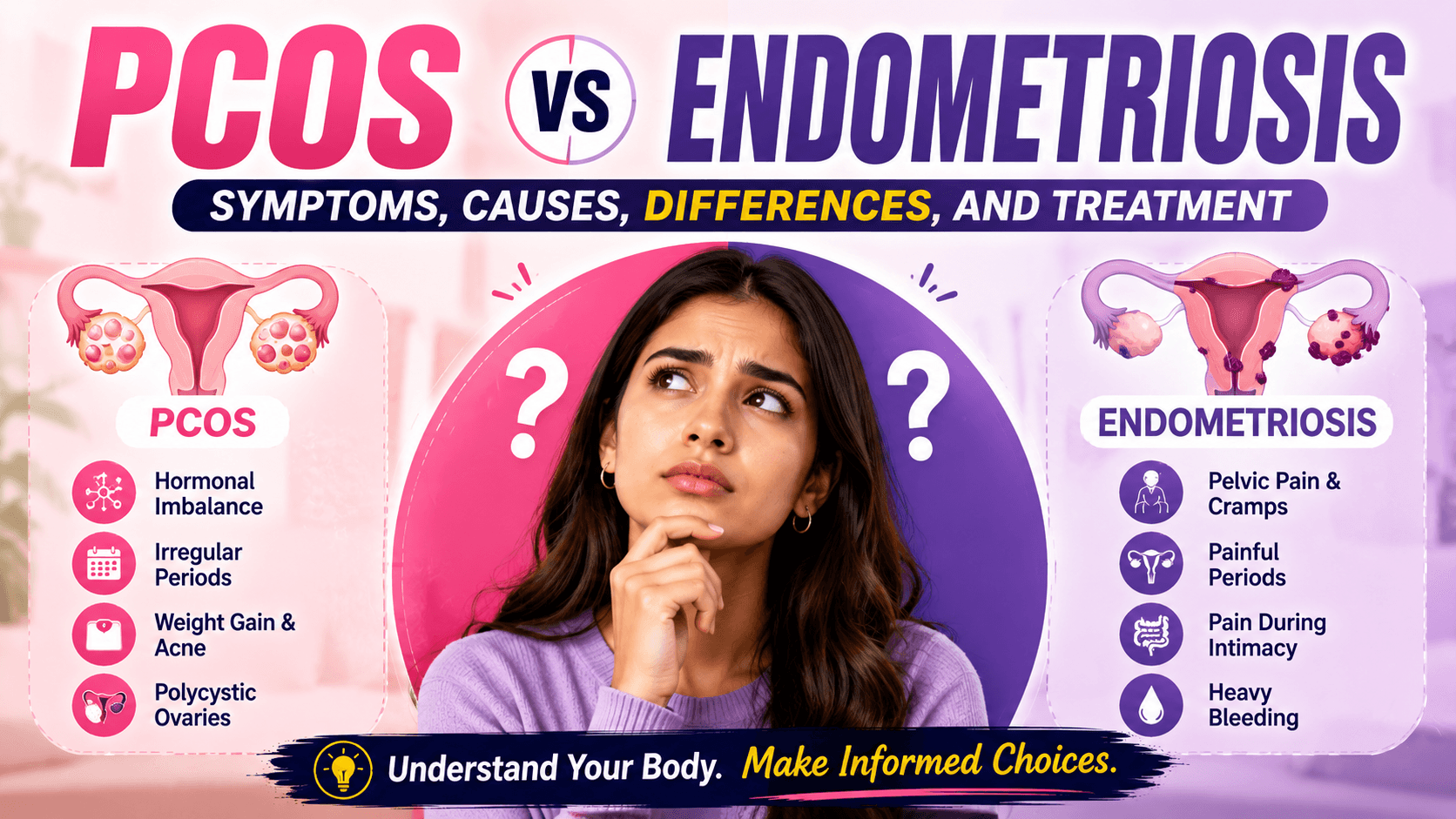
Explore the differences between PCOS and Endometriosis, including symptoms, causes, and effective treatment options.
Maryam Mumtaz
Co-Founder & CEO
13 min read•9/2/2026
Marsa Empower · Women's Reproductive Health · Hormonal Wellness · For Girls & Women Aged 13 and Above · 13 min read
Irregular periods. Pelvic pain. Difficulty conceiving. These are the symptoms that bring many women to search for answers — and these are also the symptoms that make PCOS and endometriosis two of the most frequently confused conditions in women's health.
The confusion is understandable. Both conditions affect women of reproductive age. Both can disrupt the menstrual cycle. Both can make pregnancy more difficult. And both are significantly under-diagnosed, meaning many women spend years with symptoms before receiving a clear explanation of what is causing them.
But PCOS and endometriosis are not the same condition. They have different underlying mechanisms, different primary symptoms, different diagnostic approaches, and different treatment options. Confusing one for the other leads to delays in appropriate care and management.
This guide explains each condition clearly, what makes them different from each other, what makes them overlap, how each is diagnosed and treated, and when symptoms warrant professional evaluation.
Polycystic Ovary Syndrome (PCOS) is a hormonal and metabolic condition that affects approximately one in ten women of reproductive age globally.
Despite its name, PCOS is not primarily a condition of the ovaries. It is a syndrome involving a cluster of hormonal and metabolic disruptions that occur together. The defining features are elevated androgens (male hormones, present in all women in small amounts but elevated in PCOS), disrupted ovulation, and in most women, insulin resistance.
These three core features produce the wide range of PCOS symptoms. Elevated androgens drive acne along the jawline and chin, excess facial and body hair growth, and scalp hair thinning. Disrupted ovulation produces irregular, infrequent, or absent periods. Insulin resistance promotes abdominal weight gain and makes weight management genuinely harder.
Importantly, having polycystic ovaries on ultrasound — the ovaries appearing to contain multiple small follicles — is not required for a PCOS diagnosis. Many women without PCOS have polycystic-appearing ovaries, and some women with PCOS do not. The diagnosis is based on the clinical picture, not the ultrasound finding alone.
Endometriosis is a condition in which tissue similar to the endometrium (the lining of the uterus) grows outside the uterus — on the ovaries, fallopian tubes, the peritoneum (the lining of the abdominal cavity), the bowel, the bladder, and in some cases other locations.
This endometrial-like tissue responds to the hormonal signals of the menstrual cycle in a similar way to the uterine lining: it thickens, and then attempts to shed during menstruation. But because it has no way to exit the body, it causes local inflammation, scarring, and the formation of adhesions (bands of fibrous tissue that can bind organs together).
The result is pain — often severe, often cyclical, but in some women persistent throughout the month. The inflammation and scarring endometriosis causes can also affect the function of the reproductive organs and contribute to fertility difficulties.
Endometriosis affects an estimated 10 percent of women of reproductive age globally and is among the most significantly under-diagnosed conditions in women's health. The average time from symptom onset to diagnosis is seven to ten years, reflecting both the normalisation of severe period pain and the limited clinical awareness of the condition's diverse presentations.
The simplest, most accurate way to understand the difference is this.
PCOS is primarily a hormonal and metabolic condition. Its defining features are elevated androgens and disrupted ovulation. Its most characteristic symptoms are irregular periods, hormonal acne, excess hair, and metabolic changes. The primary mechanism is hormonal and metabolic dysregulation.
Endometriosis is primarily a condition of tissue growth and inflammation. Its defining feature is endometrial-like tissue growing outside the uterus, causing inflammation, scarring, and pain. Its most characteristic symptoms are painful periods, chronic pelvic pain, and pain during intercourse or bowel movements.
Both can affect fertility, but through different mechanisms. PCOS reduces fertility by disrupting ovulation, meaning eggs are not released regularly. Endometriosis reduces fertility through the inflammation and scarring that can damage the fallopian tubes, impair egg quality, and create an inhospitable environment for implantation.
| Feature | PCOS | Endometriosis |
|---|---|---|
| Core mechanism | Hormonal and metabolic dysregulation | Endometrial-like tissue outside the uterus causing inflammation |
| Period pattern | Irregular, infrequent, or absent | Often painful and heavy; may also be irregular |
| Primary symptom | Hormonal and metabolic — acne, hair changes, irregular cycles | Pain — period pain, pelvic pain, pain during intercourse |
| Pelvic pain | Can occur but is not the defining feature | Very common; often severe |
| Acne | Common | Not a defining symptom |
| Excess facial or body hair | Common | Not typical |
| Scalp hair thinning | Common in some women | Not a defining symptom |
| Pain during sex | Possible | Common in some women |
| Heavy periods | Variable | Common in many women |
| Weight changes | Common in many, particularly abdominal weight | Not a defining symptom |
| Fertility impact | Disrupted or absent ovulation | Inflammation and scarring affecting reproductive anatomy |
| Hormonal changes | Elevated androgens; insulin resistance | Oestrogen-sensitive condition — symptoms are driven by the hormonal cycle |
| Diagnosis approach | Clinical assessment + blood tests | Clinical assessment + imaging; definitive diagnosis may require surgery |
| Currently curable? | No — manageable but not curable | No — manageable but not curable |
Despite their fundamental differences, PCOS and endometriosis share several features that make them easy to conflate.
Both primarily affect women during their reproductive years. Both can produce menstrual changes including irregular, heavy, or painful periods, though the patterns differ. Both can contribute to fertility difficulties, though through different mechanisms. Both are significantly under-diagnosed and often dismissed or normalised for years before receiving appropriate clinical attention. Both require long-term management rather than a one-time cure. Both place a significant burden on quality of life, mental health, and daily functioning. And both respond, at least partly, to lifestyle approaches including nutrition, exercise, and stress management, alongside medical management.
The overlap in some symptoms, particularly irregular periods, pelvic discomfort, and fertility difficulties, is what creates confusion. But the specific character, timing, and pattern of symptoms typically differ enough between the two conditions to allow clinical distinction.
Yes. A woman can have both PCOS and endometriosis simultaneously. These are not mutually exclusive conditions.
Research suggests that women with PCOS may have a somewhat elevated risk of endometriosis compared to the general population, though the relationship is not fully understood. The hormonal environment of PCOS, particularly elevated oestrogen relative to progesterone in some phases, may create conditions that promote endometrial growth.
For women who have symptoms consistent with both conditions, including both hormonal symptoms (acne, hair changes, irregular cycles) and pain-dominant symptoms (severe dysmenorrhoea, pelvic pain, pain during sex), both diagnoses should be considered rather than assuming one condition explains everything. A thorough clinical evaluation can assess for both.
PCOS produces a wide range of symptoms driven by the three core features of elevated androgens, disrupted ovulation, and insulin resistance.
Irregular or absent periods: This is the most common and most disruptive symptom for many women with PCOS. Cycles may be longer than 35 days, may arrive unpredictably, or may be absent for months at a time. When periods do arrive after a prolonged absence, they may be heavier than usual because the uterine lining has had more time to build up.
Persistent acne: Particularly along the jawline, chin, and lower cheeks. Driven by elevated androgens stimulating oil glands. Notably different from surface-level teenage acne, typically appearing as deeper, more cystic, and often painful spots.
Excess facial or body hair (hirsutism): Darker, coarser hair appearing on the chin, upper lip, jaw, neck, chest, or stomach. One of the most visible androgen-driven symptoms of PCOS.
Scalp hair thinning: Diffuse thinning at the crown and temples, driven by DHT (a potent androgen derivative) miniaturising scalp follicles. Particularly distressing because it coexists with excess hair growth elsewhere.
Weight changes and difficulty managing weight: Particularly abdominal weight gain. Insulin resistance promotes fat storage around the abdomen regardless of dietary intake. This is a metabolic consequence of PCOS, not simply a lifestyle issue.
Fatigue: Driven by insulin resistance impairing cellular energy use, disrupted sleep patterns, and the hormonal environment of PCOS.
Dark skin patches (acanthosis nigricans): Velvety, darkened skin around the neck, underarms, or groin — a visible sign of significant insulin resistance.
Mood changes: Anxiety and depression occur at two to three times the rate of women without PCOS, partly through the direct neurobiological effects of elevated androgens and insulin dysregulation, and partly through the psychological burden of managing a chronic hormonal condition.
Endometriosis produces symptoms primarily through the inflammation, adhesion formation, and local tissue damage caused by misplaced endometrial tissue responding to hormonal cycles.
Severe period pain (dysmenorrhoea): The most commonly described symptom of endometriosis. Pain that begins before the period, is significantly more severe than typical cramping, may radiate to the lower back and thighs, and does not fully resolve with standard pain medication. Pain that prevents normal daily activities on period days is not something to simply accept — it is a clinical indicator of a condition requiring investigation.
Chronic pelvic pain: Unlike period pain associated with uncomplicated dysmenorrhoea, endometriosis pain is often present outside of menstruation. Chronic pelvic pain that is present throughout the cycle, not only during the period, strongly suggests endometriosis or another structural cause.
Pain during or after sexual intercourse (dyspareunia): A particularly significant and often under-reported symptom. Deep pain during intercourse, particularly in specific positions, often reflects endometriosis involving the uterosacral ligaments or the pouch of Douglas (the space between the uterus and rectum).
Pain during bowel movements or urination: Particularly during menstruation. This pattern suggests endometriosis involvement of the bowel or bladder, which is not rare and is significantly under-recognised.
Heavy periods (menorrhagia): Many women with endometriosis experience heavier-than-normal menstrual bleeding, which can contribute to iron deficiency anaemia.
Spotting between periods: Endometriosis can produce spotting outside of the main period.
Fatigue: Chronic fatigue that is disproportionate to other explanations is a consistent feature of endometriosis, driven by chronic inflammation, iron deficiency from heavy bleeding, and the physiological cost of sustained chronic pain.
Fertility difficulties: Depending on the location and severity of endometriosis, fertility may be affected through fallopian tube damage, impaired egg quality, disrupted implantation, and the hostile inflammatory environment that severe endometriosis creates.
The exact cause of PCOS is not fully understood, but several factors are well-established.
Genetics: PCOS has a strong hereditary component. Women with a mother or sister with PCOS are significantly more likely to develop it themselves.
Insulin resistance: Present in the majority of women with PCOS, including those who are lean. Elevated insulin stimulates the ovaries to produce excess androgens, driving many of PCOS's symptoms. The cause of the insulin resistance in PCOS has both genetic and metabolic components.
Hormonal dysregulation: Elevated LH (the hormone that triggers ovulation) relative to FSH disrupts normal follicle development and prevents regular ovulation.
Androgen excess: Whether through increased ovarian production (driven by elevated insulin), increased adrenal production, or reduced binding by SHBG (sex hormone binding globulin), elevated free androgens drive the visible symptoms of acne, hair changes, and cycle disruption.
The cause of endometriosis is not fully established, and multiple theories exist.
Retrograde menstruation: The most widely cited theory. During menstruation, some endometrial cells flow backward through the fallopian tubes into the pelvis rather than exiting through the vagina. In most women, the immune system clears these cells. In women who develop endometriosis, these cells implant and grow. This theory explains the location of many endometriosis deposits but does not explain all presentations.
Genetic factors: Endometriosis runs in families. Women with a first-degree relative (mother or sister) with endometriosis have a five to seven times higher risk of developing it themselves.
Immune system dysfunction: The failure of the immune system to clear retrograde endometrial cells, or an immune response that actively promotes their growth, is considered an important component.
Other theories: Including stem cell involvement, lymphatic or vascular spread, and in utero developmental factors.
PCOS diagnosis is based on the Rotterdam criteria, which requires at least two of the following three features to be present.
Irregular or absent ovulation, evidenced by irregular or absent periods. Clinical or biochemical signs of elevated androgens, including visible symptoms (acne, hirsutism, hair thinning) or elevated androgen levels on blood tests. Polycystic-appearing ovaries on ultrasound.
The diagnostic process includes a clinical history reviewing menstrual patterns, symptom history, and family history. Blood tests measuring androgens (testosterone and DHEAS), FSH, LH, prolactin, TSH (to rule out thyroid dysfunction as a cause of irregular cycles), and fasting glucose and insulin (to assess insulin resistance). Pelvic ultrasound to assess ovarian morphology. Other causes of irregular periods and androgen excess, including thyroid disorders, hyperprolactinaemia, and congenital adrenal hyperplasia, must be considered and excluded.
No single test diagnoses PCOS. The diagnosis is a clinical pattern recognised after other causes of the same symptoms have been appropriately excluded.
Endometriosis is notoriously difficult to diagnose, which is the primary explanation for the long average diagnostic delay of seven to ten years.
The diagnostic process begins with a thorough clinical history, focusing on the character, timing, and severity of pain — particularly the specific features most associated with endometriosis including premenstrual pain onset, pain during intercourse, pain during bowel movements, and progressive worsening of period pain over time.
Pelvic examination may reveal tenderness, nodules, or other physical findings suggestive of endometriosis, particularly involvement of the uterosacral ligaments.
Ultrasound can detect some manifestations of endometriosis, particularly ovarian endometriomas (cysts containing old blood called "chocolate cysts"). However, a normal ultrasound does not rule out endometriosis. Peritoneal deposits, which are the most common form, are typically too small to be detected by standard ultrasound.
MRI provides better soft tissue detail and is used when deep infiltrating endometriosis is suspected.
Laparoscopy (keyhole surgery) remains the definitive diagnostic method for most forms of endometriosis. It allows direct visualisation of endometrial deposits and, where appropriate, tissue biopsy for histological confirmation. Increasingly, clinical diagnosis (without surgery) is accepted for certain presentations when the clinical picture is sufficiently characteristic and imaging is supportive.
PCOS management is individualised based on the specific symptoms being prioritised and the woman's current goals, including whether pregnancy is desired.
For cycle regulation and hormonal symptoms in women not currently seeking pregnancy, combined oral contraceptive pills (with anti-androgenic progestogens) regulate cycles, reduce androgen-driven symptoms including acne and hirsutism, and protect the uterine lining from the risks associated with prolonged absence of progesterone.
For insulin resistance and metabolic health, lifestyle changes including a low-glycaemic diet and regular exercise are the most evidence-supported interventions. Metformin is used medically for insulin sensitisation where indicated.
For androgen-driven symptoms including acne and hirsutism, anti-androgen medications including spironolactone may be appropriate alongside hormonal management.
For women with PCOS seeking to conceive, ovulation induction using letrozole or clomiphene citrate is first-line medical treatment. Myo-inositol supplementation has strong evidence for improving ovulation rates and reducing androgens in PCOS and is appropriate as a complement to medical management.
Endometriosis treatment is similarly individualised, with the primary goal depending on whether pain relief or fertility preservation and enhancement is the priority.
For pain management, hormonal treatments are the primary approach. These include combined oral contraceptives, progestogen-only treatments, the levonorgestrel-releasing IUD (Mirena), GnRH analogues (which temporarily suppress the hormonal cycle), and danazol. These treatments work by reducing or eliminating the hormonal stimulation that drives endometrial tissue activity, thereby reducing inflammation and pain.
Pain-relieving medications including NSAIDs (ibuprofen, naproxen) reduce prostaglandin-driven inflammation and are useful for managing acute pain during menstruation.
Surgical treatment — laparoscopic excision or ablation of endometrial deposits — reduces pain for many women and may improve fertility outcomes. Excision (complete removal of deposits) is generally preferred over ablation (surface destruction) where surgically feasible, as it reduces recurrence rates.
For fertility, assisted reproductive technologies including IUI and IVF may be appropriate depending on the extent of endometriosis and other fertility factors.
Both conditions affect fertility, but through different mechanisms and with different treatment approaches.
In PCOS, the primary fertility challenge is absent or irregular ovulation. When an egg is not released, conception cannot occur through natural means. Ovulation induction medications, which stimulate the ovaries to develop and release eggs, are highly effective for many women with PCOS. The prognosis for PCOS-related infertility with appropriate treatment is generally very good.
In endometriosis, fertility is affected through multiple mechanisms depending on disease severity. Mild endometriosis may reduce natural conception rates through the inflammatory pelvic environment it creates. Moderate to severe endometriosis may involve fallopian tube damage, ovarian endometriomas that reduce ovarian reserve, and extensive adhesions that affect the anatomy of the reproductive organs. Treatment decisions in endometriosis and fertility require specialist assessment and are highly individualised.
In both conditions, timely diagnosis and management produces better fertility outcomes than delayed diagnosis. Women who are concerned about how either condition may affect their future fertility should discuss this proactively with a healthcare provider rather than waiting until pregnancy is attempted.
For both PCOS and endometriosis, lifestyle factors including diet, exercise, sleep, and stress management play a genuine supporting role in symptom management — though they do not replace medical treatment and should not be presented as cures.
For PCOS, a low-glycaemic diet that reduces refined carbohydrates and sugar directly lowers insulin levels, reducing the androgen production that drives PCOS symptoms. Regular moderate exercise improves insulin sensitivity through direct metabolic effects. Both interventions have strong clinical evidence for symptom improvement in PCOS.
For endometriosis, an anti-inflammatory diet rich in omega-3 fatty acids, vegetables, and whole foods may reduce the inflammatory burden that drives pain and disease progression. Limiting red meat and alcohol, which may increase oestrogen levels and inflammatory prostaglandin production, is supported by some evidence. Regular exercise reduces systemic inflammation and prostaglandin activity, and has been shown to reduce the severity of endometriosis-related pain.
For both conditions, adequate sleep and effective stress management reduce cortisol, which worsens insulin resistance in PCOS and increases systemic inflammation in endometriosis.
These lifestyle approaches are most effective as complements to appropriate medical management, not as substitutes for it.
If you have symptoms consistent with either condition, consistent tracking provides the documented pattern that makes clinical assessment significantly more productive.
Track the first and last day of each period to establish cycle length and duration. Rate and describe pain on each day of the cycle, including its location, character, and severity. Note flow volume on each period day. Record any spotting between periods. Document pain during intercourse or bowel movements if present. Note skin changes, hair changes, and mood patterns alongside the cycle. Record energy levels and fatigue. Keep any test results or reports from previous investigations.
Across two to three months of consistent tracking, patterns emerge that inform both your own understanding and the clinical picture a healthcare provider sees.
Seek professional evaluation if you experience any of the following.
Periods that are consistently absent or fewer than eight per year. Very painful periods that prevent normal daily activities or require strong pain medication. Pelvic pain that persists outside of the period. Pain during sexual intercourse. Pain during bowel movements or urination, particularly around menstruation. Heavy periods that significantly disrupt daily life. Persistent hormonal symptoms including acne, excess hair growth, or scalp thinning. Difficulty conceiving after twelve months of trying (or six months if over 35). Symptoms from both conditions simultaneously, including both hormonal and pain-dominant features.
Do not wait until symptoms become severe or relationships and work are significantly affected before seeking evaluation. Early assessment produces better outcomes for both conditions.
Marsa Empower supports women navigating the uncertainty and complexity of conditions like PCOS and endometriosis through accessible, reliable health education and tracking tools.
The Health Hub's cycle and symptom tracking allows women to document pain patterns, flow volume, hormonal symptoms, and mood alongside their menstrual cycle, building the documented clinical picture that is most useful for diagnosis consultations. Health education resources explain both conditions clearly, covering symptoms, causes, diagnostic approaches, and treatment options. AI health guidance through Digital Doctors helps women understand their symptoms, identify patterns worth discussing with a healthcare provider, and prepare specific questions for specialist appointments.
Marsa Empower is an educational and health awareness companion. It does not diagnose PCOS or endometriosis, prescribe treatments, or replace evaluation by a qualified gynaecologist or endocrinologist. Both conditions require specialist assessment for accurate diagnosis and personalised management.
Is PCOS the same as endometriosis?
No. PCOS is primarily a hormonal and metabolic condition involving disrupted ovulation and elevated androgens. Endometriosis is primarily a condition in which tissue similar to the uterine lining grows outside the uterus, causing inflammation and pain. They have different mechanisms, different primary symptoms, different diagnostic approaches, and different treatment options.
Which is more painful, PCOS or endometriosis?
Endometriosis is more strongly associated with significant pelvic pain and severe period pain, and pain is often the defining and most disruptive symptom. PCOS can cause discomfort including period pain and the pain of cystic acne, but it is not primarily a pain condition. However, individual experience varies significantly, and symptoms of both conditions span a wide spectrum.
Can PCOS cause painful periods?
Yes. Women with PCOS can experience period pain, and when periods arrive after a prolonged absence they may be particularly heavy and uncomfortable. However, the severe, progressive, often pre-menstrual pain most characteristic of endometriosis is not the typical pattern of PCOS-related period pain. When pain is severe or worsening, other conditions including endometriosis should be considered.
Can endometriosis cause irregular periods?
Endometriosis is more characteristically associated with heavy and painful periods than with irregular periods. However, associated hormonal changes or the impact of treatment may affect cycle regularity in some women.
Can women with PCOS or endometriosis get pregnant?
Yes. Both conditions can affect fertility, but many women with either condition conceive, some naturally and others with medical assistance. Ovulation induction is highly effective for PCOS-related infertility. Endometriosis-related fertility is managed through a range of approaches depending on disease severity. Specialist assessment provides the most accurate individual picture.
| Feature | PCOS | Endometriosis |
|---|---|---|
| What it is | Hormonal and metabolic syndrome | Endometrial-like tissue outside the uterus |
| Primary symptom | Irregular periods and hormonal features | Pain — period pain, pelvic pain, pain during sex |
| Periods | Irregular, infrequent, or absent | Often heavy and painful |
| Hormonal features | Elevated androgens, insulin resistance | Oestrogen-sensitive; no androgen excess |
| Pain pattern | Not the defining feature | Central feature; often severe and cyclical |
| Diagnosis | Blood tests + clinical assessment | Clinical assessment + imaging ± laparoscopy |
| Treatment | Hormonal, metabolic, lifestyle | Hormonal, surgical, pain management |
| Fertility impact | Disrupted ovulation | Inflammation, scarring, structural changes |
| Can you have both? | Yes | Yes |
Educational Disclaimer
This article is for educational and awareness purposes only. It does not constitute medical advice, diagnosis, or treatment. If you have symptoms consistent with PCOS, endometriosis, or both, please consult a qualified gynaecologist or healthcare professional for personalised assessment and management guidance.
Marsa Empower | Care. Safety. Growth.
Visit marsaempower.com to track your symptoms, understand your health patterns, and access educational resources built for every stage of a woman's life.
Medical Disclaimer
This article is for general informational and educational purposes only and is not a substitute for professional medical advice, diagnosis, or treatment. Always seek the advice of a qualified healthcare provider with any questions you may have regarding a medical condition. Never disregard professional medical advice or delay seeking it because of something you have read on MARSA Empower.
Written By
Maryam Mumtaz
Co-Founder & CEO
Co-Founder of MARSA Empower who leads the visual and strategic evolution of the platform. Maryam bridges technical complexity with human-centric design, architecting the team's official roadmap and ensuring MARSA effectively addresses the real-world needs of women. With deep expertise in agentic AI, full-stack development, and UI/UX design, she has delivered 50+ projects for 30+ satisfied clients.
Enjoyed this story?