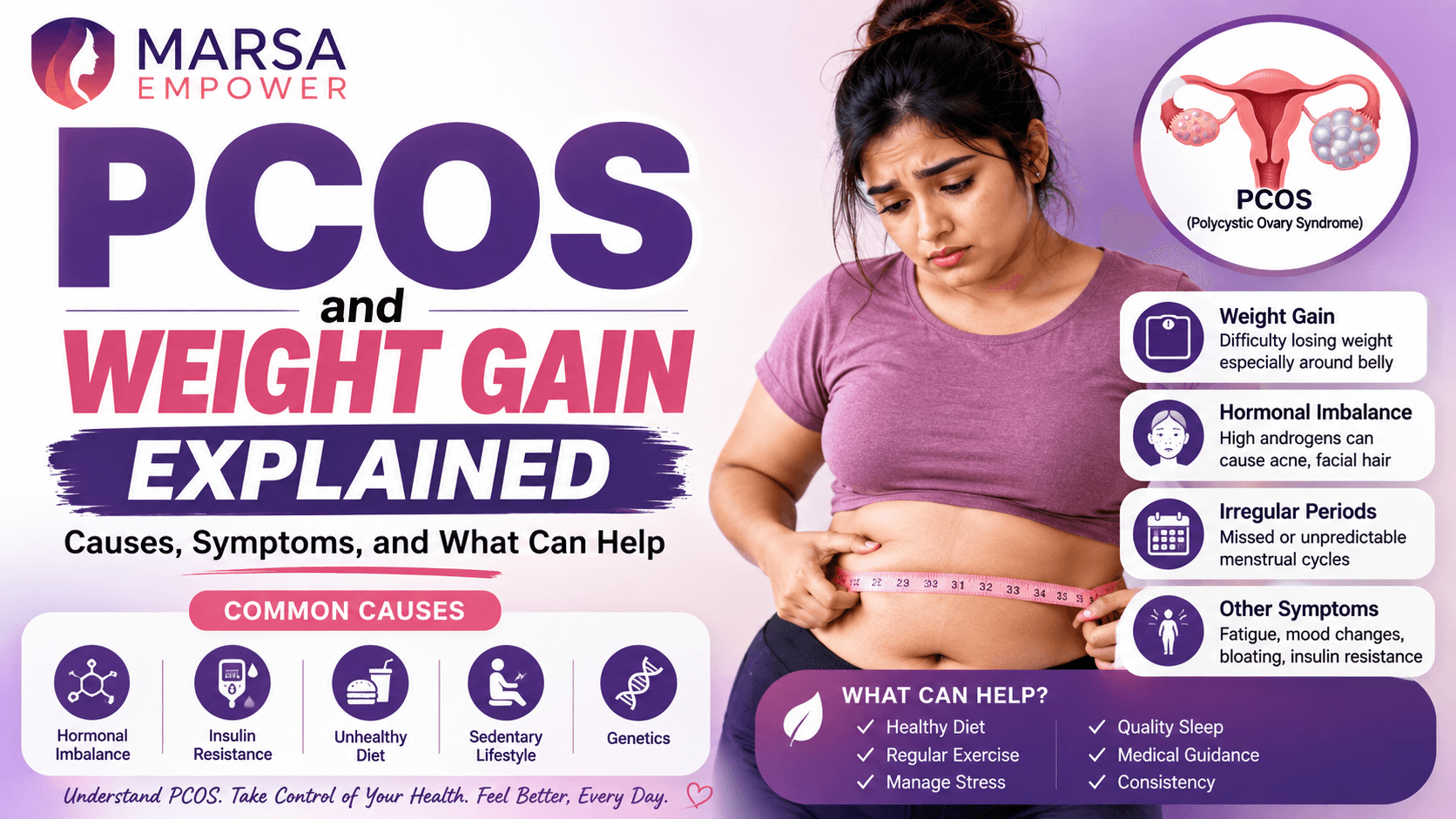
Discover the intricate relationship between PCOS and weight gain. Uncover causes, symptoms, and practical strategies to manage your health.

Maryam Mumtaz
Co-Founder & CEO
13 min read•8/17/2026
Marsa Empower · Women's Hormonal Health · PCOS Awareness · For Girls & Women Aged 13 and Above · 13 min read
"Weight gain in PCOS is not a failure of willpower. It is a metabolic consequence of a hormonal condition — and understanding that distinction changes everything about how you approach managing it."
If you have PCOS and you struggle with your weight, there is something important you deserve to hear first:
It is not because you are not trying hard enough. It is not because of a lack of discipline. It is not your fault.
PCOS changes the way the body processes food, stores energy, and responds to hormonal signals — in ways that make weight management genuinely and measurably more difficult than it is for women without the condition. The same calorie intake and the same exercise routine that produces weight stability in a woman without PCOS may produce weight gain in a woman with it.
This is a biological reality, not a moral failing.
Understanding why this happens — what PCOS does to metabolism, how insulin resistance works, and which specific changes are most effective for managing weight with PCOS — is far more useful than simply being told to "eat less and exercise more." That advice, while not wrong, is incomplete in the context of PCOS, and its incompleteness is part of why so many women with PCOS feel stuck and frustrated despite genuine effort.
This guide explains the real relationship between PCOS and weight — honestly, compassionately, and practically.
Polycystic Ovary Syndrome — PCOS — is one of the most common hormonal conditions affecting women of reproductive age worldwide. It affects approximately 1 in 10 women globally, with rates in Pakistan and South Asia potentially higher — though significant under-diagnosis means the true prevalence is not fully known.
Despite its name, PCOS is not primarily a condition of the ovaries. It is a hormonal and metabolic syndrome — meaning it affects multiple body systems simultaneously through interconnected hormonal disruptions.
Elevated androgens: Androgens are hormones present in all women in small amounts — including testosterone. In PCOS, the ovaries produce androgens in greater quantities than normal. This excess drives many of the most visible symptoms — persistent acne (particularly along the jawline), excess facial or body hair, and scalp hair thinning.
Disrupted ovulation: Regular ovulation — the monthly release of an egg — depends on a precise hormonal sequence. In PCOS, this sequence is disrupted. Ovulation becomes irregular, infrequent, or absent — producing the unpredictable or absent periods that are often the first visible sign of PCOS.
Insulin resistance: The majority of women with PCOS — including lean women — have some degree of insulin resistance. This is the metabolic piece of PCOS that is most directly connected to weight — and the one most important to understand.
| System | How PCOS Affects It |
|---|---|
| Menstrual cycle | Irregular, infrequent, heavy, or absent periods |
| Skin | Persistent acne — particularly jawline and chin |
| Hair | Excess facial and body hair · Scalp hair thinning at crown |
| Weight and metabolism | Difficulty managing weight · Abdominal weight gain tendency |
| Mood and energy | Fatigue · Anxiety · Depression at higher rates than average |
| Fertility | Irregular ovulation reduces monthly conception opportunity |
| Skin pigmentation | Dark patches around neck, underarms, or groin (acanthosis nigricans) |
Yes — PCOS can contribute to weight gain. But the relationship is more nuanced than it is often presented.
Not every woman with PCOS gains weight. PCOS occurs in women of all body types — slim, average, and heavier. Approximately 20 to 30% of women with PCOS have a healthy body weight, and some are underweight. The idea that PCOS only affects overweight women is incorrect and harmful — it leads to missed diagnoses in slim women whose symptoms are dismissed.
Not every weight change in a woman with PCOS is caused by PCOS. Weight changes have many causes — diet, activity level, stress, sleep, other medications, other medical conditions, and simply the normal variation that occurs across different life stages.
What is accurate is that PCOS creates a biological environment — primarily through insulin resistance and elevated androgens — that makes weight gain more likely and weight management genuinely more challenging for many women who are predisposed to weight gain. Understanding this environment is the starting point for managing it effectively.
This section is important to understand — not because it is an excuse to stop trying, but because it explains why the standard "eat less, move more" advice often falls short for women with PCOS, and what different approaches are more effective.
When insulin resistance is present, the body needs to produce more insulin to manage the same amount of blood sugar. High insulin levels have a direct fat-storage effect — they signal fat cells to take up and store more energy, and they inhibit the breakdown of stored fat for energy. This means the body is in a state of chronic fat-accumulation bias regardless of dietary intake.
Elevated androgens in PCOS specifically promote the accumulation of fat in the abdominal area — around the organs (visceral fat). This pattern of fat distribution is metabolically more disruptive than fat stored elsewhere — it worsens insulin resistance, increases inflammation, and drives further androgen production, creating a self-reinforcing cycle.
Research shows that women with PCOS have altered levels of appetite-regulating hormones — including ghrelin (which stimulates hunger) and leptin (which signals fullness). These disruptions can produce persistently elevated hunger, reduced sense of satiety after eating, and stronger cravings for calorie-dense foods — independent of actual caloric need.
Some evidence suggests that women with PCOS have a lower resting metabolic rate than women without the condition — meaning they burn fewer calories at rest. This is not dramatic, but over weeks and months it contributes to the difficulty of weight management.
The fatigue associated with PCOS — from insulin resistance impairing cellular energy use, from disrupted sleep, and from the emotional burden of managing a chronic condition — reduces motivation and capacity for physical activity. This creates another cycle: less activity worsens insulin resistance, which worsens fatigue, which reduces activity further.
Insulin resistance is the most important mechanism to understand when it comes to PCOS and weight — and it is frequently misexplained.
When you eat, food is converted to glucose (sugar) and enters the bloodstream. The pancreas releases insulin — a hormone that acts like a key, opening cell doors to let glucose in. Cells use this glucose for energy. Blood sugar returns to normal. Simple.
In insulin resistance, the cells have become less responsive to insulin's signal — the key no longer opens the door as efficiently. The pancreas compensates by producing more insulin to achieve the same effect. Blood sugar is managed — but at the cost of chronically elevated insulin levels.
These high insulin levels then create several problems specific to PCOS:
Signal to ovaries: High insulin directly tells the ovaries to produce more androgens (male hormones). More androgens → more acne, more hair changes, more disrupted ovulation.
Fat storage signal: High insulin tells fat cells — particularly abdominal fat cells — to store more energy and release less. The result is weight gain, particularly around the abdomen, that persists even with a reasonable diet.
Hunger amplification: High insulin drives blood sugar down after meals, triggering hunger signals sooner than expected after eating.
Because insulin resistance drives so many aspects of PCOS — including weight gain, androgen excess, and menstrual irregularity — interventions that improve insulin sensitivity often produce improvements across multiple PCOS symptoms simultaneously. This is why dietary changes and exercise that specifically improve insulin sensitivity are among the most powerful tools for managing PCOS.
Beyond weight and metabolic changes, PCOS produces a range of symptoms that affect quality of life and daily wellbeing:
| Symptom | What It Looks or Feels Like |
|---|---|
| Irregular or missed periods | Cycles longer than 35 days · Fewer than 8 periods per year · Completely absent periods |
| Heavy periods when they occur | When a period does arrive after a long absence, the uterine lining has built up more than usual — producing heavier flow |
| Acne | Persistent, often cystic acne along the jawline, chin, and lower cheeks — driven by elevated androgens |
| Excess facial or body hair (hirsutism) | Darker, coarser hair on the chin, upper lip, jaw, chest, or stomach — driven by androgens |
| Scalp hair thinning | Thinning at the crown and temples — while excess hair grows on the face and body |
| Dark skin patches (acanthosis nigricans) | Velvety, darkened patches of skin around the neck, underarms, or groin — a sign of insulin resistance |
| Persistent fatigue | Driven by insulin resistance impairing cellular energy use |
| Mood changes | Anxiety and depression occur at two to three times the rate of women without PCOS |
| Difficulty conceiving | Irregular ovulation reduces the monthly opportunity for pregnancy |
Not every woman with PCOS experiences all of these symptoms. Presentations vary significantly — some women have predominantly metabolic features, others predominantly hormonal or reproductive symptoms. PCOS does not have one single face.
Before attributing every weight change to PCOS, it is worth recognising that weight fluctuates for many reasons — most of them normal and unrelated to PCOS.
Puberty: Significant weight gain during the teenage years is a completely normal part of female development — the body is building fat stores needed for hormonal function, menstruation, and potential pregnancy. Puberty-related weight changes are not PCOS.
Menstrual cycle variation: Weight typically fluctuates by one to three kilograms across the menstrual cycle — driven by fluid retention in the luteal phase before a period. This is normal and resolves after the period.
Dietary changes: Increased caloric intake, changes in food quality, or decreased physical activity all produce weight gain independently of PCOS.
Stress and sleep disruption: Both elevate cortisol and disrupt appetite hormones — producing weight changes, particularly abdominal, in anyone, regardless of PCOS status.
Medications: Several common medications — including corticosteroids, some antidepressants, hormonal contraceptives, and others — produce weight gain as a side effect.
Other medical conditions: Hypothyroidism, Cushing's syndrome, and other hormonal conditions also produce weight gain and should be considered and tested for when appropriate.
PCOS weight gain is more likely when:
A confirmed PCOS diagnosis — based on the Rotterdam criteria (at least two of three: irregular ovulation, elevated androgens, polycystic ovaries on ultrasound) — is the appropriate framework for attributing weight to PCOS rather than other causes.
For women with PCOS who are overweight, weight loss is one of the most evidence-supported interventions for improving symptoms — and the improvements it produces can be significant.
Even modest weight loss of 5 to 10% of total body weight consistently produces:
The mechanism is direct: weight loss reduces fat tissue, which reduces the production of oestrogen and androgens from fat cells, which reduces the insulin-driven hormonal disruption at the core of PCOS.
The goal is better health — not achieving a particular body shape or weight. The health improvements associated with weight loss in PCOS are measurable at 5 to 10% loss — a realistic, achievable target — not contingent on reaching an "ideal" weight as defined by external standards.
Weight loss in PCOS requires a different approach than standard calorie restriction. Because insulin resistance impairs the body's ability to use stored fat for energy, simply eating less often produces disappointing results and significant hunger. Approaches that specifically improve insulin sensitivity — low-glycaemic diet, regular exercise, adequate sleep, and stress management — produce better results than calorie counting alone.
Lean women with PCOS also benefit from lifestyle management — even without weight loss goals. Improving insulin sensitivity, reducing inflammation, and supporting hormonal balance through diet and lifestyle produces symptom improvement regardless of starting body weight.
The following approaches are supported by evidence specifically in the context of PCOS — meaning they are targeted to the underlying mechanisms of the condition rather than generic weight management advice.
Regular eating — three balanced meals per day at consistent times — is foundational. Skipping meals drops blood sugar, triggers a cortisol response, and exacerbates the blood sugar dysregulation central to PCOS. Every meal should contain protein, complex carbohydrates, healthy fats, and vegetables.
This is the most evidence-supported dietary pattern for PCOS. Low-glycaemic foods release energy slowly, preventing the blood sugar spikes that trigger insulin surges and the androgen production that follows.
Reduce: White bread, white rice, refined flour, sugary drinks, sweets, packaged biscuits, and processed snacks.
Increase: Brown rice, whole wheat atta, oats, lentils, chickpeas, vegetables, berries, and other whole foods that release energy gradually.
Protein at every meal supports satiety, reduces hunger, and helps maintain blood sugar stability. Good sources include eggs, chicken, fish, lentils, Greek yogurt, and nuts.
Fibre slows glucose absorption and feeds the gut bacteria that regulate oestrogen metabolism and inflammation. Good sources include vegetables, legumes, whole grains, chia seeds, and flaxseeds.
Very low-calorie diets, fasting protocols taken to extremes, or the elimination of entire food groups without medical guidance all worsen the hormonal disruption of PCOS. They signal nutritional scarcity to the body, elevate cortisol, suppress thyroid function, and worsen the reproductive hormonal disruption that characterises PCOS. The body needs adequate, consistent nourishment to restore hormonal balance.
Exercise is discussed in detail in its own section — but within the context of weight management specifically, regular moderate exercise is one of the most powerful insulin-sensitising tools available, producing improvements in metabolic health that translate directly to PCOS symptom improvement.
| Include More Often | Why It Helps PCOS | Easy Ways to Include |
|---|---|---|
| Lentils and daal | High protein + fibre + low glycaemic · Iron for menstrual health | Daily daal at lunch or dinner |
| Eggs | Complete protein + zinc + B12 + vitamin D | Breakfast most days |
| Fatty fish (salmon, sardines) | Omega-3 reduces inflammation + androgens | 2 to 3 times per week |
| Leafy greens (spinach, methi) | Iron + magnesium + folate · Anti-inflammatory | Added to most meals |
| Whole grains (brown rice, oats) | Lower glycaemic than refined versions | Replace white rice and bread |
| Berries | High antioxidant + low glycaemic | As snacks or with breakfast |
| Nuts and seeds | Healthy fats + zinc + magnesium | Small handful daily |
| Greek yogurt | Protein + probiotics for gut health | Breakfast or snack |
| Avocado and olive oil | Anti-inflammatory healthy fats | In cooking and salads |
| Cinnamon | Mild insulin-sensitising properties | Added to oats, tea, or cooking |
| Reduce Significantly | Why to Reduce | Better Alternative |
|---|---|---|
| Sugary drinks and packaged juices | Rapid insulin spike | Water, lassi, herbal tea |
| White bread and maida products | High glycaemic index | Whole wheat atta products |
| Packaged biscuits and chips | Trans fats + refined carbs | Nuts, roasted chickpeas |
| Sweets and mithai | Pure sugar → insulin surge | Fresh fruit, dark chocolate |
| Deep-fried fast food | Pro-inflammatory + high glycaemic | Home-cooked alternatives |
Exercise is not just generally beneficial for PCOS — it is one of the most specifically effective interventions available for the underlying insulin resistance that drives the condition.
During physical activity, muscles take up glucose from the bloodstream without requiring insulin — directly bypassing the insulin resistance mechanism. With regular exercise, this insulin-independent glucose uptake becomes more efficient over time — producing sustained improvement in insulin sensitivity that reduces the hormonal cascade driving PCOS symptoms.
Studies in women with PCOS consistently show that regular exercise — even without weight loss — reduces:
Walking: The most accessible starting point. Even 30 minutes of brisk walking daily produces measurable insulin sensitivity improvement in women with PCOS within two to four weeks. This is the exercise most likely to become a genuine lifelong habit.
Strength training: Particularly effective for PCOS because building muscle mass increases the body's capacity for insulin-independent glucose storage. Two to three sessions of light to moderate resistance exercise per week produces significant metabolic benefit.
Cycling: Low-impact, good for insulin sensitivity, adjustable intensity.
Swimming: Full-body, joint-friendly, sustainable.
Yoga: Particularly beneficial for PCOS because it simultaneously improves insulin sensitivity, reduces cortisol, and addresses the anxiety and depression that disproportionately burden women with PCOS.
Target: 150 minutes of moderate aerobic activity per week — approximately 30 minutes, five days per week — alongside two sessions of strength work.
Starting point: If you are completely sedentary, begin with 10 to 15 minutes of walking three times per week and build gradually. Even small, consistent amounts of exercise produce measurable PCOS benefit. Perfectionism about exercise quantity is the enemy of starting.
Very intense exercise combined with insufficient caloric intake worsens PCOS by creating the physiological stress response (elevated cortisol) that compounds insulin resistance. Exercise should feel challenging but sustainable — not exhausting and depleting.
Sleep and stress management are frequently mentioned as wellness platitudes — but in the context of PCOS specifically, they have direct and measurable effects on the hormonal and metabolic mechanisms driving the condition.
A single night of inadequate sleep measurably worsens next-day insulin sensitivity. Chronic sleep deprivation maintains elevated cortisol, which:
Research shows that women with PCOS have significantly higher rates of sleep disorders — particularly sleep apnoea and insomnia — than women without the condition. Treating these sleep disorders produces measurable improvements in insulin sensitivity and PCOS metabolic parameters.
Target: 7 to 9 hours of consistent, quality sleep per night. This is not a luxury for women with PCOS — it is metabolic medicine.
Cortisol — the primary stress hormone — directly impairs insulin sensitivity, increases androgen production from the adrenal glands, promotes abdominal fat storage, and disrupts ovulation. Chronic stress loads — from academic pressure, work demands, caregiving responsibilities, or life difficulty — worsen every core mechanism of PCOS through this cortisol pathway.
Practical stress management for PCOS:
The supplement market aggressively targets women with PCOS — and navigating the claims honestly is important.
Myo-inositol: The strongest evidence base of any PCOS supplement. Multiple randomised controlled trials show that myo-inositol (particularly combined with D-chiro-inositol in a 40:1 ratio) improves insulin sensitivity, reduces androgens, and restores more regular ovulation in women with PCOS. The evidence is comparable to metformin in some studies. Typical dose: 2,000 to 4,000 mg daily.
Vitamin D: Deficiency is extremely common in women with PCOS and worsens insulin resistance. Correcting deficiency — based on blood testing — consistently improves metabolic and hormonal PCOS parameters. Test first, supplement appropriately based on result.
Omega-3 fatty acids: Reduce inflammation, reduce triglycerides, and reduce androgens in PCOS. Good dietary sources plus a daily fish oil supplement (2,000 mg EPA + DHA) is a reasonable approach.
Magnesium: Improves insulin sensitivity and reduces cortisol. Commonly deficient in women with PCOS. 250 to 400 mg daily of magnesium glycinate or citrate.
Berberine, NAC (N-acetyl cysteine), zinc, and chromium all have some evidence for PCOS benefit but less robust or consistent than the above. They may be appropriate in specific situations — discuss with a healthcare provider.
Yes — PCOS can begin during puberty and can affect teenage girls. However, diagnosis during adolescence requires particular care, because several features of PCOS are also normal features of early puberty.
In the first two to three years after the first period, irregular cycles, acne, and hormonal fluctuations are normal — the hormonal axis governing the menstrual cycle is still maturing. These features cannot be automatically attributed to PCOS during this developmental window.
For a PCOS diagnosis in a teenager to be meaningful, the Rotterdam criteria must be applied carefully: elevated androgens (confirmed by blood tests, not just symptoms) and clinical features that persist beyond the expected period of puberty-related variation.
Consider evaluation when:
A PCOS diagnosis in the teenage years, while potentially distressing, is also an opportunity. Early diagnosis enables early lifestyle management — before significant insulin resistance, weight gain, or reproductive consequences have accumulated. A teenage girl who understands PCOS, builds healthy eating habits, and maintains regular moderate exercise is protecting her long-term health, fertility, and metabolic wellbeing in genuinely meaningful ways.
| Symptom | Why It Warrants Evaluation |
|---|---|
| Periods consistently absent or fewer than 8 per year | Most important indicator of anovulation — the reproductive core of PCOS |
| Persistent, severe, cystic acne — particularly along the jawline | May indicate elevated androgens requiring hormonal evaluation |
| Noticeable excess hair on face, chin, chest, or stomach | Clinical indicator of androgen excess |
| Scalp hair thinning at crown | Particularly meaningful when combined with other symptoms |
| Difficulty conceiving | PCOS is the most common hormonal cause of ovulatory infertility — and highly treatable |
| Rapid or significant weight gain without dietary explanation | Warrants metabolic investigation including insulin, glucose, and thyroid |
| Dark skin patches around neck or underarms | Visible indicator of insulin resistance |
| Persistent fatigue alongside other PCOS symptoms | May indicate insulin resistance or nutritional deficiency |
| Blood sugar or metabolic concerns | Women with PCOS have significantly increased lifetime risk of type 2 diabetes — monitoring is important |
| Worsening symptoms despite lifestyle changes | May indicate need for medical management alongside lifestyle intervention |
For women navigating PCOS — often without a clear diagnosis for years, managing multiple overlapping symptoms, and wading through an overwhelming amount of conflicting online information — Marsa Empower provides accessible, reliable educational support.
Marsa's Health Hub allows women to track their menstrual cycles, flow, symptoms, and energy levels over time — creating the documented baseline that is invaluable for PCOS evaluation. A healthcare provider reviewing three to six months of tracked cycle data can assess irregularity patterns far more accurately than they can from a verbal description.
Marsa's health education library explains PCOS — its mechanisms, symptoms, management approaches, and medical options — in simple, clear language accessible to teenage girls, young women, and adult women at any level of prior health knowledge. Understanding the condition is the foundation of managing it effectively.
Marsa's Smart Nutrition resources support the dietary changes most relevant to PCOS management — low-glycaemic eating, anti-inflammatory foods, and the specific nutritional strategies that improve insulin sensitivity from within.
Marsa's Digital Doctors provide informational guidance on PCOS symptoms, management approaches, and the questions worth raising with a healthcare provider. This support helps women arrive at medical appointments better informed, with specific questions and documented symptom patterns.
Important: Marsa Empower's AI guidance is educational and informational — not diagnostic. PCOS diagnosis and medical management require evaluation by a qualified healthcare professional — a gynaecologist or endocrinologist. Marsa supports the informed patient, not the self-diagnosing one.
Why do I gain weight with PCOS even when I eat healthily?
Because PCOS creates a metabolic environment — primarily through insulin resistance — that makes the body more prone to fat storage regardless of dietary quality alone. High insulin levels signal fat cells to store more energy and release less, particularly around the abdomen. This is a physiological reality, not a reflection of dietary failure. Approaches that directly improve insulin sensitivity — low-glycaemic diet, regular exercise, adequate sleep, and stress management — produce better results than calorie restriction alone.
Can PCOS be managed without medication?
For many women — particularly those with mild to moderate symptoms — lifestyle interventions alone (diet, exercise, sleep, stress management, and targeted supplementation like myo-inositol) produce significant and clinically meaningful symptom improvement. For women with more significant symptoms, or whose symptoms do not respond adequately to lifestyle changes, medical management (metformin, hormonal treatment, ovulation induction, or anti-androgens) may be appropriate alongside lifestyle approaches. The most effective management approach for most women combines both.
Does everyone with PCOS need to lose weight?
No. Weight loss is a relevant and evidence-supported goal for women with PCOS who are overweight — because modest weight loss consistently improves insulin sensitivity and symptom severity. But lean women with PCOS also benefit enormously from lifestyle management — improving insulin sensitivity, reducing inflammation, and supporting hormonal balance — without the goal of weight loss. The objective for all women with PCOS is improved metabolic and hormonal health, not a specific number on a scale.
Will my periods regulate if I manage PCOS?
For many women, yes — particularly when lifestyle changes consistently improve insulin sensitivity. Reduced insulin → reduced androgens → improved ovulation → more regular cycles. This is one of the most consistently reported benefits of effective PCOS management. However, cycles may not become perfectly regular for all women, and for those wanting to conceive, medical ovulation induction may still be needed even with otherwise well-managed PCOS.
Is PCOS the reason I am always tired?
PCOS-related fatigue is real — driven by insulin resistance impairing cellular energy production, elevated androgens affecting sleep quality, and the emotional burden of managing a chronic condition. It is also worth investigating other causes of fatigue that are common in women with PCOS: iron deficiency (from heavy or irregular periods), vitamin D deficiency (extremely common in Pakistani women), thyroid dysfunction (which coexists with PCOS in some women), and poor sleep quality. A blood panel covering ferritin, 25-OH vitamin D, TSH, and fasting insulin helps identify what is driving fatigue specifically.
| Topic | Key Takeaway |
|---|---|
| What causes PCOS weight gain | Insulin resistance → high insulin → fat storage signal · Elevated androgens → abdominal fat · Disrupted appetite hormones |
| Not everyone with PCOS gains weight | 20–30% of women with PCOS have healthy body weight — PCOS affects all body types |
| Most effective dietary approach | Low-glycaemic eating — reducing refined carbs and sugar, increasing protein, fibre, and whole foods |
| Best exercise for PCOS | Walking + strength training — both specifically improve insulin sensitivity |
| Sleep and PCOS | Poor sleep measurably worsens insulin resistance and androgen production |
| Stress and PCOS | Cortisol from chronic stress directly worsens insulin resistance and androgen excess |
| Most evidence-supported supplement | Myo-inositol (2,000–4,000 mg daily) — comparable to metformin in several studies |
| Weight loss goal | 5–10% of body weight produces significant PCOS improvement — the goal is health, not a number |
| Teen PCOS | Possible but complex to diagnose — irregular periods during the first 2–3 years of menstruation may be normal development |
| When to see a doctor | Absent or very irregular periods · Severe acne or hirsutism · Difficulty conceiving · Worsening symptoms despite lifestyle changes |
| Most important truth | PCOS-related weight difficulty is biological, not a personal failing — and it responds to targeted, consistent management |
"PCOS is not your fault. The weight gain it produces is not your fault. But understanding what is driving it — and what specifically addresses those drivers — gives you something more useful than blame-free reassurance. It gives you a plan."
Educational Disclaimer
This article is for educational and awareness purposes only. It does not constitute medical advice, diagnosis, or treatment. If you have symptoms of PCOS or concerns about your hormonal or metabolic health, please consult a qualified gynaecologist or endocrinologist for personalised evaluation and guidance.
Marsa Empower · Women's Hormonal Health · PCOS Awareness · Metabolic Wellness Education
Medical Disclaimer
This article is for general informational and educational purposes only and is not a substitute for professional medical advice, diagnosis, or treatment. Always seek the advice of a qualified healthcare provider with any questions you may have regarding a medical condition. Never disregard professional medical advice or delay seeking it because of something you have read on MARSA Empower.
Written By
Maryam Mumtaz
Co-Founder & CEO
Co-Founder of MARSA Empower who leads the visual and strategic evolution of the platform. Maryam bridges technical complexity with human-centric design, architecting the team's official roadmap and ensuring MARSA effectively addresses the real-world needs of women. With deep expertise in agentic AI, full-stack development, and UI/UX design, she has delivered 50+ projects for 30+ satisfied clients.
Enjoyed this story?



