
One App. Every Woman.
One App. Every Woman.
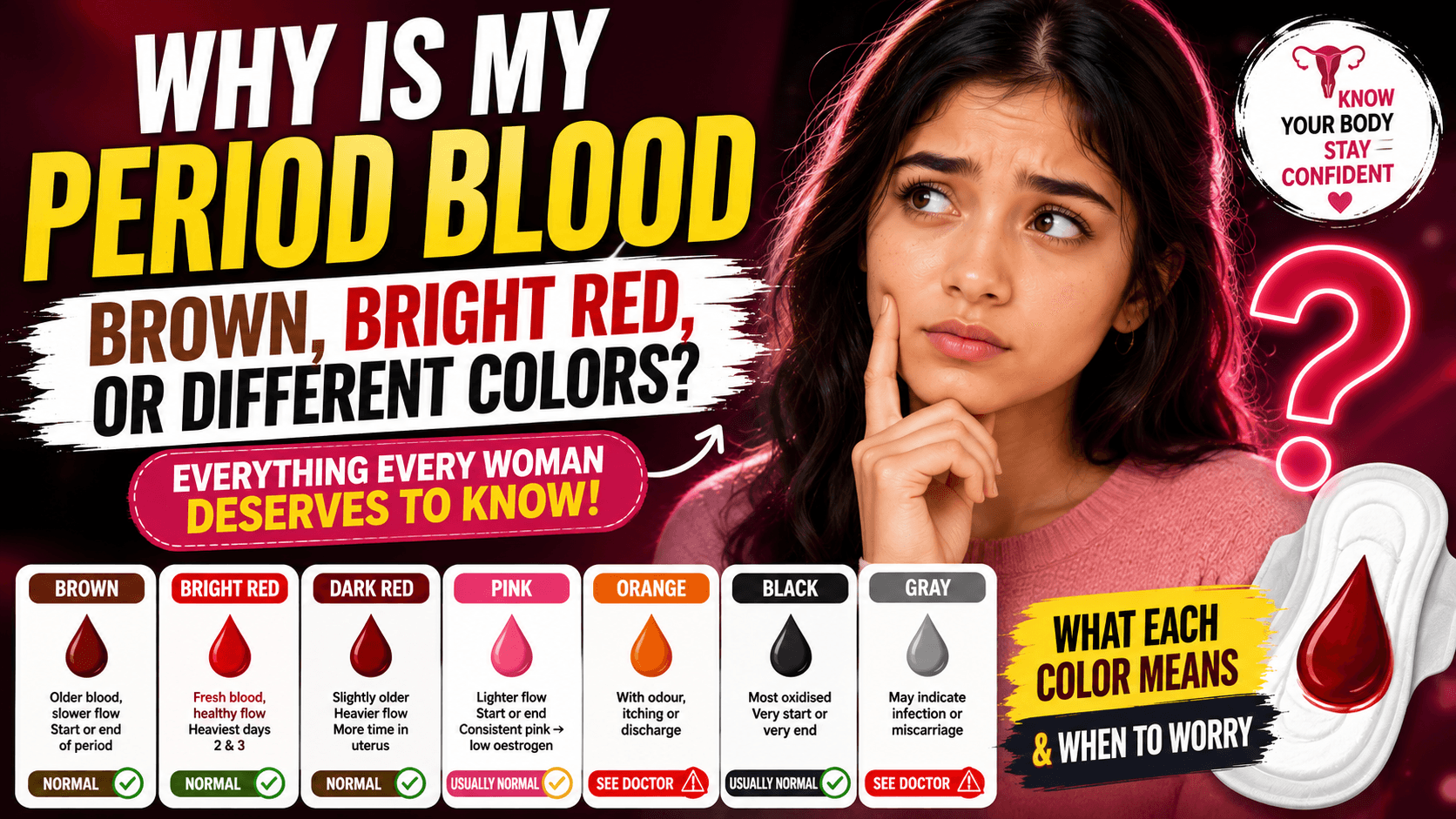
Explore the complete guide to menstrual blood colors. Understand what different period blood colors, such as brown, bright red, pink, black, and orange, mean for your health.

Maryam Mumtaz
Co-Founder & CEO
12 min read•8/1/2026
Marsa Empower · Menstrual Health · Women's Wellness · For Girls & Women Aged 13 and Above · 15 min read
"Your period blood is not just blood. It is a monthly health report — and its colour, texture, and consistency carry information worth understanding."
You notice that your period blood looks different than usual. Maybe it started brown before turning red. Maybe it ended with pink spotting. Maybe there was a darker patch that looked almost black. Maybe the colour seemed a little orange and you are not sure what that means.
Most women notice these variations — and most never receive a proper explanation of what they mean.
Period blood is not uniform. It changes colour, texture, and consistency across the days of a single period, across different periods in the same woman, and across different phases of a woman's reproductive life. These variations are mostly normal and expected — but some changes in colour can signal something worth paying attention to.
Understanding what different period blood colours mean is not a medical luxury. It is basic health literacy — the kind of knowledge that allows a woman to recognise what is normal for her body and to notice when something has changed in a way that deserves a doctor's attention.
This guide explains every colour clearly, honestly, and completely.
Period blood — the fluid released during menstruation — is not simply blood in the way that blood from a cut is simply blood. It is a more complex mixture of several biological components.
Endometrial tissue: The uterus builds up a thick, soft lining called the endometrium throughout the menstrual cycle, preparing for potential implantation of a fertilised egg. When pregnancy does not occur, this lining breaks down and sheds. Fragments of this tissue make up a significant portion of menstrual flow.
Blood: Blood from the blood vessels that supplied the endometrium is released as the lining sheds. This is the red component of menstrual flow.
Cervical and vaginal mucus: Secretions from the cervix and vaginal walls are mixed into the flow, affecting its texture and sometimes its colour.
Vaginal bacteria and cells: Normal vaginal bacteria and shed vaginal cells are also present in menstrual fluid.
This combination is why period blood looks different from regular blood — thicker, darker, sometimes more textured, and variable in colour across the days of the period.
The total blood loss during a normal menstrual period is approximately 30 to 80 millilitres (about 2 to 5 tablespoons). This sounds like a small amount — and it is. The perception of heavy flow is often inaccurate because menstrual fluid is mixed with other components that increase its apparent volume.
A period is considered heavy (menorrhagia) when total blood loss exceeds 80 ml per cycle — which in practical terms means needing to change a fully soaked pad or tampon more frequently than every one to two hours.
The colour of period blood is primarily determined by three factors:
When blood is freshly released from the blood vessels of the endometrium, it is bright red — as all fresh blood is. When blood has been in the uterus or vagina for a longer period of time, it undergoes a chemical process called oxidation — the same process that makes a cut apple turn brown. Oxidised blood becomes darker — ranging from dark red to brown to almost black, depending on how long it has been sitting before being expelled.
This is why blood at the beginning or end of a period — when flow is lighter and the blood moves more slowly — tends to be darker or brown, while blood during the heaviest days — when it moves quickly through the cervix and out — tends to be bright red.
The relative proportions of blood, endometrial tissue, cervical mucus, and vaginal secretions change throughout the period. Higher proportions of cervical mucus can make the flow appear lighter or more pink. Higher concentrations of tissue can make the flow appear darker or thicker.
The hormonal environment — particularly the levels of oestrogen and progesterone — affects the thickness, texture, and cellular composition of the endometrial lining that sheds. Changes in hormonal balance can therefore change the appearance of menstrual flow.
Brown period blood is one of the most common colour variations women notice — and one of the least concerning in most contexts.
Brown blood is oxidised blood — blood that has been in the uterus or vagina for longer than usual before being expelled. The haemoglobin (the red oxygen-carrying protein in blood) breaks down through contact with oxygen over time, changing colour from red to brown.
At the beginning of a period: Many women notice their period starts with brown or dark spotting before the flow becomes red. This is typically old blood from the end of the previous cycle that was retained in the uterus and is being cleared at the beginning of the new cycle. Completely normal.
At the end of a period: As the period winds down, flow decreases and blood moves more slowly — giving it more time to oxidise before it exits. Brown blood or discharge in the final days of a period is extremely common and completely expected.
Between periods — old blood from the previous cycle: If a small amount of blood is retained from the previous period, it may appear as brown spotting in the days following the period's end. Usually not a concern if it occurs occasionally.
After Plan B or hormonal contraceptive changes: Hormonal changes caused by emergency contraception or starting/stopping hormonal contraceptives can cause irregular brown spotting or discharge.
Seek medical advice if brown blood or discharge:
Bright red blood is fresh blood — blood that has moved quickly from the uterus through the cervix and out of the body without significant time for oxidation.
Bright red period blood is the colour most commonly expected during menstruation — and it is the colour that typically dominates the heaviest days of a period (usually days 2 and 3), when flow is at its highest and blood moves rapidly.
For the most part, yes. During the heaviest days of your period, bright red blood is entirely normal and expected.
Bright red blood may warrant attention if:
Bright red spotting or bleeding that occurs outside of the expected period window should always be assessed. It can be caused by:
Dark red blood — similar to the colour of dark wine or brick red — is extremely common, particularly:
Dark red blood is simply blood that has been in the uterus for a moderate amount of time — not as long as the blood that turns brown or black, but long enough for partial oxidation to darken it from bright red.
Yes — for most women, dark red blood during the period is entirely normal. It is simply the product of the natural oxidation process that affects all menstrual blood to varying degrees.
If the darkness of the blood is a new change — previously your flow was brighter and it has recently become consistently darker — this is worth mentioning to a doctor, particularly if accompanied by changes in cycle timing, flow volume, or pain.
Pink period blood — blood that appears lighter than normal red, with a pink or salmon-coloured tone — is usually blood diluted with cervical mucus or vaginal discharge.
Low oestrogen levels: Oestrogen supports the development of the uterine lining. When oestrogen is lower than usual, the lining that develops is thinner — and the blood produced when it sheds is less concentrated and therefore lighter in colour.
Low oestrogen can occur:
Mid-cycle spotting: Light pink spotting around the middle of the cycle — around day 14 — can be a sign of ovulation spotting. Some women consistently experience light spotting or pinkish discharge when an egg is released from the ovary.
Implantation bleeding: In early pregnancy (approximately 6 to 12 days after fertilisation), some women experience very light pink or brown spotting when the fertilised egg implants into the uterine lining. This is typically much lighter than a period, lasts only one to two days, and occurs around the time of the expected period.
After childbirth: The lochia (post-delivery vaginal discharge) transitions from bright red to pink to yellowish-white over several weeks. Pink lochia at around weeks two to four postpartum is normal.
Starting or stopping hormonal contraceptives: Hormonal changes can produce lighter, pinker bleeding during the adjustment period.
Orange period blood is less common than other colours and often signals the mixing of blood with a third element — typically cervical fluid or vaginal discharge.
Mixing with cervical fluid: When blood mixes with larger amounts of cervical mucus (which has a yellowish or orange tint), the combined fluid can appear orange or orange-pink. This is more common around ovulation, when cervical mucus production is at its highest.
Bacterial vaginosis (BV): Bacterial vaginosis is a common condition in which the normal bacterial balance of the vagina is disrupted. It can produce a greyish or sometimes yellowish-orange discharge. When this coincides with menstrual bleeding, the combined fluid may appear orange.
Other vaginal infections: Trichomoniasis — a sexually transmitted infection — can produce frothy, yellow-green or orange-tinged discharge. When mixed with period blood, this produces an orange or orange-pink appearance.
Orange period blood combined with any of the following warrants medical evaluation:
Orange blood that occurs only briefly and has no other accompanying symptoms — and is most likely blood mixed with cervical mucus — is generally not a concern.
Black period blood — very dark brown to true black — looks alarming but is almost always simply the most heavily oxidised form of the same blood that appears brown or dark red at other points in the cycle.
Blood turns black when it has been in the uterus for the longest amount of time before being expelled. This is most common:
At the very beginning of a period: The first blood to exit the uterus at the start of a new period may include blood that was retained from the end of the previous cycle — having sat in the uterus for days and oxidised to a dark or black colour.
At the very end of a period: Similarly, the final blood expelled at the end of a period has often been in the uterus or vagina for longer than blood expelled during peak flow days, producing a darker — sometimes black — appearance.
In women with slow uterine clearance: Some women retain small amounts of menstrual blood in the uterus for longer periods before it is expelled — producing consistently darker blood.
With certain medical conditions: Rarely, black blood or discharge between periods or in unusual contexts can be associated with a vaginal blockage (most commonly the hymen in teenagers — called haematocolpos), which prevents menstrual blood from exiting normally. This typically presents with symptoms including pelvic pain and a lack of visible menstrual flow despite cramping.
Black blood that appears only at the very beginning or end of your period, with no other symptoms, is almost certainly old, oxidised blood and is not a concern.
Seek medical assessment for black blood if:
Gray period blood or discharge is the colour most consistently associated with a condition that requires medical attention.
Bacterial vaginosis (BV): The most common cause of greyish discharge. BV is not a sexually transmitted infection — it is a disruption of the vaginal microbiome (the community of bacteria that normally keep the vaginal environment balanced). When the balance shifts away from healthy lactobacillus bacteria toward other bacterial species, the discharge produced can be thin, greyish-white or grey-green, and often has a characteristic fishy odour.
Miscarriage: In early pregnancy, gray or greyish tissue passed from the vagina alongside bleeding may indicate pregnancy tissue — the products of conception during a miscarriage. Any grey tissue or discharge in a woman who may be pregnant, accompanied by cramping and bleeding, should be evaluated urgently.
If you are pregnant or may be pregnant and experience:
This requires immediate medical attention. A miscarriage — particularly in the first trimester — is a medical event that needs proper evaluation and care.
Bacterial vaginosis is highly treatable with antibiotics. A simple examination and test confirms the diagnosis. If you notice persistently grey or off-coloured discharge with an unusual odour, please see a doctor. BV does not resolve without treatment and can increase vulnerability to other infections if left untreated.
Many women pass small blood clots during their period, particularly on the heaviest days. This is usually normal — but the size and frequency of clots matters.
During heavy flow, blood may pool in the uterus before being expelled. When blood pools, the body's natural anticoagulants (chemicals that prevent blood from clotting) may not be sufficient to prevent clotting — and the blood forms small clots. These clots are then expelled along with the menstrual flow.
| Clot Type | Normal or Concerning? |
|---|---|
| Small clots — smaller than a 20-rupee coin | Normal on heavy flow days |
| Occasional small-medium clots on the heaviest day or two | Usually normal |
| Large clots — larger than a 50-rupee coin | Warrants evaluation |
| Frequent large clots across multiple days | Warrants evaluation |
| Clots with very heavy flow (soaking pad every hour or less) | Warrants prompt medical attention |
Consistently heavy periods with large clots may be associated with:
Understanding the typical progression of period blood colour across the days of a period helps normalise the variation and identify when something has changed from your personal baseline.
| Day of Period | Typical Color | Why |
|---|---|---|
| Day 1 | Brown, dark red, or bright red | Older blood from end of last cycle expels first, followed by fresh blood as flow builds |
| Day 2 | Bright red · Often heaviest | Peak flow — blood moves quickly, minimal oxidation |
| Day 3 | Bright red to dark red | Still heavy — some oxidation beginning |
| Day 4 | Dark red | Flow reducing — blood moves more slowly |
| Day 5 | Dark red to brown | Significantly reduced flow — more oxidation |
| Day 6–7 | Brown to dark brown | Very light flow — heavily oxidised |
| Final days | Brown, dark brown, or black | Last remaining blood — most oxidised |
This progression is the most common pattern — but individual variation is significant. Some women have consistently bright red periods throughout. Some have consistently darker periods. The key is understanding your personal normal — and noticing changes from it.
Beyond the normal day-to-day variation within a period, several factors can change the overall colour pattern of your period:
Starting, stopping, or changing hormonal contraceptives (the pill, hormonal IUD, implant, injection) significantly affects the menstrual cycle and can change period blood colour, volume, and duration. Lighter, shorter, or more irregular bleeding — often pinker or browner — is common on hormonal contraception.
Chronic stress elevates cortisol, which suppresses reproductive hormones and can disrupt the normal development of the uterine lining. This may produce lighter, less regular periods — sometimes appearing pinker or browner than usual.
Rapid weight loss reduces oestrogen production (because fat cells produce oestrogen), leading to lighter, pinkish periods. Significant weight gain can worsen oestrogen dominance, producing heavier, darker, clottier periods.
Periods in the first one to two years after menarche are often irregular in colour, volume, and timing as the hormonal axis matures. In perimenopause (the years approaching menopause), hormonal fluctuations produce highly variable periods — sometimes heavier and darker, sometimes lighter and pinkish, sometimes brown spotting where a full period would have been expected.
Vaginal or cervical infections can alter the appearance of period blood — most notably producing orange or grey-coloured flow when infection discharge mixes with menstrual blood.
Both hypothyroidism (underactive thyroid) and hyperthyroidism (overactive thyroid) affect the menstrual cycle — hypothyroidism often produces heavier, darker periods, while hyperthyroidism often produces lighter, less frequent periods.
| Sign | Why It Warrants Attention |
|---|---|
| Gray blood or discharge | May indicate bacterial vaginosis or — if pregnant — miscarriage |
| Orange blood with odour or itching | May indicate bacterial vaginosis or infection |
| Very heavy flow — soaking a full pad every 1 to 2 hours | Risk of anaemia · May indicate fibroids, PCOS, or hormonal imbalance |
| Large blood clots — consistently larger than a 50-rupee coin | Warrants investigation for fibroids, adenomyosis, or hormonal causes |
| Brown spotting consistently between periods | Not the same as normal end-of-period brown blood — warrants evaluation |
| Pink or light periods that are new | May indicate low oestrogen — worth investigating |
| Any bleeding after menopause | Any vaginal bleeding after 12 months without a period requires prompt evaluation |
| Post-coital bleeding (bleeding after sexual intercourse) | May indicate cervical changes that need assessment |
| Period blood with strong, unusual odour | May indicate infection |
| Gray tissue passed during pregnancy | Requires urgent medical attention |
| Significant changes from your personal normal | Any change that persists across two or more cycles deserves a conversation with a doctor |
A regular, healthy menstrual cycle is one of the most reliable indicators of overall hormonal health. These habits support cycle regularity and healthy menstrual flow:
Why is my period blood brown instead of red?
Brown blood is oxidised blood — blood that has been in the uterus or vagina for longer than usual before being expelled. It is most common at the very beginning and very end of a period, when flow is lighter and blood moves more slowly. Occasional brown blood at the start or end of a period is normal and not a cause for concern.
Is bright red period blood normal?
Yes — bright red blood during the heaviest days of your period is completely normal. It simply means the blood is fresh and has moved quickly through the cervix without time to oxidise. Bright red blood is the most expected colour during peak menstrual flow.
What does black period blood mean?
Black blood is the most heavily oxidised form of menstrual blood — blood that has spent the most time in the uterus before being expelled. It is most common at the very beginning or very end of a period. Black blood at these times is almost always old, retained blood and is not a health concern. Black blood between periods or accompanied by other symptoms warrants medical evaluation.
Is pink period blood a sign of pregnancy?
Pink period blood can occur in very early pregnancy as "implantation bleeding" — light spotting when a fertilised egg attaches to the uterine lining. However, pink blood is also commonly caused by low oestrogen, mid-cycle ovulation spotting, or blood diluted with cervical mucus. If you are concerned about pregnancy, a home pregnancy test is the most reliable first step.
Why is my period blood orange?
Orange period blood is usually blood mixed with cervical mucus or vaginal discharge — which can have a yellowish or orange tint. It can also occasionally be associated with bacterial vaginosis. If orange blood is accompanied by an unusual odour, itching, or irritation, see a doctor to rule out infection.
Are blood clots during a period normal?
Small clots — smaller than a 20-rupee coin — on the heaviest days of your period are normal. They form when blood pools in the uterus before being expelled. Large clots, frequent clots, or clots accompanied by very heavy flow warrant medical evaluation, as they can indicate fibroids, hormonal imbalance, or other conditions.
What colour should healthy period blood be?
There is no single "correct" colour for period blood — because colour naturally varies across the days of the period and between women. Bright red during peak flow, dark red or brown toward the end, and brown at the beginning are all within the normal range. The key is knowing your personal normal and noticing significant deviations from it.
Can stress change the colour of period blood?
Yes — indirectly. Chronic stress elevates cortisol, which disrupts reproductive hormones. This can produce lighter, less regular periods — sometimes appearing pinkish or brown rather than the usual bright red. Stress can also cause periods to be heavier, lighter, earlier, later, or temporarily absent.
When should I worry about my period blood colour?
Seek medical advice for grey blood or discharge (possible infection or miscarriage), orange blood with odour or irritation (possible infection), consistently very light pink blood over several cycles (possible low oestrogen), blood clots consistently larger than a 50-rupee coin, very heavy flow, post-coital bleeding, any bleeding after menopause, or any change from your personal normal that persists across two or more cycles.
Can infections change period blood colour?
Yes. Bacterial vaginosis — the most common vaginal bacterial imbalance — can produce greyish or grey-white discharge that, when mixed with period blood, produces an unusual grey or orange appearance. Trichomoniasis can produce frothy, yellow-green or orange-tinged discharge. Any unusual colour combined with odour, itching, or burning warrants medical evaluation.
| Blood Color | Most Likely Meaning | Action Needed? |
|---|---|---|
| Bright red | Fresh blood — normal during peak flow | No — unless very heavy or between periods |
| Dark red | Partially oxidised blood — normal at start/end | No — unless new change without explanation |
| Brown | Oxidised old blood — normal at start/end | No — unless persistent between periods or with odour |
| Black | Heavily oxidised old blood — normal at very start/end | No — unless between periods or with other symptoms |
| Pink | Diluted blood — may be low oestrogen, ovulation spotting | Monitor — see doctor if consistently very light or with other symptoms |
| Orange | Blood mixed with cervical mucus OR possible infection | See doctor if accompanied by odour, itching, or burning |
| Gray | Possible bacterial vaginosis OR — if pregnant — miscarriage | See doctor — BV needs treatment, miscarriage needs evaluation |
| Small clots | Normal pooling of blood before expulsion | No — unless very large or associated with heavy flow |
| Large clots | Possible fibroids, hormonal imbalance, or adenomyosis | See doctor for evaluation |
"Your period is not something to be embarrassed about, afraid of, or simply endured. It is a monthly message from your body's hormonal system — and when you learn to read it, you gain one of the most valuable health tools available to you."
Educational Disclaimer
This article is for educational and awareness purposes only. It does not constitute medical advice, diagnosis, or treatment. If you notice persistent unusual period blood colour, very heavy bleeding, grey discharge, post-coital bleeding, or any bleeding after menopause, please consult a qualified gynaecologist or healthcare professional promptly for personalised evaluation and guidance.
Marsa Empower · Menstrual Health · Women's Wellness · Health Education for Every Woman
Medical Disclaimer
This article is for general informational and educational purposes only and is not a substitute for professional medical advice, diagnosis, or treatment. Always seek the advice of a qualified healthcare provider with any questions you may have regarding a medical condition. Never disregard professional medical advice or delay seeking it because of something you have read on MARSA Empower.
Written By
Maryam Mumtaz
Co-Founder & CEO
Co-Founder of MARSA Empower who leads the visual and strategic evolution of the platform. Maryam bridges technical complexity with human-centric design, architecting the team's official roadmap and ensuring MARSA effectively addresses the real-world needs of women. With deep expertise in agentic AI, full-stack development, and UI/UX design, she has delivered 50+ projects for 30+ satisfied clients.
Enjoyed this story?