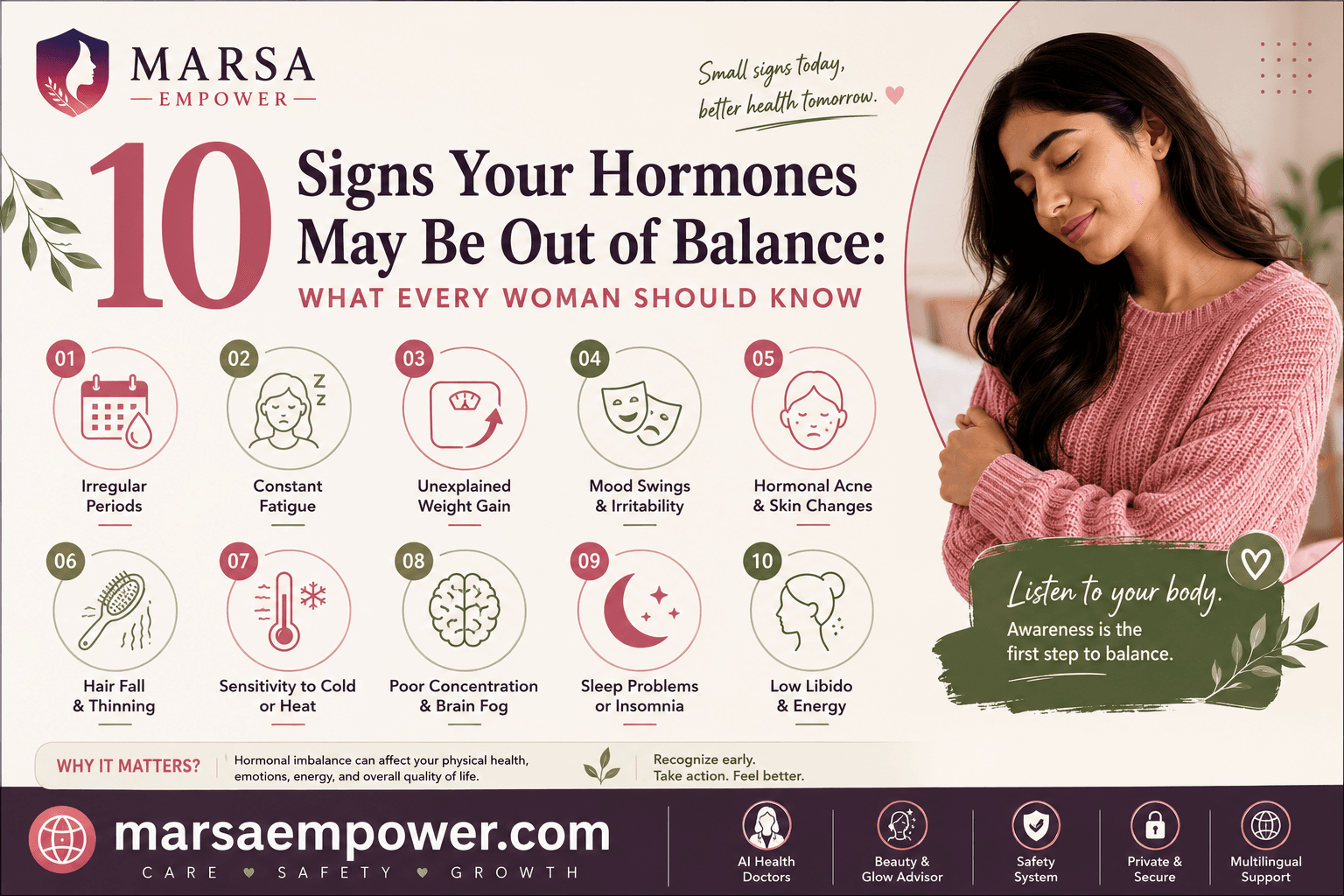
Explore the telltale signs of hormonal imbalance in women and learn how to recognize and address these issues for improved health and well-being.

Maryam Mumtaz
Co-Founder & CEO
21 min read•6/29/2026
"Your body has been sending signals. It is time to learn what they mean."
She is tired all the time — even after a full eight hours of sleep. Her skin is breaking out in ways she has not seen since her teenage years. Her weight is shifting without any obvious change in what she eats or how much she moves. And her mood swings so dramatically from week to week that she sometimes feels like a different person in her own life.
Every time she mentions it, she is told the same thing: it is stress. Rest more. Drink more water. It will pass.
But what if it will not pass — because stress is not the root cause? What if the real explanation is something measurable, identifiable, and genuinely treatable? What if her body has been communicating a specific message this entire time, and nobody has taught her how to read it?
For millions of women, that message is hormonal imbalance.
Hormones are chemical messengers produced by glands throughout the body — the thyroid, the adrenal glands, the ovaries, the pancreas, the pituitary. They regulate nearly every biological function you can name:
When hormones are in balance, these systems hum quietly and reliably in the background of life. When they fall out of balance, the disruption is felt everywhere — in the body, the mind, and the emotional landscape.
What makes hormonal imbalance particularly difficult to recognise is that its symptoms are remarkably easy to attribute to other causes.
| What Women Say | What It May Actually Be |
|---|---|
| "I am just busy" | Thyroid dysfunction or adrenal fatigue |
| "I am just stressed" | Cortisol and oestrogen imbalance |
| "I need to try harder" | Insulin resistance or PCOS |
| "I am not drinking enough water" | Androgen excess driving skin changes |
Women are extraordinarily skilled at normalising their own suffering — and the medical system has historically reinforced this by under-investigating women's hormonal complaints. This guide exists to change that.
| # | Sign | Primary Hormones Involved |
|---|---|---|
| 1 | Persistent Fatigue | Thyroid, Cortisol, Oestrogen |
| 2 | Unexplained Weight Changes | Thyroid, Insulin, Cortisol |
| 3 | Irregular or Painful Periods | FSH, LH, Oestrogen, Progesterone |
| 4 | Persistent Acne & Skin Problems | Androgens, Insulin |
| 5 | Mood Swings, Anxiety & Depression | Oestrogen, Progesterone, Cortisol |
| 6 | Sleep Disturbances | Progesterone, Cortisol, Melatonin |
| 7 | Hair Loss or Thinning | Thyroid, Androgens, DHT |
| 8 | Low Libido | Oestrogen, Testosterone, Cortisol |
| 9 | Digestive Issues | Oestrogen, Progesterone, Thyroid |
| 10 | Brain Fog & Poor Concentration | Oestrogen, Thyroid, Cortisol |
There is ordinary tiredness, which resolves with rest. And then there is the bone-deep, persistent exhaustion that no amount of sleep seems to touch. You wake after eight hours feeling as though you have not slept at all. Your energy crests briefly in the morning and then drops to nothing by early afternoon. You are not just tired — you are depleted.
This kind of fatigue is one of the most common symptoms of hormonal disruption, and it can originate from several sources:
If you are consistently exhausted in a way that rest does not fix, this is not a personal failing. It is a physiological signal worth investigating.
Weight that increases without any meaningful change in diet or activity — or weight that drops unexpectedly — is one of the clearest red flags for hormonal disruption, and one of the most dismissed.
Thyroid hormones are the master regulators of metabolic rate. When thyroid function is low, metabolism slows dramatically and weight accumulates even on a carefully maintained diet. When thyroid function is high, weight may fall despite normal or increased eating. In both directions, the scale is responding to hormonal reality — not caloric arithmetic alone.
Insulin resistance — in which cells become less responsive to insulin's signal to absorb blood sugar — leads to chronically elevated insulin levels that promote fat storage, particularly around the abdomen. Insulin resistance is closely linked to PCOS and is increasingly common in women with sedentary lifestyles, high-sugar diets, or chronic sleep deprivation.
Cortisol, the primary stress hormone, is particularly associated with abdominal fat accumulation when chronically elevated. Chronically high cortisol increases appetite — particularly for calorie-dense foods — while simultaneously directing fat storage toward the belly.
Weight that shifts without explanation deserves hormonal investigation, not simply a new diet.
The menstrual cycle is perhaps the most sensitive barometer of female hormonal health. Its regularity, flow intensity, duration, and degree of associated pain all reflect the quality of the underlying hormonal orchestration. When hormones are disrupted, the cycle reflects that disruption directly.
The most common hormonal causes include PCOS (which disrupts ovulation), thyroid dysfunction (which alters the uterine lining and hormonal timing), elevated androgens, and oestrogen-progesterone imbalance in the second half of the cycle.
Gynaecologists and endocrinologists increasingly refer to the menstrual cycle as the "fifth vital sign." Dismissing period irregularity or severe pain as normal is a missed opportunity for early diagnosis of highly treatable conditions.
Adult acne — particularly the deep, cystic kind that clusters around the jawline, chin, and lower cheeks — is not a hygiene issue or a skincare failure. It is hormonal. Treating it with topical products alone, without addressing the underlying driver, is like mopping the floor without turning off the tap.
Androgens — the family of hormones that includes testosterone — stimulate the sebaceous glands to produce more sebum (oil). Excess sebum combined with cellular turnover changes creates the conditions for clogged pores and acne.
The jawline and chin pattern is particularly characteristic of hormonal acne because the sebaceous glands in this region have a higher density of androgen receptors. Women who notice consistent breakouts here — particularly worsening before menstruation — are very likely observing androgen-driven hormonal acne.
The relationship between hormones and mental health is direct, bidirectional, and deeply underappreciated. Oestrogen and progesterone are not merely reproductive hormones — they are neuroactive steroids that directly modulate brain chemistry, including the systems that regulate mood, anxiety, and emotional stability.
Oestrogen supports the production and activity of serotonin — the neurotransmitter most associated with mood stability and wellbeing. When oestrogen fluctuates dramatically, serotonin activity fluctuates too, and mood follows.
Progesterone has a calming, anti-anxiety effect on the brain through its conversion to allopregnanolone, which enhances the activity of GABA receptors. Low progesterone in the second half of the cycle is strongly associated with premenstrual anxiety and irritability.
Cortisol imbalance adds another layer — chronically elevated cortisol keeps the nervous system in a state of heightened arousal that manifests as anxiety, difficulty relaxing, and sleep disruption.
If your mood symptoms are clearly cyclical — worse in the week before your period, or at a predictable phase of your cycle — this is hormonal signalling, not personality. It is a pattern with identifiable biochemical causes, and it responds to targeted treatment.
Difficulty falling asleep, waking repeatedly during the night, or lying awake in the early hours — many women attribute these simply to stress or anxiety. But sleep disturbances have direct hormonal drivers that are worth understanding.
Progesterone has a sedative-like quality and plays an important role in supporting deep, restorative sleep. Women with low progesterone — which occurs in the first half of the menstrual cycle, in anovulatory cycles, and dramatically in perimenopause — often experience noticeable sleep disruption.
Melatonin, the hormone that initiates sleep onset, is profoundly disrupted by elevated cortisol — which is directly antagonistic to melatonin secretion.
The cortisol rhythm problem: Cortisol should be at its lowest at night and peak in the early morning to support waking. When chronically stressed, cortisol can peak at night instead — making it genuinely difficult to fall or stay asleep, not through any failure of discipline, but through basic hormonal mechanics.
Hair is acutely sensitive to hormonal change. The hair follicle contains receptors for thyroid hormones, androgens, oestrogen, and insulin. When any of these shift significantly, the hair growth cycle is affected — often with noticeable consequences.
Thyroid dysfunction — both hypo and hyperthyroidism — causes diffuse hair thinning across the scalp. The hair follicle depends on adequate thyroid hormone to maintain its normal growth cycle; without it, follicles shift prematurely into the resting (telogen) phase and shed.
Androgen excess, as seen in PCOS, causes a pattern of hair loss at the temples and crown (androgenic alopecia), because the follicles in these regions are particularly sensitive to DHT — a potent androgen derivative. Simultaneously, elevated androgens stimulate hair growth in androgen-sensitive regions of the face and body, creating the paradox of scalp hair loss alongside unwanted facial hair.
Significant hair loss warrants hormonal investigation before any topical or cosmetic treatment is pursued.
A significant and persistent decrease in sexual interest is not simply a relationship issue or a sign of emotional disconnection. It has a hormonal basis that is both real and under-discussed.
Oestrogen supports libido through its effects on vaginal tissue health — maintaining lubrication, sensitivity, and comfort. When oestrogen falls, these physical changes directly reduce sexual interest.
Testosterone — which women produce in smaller but significant amounts — is the primary driver of sexual desire across the lifespan. Low testosterone can result from oral contraceptive use, adrenal dysfunction, or age-related hormonal shifts.
There is a well-documented phenomenon in which chronic stress diverts the hormonal precursors that would otherwise be used to make sex hormones toward cortisol production instead. The result is a compound deficit of the hormones that support libido.
Low libido that is persistent, feels out of character, or accompanies other symptoms on this list deserves hormonal evaluation — not dismissal.
The connection between hormones and digestion surprises many women — but it is both direct and well-established. The gut contains receptors for oestrogen, progesterone, and thyroid hormones, and gut motility is significantly influenced by hormonal fluctuations.
Hypothyroidism slows gut motility entirely — contributing to chronic constipation, bloating, and the feeling of sluggish digestion. Hyperthyroidism tends to accelerate gut transit, causing looser stools and urgency.
Digestive symptoms that consistently worsen at the same phase of the menstrual cycle are almost certainly hormonally driven — not a standalone digestive problem.
The experience of brain fog — mental cloudiness, poor concentration, memory lapses, and the sense of thinking through treacle — is one of the most distressing hormonal symptoms precisely because it undermines confidence and competence in daily life.
Oestrogen is profoundly neuroprotective. It supports blood flow to the brain, enhances acetylcholine activity (critical for memory and focus), and reduces neuroinflammation. When oestrogen falls — in perimenopause, in PCOS, or in the premenstrual phase — cognitive clarity falls with it.
Thyroid dysfunction — particularly hypothyroidism — causes significant cognitive slowing. Patients describe thinking through fog, struggling to find words, and losing mental sharpness they previously took for granted. These symptoms respond dramatically to appropriate thyroid treatment.
Chronically elevated cortisol directly impairs hippocampal function — the brain region most involved in memory consolidation — and reduces the brain's ability to shift focus and process information efficiently.
Brain fog driven by hormonal disruption is not imagined. It is measurable, identifiable, and treatable.
Understanding the symptoms is only half the picture. Understanding the causes empowers meaningful action — and many are modifiable.
| Cause | How It Disrupts Hormones |
|---|---|
| Chronic Stress | Sustained cortisol elevation disrupts thyroid function, reproductive hormones, sleep, and metabolism simultaneously |
| Poor Nutrition | Deficiencies in zinc, magnesium, vitamin D, and iron remove the raw materials needed for hormone synthesis |
| Inadequate Sleep | Disrupts circadian-driven hormonal rhythms in ways that cascade across multiple systems |
| Thyroid Disorders | Both hypo- and hyperthyroidism interfere with metabolism, reproduction, cognition, skin, and hair |
| PCOS | The most common endocrine disorder in reproductive-age women — affects ovulation, androgens, and insulin sensitivity |
| Environmental Toxins | Plastics, pesticides, and certain cosmetic ingredients act as endocrine disruptors that interfere with hormone receptor signalling |
| Significant Weight Changes | Alter the hormonal environment in both directions — both underweight and overweight states disrupt reproductive and metabolic hormones |
| Sedentary Lifestyle | Contributes to insulin resistance, metabolic dysregulation, and chronic low-grade inflammation |
Many of these causes are modifiable. And for those that are not fully modifiable — they are treatable. Early identification of hormonal imbalance leads to earlier intervention and significantly better outcomes.
If you recognise three or more of these signs occurring consistently — not once, but regularly, over a period of weeks or months — a hormonal evaluation with a qualified healthcare professional is recommended.
A basic hormonal workup is straightforward and accessible. A single blood draw can typically include:
This is not an exotic or specialist investigation. It is standard, accessible medicine that too few women are offered proactively.
Women have been taught — implicitly and explicitly — to tolerate hormonal disruption without complaint. The conditions most commonly underlying these symptoms — PCOS, thyroid disease, adrenal dysfunction — are diagnosed on average years after symptoms begin. Not because the symptoms were subtle. Because women were told to tolerate them.
Advocating for your own hormonal health is not vanity. It is not hypochondria. It is not excessive self-focus.
It is fundamental health literacy — and it is something every woman deserves.
"Your hormones affect everything. Understanding them empowers everything."
This article is for educational and awareness purposes only. It does not constitute medical advice, diagnosis, or treatment. If you recognise persistent symptoms that concern you, please consult a qualified healthcare professional for personalised evaluation and guidance.
MARSA Empower is an AI-powered women's empowerment platform offering private, multilingual tools for health, beauty, and safety. From 11 specialized AI health doctors and a personalized Beauty & Glow advisor to a built-in safety system with SOS alerts, MARSA helps women take charge of their wellbeing — accessibly and securely.
Medical Disclaimer
This article is for general informational and educational purposes only and is not a substitute for professional medical advice, diagnosis, or treatment. Always seek the advice of a qualified healthcare provider with any questions you may have regarding a medical condition. Never disregard professional medical advice or delay seeking it because of something you have read on MARSA Empower.
Written By
Maryam Mumtaz
Co-Founder & CEO
Co-Founder of MARSA Empower who leads the visual and strategic evolution of the platform. Maryam bridges technical complexity with human-centric design, architecting the team's official roadmap and ensuring MARSA effectively addresses the real-world needs of women. With deep expertise in agentic AI, full-stack development, and UI/UX design, she has delivered 50+ projects for 30+ satisfied clients.
Enjoyed this story?



