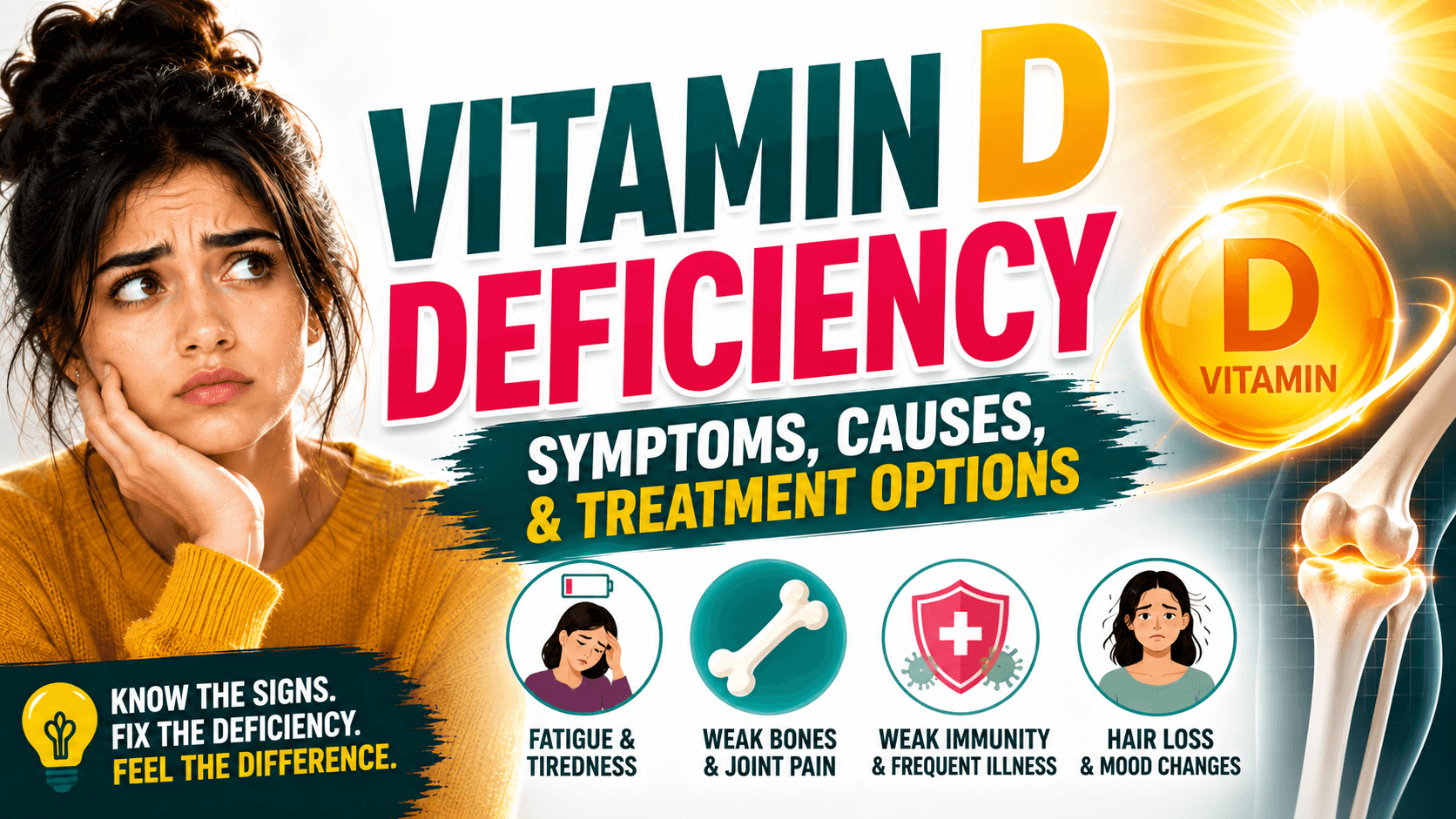
Explore the critical signs of vitamin D deficiency, its common causes, who is at risk, and the best treatment options to maintain optimal health.

Maryam Mumtaz
Co-Founder & CEO
14 min read•8/6/2026
Marsa Empower · Women's Health & Nutritional Wellness · For Girls & Women Aged 13 and Above · 14 min read
"Vitamin D deficiency is one of the most common and most consistently missed nutritional problems in the world — affecting billions of people, the majority of whom have no idea their levels are low."
You feel constantly tired — not just physically but in a deep, heavy way that sleep does not fix. Your bones ache. Your muscles feel weak. You get sick more often than you used to. Your mood is low. You cannot concentrate the way you once could.
You have been to the doctor. Your blood work looks "mostly normal." But nobody checked your vitamin D.
Vitamin D deficiency is one of the most widespread nutritional problems on the planet — and one of the most consistently overlooked. An estimated one billion people globally have low vitamin D levels. In Pakistan and South Asia, research suggests that vitamin D deficiency is strikingly prevalent — with some studies finding deficiency in over 70% of adults tested, including educated, urban women who appear well-nourished by most other measures.
The symptoms of vitamin D deficiency are real, significant, and directly connected to how the body functions at the cellular level. But they are also vague — fatigue, muscle aches, low mood, frequent infections — the kind of symptoms that are easy to attribute to a busy lifestyle, stress, or ageing.
This guide explains what vitamin D actually does, why deficiency is so widespread, what the symptoms look like, and precisely what can be done about it.
Vitamin D is a fat-soluble nutrient — meaning it dissolves in fat rather than water, and is stored in fatty tissue and the liver rather than being excreted daily. Unlike most vitamins, which must be obtained entirely from food, vitamin D can be produced by the body itself — when the skin is exposed to ultraviolet B (UVB) radiation from sunlight.
This is why vitamin D is sometimes called the "sunshine vitamin." But it is technically more accurately described as a prohormone — a precursor to a hormone. Once produced in the skin or absorbed from food, vitamin D undergoes conversion steps in the liver and kidneys to produce its biologically active form: calcitriol (1,25-dihydroxyvitamin D3) — the form that actually carries out vitamin D's functions in the body.
Vitamin D2 (ergocalciferol): Found in some plant sources, particularly UV-exposed mushrooms. Also used in some supplements.
Vitamin D3 (cholecalciferol): The form produced by the skin through sunlight exposure and found in animal-based foods. More effectively raises blood vitamin D levels than D2. Most supplements now use D3.
Vitamin D's influence on human health extends far beyond the role in bone health that most people associate with it. Vitamin D receptors — molecular docking sites that respond to vitamin D — are found in virtually every tissue in the human body, including the brain, heart, immune cells, skin, muscle, reproductive organs, and pancreas. This means vitamin D is involved in far more biological processes than simply bone mineralisation.
Calcium absorption: This is vitamin D's most well-known role. Without adequate vitamin D, the intestine can absorb only 10 to 15% of the calcium in food. With sufficient vitamin D, absorption rises to 30 to 40%. Vitamin D is therefore the essential partner to calcium in bone building and maintenance.
Bone health: By enabling calcium absorption, vitamin D directly supports bone mineralisation — the process by which calcium and phosphate are deposited into bone tissue, giving it strength and density. Without adequate vitamin D, bones become soft, weak, and prone to fracture.
Muscle function: Vitamin D receptors in muscle cells govern their strength, coordination, and recovery. Vitamin D deficiency causes muscle weakness, aches, and cramps — and increases the risk of falls in older adults.
Immune regulation: Vitamin D is one of the most important regulators of the immune system. It activates immune cells, modulates the inflammatory response, and has direct antimicrobial effects — stimulating the production of peptides that kill bacteria and viruses. Vitamin D deficiency is consistently associated with increased susceptibility to infections, particularly respiratory infections.
Mood and brain function: Vitamin D receptors are found throughout the brain — in areas governing mood regulation, cognitive function, and the production of neurotransmitters including serotonin. Vitamin D deficiency is consistently associated with depression, low mood, and cognitive difficulties.
Hormonal regulation: Vitamin D plays a role in insulin sensitivity, reproductive hormone balance, and thyroid function — explaining why deficiency has wide-ranging effects on metabolic and hormonal health.
Cell growth regulation: Vitamin D influences how cells grow, divide, and die — a function relevant to cancer prevention. Low vitamin D levels are associated with increased risk of several cancers, though this relationship is still actively researched.
When UVB rays from sunlight hit the skin, they convert a cholesterol precursor in the skin (7-dehydrocholesterol) into pre-vitamin D3, which is then converted by skin warmth into vitamin D3. This then travels to the liver and kidney for activation.
The amount of vitamin D produced depends on:
Relatively few foods naturally contain meaningful amounts of vitamin D. The primary natural food sources are fatty fish, egg yolks, and liver. Many countries address this through food fortification — adding vitamin D to milk, cereals, and other staples.
For many people — particularly those with limited sun exposure — dietary supplementation is the most reliable way to ensure adequate vitamin D levels.
Vitamin D deficiency is often called a "silent" deficiency because its symptoms develop gradually and are frequently attributed to other causes. However, when the full cluster of symptoms is present, the picture becomes recognisable.
| Symptom | Severity | Notes |
|---|---|---|
| Persistent fatigue and low energy | Very common | Heavy, unrelenting tiredness not fixed by sleep — one of the most consistent vitamin D deficiency symptoms |
| Bone pain | Common | Deep, aching pain — particularly in the back, hips, and legs. Pressing firmly on the sternum (breastbone) may be unusually painful in deficiency |
| Muscle weakness | Common | Difficulty with tasks requiring sustained muscle effort · Legs feel heavy · Stairs feel harder than they should |
| Muscle aches and cramps | Common | Diffuse body aches · Cramping — particularly in the legs |
| Frequent illness and infections | Common | Recurrent colds, respiratory infections, and longer recovery times |
| Lower back pain | Common | Vitamin D deficiency weakens the musculature supporting the spine and reduces bone density in the vertebrae |
| Low mood and depression | Common | Consistent association between low vitamin D and depressive symptoms — particularly seasonal low mood |
| Brain fog and difficulty concentrating | Common | Memory difficulties · Reduced mental sharpness · Difficulty sustaining attention |
| Hair loss | Moderate | Vitamin D plays a role in hair follicle cycling — deficiency is associated with increased shedding, particularly diffuse thinning |
| Slow wound healing | Moderate | Vitamin D supports the skin's repair processes |
| Bone loss and fractures | Serious — develops with prolonged deficiency | Osteoporosis · Stress fractures · Especially significant in women approaching or past menopause |
| Weak, aching bones overall (osteomalacia) | Serious | The adult equivalent of rickets — bones that have not been adequately mineralised |
The most frequently described experience of vitamin D deficiency in women is a combination of:
This cluster — often present for months or years before a blood test finally confirms vitamin D deficiency — is one of the clearest signals to request a test.
Understanding the biological mechanism behind each symptom makes them easier to recognise and reinforces the importance of addressing the deficiency:
Fatigue: Vitamin D is involved in the cellular energy production process. Vitamin D receptors in the mitochondria (the cell's energy generators) govern how efficiently cells convert food to energy. Without adequate vitamin D, cellular energy production is impaired at a fundamental level — producing the heavy, persistent fatigue that characterises deficiency.
Bone pain: When vitamin D is insufficient, calcium is not adequately absorbed, and the bone mineralisation process is impaired. The bones — particularly the long bones of the legs, the spine, and the pelvis — become less dense and may develop tiny unmineralised patches (osteoid) that are sensitive to pressure. This is why pressing on the sternum or shins may feel unusually sore in vitamin D deficiency.
Muscle weakness and aches: Vitamin D receptors in muscle cells regulate muscle protein synthesis, calcium signalling within muscle cells, and muscle cell survival. Without adequate vitamin D, muscle contraction is less efficient, recovery from exertion is slower, and generalised muscle aching is common.
Frequent illness: Vitamin D activates macrophages and other immune cells — the first responders against pathogens. Without adequate vitamin D, these cells are less responsive. Vitamin D also directly stimulates the production of antimicrobial peptides that create a chemical barrier against bacterial and viral invasion. Deficiency removes this protection.
Low mood and depression: Vitamin D influences the synthesis and regulation of serotonin — the neurotransmitter most closely associated with mood stability. Vitamin D receptors are found in the limbic system — the brain's mood and emotion centre. Multiple large studies show significant associations between low vitamin D and depression, particularly in populations with limited sun exposure.
Hair loss: Hair follicles contain vitamin D receptors that regulate the hair growth cycle. Vitamin D deficiency disrupts follicle cycling — causing more follicles to enter the resting phase simultaneously, producing diffuse shedding. This is distinct from androgen-driven hair loss but can coexist with it.
This is the primary cause globally — and in Pakistan specifically:
Vitamin D-rich foods — fatty fish, egg yolks, liver, and fortified dairy — may not feature prominently in typical Pakistani diets. Fish consumption varies significantly by region. Fortified foods are less consistently available than in Western markets.
Melanin — the pigment that gives darker skin its colour — absorbs UVB radiation, reducing the amount available for vitamin D synthesis. Women with darker skin tones need two to six times longer sun exposure than those with very light skin to produce equivalent vitamin D. In a population where sun exposure is already limited by cultural factors, this biological reality significantly increases deficiency risk.
Vitamin D production in the skin decreases significantly with age — older skin is less efficient at converting UVB to vitamin D even with equivalent sun exposure. Simultaneously, older adults often spend less time outdoors and eat less food overall.
Vitamin D is fat-soluble — it is stored in fat tissue. In people with a higher body fat percentage, vitamin D is sequestered (trapped) in fat stores rather than circulating freely in the blood. This means that women with higher body fat may have normal vitamin D storage but low circulating levels — and require higher doses of supplementation to achieve adequate blood levels.
Several gastrointestinal conditions impair fat absorption — and since vitamin D is fat-soluble, they impair its absorption too. These include:
Several medications increase vitamin D breakdown in the liver and reduce circulating levels:
| Group | Why They Are at Higher Risk |
|---|---|
| Women generally | Higher rates of indoor lifestyle · Cultural sun avoidance · Greater bone density requirements · Hormonal factors |
| Women covering skin outdoors | Dramatically reduced UVB exposure to skin |
| Pregnant and breastfeeding women | Higher vitamin D requirements · Fetal and infant demand drawn from maternal stores |
| Postmenopausal women | Reduced skin synthesis efficiency · Bone density concerns |
| Teenagers with limited outdoor activity | Critical bone-building period with potentially inadequate vitamin D |
| Dark-skinned individuals | Melanin reduces UVB-to-vitamin D conversion efficiency |
| People with obesity | Fat sequestration reduces circulating vitamin D |
| People with digestive disorders | Impaired fat and vitamin D absorption |
| Older adults | Reduced skin synthesis · Less sun exposure · Less efficient kidney activation |
| Office workers and indoor workers | Minimal UVB exposure throughout the working day |
| Women with PCOS | Vitamin D deficiency is particularly common and worsens insulin resistance and androgen excess |
| Women with thyroid disorders | Bidirectional relationship between vitamin D and thyroid function |
Vitamin D deficiency is diagnosed through a blood test measuring 25-hydroxyvitamin D [25(OH)D] — also written as 25-OH vitamin D. This is the storage form of vitamin D — the form that circulates in the blood before activation in the kidneys. It is the most accurate marker of the body's overall vitamin D status.
This test is often not included in standard blood panels unless specifically requested. If you suspect vitamin D deficiency based on symptoms, specifically ask your doctor for a "25-hydroxyvitamin D" or "25-OH vitamin D" blood test.
| Blood Level | Classification | Meaning |
|---|---|---|
| Below 20 ng/mL (50 nmol/L) | Deficiency | Clinically significant — symptoms likely · Treatment needed |
| 20 to 29 ng/mL (50–75 nmol/L) | Insufficiency | Below optimal — may produce symptoms · Improvement needed |
| 30 to 100 ng/mL (75–250 nmol/L) | Sufficient | Within the healthy range |
| Above 100 ng/mL (250 nmol/L) | Potentially excessive | Upper limit of comfortable range — higher is not better |
| Above 150 ng/mL (375 nmol/L) | Toxicity range | Vitamin D toxicity — caused only by excessive supplementation, not sunlight or food |
Important note on interpretation: Some clinicians and researchers suggest that optimal vitamin D levels — producing full functional benefit — may be toward the higher end of the "sufficient" range (50 to 70 ng/mL or higher). A level technically above 30 ng/mL (classified as "sufficient") may still be suboptimal for some individuals and some conditions. Discuss the interpretation of your specific result with your doctor in the context of your symptoms and health history.
Alongside vitamin D testing, a doctor investigating deficiency may check:
Treatment depends on the severity of deficiency, its cause, and the individual's health circumstances. A healthcare professional should guide the treatment approach based on blood test results.
For mild insufficiency in otherwise healthy individuals with no contraindication to sun exposure, increasing sun exposure is the most natural first-line approach. See the dedicated section below for guidance.
Increasing consumption of vitamin D-rich foods (detailed in the food section below) contributes meaningfully to vitamin D status — though diet alone is rarely sufficient to correct a confirmed deficiency.
Supplementation is the most reliable and most efficient way to correct vitamin D deficiency — particularly in individuals with limited sun exposure or dietary sources.
Forms of supplementation:
Dosing — always based on blood test results and medical guidance:
| Deficiency Level | Typical Supplementation Approach |
|---|---|
| Mild insufficiency (20–29 ng/mL) | 1,000 to 2,000 IU daily · Retest after 3 months |
| Moderate deficiency (10–20 ng/mL) | 2,000 to 4,000 IU daily or a loading dose protocol · Retest after 3 months |
| Severe deficiency (below 10 ng/mL) | High-dose loading protocol (typically 50,000 IU weekly for 8 weeks) under medical supervision · Followed by maintenance dose |
Important: Vitamin D is fat-soluble — it accumulates in the body and can reach toxic levels if supplemented excessively without monitoring. Vitamin D toxicity (hypervitaminosis D) causes dangerously elevated blood calcium (hypercalcaemia) — producing nausea, weakness, kidney damage, and in severe cases, life-threatening complications. Never take high-dose vitamin D supplementation without medical guidance and blood test monitoring.
Take vitamin D with fat: Because it is fat-soluble, taking vitamin D with a meal containing fat — even a small amount — significantly improves absorption. A supplement taken with a glass of water on an empty stomach is much less effectively absorbed than one taken with a meal.
If deficiency is driven by a malabsorption condition (coeliac disease, inflammatory bowel disease, liver or kidney disease), treating the underlying condition is essential. No amount of supplementation will adequately correct vitamin D levels if absorption from the gut is severely impaired without addressing the cause.
Sunlight is the most natural and most efficient vitamin D source — and for women who can access it appropriately, regular brief sun exposure is an important complement to dietary and supplementation approaches.
The amount of sun exposure needed to produce adequate vitamin D varies significantly by:
A general guideline for Pakistan: Approximately 10 to 20 minutes of direct midday sun (between 10 am and 3 pm) on the forearms and lower legs (or equivalent body surface area), three to four times per week, is sufficient for many lighter-skinned individuals. Darker-skinned individuals may need 30 to 60 minutes to produce the same amount.
Diet alone typically cannot fully prevent vitamin D deficiency — but including vitamin D-rich foods regularly makes a meaningful contribution to daily intake, particularly when combined with sunlight exposure or supplementation.
| Food | Vitamin D Content | Notes |
|---|---|---|
| Salmon (cooked, 85g) | 400–600 IU | One of the richest food sources |
| Sardines (canned, 85g) | 200–300 IU | Affordable and accessible · Eaten with bones adds calcium |
| Mackerel (cooked, 85g) | 250–350 IU | Rich in both vitamin D and omega-3 |
| Tuna (canned, 85g) | 150–200 IU | Convenient everyday source |
| Egg yolks (1 large egg) | 40–50 IU | A daily egg contributes meaningfully |
| Beef liver (85g) | 40–50 IU | Also provides iron and B12 |
| UV-exposed mushrooms | 100–400 IU | Mushrooms exposed to UV light produce vitamin D — check packaging |
| Food | Typical Vitamin D Content |
|---|---|
| Fortified milk (250ml) | 100–150 IU |
| Fortified yogurt (150g) | 50–100 IU |
| Fortified breakfast cereal (one serving) | 40–100 IU |
| Fortified plant-based milk (almond, soy, oat) | 100–150 IU per 250ml |
| Fortified orange juice (250ml) | 100 IU |
For many women in Pakistan — given the combination of indoor lifestyles, skin coverage, darker skin tones, and limited dietary vitamin D — supplementation is not just an option. It is a practical necessity for maintaining adequate levels.
Women are particularly vulnerable to vitamin D deficiency and its consequences — for several biological and social reasons.
Bone density peaks in the early twenties and then gradually declines. After menopause — when oestrogen falls dramatically — bone loss accelerates significantly, increasing osteoporosis and fracture risk. Adequate vitamin D throughout the reproductive years, and especially at and after menopause, is essential for maintaining the bone density that protects against fractures.
Vitamin D requirements increase during pregnancy — to support fetal bone development and the mother's own increased needs. Severe vitamin D deficiency during pregnancy is associated with:
Breastfed infants receive very little vitamin D from breast milk (even when the mother is replete) — supplementation of breastfed infants with vitamin D drops is recommended in most guidelines.
Vitamin D deficiency has been directly associated with menstrual irregularity. Vitamin D receptors are found throughout the reproductive system — in the ovaries, uterus, and endometrium. Adequate vitamin D supports:
Improving vitamin D status in deficient women has been shown to improve cycle regularity in some studies.
Vitamin D deficiency is significantly more common in women with PCOS than in women without the condition — and the relationship is not coincidental. Vitamin D:
Multiple studies show that correcting vitamin D deficiency in women with PCOS improves cycle regularity, reduces androgen levels, and improves insulin sensitivity. Vitamin D is now considered an important component of PCOS management.
Vitamin D and thyroid health are bidirectionally connected:
For women with thyroid conditions, vitamin D testing and optimisation is a particularly important component of care.
Beyond the specific interventions of sun exposure, food, and supplements, several lifestyle habits support vitamin D status and overall health:
Spend time outdoors safely: Even brief midday outdoor time on weekdays — walking to a local shop, sitting outside for 15 minutes at lunch — contributes to vitamin D production over time.
Eat a balanced diet including vitamin D foods regularly: Fatty fish twice weekly, eggs daily, and fortified dairy consistently is a practical and achievable dietary foundation for vitamin D.
Stay physically active — particularly weight-bearing exercise: Exercise supports bone health alongside vitamin D — and regular physical activity is associated with better vitamin D utilisation. Walking, resistance training, and yoga all contribute to the bone health that vitamin D supports.
Follow your healthcare provider's supplement guidance: Take the prescribed dose consistently, take it with food, and attend follow-up appointments for retesting. Self-adjusting supplement doses without retesting is not safe with vitamin D.
Address underlying health conditions: If coeliac disease, inflammatory bowel disease, kidney or liver disease, or thyroid dysfunction is contributing to vitamin D deficiency, managing these conditions is essential to improving and maintaining vitamin D levels.
Attend follow-up testing: Vitamin D repletion is a process, not a one-time event. Retesting three months after starting supplementation confirms whether levels have reached the target range and guides ongoing dose decisions.
What causes vitamin D deficiency?
The most common causes are limited sun exposure (from indoor lifestyles, full skin coverage, or limited outdoor time during peak UV hours), insufficient dietary intake of vitamin D-rich foods, darker skin tone requiring longer sun exposure, obesity causing vitamin D to be trapped in fat tissue, and medical conditions impairing absorption or activation of vitamin D.
How much vitamin D do I need?
Recommended daily intakes vary by age and life stage:
These are minimum recommendations — many nutritional experts and clinicians suggest higher targets, particularly for individuals with known deficiency or high-risk factors. A blood test provides the most accurate guide to individual needs.
Which foods contain the most vitamin D?
The richest food sources are fatty fish (salmon, sardines, mackerel, tuna) and egg yolks. UV-exposed mushrooms are a good plant-based source. Fortified foods — fortified milk, fortified yogurt, fortified breakfast cereals — contribute meaningfully. No plant food naturally contains significant vitamin D, which is why vegetarians and vegans need particular attention to fortified foods or supplementation.
Can vitamin D deficiency cause hair loss?
Yes — vitamin D plays a role in the hair follicle growth cycle, and deficiency is associated with increased hair shedding (telogen effluvium) and diffuse scalp thinning. This is not the same as androgen-driven hair loss (which affects specific pattern areas) — vitamin D-related hair loss tends to be more diffuse. Correcting deficiency typically improves hair health over several months, though other causes of hair loss (iron deficiency, thyroid dysfunction, hormonal imbalance) should be investigated simultaneously.
Can low vitamin D affect mood?
Yes — consistently. Multiple large epidemiological studies and clinical trials show significant associations between low vitamin D levels and depression, low mood, and anxiety. Vitamin D influences serotonin synthesis and activity in the brain — a direct mechanism for its mood effects. While vitamin D is not a standalone treatment for clinical depression, correcting deficiency in a depressed person with low levels is an important component of comprehensive care.
How long does treatment take?
Blood levels of vitamin D typically improve within four to eight weeks of starting supplementation at appropriate doses. Full correction of significant deficiency typically takes two to three months. Improvement in symptoms may begin within several weeks of starting treatment but can take two to four months for full benefit — particularly for fatigue, mood, and muscle symptoms.
Can teenagers develop vitamin D deficiency?
Yes — and it is particularly important during adolescence because this is the period of peak bone density building. Teenage girls who spend most of their time indoors, cover most of their skin outdoors, or have limited dietary vitamin D sources are at significant risk. Signs in teenagers include bone and muscle pain, fatigue, frequent infections, and in severe cases, bone deformities. Vitamin D testing is appropriate for any teenager with persistent unexplained fatigue or musculoskeletal symptoms.
Can vitamin D deficiency be prevented?
Yes — through a combination of: safe, brief, regular midday sun exposure on uncovered skin; regular consumption of vitamin D-rich foods (fatty fish, eggs, fortified dairy); and supplementation at a maintenance dose (typically 1,000 to 2,000 IU daily) for individuals with known risk factors or limited sun exposure. Annual blood testing allows monitoring and dose adjustment.
| Topic | Key Takeaway |
|---|---|
| What vitamin D does | Enables calcium absorption · Builds bone · Supports immunity · Regulates mood · Governs muscle function |
| Most common cause of deficiency | Limited sun exposure — particularly in women covering skin outdoors or spending time indoors |
| Most common symptoms | Persistent fatigue · Bone and muscle pain · Frequent illness · Low mood · Hair loss |
| Who is at highest risk | Women who cover skin outdoors · Dark skin tones · Pregnant women · Obese individuals · People with digestive disorders |
| How to diagnose | 25-OH vitamin D blood test — request this specifically |
| Sufficient blood level | 30 to 100 ng/mL · Optimal may be 50–70 ng/mL |
| Deficiency level | Below 20 ng/mL |
| Best supplement form | Vitamin D3 (cholecalciferol) — taken with a fatty meal |
| Best food sources | Salmon · Sardines · Mackerel · Egg yolks · Fortified milk and cereals |
| Sun exposure guideline | 10 to 20 minutes of midday sun on forearms and legs · 3 to 4 times per week |
| Vitamin D and PCOS | Deficiency worsens insulin resistance and androgen excess — optimising vitamin D supports PCOS management |
| Vitamin D and thyroid | Bidirectional relationship — common to be deficient alongside autoimmune thyroid conditions |
| Vitamin D toxicity | Only from excessive supplementation — cannot occur from sun or food · Never take high doses without medical guidance |
| When to see a doctor | Persistent fatigue · Bone or muscle pain · Frequent infections · Low mood · Risk factors for deficiency |
"Vitamin D deficiency is both extremely common and extremely correctable. A single blood test identifies it. Targeted supplementation corrects it. The improvements — in energy, mood, immunity, bone health, and hormonal function — can be transformative. Do not guess. Test."
Educational Disclaimer
This article is for educational and awareness purposes only. It does not constitute medical advice, diagnosis, or treatment. If you suspect vitamin D deficiency or are considering supplementation, please consult a qualified healthcare professional for blood testing and personalised guidance. Do not self-prescribe high-dose vitamin D without medical supervision.
Marsa Empower · Women's Health · Nutritional Wellness · Bone & Immune Health Education
Medical Disclaimer
This article is for general informational and educational purposes only and is not a substitute for professional medical advice, diagnosis, or treatment. Always seek the advice of a qualified healthcare provider with any questions you may have regarding a medical condition. Never disregard professional medical advice or delay seeking it because of something you have read on MARSA Empower.
Written By
Maryam Mumtaz
Co-Founder & CEO
Co-Founder of MARSA Empower who leads the visual and strategic evolution of the platform. Maryam bridges technical complexity with human-centric design, architecting the team's official roadmap and ensuring MARSA effectively addresses the real-world needs of women. With deep expertise in agentic AI, full-stack development, and UI/UX design, she has delivered 50+ projects for 30+ satisfied clients.
Enjoyed this story?



