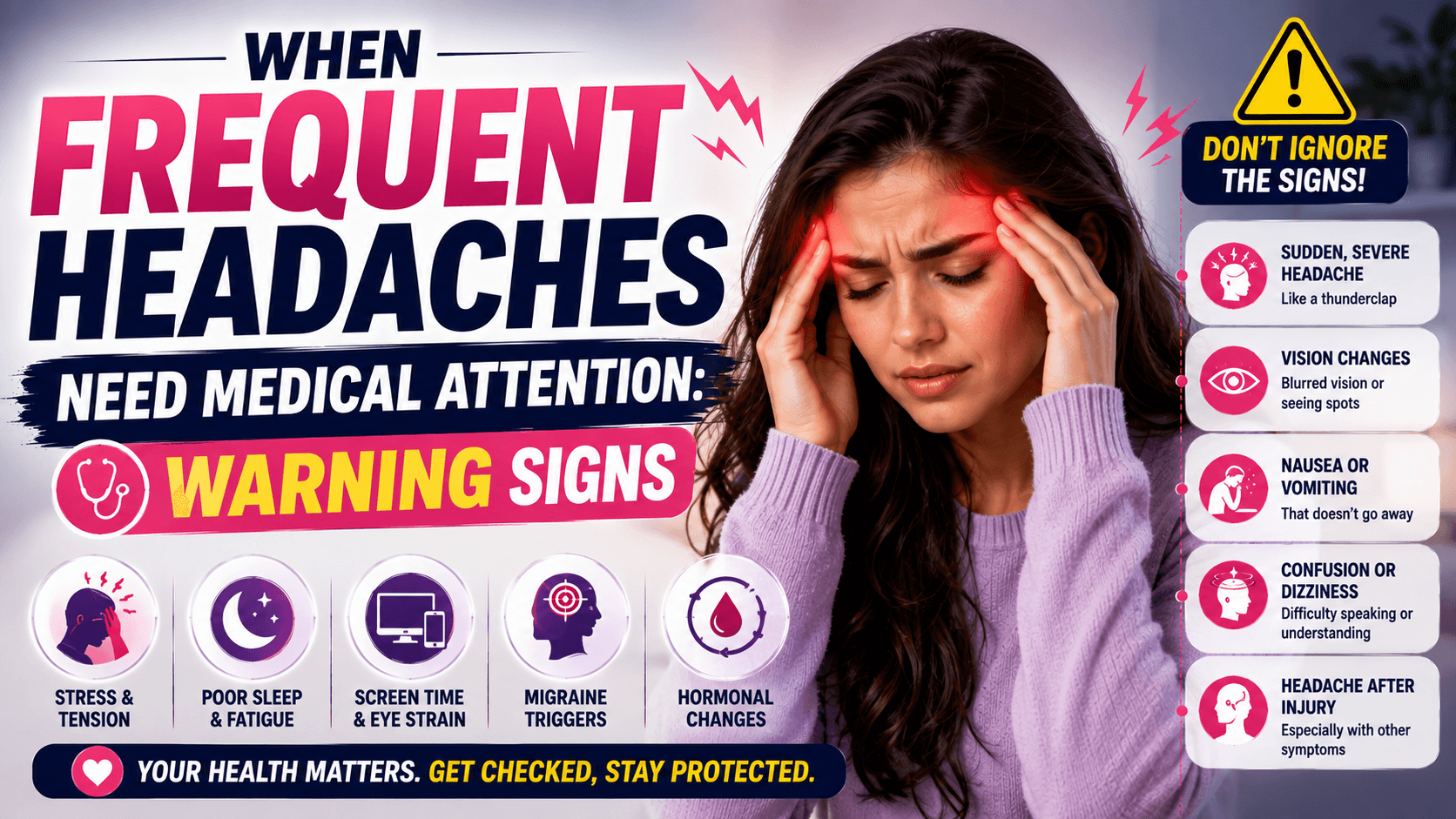
Frequent headaches can be more than just a nuisance. Discover the warning signs that suggest it's time to seek medical attention and gain expert insights into headache management.

Maryam Mumtaz
Co-Founder & CEO
11 min read•9/2/2026
Marsa Empower · Women's Health & Everyday Wellness · For Girls & Women Aged 13 and Above · 11 min read
Almost everyone gets a headache sometimes. A stressful day, too little sleep, not enough water, a skipped meal, hours at a screen — any of these can trigger the kind of head pain that most women experience occasionally and manage without much concern.
But what about headaches that keep coming back? What about the headache that feels completely different from any you have had before? What about head pain that is arriving more often, lasting longer, or becoming harder to manage?
Frequent headaches should not simply be pushed through, treated with repeated painkiller doses, and dismissed as part of a busy life. The pattern of your headaches, their severity, their timing, and the symptoms that accompany them all provide information about what is driving them and whether medical evaluation is needed.
This guide explains the most common headache causes in women, the specific warning signs that require urgent evaluation, when recurring headaches warrant a non-urgent medical conversation, and the practical habits that reduce headache frequency for many women.
A headache is pain or discomfort felt in or around the head, scalp, or upper neck. The experience varies significantly between people and between headache types.
Headaches can feel like pressure or tightening, as though a band is being squeezed around the head. They can feel like throbbing or pulsing, often worsening with physical activity. Pain may be one-sided or bilateral. It may be localised to the forehead, the temples, the back of the head, or around the eyes. Some headaches are accompanied by sensitivity to light or sound. Some are accompanied by nausea. Some arrive alongside visual changes or aura.
These differences in character, location, and associated symptoms are clinically meaningful. They help distinguish different headache types, each of which has different typical causes and different optimal management approaches.
The majority of headaches have identifiable, non-serious triggers. Understanding the most common ones helps both in managing individual headaches and in identifying when a headache does not fit the usual pattern.
Dehydration is one of the most consistent and most correctable headache triggers. Even mild fluid deficit — not yet producing thirst — can produce head pain in many people. Headaches that arrive after sweating heavily, spending time in hot weather, or a day of inadequate fluid intake and improve promptly with drinking water are typically dehydration-related.
Skipping meals drops blood sugar and elevates cortisol, both of which can trigger headaches, particularly in people who are susceptible. Headaches that arrive during or after a long gap between meals and improve after eating are often hunger and blood sugar related.
Insufficient or irregular sleep is among the most common headache triggers. Both too little sleep and significantly disrupted sleep patterns produce head pain in many people. Weekend headaches, which often arrive on Saturday or Sunday mornings, are frequently a combination of sleeping later than usual, changes in caffeine timing, and the cortisol shift of an altered routine.
Stress and emotional strain produce tension-type headaches through muscle tension in the neck, shoulders, and scalp, as well as through the direct hormonal effects of elevated cortisol on vascular tone.
Prolonged screen use contributes to eye strain, sustained poor posture of the neck and upper back, and reduced blinking frequency, all of which can produce or worsen headaches. Headaches that develop during or after extended computer or phone use and improve with rest from the screen are often screen-related.
Caffeine changes — either sudden reduction in regular caffeine intake or excessive caffeine consumption — reliably trigger headaches in regular caffeine consumers. The sudden removal of caffeine from a habituated system produces a withdrawal headache, typically in the morning or after any delay in the usual caffeine intake time.
Hormonal changes drive headaches for many women, particularly around the menstrual cycle. The drop in oestrogen that occurs in the days before menstruation is one of the most consistent hormonal headache triggers, and some women experience predictable premenstrual or menstrual migraines as a direct result.
Illness — viral and bacterial infections including colds, influenza, and sinusitis — frequently produce headaches as part of the broader systemic response to infection.
These common triggers are not the only possible causes of headaches. They are the starting point for understanding the pattern of your own headaches.
There is no single universally agreed threshold that defines when headaches have become "frequent" in a clinically concerning sense. A general working definition is experiencing headaches on fifteen or more days per month for three or more months — this meets the clinical criteria for chronic daily headache. But headaches that are significantly disrupting daily life or requiring regular medication may warrant evaluation even before reaching this threshold.
What matters more than a specific number is the pattern over time. Are headaches arriving more often than they used to? Are they lasting longer? Are they becoming more severe? Are they requiring more medication to manage? Have they changed in character from your established personal baseline? These changes, rather than any single absolute frequency, are the signals worth tracking and discussing with a healthcare professional.
Keeping a headache diary — recording the date, time, duration, severity, character, location, and associated circumstances of each headache — makes patterns visible that would not be apparent from individual episodes.
The following headache patterns require prompt or emergency medical evaluation. These are not scenarios for a routine future appointment. They are situations to seek help for immediately.
A sudden, extremely severe headache — the worst of your life. A headache that reaches its maximum severity very quickly — described by neurologists as a "thunderclap headache" — is a medical emergency until proven otherwise. It can indicate subarachnoid haemorrhage (bleeding around the brain) and requires immediate emergency evaluation.
Headache accompanied by weakness, numbness, facial drooping, difficulty speaking, or confusion. Any combination of head pain and sudden neurological symptoms is a medical emergency that requires calling emergency services immediately. These can be signs of stroke.
Headache with loss of consciousness or seizure. Requires emergency medical attention.
Headache with sudden significant vision changes. Sudden loss of vision, double vision, or other significant visual disturbance alongside a headache requires urgent evaluation.
Headache with fever and a stiff neck. This combination — particularly when accompanied by sensitivity to light and a characteristic rash — can indicate bacterial meningitis, a serious infection requiring emergency treatment.
Headache following a significant head injury. Any headache developing after a head injury, especially when accompanied by vomiting, confusion, unusual drowsiness, weakness, or brief loss of consciousness, requires medical evaluation for concussion or more serious intracranial injury.
New or severe headache during pregnancy or shortly after giving birth. This requires prompt discussion with a healthcare provider, particularly if accompanied by vision changes, high blood pressure, significant swelling, or other symptoms, as it may indicate a serious pregnancy-related condition including pre-eclampsia.
These warning signs are sometimes called "red flag" headache features. They do not mean every headache with a mild associated symptom is dangerous. They mean that these specific combinations require professional evaluation without delay.
Outside of the urgent warning signs above, the following patterns are reasons to have a non-urgent but timely medical conversation about your headaches.
Headaches that are arriving more frequently than in the past, even if each individual episode is manageable. Headaches that are becoming more severe over weeks or months. Headaches that are interfering with your ability to attend school or work, complete normal daily activities, or sleep. Headaches that require you to take pain medication more than two to three days per week to manage. Headaches that have changed significantly from your personal established pattern, even if the new pattern does not yet include any of the urgent warning features. Headaches that wake you from sleep. Headaches that are occurring in a child or teenager and are becoming more frequent or severe.
You do not need to wait until headaches are unbearable or fully disabling before raising them with a healthcare professional. Earlier evaluation identifies the headache type more accurately, allows more targeted management, and prevents the overuse of self-prescribed pain medication that can itself worsen headache frequency over time.
Migraine is a neurological condition that produces significantly more intense and functionally disabling headaches than common tension-type headaches. Understanding the difference matters because migraine has specific treatment options that are more effective than standard pain relief.
Migraine typically produces moderate to severe throbbing or pulsating pain, usually on one side of the head. It is worsened by physical activity and is often accompanied by nausea, and sometimes vomiting. Sensitivity to light (photophobia) and sensitivity to sound (phonophobia) are characteristic features — the need to lie in a dark, quiet room is a reliable migraine indicator.
Some people experience migraine aura, which consists of neurological symptoms arising in the minutes before or alongside the headache. Aura most commonly involves visual changes — flickering lights, blind spots, zigzag patterns — but can also involve sensory changes (tingling or numbness), speech difficulties, or motor symptoms.
Migraine is significantly more common in women than men, largely because of the hormonal connection described above.
If you experience symptoms that might be migraine — particularly if they are recurring, severe, or significantly disrupting your life — this warrants a medical assessment rather than continued self-management with over-the-counter pain relief. Effective migraine-specific treatments exist, and appropriate management significantly reduces both the frequency and severity of attacks for many women.
One important caution: any new or unusual neurological symptom should not automatically be attributed to migraine without medical evaluation. Aura-like symptoms occurring for the first time, particularly if sudden or severe, require professional assessment.
Many women experience headaches or migraines with a clear relationship to their menstrual cycle. This menstrual pattern is driven by the sharp drop in oestrogen that occurs in the late luteal phase, in the days before menstruation begins.
Oestrogen supports serotonin activity, and when oestrogen falls rapidly, serotonin activity falls with it. This neurochemical shift is one of the most consistent triggers for migraine in susceptible women, producing what is called menstrual migraine or hormonal headache.
Signs that headaches have a hormonal pattern include consistent arrival in the two to three days before the period begins or in the first days of the period. This pattern tends to be reliable across cycles, unlike tension or dehydration headaches which vary more unpredictably.
Tracking headaches alongside your menstrual cycle using Marsa's Health Hub reveals whether this timing pattern is consistent — and this documented pattern is useful both for self-understanding and for medical consultations about headache management.
Importantly, a new, severe, or unusual headache that happens to coincide with your period should not automatically be attributed to hormonal causes. New or significantly changed headache patterns always warrant evaluation regardless of where they fall in the cycle.
Yes. Stress is one of the most consistent headache triggers, particularly for tension-type headaches. The mechanism involves both direct neurological effects (cortisol's influence on vascular tone and pain sensitivity) and indirect effects through the habits that chronic stress disrupts, including sleep, hydration, meal regularity, and posture.
Managing stress — through regular exercise, adequate sleep, breathwork, and, where needed, professional support — genuinely reduces headache frequency for many women whose headaches are primarily stress-driven. However, frequent or severe headaches that occur during or following stressful periods still deserve medical evaluation. Stress may be a trigger, but it does not mean that the headaches have no other underlying cause or that they cannot be better managed with appropriate medical support.
Yes, dehydration is a reliable and common headache trigger in many people. Even mild fluid deficit — before obvious thirst develops — can produce head pain. Headaches that develop after a day of inadequate fluid intake, after sweating during exercise or hot weather, or after illness involving vomiting or diarrhoea are often dehydration-related.
Staying adequately hydrated through the day — approximately six to eight glasses of water for most adults, with more during exercise or heat — reduces dehydration-related headache frequency. If headaches persist despite consistent adequate hydration, additional causes should be considered and a healthcare professional consulted if the pattern continues.
For an ordinary, mild, familiar headache — the kind that fits your established pattern and has a recognisable trigger — the following simple steps are appropriate first responses.
Drink water if there is any chance dehydration is contributing. Even if you have been drinking throughout the day, a glass of water is a low-risk first step. Eat something balanced if you have missed or delayed a meal. Rest in a quiet, lower-light environment if the headache involves light or sound sensitivity. Take a break from screen use, which eliminates both the eye strain and the posture-related contribution. Change your sitting position or move around if you have been in one position for an extended period.
If you use pain relief medication, take it at the early stages of a headache rather than waiting until pain is severe — for most headache types, earlier medication is more effective than later medication once pain has intensified.
Record the headache in a diary for pattern tracking.
Over-the-counter pain medications including paracetamol and ibuprofen are appropriate for managing occasional headaches. But using headache medication more than two to three days per week consistently can itself cause medication-overuse headache, also called analgesic rebound headache. This is a paradoxical condition in which frequent pain medication use increases rather than decreases headache frequency over time, creating a cycle where the treatment perpetuates the problem.
If you find yourself reaching for headache medication most days, or several times per week, this pattern warrants medical discussion rather than continued self-management. A healthcare provider can help identify the underlying headache type and recommend approaches — including preventive treatments — that address the cause rather than only the symptom.
Always follow the dosing instructions on medication packaging and follow any specific guidance from your healthcare professional.
While not every headache can be prevented, the following consistent habits reduce headache frequency for many women by addressing the most common modifiable triggers.
Maintaining regular sleep and wake times, including on weekends, supports the circadian stability that reduces cortisol-driven headaches and sleep deprivation triggers. Eating regular, balanced meals prevents the blood sugar drops that trigger headaches in susceptible women. Staying well hydrated throughout the day prevents dehydration-related episodes. Taking regular breaks from screens — standing, looking away from the screen, and briefly moving — reduces eye strain and postural contributions. Maintaining good neck and shoulder posture and ensuring the screen is at a comfortable height reduces the sustained muscular tension that produces tension headaches. Managing stress actively through exercise, breathwork, and appropriate social and professional support reduces the cortisol burden that increases headache susceptibility. Avoiding sudden large changes in caffeine intake, particularly sudden complete cessation, prevents withdrawal headaches in regular caffeine consumers. Tracking headaches and identifying personal patterns allows targeted avoidance of specific individual triggers once they are identified.
When you consult a healthcare professional about frequent headaches, they will typically ask for the following information. This is exactly what a headache diary helps you provide accurately.
When the headaches began and how the pattern has changed over time. How often they occur and how long each episode lasts. Where the pain is located and what it feels like. How severe it is, typically rated on a scale. What you were doing or what circumstances preceded the headache. Your sleep patterns. Your dietary and hydration habits. Your caffeine consumption and any recent changes. Your stress levels. Any medications you take, including how often you use pain relief for headaches. Your menstrual cycle pattern and whether headaches seem to follow a cyclical pattern. Whether any specific activities, foods, or situations seem to trigger them. Whether anything reliably helps. Whether you have any other associated symptoms.
The more specific and documented this information is, the more useful the consultation will be.
A headache diary does not need to be complicated. The following information, recorded at the time of each headache, provides the pattern data most useful for clinical assessment.
The date and the time the headache began. How long it lasted. The pain level on a scale of one to ten. Where the pain was located. What it felt like — pressure, throbbing, stabbing, or another description. Your sleep the previous night. What you ate and drank that day and whether you skipped any meals. Your caffeine intake and timing. Your stress level that day. The day of your menstrual cycle if you are menstruating. Any other symptoms accompanying the headache. Any medication you took and whether it helped.
After two to four weeks of consistent recording, patterns that were not visible from individual episodes become apparent. This data transforms an appointment about "I keep getting headaches" into a specific, evidenced discussion of patterns, triggers, and appropriate management approaches.
Marsa Empower's platform provides tools and resources that support women in tracking health patterns and understanding health information in accessible, clear language.
The Health Hub's cycle and symptom tracking allows women to record headaches alongside their menstrual cycle phase, sleep quality, stress levels, and other relevant factors, building the documented pattern that is most valuable for both self-understanding and medical consultations. Health education resources explain headache types, hormonal connections, and the management approaches most relevant to women at different life stages. AI health guidance through Digital Doctors provides educational information about headache causes and warning signs, helping women identify which patterns warrant prompt medical attention and which can be managed with lifestyle adjustments.
Marsa Empower is an educational and health awareness companion. It does not diagnose headache types or causes, prescribe treatment, or replace clinical evaluation by a qualified healthcare professional. Frequent, worsening, or unusual headaches should be discussed with a doctor.
How many headaches is too many?
There is no single threshold that applies to every woman. If headaches are arriving more often than previously, becoming more severe, requiring regular pain medication, or interfering with daily activities, raising them with a healthcare professional is appropriate regardless of the specific number.
Can dehydration cause frequent headaches?
Yes. Dehydration is a common and correctable headache trigger. Consistent adequate hydration reduces dehydration-related headache frequency. If headaches persist despite good hydration, other causes should be considered.
Can periods cause headaches?
Yes. The premenstrual drop in oestrogen is a reliable migraine and headache trigger for many women. Tracking headaches alongside your menstrual cycle reveals whether a cyclical hormonal pattern is present. New, severe, or unusual headaches that coincide with the period should still be evaluated rather than automatically attributed to hormones.
When is a headache an emergency?
A sudden extremely severe headache, a headache accompanied by weakness, numbness, or facial drooping, a headache with confusion or loss of consciousness, a headache with sudden significant vision changes, a headache with fever and a stiff neck, a headache following head injury, and a new severe headache during or shortly after pregnancy all require urgent or emergency medical evaluation.
Can too much screen time cause headaches?
Yes. Prolonged screen use contributes to eye strain, neck and shoulder muscle tension, and reduced blinking frequency — all of which can trigger or worsen headaches. Regular screen breaks, appropriate screen height, and posture changes reduce screen-related headache frequency.
Should I see a doctor for weekly headaches?
Yes. Headaches occurring weekly — particularly if this represents a change from your previous pattern, if they are worsening, or if they require regular pain medication — are worth discussing with a healthcare professional. Weekly headaches that fit a consistent pattern with clear identifiable triggers (such as consistent menstrual timing or sleep deprivation) may be less concerning, but still benefit from medical discussion about whether preventive management is appropriate.
Seek emergency medical help immediately for these headache features:
Sudden, extremely severe headache that reaches maximum intensity very quickly. Headache with weakness, numbness, facial drooping, or difficulty speaking. Headache with confusion, loss of consciousness, or seizure. Headache with sudden significant vision changes. Headache with fever and a stiff neck. Headache following a significant head injury with other neurological symptoms. New severe headache during pregnancy or shortly after giving birth.
See a doctor for medical evaluation if:
Headaches are becoming more frequent or more severe over time. Headaches are interfering with school, work, or daily activities. Headaches require pain medication more than two to three times per week. Headaches have significantly changed from your personal established pattern. Headaches are waking you from sleep.
Manage with lifestyle adjustments when:
Headaches fit a familiar personal pattern. Headaches have clear identifiable triggers (dehydration, skipped meals, stress, screen use). Headaches are mild to moderate in severity. Headaches respond well to simple measures and appropriate medication. The pattern is not worsening and is not accompanied by other concerning symptoms.
Educational Disclaimer
This article is for educational and awareness purposes only. It does not constitute medical advice, diagnosis, or treatment. If you have frequent, worsening, or concerning headaches, or experience any of the warning signs described in this guide, please consult a qualified healthcare professional promptly.
Marsa Empower | Care. Safety. Growth.
Visit marsaempower.com to track your health patterns, understand your symptoms, and access educational resources built for every stage of a woman's life.
Medical Disclaimer
This article is for general informational and educational purposes only and is not a substitute for professional medical advice, diagnosis, or treatment. Always seek the advice of a qualified healthcare provider with any questions you may have regarding a medical condition. Never disregard professional medical advice or delay seeking it because of something you have read on MARSA Empower.
Written By
Maryam Mumtaz
Co-Founder & CEO
Co-Founder of MARSA Empower who leads the visual and strategic evolution of the platform. Maryam bridges technical complexity with human-centric design, architecting the team's official roadmap and ensuring MARSA effectively addresses the real-world needs of women. With deep expertise in agentic AI, full-stack development, and UI/UX design, she has delivered 50+ projects for 30+ satisfied clients.
Enjoyed this story?