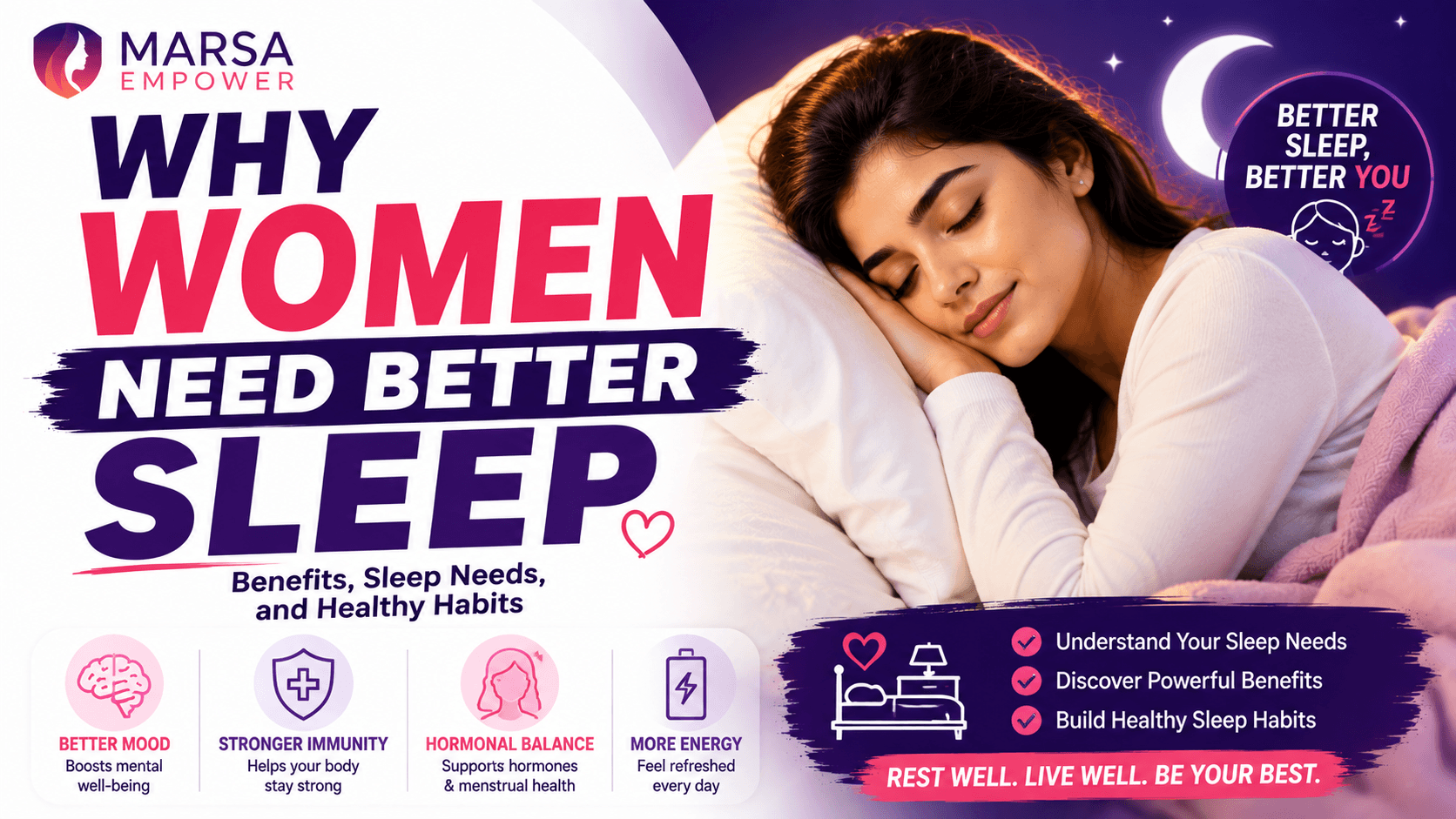
Explore why women need better sleep, the benefits it brings, and how to establish healthy sleep habits for improved wellness.

Maryam Mumtaz
Co-Founder & CEO
14 min read•8/20/2026
Marsa Empower · Women's Health & Everyday Wellness · For Girls & Women Aged 13 and Above · 14 min read
"Sleep is not time stolen from productivity. It is the foundation that makes everything else possible — your concentration, your mood, your hormones, your immune system, and your capacity to take on every demand of your day."
Ask most women how they are, and somewhere in the answer will be some version of tired. Tired from work. Tired from caregiving. Tired from stress. Tired in that deep, bone-level way that a weekend does not fix.
This tiredness is real — and for many women, it is not simply the consequence of a demanding life. It is at least partly the consequence of genuinely inadequate sleep. Sleep that is too short, too fragmented, too light, or too disrupted by hormonal changes, stress, or caregiving responsibilities to be genuinely restorative.
Women are significantly more likely than men to report insomnia, difficulty falling asleep, frequent nighttime waking, and unrefreshing sleep. This gender gap is partly structural — women carry disproportionate caregiving and domestic burdens that reduce available sleep time and fragment sleep with nighttime responsibilities. But it is also partly biological — women's sleep is uniquely sensitive to the hormonal fluctuations of puberty, the menstrual cycle, pregnancy, postpartum recovery, perimenopause, and menopause in ways that men's sleep simply is not.
Understanding sleep as a specific women's health priority — not just a general wellness recommendation — is the starting point of taking it seriously enough to protect.
Sleep is not the passive absence of wakefulness. It is one of the most biologically active states the body enters — a period during which essential maintenance, repair, and restoration occurs across virtually every system.
Sleep occurs in cycles of approximately 90 minutes, each containing several stages:
Stage 1 — Light sleep: The transition between wakefulness and sleep. Easily disrupted. Body temperature begins to fall.
Stage 2 — Deeper light sleep: Heart rate slows. Brain produces sleep spindles — brief bursts of activity associated with memory consolidation. The majority of sleep time is spent in this stage.
Stage 3 — Slow-wave sleep (deep sleep): The most physically restorative stage. Growth hormone is released — driving cellular repair, immune function, and tissue maintenance. Very difficult to wake from. Most concentrated in the first half of the night.
REM sleep (Rapid Eye Movement): The stage in which most dreaming occurs. The brain is highly active — processing emotional experiences, consolidating procedural memory, and integrating new learning with existing knowledge. Crucial for emotional regulation and cognitive function. Concentrated more in the later half of the night.
A full night of sleep cycles through these stages four to six times. When sleep is cut short, fragmented, or of poor quality, specific stages are disproportionately reduced — with real consequences.
Sleep needs are primarily determined by age — and these requirements are not guidelines to aim vaguely toward. They reflect the genuine biological needs of the body at each developmental stage.
| Age Group | Recommended Sleep Per Night |
|---|---|
| Teen girls (13–18 years) | 8 to 10 hours |
| Young adults (18–25 years) | 7 to 9 hours |
| Adults (26–64 years) | 7 to 9 hours |
| Older adults (65+ years) | 7 to 8 hours |
| Pregnant women | 8 to 10 hours — needs increase across pregnancy |
These ranges represent what most people in each age group need to feel fully rested, perform at their cognitive and physical best, maintain immune function, and support hormonal health.
Sleeping at the lower end of the range is fine for some people — but it is not appropriate to assume that sleeping less than the minimum is fine simply because you feel "okay." The effects of mild chronic sleep deprivation accumulate gradually in ways that feel normal only because they have become the baseline. Many women who "function fine" on six hours would discover, if they consistently slept eight, that what they called functioning fine was significantly below their actual capacity.
Sleep needs vary somewhat between individuals — genetics, health status, activity level, and life stage all influence how much sleep a specific person requires. The most reliable indicators are:
Sleep and mental health are inseparably connected — and the relationship is bidirectional. Poor sleep worsens mental health; poor mental health worsens sleep. But the starting point — improving sleep — consistently produces measurable mental health benefits even when other circumstances have not changed.
The prefrontal cortex — the brain region responsible for rational thinking, emotional regulation, and proportionate responses to stressors — requires adequate sleep to function effectively. Sleep deprivation measurably reduces prefrontal cortex activity and increases amygdala reactivity — the amygdala being the brain's threat-detection centre.
The result is a brain that perceives neutral stimuli as threatening, registers small frustrations as disproportionately upsetting, and has reduced capacity to apply rational perspective to emotional situations. A sleep-deprived woman is not "being too emotional" — her brain is genuinely functioning differently due to sleep insufficiency.
Studies consistently show that even a single night of inadequate sleep produces measurable increases in anxiety, irritability, and emotional reactivity. Chronic sleep deprivation produces sustained elevated anxiety, increased depression risk, and significantly reduced resilience to everyday stress.
Conversely, improving sleep consistently produces mood stabilisation, reduced anxiety, and improved stress tolerance — even when the stressors themselves have not changed.
During sleep — particularly during slow-wave sleep and REM sleep — the brain transfers information from short-term to long-term memory storage. The experiences, facts, and skills encountered during the day are reviewed, filtered, and encoded during this process. Material that is not consolidated during sleep is more likely to be forgotten.
This is why studying and then sleeping consistently produces better retention than studying for the same amount of time without sleeping afterward. The sleep is not wasted time — it is where the learning happens.
The relationship between sleep and academic performance is particularly significant during adolescence, when the brain is undergoing some of its most intensive developmental work. Sleep deprivation in teenage girls is associated with:
A teenage girl who consistently sleeps seven or fewer hours while trying to manage a demanding academic schedule is working against her own cognitive capacity — the brain she needs for studying is impaired by the same late nights she uses to study.
The cognitive consequences of chronic mild sleep deprivation — the "brain fog," difficulty remembering things, slower processing speed, reduced creative thinking — that many adult women attribute to stress, ageing, or simply "how they are" are frequently attributable to consistently inadequate sleep.
The immune system and the sleep system are profoundly interconnected — not in a general "sleep is healthy" sense, but through specific, well-characterised biological mechanisms.
During sleep, the immune system:
Studies measuring the relationship between sleep duration and infection susceptibility consistently show that people sleeping fewer than six hours per night are significantly more likely to develop a cold when exposed to the cold virus than those sleeping seven or more hours. A study published in Sleep found that sleeping six hours or fewer was associated with a more than four-fold increase in infection susceptibility compared to sleeping eight or more hours.
Vaccine response is also sleep-dependent — research shows that people who sleep poorly in the days around a vaccination generate significantly fewer antibodies than those who sleep adequately. This reduced vaccine response can persist for months.
For women — who often sacrifice sleep in service of work, family, and caregiving — the immune consequences accumulate in the form of more frequent illness, slower recovery from infection, and potentially reduced vaccine effectiveness.
Cardiovascular disease is the leading cause of death in women globally — and sleep is a significant modifiable cardiovascular risk factor that receives far less attention than diet, exercise, or smoking.
Blood pressure: During sleep, blood pressure falls by 10 to 20% below its daytime level — a phenomenon called "nocturnal dipping." This nightly period of cardiovascular rest is essential for heart health. Women who sleep fewer than six hours per night are significantly more likely to be non-dippers — meaning their blood pressure does not fall adequately during sleep — which is associated with substantially increased cardiovascular risk.
Inflammation: Chronic sleep deprivation increases levels of C-reactive protein and other inflammatory markers that are independent predictors of cardiovascular disease risk. This inflammatory effect of poor sleep compounds with other cardiovascular risk factors.
Heart rate and rhythm: Adequate sleep maintains appropriate heart rate variability — an indicator of cardiac health. Sleep deprivation reduces heart rate variability and increases resting heart rate.
Cortisol: Chronically elevated cortisol from sleep deprivation contributes to arterial stiffness, elevated blood pressure, and lipid changes that increase cardiovascular risk over time.
The cardiovascular protection of oestrogen is lost after menopause — making the decade after menopause the period when cardiovascular risk rises most significantly for women. Sleep disruption — which also worsens at menopause — adds to this risk. Protecting sleep during and after the menopausal transition is therefore a direct cardiovascular health strategy.
The relationship between sleep and metabolism is direct, clinically significant, and vastly underappreciated in conversations about weight management.
Insulin sensitivity: Even a single night of poor sleep measurably worsens next-day insulin sensitivity — the body's ability to efficiently use glucose for energy. Chronic sleep deprivation produces a state of insulin resistance that resembles the early stages of type 2 diabetes, independently of body weight or dietary habits.
Appetite hormones: Sleep deprivation directly disrupts two critical appetite hormones:
The combined effect is increased hunger, reduced satiety, and stronger cravings for exactly the foods most associated with weight gain.
Metabolic rate: Chronic sleep insufficiency is associated with reduced basal metabolic rate over time — the body burns fewer calories at rest in a sleep-deprived state.
Cortisol and abdominal fat: The elevated cortisol of chronic sleep deprivation promotes fat storage specifically around the abdomen — the pattern of fat distribution most associated with metabolic disease.
For women with PCOS — where insulin resistance is already a central mechanism — inadequate sleep directly worsens the core metabolic disruption of the condition. Sleep is not peripheral to PCOS management. It is central.
Whether a woman exercises seriously, manages a physically demanding daily schedule, or simply wants to feel physically capable in daily life, sleep is when the body performs its most intensive physical recovery.
Growth hormone release: The majority of daily growth hormone secretion occurs during the first hours of deep sleep. Growth hormone drives muscle protein synthesis, tissue repair, and the recovery from physical exertion. Without adequate deep sleep, physical recovery is impaired regardless of nutrition or exercise.
Muscle repair: The micro-damage to muscle fibres caused by exercise — which is what triggers muscle adaptation and strengthening — is repaired during sleep. Insufficient sleep means insufficient repair, which means reduced benefit from the same exercise.
Inflammation resolution: Post-exercise inflammation resolves during sleep through the same immune mechanisms described above. Chronic sleep deprivation extends recovery time from both injury and exercise.
Glycogen restoration: Muscle glycogen (the stored glucose used for physical energy) is restored during sleep. Sleep-deprived muscles enter the next day with less available fuel for physical performance.
Sleep and the female reproductive hormonal system are directly interconnected in ways that make sleep a genuinely clinical concern for menstrual and hormonal health.
LH secretion: Luteinising hormone — which triggers ovulation — is secreted in pulses that are directly linked to the sleep-wake cycle. Sleep deprivation disrupts the timing and amplitude of these pulses, impairing the hormonal cascade leading to ovulation.
Cortisol and reproductive hormones: Elevated cortisol from sleep deprivation suppresses GnRH — the hypothalamic signal that initiates the reproductive hormonal cascade. Consistently poor sleep is one of the mechanisms through which chronic stress disrupts menstrual regularity.
Insulin and PCOS: As described above, sleep deprivation worsens insulin resistance — directly worsening the core metabolic driver of PCOS and its downstream hormonal consequences.
Thyroid function: Thyroid hormone secretion follows a circadian pattern. Sleep deprivation disrupts this pattern, impairing thyroid hormone regulation — which is directly relevant for women with thyroid conditions.
The relationship between sleep and hormones is bidirectional — not only does sleep affect hormones, but hormones affect sleep. Understanding this bidirectionality helps explain why women experience specific sleep patterns at different life stages.
The hormonal changes of puberty produce a genuine circadian phase delay — a shift in the body's internal clock toward a later sleep and wake time. Melatonin begins secreting later in the evening in teenagers than in children or adults — making early sleep onset genuinely neurologically difficult, not simply a matter of preference or discipline. This combines with school schedules that require early rising to produce structural chronic sleep deprivation in most adolescents.
The premenstrual week — when both progesterone and oestrogen fall — consistently produces lighter, more fragmented sleep for many women. The sedating effect of progesterone is withdrawn. Oestrogen's support of REM sleep and emotional regulation is reduced. The physical symptoms of PMS (cramps, bloating, breast tenderness) add direct physical discomfort. Tracking sleep alongside cycle phase reveals how consistent and significant this monthly sleep disruption is for most women.
Surging progesterone produces extreme daytime sleepiness in the first trimester. Nighttime sleep is disrupted by nausea, frequent urination, heartburn, and anxiety. Physical discomfort dominates in the third trimester as finding a comfortable sleeping position becomes increasingly difficult.
The dramatic hormonal drop after delivery — oestrogen and progesterone falling from their pregnancy peaks to their lowest levels in years — directly affects sleep architecture and mood. Combined with the fragmented sleep demands of newborn care, postpartum sleep deprivation is both hormonally and situationally driven.
Hot flashes and night sweats disrupt sleep through nighttime temperature dysregulation — waking women repeatedly, sometimes multiple times per night, for years. Falling oestrogen reduces REM sleep and serotonin-supported emotional regulation. Falling progesterone removes its natural sedating effect. The result is often the most significant, sustained sleep disruption of a woman's life.
The chronic sleep deprivation of most teenagers is not a lifestyle choice or a discipline failure. It is the product of a mismatch between biology and institutional schedule.
Puberty produces a genuine circadian phase delay — the timing of melatonin secretion shifts later, making it neurologically impossible for most teenagers to feel genuinely sleepy before 11pm. This is a biological reality, not a choice. A teenager who goes to bed at 10pm when her melatonin has not yet risen is lying awake in the dark — not sleeping poorly because she is on her phone, but not yet biologically ready to sleep.
Combined with school start times that often require waking before 7am, this creates a structural shortfall of two to three hours of sleep per night for the majority of secondary school students worldwide.
Screen use: Blue light from phones and tablets suppresses melatonin, delaying its already-late onset in teenagers further. Social media keeps the brain in a state of social engagement and stimulation that conflicts with sleep preparation.
Caffeine: Energy drinks, coffee, and caffeinated sodas consumed throughout the day — and particularly in the afternoon — extend the caffeine's active period into the evening, impairing sleep onset and quality.
Homework and academic pressure: Late-night studying is not only disruptive to sleep — it is also counterproductive. The memory consolidation that makes studying effective occurs during sleep, so studying and then sleeping consolidates learning far better than studying through the night.
Inconsistent schedules: Sleeping significantly later on weekends "catches up" on some sleep debt but also shifts the circadian clock further — making Monday morning even harder.
Being chronically tired should not be normalised as a routine feature of being a teenager.
The effects of chronic sleep deprivation accumulate gradually — and because each individual night's deficit feels manageable, the accumulated impact is rarely connected to its cause.
| Effect | How It Appears |
|---|---|
| Daytime fatigue | Heavy, persistent tiredness that caffeine only partially addresses |
| Difficulty concentrating | Brain fog · Poor retention of new information · Increased errors |
| Irritability | Disproportionate emotional reactivity · Shorter fuse · More tearfulness |
| Poor memory | Forgetting things that should be easily remembered · Reduced word retrieval |
| Reduced motivation | Everything feels harder and less worthwhile than it should |
| Changed appetite | Increased hunger, particularly for sweet and high-carbohydrate foods |
| Slower reaction time | Relevant for driving, sports, and any task requiring quick responses |
| Effect | How It Appears |
|---|---|
| Increased cardiovascular risk | Elevated blood pressure · Increased inflammation · Arterial stiffness |
| Impaired metabolic health | Worsened insulin resistance · Increased abdominal fat · Higher diabetes risk |
| Suppressed immune function | More frequent illness · Slower recovery |
| Mental health deterioration | Increased anxiety · Increased depression risk · Reduced emotional resilience |
| Hormonal disruption | Irregular periods · Worsened PCOS · Impaired thyroid function |
| Accelerated cognitive ageing | Earlier onset of memory decline and cognitive changes |
This is the single most impactful sleep habit available. Going to bed and waking at the same time every day — including weekends — maintains the circadian clock that governs melatonin timing, morning cortisol, and the entire architecture of the sleep-wake cycle.
Inconsistency — sleeping at 11pm on weekdays and 2am on weekends, or waking at 6am on weekdays and 10am on weekends — progressively disrupts circadian rhythm in ways that worsen sleep quality even when total hours are technically adequate.
Practical target: Identify your consistent target wake time first — based on your earliest weekly commitment. Work backwards by your sleep need (7 to 9 hours for adults, 8 to 10 for teenagers) to set your target bedtime. Stick to both seven days a week.
Stop using phones, tablets, and computers 30 to 60 minutes before your target bedtime. This advice is given constantly and followed rarely — because it is inconvenient. But it works.
The blue light from screens directly suppresses melatonin production — delaying the hormonal signal that initiates the transition to sleep. The cognitive and emotional stimulation of social media, news, and entertainment prevents the mental deactivation that precedes sleep. For teenagers, removing phones from the bedroom at bedtime produces some of the most reliably significant sleep improvements reported.
Practical substitute: Keep something non-screen-based available for the pre-sleep period — a physical book, a notebook, prayer, gentle stretching, or simply lying in the dark. The 30 minutes before sleep should be the quietest, dimmest, least stimulating period of the day.
Caffeine has a half-life of five to six hours in most adults — meaning half of a 3pm coffee's caffeine is still active at 9pm. Even when caffeine does not prevent sleep onset entirely, it significantly reduces the depth and quality of sleep achieved.
For women with anxiety — which frequently co-occurs with sleep problems — caffeine directly worsens anxiety symptoms and should be consumed particularly carefully.
Practical target: No caffeine after 12pm for women with significant sleep problems. After 2pm as a general guideline for those without current sleep issues.
Dark: Complete or near-complete darkness supports melatonin production and prevents the light-activated waking that disrupts sleep in the early morning hours. Blackout curtains or a well-fitted sleep mask make a measurable difference.
Cool: A slightly lower bedroom temperature (around 18 to 20°C, or what feels comfortably cool) supports the core body temperature drop needed for sleep onset and maintenance. A bedroom that is too warm is one of the most consistent causes of frequent nighttime waking.
Quiet: Background noise consistency matters more than absolute quiet for most people. A consistent low-level sound (a fan, white noise) is more conducive to sleep than unpredictable noise from the environment. If noise is unavoidable, earplugs or white noise effectively mask it.
Sleep only: Where possible, keep the bed associated exclusively with sleep. Working, studying, or watching television in bed trains the brain to associate the bed with wakefulness — weakening the automatic sleep signal that should accompany getting into bed.
The contrast between high stimulation (work, social media, intense conversation) and immediate sleep is too abrupt for the nervous system to manage smoothly. A transition period of 20 to 30 minutes of calm, low-stimulus activity helps the nervous system downregulate toward sleep.
Effective wind-down activities include:
The activity matters less than the consistency — whatever reliably signals to your nervous system that sleep is approaching becomes, through repetition, a genuine sleep trigger.
Regular moderate exercise is one of the most consistently evidence-supported sleep improvement interventions available. It increases sleep drive (the homeostatic pressure to sleep that builds through waking hours), reduces cortisol, improves mood, and increases the proportion of time spent in deep slow-wave sleep.
Timing consideration: Most women can exercise at any time of day without sleep disruption. However, vigorous exercise within two hours of bedtime can elevate heart rate and cortisol in ways that delay sleep onset for some women. If this applies to you, shift vigorous workouts to earlier in the day.
A 30-minute brisk walk in the morning — particularly in natural light — sets the circadian clock effectively, reduces cortisol, and produces consistent sleep improvement over weeks.
Large meals close to bedtime: Digestion raises core body temperature and can cause heartburn or abdominal discomfort — both of which disrupt sleep. Aim to finish the main meal at least two to three hours before bedtime.
Alcohol: Alcohol is widely and mistakenly used as a sleep aid. It reduces sleep onset latency — making it easier to fall asleep. But it significantly disrupts sleep architecture in the second half of the night — suppressing REM sleep, increasing nighttime arousals as it metabolises, and worsening sleep apnoea. The result is sleep that feels adequate but is measurably less restorative. For women with sleep problems, alcohol reliably worsens them over time.
Light evening snack if hungry: Going to bed significantly hungry also disrupts sleep through blood sugar fluctuations and physical discomfort. A small, low-glycaemic snack — a handful of nuts, a small piece of cheese, or a banana — is preferable to either extreme.
The brain forms strong associations between environments and behaviours. Working at a desk, exercising in a gym, eating in the kitchen — each of these associations means that entering those spaces triggers the mental state associated with those activities.
The bedroom should be associated exclusively with sleep (and intimacy). Using the bedroom as a study, office, or entertainment space weakens the sleep association and means getting into bed produces alertness rather than the automatic shift toward sleep that a well-conditioned bedroom environment produces.
Identify your target wake time: The time dictated by your earliest consistent weekday commitment. This is your anchor.
Work backwards to your bedtime: Based on your sleep need (8 hours for most adults, 9 for teenagers). If your wake time is 6:30am and you need 8 hours, your target bedtime is 10:30pm.
Begin your wind-down 30 minutes before your target bedtime: Dim lights, stop screens, begin your calming pre-sleep activity.
Keep these times consistent seven days per week: Weekend variation of more than one hour significantly disrupts the circadian rhythm the consistent schedule is building.
Give the routine four to six weeks: Circadian rhythm changes and sleep habit formation take time. A week of consistent scheduling produces some improvement; a month produces reliable, established change.
Beyond the practical advice above, specific nutritional factors influence sleep quality:
Magnesium: Supports GABA activity (the brain's primary inhibitory neurotransmitter) and melatonin regulation. Magnesium deficiency — very common in women — is associated with lighter, more easily disrupted sleep. Best dietary sources: dark chocolate, pumpkin seeds, spinach, almonds, avocado, black beans.
Tryptophan: The amino acid precursor to serotonin and melatonin. Adequate dietary tryptophan supports the hormonal pathway from wakefulness to sleep. Best sources: eggs, poultry, milk, cheese, nuts, seeds.
Vitamin D: Deficiency has been linked to poor sleep quality and shorter sleep duration. As discussed in Marsa Empower's vitamin D resources, deficiency is extremely common in Pakistani women — correction supports not only sleep but immune function, mood, and hormonal health.
Iron: Iron deficiency — particularly relevant for women with heavy periods — is directly associated with restless legs syndrome, which significantly disrupts sleep through uncomfortable leg sensations that worsen at night. Testing ferritin (iron stores) in any woman with sleep disruption alongside fatigue is an important and frequently missed investigation.
Regular moderate exercise is one of the most reliable sleep improvement interventions available — producing measurable improvements in sleep onset, sleep depth, and sleep duration in research across all age groups and across multiple health conditions.
For most women, exercise timing does not significantly affect sleep quality. The evidence that late-evening exercise universally disrupts sleep is weaker than is often presented. However, some women find that vigorous exercise within two hours of bedtime raises heart rate and body temperature in ways that delay sleep onset. If this applies to you, shift intense workouts to the morning or afternoon.
Morning exercise in natural light has the added benefit of reinforcing the circadian clock and supporting daytime cortisol patterns that facilitate evening melatonin production.
The relationship between screen use and sleep is real, significant, and consistently more impactful than most women acknowledge — particularly for teenagers.
Blue light suppresses melatonin: The blue wavelength light emitted by phone, tablet, and computer screens suppresses pineal gland melatonin production — directly delaying the hormonal signal that initiates the sleep transition. This effect is measurable with as little as two hours of screen exposure before bed, and is most significant in teenagers whose melatonin timing is already shifted later.
Cognitive and emotional activation: Social media, news, messaging apps, and entertainment maintain the brain in a state of social engagement, information processing, and emotional reactivity that is directly antithetical to the cognitive quieting needed for sleep onset. The "just five more minutes" of scrolling is not accidental — these platforms are specifically designed to maintain engagement through variable reward mechanisms that are neurologically similar to those of other addictive behaviours.
Anxiety and comparison: Exposure to social media before bed — particularly for teenage girls and young women — activates social comparison, body image anxiety, and FOMO (fear of missing out) at exactly the time when the brain needs to be calming, not activating.
Most sleep problems respond to the consistent application of the habits described above. But some sleep patterns indicate conditions that require professional evaluation rather than lifestyle modification alone.
Do not attribute persistent sleep problems automatically to stress or hormones without investigation. Many specific, treatable sleep disorders — sleep apnoea, insomnia disorder, restless legs syndrome — require specific approaches that lifestyle changes alone will not resolve.
Marsa Empower's platform supports women in tracking, understanding, and improving their sleep as part of a comprehensive approach to health and wellbeing.
Marsa's Health Hub allows women to track mood, energy, symptoms, and sleep quality alongside their menstrual cycle — revealing the patterns that connect hormonal changes to sleep disruption. Understanding whether poor sleep is cyclical, stress-related, or persistent regardless of circumstances guides the most appropriate management approach.
Marsa's Mind and Soul ecosystem includes guided meditation, breathing exercises, mood intelligence tools, and stress recovery resources — all of which directly support the physiological conditions needed for good sleep. A regular meditation or breathwork practice before bed is one of the most accessible and effective sleep improvement strategies available.
Marsa's nutritional resources support the dietary habits — adequate magnesium, tryptophan-rich foods, reducing late caffeine and alcohol — that underpin better sleep.
Marsa's Digital Doctors provide informational guidance on sleep disorders, hormonal connections to sleep, and when symptoms warrant professional evaluation — helping women understand their sleep patterns and know when to seek further support.
Important: Marsa's AI guidance is educational and informational — not a diagnostic tool and not a substitute for professional evaluation of significant or persistent sleep problems.
Is six hours of sleep enough for women?
For most women — no. The recommended minimum for adults is seven hours. Six hours is below the threshold at which most adults maintain full cognitive performance, immune function, and metabolic health. Many women who "function on six hours" are functioning below their actual capacity and would notice significant improvement in energy, mood, and cognitive sharpness with consistent seven to nine hours.
Does sleep affect periods?
Yes — bidirectionally. Chronic sleep deprivation elevates cortisol, which suppresses the hormonal cascade governing ovulation — disrupting cycle regularity. And premenstrual hormonal changes disrupt sleep. Tracking both reveals the pattern. Persistent menstrual changes alongside poor sleep deserve medical evaluation.
Can poor sleep affect weight?
Yes — significantly. Sleep deprivation worsens insulin sensitivity, elevates hunger hormones (ghrelin), suppresses satiety hormones (leptin), increases cortisol-driven abdominal fat storage, and produces cravings for high-calorie foods. For women with PCOS or insulin resistance, poor sleep directly worsens the metabolic core of the condition.
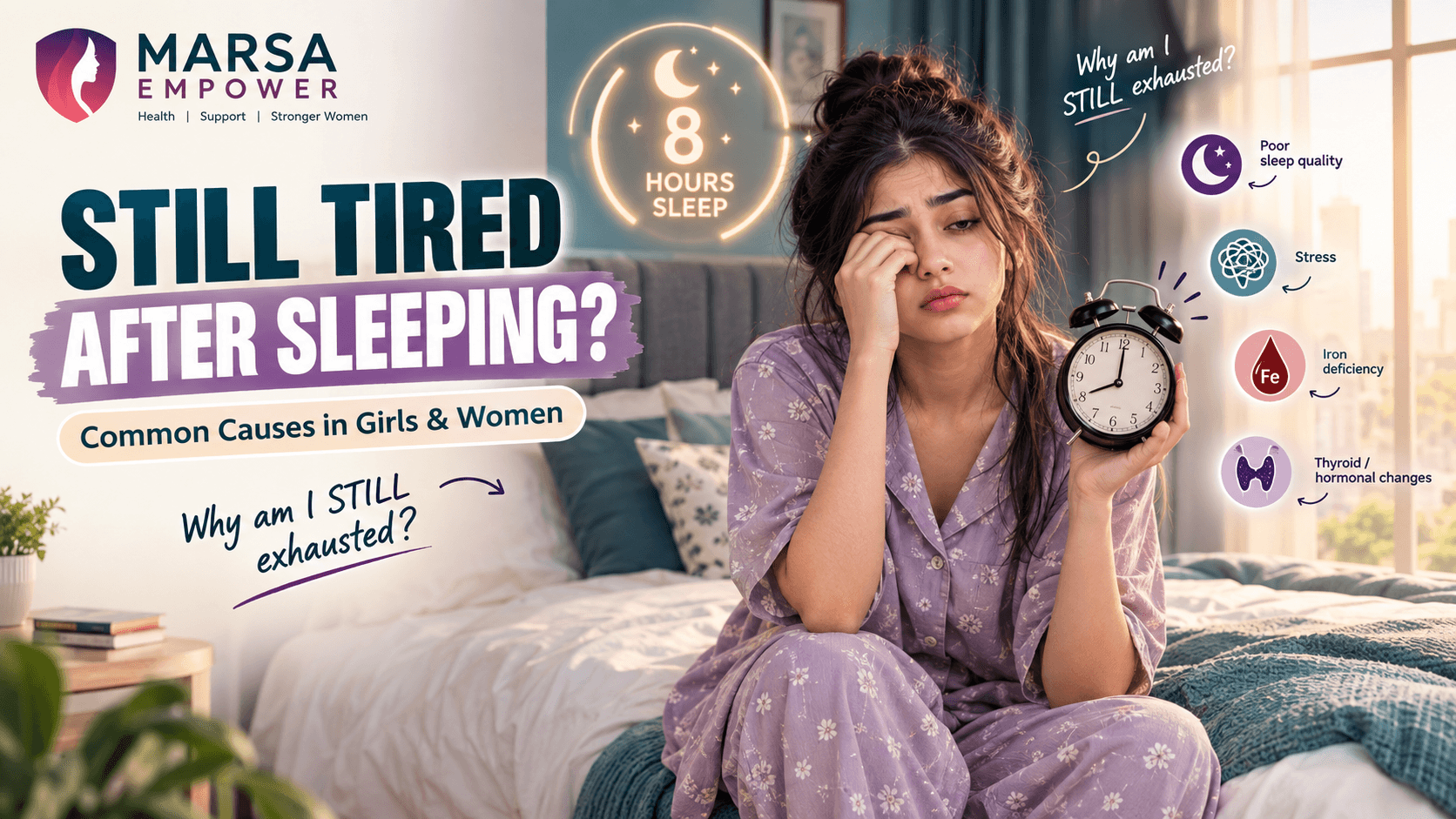
Why am I tired even after sleeping?
Possible causes include: poor sleep quality (light, fragmented, or insufficiently deep sleep) rather than short sleep; sleep disorders such as sleep apnoea; iron deficiency or anaemia; vitamin D deficiency; thyroid dysfunction; depression or anxiety; and medication effects. Persistent fatigue despite adequate sleep duration deserves blood testing and professional evaluation — not simple attribution to lifestyle.
Can women have different sleep problems at different ages?
Yes. Each hormonal life stage brings specific sleep challenges — the circadian shift of puberty, the premenstrual sleep disruption of the reproductive years, the fragmented sleep of postpartum, and the night-sweat-driven sleep disruption of perimenopause and menopause. Understanding which life stage you are in helps identify the most relevant sleep challenges and the most appropriate management approaches.
| Sleep Need | Recommendation |
|---|---|
| Teen girls | 8–10 hours per night |
| Adult women | 7–9 hours per night |
| Pregnant women | 8–10 hours per night |
| Habit | Why It Helps |
|---|---|
| Consistent sleep/wake time | Sets and maintains the circadian clock |
| Screens off 60 min before bed | Allows melatonin to rise naturally |
| No caffeine after noon | Removes 5–6 hour half-life interference |
| Cool, dark, quiet bedroom | Supports temperature drop needed for sleep |
| 30-minute wind-down routine | Signals nervous system to downregulate |
| Regular moderate exercise | Increases deep sleep · Reduces cortisol |
| No large meals or alcohol before bed | Prevents temperature and sleep architecture disruption |
| Keep bed for sleep only | Strengthens the sleep-bed association |
| When to See a Doctor |
|---|
| Consistent difficulty falling asleep despite good sleep hygiene |
| Frequent nighttime waking · Early morning waking |
| Extreme daytime tiredness despite adequate bed time |
| Loud snoring · Gasping · Stopping breathing during sleep |
| Uncomfortable leg sensations at night |
| Sleep problems affecting daily functioning |
"Better sleep is not about finding more time. It is about protecting the time you already spend in bed — making it genuinely restorative. For women, this means understanding the hormonal, lifestyle, and environmental factors that shape your sleep, and addressing them with the seriousness they deserve."
Educational Disclaimer
This article is for educational and awareness purposes only. It does not constitute medical advice, diagnosis, or treatment. If you have persistent or significant sleep problems, please consult a qualified healthcare professional for personalised evaluation and guidance.
Marsa Empower · Women's Health · Sleep & Wellness · Care. Safety. Growth.
Medical Disclaimer
This article is for general informational and educational purposes only and is not a substitute for professional medical advice, diagnosis, or treatment. Always seek the advice of a qualified healthcare provider with any questions you may have regarding a medical condition. Never disregard professional medical advice or delay seeking it because of something you have read on MARSA Empower.
Written By
Maryam Mumtaz
Co-Founder & CEO
Co-Founder of MARSA Empower who leads the visual and strategic evolution of the platform. Maryam bridges technical complexity with human-centric design, architecting the team's official roadmap and ensuring MARSA effectively addresses the real-world needs of women. With deep expertise in agentic AI, full-stack development, and UI/UX design, she has delivered 50+ projects for 30+ satisfied clients.
Enjoyed this story?