Women's heart health is a critical yet often overlooked issue. Discover why it deserves more attention and learn actionable steps for better heart care.

Maryam Mumtaz
Co-Founder & CEO
13 min read•9/4/2026
Marsa Empower · Women's Health · Cardiovascular Wellness · For Girls & Women Aged 13 and Above · 13 min read
When women think about their health, the conversation often centres on periods, hormones, reproductive health, PCOS, thyroid issues, or fertility. These are important — and Marsa Empower's health resources cover all of them. But there is another dimension of women's health that receives less everyday attention despite being one of the most significant health concerns worldwide:
The heart.
Cardiovascular disease is not primarily a man's disease. It is the leading cause of death in women globally. Yet research consistently shows that women are less aware of their cardiovascular risk than men, less likely to recognise their own heart symptoms when they occur, and — historically — less likely to receive timely and appropriate cardiac evaluation when they present with symptoms.
Part of this gap comes from the genuine differences between how heart disease presents in women versus men. Part of it comes from decades of research that under-represented women. And part of it comes from a cultural tendency to associate heart health with older men, when in reality, the cardiovascular habits built in the teenage years and twenties directly determine heart health in the forties, fifties, and beyond.
This guide explains what heart health means for women, why it deserves more attention than it typically receives, what the specific risk factors and warning signs in women look like, and what genuinely matters for protecting your heart at every life stage.
The cardiovascular system consists of the heart, the arteries that carry oxygen-rich blood from the heart to the body, the veins that return deoxygenated blood to the heart, and the capillaries that connect them. Every cell in the body depends on the continuous supply of oxygen and nutrients that the cardiovascular system delivers.
Heart health is not a single measurement. It is the overall function and condition of this entire system — including the efficiency with which the heart pumps, the health of the arterial walls, the appropriate regulation of blood pressure, the management of cholesterol and blood fats, the absence of clotting abnormalities, and the adequacy of blood flow to the heart muscle itself.
Many factors influence heart health, some modifiable and some not. Blood pressure, cholesterol profile, blood sugar regulation, physical activity, nutrition, body weight, smoking, alcohol use, sleep quality, and stress levels are all significantly within a woman's ability to influence. Age, genetics, family history, sex, and certain medical conditions represent factors that cannot be changed but that can be understood and responded to through appropriate preventive care.
Cardiovascular disease is often perceived as predominantly affecting men. This perception creates a significant and dangerous gap in women's health awareness.
In reality, cardiovascular disease is the leading cause of death in women globally, responsible for more female deaths than all cancers combined. In Pakistan, as in most countries, cardiovascular disease represents one of the largest contributors to premature female mortality.
Several factors make heart health particularly important to address specifically for women.
Women's cardiovascular risk increases significantly after menopause as oestrogen's protective cardiovascular effects are lost. This means women often develop cardiovascular disease a decade later than men — but they are catching up, and the increasing rates of metabolic risk factors including insulin resistance, obesity, diabetes, and hypertension among younger women are concerning.
Certain conditions that are specific to or more prevalent in women — including PCOS, a history of pregnancy complications, autoimmune conditions, and specific hormonal patterns — are associated with elevated cardiovascular risk that is often not adequately communicated to the women affected.
Women's heart symptoms are more likely to be atypical, misinterpreted, and dismissed — by both the women experiencing them and by healthcare providers. This leads to later presentation, less timely treatment, and worse outcomes.
The classic presentation of a heart attack — severe, crushing chest pain radiating to the left arm — is a real presentation. But it is not the only one, and for women it may not be the most common one.
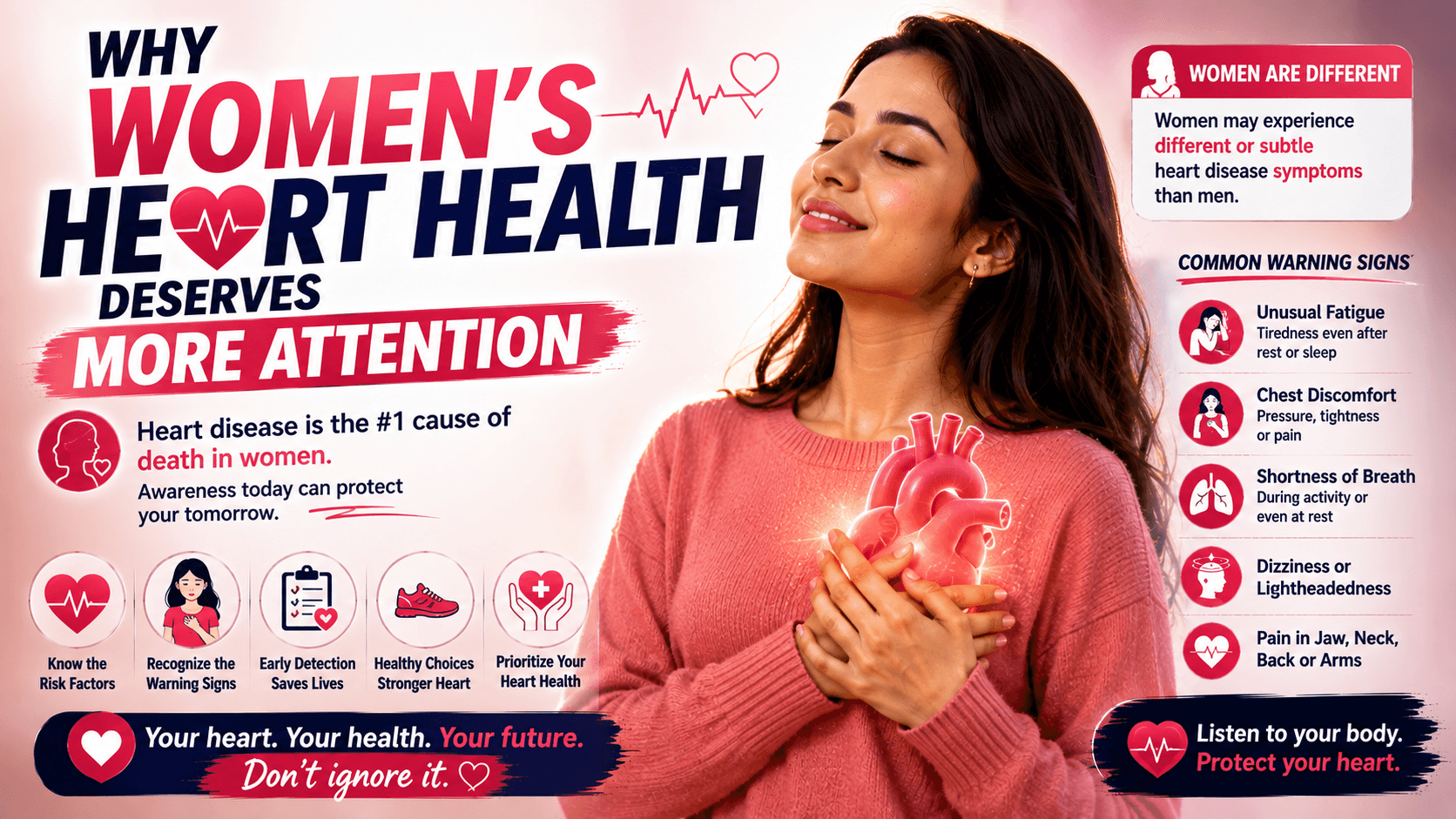
Women having a heart attack or experiencing other serious cardiac events are more likely to present with symptoms that do not fit this classic picture. These include shortness of breath, sometimes without any chest pain at all. Unusual or extreme fatigue — a sudden, heavy exhaustion disproportionate to circumstances and unlike ordinary tiredness. Nausea, indigestion, or upper abdominal discomfort. Sweating without obvious cause. Dizziness or lightheadedness. Discomfort in the jaw, back, neck, or shoulder that may be vague and difficult to localise. Chest discomfort that is more pressure, fullness, or squeezing than sharp pain.
Because these symptoms individually resemble other more benign conditions — stress, indigestion, a busy week, anxiety, the flu — women are more likely to attribute them to something less serious and delay seeking care. This delay can be catastrophic. Cardiac tissue that is deprived of blood begins dying within minutes of a heart attack. The window during which treatment can restore blood flow and preserve heart muscle is measured in hours, not days.
Every woman deserves to know that atypical cardiac symptoms are real, that women's heart attacks do not always look like the presentations shown in films and medical dramas, and that unusual or concerning symptoms affecting the chest, breathing, or associated body regions warrant medical evaluation rather than dismissal.
The idea that heart health only becomes relevant after a certain age is one of the most consequential misconceptions in women's health. Cardiovascular disease develops over decades, not overnight. The habits, conditions, and risk factors present in young women directly shape cardiovascular outcomes in middle age and beyond.
Teenage girls and young women: This is the window during which cardiovascular habits are established. Smoking, physical inactivity, poor nutritional patterns, and the emergence of conditions including PCOS and insulin resistance in the teenage years all have long-term cardiovascular implications. The healthy habits built here — consistent movement, balanced nutrition, non-smoking, adequate sleep — are genuinely protective investments in future cardiovascular health.
Women in their twenties and thirties: This decade often sees the first emergence of modifiable cardiovascular risk factors including elevated blood pressure, unfavourable cholesterol profiles, and blood sugar dysregulation. These often produce no symptoms. Regular health monitoring — knowing your blood pressure and having your cholesterol and blood sugar checked — is the only way to identify them before they have accumulated years of unaddressed cardiovascular impact.
Women during pregnancy: Pregnancy is a physiological stress test of the cardiovascular system. Several conditions that emerge during pregnancy — gestational hypertension, pre-eclampsia, gestational diabetes — are not only important for the pregnancy itself but are associated with elevated long-term cardiovascular risk in the mother. Understanding this connection allows women and their healthcare providers to monitor and manage cardiovascular risk factors after pregnancy with appropriate awareness.
Women during perimenopause and menopause: The hormonal changes of the menopausal transition include a shift in the cardiovascular risk profile — falling oestrogen is associated with increases in LDL cholesterol, blood pressure, and abdominal fat accumulation. This is not inevitable pathology, but it does make consistent cardiovascular health habits increasingly important during this life stage.
Older women: Age is among the strongest risk factors for cardiovascular disease. Regular health monitoring — blood pressure, cholesterol, blood sugar, weight — becomes increasingly important as the cumulative effect of all prior lifestyle factors and the biological changes of ageing converge on cardiovascular risk.
Understanding your specific risk factors is the foundation of meaningful cardiovascular prevention. The following are the most significant modifiable and recognised risk factors for cardiovascular disease in women.
High blood pressure (hypertension) is the single most important modifiable cardiovascular risk factor. It is the direct driver of arterial damage, atherosclerosis, heart failure, stroke, and kidney disease. It produces no symptoms in the vast majority of cases — most women with high blood pressure feel completely normal until a serious cardiovascular event occurs. Regular blood pressure measurement is the only way to know. A blood pressure consistently above 130/80 mmHg warrants medical discussion and management.
Unhealthy cholesterol levels — specifically elevated LDL (low-density lipoprotein, the "bad" cholesterol) and low HDL (high-density lipoprotein, the "good" cholesterol) — promote the development of arterial plaques that narrow vessels and restrict blood flow. Again, these produce no symptoms. A fasting lipid profile blood test identifies them. Cholesterol testing is appropriate from the thirties for most women and earlier for those with family history or other risk factors.
Diabetes and insulin resistance damage blood vessel walls, promote atherosclerosis, and significantly amplify cardiovascular risk from other factors. The cardiovascular risk of diabetes is disproportionately higher in women than in men — women with diabetes have a substantially greater relative increase in cardiovascular risk compared to diabetic men. Blood sugar monitoring is particularly important for women with PCOS, women with a history of gestational diabetes, and women with family history of type 2 diabetes.
Smoking is one of the most powerful cardiovascular risk factors regardless of sex. It damages arterial walls, reduces HDL cholesterol, promotes blood clotting, and accelerates atherosclerosis. The cardiovascular risk of smoking in women is not significantly less than in men — the popular perception that smoking is less harmful for women is incorrect. Quitting smoking is among the most impactful cardiovascular health improvements a smoking woman can make.
Physical inactivity is a direct cardiovascular risk factor. Regular physical activity — even moderate activity like brisk walking — reduces blood pressure, improves cholesterol profile, reduces insulin resistance, supports healthy weight, and directly strengthens the cardiovascular system. Women who are physically active have significantly lower rates of cardiovascular disease than those who are sedentary.
Consistently poor nutrition that is high in refined carbohydrates, added sugars, processed foods, trans fats, and excess sodium contributes to high blood pressure, unfavourable cholesterol levels, weight gain, and insulin resistance — all of which are cardiovascular risk factors. A diet consistently built around vegetables, whole grains, legumes, lean protein, and healthy fats actively reduces cardiovascular risk.
Obesity, particularly abdominal obesity — is associated with multiple cardiovascular risk factors including hypertension, insulin resistance, high triglycerides, and low HDL cholesterol. It is important to note that cardiovascular risk is not reducible to body weight alone — women of any body size can develop cardiovascular disease — but for women who are overweight, weight management is an important cardiovascular health priority.
Chronic stress contributes to cardiovascular risk through multiple pathways: elevated cortisol raises blood pressure, promotes abdominal fat accumulation, increases inflammation, impairs sleep quality, and drives behaviours (poor nutrition choices, reduced physical activity, smoking or alcohol use) that further worsen cardiovascular risk.
Family history of premature cardiovascular disease — a first-degree relative (parent or sibling) who developed heart disease before age 65 in a woman or before age 55 in a man — significantly elevates individual cardiovascular risk and warrants earlier and more proactive cardiovascular monitoring and prevention.
Pregnancy places significant additional demands on the cardiovascular system — blood volume expands by approximately 50 percent, cardiac output increases substantially, and the kidneys and blood pressure regulation system adapt to maintain this expanded circulation.
When the cardiovascular system is stressed by pregnancy and develops problems in response to this stress — gestational hypertension, pre-eclampsia, or eclampsia — this is not simply an isolated pregnancy complication. Research now clearly demonstrates that women who experience hypertensive disorders of pregnancy have significantly elevated lifetime risk of cardiovascular disease, stroke, kidney disease, and cardiovascular death compared to women whose blood pressure was normal throughout pregnancy.
Similarly, gestational diabetes — while often resolving after delivery — indicates that glucose regulation under physiological stress was impaired. Women with a history of gestational diabetes have substantially elevated lifetime risk of type 2 diabetes and associated cardiovascular disease.
This does not mean that women who experienced these complications will develop cardiovascular disease. It means that these pregnancy experiences are important health history information that should inform ongoing cardiovascular monitoring and preventive care throughout a woman's life. Women with these histories should ensure their healthcare providers are aware of them and should maintain more proactive cardiovascular risk monitoring than the general population.
The menopausal transition — typically occurring in the late forties to early fifties — represents a genuine shift in the cardiovascular risk landscape for women.
Prior to menopause, oestrogen provides significant cardiovascular protection — it supports favourable cholesterol profiles, maintains arterial elasticity, promotes appropriate vascular tone, and has anti-inflammatory effects on arterial walls. These protective effects are substantial: premenopausal women have significantly lower rates of cardiovascular disease than age-matched men.
After menopause, as oestrogen falls to very low levels, this protection is lost. LDL cholesterol typically rises. HDL cholesterol may fall. Blood pressure tends to increase. Abdominal fat accumulates more readily. Arterial stiffness increases. The result is a convergence of cardiovascular risk factors that, without proactive management, can accelerate atherosclerotic disease significantly in the post-menopausal decade.
The most effective response to this increased risk is the same as at any other life stage: consistent healthy habits — physical activity, balanced nutrition, not smoking, adequate sleep, stress management — alongside more proactive monitoring of blood pressure, cholesterol, and blood sugar. This is not the time to reduce health monitoring, but to increase it.
Every woman should know these symptoms. Some may indicate a cardiac emergency.
Possible heart attack symptoms include chest pressure, squeezing, fullness, tightening, or pain — which may be mild rather than dramatic. Shortness of breath that may occur without chest discomfort. Unusual or extreme fatigue that arrives suddenly and is disproportionate to circumstances. Nausea or vomiting. Sweating without cause. Dizziness or lightheadedness. Discomfort in the arm (one or both), the back, the neck, the jaw, or the upper stomach. Rapid or irregular heartbeat.
Several of these — nausea, fatigue, back or jaw discomfort — are more common presentations in women than in men, and less commonly recognised as cardiac symptoms by both women themselves and healthcare providers.
No single symptom from this list is automatically diagnostic of a heart attack. But a combination of these symptoms — particularly if they are new, came on suddenly, are worsening, and cannot be explained by another obvious cause — warrants urgent medical evaluation.
If you or someone near you is experiencing symptoms that may indicate a cardiac emergency — sudden chest pain, pressure, or discomfort; severe shortness of breath; sudden dizziness or fainting; pain spreading to the jaw, arm, or back alongside other symptoms — call emergency services immediately.
Do not drive yourself to a hospital if you think you may be having a heart attack. Do not wait to see if symptoms resolve. Do not attribute concerning cardiac symptoms to stress, indigestion, or anxiety without first ruling out a cardiac cause — particularly if the symptoms are new, sudden, severe, or accompanied by multiple symptoms from the list above.
Time is heart muscle. In a heart attack, every minute from the start of the event to the restoration of blood flow determines how much cardiac tissue is preserved and how well the heart will function afterward. The decision to seek emergency care immediately versus waiting even an hour has direct, measurable consequences for outcomes.
The most evidence-supported cardiovascular protective strategies are also among the most accessible and least complex. They do not require extreme measures — they require consistent attention to the habits that cumulatively determine cardiovascular health over decades.
Move your body regularly. Physical activity is one of the most powerful cardiovascular protective interventions available. Aim for at least 150 minutes of moderate-intensity aerobic activity per week — brisk walking, cycling, swimming, dancing — distributed across most days. Two to three sessions of strength training per week add additional cardiovascular benefit by improving insulin sensitivity and supporting healthy body composition. The best exercise is the one that is both appropriate for your current fitness and genuinely sustainable.
Do not smoke. If you currently smoke, stopping is the single most impactful cardiovascular change you can make. Cardiovascular risk begins declining within months of stopping and continues to improve over subsequent years.
Eat in ways that support cardiovascular health. A dietary pattern built around vegetables, fruits, whole grains, legumes, fatty fish, nuts, and olive oil is associated with the lowest cardiovascular risk across the evidence base. Reduce the frequency of highly processed foods, sugary drinks, excess salt, and trans fats. Replacing a single daily sugary drink with water or unsweetened tea reduces arterial inflammation, blood sugar spikes, and total caloric intake simultaneously.
You do not need to follow a rigid diet or eliminate every food you enjoy to eat in a heart-healthy way. The following practical meal patterns provide a simple framework.
Build most meals around a plate that is half vegetables, a quarter whole grain (brown rice, whole wheat atta, oats), and a quarter quality protein (eggs, chicken, fish, lentils). Add a small amount of healthy fat through olive oil in cooking, a handful of nuts, or avocado. This simple framework consistently outperforms more complex dietary prescriptions in long-term adherence and cardiovascular benefit.
Include fatty fish (salmon, sardines, mackerel) two to three times per week for omega-3 fatty acids that directly reduce inflammation and improve cardiovascular risk markers. Include lentils and chickpeas regularly — they provide protein, fibre, iron, and blood-sugar-stabilising complex carbohydrates that support cardiovascular health. Use olive oil or small amounts of ghee rather than hydrogenated vegetable oils or margarine, which contain the trans fats most directly associated with cardiovascular risk.
Consistency over years matters far more than perfection on any given day.
Any movement is better than none. The transition from completely sedentary to moderately active produces the largest proportional reduction in cardiovascular risk. Women who go from no regular exercise to thirty minutes of brisk walking five days per week achieve significant cardiovascular benefit.
For women already moderately active, adding strength training two to three times per week further improves cardiovascular risk markers — insulin sensitivity, blood pressure, body composition, and resting metabolic rate — in ways that cardiovascular exercise alone does not fully achieve.
Beyond structured exercise, incidental daily movement — standing regularly, walking rather than sitting during phone calls, taking stairs, reducing prolonged uninterrupted sitting — contributes meaningfully to cardiovascular health through its effects on daily caloric expenditure, insulin sensitivity, and blood pressure regulation.
Blood pressure is the cardiovascular metric with the most direct relationship to cardiovascular event risk. Every 10 mmHg reduction in systolic blood pressure (the top number) produces measurable reductions in heart attack and stroke risk. Knowing your blood pressure, monitoring it regularly, and managing it through lifestyle changes (and medication when indicated) is one of the highest-impact cardiovascular actions available.
Healthy blood pressure is below 130/80 mmHg. Blood pressure can be checked at pharmacies, health clinics, and with home devices. Annual blood pressure checks are appropriate for all adult women. More frequent checks are appropriate for women with known or borderline high blood pressure.
Cholesterol requires a blood test to assess. A fasting lipid profile measures total cholesterol, LDL (the atherogenic cholesterol associated with arterial plaque), HDL (the protective cholesterol), and triglycerides. The pattern matters as much as any single number — a healthcare provider interprets lipid results alongside other risk factors to determine appropriate management.
Cholesterol testing is appropriate from the early thirties for most women, and from earlier for women with family history of early cardiovascular disease, diabetes, or other elevated risk factors.
Sleep is a direct cardiovascular factor that is consistently underemphasised in cardiovascular prevention. During adequate sleep, blood pressure falls to its lowest daily levels — this nocturnal dipping provides critical cardiovascular rest. Women who consistently sleep fewer than six hours per night have significantly elevated cardiovascular risk compared to those sleeping seven to eight hours. Sleep apnoea — which is significantly under-diagnosed in women — is an independent cardiovascular risk factor through its effects of repeated nocturnal hypoxia and blood pressure fluctuation.
Seven to nine hours of consistent, quality sleep per night is a direct cardiovascular health investment, not simply a wellbeing preference.
Chronic stress maintains elevated cortisol that directly raises blood pressure, promotes abdominal fat accumulation, increases inflammatory markers, and drives the behaviours — poor nutritional choices, physical inactivity, smoking — that further compound cardiovascular risk. Managing chronic stress through exercise, adequate sleep, breathwork, social connection, and professional support where needed is not peripheral to cardiovascular health. It is a direct component of it.
Heart health building starts in the teenage years — and the habits established here have long-lasting consequences.
The most important heart-healthy habits for teenage girls are non-smoking (never starting is the most effective strategy), regular physical activity that is enjoyable and sustainable, a diet that includes plenty of vegetables, fruits, whole grains, and protein while limiting sugary drinks and highly processed foods, adequate sleep, and healthy weight management through active living rather than restrictive dieting.
For teenage girls with PCOS — which significantly elevates long-term cardiovascular risk — the specific management of insulin resistance through diet, exercise, and medical management as appropriate is particularly important for long-term cardiovascular protection.
For women in their twenties through fifties, the following consistent habits produce the most meaningful long-term cardiovascular benefit.
Regular moderate physical activity — at minimum 150 minutes per week of brisk walking or equivalent, with strength training two to three times weekly. A dietary pattern built primarily around whole foods, vegetables, lean proteins, and healthy fats, with limited processed foods and sugary drinks. Non-smoking, and if currently smoking, actively seeking cessation support. Knowing and monitoring blood pressure annually — more frequently if it has ever been elevated. Having cholesterol and blood sugar assessed at appropriate intervals based on age and risk factors. Attending health checkups that include cardiovascular risk assessment. Managing stress actively. Protecting adequate sleep consistently. Ensuring healthcare providers are aware of any pregnancy complications or family history of early cardiovascular disease.
A documented personal cardiovascular health history allows you to track changes over time, communicate clearly with healthcare providers, and recognise when monitoring needs to change.
Consider recording and updating the following. Your blood pressure readings with dates. Cholesterol test results with dates. Blood sugar or HbA1c test results with dates. Smoking history. Physical activity level. Family history of cardiovascular disease including the relationship and age of diagnosis. Any pregnancy complications including hypertension, pre-eclampsia, or gestational diabetes. Current medications. Any chest symptoms, breathlessness, palpitations, or other cardiac concerns that have occurred and how they were evaluated.
Seek routine medical evaluation for cardiovascular risk assessment if you have not had blood pressure, cholesterol, or blood sugar checked within the past year and are over 30. If you have a family history of early cardiovascular disease. If you have diabetes, PCOS, or a history of pregnancy complications. If you are beginning a new exercise programme and have known or suspected cardiovascular conditions.
Seek timely (same day or next day) medical evaluation if you have been experiencing chest discomfort, unusual breathlessness, or palpitations that are new, recurrent, or unexplained, and do not require emergency care but warrant assessment.
Seek emergency medical care immediately if you or someone near you has sudden chest pain, pressure, or discomfort; sudden severe shortness of breath; sudden onset of sweating, nausea, and dizziness together; pain spreading to the jaw, arm, or back; or any symptom combination suggesting a cardiac emergency.
Marsa Empower supports women in building the health awareness and consistent daily habits that most meaningfully protect cardiovascular health across a lifetime.
Health education resources explain cardiovascular risk, the specific way cardiovascular risk and symptoms present in women, and the preventive strategies with the strongest evidence base — in clear, accessible language.
Health tracking through the Health Hub allows women to monitor trends in energy, symptoms, and daily habits over time, and to document health information that is valuable for medical consultations including blood pressure readings and symptom records.
AI health guidance through Digital Doctors provides educational information about cardiovascular risk factors, warning signs, and the habit changes most likely to produce meaningful cardiovascular benefit for women at different life stages.
Medication scheduling supports consistent adherence to any prescribed cardiovascular medications, which is one of the most important determinants of whether medical management produces its intended benefit.
Marsa Empower is a health education and wellness companion. It does not replace emergency services or professional medical care. Any symptoms suggesting a cardiac emergency require immediate emergency services contact, not an AI health consultation.
Is heart disease common in women?
Yes. Cardiovascular disease is the leading cause of death in women globally, responsible for more female deaths than all cancers combined. It is significantly under-recognised as a women's health priority.
Can young women have heart problems?
Yes. Cardiovascular problems can affect women at any age. Risk increases with age and with the accumulation of risk factors, but conditions including hypertension, insulin resistance, and unfavourable cholesterol can develop in women in their twenties and thirties. Family history of early cardiovascular disease further increases risk in younger women.
What are heart attack symptoms in women?
Women are more likely than men to experience atypical symptoms including shortness of breath, unusual or extreme fatigue, nausea, sweating, dizziness, and jaw or back pain, sometimes without the classic dramatic chest pain. All of these, particularly in combination, warrant urgent medical evaluation.
Does menopause affect heart health?
Yes. The loss of oestrogen's cardiovascular protective effects at menopause is associated with changes in cholesterol, blood pressure, body composition, and arterial health that increase cardiovascular risk. Consistent cardiovascular health habits become more important, not less, in and after the menopausal transition.
What is the single most important heart-protective habit for women?
No single habit provides complete protection. The combination of not smoking, regular physical activity, a balanced whole-food diet, knowing and managing blood pressure, and attending appropriate health monitoring checkups produces the most meaningful collective cardiovascular protection.
When should chest pain be treated as an emergency?
Any sudden or severe chest discomfort — particularly accompanied by shortness of breath, sweating, nausea, dizziness, or pain in the jaw, arm, or back — requires emergency medical care immediately. Do not wait to see if symptoms improve.
Educational Disclaimer
This article is for educational and awareness purposes only. It does not constitute medical advice, diagnosis, or treatment. If you are experiencing possible cardiac symptoms or a medical emergency, call emergency services immediately. For cardiovascular risk assessment and personalised guidance, please consult a qualified healthcare professional.
Marsa Empower | Care. Safety. Growth.
Visit marsaempower.com to track your health, access educational guidance, and build the daily habits that protect your health at every stage of life.
Medical Disclaimer
This article is for general informational and educational purposes only and is not a substitute for professional medical advice, diagnosis, or treatment. Always seek the advice of a qualified healthcare provider with any questions you may have regarding a medical condition. Never disregard professional medical advice or delay seeking it because of something you have read on MARSA Empower.
Written By
Maryam Mumtaz
Co-Founder & CEO
Co-Founder of MARSA Empower who leads the visual and strategic evolution of the platform. Maryam bridges technical complexity with human-centric design, architecting the team's official roadmap and ensuring MARSA effectively addresses the real-world needs of women. With deep expertise in agentic AI, full-stack development, and UI/UX design, she has delivered 50+ projects for 30+ satisfied clients.
Enjoyed this story?